Gagging vs. Choking in Baby-Led Weaning

Sarah Mitchell
Sarah Mitchell is a Registered Pediatric Nurse and a mother of three who has spent over a decade helping families navigate the beautiful, chaotic early years of childhood. She combines evidence-based medical knowledge with real-world parenting experience to offer practical, compassionate advice. At Awesome Parent, Sarah's mission is to help exhausted parents find solutions, trust their instincts, and finally get some sleep.
If you are doing baby-led weaning and you have ever felt your soul leave your body when your baby gags, welcome. You are not overreacting. You are a parent watching a tiny human put food in their mouth, and your brain is doing its job: scanning for danger.
Here is the reassuring truth I used to repeat all day as a pediatric triage nurse: gagging is common and protective. Choking is less common than gagging and can be an emergency. The tricky part is that in the moment, they can look similar.
This guide will help you make a quick best-guess, respond safely, and set up meals to be safer from the start.

Gagging vs. choking: the 10-second check
When you are panicking, you do not need a textbook. You need a quick mental checklist.
Most important question: Can they breathe, cry, or cough?
- If they can breathe and are making noise (gagging, sputtering, or coughing): air is moving. That is often gagging or a protective cough.
- If they cannot breathe or cannot cough effectively (silent, weak cough, unable to cry): treat it like choking and act right away.
Effective cough vs. ineffective cough
- Effective cough: strong, forceful coughing with breathing in between. You can usually hear it and see they are moving air. What you do: encourage coughing, keep them upright, watch closely.
- Ineffective cough: little to no sound, a weak or silent cough, trouble breathing, or they cannot cry. What you do: treat as choking and start first aid.
What gagging often looks like
- Noisy: coughing, retching, sputtering
- Watery eyes, red face, tongue thrusting forward
- They may push food forward in their mouth or spit it out
- They often recover quickly and keep eating (because babies are wild)
What choking can look like
- Silent or very quiet, with little to no effective coughing
- Unable to breathe, cry, or make sound
- Open mouth, panicked expression
- Possible bluish or gray tint around lips or face
- May clutch at mouth or look like they are trying to breathe but cannot
Why gagging is normal during BLW
Babies are born with a strong gag reflex. It is a built-in safety feature that helps keep large pieces of food from moving too far back before they have the coordination to chew and manage textures.
During baby-led weaning, babies explore food with their mouths and sometimes take bigger bites than they can handle. That often triggers gagging, especially early on or with new textures.
As they practice, their oral skills improve, they learn how much to bite off, and the gag reflex gradually becomes less sensitive. In other words: gagging is often part of the learning curve.
BLW readiness matters
Safety starts before the first bite. Baby-led weaning is safest when your baby can:
- Sit upright with good head and trunk control (with minimal support)
- Bring food to their mouth themselves
- Stay awake and engaged during meals
If you are unsure about readiness, ask your pediatrician. (And yes, it is still BLW if you start slow.)
What to do when your baby gags
This is the part that feels impossible: you usually help most by staying calm and not rushing in.
Do this
- Pause and watch for 1 to 2 seconds. If they are gagging or coughing strongly, they are moving air.
- Let them work it out. Many babies will spit it out or cough it forward.
- Model calm breathing. Your baby reads your face. Slow inhale, slow exhale.
- Keep them upright in the high chair.
- Offer a sip of water only after they fully recover (breathing normally, calm, no active coughing or gagging) and only if your baby is already practicing small sips from an open cup or straw with meals.
Avoid this (it can make things worse)
- Do not sweep their mouth with your finger unless you can clearly see and easily remove food. Blind finger sweeps can push food farther back.
- Do not pick them up and shake or bounce.
- Do not tilt them back or try to “pour” food out.
- Do not panic-feed more food to “wash it down.”
My nurse-mom mantra: If it is loud and forceful, let them work. If they cannot breathe or cannot cough effectively, we act.
What about vomiting?
A strong gag can trigger a vomit, especially early on. If vomiting is frequent, your baby seems distressed at most meals, or you see breathing changes (wheezing, persistent coughing, wet or noisy breathing), check in with your pediatrician.
What to do if you think it is choking
If your baby cannot breathe, cry, or cough effectively, treat it as choking.
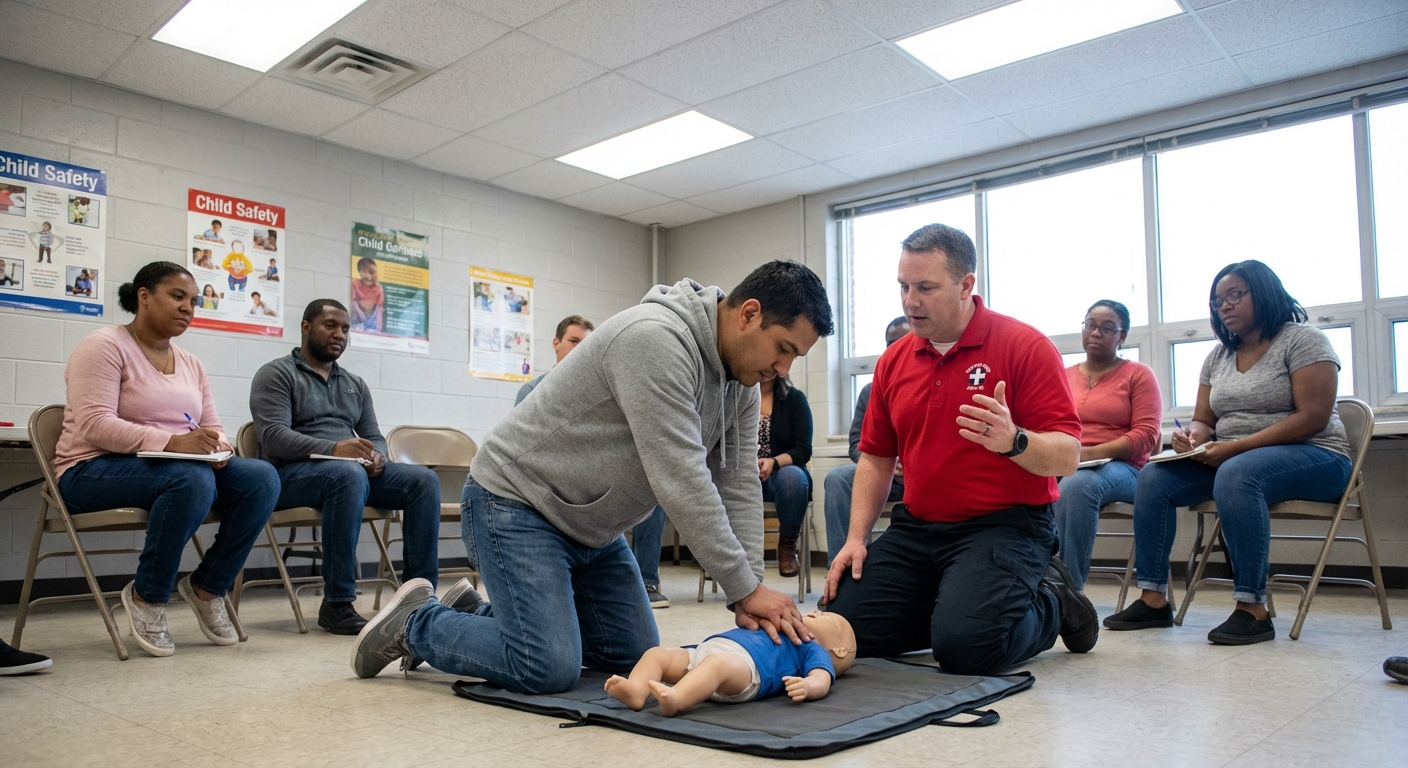
Safety note: This section is educational and not a substitute for hands-on training. Take an infant CPR and choking relief class, and follow guidance from your local first-aid authority (such as the Red Cross, AAP guidance, St John Ambulance, or your country’s resuscitation council).
Step 1: Call for help
- Shout for someone to call emergency services.
- If you are alone, call emergency services on speaker and start first aid.
Step 2: Start age-appropriate first aid
Techniques vary by age and by guideline. The safest plan is to take an in-person class so you can practice with a manikin and learn the exact sequence recommended where you live.
In general terms (follow your local guidance):
- Infants under 12 months: choking relief typically involves a sequence of firm back blows and chest thrusts while supporting the head and neck.
- Children 12 months and older: choking relief may involve abdominal thrusts and other steps depending on responsiveness.
If your child becomes unresponsive at any point, begin CPR and follow the emergency dispatcher’s instructions until help arrives.
Step 3: After a choking scare
- If your baby needed first aid, was turning blue or gray, became very sleepy, or you are worried something was inhaled, seek emergency care right away.
- Even if they seem fine, contact your pediatrician for guidance if you are unsure.
Common choking hazards (and safer prep)
Choking risk is more about shape and texture than the “healthiness” of the food. Round, hard, sticky, and slippery foods are the usual troublemakers.
Higher-risk foods for babies and toddlers
- Whole grapes, cherry tomatoes, and whole, firm blueberries (round and slippery)
- Hot dogs or sausage rounds (airway-sized coins)
- Nuts and popcorn (hard, small pieces)
- Chunks of raw apple or carrot (hard)
- Globs of nut butter (sticky)
- Marshmallows, gummy candies (sticky and squishy)
Safer prep ideas (general)
- Round foods: cut lengthwise into quarters for babies and young toddlers.
- Blueberries: for younger babies, squish them flat between your fingers or cut them, especially if they are firm.
- Hard foods: cook until soft enough to squish between fingers.
- Nut butter: spread thinly on toast sticks or mix into yogurt or oatmeal, rather than offering a thick spoonful.
- Hot dogs: they are a top choking hazard for young children. Avoid for babies. For older toddlers, cut lengthwise and then into small pieces.
If you want very specific serving guidance for each age and food, consider using evidence-based BLW resources created by pediatric feeding specialists. When in doubt, choose softer textures and bigger shapes that baby can grip and gnaw.

Meal safety checklist
You cannot remove all risk from eating. You can stack the odds in your favor.
Before you serve
- Sit baby fully upright in a high chair with good trunk support.
- Stay within arm’s reach. Eating is not a “fold laundry in the other room” activity.
- Check food texture: soft enough to mash between fingers is a good baseline for many early foods.
- Skip distractions: no walking around, no eating in the car seat, stroller, or on the couch.
- One caregiver in charge: if grandparents are visiting and everyone is chatting, designate a set of eyes.
During the meal
- Let baby lead. Avoid putting food into their mouth for them.
- Go slow with new foods. Offer manageable pieces and watch how they handle the texture.
- Keep portions reasonable. You can always offer more.
Why babies gag more
Two reasons you are seeing a lot of drama at the high chair:
- Anatomy and reflexes: babies have a more sensitive gag reflex and less practiced chewing.
- Skill building: chewing, moving food side to side, and swallowing smoothly are learned skills, not instincts.
This is also why it helps to offer foods in shapes that encourage gnawing and controlled bites, like soft spears or strips, rather than small hard cubes.
When to call the pediatrician
Most gagging during BLW is normal. Reach out for medical guidance if you notice:
- Frequent choking episodes or persistent coughing during meals
- Gagging to the point of vomiting at most meals, especially if it is not improving over time
- Breathing changes during feeding (wheezing, noisy breathing, repeated coughing with liquids)
- Poor weight gain, extreme refusal of textures, or feeding that is consistently stressful for baby
- History of prematurity, neuromuscular conditions, cleft palate, or known swallowing concerns
Your pediatrician may recommend a feeding evaluation with a speech-language pathologist or occupational therapist who specializes in pediatric feeding.
Peace of mind for anxious parents
If you take nothing else from this article, take this: gagging is often loud and messy. Choking is often quieter and more urgent. But the most helpful check is still function: can they breathe and cough effectively?
The best way to calm your nervous system is to pair BLW with two practical safety steps:
- Take an infant CPR and choking relief class. Skills beat panic every time.
- Serve developmentally appropriate shapes and textures, and keep baby upright and supervised.
And if BLW is not for you right now, that is also okay. You are not failing. You are feeding your baby. That counts.
Quick reference
Likely gagging or effective cough
- Noisy gagging or forceful coughing
- Red face, watery eyes
- Baby can breathe and may recover quickly
- What you do: stay calm, keep baby upright, let them work it out, encourage coughing
Possible choking or ineffective cough
- Silent or unable to cry
- Little or no effective coughing, weak cough
- Struggling to breathe, color change
- What you do: call emergency services, start choking first aid for their age, follow local first-aid guidance