Gentle Sleep Training Methods

Sarah Mitchell
Sarah Mitchell is a Registered Pediatric Nurse and a mother of three who has spent over a decade helping families navigate the beautiful, chaotic early years of childhood. She combines evidence-based medical knowledge with real-world parenting experience to offer practical, compassionate advice. At Awesome Parent, Sarah's mission is to help exhausted parents find solutions, trust their instincts, and finally get some sleep.
If you're reading this at an unholy hour with one eye open, I see you. Sleep training can feel like a moral referendum on your parenting, especially if you've stumbled into loud corners of the internet that insist there's only one “right” way. There isn't.
Gentle sleep training is really about two things: teaching a new skill and keeping everyone as regulated as possible while you teach it. Some methods involve a little fussing, some aim for almost none, and all of them work best when you pick the approach that matches your baby's temperament and your own comfort level.

This guide compares common low-cry and no-cry options, explains who they tend to work well for, and shows you how to choose without spiraling.
Before you start: safety and readiness
Gentle methods still work best when your baby is developmentally ready and the basics are in place. Here's what I suggest checking first.
Age and feeding
- Many babies are ready for sleep training around 4 to 6 months, when sleep becomes more adult-like and patterns tend to get more consistent.
- If your baby was premature or has medical concerns (reflux, airway issues, poor weight gain), run your plan by your pediatrician first.
- Night feeds can be normal for many months. Sleep training and night weaning are related, but they're not the same project.
Safe sleep basics (non-negotiable)
- Back to sleep, on a firm flat mattress.
- No loose blankets, pillows, bumpers, or stuffed animals in the sleep space.
- Room-share (not bed-share) is recommended for at least the first 6 months, and ideally 12 months, per the AAP.
Health check
If sleep suddenly fell apart, think like a triage nurse for a moment: new fever, ear tugging, a big reflux flare, eczema itching, new snoring, or a growth spurt can all temporarily sabotage sleep. Sleep training is hardest when your baby feels crummy.

What “gentle” means
“Gentle” doesn't mean “no tears ever.” It usually means:
- You respond to your baby regularly and predictably.
- You avoid long periods of unsupported crying.
- You make changes gradually, so your baby isn't shocked by a brand-new routine.
- You protect attachment by being consistent, calm, and present.
Even with the gentlest plan, some protest is normal. Babies complain about change the way adults complain about changing passwords.
Comparison at a glance
Below is a plain-English rundown of common low-cry and no-cry methods. (If you're overwhelmed, skip to How to choose a method.)
| Method | How it works | How much crying | Best for | Hard part |
|---|---|---|---|---|
| Fading (bedtime routine + gradual changes) | Small steps toward independent sleep | Low | Sensitive babies, anxious parents | Takes longer, needs patience |
| Pick Up Put Down | Comfort in arms briefly, then back down | Low to moderate | Younger babies, hands-on parents | Can be physically exhausting |
| Chair method (camping out) | Parent sits near crib, gradually moves away | Low to moderate | Babies who escalate when alone | Some babies get mad you're there but not holding |
| Responsive checks (graduated) | Short check-ins at increasing intervals | Moderate | Babies who do better with clear boundaries | Hard for anxious parents to wait |
| Bedtime routine + “drowsy but awake” practice | Lots of reps falling asleep in the crib | Very low to low | Younger babies, strong routines | Progress can be slow and non-linear |
| Scheduled awakenings | Gently disrupt habitual wakes, then taper | Usually low | Predictable wake times | Requires tracking and timing |
Method 1: Fading
Fading is my go-to for anxious parents because it's simple and kind, and it rarely involves big crying spikes. You keep the comfort cues your baby relies on, then you slowly reduce them until they're no longer needed.
Common fading targets
- Motion: rocking less each night (or rocking until calm, not asleep).
- Feeding to sleep: move the feed earlier in the routine by 5 to 10 minutes every few nights.
- Contact sleep: start with a hand on chest in the crib, then shift to patting, then verbal reassurance.
How to do it (one example)
- Pick one sleep association to work on first (usually bedtime, not naps).
- Keep your bedtime routine consistent, and try not to change multiple variables at once for 7 to 10 nights.
- If you rock to sleep now, rock until your baby is very sleepy, then put them down and keep a hand on them.
- Every 2 to 3 nights, rock a little less and do a little more soothing in the crib.
What to expect: Small protests, fewer big meltdowns, slower progress. Think 2 to 6 weeks, not 3 nights.
Best for: Highly sensitive babies, parents who want the lowest drama possible, families who can tolerate slower change.
Method 2: Pick Up Put Down
This method is exactly what it sounds like. You put your baby down awake. If they cry, you pick them up until calm, then put them back down. Repeat until they fall asleep in the crib.
It's soothing, responsive, and can work beautifully for younger babies who get overwhelmed fast. It can also feel like doing squats in the dark for 45 minutes, so plan accordingly.
How to do it
- Do your bedtime routine, then place baby in the crib awake.
- If crying escalates, pick up just until calm. Try not to rock fully to sleep.
- Put down again. Use a consistent phrase like, “It's sleep time. I'm right here.”
- Repeat. Consistency matters more than perfection.
Pro tip: If your baby ramps up the second they feel the mattress, try hands-on soothing in the crib first for 20 to 30 seconds before picking up. Some babies settle faster with less handling.
What to expect: Often improves in 1 to 2 weeks, but the first few nights can be long.
Best for: Around 4 to 8 months, parents who prefer immediate responsiveness.
Watch-outs: Some babies find the up-down-up-down pattern stimulating. If crying increases over several nights, switch to fading or the chair method.
Method 3: Chair method
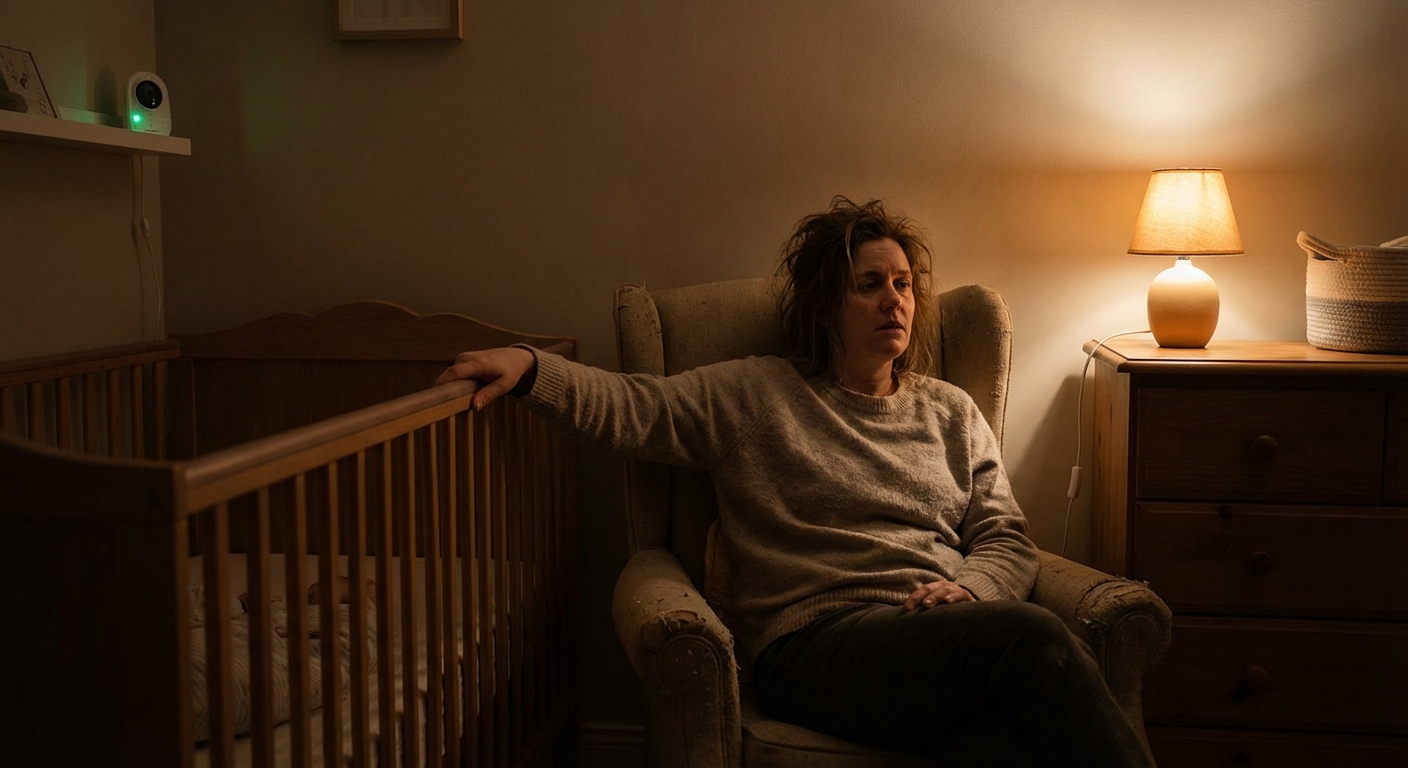
The chair method is a middle ground for families who want presence without creating a brand-new habit of holding to sleep. You sit next to the crib while your baby falls asleep, offering voice and occasional touch. Over several nights, you move the chair farther away until you're out of the room.
How to do it
- Night 1 to 3: Sit right next to the crib. Minimal interaction, calm voice, brief touch if needed.
- Night 4 to 6: Move the chair a bit away from the crib.
- Keep moving the chair every few nights until you're at the door, then outside.
What to expect: Typically 1 to 3 weeks. Some babies protest the “I'm here but not holding you” part at first.
Best for: Babies who panic when you leave, parents who want to avoid frequent pick-ups, families who can commit to staying put.
Hard part: Some babies get furious that you're present but not scooping them up. If that's your baby, fading or Pick Up Put Down may be kinder.
Method 4: Responsive checks (modified Ferber)
Let's clear up a common fear: graduated check-in methods are structured, responsive options where you give your baby a chance to try, and you check in briefly at planned intervals so they know you're still there. Some people group these under the “cry it out” umbrella because there can be crying. The difference is the plan includes predictable check-ins rather than leaving a baby to cry indefinitely.
This tends to work faster than fading, with more crying up front. For many anxious parents, the challenge isn't the method. It's the clock.
How it works
- Place baby down awake after the bedtime routine.
- If crying starts, wait a short interval (for example, 3 minutes), then do a brief check (30 to 60 seconds).
- Increase the interval gradually (for example, 5 minutes, then 10 minutes).
- During checks, keep it calm: pat, shush, say your phrase. Avoid picking up unless you truly feel it's needed.
What to expect: Many families see meaningful improvement within 3 to 7 nights, with continued progress over 2 weeks.
Best for: Babies who get more worked up with lots of intervention, parents who want clearer structure, families who need faster improvement.
Hard part: If check-ins make your baby angrier, you can switch to fewer checks, longer intervals, or the chair method.
Method 5: Drowsy but awake
“Drowsy but awake” isn't a personality trait your baby is born with. It's a skill you practice gently, over and over, usually earlier than you think. The goal is to give your baby low-pressure opportunities to fall asleep in the sleep space without fully conking out in your arms.
How to practice
- Start with the first sleep of the night or first nap of the day.
- Do a short routine (diaper, sleep sack, song).
- Put baby down when eyelids are heavy but still awake.
- If baby fusses, soothe in the crib first (hand on chest, shushing) before picking up.
What to expect: Slow, steady gains over weeks. You'll get some wins, then a rough day, then more wins.
Best for: Younger babies, parents who want minimal crying, families who can tolerate slow progress.
Reality check: Some babies blow right past drowsy and into full party mode. If that happens consistently, adjust wake windows and try again tomorrow.
Method 6: Scheduled awakenings
If your baby wakes at the same times every night like they've got a tiny wristwatch, scheduled awakenings can help. You gently rouse them before the habitual wake, help them resettle quickly, then gradually taper the scheduled wake away.
How to do it
- Track wake times for 5 to 7 nights.
- Pick one habitual wake (say, 12:30 am).
- Wake baby slightly at 12:10 to 12:15 am (just enough to stir), then help them settle back.
- Every few nights, make the wake a little lighter (less rousing, less soothing), until you can remove it completely.
What to expect: Best for one or two very predictable wakes. Improvement is usually gradual over 1 to 2 weeks.
Best for: Very consistent wake-ups, families who don't want prolonged crying.
Watch-out: If wakes are driven by hunger, illness, or teething pain, this won't fix it. It's a pattern tool, not a pain eraser.
How to choose a method
If you're paralyzed by options, here's the decision-making shortcut I use with families: match the method to baby temperament plus parent tolerance.
If your baby escalates quickly
- Try fading or chair method.
- Avoid lots of pick-ups if they seem to rev your baby up.
If your baby gets more upset when you intervene
- Try responsive checks with fewer, calmer check-ins.
- Keep checks boring and short.
If you feel panicky listening to crying
- Start with fading, drowsy but awake practice, or scheduled awakenings.
- Give yourself permission to go slower. Slow is still forward.
If you need results fast to function safely
- Consider responsive checks or a faster fade with clear boundaries.
- Choose a start date when you can be consistent for at least 7 nights.
My non-judgmental nurse opinion: The “best” method is the one you can do consistently while staying emotionally regulated enough to be kind. Consistency is the part babies can understand.
The foundation that helps
No method can outwork a schedule that's wildly off. You don't need perfection, but you do need a decent foundation.
1) A predictable bedtime routine
Keep it short and repeatable, 20 to 30 minutes. For example: bath or wipe-down, pajamas, feed, book, song, into sleep sack, lights out. Your baby learns, “These steps mean sleep is coming.”
2) Age-appropriate wake windows
Overtired and undertired can look the same at 2 am. If your baby fights sleep for a long time, wakes frequently, or treats bedtime like a second afternoon, tweak daytime sleep timing first.
3) A sleep-friendly environment
- Dark room (blackout curtains help).
- White noise at a low, consistent volume. Place it across the room, not in or right next to the crib.
- Comfortable temperature (cooler tends to be better than warm).

Nights vs naps
If you want the simplest path, train nights first. Bedtime sleep pressure is higher, so your baby has an easier time learning the new skill there.
- Start with bedtime. Once bedtime is smoother for about a week, pick one nap to practice (often the first nap).
- Keep nap expectations realistic. Short naps are common during transitions.
- It's okay to rescue naps. If a nap implodes and you need to do a contact nap or stroller nap to protect your day, that's not “ruining it.” That's triage.
Caregiver consistency
Babies can learn with more than one caregiver, but they do best when the response is predictable.
- Agree on the plan and the script before bedtime, not in the middle of a 2 am debate.
- If one parent can't tolerate crying, give them a job that helps: setting up the room, doing the routine, logging wake-ups, handling the early-morning shift, or being the “tap-out” support.
- Consistency doesn't mean rigid. It means your baby isn't getting a totally different rulebook every night.
Common worries
“Will this harm attachment?”
Secure attachment is built through thousands of everyday moments: feeding, cuddling, play, repairing after hard moments, and being reliably responsive overall. Gentle sleep training that includes comforting, consistency, and a loving relationship isn't the same thing as abandonment.
“What if my baby cries and I panic?”
Plan your response ahead of time. Write it down if you need to. Put in earplugs to take the edge off (you'll still hear your baby). Swap with your partner for breaks. The goal isn't to never feel anxious. It's to not let anxiety run the whole night.
“Are we creating bad habits?”
Babies are allowed to have needs. A “habit” is only a problem if it isn't working for your family anymore. You're not spoiling a baby by comforting them. You're also not failing them by teaching them to sleep in a new way.
“What about night feeds, especially if we're breastfeeding?”
You can keep night feeds and still work on sleep. One common approach is to feed on true hunger wakes (your baby won't settle with your usual soothing) and use your chosen method for the other wakes. If you're unsure what's hunger versus habit, your pediatrician can help you decide what's appropriate for your baby's age and growth.
When to pause and call the pediatrician
Sleep training isn't the right tool for every situation. Reach out for medical guidance if you notice:
- Fever, vomiting, dehydration signs, or your baby seems unusually lethargic.
- New or worsening reflux symptoms, poor weight gain, or feeding refusal.
- Persistent snoring, gasping, or breathing pauses.
- Inconsolable crying that's out of character.
- You have postpartum anxiety or depression symptoms that are worsening with sleep training.
You deserve support too. Exhaustion can mimic and magnify everything.
A simple 7-night plan
If decision fatigue is eating you alive, try this blended approach that stays on the gentle end while still moving forward.
Nights 1 to 3: Set the stage
- Lock in bedtime routine and sleep environment.
- Choose one settling method (hand on chest, patting, chair next to crib).
- Aim for bedtime to be the one consistent “awake put-down” attempt. Other wakes, handle however you need so everyone survives.
Nights 4 to 7: Begin a slow fade
- Reduce your help slightly every 2 nights (less rocking, less patting, chair a little farther).
- Pause 20 to 30 seconds before intervening to give baby a chance to resettle.
- If baby escalates hard, comfort, then return to your plan.
Measure progress realistically: You're looking for shorter settling time, fewer full wake-ups, or easier returns to sleep. Not perfect silence.
Final reassurance
I've sat in triage rooms with parents who looked like they hadn't slept since the last presidential administration. I've also been the parent pacing the hallway, whispering, “Please, please, please,” at a baby who definitely didn't care about my schedule.
Gentle sleep training isn't about toughness. It's about choosing a plan you can follow and repeating it calmly until your baby learns a new pattern. If you start and it feels wrong in your bones, you're allowed to pivot. That's not failure. That's responsive parenting.
You're not behind. You're not doing it wrong. You're tired. Let's get you some sleep.