A calm, practical guide to ear tubes: candidacy (including the effusion nuance), the ENT consult, same-day surgery basics, water rules after tubes, and when ...
Glue Ear in Young Kids

Sarah Mitchell
Sarah Mitchell is a Registered Pediatric Nurse and a mother of three who has spent over a decade helping families navigate the beautiful, chaotic early years of childhood. She combines evidence-based medical knowledge with real-world parenting experience to offer practical, compassionate advice. At Awesome Parent, Sarah's mission is to help exhausted parents find solutions, trust their instincts, and finally get some sleep.
If your child has been asking “what?” a lot, turning the TV up, or suddenly seems a little off balance, your brain might jump straight to another ear infection. But there is a common in-between problem that can look sneaky and linger for weeks: glue ear, also called otitis media with effusion (OME).
As a pediatric nurse and a mom, I think of glue ear as the “puddle behind the eardrum.” It is fluid trapped in the middle ear space usually without the fever-and-crying ear pain of an acute infection. It can affect hearing and speech, especially when it sticks around.

What glue ear is (and is not)
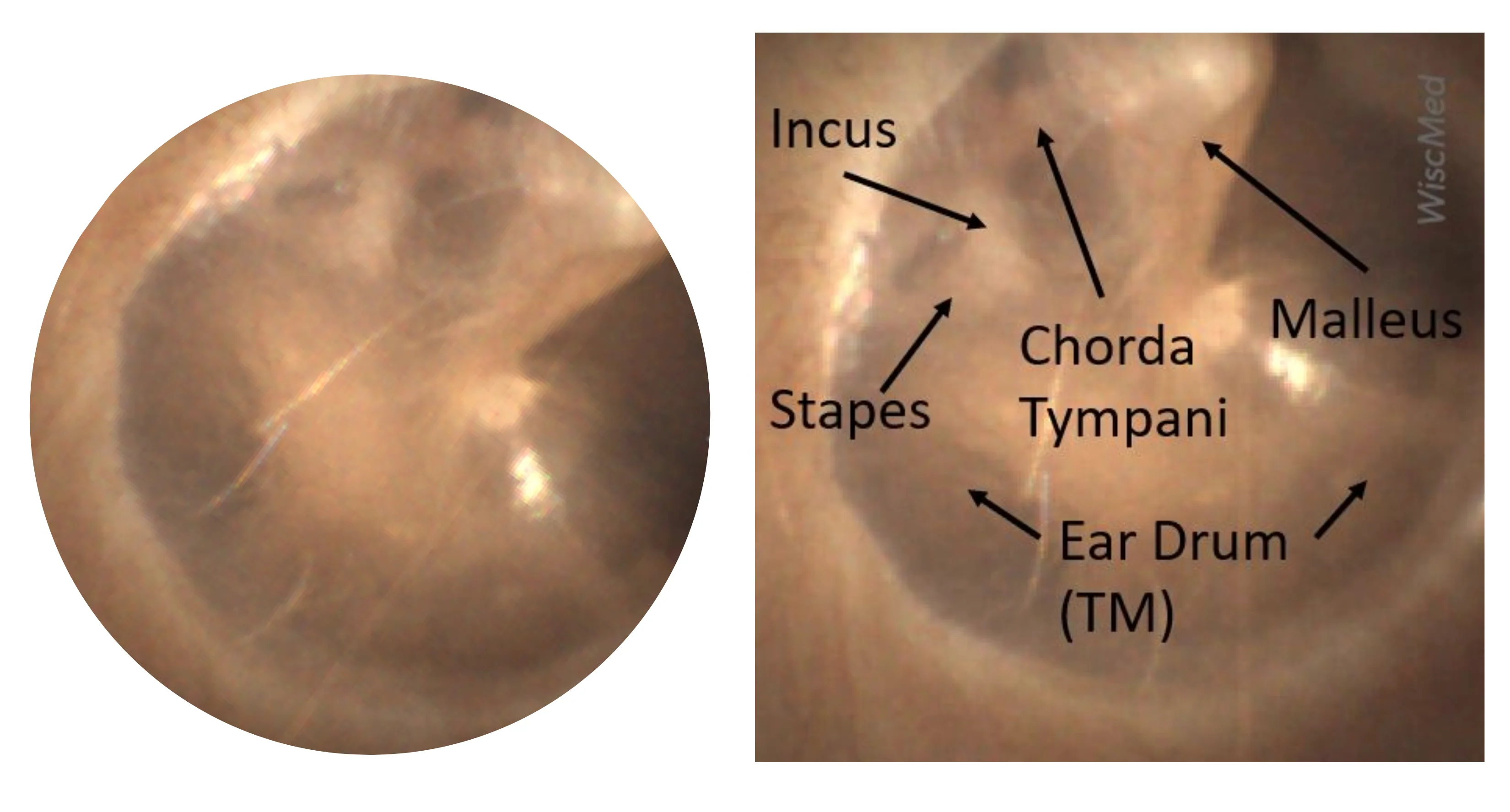
Glue ear means there is fluid behind the eardrum in the middle ear, often after a cold or after an ear infection has cleared. The eardrum and tiny hearing bones need air and freedom of movement to transmit sound well. When fluid is sitting there, sound gets dampened.
Glue ear is most common in babies, toddlers, and preschoolers because their Eustachian tubes are shorter and more likely to get blocked. It can happen at any age, but it is a classic “little kid” problem.
Glue ear vs. an acute ear infection
Parents often tell me, “He is acting fine, so it cannot be an ear infection.” That can be true. Here is the simple contrast:
- Acute ear infection (acute otitis media): usually a sudden illness with ear pain, irritability, trouble sleeping, and sometimes fever (but not always). Sometimes there is drainage if the eardrum perforates.
- Glue ear (OME): typically no fever and no severe ear pain. The main issue is ongoing fluid and the hearing changes that come with it.
Kids can still have mild ear discomfort or a sense of “fullness,” but glue ear is more about muffled hearing and persistence than about acute pain.
Why glue ear happens
Behind the eardrum is a small air-filled space connected to the back of the nose by the Eustachian tube. In young kids, that tube is shorter, more horizontal, and more likely to get swollen shut during colds.
Common reasons fluid lingers:
- After a cold or viral upper respiratory infection
- After an ear infection when the infection is gone but the fluid remains
- Allergies that cause chronic nasal inflammation in some kids
- Enlarged adenoids that block airflow and drainage behind the nose
Important: glue ear is not a sign you “missed” an infection or did something wrong. It is a very common mechanical problem in little ears.
How it’s diagnosed
Glue ear is diagnosed in the clinic. It is not something you can reliably see at home.
- Ear exam (otoscopy): your clinician looks for signs of fluid, like a dull eardrum, bubbles, or reduced movement.
- Tympanometry: a quick test that measures how the eardrum moves and can support the diagnosis of fluid.
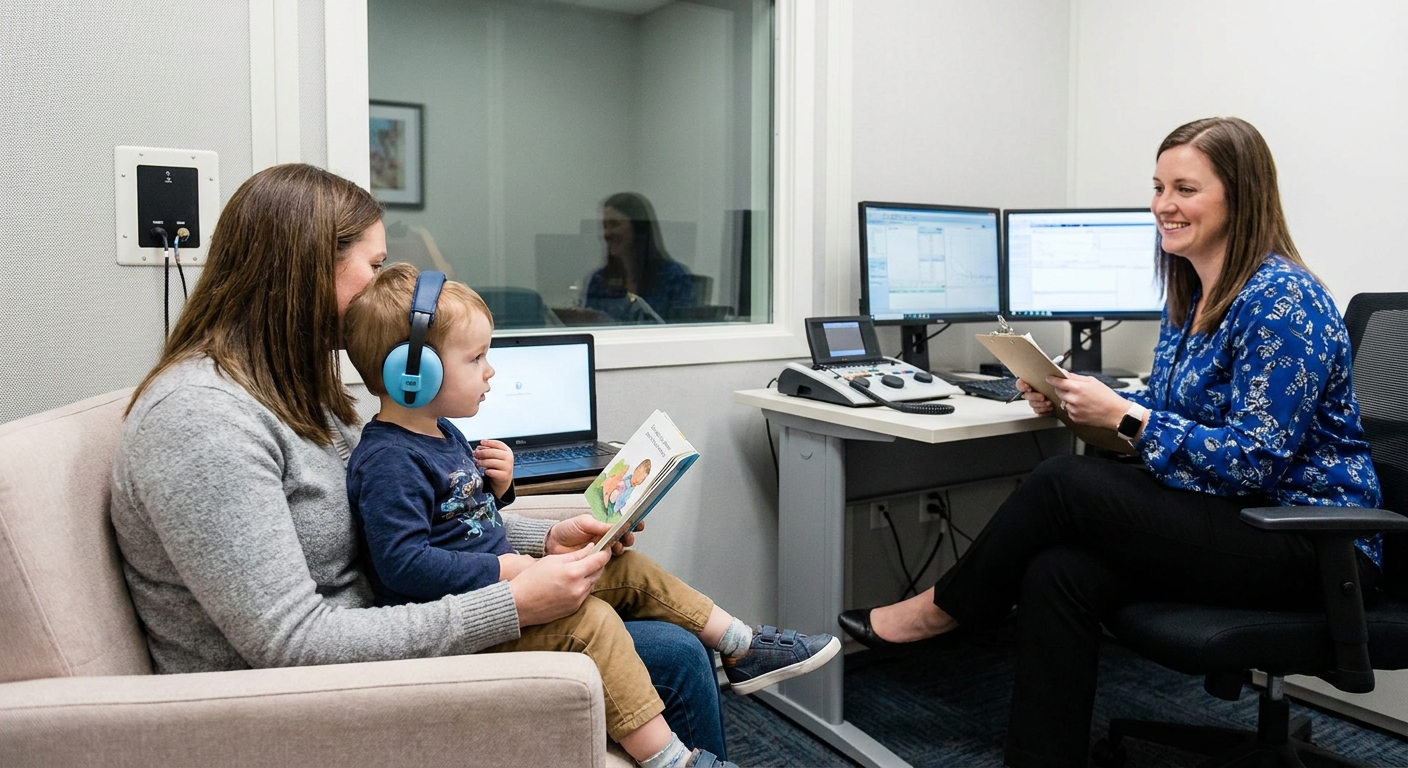
- Hearing test (audiology): age-appropriate testing to see how much hearing is affected.
A lot of kids with glue ear look completely fine. That is why the hearing and classroom clues matter.
Signs parents notice at home
Glue ear can be subtle. Many children look perfectly well, especially once the cold has passed. These are the clues I want parents to watch for:
- Muffled hearing or acting like sounds are “far away”
- Asking for repetition (“Huh?” “What?”) more than usual
- Turning up volume on TV or tablet
- Not responding when called, especially from another room
- Speech sounding different (nasal, louder than usual, or less clear)
- New frustration or tantrums that seem linked to communication
- Ear popping complaints in older toddlers and preschoolers
- Clumsiness that feels new or a mild balance change
Balance note: mild “wobbly” moments can happen, but significant dizziness or vertigo is not typical and should be checked out.
A quick reality check: toddlers are tiny chaos machines and they fall a lot. What I am looking for is a noticeable change in steadiness that lines up with hearing changes and a recent string of colds.

Signs at daycare or school
Classroom sound is hard even with perfect hearing. With glue ear, kids may struggle more with:
- Following multi-step directions
- Hearing quiet speech sounds, especially high-frequency consonants that carry clarity
- Group time when the teacher is farther away
- Seeming “distracted” or “not listening”
If a teacher says, “They do great one-on-one but seem lost in a group,” that is a classic glue ear hint.
Does glue ear affect speech?
It can, especially if it is persistent or happens repeatedly. Think of it as listening through a wall. Your child may still hear you, but speech sounds are less crisp. Over time, that can lead to:
- Slower speech development in toddlers who are still building their sound library
- Less clear pronunciation
- Shorter sentences or less talking because communication feels harder
Many children catch up quickly once hearing is back to normal. The goal is steady follow-up and a plan if it is not improving.
Who needs closer follow-up
Some children have higher stakes if hearing is reduced, even temporarily. Your clinician may monitor more closely or move faster to hearing testing or ENT if your child has:
- Known speech or language delay
- Developmental differences where hearing clarity is especially important for progress
- Down syndrome
- Cleft palate or certain craniofacial differences
- Known permanent hearing loss
If you are not sure whether your child is in a higher-risk group, ask. It can change the timeline.
What to do first: a calm timeline
Most fluid after a cold or ear infection clears on its own. In many pediatric practices, the initial approach is watchful waiting if your child is otherwise well.
Guidelines often suggest monitoring for about 3 months from onset (or from diagnosis) in otherwise low-risk children, because many cases resolve without treatment.
An example watch-and-check plan
- First 4 to 6 weeks: fluid is very common. Monitor symptoms and schedule a recheck if you are concerned.
- Around 8 to 12 weeks: if fluid is still present, many clinicians consider a formal hearing evaluation or closer follow-up.
- By around 3 months: persistent fluid usually triggers a clearer plan, which may include hearing testing, speech screening, or an ENT referral depending on your child’s age, risk factors, and symptoms.
These are general benchmarks and can vary by age and risk. But they can help you avoid the two extremes: spiraling on day three or waiting half a year while everyone struggles.
When to request a hearing check
You do not need to wait until speech is clearly behind to ask about hearing. Consider asking your pediatrician about a hearing screen or audiology referral if:
- Glue ear (or suspected fluid) has lasted about 3 months
- You notice muffled hearing that affects daily life
- Your child has speech delay or a sudden slowdown in new words
- There are learning or behavior concerns that might be hearing-related
- Your child is in a higher-risk group for speech and language impacts
Audiology testing in kids is usually playful and non-invasive. They can also measure how the eardrum moves using tympanometry, which helps confirm fluid.

What you can do at home
There is no magic home trick that reliably drains middle ear fluid overnight. I know, I would have purchased it in bulk years ago.
But you can make life easier while your child is hearing less clearly:
- Get close before you speak and make eye contact first.
- Use simple, clear phrases and ask your child to repeat key instructions.
- Reduce background noise (turn off TV or music during directions).
- Tell teachers what you are seeing so they can seat your child closer and check understanding.
- Keep a short symptom log: dates of colds, “what?” frequency, any balance concerns, any speech changes.
About medicines: routine decongestants are not recommended for young kids and do not reliably help OME. And for glue ear alone, guidelines generally do not recommend routine antibiotics, antihistamines, steroids, or nasal sprays unless there is another diagnosis (like an acute infection or clearly significant allergies) that your clinician is treating.
Myths and misconceptions
- It is not “water in the ear”: glue ear is fluid behind the eardrum, not water in the ear canal from bathing or swimming.
- Flying can be uncomfortable: pressure changes can worsen ear fullness temporarily, but flights do not “cause” glue ear by themselves.
When to see ENT
ENT referral is not a sign of failure. It is just the next step when the middle ear will not cooperate.
Your pediatrician may suggest ENT if:
- Fluid persists despite observation (often around the 3-month mark in low-risk children, sooner in higher-risk children)
- Hearing loss is documented or strongly suspected
- Speech or language concerns are present
- Recurrent ear problems keep stacking up
- There are structural concerns with the eardrum or other exam findings
ENT can confirm what is happening, look for contributing issues like adenoids, and talk through options including ongoing observation versus ear tubes.
Ear tubes: the simple explainer
Ear tubes (tympanostomy tubes) are tiny tubes placed in the eardrum to help ventilate the middle ear and prevent fluid from building up.
When tubes come up
Tubes are often considered when:
- Persistent middle ear fluid is not resolving and is affecting hearing
- There is a pattern of recurrent infections with fluid in between
- A child has higher stakes for hearing clarity due to speech, learning, or developmental factors
Tubes are not for every child with fluid. Many kids improve with time. But for some, tubes can quickly restore hearing and reduce the constant “underwater” listening experience.
If you want the full surgical pros, cons, and recovery details, we cover that separately on our ear tubes page.
Call sooner for these red flags
Glue ear itself is usually not an emergency, but you should contact your pediatrician promptly if your child has:
- Severe ear pain, fever, or looks very ill (could be an acute infection)
- Ear drainage
- Sudden hearing loss or a big change in responsiveness
- Persistent dizziness, vomiting, or a significant new balance problem
- Speech regression or loss of previously gained skills
Quick parent checklist
If you are reading this at an exhausted hour with a nagging feeling something is off, here is your simple next move:
- Think glue ear if there is muffled hearing without acute pain after a cold.
- Track symptoms for a couple of weeks and book a recheck if it is not improving.
- Ask about a hearing test if concerns are real or fluid is lingering.
- Loop in daycare or school because the classroom is where mild hearing loss shows itself.
- Consider ENT if fluid persists or hearing and speech are being impacted.
You are not overreacting by paying attention to hearing. Clear input is how kids build language, confidence, and behavior that looks like “listening.” Sometimes the fix is simply time. Sometimes it is a hearing check and a plan. Either way, you deserve a plan.
Sources
- American Academy of Otolaryngology, Clinical Practice Guideline: Otitis Media with Effusion (update)
- American Academy of Otolaryngology, Clinical Practice Guideline: Tympanostomy Tubes in Children (update)
- American Academy of Pediatrics and American Academy of Family Physicians guidance on otitis media management
- Centers for Disease Control and Prevention (CDC), child hearing and communication milestones
Sarah Mitchell
Sarah Mitchell is a Registered Pediatric Nurse and a mother of three who has spent over a decade helping families navigate the beautiful, chaotic early years of childhood. She combines evidence-based medical knowledge with real-world parenting experience to offer practical, compassionate advice. At Awesome Parent, Sarah's mission is to help exhausted parents find solutions, trust their instincts, and finally get some sleep.