Growing Pains in Kids

Sarah Mitchell
Sarah Mitchell is a Registered Pediatric Nurse and a mother of three who has spent over a decade helping families navigate the beautiful, chaotic early years of childhood. She combines evidence-based medical knowledge with real-world parenting experience to offer practical, compassionate advice. At Awesome Parent, Sarah's mission is to help exhausted parents find solutions, trust their instincts, and finally get some sleep.
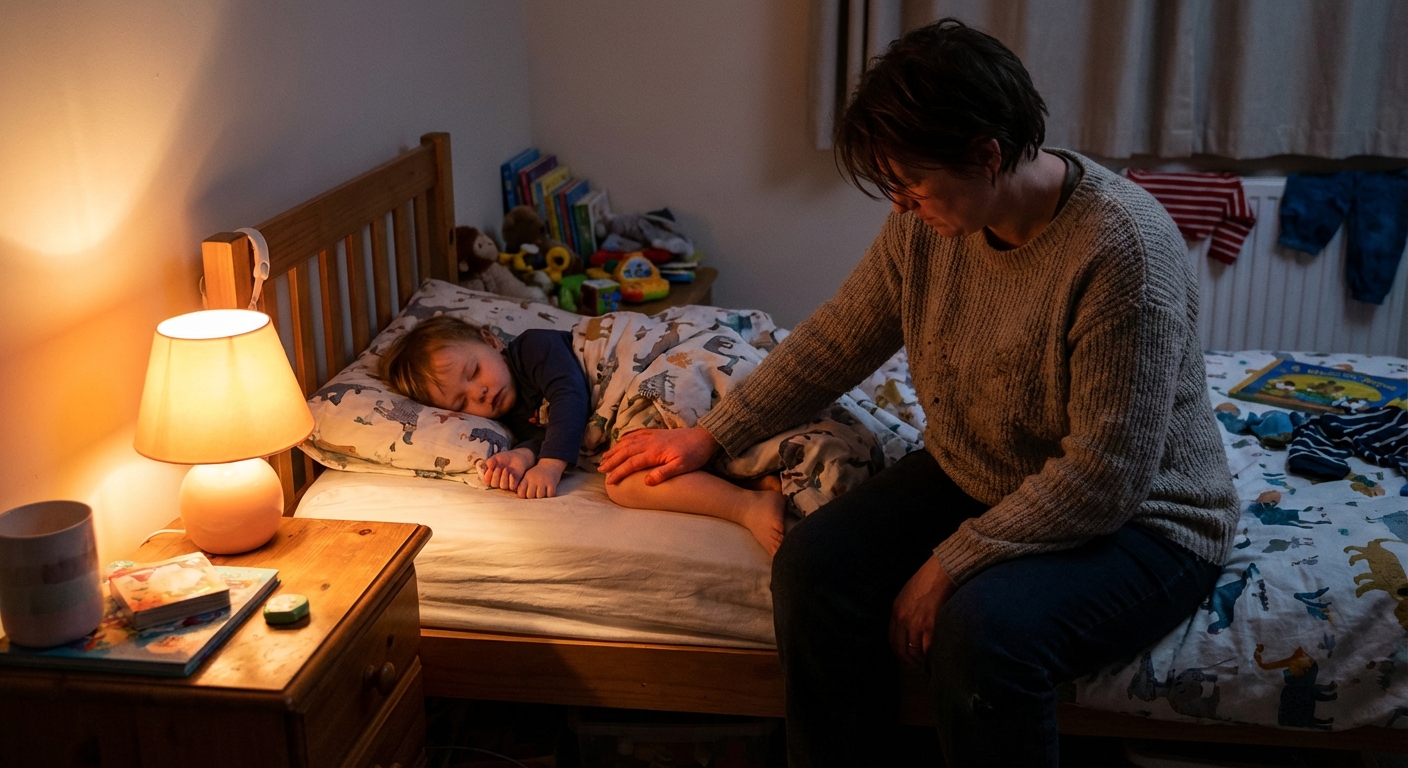
If your child wakes up crying about leg pain at night but is running around like nothing happened by morning, you are in very familiar territory. “Growing pains” are a common reason kids complain of aches in their legs, and they can be dramatic, exhausting, and confusing all at once.
Let’s walk through what growing pains actually are, when they typically show up, how to tell when something needs a closer look, and what you can do tonight to help your kid feel better.
What growing pains are (and are not)
Despite the name, growing pains are not proven to be caused by bones “growing.” Kids do grow rapidly in early childhood, but research has not shown a direct link between growth spurts and the pain.
Most experts think growing pains are a type of benign musculoskeletal pain, meaning they are real pain but not caused by an injury or disease. Common theories include muscle fatigue from a busy day, a child’s nervous system being more sensitive to pain, or differences in how a child’s muscles and joints handle activity.
What growing pains usually are
- Intermittent aches or throbbing pains, usually in the legs
- More common after active days
- Most noticeable in the late afternoon, evening, or overnight
- Not associated with swelling, redness, warmth, or a limp the next day
What growing pains are not
- An emergency, in most cases
- A sign that bones are “breaking down” or that your child is damaging their body by playing
- The cause of ongoing daytime pain, persistent limping, or joint swelling
- Pinpoint pain over one specific bone that you can tap and reliably reproduce
Typical age range and timing
Growing pains most commonly show up in preschool and elementary-age kids. Many families notice them between ages 3 and 12. They are often reported during the early school years, but timing varies a lot from child to child.
Why does it happen at night?
The classic pattern is pain in the evening or that wakes a child after they have fallen asleep. A few reasons may be at play:
- Muscle fatigue: Kids go hard all day, then notice the discomfort once they finally slow down.
- Less distraction: At night, kids are tired and quieter, so pain can feel bigger.
- Nighttime effect: Many types of aches may feel worse at night.
Many children have episodes that come and go over months or even years, with long stretches of no pain in between.
Common symptoms
Growing pains have a pretty specific pattern. Many parents say, “It’s always at bedtime,” or “It’s both legs,” or “They’re fine in the morning.” Those details matter.
Where kids feel it
- Calves
- Behind the knees
- Thighs
- Along the shin area (more the muscles alongside the shin than a single, pinpoint spot on the bone)
What it feels like
- Aching, cramping, or throbbing pain
- Often in both legs, though it can alternate sides
- Lasts minutes to a couple of hours
- Improves with comfort measures like rubbing or warmth
What you usually do not see
- No fever
- No joint swelling
- No redness or warmth
- No ongoing limp or refusal to walk the next day
Growing pains vs something else
Here’s the reassuring part: growing pains are common and usually harmless. Here’s the important part: not every leg pain is a growing pain. If something about your child’s symptoms does not match the typical pattern, it is worth checking in with your pediatrician.
Signs it likely is growing pains
- Pain happens in the evening or at night
- Pain is in the muscles (calves, thighs, behind knees) more than in a specific joint
- Your child is back to normal by morning and plays normally
- No swelling, redness, or warmth
- No injury you can point to
Call your pediatrician soon if
- Persistent pain during the day or pain that is getting steadily worse
- Limping, refusing to walk, or pain that limits activity
- Swollen, red, or warm joints (knees, ankles, hips)
- Pain that is always in the same spot, especially if it feels like it is right on a bone
- Morning stiffness that takes time to loosen up
- Unexplained bruising or frequent nosebleeds
- Weight loss, fatigue, or decreased appetite
- Fever or recent significant illness
Get urgent or emergency care now if
- Your child has severe pain after an injury or you suspect a fracture
- Your child cannot bear weight or has sudden, intense hip or knee pain
- There is a high fever with inability to move a joint, significant swelling, or extreme tenderness
- Your child seems very ill, unusually drowsy, or difficult to wake
If your gut is telling you this is not “just growing pains,” trust that. You are not overreacting by asking for an exam.
How to help at home
Most kids respond really well to simple comfort measures. The goal is to relax tired muscles and help your child feel safe and soothed so everyone can get back to sleep.
1) Gentle massage
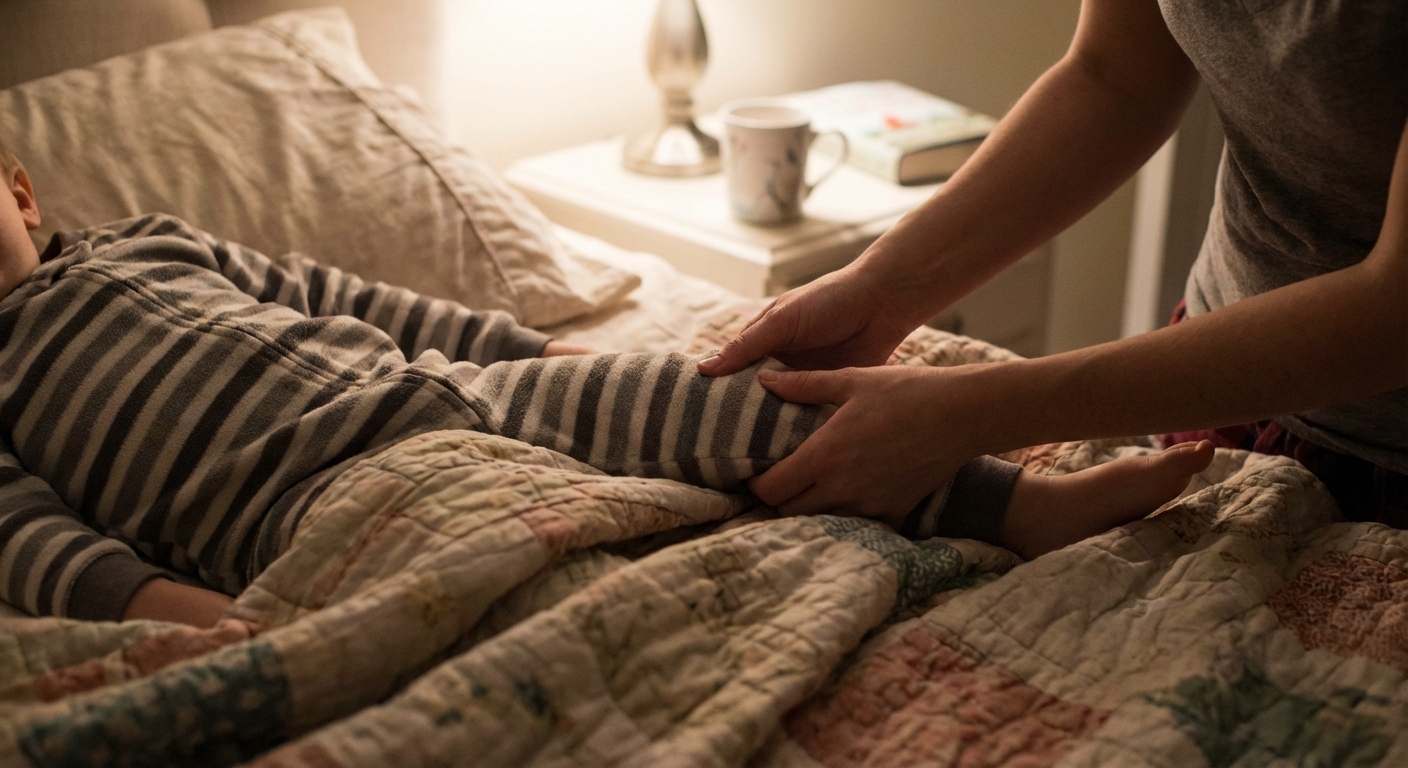
Use slow, firm but gentle pressure on the calves, thighs, or behind the knees. Ask your child where it hurts and let them guide you. Many kids calm down quickly once they feel your hands on the sore area.
2) Warmth
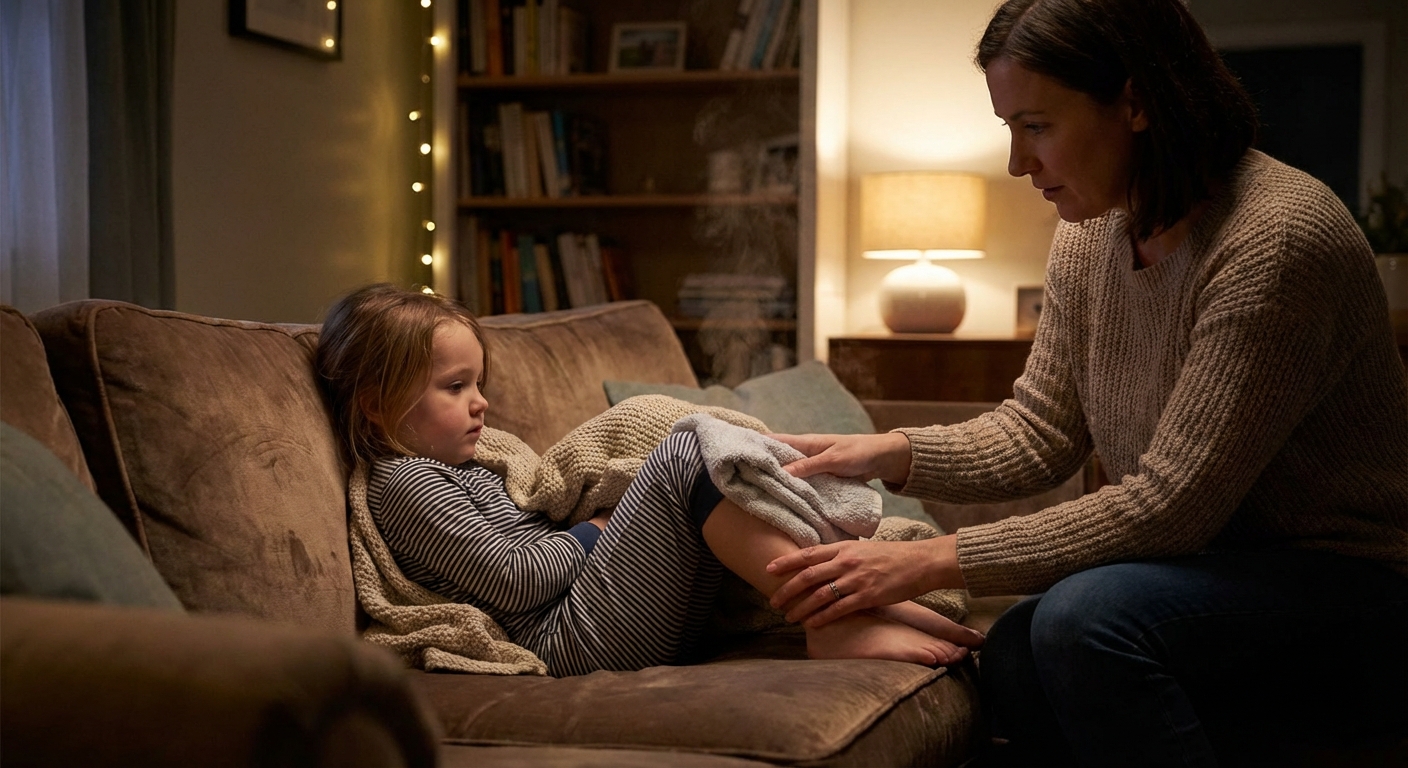
Try a warm compress or heating pad on a low setting for 10 to 15 minutes. Always keep a barrier between heat and skin and do not let a child sleep with an active heating pad.
3) Stretching before bed
Light stretching can help, especially after very active days.
- Calf stretch: With the knee straight, gently flex the foot upward toward the shin for 20 seconds, then relax. Repeat 2 to 3 times per leg.
- Hamstring stretch: With the child lying on their back, lift one leg gently and keep the knee slightly bent, holding 15 to 20 seconds. Repeat 2 times per leg.
- Quad stretch: With the child on their tummy, gently bring the heel toward the buttock until a mild stretch is felt in the front of the thigh. Hold 15 seconds. Repeat 2 times.
Keep it easy. Stretching should never be painful.
4) A predictable bedtime reset
If your child tends to spiral once the pain starts, a simple script helps: “Your legs are hurting. That happens sometimes. I’m going to rub them and use warm heat, and it will pass.” Kids borrow our calm. Even when it is 2:47 AM.
5) Over-the-counter pain relief, when appropriate
If comfort measures are not enough and your child is truly miserable, ask your pediatrician about using an age-appropriate dose of acetaminophen or ibuprofen. Use dosing instructions based on your child’s weight, not just age, and avoid giving multiple products with the same active ingredient.
- No aspirin for children (unless your clinician specifically tells you to use it).
- Ibuprofen is generally not used in babies under 6 months.
- If your child is vomiting, dehydrated, or not drinking well, check with your clinician before using ibuprofen.
If your child needs medication frequently for leg pain, that is a good reason to check in with your clinician to confirm the diagnosis.
Possible causes
We do not have one single proven cause, but a few patterns show up again and again:
- Busy, high-activity days: Running, jumping, climbing, sports, playground marathons.
- Muscle tightness: Some kids have naturally tighter calves and hamstrings.
- Family history: Growing pains often run in families.
- Normal variation in pain sensitivity: Some kids feel body signals more intensely.
Growing pains are not caused by your child being “out of shape,” and they are not your fault. Kids’ bodies are constantly adapting, and sometimes that comes with some noisy complaints at bedtime.
What else it could be
If your child’s symptoms do not fit the classic pattern, your pediatrician may consider other possibilities. This does not mean something scary is happening, it just helps to know there are other common explanations.
- Overuse injuries (like shin splints or tendon irritation), especially with sports
- Restless legs or nighttime leg discomfort (sometimes associated with low iron)
- Joint or inflammatory issues if there is swelling, warmth, morning stiffness, or a limp
- Foot mechanics (flat feet, hypermobility) that can contribute to leg fatigue
Frequently asked questions
Can growing pains happen in one leg?
They are more commonly in both legs or they alternate, but some kids complain of one side at a time. Pain that is consistently in the exact same spot, especially over a bone, should be checked.
Can growing pains happen in the arms?
Legs are far more typical. Recurring arm pain is worth discussing with your pediatrician, especially if it affects a joint, function, or shows up with swelling or fever.
How long do growing pains last?
An individual episode can last minutes to a couple of hours. The overall pattern may come and go for months or years, often fading as kids get older.
Will my child have any long-term problems?
Growing pains do not cause joint damage or long-term disability. The biggest “side effect” is usually lost sleep and worried parents.
Should I get blood work or X-rays?
Not usually if the story and exam fit classic growing pains. Tests are more likely when there are red flags like swelling, persistent daytime pain, fever, limping, or abnormal exam findings. Your pediatrician can guide what is appropriate.
A simple plan for tonight
- Do a quick check: no injury, swelling, redness, fever, and they are not limping the next morning.
- Offer water and a quick bathroom trip, because bedtime is bedtime.
- Massage the sore area for a few minutes.
- Add warmth for 10 to 15 minutes.
- Try one or two gentle stretches.
- If pain is severe, unusual for your child, or keeps happening, consider appropriate pain relief and call your pediatrician for guidance.
Quick tip for tracking
If you are planning to call or visit, jot down a few notes: what time it happened, which leg (or both), the exact location, what your child did that day, how long it lasted, and what helped. That little log can make the appointment much more efficient.
Growing pains are real, and your child is not being dramatic, even if the timing is impressively inconvenient. With a consistent routine and a quick red-flag check, most families can manage them confidently.
Parenting reality check: If you needed to Google this at night with one eye open, you are doing great. Keep the plan simple, keep your calm voice handy, and if anything feels off, get your kid checked. You never have to choose between reassurance and safety.