Eye blinking, throat clearing, shoulder shrugging? Here’s how to tell provisional tics from other repetitive behaviors, what usually happens over time, and...
Hair Pulling in Toddlers: Habit vs. Trichotillomania

Sarah Mitchell
Sarah Mitchell is a Registered Pediatric Nurse and a mother of three who has spent over a decade helping families navigate the beautiful, chaotic early years of childhood. She combines evidence-based medical knowledge with real-world parenting experience to offer practical, compassionate advice. At Awesome Parent, Sarah's mission is to help exhausted parents find solutions, trust their instincts, and finally get some sleep.
If you’ve ever looked over and seen your toddler calmly twirling hair around a finger or yanking at a little tuft while staring off, you’ve probably had two thoughts at once: Is this normal? and Please do not make yourself bald.
Hair pulling comes up in pediatric offices and parenting conversations more than you’d think, and most of the time it’s a short-lived habit that fades as kids grow. But sometimes it can turn into repeated pulling that causes noticeable hair loss and needs support. Let’s sort out what’s typical, what’s worth a closer look, and what you can do tonight that actually helps.
Hair twirling vs. hair pulling
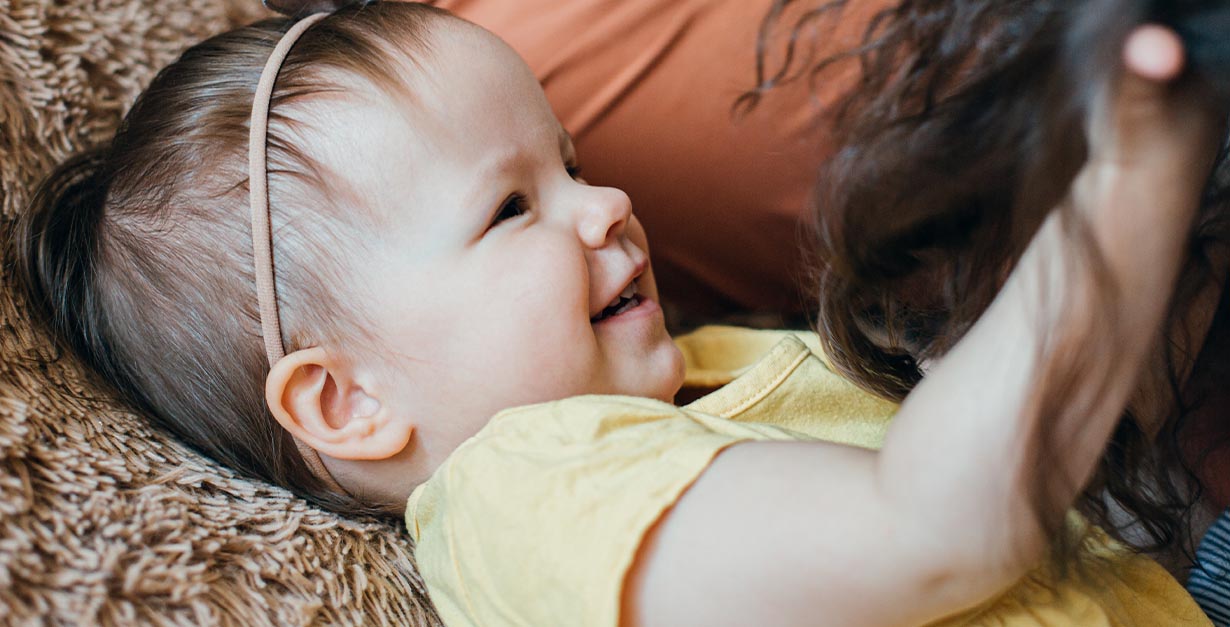
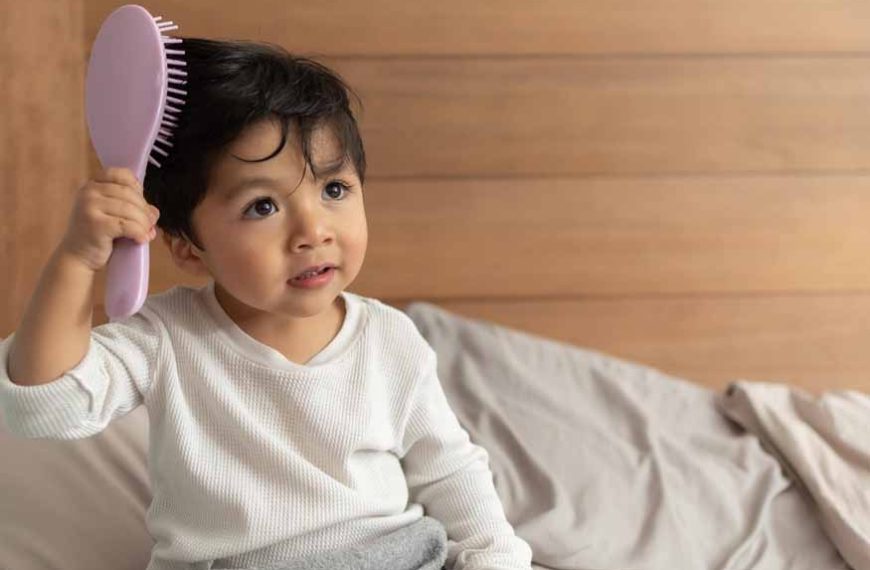
Toddlers are sensory explorers. Their hands are almost always busy, and repetitive little movements can be surprisingly calming. Common, usually developmentally typical behaviors include:
- Hair twirling (around a finger, especially when tired)
- Light tugging during story time, car rides, or while falling asleep
- Playing with hair texture after a bath or when hair is newly brushed
- Occasional pulling during frustration, like when a toy will not cooperate
For many toddlers, these behaviors are in the same family as thumb-sucking or rubbing a tag on a blanket. It’s self-soothing. It’s not a parenting fail. And it often improves as language and coping skills grow.
When to worry
Hair pulling can move from “quirky habit” to “we should talk to someone” when there is a pattern, distress, or physical impact.
Signs it may be more than a phase
- Visible hair loss, thinning patches, or broken hairs that do not match normal shedding
- Repeated pulling that happens many times a day or is hard to interrupt
- Pulling that seems driven, like your child looks “stuck” in it and gets upset if stopped
- Scalp irritation, scabs, redness, or signs of infection
- Pulling eyelashes or eyebrows (less common, often more concerning)
- Pulling plus other big stress signs, like sleep changes, intense separation anxiety, or frequent meltdowns beyond their usual
If you are seeing bald spots or your toddler is pulling hair out by the root, that is a good time to check in with your pediatrician. Not because you should panic, but because earlier support is often easier and gentler than waiting until the habit becomes more entrenched.
Trichotillomania basics
Trichotillomania is a condition where a person repeatedly pulls out hair, often as a way to manage tension, boredom, or uncomfortable sensations. It is classified under obsessive-compulsive and related disorders (DSM-5-TR). In little kids it can look more like a self-soothing habit that has gotten sticky.
One important note: diagnosis in very young children can be tricky, and it is something a qualified clinician should sort out. Hearing the word “trichotillomania” also does not mean your toddler has a lifelong mental health diagnosis. In preschoolers, hair pulling can be transient and respond well to supportive behavioral strategies.
How it can look different from twirling
- More consistent and repetitive, often in the same spot
- Noticeable hair breakage or missing hair
- Pulling episodes that happen during quiet focus, stress, or transitions
- Difficulty stopping even with distraction
Some children also play with the pulled hair. A smaller subset may put hair in their mouth or swallow it (trichophagia). If you suspect hair ingestion, call your pediatrician promptly. And if there are symptoms like vomiting, belly pain, poor appetite, constipation, or a swollen belly, seek urgent medical evaluation.
Age and patterns
Toddlers and preschoolers can have phases of repetitive behaviors, especially around big developmental leaps.
- Ages 1 to 3: Hair twirling and occasional pulling often track with self-soothing, teething discomfort, fatigue, or big feelings. If there is no hair loss and it is easy to redirect, you can usually start with at-home supports.
- Ages 3 to 5: Patterns become more meaningful. If there are bald patches, the behavior is frequent, or it is tied to anxiety, an evaluation can be very helpful.
- Any age: If you see patchy hair loss, skin injury, eyebrow or eyelash pulling, or hair eating, it is worth calling sooner rather than later.
Also, keep in mind that not all hair loss is from pulling. Conditions like tinea capitis (scalp fungal infection), alopecia areata (autoimmune hair loss), traction from tight hairstyles, and nutritional deficiencies can mimic pulling-related loss. A clinician can help you sort it out.
- Tinea capitis often comes with scaling, itch, broken hairs that look like “black dots,” or swollen lymph nodes in the neck.
- Alopecia areata often causes smooth, round bald patches with little to no scaling.
- Nutritional deficiencies (for example iron deficiency, and less commonly zinc deficiency) can contribute to increased shedding and thinning and should be evaluated by a clinician.
Why toddlers pull
Hair pulling is rarely random. Most kids are meeting a need, even if the method is not ideal.
Common contributors
- Sensory seeking: The feel of hair between fingers can be regulating, especially for kids who crave tactile input.
- Self-soothing: Many kids do it when falling asleep, watching a show, or cuddling.
- Stress or anxiety: New sibling, daycare changes, travel, potty training pressure, or family stress can all show up as repetitive behaviors.
- Boredom and idle hands: Long car rides and screen time are classic triggers.
- Itchy scalp or skin irritation: Eczema, dry scalp, cradle cap remnants, or product irritation can start as scratching and turn into pulling.
- Big emotions without words: Toddlers often use their bodies to express what they cannot explain.
If your child started pulling after a life change, it does not mean the change was “bad.” It means their nervous system is doing its best to adjust.
What to do at home
The goal is to reduce pulling opportunities and build replacement skills, not to shame or punish. In my experience, hair pulling responds best to calm, boring consistency.
1) Name it, gently
Use a neutral script:
- “I see your hands are pulling your hair. Hair stays on your head.”
- “Let’s help your hands find something else.”
Try to avoid big reactions. Big reactions can accidentally add attention, which can strengthen habits.
2) Offer a busy-hands replacement
Give the hands something that meets the same need:
- A soft sensory ball
- A fidget ribbon or textured fabric square
- Play dough
- A small stuffed animal with tags or interesting texture
- A chewable tool made for chewing, with pediatric guidance and close supervision (avoid choking hazards and do not use for sleep)
Pro tip from the 3 AM parenting trenches: keep one option where pulling happens most, like the car seat or bedtime chair.
3) Make high-risk moments easier
- Bedtime: Add a soothing routine that keeps hands occupied, like holding a lovey with both hands, rubbing lotion into hands, or squeezing a soft ball while you read.
- Screen time: If pulling happens during shows, try cutting back temporarily or pairing screens with a “hands job,” like holding a sensory ball for the whole episode.
- Transitions: Use a predictable warning tied to the moment: “Two more minutes of show, then we hold your sensory ball and go brush teeth.”
4) Try simple protective styles
For children with longer hair, a simple style can reduce access:
- A loose braid
- A gentle ponytail (not tight)
- A soft headband if tolerated
Avoid tight styles that cause traction and can worsen hair breakage.
5) Check the scalp
If there is itching, flaking, or redness, address that piece too. A pediatrician can help you decide if you are dealing with dry scalp, eczema, or infection.
6) Track patterns for a week
If pulling is frequent, a little detective work helps. Try a simple ABC log:
- A (antecedent): What happened right before (screen time, bedtime, car ride, separation, boredom, a “no”)?
- B (behavior): What did pulling look like (twirling vs pulling, where on the scalp, how long)?
- C (consequence): What happened after (comfort, attention, a toy offered, nap started)?
This is not about blaming yourself. It’s about spotting triggers, measuring progress, and giving your pediatrician useful information if you need extra help.
7) Loop in other caregivers
If daycare, babysitters, or grandparents see the pulling too, share the same neutral script and the same replacement tool plan. Consistency helps habits fade faster.
What not to do
- Do not punish or use humiliation. Shame increases stress, and stress increases pulling.
- Do not repeatedly say “stop” without giving an alternative. Little kids need a replacement action.
- Do not yank hands away unless you are preventing injury. Gentle blocking plus redirection works better.
- Do not assume it’s “just behavioral” if you see patchy hair loss. Rule out skin and hair conditions too.
Sleep safety note
If pulling happens mostly at night, focus first on routines, hair access (loose braid), and safe “busy hands” comfort objects that are already appropriate for your child’s age and sleep setup. Avoid gloves or mittens for sleep unless your pediatrician specifically advises it. Also avoid anything that can wrap, tighten, or tangle around fingers, hair, or the neck.
When to call the pediatrician
You do not need to wait for a full bald spot to ask for help. Reach out if:
- You see patchy thinning, broken hairs, or bald spots
- Your child pulls daily and it is hard to interrupt
- There are scabs, bleeding, swelling, or tenderness
- Your child pulls eyelashes or eyebrows
- You suspect hair eating or frequent hair in the mouth
- Pulling is paired with significant anxiety, sleep disruption, or major behavior changes
Helpful questions to ask
- “Could this be a scalp condition like eczema or a fungal infection?”
- “Do you see signs that the hair loss pattern matches pulling?”
- “Should we see dermatology for the hair and scalp?”
- “Would a child psychologist or behavioral therapist help?”
- “Are there occupational therapy strategies if this seems sensory-driven?”
A pediatrician may look at the scalp, ask about triggers, and check for signs of other causes of hair loss. Sometimes photos at home are helpful, especially if pulling happens in short episodes you cannot recreate in the exam room.
Professional supports
If hair pulling is persistent or causing hair loss, professional support is not overreacting. It is just using the tools available.
Dermatology
A dermatologist can confirm the type of hair loss and rule out conditions like fungal infections or alopecia areata. They can also help treat scalp irritation that may be fueling the behavior.
Child psychology or behavioral therapy
For older preschoolers and beyond, structured behavioral approaches are often used. One common evidence-based approach for body-focused repetitive behaviors is habit reversal training, adapted to the child’s age. For toddlers, therapy often focuses more on parent coaching, routines, and reducing triggers.
Occupational therapy (OT)
If sensory needs are a major driver, OT can help identify what your child is seeking and build a “sensory diet” of safe, effective replacements.
If you are not sure where to start, your pediatrician can guide you based on whether this looks more skin-related, sensory-related, anxiety-related, or a mix.
Quick checklist
Use this as a simple gut-check. It is not a diagnosis, just a way to decide next steps.
| More likely a common habit | More likely needs evaluation |
|---|---|
| Mostly twirling or light tugging | Hair is pulled out, not just touched |
| Happens when sleepy and stops with cuddles or a toy | Hard to interrupt and happens across many settings |
| No bald spots or scalp injury | Patchy thinning, broken hairs, scabs, or bleeding |
| Fades over weeks to months | Lasts months or worsens over time |
| One of several soothing habits | Main coping tool during stress or anxiety |
Bottom line
Most toddler hair twirling is normal self-soothing. Even some hair pulling can be a short phase. The line you do want to pay attention to is patterned pulling that causes hair loss, skin injury, or distress, or pulling that is paired with big anxiety signs.
If you are worried, trust that instinct. A quick check-in with your pediatrician can rule out medical causes and get you the right kind of support. And in the meantime, you can start helping your child with calm redirection, busy-hands replacements, and routines that lower stress.
If you’re reading this at an unreasonable hour while your toddler finally sleeps, you are not alone. This is a solvable problem, and you do not need to solve it perfectly to make it better.
When to seek urgent care
Hair pulling itself is rarely an emergency, but seek prompt medical attention if:
- Your child may have swallowed hair repeatedly and has belly pain, vomiting, poor appetite, constipation, or a swollen belly
- The scalp shows spreading redness, warmth, swelling, pus, or your child has fever
- There is sudden, significant hair loss with other concerning symptoms
Sarah Mitchell
Sarah Mitchell is a Registered Pediatric Nurse and a mother of three who has spent over a decade helping families navigate the beautiful, chaotic early years of childhood. She combines evidence-based medical knowledge with real-world parenting experience to offer practical, compassionate advice. At Awesome Parent, Sarah's mission is to help exhausted parents find solutions, trust their instincts, and finally get some sleep.