Hand, Foot, and Mouth Disease in Toddlers

Sarah Mitchell
Sarah Mitchell is a Registered Pediatric Nurse and a mother of three who has spent over a decade helping families navigate the beautiful, chaotic early years of childhood. She combines evidence-based medical knowledge with real-world parenting experience to offer practical, compassionate advice. At Awesome Parent, Sarah's mission is to help exhausted parents find solutions, trust their instincts, and finally get some sleep.
Quick take: Hand, foot, and mouth disease (HFMD) is a common viral illness. It usually clears on its own in about 7 to 10 days. The main thing we worry about in toddlers is dehydration from painful mouth sores.
If your toddler suddenly has a fever and a weird rash on their hands or feet, your brain tends to go straight to: What is this and how fast can it go away? Hand, foot, and mouth disease (HFMD) is one of the most common culprits. It often peaks in summer and early fall in many places, but it can happen any time of year. It looks dramatic, it spreads easily, and it usually gets better on its own with supportive home care.
As a pediatric nurse and a mom who has personally done the “why is my child refusing everything except one single sip of water at 2 AM” routine, I’m going to walk you through what to look for, what the typical timeline is (usually 7 to 10 days), what actually helps at home, and when it’s time to call for backup.

What is hand, foot, and mouth disease?
HFMD is a common viral illness, most often caused by coxsackievirus or other enteroviruses. It’s very common in children under 5, but older kids and adults can get it too.
Despite the name, it is not the same as “foot and mouth disease” in animals.
HFMD is usually diagnosed based on the exam and symptoms. Testing is rarely needed unless the presentation is unusual or your clinician is concerned about something else.
How it spreads
HFMD spreads through close contact, including:
- Respiratory secretions and droplets (coughing, sneezing)
- Saliva (sharing cups, utensils, pacifiers)
- Fluid from blisters
- Stool (diaper changes and bathroom help are big ones)
- Touching contaminated surfaces and then touching the mouth, nose, or eyes
HFMD symptoms in toddlers
HFMD can look textbook, or it can be subtle. Some kids get the full classic picture, while others have only a few mouth sores or a mild rash.
Early symptoms
- Fever (often the first sign)
- Sore throat or “my mouth hurts” complaints
- Decreased appetite, fussiness, low energy
- Runny nose or mild cold symptoms sometimes
Many kids have a low to moderate fever, but call your clinician if your child has a very high fever, seems unusually ill, or you just feel like something is off.
Mouth sores
Mouth sores are a big reason toddlers stop drinking. You might see:
- Small red spots that become ulcers
- Sores on the tongue, gums, inside cheeks, and back of the throat
- Drooling in younger toddlers who don’t want to swallow
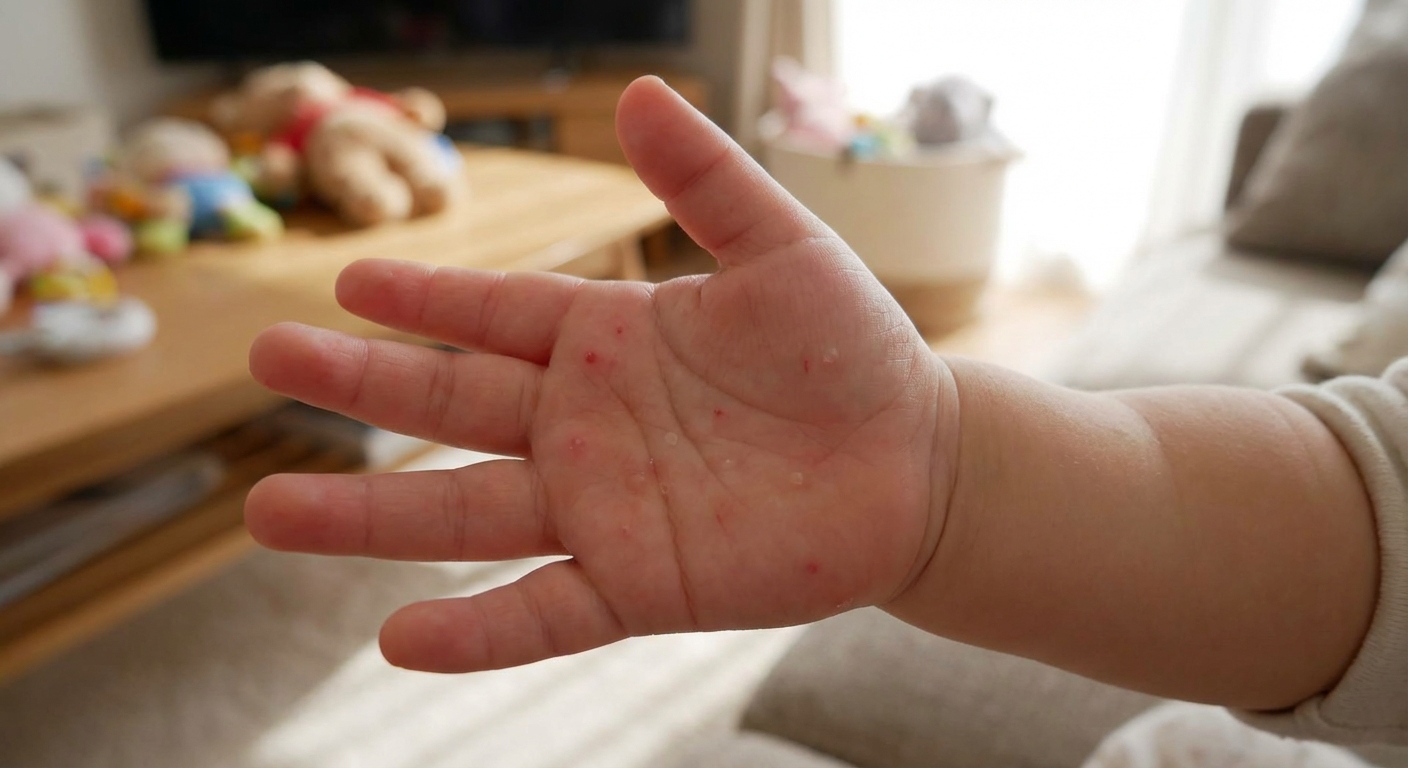
The rash (hands, feet, and beyond)
The rash often shows up on:
- Palms of the hands
- Soles of the feet
- Buttocks and diaper area
- Sometimes legs, arms, or around the mouth
Spots can look like red bumps, flat red areas, or small blisters. Some kids say their feet hurt and refuse to walk for a day or two. That can be normal, but we still want to watch hydration and pain control closely.
One extra note: certain strains (like coxsackie A6) can cause a more widespread or intense rash that looks “worse” than classic HFMD. It can still be HFMD, just a spicier version.
HFMD vs other common rashes
A lot of childhood rashes show up right when you are already sleep-deprived, so it helps to know the basic differences.
HFMD vs chickenpox
- Chickenpox is usually an itchy rash that starts on the torso and spreads, with spots in different stages (new bumps plus crusted scabs).
- HFMD commonly involves the mouth and favors hands and feet. It is not always very itchy, but it can be painful.
HFMD vs eczema flare
- Eczema tends to be chronic or recurring, often in skin folds, and looks like dry, irritated patches.
- HFMD appears more suddenly, often with fever and mouth sores, and the spots can look blister-like.
HFMD vs scarlet fever
- Scarlet fever can cause a sandpapery rash and a very sore throat, often without blisters on hands and feet.
- HFMD typically includes mouth ulcers and the hand/foot distribution.
HFMD vs impetigo
- Impetigo is a bacterial skin infection that often has honey-colored crusting, commonly around the nose and mouth.
- HFMD has viral spots and mouth ulcers. (You can have both, but they are different problems.)
If you are unsure, a quick call to your pediatrician’s nurse line is exactly what it’s for.
Timeline: how long HFMD lasts
Most toddlers are noticeably better within a week, but the full course is commonly 7 to 10 days.
Typical pattern
- Days 1 to 2: Fever, crankiness, sore throat, not eating well.
- Days 2 to 4: Mouth sores appear or worsen. Rash begins on hands/feet and sometimes diaper area.
- Days 4 to 6: Fever often resolves. Rash may look worse before it looks better. Mouth pain can still be the main issue.
- Days 7 to 10: Spots fade, blisters dry up, mouth sores heal, energy returns.
Peeling and nail changes
Some kids peel on their fingertips or toes 1 to 3 weeks later. Less commonly, a few weeks after HFMD, a fingernail or toenail can loosen or shed. It looks alarming, but it generally grows back normally. Mention it to your pediatrician, especially if there is redness, swelling, or pus around the nail.
How long is HFMD contagious?
This is the frustrating part: kids can be contagious before you even know what’s going on.
- Most contagious: During the first week of illness, especially with fever and active symptoms.
- Still possible after symptoms improve: The virus can continue to shed from the respiratory tract for days to weeks, and it can be present in stool for weeks. That means good handwashing after diaper changes matters even after the rash is gone.
In real life, exclusions do not stop every exposure, especially in group settings. What does help is staying home when actively sick, plus solid hygiene.
Home care that helps
HFMD treatment is supportive. Antibiotics do not help because it’s viral (unless your child also develops a bacterial infection, which your clinician would evaluate). Your goals at home are simple and important: control pain and prevent dehydration.
1) Fluids first
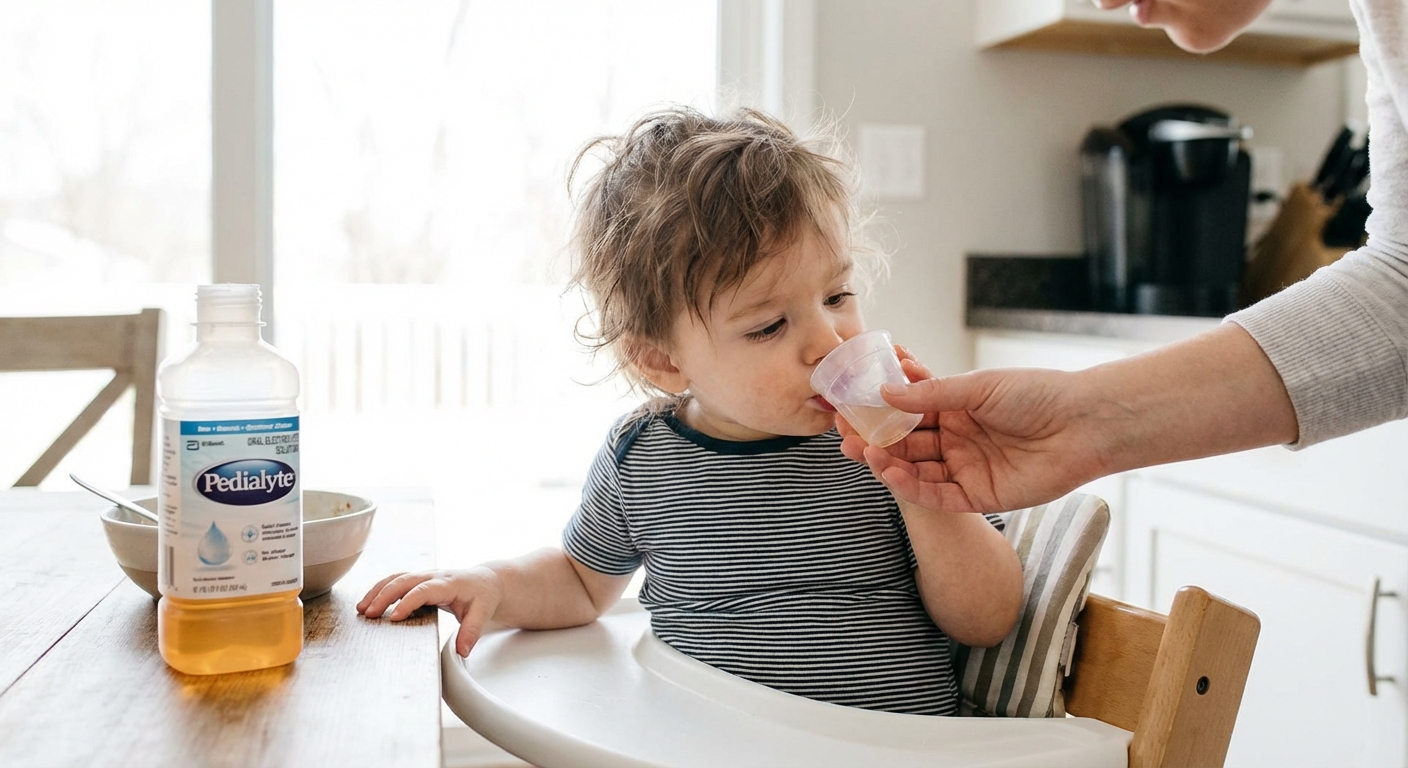
For toddlers with mouth sores, drinking can hurt. Aim for frequent small sips.
- Water is great.
- Oral rehydration solution (like Pedialyte) is helpful if intake is low.
- Cold options often feel better: popsicles, ice chips (if age-appropriate), chilled applesauce, smoothies.
- Avoid acidic drinks (orange juice, lemonade) that sting mouth sores.
If your toddler is refusing everything, try using a syringe, spoon, or small open cup and offering a tiny amount every few minutes. It feels like a full-time job because it is, temporarily.
2) Use pain and fever medicine correctly
For most toddlers, pain control is what unlocks better drinking.
- Acetaminophen and ibuprofen are commonly used. Use the dose recommended by your child’s clinician or the label based on your child’s current weight.
- Do not use ibuprofen for babies under 6 months unless your pediatrician tells you to.
- Avoid aspirin in children due to the risk of Reye syndrome.
When mouth pain is severe, giving a dose 30 to 45 minutes before offering a bigger drink or soft meal can make a huge difference.
3) Soft, non-stinging foods
- Yogurt, oatmeal, mashed potatoes, scrambled eggs
- Soups that are lukewarm (hot temperatures can hurt)
- Ice cream can be soothing, especially short-term when hydration is the priority
It is okay if your toddler eats very little for a couple days as long as they are drinking enough and peeing regularly.
4) Soothe the rash
- Keep nails trimmed to reduce skin damage if they scratch.
- Loose, breathable clothing helps if the diaper area is irritated.
- If the rash is itchy, talk with your pediatrician about whether an age-appropriate antihistamine is reasonable.
Avoid popping blisters. Keep the skin clean and dry.
5) Skip numbing mouth products unless your pediatrician recommends them
Parents often ask about “numbing sprays” or gels. Many are not recommended for young children due to safety concerns. For example, benzocaine products are discouraged in young children due to a rare but serious risk (methemoglobinemia), and viscous lidocaine is generally not recommended for routine mouth pain in kids. If your child’s mouth pain is extreme, call your pediatrician and ask what they prefer for your child’s age.
When to call the doctor
Most HFMD is manageable at home, but I always want parents to know the red flags that mean “do not wait this out.”
Call within 24 hours if:
- Your toddler has severe mouth pain and is barely drinking
- Fever lasts more than 3 days, returns after improving, or your child seems very ill
- The rash looks infected (increasing redness, warmth, swelling, pus, or worsening tenderness)
- Your child has a weakened immune system or a chronic medical condition and gets HFMD
- You are pregnant and there is HFMD exposure in the household (call your OB for guidance)
Get urgent or emergency care now if:
- Signs of dehydration: very dry mouth, no tears when crying, sunken eyes, peeing much less than usual (often fewer than 3 wet diapers or urinations in 24 hours is concerning), unusual sleepiness or irritability
- Breathing problems or persistent trouble swallowing
- Stiff neck, severe headache, confusion, or your child is difficult to wake
- Seizure
- Your parental gut is telling you something is off
Trust yourself here. You do not need a perfect symptom checklist to ask for help.
Daycare: when can they go back?
This is the most common practical question, and the answer depends on your daycare’s policy, local public health guidance, and how your child feels.
In general, kids can usually return when:
- They are fever-free for 24 hours without fever-reducing medicine
- They feel well enough to participate in normal activities
- They can manage drooling (excess drool can mean painful mouth sores and also increases spread)
- Any open blisters can be covered when possible and your child can manage basic hygiene (realistically, toddlers are toddlers, so this varies)
Because HFMD can spread even after symptoms improve, keeping a child home until every last spot disappears is usually not practical or required. In many settings, rash alone is not a reason to exclude. The biggest factors are fever, behavior, and the ability to drink and function.
How to reduce spread
- Wash hands after diaper changes or using the toilet, and before meals
- Disinfect high-touch surfaces (doorknobs, toys, light switches)
- Do not share cups, utensils, towels, or pacifiers
- Teach “cover your cough” habits as best as toddlers allow
FAQs
Can adults catch HFMD?
Yes. Adults often have milder symptoms, but some feel pretty lousy. Hand hygiene and not sharing drinks helps.
Is HFMD dangerous?
Most cases are mild. The main risk for toddlers is dehydration due to painful mouth sores. Rare complications can happen, which is why the red flags above matter.
Will my child get HFMD again?
They can. There are multiple viruses that cause HFMD, so prior infection does not guarantee lifelong immunity.
Should I keep siblings apart?
If you can reduce close contact, great. But in real family life, complete separation is tough. Focus on what’s realistic: handwashing (especially after diapers and bathroom trips), separate cups and utensils, and wiping down shared surfaces.
The bottom line
Hand, foot, and mouth disease is one of those toddler illnesses that looks worse than it usually is. Expect a 7 to 10 day course, with the toughest part often being mouth pain and keeping fluids going. If your child is drinking well and peeing regularly, you are likely on the right track. If hydration is slipping, or your instincts are flashing red, call your pediatrician or seek urgent care.
You are not overreacting. You are parenting a tiny human through a very uncomfortable week, and that is hard. One sip at a time.