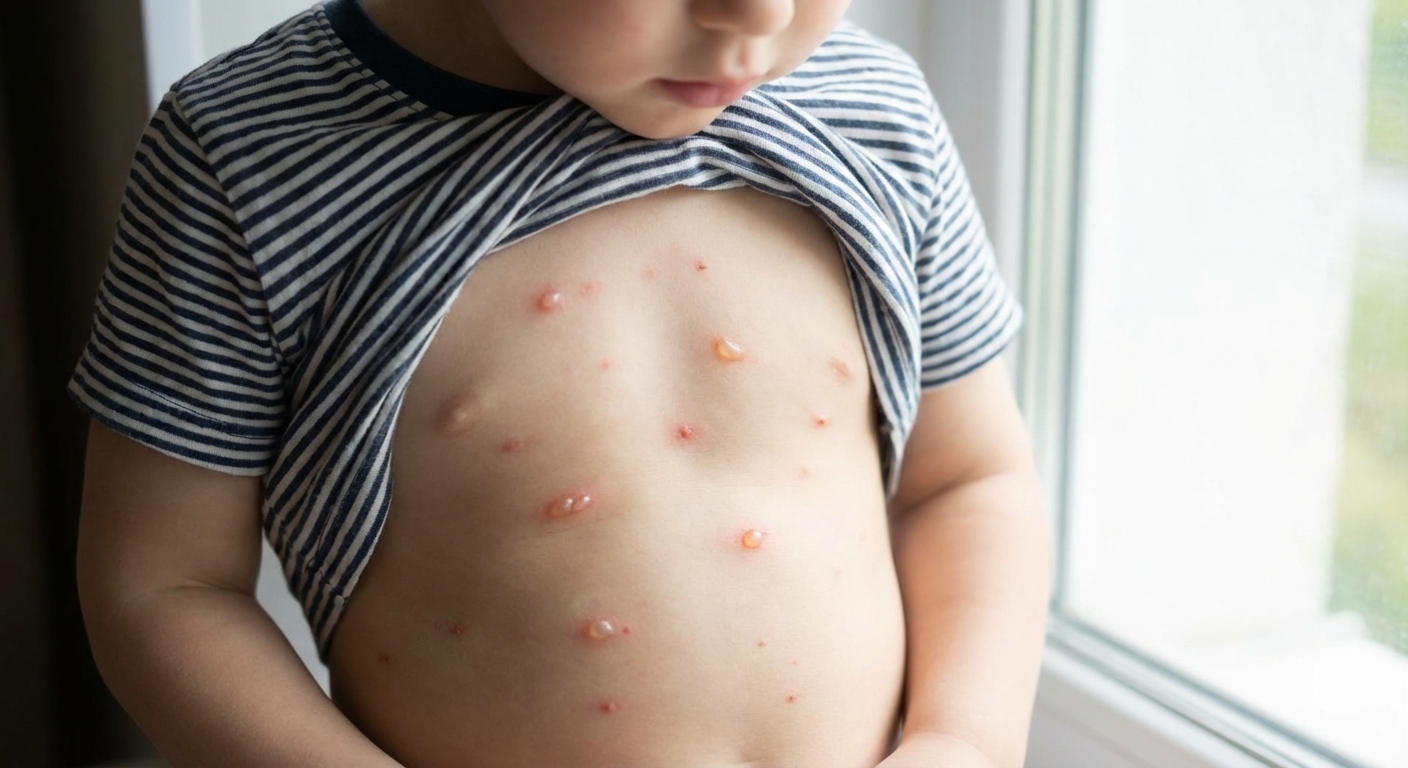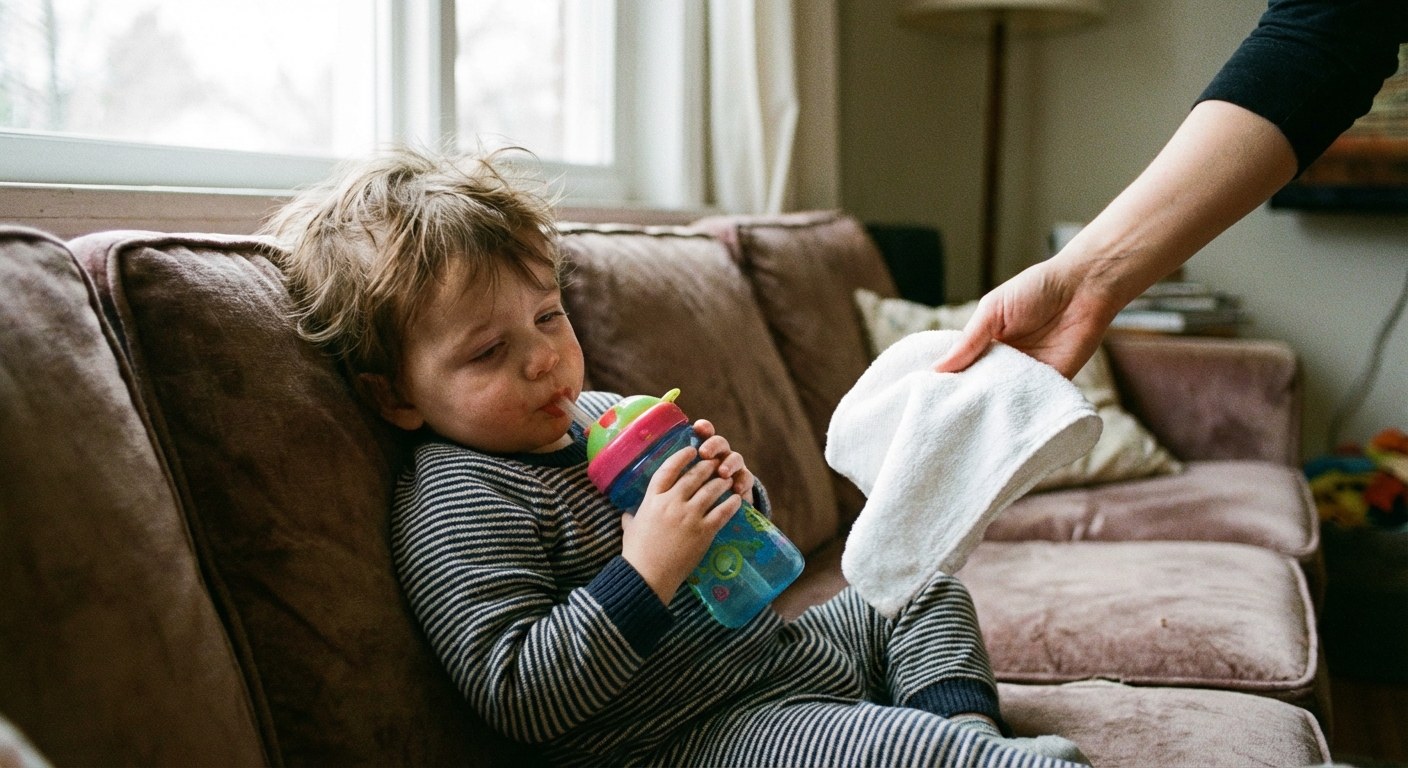
A calming, practical guide to HFMD: what the rash looks like, mouth sores, typical 7 to 10 day timeline, contagious period, home care tips, daycare return, a...
Hand, Foot, and Mouth Disease vs Chickenpox

Sarah Mitchell
Sarah Mitchell is a Registered Pediatric Nurse and a mother of three who has spent over a decade helping families navigate the beautiful, chaotic early years of childhood. She combines evidence-based medical knowledge with real-world parenting experience to offer practical, compassionate advice. At Awesome Parent, Sarah's mission is to help exhausted parents find solutions, trust their instincts, and finally get some sleep.
There are few parenting moments more humbling than trying to identify a mystery rash while your child is melting down because their mouth hurts, their skin itches, and they will not let you look closely for more than 0.7 seconds. I spent years as a pediatric triage nurse and I still had nights with my own kids where I stared at spots under the hallway light thinking, Is this hand, foot, and mouth… or is this chickenpox?
The good news: these two illnesses usually leave different “fingerprints” on the body. If you know where to look and what details matter, you can give your clinician a much clearer picture and you can make safer choices about home care and when to be seen.
At-a-glance: biggest clues
- Mouth pain and refusal to eat or drink often points toward hand, foot, and mouth disease (HFMD), because sores inside the mouth can be very painful.
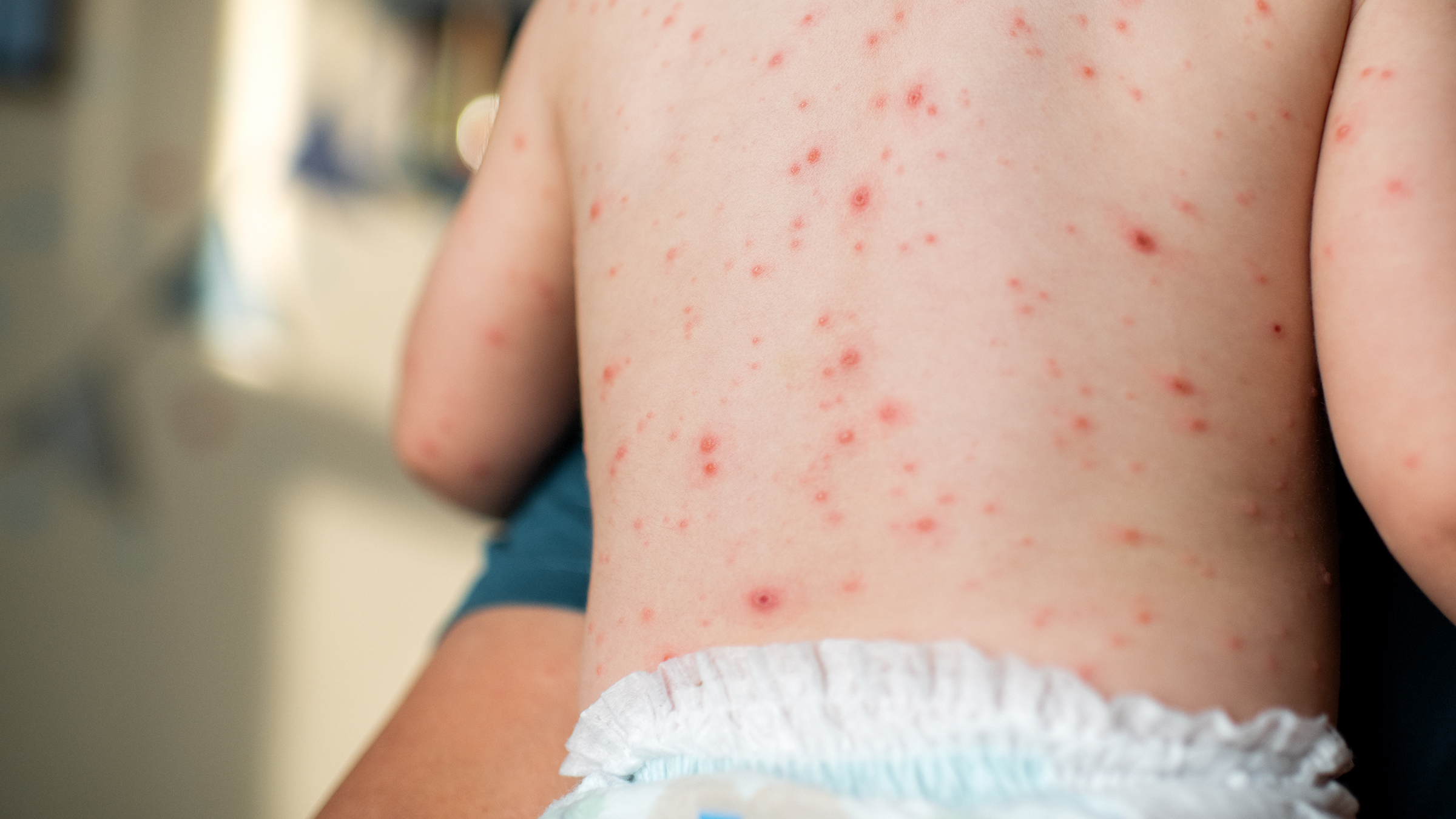
- Itchy blisters that keep showing up in new waves are a classic chickenpox pattern.
- Spots on palms and soles makes me think HFMD first. Chickenpox can show up almost anywhere, but palms and soles are less typical (though it can happen, especially in atypical cases).
- Buttocks involvement is very common with HFMD in diapered kids and toddlers.
- Chickenpox often concentrates on the trunk (chest, back, belly) and face, with fewer spots on hands and feet.
Real life note: there is overlap. Some HFMD cases are mostly mouth plus a few body spots. Chickenpox can look less “classic” in vaccinated children (breakthrough varicella), with fewer lesions and a milder overall picture. When you are unsure, focus on hydration, comfort, and smart photo documentation while you check in with your child’s clinician.
What it looks like and where it shows up
Hand, foot, and mouth disease (HFMD)
Where: hands (including palms), feet (including soles), around the mouth, buttocks, sometimes legs and arms.
What it looks like: small red spots that can become tiny blisters. They are often not terribly itchy. The mouth sores are usually the main source of misery.
What parents notice: drooling, refusing snacks they normally love, crying with swallowing, and a rash that seems “oddly placed” on hands and feet.
Chickenpox (varicella)
Where: often starts on the trunk or face and spreads. Spots can appear on the scalp and behind the ears, which parents sometimes miss until bath time or hair brushing.
What it looks like: very itchy, fluid-filled blisters on a red base. You may see spots in different stages at the same time (some flat red bumps, some blisters, some crusting).
What parents notice: intense itching and new crops of spots appearing even after you thought you found them all.
If you are trying to decide between the two, I ask families to do one quick check: look at the hands, feet, and inside the mouth, then scan the trunk and scalp. The overall “map” of the rash often tells the story.
Mouth symptoms
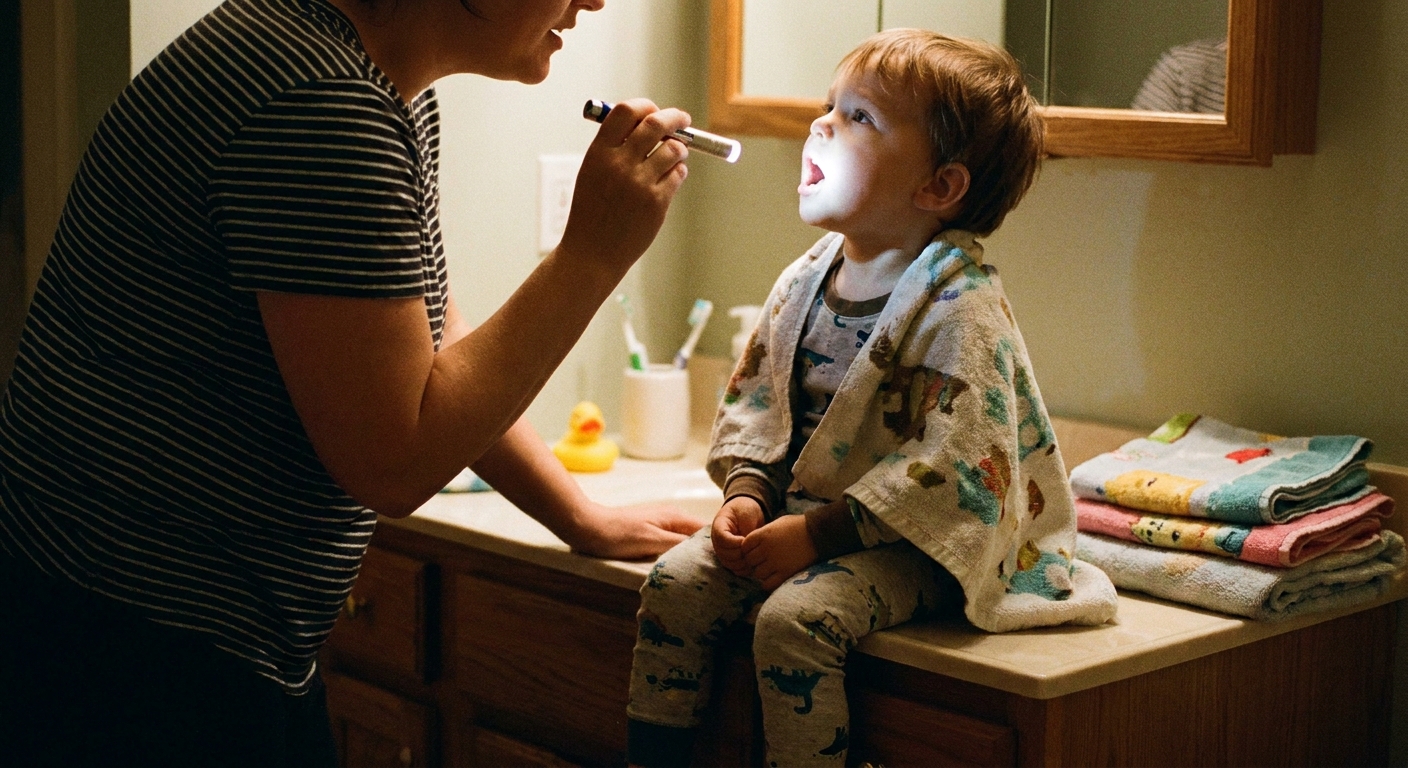
HFMD tends to win the “mouth pain” category. Kids may:
- refuse to drink even when they seem thirsty
- cry when swallowing
- eat only cold, smooth foods (yogurt, smoothies, popsicles)
- drool more than usual
- wake at night from pain
Chickenpox can cause sores in the mouth too, but in many children the headline symptom is itching and the rash distribution is more generalized, not centered on hands and feet.
One important caveat: mouth ulcers are not exclusive to HFMD. Herpangina, cold sores (HSV), and canker sores can also make kids refuse to drink. If the mouth pain is intense and you are not seeing the hand and foot pattern, it is still worth checking in.
Itching vs pain
When parents call a clinic, the words they use often point us in the right direction:
- “They are scratching nonstop.” Chickenpox rises on my list.
- “They won’t drink and scream when they swallow.” HFMD rises on my list.
- “The rash is mostly on hands, feet, and diaper area.” HFMD rises on my list.
- “It started on the belly/back and now it’s everywhere.” Chickenpox rises on my list.
Either way, your job tonight is the same: keep them comfortable, keep fluids going, and watch for red flags.
Timeline and contagiousness
Knowing the typical course helps you interpret what you are seeing.
- HFMD: symptoms often run about 7 to 10 days. Mouth pain is often worst early. The skin spots can linger even after a child feels better. Kids can shed the virus for weeks, so keeping them home longer does not always stop spread completely.
- Chickenpox: new lesions often appear in crops over several days. It is generally considered contagious from 1 to 2 days before the rash until all lesions have crusted (some policies add “no new lesions for 24 hours”).
If you suspect chickenpox and you have a pregnant person, a newborn, or an immunocompromised family member in the household, contact a clinician promptly for exposure advice. Those situations can require a different safety plan.
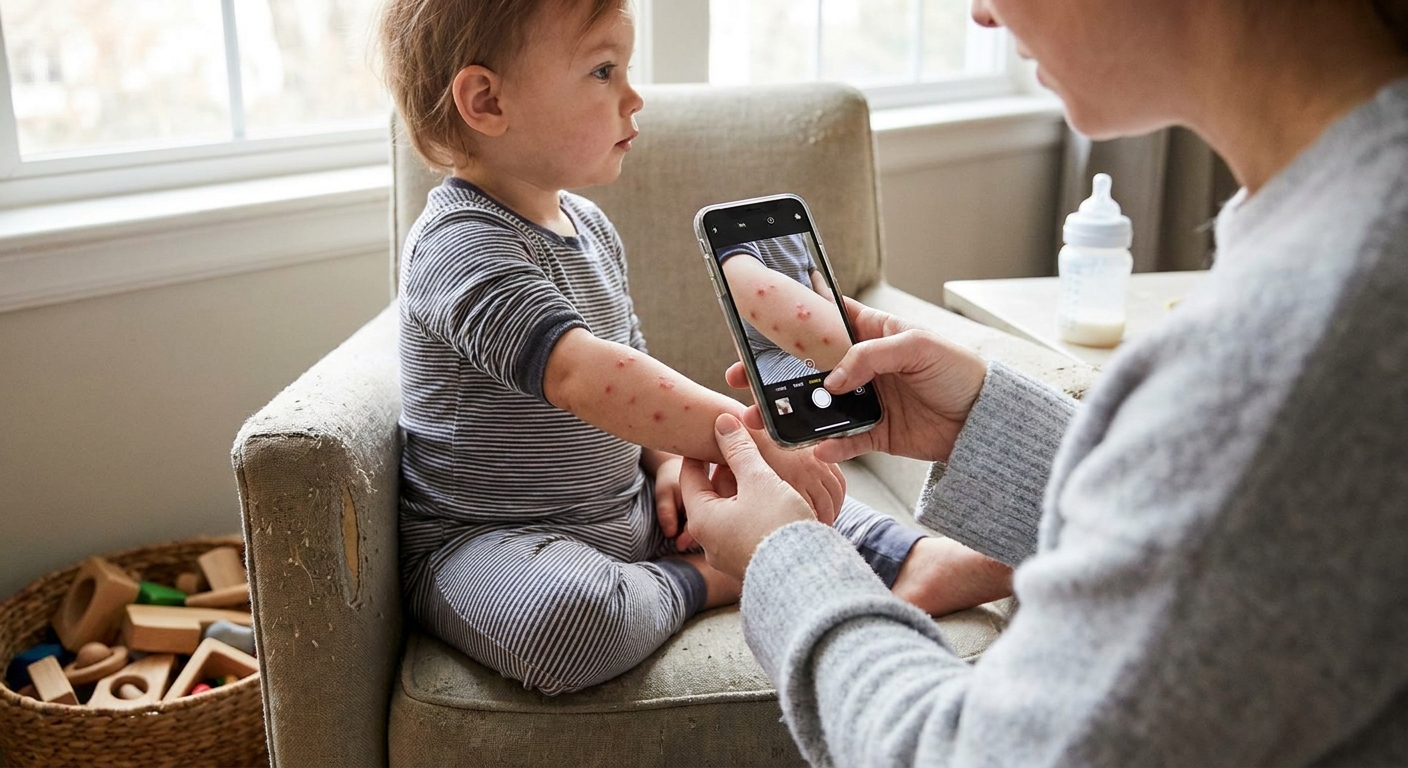
What to photograph for your clinician
If you can send photos through your clinic portal or show them during a visit, these are the images that help the most. Turn on good lighting, wipe away food or diaper cream, and take both close-up and “where is it on the body” shots.
- Hands: a clear photo of the palm and the back of the hand.
- Feet: a clear photo of the sole and the top of the foot.
- Buttocks/diaper area: one photo that shows the rash distribution (if present).
- Trunk: chest and back photos showing how dense the rash is.
- Scalp/behind ears: a quick photo if you see spots there.
- Mouth: only if you can do it safely. A photo of the back of the throat is not required, but if you can capture obvious sores on the tongue, inner cheeks, or lips, it is useful.
Helpful extra details to send with the photos:
- your child’s age
- highest temperature and how you measured it
- whether they are drinking, and roughly how much
- wet diapers in the past 8 to 12 hours (or number of pees if potty trained)
- known exposure to chickenpox or HFMD at daycare/school (if you know)
- vaccination status for varicella (chickenpox vaccine), if you have it handy
When to get care today
Most cases of HFMD and chickenpox can be managed at home with guidance from your child’s clinician. But there are a few situations where I want you to get help today.
Same-day evaluation for dehydration
Mouth pain from HFMD can lead to dehydration surprisingly fast, especially in toddlers who refuse to drink.
- very dry mouth or cracked lips
- no tears when crying
- urinating much less than usual (for babies: fewer wet diapers)
- sunken soft spot in an infant
- unusual sleepiness, weakness, or a child who is hard to wake
Same-day evaluation for fever in a young infant
If your baby is under 3 months and has a rectal temperature of 100.4°F (38°C) or higher, contact your clinician urgently or go in the same day. Young infants need a different safety approach, even when the rash looks “straightforward.”
Emergency care for breathing trouble
Call emergency services or go to the ER now if your child has:
- struggling to breathe, fast breathing, or ribs pulling in with breaths
- blue or gray lips/face
- severe lethargy or they are difficult to arouse
- signs of a severe allergic reaction (hives plus swelling of lips/face, wheezing, vomiting)
Also get same-day advice if:
- your child has a weakened immune system (from medications or a medical condition)
- the rash looks infected (spreading redness, warmth, swelling, pus, or worsening pain)
- there is a very severe headache, stiff neck, confusion, or persistent vomiting
- your child’s eye is red or painful, or there are spots very close to the eye
If you are on the fence, call. You are not wasting anyone’s time. This is exactly what pediatric triage is for.
Home care that helps
If it looks like HFMD
- Prioritize fluids over food. For kids who are drinking poorly, oral rehydration solution is often the best tool. Popsicles, smoothies, chilled applesauce, and cool water can also help. Milk is fine for many kids, but if it seems to make swallowing feel worse, skip it.
- Think pain control. If your clinician okays it, acetaminophen or ibuprofen (age-appropriate) can make drinking possible. Follow the dosing guidance carefully, and do not double up products that contain the same medicine.
- Skip acidic or salty foods (orange juice, tomato sauce, chips) because they can sting mouth sores.
- Avoid topical numbing gels (like benzocaine) in young children unless your clinician specifically recommends them.
If it looks like chickenpox
- Itch control is the main battle. Keep nails short, use mittens for little ones who scratch in their sleep, and ask your clinician about age-appropriate options for itching.
- Keep skin clean and cool. Overheating can worsen itching. Loose cotton pajamas help.
- Do not use aspirin. In children and teens, aspirin during viral illness is linked to Reye syndrome.
For both illnesses: offer comfort, maintain normal sleep routines as much as you can, and assume your child needs extra patience. Sick kids are not giving you a hard time. They are having a hard time.

Daycare and school
Both HFMD and chickenpox spread easily, but the “return” rules are not identical and schools vary. In general:
- Chickenpox: kids usually need to stay home until the blisters have crusted over and they are well enough to participate (some policies also specify no new lesions for 24 hours).
- HFMD: some kids can return once fever is gone and they feel well enough, even if spots linger. Many health agencies also emphasize that kids can still shed virus after they look better, so exclusion does not fully prevent spread. Local policy matters here.
If you need a clear answer for your setting, call your child’s school or daycare and your clinician’s office. They can help you make a plan that protects other kids and is realistic for your family.
FAQ
Can HFMD and chickenpox look the same at first?
Early on, yes. Many viral rashes start as nonspecific red bumps. The pattern becomes clearer when you look at (1) mouth pain and mouth sores, (2) palms and soles, and (3) whether new itchy blisters keep appearing in waves.
What if my child is vaccinated for chickenpox?
The chickenpox vaccine dramatically lowers the chance of typical chickenpox, but breakthrough cases can happen and may look milder, with fewer spots and less obvious “classic” staging. If you see a very itchy blistery rash with new spots appearing, it is still worth checking in with your clinician.
Could it be something else?
Yes. Herpangina can cause painful mouth blisters without the hand and foot rash. Impetigo can cause crusty sores. Allergic rashes can look dramatic but behave differently. If your child seems very uncomfortable, is not drinking, or the rash is rapidly changing, it is reasonable to get same-day guidance.
The bottom line
If your child has mouth pain plus spots on hands, feet, and often the buttocks, HFMD is a strong contender. If you are seeing a very itchy blistery rash that keeps appearing in new waves, chickenpox moves up the list, even if your child is vaccinated and the case looks mild. Take clear photos of the rash in key locations, focus on hydration and comfort, and seek same-day evaluation if you see dehydration signs, fever in a young infant, or any breathing trouble.
And if you are reading this at an unreasonable hour with a sick kid and a phone flashlight, I am right there with you in spirit. You do not have to solve it perfectly tonight. You just have to keep them safe until morning and ask for help when you need it.
Sarah Mitchell
Sarah Mitchell is a Registered Pediatric Nurse and a mother of three who has spent over a decade helping families navigate the beautiful, chaotic early years of childhood. She combines evidence-based medical knowledge with real-world parenting experience to offer practical, compassionate advice. At Awesome Parent, Sarah's mission is to help exhausted parents find solutions, trust their instincts, and finally get some sleep.