Heat Exhaustion and Heat Stroke in Babies and Toddlers

Sarah Mitchell
Sarah Mitchell is a Registered Pediatric Nurse and a mother of three who has spent over a decade helping families navigate the beautiful, chaotic early years of childhood. She combines evidence-based medical knowledge with real-world parenting experience to offer practical, compassionate advice. At Awesome Parent, Sarah's mission is to help exhausted parents find solutions, trust their instincts, and finally get some sleep.
If you have ever touched your baby’s neck and thought, Whoa, you’re hot, you are not alone. Little bodies can heat up faster than adult bodies, and infants in particular have immature temperature regulation. Add in the fact that young kids rely on you for the “behavioral” part of cooling down (moving to shade, taking off layers, asking for water), and a warm day, a stuffy room, or a “just for a minute” stop in the car can turn into a real medical problem faster than most parents expect.
This guide will help you separate common skin issues like heat rash and sunburn from systemic heat illness like heat exhaustion and heat stroke. I will also walk you through exactly what to do at home, what to watch for with hydration, and when it is time to head to the ER, urgent care, or call 911.
Quick note: This is general education, not medical advice for your specific child. When in doubt, call your pediatrician or local nurse line, and trust your instincts.
Heat rash and sunburn vs heat illness
Heat rash and sunburn can look dramatic, but they usually stay on the skin. Heat exhaustion and heat stroke affect the whole body, including the brain and organs. That is why we treat them differently and take them seriously.
Heat rash (miliaria)
- What you see: Tiny red bumps or small blisters, often in skin folds (neck, chest, diaper area).
- How your child acts: Usually otherwise okay. Maybe a bit fussy or itchy.
- What helps: Cool environment, loose clothing, keep skin dry, lukewarm bath, avoid heavy ointments that trap heat.
Sunburn
- What you see: Red, warm, tender skin, sometimes swelling. Blistering can happen with worse burns.
- How your child acts: May be uncomfortable, clingy, less interested in playing.
- What helps: Get out of the sun, cool compresses, fluids, age-appropriate pain relief if needed. Seek care for blistering burns, burns on infants, or signs of dehydration.
Heat illness (systemic)
- What you see: Not always much on the skin.
- How your child acts: Tired, weak, dizzy, nauseated, unusually sleepy or irritable, fast breathing, fast heart rate.
- What helps: Immediate cooling plus hydration, and sometimes urgent medical care.
Why little kids overheat easily
Here is the unfair truth: kids are not just small adults.
- They heat up faster: They have a higher surface-area-to-body-mass ratio and can gain heat quickly.
- Cooling is harder, especially for infants: Thermoregulation is still maturing, and they cannot “manage” their environment the way adults do.
- Sweat and cooling responses can be less effective: Young children can have lower sweat rates in some situations and rely heavily on skin blood flow and caregiver help to cool down.
- They depend on you: They cannot always move to shade, take layers off, or ask for water clearly.
- Car seats and strollers trap heat: Airflow is limited, and padding holds warmth close to the body.
Also, “indoors” is not automatically safe. A poorly ventilated room, a broken AC, a nap in an overheated bedroom, or a power outage can all create dangerous conditions.
Highest risk scenarios
Hot cars, even with windows cracked
A parked car can heat up shockingly fast. Cracking windows does not keep it safe. If a child is left in a vehicle, even briefly, treat this as an emergency situation.
Strollers and carriers
Stroller canopies can reduce airflow. Babywearing adds adult body heat and reduces evaporation. Both can be fine with planning, but in high heat they raise the risk quickly.
Sleep in a warm room
Overheating during sleep can be sneaky because kids are not drinking, moving, or asking for help. Check the room temperature and dress your child lightly.
Illness and dehydration
Vomiting, diarrhea, fever, and poor intake make heat illness more likely because your child starts the day already behind on fluids.

Heat exhaustion signs
Heat exhaustion happens when the body is struggling to cool down and starting to get dehydrated. It is serious, but it is often reversible with fast action.
Common signs
- Cool, clammy skin or sweating (some children, especially infants, may not sweat much)
- Flushed face
- Weakness, fatigue, or wanting to be carried more than usual
- Headache (toddlers may just cry and hold their head)
- Nausea, vomiting, or tummy pain
- Muscle cramps
- Dizziness or seeming “wobbly”
- Fast breathing or fast heart rate
- Less pee than usual
Trust your gut here. If your child looks “off” after heat exposure, do not wait for it to become dramatic. Start cooling right away.
Heat stroke signs
Heat stroke is a medical emergency. It means the body’s temperature regulation has failed and the brain can be affected.
Call 911 now if you notice
- Altered mental status: confusion, extreme irritability, lethargy you cannot break through, unresponsiveness
- Seizure
- Fainting or collapse
- Very hot skin (may be dry or sweaty)
- Breathing problems or severe weakness
- Any concern for heat exposure in a car
If you have a thermometer and see a very high temperature along with these symptoms, treat it as heat stroke. But you do not need a number to act. How your child is behaving matters most.
Temperature note
If a child has a temperature around 104°F (40°C) or higher plus concerning symptoms after heat exposure, that is especially worrisome for heat stroke. Still, do not wait for a perfect reading. Start cooling and get emergency help.
What to do now
When you suspect heat illness, your priorities are simple: get to a cooler place, cool the body, and hydrate if it is safe.
Step 1: Get to a cooler place
- Go indoors with air conditioning if possible.
- If you are outside, get to deep shade and create airflow.
- Remove extra clothing, hats, and socks.
Step 2: Start active cooling
- Cool water on skin: Use lukewarm to cool (not ice cold) water on the body, especially neck, armpits, and groin.
- Fan + damp skin: A fan over damp skin is very effective.
- Cool compresses: Cloths on the forehead, neck, and torso.
- Cool bath: A cool or lukewarm bath can help if your child is alert and stable.
About ice baths and cold water immersion: Do not try ice water immersion at home for babies and young children unless directed by emergency professionals. In true heat stroke, rapid cooling is critical, so call 911 and follow dispatcher instructions. If they tell you to use more aggressive cooling, do it.
Step 3: Hydrate safely
- If your child is awake, alert, and able to swallow, offer frequent small sips.
- Best options: breastmilk, formula, or an oral rehydration solution (ORS) such as Pedialyte if dehydration is a concern.
- Water: For babies under 6 months, avoid plain water unless your clinician tells you to. For 6 to 12 months, small amounts of water can be okay, but breastmilk, formula, and ORS are usually more helpful for rehydration.
- Avoid chugging large amounts at once. Small sips reduce vomiting.
Do not force fluids if your child is very sleepy, vomiting repeatedly, or acting confused. That is an aspiration risk. In that case, focus on cooling and seek urgent evaluation.
One more safety note: Do not dilute formula to “add water.” Mix formula exactly as directed.
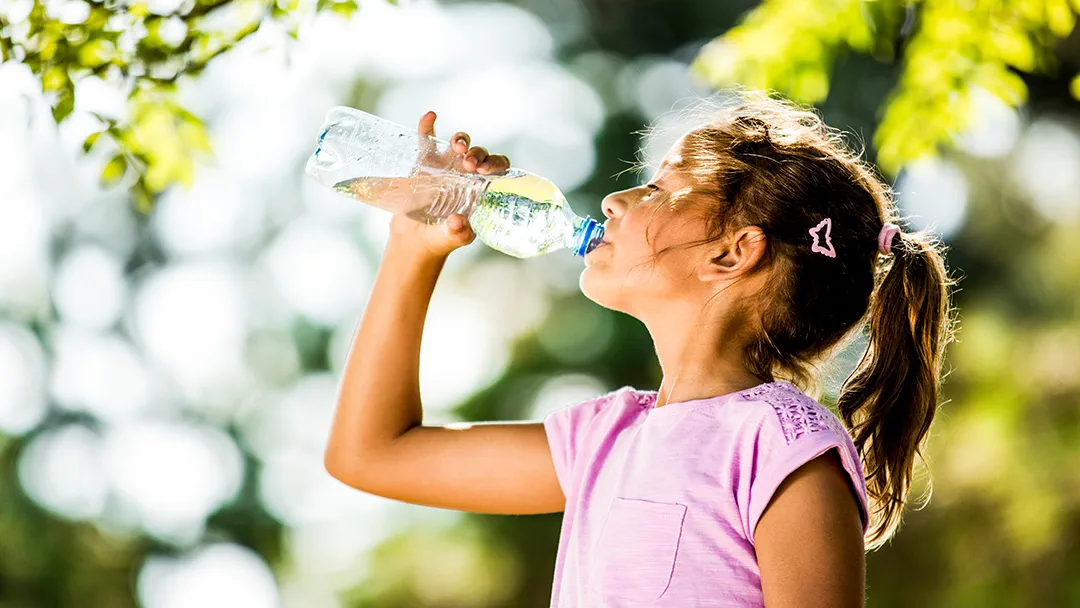
Hydration cues
Kids do not always say “I’m thirsty.” More often, they get cranky, slow down, or stop peeing like they usually do.
Signs of mild dehydration
- Thirst
- Dry lips or sticky mouth
- Fewer wet diapers or fewer trips to the bathroom
- Darker urine
More concerning signs
- No wet diaper for 6+ hours in an infant, or significantly fewer wet diapers than usual
- Very infrequent urination in a toddler
- Crying with few or no tears
- Sunken eyes, very dry mouth
- Unusual sleepiness, weakness, or irritability
- Persistent vomiting
If dehydration is moderate to severe, kids often need medical evaluation and sometimes IV fluids, especially if they cannot keep liquids down.
ER vs urgent care vs 911
I know this is the part you want in black and white. Real life is messy, but here are solid thresholds that I used in triage and that I use with my own kids.
Call 911 now
- Seizure, collapse, or unresponsive child
- Confusion, extreme lethargy, or you cannot wake them normally
- Trouble breathing
- Signs of heat stroke after heat exposure
- Any child who may have been left in a hot car
Go to the ER today
- Symptoms of heat exhaustion that are not improving after 30 to 60 minutes of cooling and fluids
- Repeated vomiting or cannot keep down fluids
- Very young infants (especially under 6 months) with concerning heat exposure
- Dehydration signs such as very few wet diapers, very dark urine, or significant sleepiness
- Fever plus heat exposure and your child looks ill, weak, or “not themselves”
- You are worried, period. You do not need perfect wording to seek care.
Call your pediatrician or nurse line
- Mild symptoms that improve quickly with cooling
- Questions about the best fluids, especially if your child is under 1 year
- Heat rash or mild sunburn with no systemic symptoms
What not to do
- Do not give fever reducers as the main “treatment” for overheating. They do not fix heat illness and can delay appropriate action. Cooling is the treatment.
- Do not use ice water immersion at home unless directed in an emergency situation.
- Do not offer fluids to a child who is not fully alert or is vomiting repeatedly.
- Do not cover a stroller with a blanket in the heat. It traps hot air even if it seems like it is creating shade.
- Do not use sports drinks as your main rehydration tool for babies and young toddlers. When you need something beyond milk, formula, or water, use an ORS.
Prevention that works
You do not need to live indoors all summer. A few practical habits go a long way.
Outdoors
- Plan outdoor time for morning or later evening on hot days.
- Use shade, breathable clothing, and wide brim hats.
- Offer drinks on a schedule. Toddlers are busy being toddlers and forget.
- Take “cool down breaks” indoors or in the car with AC.
Strollers and car seats
- Choose light, breathable clothing and avoid thick layers.
- Check the back and chest, not hands and feet, to gauge heat.
- Bring a small battery fan for airflow (aimed near, not directly blasting the face).
Indoors
- Keep sleep spaces comfortably cool and dress lightly for naps and bedtime.
- During power outages or heat waves, identify a cooling location ahead of time (library, mall, community cooling center).
Sun safety basics
- Babies under 6 months: Prioritize shade and protective clothing. Try to avoid direct sun as much as possible.
- 6 months and up: Use sunscreen on exposed skin, plus hats and sun-protective clothing.
- If your child gets burned easily or you are unsure what is safe for your baby’s age, ask your pediatrician.
Extra heat-risk factors
Some kids run into trouble faster in the heat, including children with chronic medical conditions, higher body weight, cystic fibrosis, or kids taking certain medications (for example, some antihistamines or stimulants). If that sounds like your child, plan more conservatively on very hot days.

Quick checklist
If your brain turns into mashed potatoes when your child looks overheated, use this:
- 1. Move: Shade or AC.
- 2. Strip: Remove extra layers.
- 3. Cool: Damp skin plus fan, cool compresses, or lukewarm bath.
- 4. Sip: Small sips if fully alert. Breastmilk, formula, or ORS are usually best.
- 5. Escalate: Not improving in 30 to 60 minutes, vomiting, very sleepy, or acting strange equals urgent care or the ER. Seizure, confusion, collapse, or car exposure equals 911.
And one final reminder from a pediatric nurse who has seen a lot: you are not overreacting by taking heat illness seriously. You are doing exactly what a good parent does, noticing, responding, and getting help when it crosses the line.