Heat Rash in Babies

Sarah Mitchell
Sarah Mitchell is a Registered Pediatric Nurse and a mother of three who has spent over a decade helping families navigate the beautiful, chaotic early years of childhood. She combines evidence-based medical knowledge with real-world parenting experience to offer practical, compassionate advice. At Awesome Parent, Sarah's mission is to help exhausted parents find solutions, trust their instincts, and finally get some sleep.
If you have ever lifted your baby out of a car seat on a hot day and found a sudden sprinkle of tiny bumps on their neck or chest, you are in very good company. Heat rash is one of the most common warm-weather skin surprises I saw in pediatric triage, and it is usually more alarming-looking than it is dangerous.
The good news: most baby heat rash clears quickly once the skin cools down and dries out. The tricky part is figuring out whether it is truly heat rash or something else like eczema, a drool rash, or an allergy. Let's walk through what heat rash looks like, what to do tonight, and when I want you to call your pediatrician.
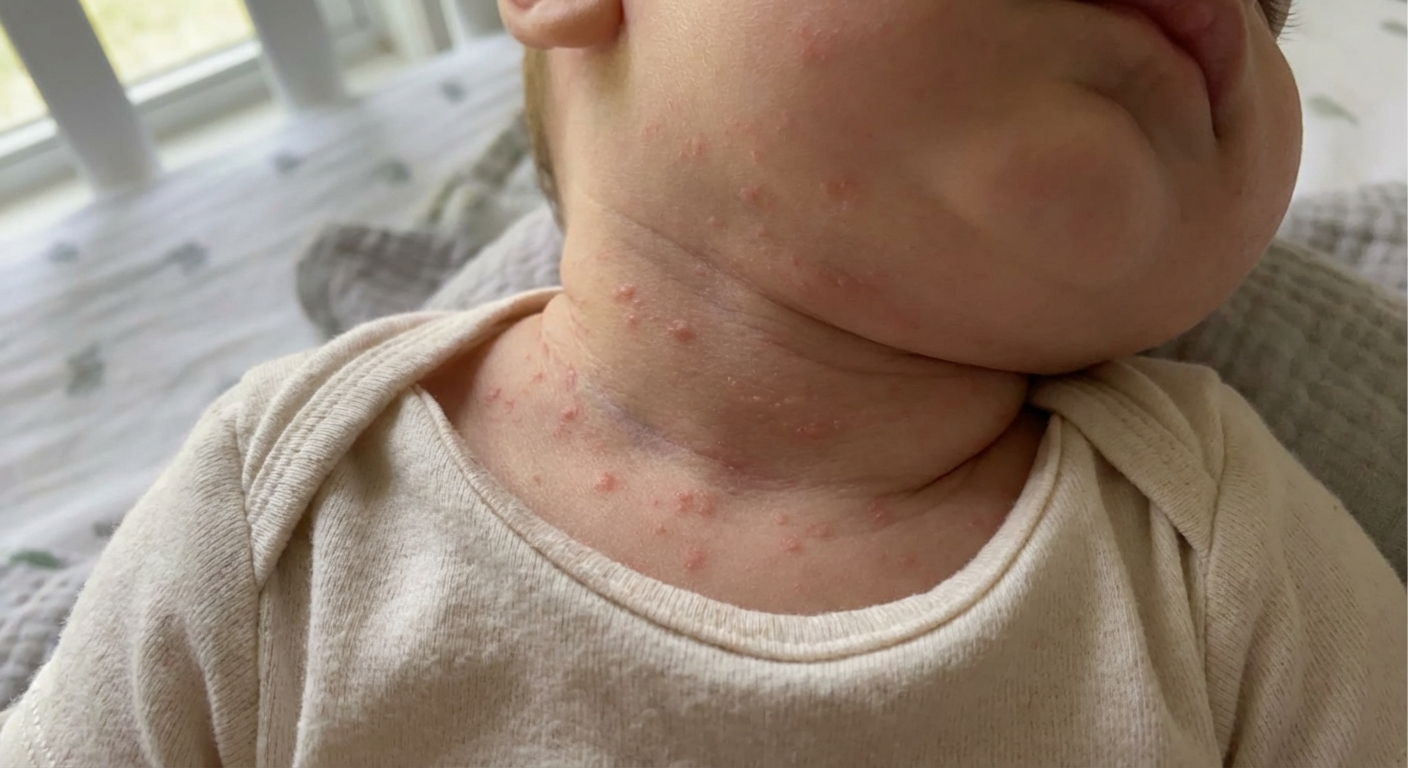
What is heat rash (miliaria)?
Heat rash, also called miliaria, happens when sweat ducts get blocked and sweat leaks into the surrounding skin. Babies are especially prone because their sweat ducts are still maturing, and they cannot regulate body temperature as efficiently as older kids.
It tends to show up when a baby is:
- Overheated (hot weather, warm rooms, too many layers)
- In a sweaty situation (car seats, strollers, carriers)
- In a friction zone (neck folds, armpits, diaper area, waistband)
Heat rash is not contagious. It's not a sign that you did anything wrong. It's a skin traffic jam, not a parenting fail.
What it looks like (3 types)
There are three classic miliaria types. You do not need to memorize them to treat your baby safely, but knowing the differences can help you feel more confident about what you are seeing.
Miliaria crystallina
This is the mildest type. You may see:
- Very small, clear or white-topped bumps that look like tiny droplets
- Little to no redness
- Usually not itchy or painful
Common locations: forehead, scalp, upper chest, back.
Miliaria rubra
This is the most common type parents notice. You may see:
- Small red or pink bumps, sometimes clustered
- Skin that looks irritated or “sandpapery”
- Baby may seem itchy, fussy, or prickly in that area
Common locations: neck folds, chest, back, armpits, groin, under snug clothing.
Miliaria profunda
This type is less common in babies and may happen after repeated episodes of rubra. You may see:
- Flesh-colored bumps rather than bright red ones
- A deeper, firmer “goosebump” look
- Usually less irritation on the surface
If you suspect this type or the rash keeps recurring, it's reasonable to check in with your pediatrician.
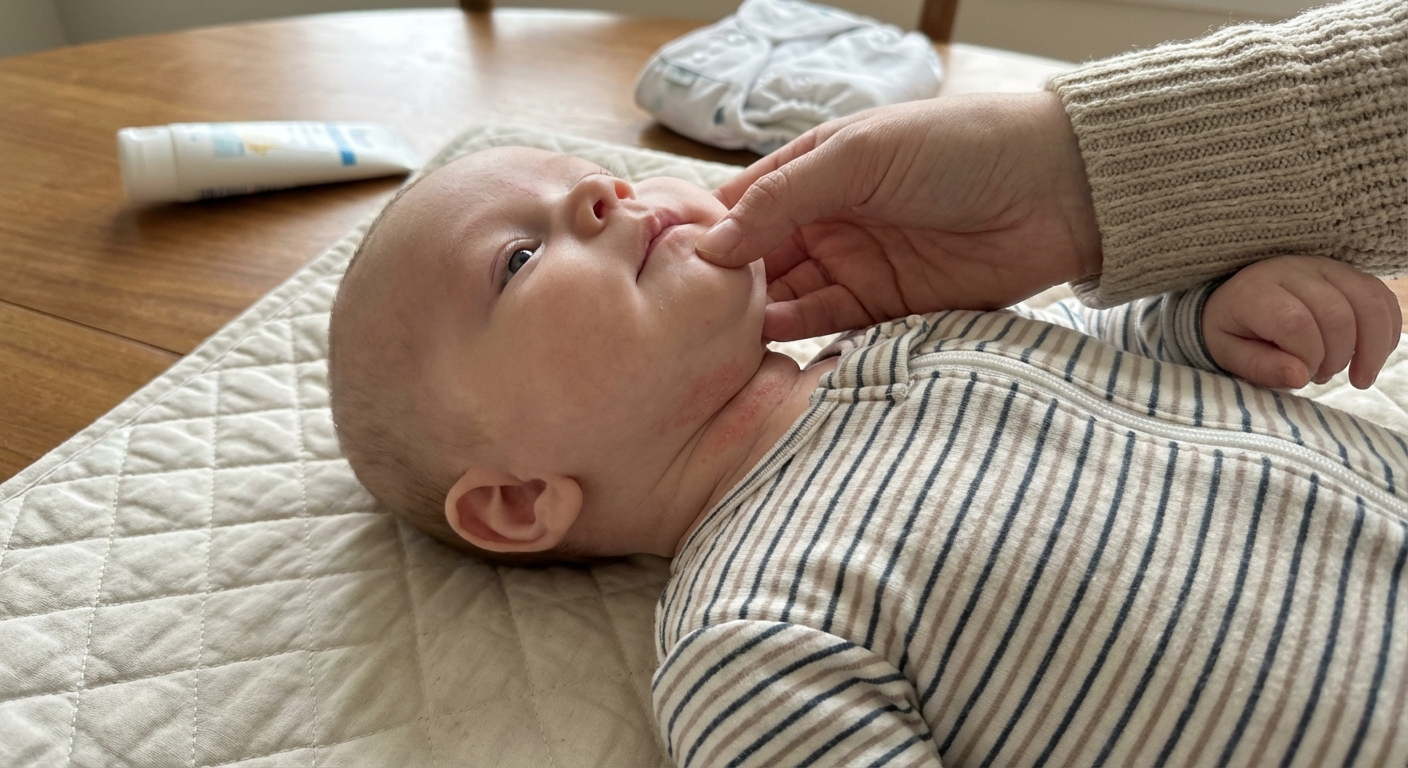
Common spots
Heat rash loves places that are warm, sweaty, and covered. The greatest hits:
- Neck folds and behind the ears
- Upper chest and back
- Armpits and elbow creases
- Diaper area and groin creases
- Waistband and under snug onesies
- Scalp (especially under hats)
Heat rash vs eczema vs allergy
Parents often say, “I cannot tell what rash is what.” That's normal. Here are the practical clues I use at the bedside.
Heat rash
- Timing: shows up after heat, sweating, or being bundled
- Texture: tiny bumps, sometimes prickly
- Location: folds, under clothing, areas of friction
- Course: improves within 24 to 72 hours once cooled and kept dry
Eczema
- Timing: chronic or recurring, not just after a hot day
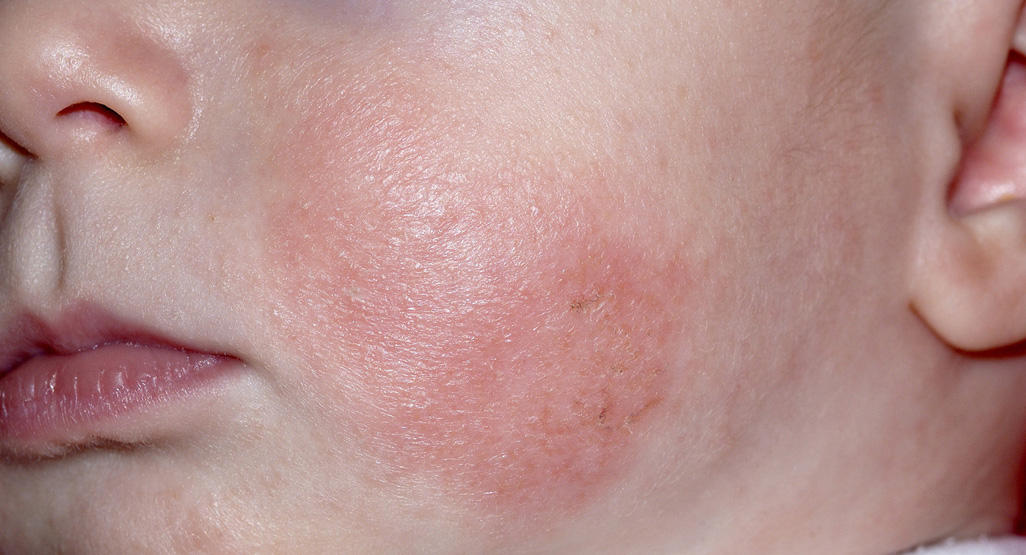
- Look: dry, rough patches that can be red and scaly
- Itch: often very itchy
- Location: cheeks and scalp in younger babies; later the creases of elbows and knees
- Course: needs ongoing moisture care and sometimes medicated cream
Allergic rash
Allergic rashes come in a few flavors:
- Hives: raised, smooth welts that can move around the body and come and go
- Contact dermatitis: redness and irritation where something touched the skin (new lotion, detergent, sunscreen, fragrance)
- Clues: sudden onset after a new product or food exposure, often itchier than heat rash
Call urgently if there are hives plus any breathing trouble, swelling of lips or face, vomiting, or your baby seems unusually sleepy or weak.
Drool rash
- Location: chin, neck, upper chest
- Look: red, irritated skin that may look chapped
- Clue: lots of drooling, wet bibs, skin stays damp
Drool rash is more of a moisture and friction problem than a heat problem, although the two can absolutely overlap.
Safe treatment at home
For most babies, heat rash treatment is simple: cool the skin, reduce sweat, and let the sweat ducts clear. Here's what I recommend in real life.
1) Cool and dry the skin
- Move to a cooler room or shade
- Remove extra layers and switch to loose cotton
- Use lukewarm (not cold) bath water or a cool compress
- Pat dry gently. Rubbing can make it more irritated
2) Let it breathe
- Give diaper-free time if the rash is in the diaper area
- Avoid snug carriers or tight necklines until it calms down
- If your baby tolerates it, short periods in just a diaper can help
3) Choose products carefully
Less is more here.
- Often it's best to avoid very occlusive ointments (like thick petrolatum layers) directly over heat rash at first. They can trap heat and moisture. If the skin is chafed or rubbing, ask your pediatrician what to use.
- If the skin is irritated, a light, fragrance-free lotion can be okay, but stop if bumps worsen.
- Avoid powders, especially talc-based powders. Breathing in powder is a risk for babies. If you are considering any powder, check with your pediatrician first and keep it away from the face.
4) Help with itch safely
Many heat rashes are not very itchy, but miliaria rubra can feel prickly.
- Keep nails short or use mittens if scratching is a problem
- Cool compresses can reduce the sting
- Don't use medicated steroid cream unless your pediatrician tells you to. Steroids are not usually needed for heat rash and can mask or worsen an infection if the diagnosis is wrong
How long does it take to go away?
Most heat rash improves noticeably within 1 to 3 days once you keep the skin cool and dry. If it's spreading, worsening, or not improving after a few days, it's time to check in.
What not to do
- Don't overdress to “protect” the rash. More heat usually makes it worse.
- Don't scrub the bumps with washcloths or exfoliating products.
- Don't use strong antiseptics or alcohol-based products on baby skin.
- Don't pop any bumps or blisters.
Prevention
Prevention is mostly about reducing sweat and friction. Here are the strategies that actually work for real families in summer.
Dress for airflow
- Choose lightweight, breathable fabrics (cotton, bamboo blends)
- One thin layer is often enough indoors
- Skip hats indoors and in the car seat unless medically necessary
Try the neck check
Hands and feet can be misleading. The best quick check is the back of the neck or upper back:
- Warm and dry: usually fine
- Hot or sweaty: remove a layer and cool the environment
Watch the hot spots
- Car seats: they run warm. Pre-cool the car, use window shades, and dress baby lightly.
- Carriers: your body heat counts as a layer. Thin clothes for both of you helps.
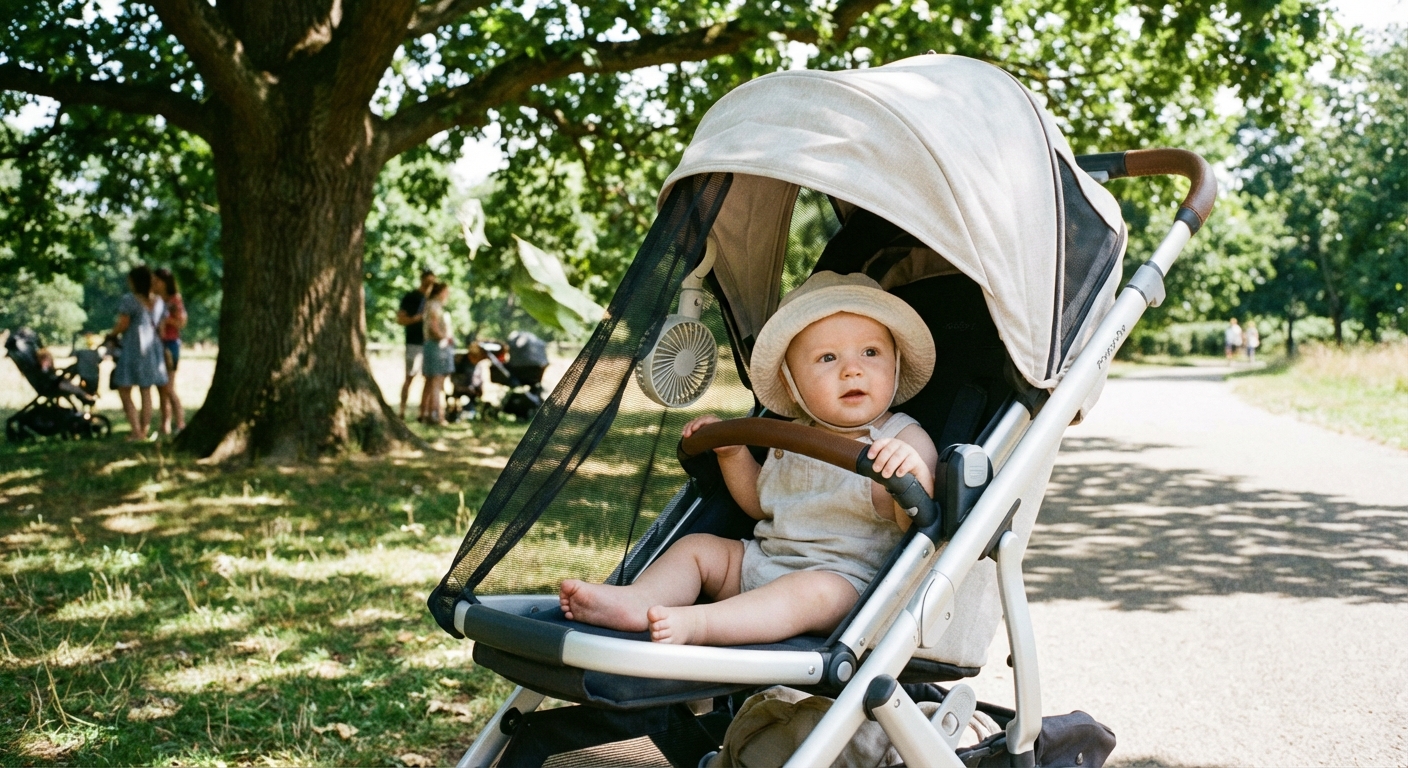
- Strollers: avoid draping blankets over the top, which can trap heat. Use shade and airflow instead.
Keep folds clean and dry
- After baths, pat dry carefully in neck and thigh folds
- Change sweaty clothes promptly
- For drooly babies, switch bibs often and keep the neck area as dry as possible
When to call the pediatrician
Most heat rash is a safe watch-and-wait situation, but I never want parents to feel stuck guessing. Reach out to your pediatrician if:
- Your baby is under 3 months and has any rash plus a fever (a temperature of 100.4°F or 38°C or higher, rectal if possible), or you're worried
- The rash is not improving after 3 days of cooling and keeping it dry
- The rash becomes very red, warm, swollen, or painful
- You see pus, honey-colored crusting, open sores, or rapidly spreading redness (could suggest infection)
- Your baby has a fever, seems unusually sleepy, is not feeding well, or you notice fewer wet diapers
- The bumps look like blisters or your baby seems very uncomfortable
- You suspect an allergic reaction (hives, swelling, vomiting, wheeze)
Go now
- Any trouble breathing, wheezing, or bluish lips
- Swelling of the lips, tongue, or face
- A fever in a baby under 3 months (100.4°F or 38°C or higher)
- Signs of dehydration: very dry mouth, no tears when crying, significantly fewer wet diapers
- Rash that looks like tiny purple or red dots that do not fade when you press on them, or your baby looks very unwell. Don't wait on this one
Other look-alikes
Most rashes are harmless, but a few heat rash look-alikes deserve a closer look. Check in with your pediatrician if you see:
- Beefy red diaper rash with “satellite” dots in the creases (can be yeast)
- Honey-colored crusts or oozing (can be impetigo)
- Mouth sores plus spots on hands and feet (can be hand-foot-and-mouth disease)
- Intense itch, especially if others in the house are itchy (can be scabies)
Also, remember: heat rash can be a clue that a baby is getting too warm overall. If your baby seems overheated, very hot to the touch, unusually sleepy, or is feeding poorly, focus on cooling and getting medical advice promptly.
Quick checklist for tonight
If you're reading this during a late-night Google spiral, here's your calm plan:
- Cool room, fewer layers, breathable pajamas
- Lukewarm bath or cool compress, then pat dry
- Skip very occlusive ointments on the bumpy areas for now
- Keep folds dry and give the skin some air time
- Take a quick photo now so you can compare tomorrow, or show your pediatrician if needed
And one last nurse-mom reminder: if your gut says this doesn't look right, you're allowed to call. You're not overreacting. You're parenting.
Safe sleep note: if you need lighter sleepwear, a fitted onesie and a wearable blanket (sleep sack) is safer than loose blankets.