Hip Dysplasia in Babies

Sarah Mitchell
Sarah Mitchell is a Registered Pediatric Nurse and a mother of three who has spent over a decade helping families navigate the beautiful, chaotic early years of childhood. She combines evidence-based medical knowledge with real-world parenting experience to offer practical, compassionate advice. At Awesome Parent, Sarah's mission is to help exhausted parents find solutions, trust their instincts, and finally get some sleep.
If you have ever changed your baby’s diaper at 2 AM and thought, “Wait, are these leg folds supposed to match?”, you are not alone. Developmental dysplasia of the hip, usually shortened to DDH, is one of those newborn topics that can sound scary online and surprisingly manageable in real life, especially when it is caught early.
DDH means a baby’s hip joint is not sitting as securely in the socket as it should. That can range from a slightly shallow socket to a hip that can slip partly or fully out of place. Most families find out through routine screening at well visits, not because something is obviously wrong.
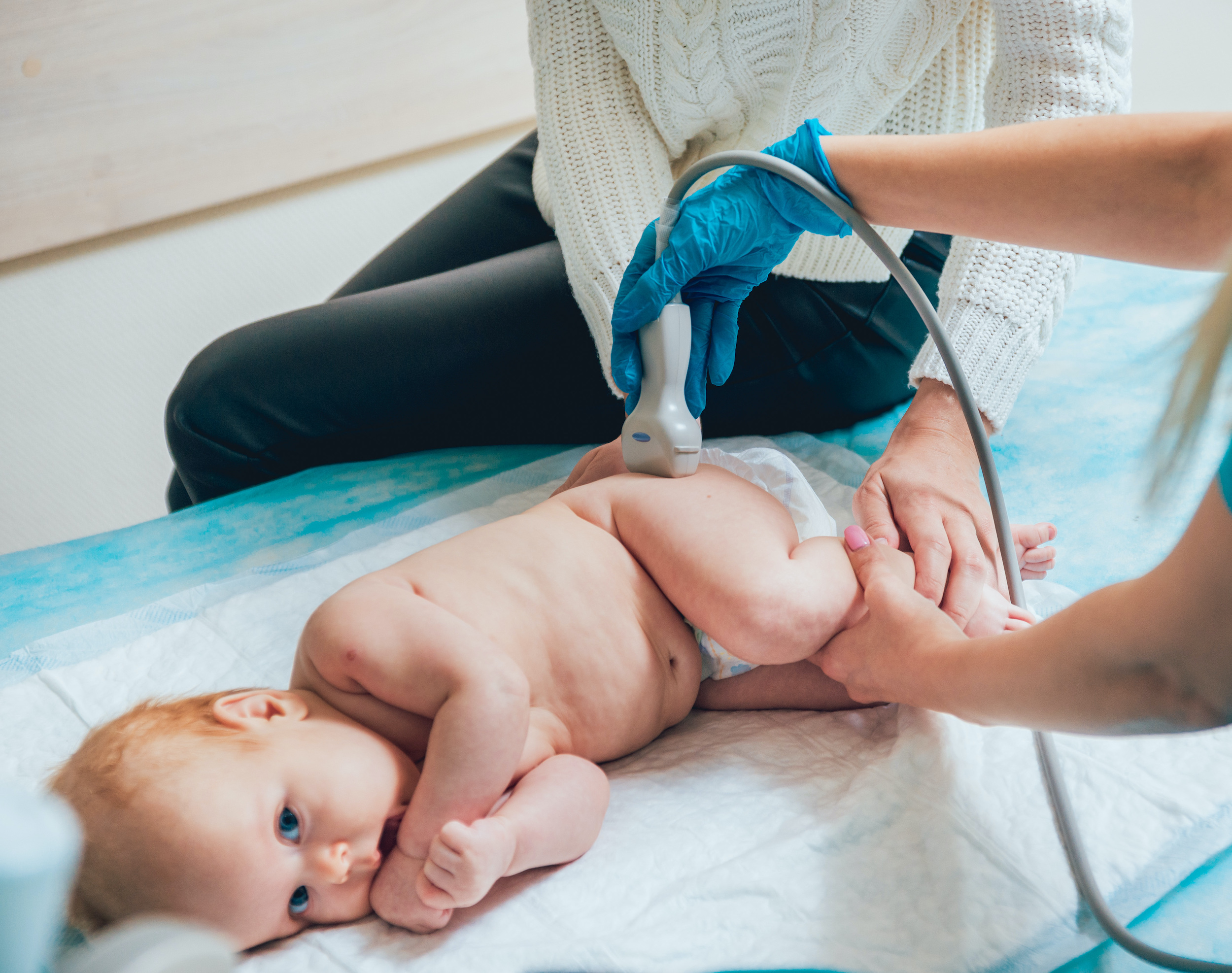
What DDH is
Your baby’s hip is a ball-and-socket joint. In DDH, the socket part can be a bit shallow, or the ball can be loose in the socket. Babies are naturally flexible, and some looseness can be normal in the early newborn days. The important part is that clinicians can tell the difference between normal newborn laxity and true instability on exam, and they will follow it over time if anything seems borderline.
DDH can affect one hip or both. When it affects just one side, it can be easier to notice subtle differences, like one leg not opening as wide.
Higher chance of DDH
Any baby can have DDH, but pediatricians pay extra attention when risk factors are present:
- Breech position late in pregnancy or at delivery
- Family history of DDH in a parent or sibling
- First baby or a tight uterus environment (less room to move)
- Female babies are affected more often
- Swaddling that keeps legs straight and tightly wrapped for long periods
Risk factors do not mean something is wrong. They just mean your baby may get extra screening, like an ultrasound, based on local guidelines and your clinician’s exam.
Signs you might notice
Most of the time, DDH is picked up by a clinician during routine hip checks. Still, there are a few things parents sometimes notice during diapering and playtime.
Uneven skin folds
Uneven thigh or buttock creases can be a clue, but they are not a diagnosis. Plenty of perfectly healthy babies have adorable, mismatched baby rolls. What matters is whether folds look different and there are other signs below.
One hip opens less
This is one of the more useful clues for parents. When your baby is on their back during a diaper change, both hips should generally open outward fairly evenly. If one side consistently feels tighter or does not open as wide as the other, it is worth mentioning.
Safety note: never force your baby’s legs open. This is purely something to notice, not something to test.
Leg length clues
If one knee looks lower than the other when baby’s hips and knees are bent, or one leg appears shorter, your pediatrician should take a closer look. This can be easier to see in older infants and toddlers than in newborns.
Click vs clunk
Parents often hear about hip clicks. Here is the calming truth: lots of babies have harmless clicks from tendons moving. The sound that concerns clinicians is more of a distinct clunk that suggests the hip is moving in and out of the socket. Either way, you do not need to diagnose the sound. Just tell your pediatrician what you noticed.

What clinicians check
At newborn and early well visits, your pediatric clinician will do a quick hip exam. This is not painful, but some babies protest because they do not enjoy being held still.
- Range of motion: they gently see how widely each hip opens.
- Stability: in the earliest weeks, they may do specific maneuvers to see whether the hip feels stable in the socket.
- Symmetry: they look for leg length differences and uneven thigh or buttock folds.
Even if everything is normal at birth, hips are monitored over time. A normal early exam is reassuring, but dysplasia can become easier to detect as the hip develops and your baby grows.
Swaddling and hip safety
Swaddling can be wonderfully soothing, especially during the newborn stretch where nobody sleeps and the coffee is basically a food group. The key is to swaddle in a way that lets hips stay in a natural, flexed, slightly outward position.
Hip-friendly basics
- Arms snug, hips loose: the swaddle should be secure around the chest and arms, but roomy around the hips and legs.
- Let knees bend: your baby should be able to bend their knees up and move their legs.
- Avoid straight, tightly wrapped legs: wrapping legs pinned together and extended can increase DDH risk, especially in babies with other risk factors.
- Swaddle sacks can help: many wearable swaddles are designed to allow leg movement. Still, check that the lower portion is not tight.
Hip-friendly positioning
In day-to-day life, think “support the thighs, allow the hips to spread.” Good options include:
- Babywearing: look for a carrier that supports baby from knee to knee with hips in a spread-squat position.
- Car seats and swings: use as directed, and avoid long stretches where baby is tightly positioned without hip movement.
- Tummy time and free play: on a safe surface, letting babies move their legs freely is great for development.

Screening and imaging
Screening depends on age, exam findings, and risk factors. Your pediatrician will follow local guidelines and refer when needed.
Ultrasound
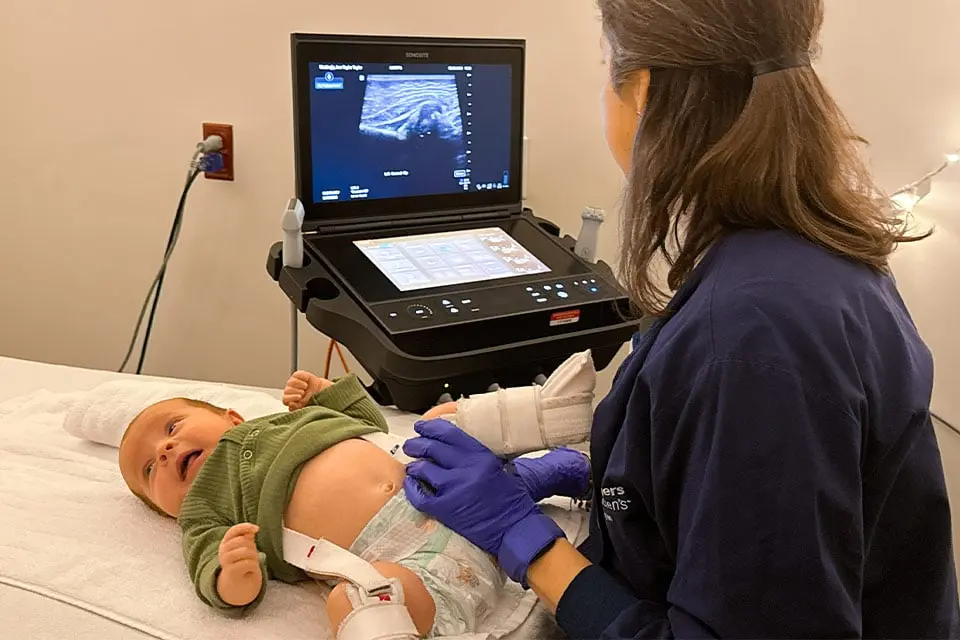
Ultrasound is commonly used for younger infants because the hip joint is still developing and much of it is cartilage early on. Ultrasound lets the clinician see how the ball sits in the socket and how the socket is forming.
- When it is used: often around 4 to 6 weeks if there are risk factors (like breech) and the exam is normal. If the exam is abnormal or the hip seems unstable, imaging and referral may happen earlier.
- What it is like: gel and a small probe on the skin. No radiation.
- What results can show: normal development, mild immaturity that needs a recheck, or dysplasia that needs treatment.
X-ray
X-rays are more useful when babies are older and the bones have developed enough to show the hip structures clearly.
- When it is used: often after about 4 to 6 months, depending on the situation.
- What it is like: quick imaging with low radiation exposure.
Treatment options
Hearing the word “harness” can make any parent’s stomach drop. Take a breath. For many babies, early treatment is straightforward and very effective.
Pavlik harness
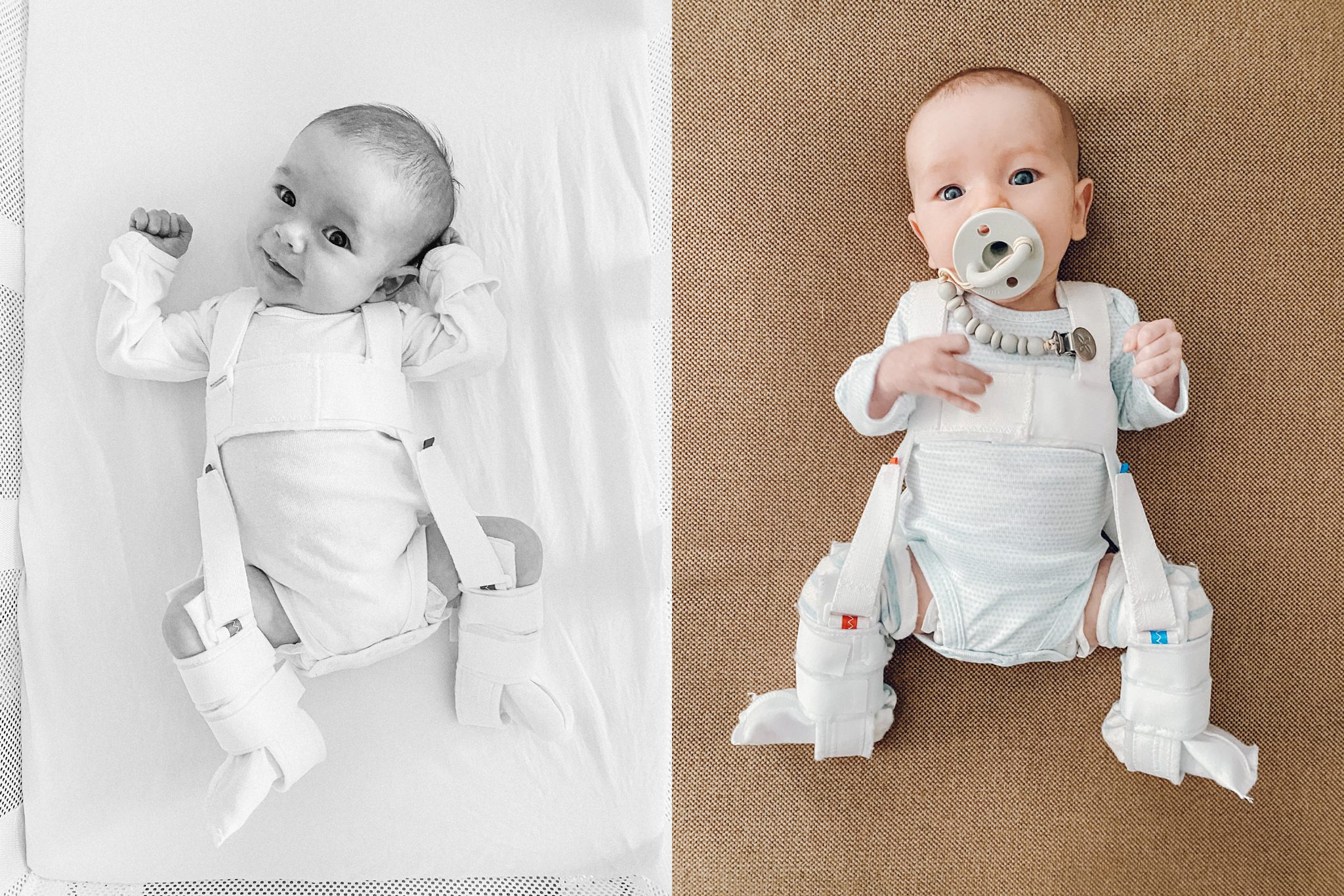
A Pavlik harness is a soft brace that holds baby’s hips in a flexed, outward position. That positioning helps the hip sit correctly in the socket so the socket can deepen as your baby grows. Most babies adapt quickly.
- What it looks like: soft straps around the shoulders and legs.
- How long it is worn: varies. Some babies wear it full-time at first, then transition to part-time. Your orthopedist will set the schedule.
- Does it hurt: it should not. If baby seems in pain or straps leave marks, call the orthopedic team.
- Follow-up: expect regular visits and repeat imaging to confirm the hip is improving.
If a harness is not enough
Some babies need a different brace, a cast, or other orthopedic treatments, especially if DDH is found later or is more severe. Your care team will walk you through options step-by-step. The overall goal is the same: a stable, well-formed hip joint to support healthy walking and long-term joint health.
Follow-up
DDH care is often a team effort between your pediatrician and a pediatric orthopedic specialist.
If the exam is normal but risks are present
- Your pediatrician may order a screening ultrasound at the recommended age.
- If imaging is normal, you may just continue routine hip checks at well visits.
If the exam is concerning
- You may be referred to pediatric orthopedics.
- Imaging (often ultrasound) may be ordered sooner.
- If mild changes are seen, you might repeat imaging in a few weeks to track development.
If treatment starts
- Expect frequent follow-ups at first to adjust fit and track progress.
- Most families will get clear instructions on diapering, clothing, car seat fit, and sleep positioning.
One practical tip from my triage nurse days: if you are waiting on an orthopedic appointment and you feel stuck, call your pediatrician’s office and ask what to watch for in the meantime. You deserve a plan you understand.
When to call sooner
DDH is rarely an emergency, but you should contact your pediatrician promptly if you notice:
- One hip that consistently will not open as wide as the other
- A leg that looks shorter or a knee that sits lower when both knees are bent
- A persistent preference to hold one leg in a different position
- New limping, toe-walking on one side, or uneven walking in a toddler
Seek urgent care if your baby seems in significant pain, will not move a leg, or you suspect an injury or trauma. A sudden change like that is not typical DDH and needs same-day evaluation.
Common questions
Did I cause this by swaddling?
Almost always, no. DDH is multifactorial and many babies with DDH were never swaddled tightly. That said, hip-healthy swaddling is an easy change that supports healthy hip positioning, especially for babies with risk factors.
Can my baby sleep on their side with DDH?
Safe sleep rules still apply: babies should sleep on their back on a firm, flat surface with no loose bedding, unless your medical team gives a specific medical exception. If your baby is in a harness, follow the orthopedist’s instructions for sleep and positioning.
Will my baby walk late?
Some babies with DDH or treatment may have a slightly different timeline, but many do not. What matters most is treating the hip early and following up as recommended so the joint develops well.
Outlook
When DDH is caught and treated early, outcomes are usually excellent. The goal is a stable hip that supports normal movement now and helps lower the risk of problems later, like limping or early hip arthritis.
Educational note: this article is for general information and is not a substitute for medical care. If something feels off, your pediatrician is the right next call.
Bottom line
DDH is common enough that pediatric offices screen for it routinely, and treatable enough that early detection makes a big difference. If something seems off, trust that little nudge in your brain and bring it up. You are not overreacting. You are parenting.
If you want to do one simple thing today: swaddle with room for hips and knees, and bring any symmetry concerns to your next well visit. That is a solid, sleep-deprived, very-good-parent plan.