Hives in Toddlers: Causes, Treatment, and When to Worry

Sarah Mitchell
Sarah Mitchell is a Registered Pediatric Nurse and a mother of three who has spent over a decade helping families navigate the beautiful, chaotic early years of childhood. She combines evidence-based medical knowledge with real-world parenting experience to offer practical, compassionate advice. At Awesome Parent, Sarah's mission is to help exhausted parents find solutions, trust their instincts, and finally get some sleep.
If you have ever lifted your toddler’s shirt and found a surprise crop of raised, itchy welts, your brain probably did that unhelpful thing where it jumps straight to serious allergy. Take a breath. Hives are common in toddlers, and many cases are triggered by everyday viruses or mild reactions that settle down with time and comfort care.
That said, hives can occasionally be the first sign of a severe allergic reaction, so you deserve clear guidance on what’s normal, what’s not, and what to do next.
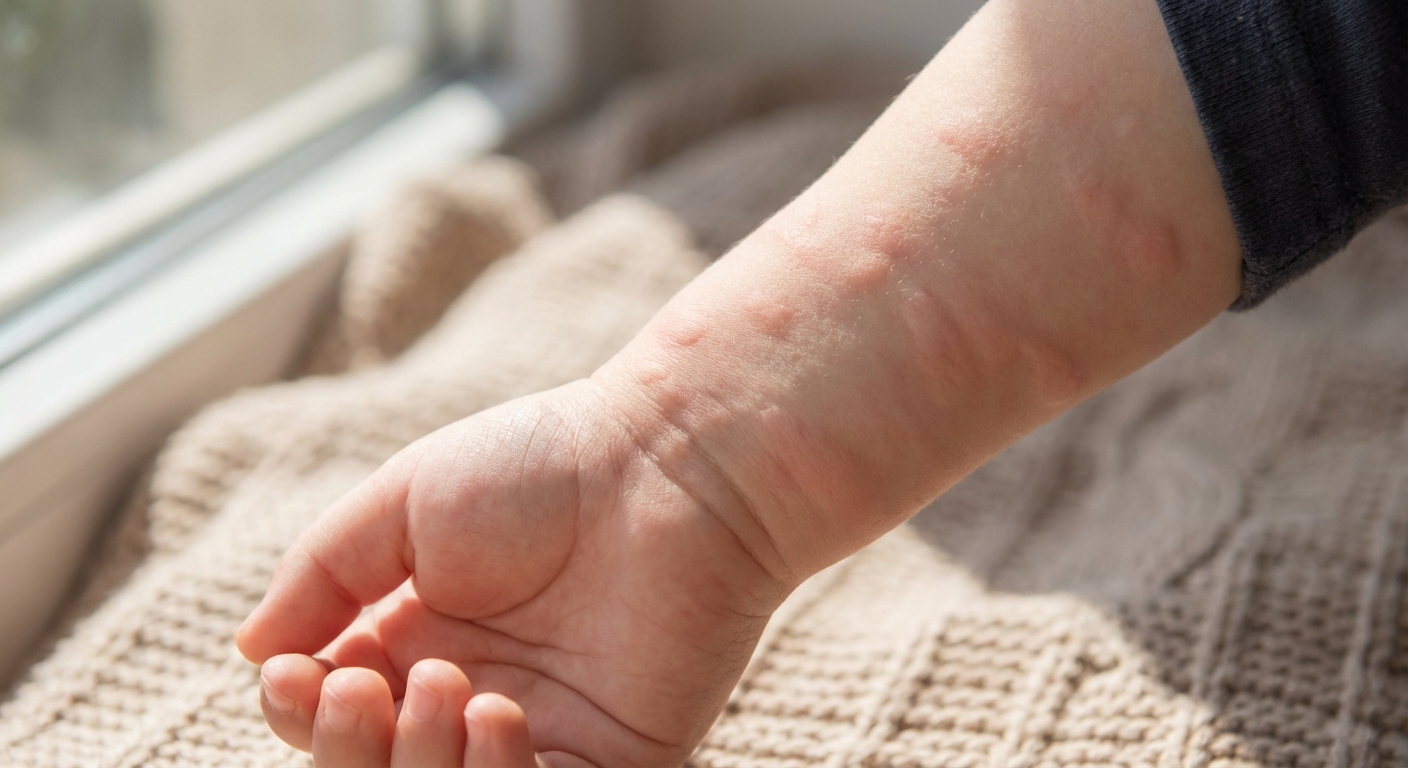
What hives look like
The hallmark of hives is that each welt is temporary. Individual spots usually come and go within 24 hours, even if new ones keep appearing elsewhere.
Hives, also called urticaria, are raised, puffy welts on the skin. They can be tiny like mosquito bites or large like a handprint. They often look pink or red on lighter skin and may look darker, purplish, or like raised swelling on deeper skin tones.
Classic hive clues
- They are raised and itchy. Some kids describe burning or stinging.
- They blanch. Press a hive and it often briefly turns lighter.
- They change shape and location. A hive can fade in one spot and pop up somewhere else minutes to hours later.
- They come and go quickly. Individual hives usually last less than 24 hours.
If a single spot stays in exactly the same shape for more than 24 to 48 hours, especially if it becomes bruised, painful, or blistered, check in with your pediatrician. Clinicians sometimes worry about less common conditions like urticarial vasculitis when lesions are painful, linger, and leave bruising.
Common triggers in toddlers
In clinic, the most common hive trigger is frustratingly simple: a toddler immune system that is a little quick on the draw. Toddlers are exposed to lots of germs, and their immune response can show up on the skin.
1) Viral infections (very common)
Viruses are a top trigger, even if your child seems only mildly sick or “not sick at all.” Hives can show up during a cold, stomach bug, or a day or two after the fever is gone.
- Often lasts a few days (sometimes longer)
- May come with runny nose, cough, diarrhea, or low appetite
- Not usually linked to a specific food or one-time exposure
2) Food allergies
True food allergies typically cause symptoms soon after eating, often within minutes to 2 hours. Common triggers include peanuts, tree nuts, eggs, milk, wheat, soy, fish, and shellfish.
- More suspicious if hives appear quickly after a specific food and happen again with repeat exposure
- May come with vomiting, lip or face swelling, coughing, wheezing, or trouble breathing
3) Medication reactions
Antibiotics are common suspects, but the story is not always straightforward because kids often take antibiotics while they are also fighting a virus, and viruses can cause hives on their own.
- Hives can appear during the course of a medication or shortly after
- Call your pediatrician before giving the next dose if you suspect a reaction
- Seek emergency care if there are breathing symptoms or significant swelling
4) Environmental triggers
Sometimes the trigger is contact or temperature related rather than something your toddler ate.
- Insect bites (mosquitoes, fleas, bedbugs) can cause hive-like welts
- Pets (dander or saliva)
- Pollen, dust mites, molds
- Soaps, detergents, lotions (can cause irritation or contact dermatitis that looks different from hives)
- Heat, sweating, or cold exposure
- Pressure (tight waistbands, car seat straps) in kids prone to pressure hives
5) Vaccines
Hives can occur after vaccination. Timing matters:
- Minutes to a few hours after a vaccine is uncommon but more concerning for an immediate allergy, especially if there are other symptoms.
- Later that day or over the next few days can also happen and is often not an IgE mediated vaccine allergy.
Severe allergic reactions to vaccines are rare, but hives plus breathing symptoms needs emergency care.
Hives vs other rashes
Not all rashes are hives, and the treatment changes depending on what you are dealing with. Here are a few quick comparisons that can help at 2 AM.
Hives
- Raised, puffy welts
- Itchy
- Move around and change shape
- Each spot usually fades within 24 hours
Eczema
- Dry, rough, scaly patches
- Often behind knees, inside elbows, cheeks
- Does not “travel” quickly
- Improves with moisturizers and sometimes steroid creams
Heat rash
- Tiny red bumps, often in sweaty folds (neck, chest, diaper area)
- Can feel prickly
- Triggered by overheating
- Improves with cooling and dry clothing
Hand, foot, and mouth disease
- Small blisters or sores, often on hands, feet, buttocks
- Mouth sores, drooling, fussiness with eating
- More “spotty” or blister-like than puffy welts
Contact dermatitis
- Redness where something touched the skin (new soap, plant, wipe)
- Can be itchy and bumpy but usually stays in the contact area
- May look dry or irritated rather than puffy welts
When in doubt, take a couple of clear photos in good light. Rashes love to disappear right as you finally get an appointment.
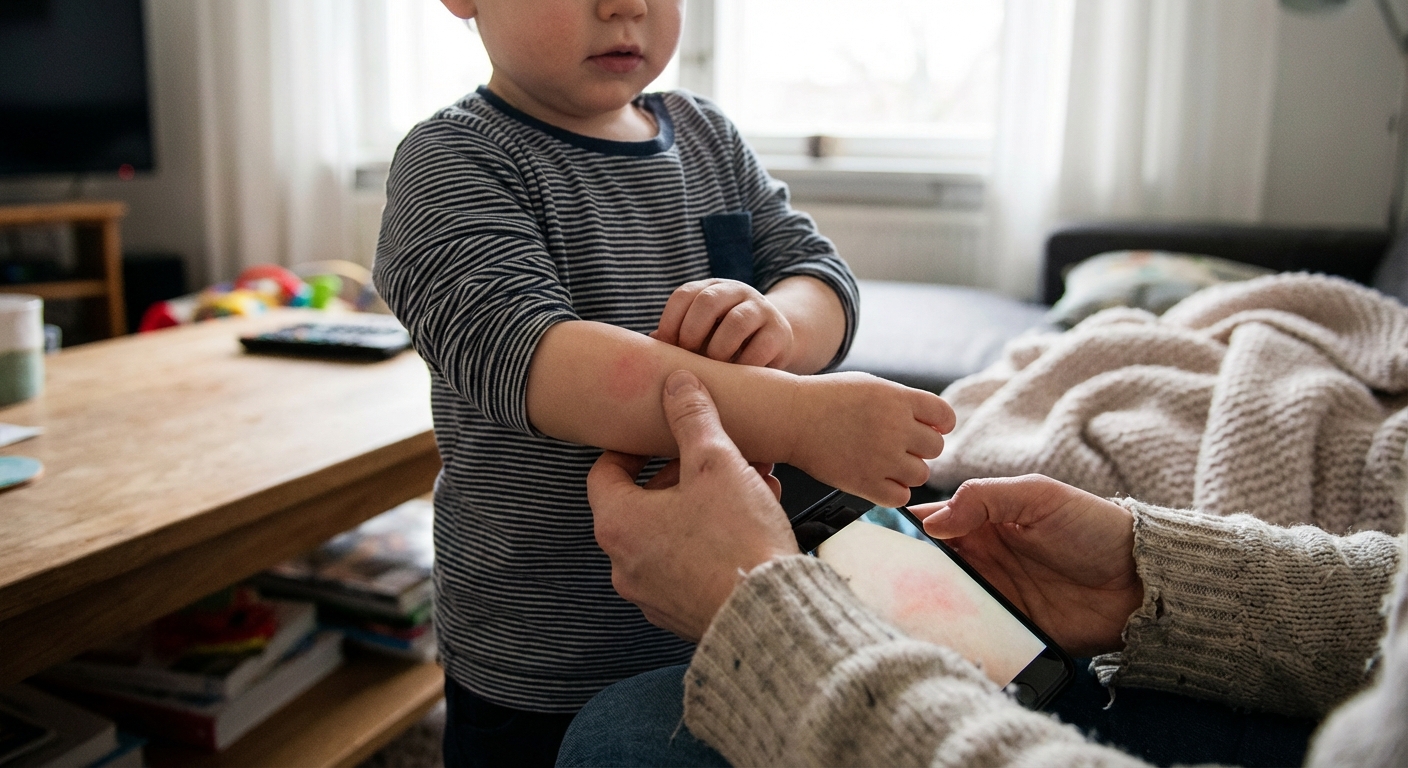
What you can do at home
Most simple hives can be managed at home while you keep an eye out for red flags.
Comfort measures
- Cool compresses for 10 to 15 minutes a few times a day
- Lukewarm bath (hot water can worsen itching). Some families find colloidal oatmeal baths soothing.
- Loose, soft clothing to reduce scratching and pressure
- Fragrance-free moisturizer after bathing, especially if your child has eczema too
- Keep nails short and consider cotton mittens at night if scratching is intense
- Reduce heat and sweat if that seems to trigger flares
What to skip
- Aspirin for kids (not recommended)
- New scented lotions or “herbal” creams that can irritate
- Topical antihistamine creams unless your clinician recommends them, as they can sometimes cause irritation or sensitization
Antihistamines
Hives are driven by histamine release in the skin, so antihistamines are often the most effective symptom relief.
Often preferred: non-drowsy options
Many pediatric clinicians prefer a second-generation, non-sedating antihistamine for uncomplicated hives because it lasts longer and causes less sleepiness.
Why dosing is tricky online
Safe dosing depends on your child’s age, weight, the specific product, and the concentration on the bottle. Over-the-counter liquids can vary, and dosing charts change. For that reason, I cannot safely give a one-size-fits-all dose here.
How to get the right dose fast
- Check the label for the active ingredient and concentration.
- Use your child’s current weight (not last year’s).
- Call your pediatrician or pharmacist for a weight-based dose if the label is unclear.
- If you are in the US, many poison control centers can also help with medication questions: 1-800-222-1222.
What about diphenhydramine (Benadryl)?
Diphenhydramine can work quickly for itching, but it can also cause significant drowsiness or, in some kids, the opposite: agitation and hyperactivity. It also wears off faster. Some families still use it under guidance, especially for nighttime misery, but talk with your pediatrician about what makes sense for your child.
Important: Antihistamines treat hives and itching. They do not treat anaphylaxis on their own. If you see breathing trouble or other emergency signs below, do not “wait to see if the antihistamine kicks in.”
Anaphylaxis signs
Hives can be part of anaphylaxis, which is a severe allergic reaction that can worsen quickly. Trust your gut. If your child looks unwell or symptoms are escalating, seek emergency care.
Call emergency services now if hives are accompanied by
- Trouble breathing, wheezing, repetitive cough, noisy breathing, or struggling to speak or cry
- Swelling of the lips, tongue, face, or throat (this swelling is also called angioedema)
- Drooling or trouble swallowing
- Vomiting repeatedly, severe belly pain, or diarrhea plus hives after a likely allergen
- Dizziness, fainting, pale or clammy skin
- Sudden sleepiness, confusion, or “something is very off” behavior
One nuance that matters: toddlers can cough or wheeze from a viral cold, and they can also cough or wheeze during an allergic reaction. If breathing symptoms are sudden, are happening right after a likely trigger (like a new food), or are paired with hives or facial swelling, treat it like an emergency.
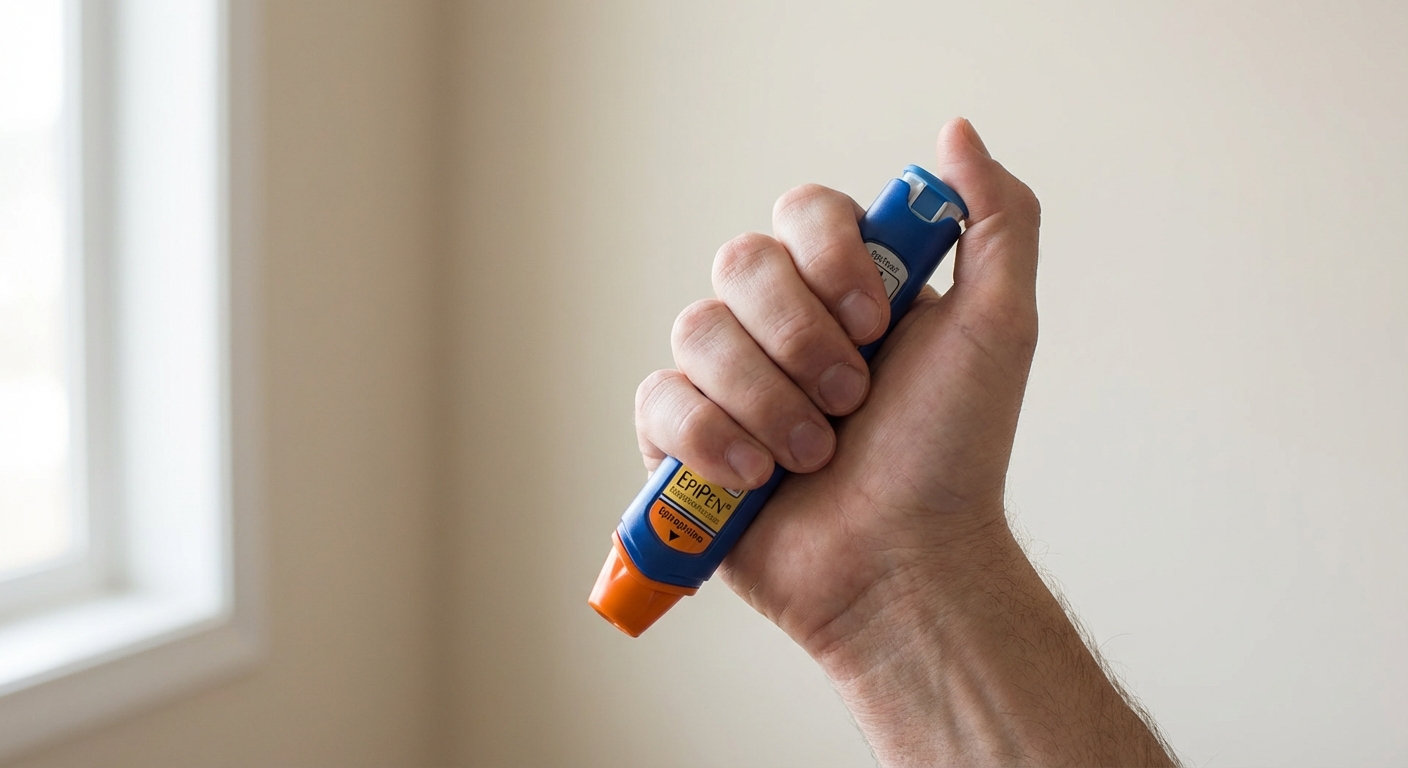
If your child has a prescribed epinephrine auto-injector and you suspect anaphylaxis, use it immediately and call emergency services. Epinephrine is the first-line treatment.
When to call the pediatrician
Reach out to your child’s clinician if:
- Any individual hive lasts more than 24 hours, or the rash becomes bruised, painful, or blistered
- The outbreak is not improving after a few days, or keeps returning over 1 to 2 weeks
- Your child is under 6 months (always worth a call)
- There is significant facial swelling even without breathing symptoms
- Hives started after a new medication
- You suspect a food allergy and need guidance on what to avoid and whether allergy testing is appropriate
- Your toddler has fever with a rash that looks unusual, is purple or bruise-like, or your child seems very ill
Chronic hives
If hives come and go for more than 6 weeks, that is considered chronic urticaria. The good news is that in many kids, chronic hives are not due to a single identifiable food allergy. They can be influenced by recent infections and, less commonly, immune system signaling that is not tied to a specific exposure. Your pediatrician may recommend a longer-term antihistamine plan and, sometimes, referral to an allergist. In general, avoid broad food restriction unless your clinician has a clear reason to suspect a specific food.
If food seems like the trigger
If hives appear soon after a specific food, treat symptoms as appropriate and contact your pediatrician. A few practical tips:
- Do not “test” the food again at home if the reaction seemed immediate or was paired with vomiting, coughing, or swelling.
- Write down the details: what was eaten, how much, timing, and symptoms.
- Take photos of the hives and any swelling.
- Ask whether you need an allergy referral and whether an epinephrine auto-injector is appropriate.
If you cannot find a trigger
You are in good company. Many toddler hive outbreaks have no single “aha” moment. A few sanity-saving moves:
- Avoid panic diet changes. Unless hives repeatedly show up right after a specific food, removing lots of foods usually creates stress without helping.
- Keep a simple log for a week: foods, new meds, illnesses, outdoor exposures, and when hives appear.
- Focus on patterns, not one-offs. One random episode after a new snack is often coincidence. Repeat, consistent timing is more meaningful.
Quick checklist
- Many toddler hives are triggered by viral infections and are self-limited.
- Hives move around and each spot usually fades within 24 hours.
- Cool compresses and avoiding heat can reduce itching.
- Use an age-appropriate antihistamine dose based on your child’s weight and the product concentration. Ask your pediatrician or pharmacist if you are unsure.
- Get emergency help if hives come with breathing trouble, throat or tongue swelling, repeated vomiting, or your child looks very ill.
If you are reading this in the dark while your toddler scratches like a tiny raccoon, you are not alone. Hives look dramatic, but with a quick red-flag check and a solid comfort plan, most families get through it safely and quickly.
Sources
- American Academy of Pediatrics, HealthyChildren.org: guidance on hives and allergic reactions
- American Academy of Allergy, Asthma and Immunology (AAAAI): urticaria and anaphylaxis resources
- National Institute of Allergy and Infectious Diseases (NIAID): food allergy and anaphylaxis overview
Medical note: This article is general education and not a substitute for medical care. If you are worried about your child’s breathing, swelling, or overall appearance, seek urgent evaluation.