How to Bring Down a Toddler’s Fever Safely

Sarah Mitchell
Sarah Mitchell is a Registered Pediatric Nurse and a mother of three who has spent over a decade helping families navigate the beautiful, chaotic early years of childhood. She combines evidence-based medical knowledge with real-world parenting experience to offer practical, compassionate advice. At Awesome Parent, Sarah's mission is to help exhausted parents find solutions, trust their instincts, and finally get some sleep.
If you are reading this with one hand while your toddler radiates heat like a tiny space heater, I see you. Fevers feel urgent, especially at 2 a.m. The good news is that most toddler fevers are caused by common viruses and can be managed safely at home with the right tools, the right dosing, and a clear plan for when to call in backup.
This page is for the “what do I do right now?” moment. We will cover what temperature counts as a fever, how to bring it down safely, how to dose acetaminophen and ibuprofen by weight, what cooling tricks actually help, hydration strategies that work on stubborn toddlers, and the specific thresholds that should prompt a call to your pediatrician.
First: confirm it is really a fever
A fever is the body’s way of fighting an infection. In toddlers, it is common and usually not dangerous by itself.
- Fever is generally a temperature of 100.4°F (38°C) or higher.
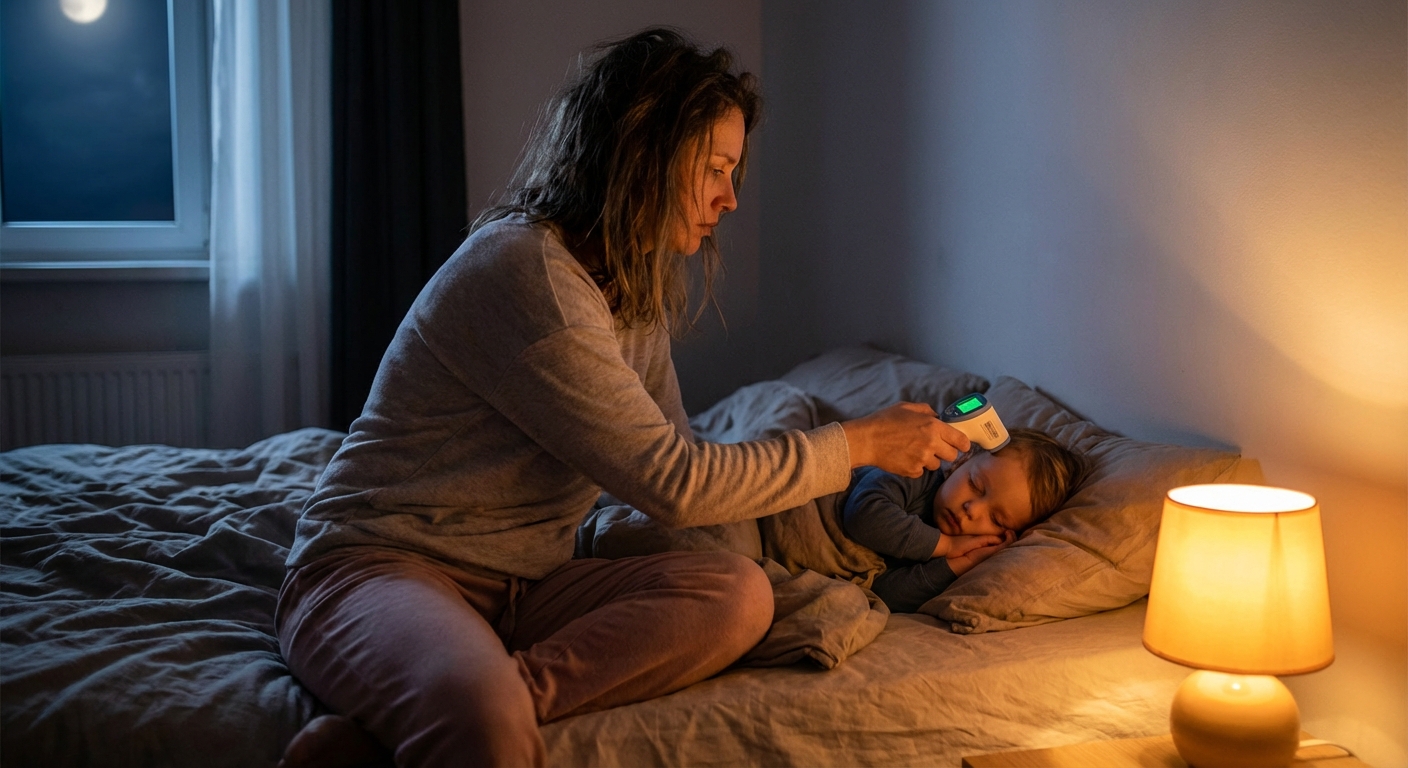
- Best methods for toddlers: rectal (most accurate), oral (if your child can do it reliably), or an ear thermometer (tympanic) in toddlers and older babies when used correctly. Forehead scanners are convenient but can be a little off, especially if your child was bundled up or just came in from outside.
- Pro tip: If you used a forehead thermometer and got a high number, confirm with a second reading and check your technique (dry forehead, no hat). If they just had a bath, were outside, or were snuggled under blankets, wait 15 to 30 minutes and follow your device instructions.
What matters most is not just the number. A toddler with 103°F who is sipping fluids and watching a show is often less concerning than a toddler with 101°F who is hard to wake, struggling to breathe, or showing signs of dehydration.
When a fever needs urgent care
Use this as your quick “do we need help right now?” checklist. Trust your gut. If something feels off, it is always okay to call.
Most fevers will not meet the criteria below. Still, it is worth knowing these red flags so you are not trying to think through them on no sleep.
Go to emergency care now or call emergency services if your toddler:
- Has trouble breathing, ribs pulling in, grunting, or lips/face turning blue or gray
- Is hard to wake, unusually floppy, severely confused, or not making eye contact like normal
- Has a seizure (especially a first seizure)
- Has a stiff neck with severe headache, new confusion, or sensitivity to light
- Has a purple or blood-colored rash that does not blanch (does not fade when you press it)
- Shows signs of severe dehydration: very dry mouth, no tears when crying, and significantly fewer wet diapers/urination
- Has a fever after being left in a hot car or with symptoms of heatstroke
Call your pediatrician urgently (same day) if:
- Your child is under 3 months and has a temp 100.4°F (38°C) or higher
- Fever is 104°F (40°C) or higher at any age
- Your toddler has fever plus worsening ear pain, persistent vomiting, signs of dehydration, or significant belly pain
- Your child has a chronic medical condition or is immunocompromised
- Fever lasts longer than your clinic’s comfort window. Many clinicians recommend calling if fever lasts more than 24 hours in children under 2, or more than 72 hours in children 2 and older, even if symptoms seem mild.
- Your child seems to be getting worse instead of slowly improving
If you are not sure, call. A good nurse line will ask a few targeted questions and help you decide the safest next step.
The goal: comfort, not a perfect number
One of the biggest myths I see as a nurse is that you must get the temperature back to 98.6°F immediately. You do not.
Your goal is comfort: easier breathing, better drinking, less misery, and more rest. Lowering the fever can help your toddler feel better, but a fever itself is not automatically dangerous.
If your toddler is playing, drinking, peeing, and waking up appropriately, it is often safe to monitor at home even with a higher fever.
Safe fever reducers
For toddlers older than 6 months, acetaminophen (Tylenol) and ibuprofen (Advil, Motrin) are the two go-to options. Both work well when dosed correctly.
Important safety reminders
- Never give aspirin to children due to the risk of Reye’s syndrome.
- Do not use multi-symptom cold medicines for fever dosing. They increase the risk of accidental double-dosing and side effects. Many contain acetaminophen (sometimes listed as APAP), which is an easy way to accidentally give too much.
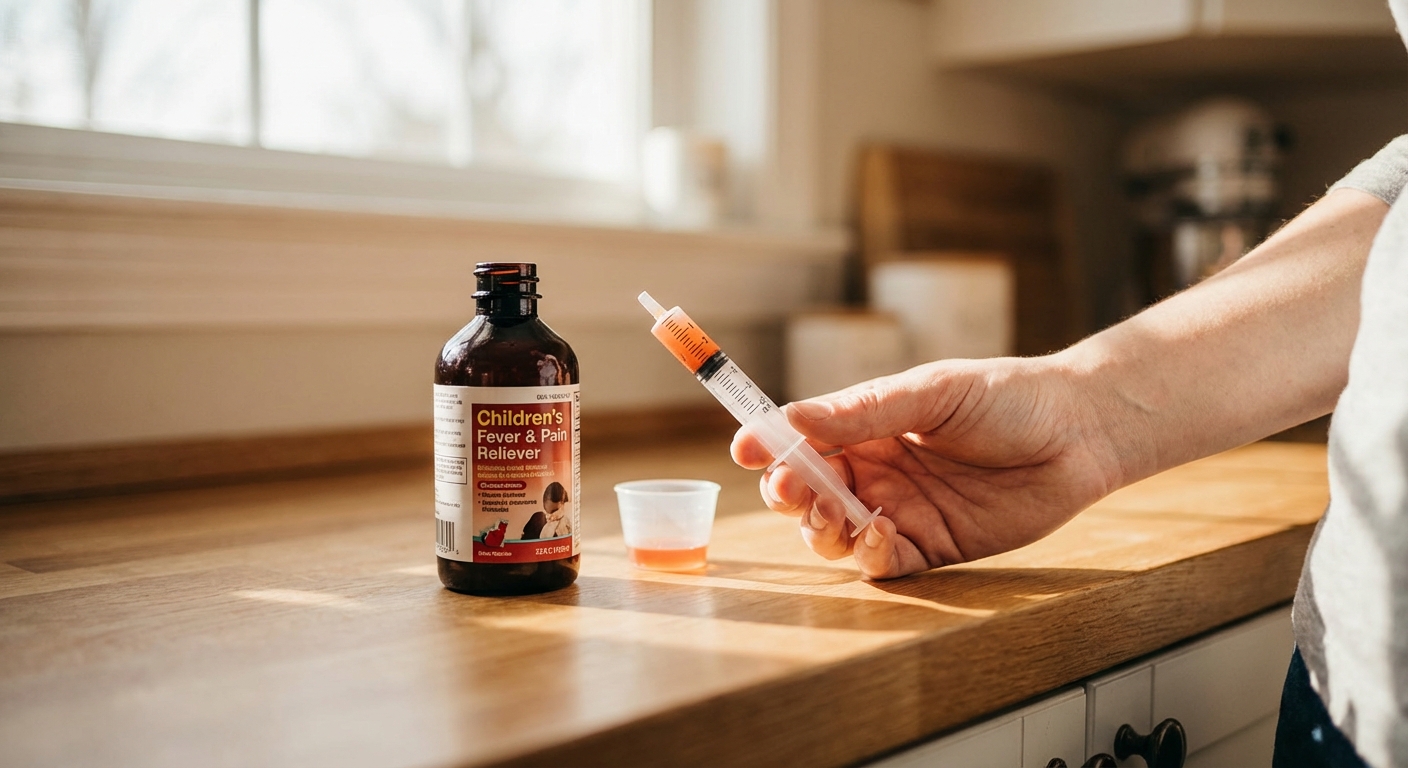
- Use the dosing syringe that comes with your medication, not a kitchen spoon.
- Check the concentration on the bottle. Infant and children’s liquid acetaminophen in the U.S. is commonly 160 mg per 5 mL, but always verify.
- Write it down: time, medication, and dose. Fever nights blur together fast.
- Skip these meds and call for guidance if your child has a known allergy, significant liver disease (acetaminophen), kidney disease, a history of GI bleeding, or is significantly dehydrated (ibuprofen).
Acetaminophen dosing by weight
Typical dose: 10 to 15 mg per kg per dose, every 4 to 6 hours as needed.
Convert mg to mL safely: Use the bottle label (mg per 5 mL or mg per mL) or your pediatrician’s dosing chart to convert the dose to mL for your exact concentration.
If your toddler is vomiting and cannot keep oral medicine down: Ask your pediatrician or pharmacist about acetaminophen suppositories and the correct dose for your child’s weight. (Do not guess.)
Ibuprofen dosing by weight
Typical dose: 10 mg per kg per dose, every 6 to 8 hours as needed. Do not use ibuprofen under 6 months. Use caution if your child is dehydrated or vomiting a lot, since ibuprofen can be harder on the stomach and kidneys when fluid intake is low.
Convert mg to mL safely: As with acetaminophen, use your bottle label and measuring device to match the correct mL to the correct mg dose.
Easy dosing shortcut (still check your bottle)
If you are in the weeds, here is a quick way to get in the right range, then you can fine-tune with the label or your pediatrician’s chart:
- Acetaminophen: about 15 mg/kg per dose
- Ibuprofen: about 10 mg/kg per dose
“Infant” versus “children’s”
Many families keep “infant” acetaminophen around because it comes with a syringe, but the concentration may be the same as children’s liquid. What matters is the mg per mL on the label, not the marketing on the front.
Alternating fever meds
This is one of the most common questions I get, and the most common place dosing errors happen.
Should you do it?
Some pediatricians recommend sticking with one medicine unless there is a specific reason to alternate. Alternating may be considered if your toddler is very uncomfortable, the fever returns before the next dose is due, or you are trying to avoid overdosing on one medication while still providing relief.
If you alternate, do it safely
Only alternate if your pediatrician says it is appropriate for your child and you can keep a clear written log.
- Keep the minimum intervals: acetaminophen every 4 to 6 hours, ibuprofen every 6 to 8 hours.
- Do not exceed the maximum daily doses on your labels or your pediatrician’s instructions.
- If you cannot keep track, do not alternate. Pick one medication and stick with it.
A simple example schedule (not a rule for every child):
- 8:00 p.m. acetaminophen
- 11:00 p.m. ibuprofen (3 hours later, only if still uncomfortable)
- 2:00 a.m. acetaminophen (this is 6 hours after the last acetaminophen)
- 5:00 a.m. ibuprofen (this is 6 hours after the last ibuprofen)
Make it safer: Set phone alarms and keep a simple log like “8:00 Tylenol 5 mL, 11:00 Motrin 5 mL.”
When not to alternate
- If your child is vomiting repeatedly or you are worried about dehydration, skip ibuprofen unless your clinician advises otherwise.
- If you have any doubt about dosing or timing, do not alternate.
- If your child has liver disease, kidney disease, bleeding disorders, or is on other medications, check with your clinician first.
Cooling techniques
Medicine helps, but there are also practical comfort steps that can take the edge off. The key is to cool gently. Shivering raises body temperature, and miserable toddlers do not hydrate well.
What helps
- Dress lightly: a single layer and a light blanket if they want it.
- Room temp fluids: small sips often.
- Lukewarm bath if your child tolerates it: think “warm enough for comfort,” not cold. Stop if they shiver.
- Cool washcloth on the forehead or back of the neck if it soothes them.
- Let them rest, but check in and offer fluids regularly.
What to skip
- Ice baths or cold baths: can cause shivering and make them feel worse.
- Alcohol rubs: unsafe, alcohol can be absorbed through the skin and inhaled.
- Over-bundling to “sweat it out”: can raise body temperature.
- Fans blasting directly on a sweaty child: can trigger chills and discomfort.
Hydration: the part that prevents trouble
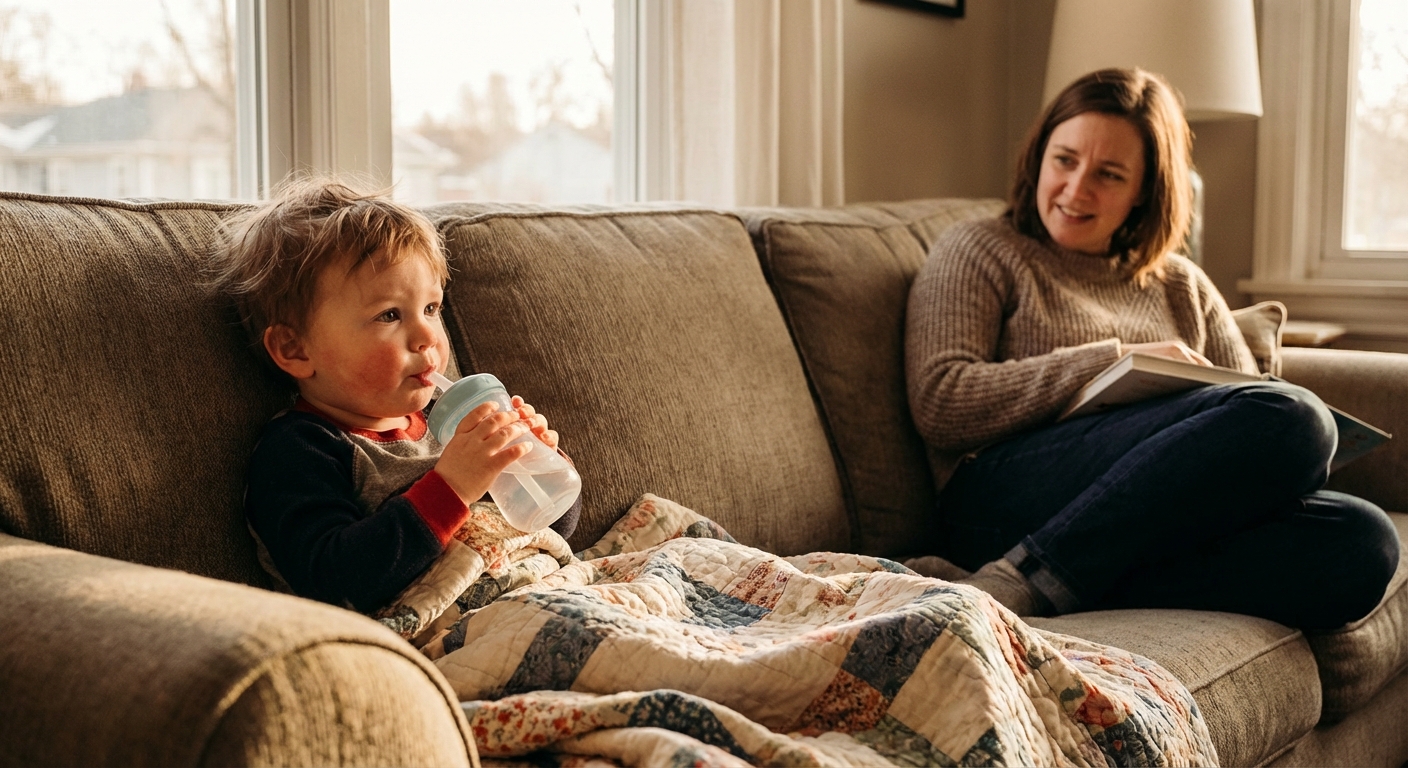
Fever increases fluid needs. Toddlers also tend to eat and drink less when sick. Keeping fluids up is one of the most important things you can do at home.
Signs your toddler is hydrated enough
- Wet diapers or peeing regularly. For many toddlers, that is at least every 6 to 8 hours, but patterns vary (especially if they are toilet-trained).
- Mouth is moist, not sticky or very dry
- Some tears when crying
- Energy is at least intermittently normal between rest periods
What to offer
- Water is great for most toddlers.
- Oral rehydration solution (like Pedialyte) is helpful if there is vomiting or diarrhea.
- Milk is usually fine if they want it and are keeping it down.
- Broth, popsicles, smoothie sips can be easier to accept than plain water.
Practical toddler hydration tricks
- Go for tiny amounts often: 1 to 2 teaspoons every few minutes for kids who gag on bigger drinks.
- Offer choices: “Do you want the blue cup or the dinosaur cup?”
- Use a medicine syringe for fluids if needed and if your child will tolerate it.
- Let them sip while watching a show. Sick days are not the time for screen-time guilt.
What to limit
- Juice and soda can worsen diarrhea and do not hydrate as well. If you use juice, consider diluting it.
- Sports drinks are not ideal for young kids with stomach bugs due to sugar content. Oral rehydration solution is better.
What to do right now
If you are overwhelmed, start here.
- Check breathing and alertness. If there is trouble breathing, difficulty waking, severe confusion, a seizure, or blue or gray lips, seek urgent care.
- Take a reliable temperature. Write it down with the time.
- Check their weight (best) or last known weight. Dosing is safest by weight.
- Give acetaminophen or ibuprofen if your child is uncomfortable and old enough for the medication. Measure carefully with a syringe. Use the bottle label (or your clinic’s chart) to convert mg to mL for your specific product.
- Offer fluids. Small sips often. Watch for regular peeing or wet diapers.
- Dress lightly. Keep the room comfortably cool, not cold.
- Recheck in 60 to 90 minutes. The number may not drop dramatically, and that is okay. Look for improved comfort and drinking.
- Log every dose with time and amount to avoid accidental repeats.
How high is too high?
The number matters, but the whole picture matters more. Still, parents deserve clear thresholds.
- 100.4°F to 102°F (38°C to 38.9°C): Often manageable with fluids and comfort measures. Meds are optional if your child is comfortable.
- 102°F to 104°F (38.9°C to 40°C): Common with viral illnesses. Consider a fever reducer if your toddler is miserable, not drinking, or not resting.
- 104°F (40°C) or higher: Call your pediatrician promptly for guidance, especially if it does not come down with medication or your child looks ill.
Remember: the cause and your child’s overall appearance matter as much as the temperature. A child can have a high fever from a simple virus, and a serious infection can sometimes have only a mild fever. That is why red-flag symptoms are so important.
Common fever questions
How long should medicine take to work?
Most kids start to look more comfortable within 30 to 90 minutes. The temperature may not return to normal. That is okay.
Hands and feet are cold but their body is hot. Is that normal?
It can happen during a fever “rise,” when the body is increasing temperature. Focus on comfort, avoid bundling, and recheck the temp. If your child is very lethargic or looks unwell, call your clinician.
Should I wake my toddler to give fever medicine?
If they are sleeping comfortably, you usually do not need to wake them just to treat a number. Sleep helps healing. Do check in and offer fluids regularly, especially if they have not urinated in a while.
When is a fever contagious?
The fever itself is not contagious. The infection causing it might be. In general, keep kids home while they have a fever and until they are fever-free for 24 hours without fever reducers, plus acting reasonably like themselves.
Medication safety checklist
- Know your child’s current weight when possible
- Use one acetaminophen product and one ibuprofen product to avoid doubling
- Scan labels for acetaminophen listed as APAP
- Use the correct measuring device
- Respect minimum intervals (acetaminophen 4 to 6 hours, ibuprofen 6 to 8 hours)
- Do not exceed the label’s maximum daily doses or your pediatrician’s instructions
- Write down: time, dose, medication
- Store medications up high and locked, especially in the chaos of sick nights
If you take one thing
You do not need to “win” against the fever. You need to keep your toddler safe, comfortable, and hydrated while you watch for red flags.
If you want a simple plan to tape inside your medicine cabinet, make a one-page note with your child’s weight, the correct acetaminophen dose (in mg and mL for your bottle), the correct ibuprofen dose (if over 6 months), and your pediatrician’s after-hours number. Future you will be very grateful.