How to Calm a Toddler Tantrum in Public: 7 Evidence-Informed Tools

Sarah Mitchell
Sarah Mitchell is a Registered Pediatric Nurse and a mother of three who has spent over a decade helping families navigate the beautiful, chaotic early years of childhood. She combines evidence-based medical knowledge with real-world parenting experience to offer practical, compassionate advice. At Awesome Parent, Sarah's mission is to help exhausted parents find solutions, trust their instincts, and finally get some sleep.
Public toddler tantrums are a special kind of parenting adrenaline. One minute you're comparing cereal prices, the next your child is on the floor like they've just been told you're moving to the moon. If you've ever felt your face go hot while strangers pretend not to stare, I want you to know two things: (1) you're not alone, and (2) there are reliable ways to de-escalate this that don't involve bribing with cookies or leaving your dignity in Aisle 7.
As a pediatric nurse and a mom of three, I think of tantrums as a toddler nervous system problem, not a character flaw. Your goal in public isn't to win an argument. It's to keep everyone safe, lower the intensity, and get through the moment with as little fuel on the fire as possible.

Quick note: If your child is injured, you suspect a medical issue, or they're holding their breath and turning blue, treat it as a safety situation first. Breath-holding spells can happen with intense crying, but if it's the first time, they become blue or limp, or you feel unsure, seek urgent medical guidance.
Why public meltdowns happen
Toddlers have big feelings and a still-developing brain that's learning impulse control. Public places pile on extra stressors:
- Overstimulation: lights, noise, crowds, and lots of “no touch” rules.
- Hunger or fatigue: the classic hangry spiral.
- Transitions: leaving the park, getting into the car, moving from one aisle to the next.
- Limited language: they can't always say, “I'm overwhelmed and the sound of the self-checkout is bothering my soul.”
- Autonomy needs: toddlers crave control, especially when they feel powerless.
Most kids have tantrums somewhere between ages 1 and 4, with a peak for many around 2 to 3. When a tantrum hits, your child isn't in “learning mode.” Think of it like a storm. We calm first. We teach later.
The public tantrum plan: 7 evidence-informed tools
These are the tools I've used in triage rooms and in Target. They work because they reduce triggers, support co-regulation, and set clear, simple limits.
1) Regulate yourself first
Your toddler takes cues from your nervous system. If you escalate, they'll often escalate. If you can stay steady, they have something steady to lean on.
- Drop your shoulders.
- Exhale longer than you inhale a few times. Slower breathing can help your body shift out of fight-or-flight.
- Lower your voice instead of raising it. Quiet often pulls a toddler down with you.
What to tell yourself: “This is loud, not dangerous. My job is calm and safe.”
2) Get low and soften your body
Standing over a toddler who's melting down can feel threatening, even when you don't mean it that way. Crouch or kneel beside them, turn slightly sideways (less confrontational), and keep your face neutral and kind.
If they're kicking or flailing, stay close enough to block dangerous movement but far enough not to get hit. Prioritize safety.

3) Use a short validating script
Validation isn't agreement. It's naming what's happening, which helps many toddlers feel understood. Keep it brief. When we talk too much, we accidentally turn it into a debate.
Try:
- “You're mad. You wanted the cookies.”
- “You're sad we're leaving the park.”
- “This is hard. I'm here.”
Avoid: “If you don't stop right now…” or “People are looking at you.” (Both add stress and usually increase the volume.)
4) Offer two controlled choices
Tantrums often ignite when a toddler feels trapped. Choices give them a safe sense of control, but only if both options work for you.
Examples that work in public:
- “Do you want to sit in the cart or hold my hand?”
- “Do you want to walk to the car or do I carry you?”
- “Do you want the red apple or the green apple?”
Pro tip: Ask once, then wait. Silence is powerful. Give them a few seconds to process.
5) Reduce stimulation fast
If your toddler's overwhelmed, the kindest move is often to change the environment. In nursing, we'd call it removing a trigger. In parenting, it looks like stepping away from the crowd.
- Move to a quieter spot: end of the aisle, an empty checkout lane, outside the store, or your car.
- Clear the lane: pull the cart out of traffic, step away from parking lot movement, and if you need to carry your child out, it's okay to ask a staff member to keep an eye on your cart.
- Turn down the input: lower your voice, dim the phone screen, stop extra talking.
- Offer a body boundary: a gentle hand on their back or holding them close if they accept it.
If they hate being touched during a tantrum, respect that and stay near. “I won't hold you, but I'll stay with you.”
6) Set one clear limit and repeat it
Limits help toddlers feel safe, but they need to be simple. One sentence. Same sentence. Calm tone. Repeating isn't being rude, it's being clear.
Examples:
- “I won't let you hit.”
- “Cookies aren't on our list today.”
- “It's time to go. I'll help you.”
Then pair the limit with the next step: “You can ride in the cart or I will carry you.”
7) Use a reset tool
Once the intensity dips even slightly, give the body something concrete to do. This helps shift from pure emotion toward regulation.
- Blow the candles: “Blow out three candles with me.” (Slow exhale.)
- Deep pressure: “Do you want a big squeeze hug or no hug?”
- Sip water: If you have it, offer a drink. A sip can help some kids reset.
- Count steps: “Let's count to ten as we walk.”
This isn't a magic trick. It's a bridge back to calm.
If they're on the floor
This is the moment that makes parents feel trapped. You're not trapped. You've got options.
- If it's safe to wait: Stand nearby, keep them in your line of sight, and use the repeatable limit. “I'm here. When your body is ready, we'll go to the car.”
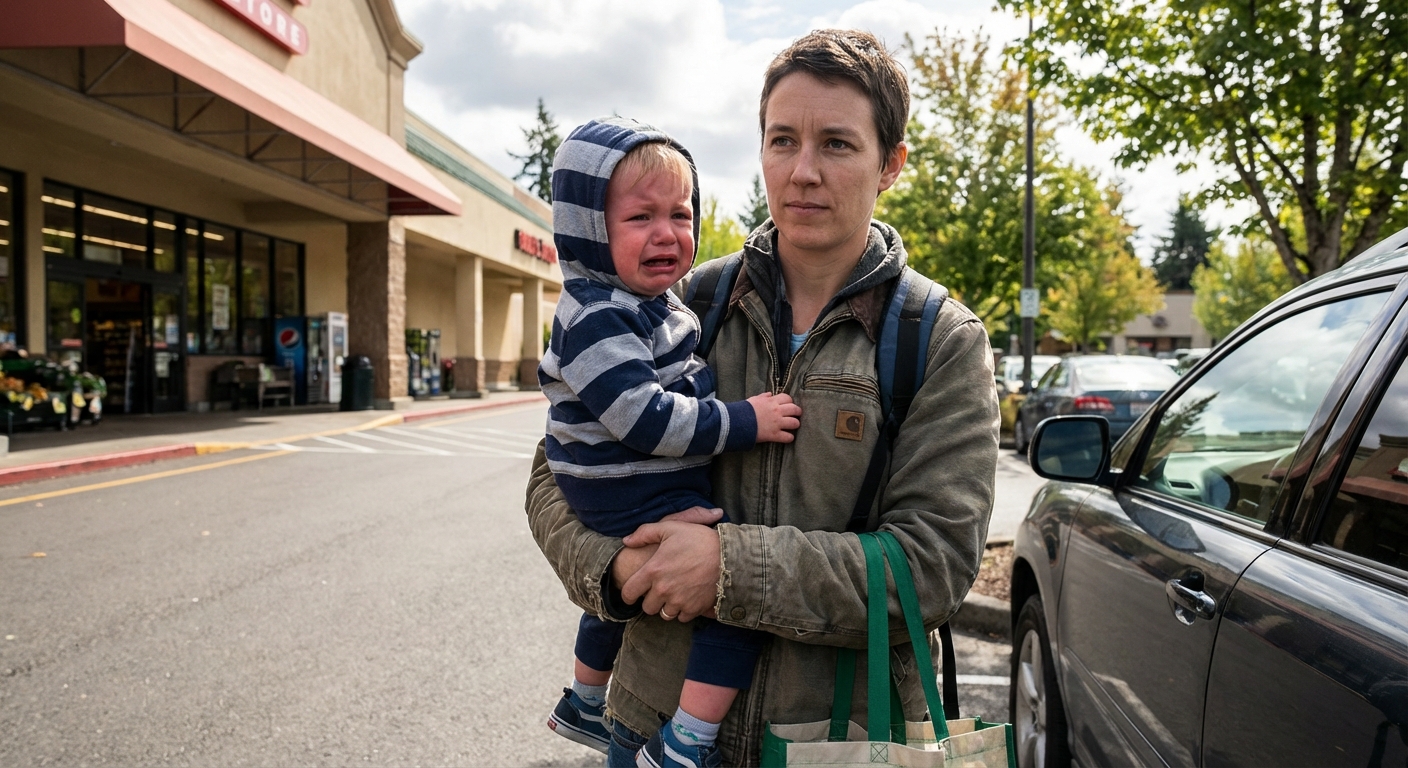
- If you need to leave: It's okay to pick them up and go, even if they're furious about it.
- If they're endangering themselves or others: Leaving is the right call.
Carrying tip: Many parents find a “football hold” helpful: your child's body tucked against your side with your arm securing their torso, keeping their legs pointed behind you. Make sure their airway stays clear and you aren't compressing their chest or belly. If your child is very strong, you're pregnant, or you're injured, prioritize getting help and getting to safety over any specific hold.
What not to do
- Don't threaten big consequences in the moment. When they're dysregulated, many toddlers can't take in lessons or future punishment.
- Don't negotiate for calm. “If you stop crying, I'll buy it” teaches that tantrums work.
- Don't lecture. Save teaching for later, when the storm has passed.
- Don't shame. “You're acting like a baby” increases distress and doesn't build skills.
- Don't rush to fix every feeling. Your child is allowed to be disappointed. You can be kind without changing your boundary.
A 2-minute repair
Later, when your toddler's calm and connected again, do a quick recap. This is where learning happens.
Keep it simple:
- “That was really hard at the store.”
- “You wanted cookies. I said no.”
- “Next time you can say ‘mad!’ or stomp your feet, but we don't hit.”
- “Do you want to practice asking for help?”
If you lost your cool (it happens), repair it. “I got loud. I'm sorry. I'm practicing staying calm too.” That's not weakness. That's modeling.
Prevention tweaks
You can't prevent every tantrum. Toddlers are going to toddler. But you can lower the odds.
- Snack and water before you go in to the store or park.
- Set expectations in one sentence: “We're buying dinner stuff, then we leave.”
- Give a job: “You can hold the list” or “Choose the bananas.”
- Use transition warnings: “Two more slides, then shoes.”
- Bring a tiny calm kit: a small book, a fidget, a favorite safe toy.
If your child is sensory-sensitive
Some kids melt down fast in loud, bright, unpredictable places. If that's your child, you're not doing anything wrong. Their system gets overloaded quickly.
- Choose lower-stim times: mornings, off-peak shopping, shorter trips.
- Bring sensory supports: headphones, sunglasses or a hat, a chewy necklace, a familiar comfort item.
- Plan your escape route: know the quickest way to a quiet corner or outside.
- Use fewer words: “Too loud. I'm here. We're going outside.”
When to get more help
Most tantrums are a normal part of toddler development. Consider talking with your child's pediatrician if you notice any of the following:
- Tantrums that are very frequent (for example, many times a day most days) or very long (often over 15 to 20 minutes) and not improving over time.
- Regular self-injury (head banging, biting) or aggression that's hard to keep safe.
- Big concerns about speech delay, sensory overwhelm, sleep issues, or anxiety.
- Your family's avoiding leaving the house because it feels unmanageable.
Support can include parenting coaching, behavior therapy, evaluation for sensory differences, or simply troubleshooting sleep and routines. Getting help isn't a sign you're failing. It's a sign you're paying attention.
A final word for Aisle 7
If your toddler melts down in public, it doesn't mean you're doing it wrong. It means you have a toddler, and today their capacity ran out in a loud place with bright lights.
Pick one technique from the list and practice it on purpose. Over time, you'll build a rhythm. And in the meantime, if someone is judging you while you calmly kneel beside your tiny tornado, let them. You're doing real work.
Sources
- American Academy of Pediatrics, HealthyChildren.org: Tantrums and toddler behavior guidance
- CDC: Essentials for Parenting Toddlers and Preschoolers
- ZERO TO THREE: Toddler tantrums and social-emotional development resources