How to Discipline a Toddler Without Yelling

Sarah Mitchell
Sarah Mitchell is a Registered Pediatric Nurse and a mother of three who has spent over a decade helping families navigate the beautiful, chaotic early years of childhood. She combines evidence-based medical knowledge with real-world parenting experience to offer practical, compassionate advice. At Awesome Parent, Sarah's mission is to help exhausted parents find solutions, trust their instincts, and finally get some sleep.
If you've ever heard your own voice get louder and thought, “Yep. This is not who I want to be,” you're in very good company. Toddlers are tiny, loud scientists who test limits for a living. And when you're running on broken sleep and cold coffee, yelling can feel like the only button that works.
Here’s the good news from both my nurse brain and my mom-of-three reality: you can discipline effectively without yelling. Not perfectly. Not 100 percent of the time. But consistently enough that your toddler learns the rules, feels safe, and you feel more in control.
Quick note from the nurse brain: This is general parenting education, not medical advice. Kids (and families) vary. If you’re worried about your child’s development or your own safety, loop in your pediatrician or a mental health professional.

What discipline means at ages 1 to 3
Discipline isn't punishment. With toddlers, discipline is teaching: teaching what's okay, what's not okay, and what to do instead.
Toddlers are still learning:
- Impulse control (their brain can know the rule and still not stop their body)
- Language (they may not have words for “I’m frustrated and hungry and the tag is itchy”)
- Emotional regulation (they borrow your calm until they can build their own)
So when we “discipline” a toddler, we're aiming for three things:
- Safety
- Connection (so they can learn)
- Consistency (so the rule is predictable)
Why yelling works, and why it backfires
Yelling can stop behavior in the moment because it startles a toddler’s nervous system. It's a big, attention-grabbing signal.
But over time it often backfires because it can:
- Teach kids that “big feelings = big voices”
- Make toddlers escalate (more screaming, hitting, running)
- Create power struggles where no one wins
- Lose effectiveness, meaning you have to get louder to get the same result
If you've yelled, you're not a bad parent. You're a human parent. The goal here is to build tools that work even when you're tired.
The calm discipline toolbox
These tools line up with widely recommended toddler guidance from organizations like the American Academy of Pediatrics and early-childhood development groups, and they also work in real life.
1) Keep rules few, but firm
Toddlers do best with a short list of non-negotiables. If everything is a battle, everything becomes a battle.
Good toddler rules are: safety-based, simple, and repeatable.
- “I will keep you safe.”
- “Hands are not for hitting.”
- “Food stays at the table.”
- “We hold hands in the parking lot.”
Script: “My job is to keep you safe. The rule is ______. I'll help you.”
2) Redirect (especially ages 1 to 2)
Redirection isn't “letting it slide.” It's a developmentally smart way to guide a toddler toward a yes when they're stuck in a no.
Best times for redirection:
- Exploring unsafe items (cords, outlets, breakables)
- Repetitive boundary testing (opening cabinets, climbing)
- Early grabbing and poking (before it turns into hitting)
How to redirect in 3 steps:
- Block the unsafe behavior calmly.
- Name the rule in one short sentence.
- Offer an acceptable alternative.
Script: “Not for mouths. This is for chewing.” (Hand them a teether.)
“Cords aren’t for playing. You can play with this toy.”
3) Natural outcomes (when they’re safe and immediate)
Natural outcomes are what happens without you adding a punishment. They work best when they're immediate, related, and safe.
- If your toddler dumps water, the water spills and gets cleaned up. (And then you put the cup away.)
- If they grab a toy from a friend, the friend cries and stops playing. (And you step in to coach.)
Tip from the triage desk: Avoid “natural” outcomes that create safety risks (like “Fine, don’t wear your coat” in dangerously cold weather) or outcomes that are delayed (toddlers don’t connect “no TV tonight” to “threw blocks at 9 AM”).
4) Logical consequences (parent-provided and related)
When the natural outcome isn’t safe, isn’t clear, or isn’t enough to teach the skill, use a logical consequence that’s directly tied to the behavior. Most toddler consequences live here, and that’s okay.
- Throwing food means the meal is paused or ends, and food stays at the table next time.
- Drawing on the wall means crayons are put away and paper is offered.
- Throwing a toy means the toy takes a short break.
- Running in the store means riding in the cart or holding hands.
Script: “Toys are for gentle hands. If you throw it again, it goes on the shelf.”
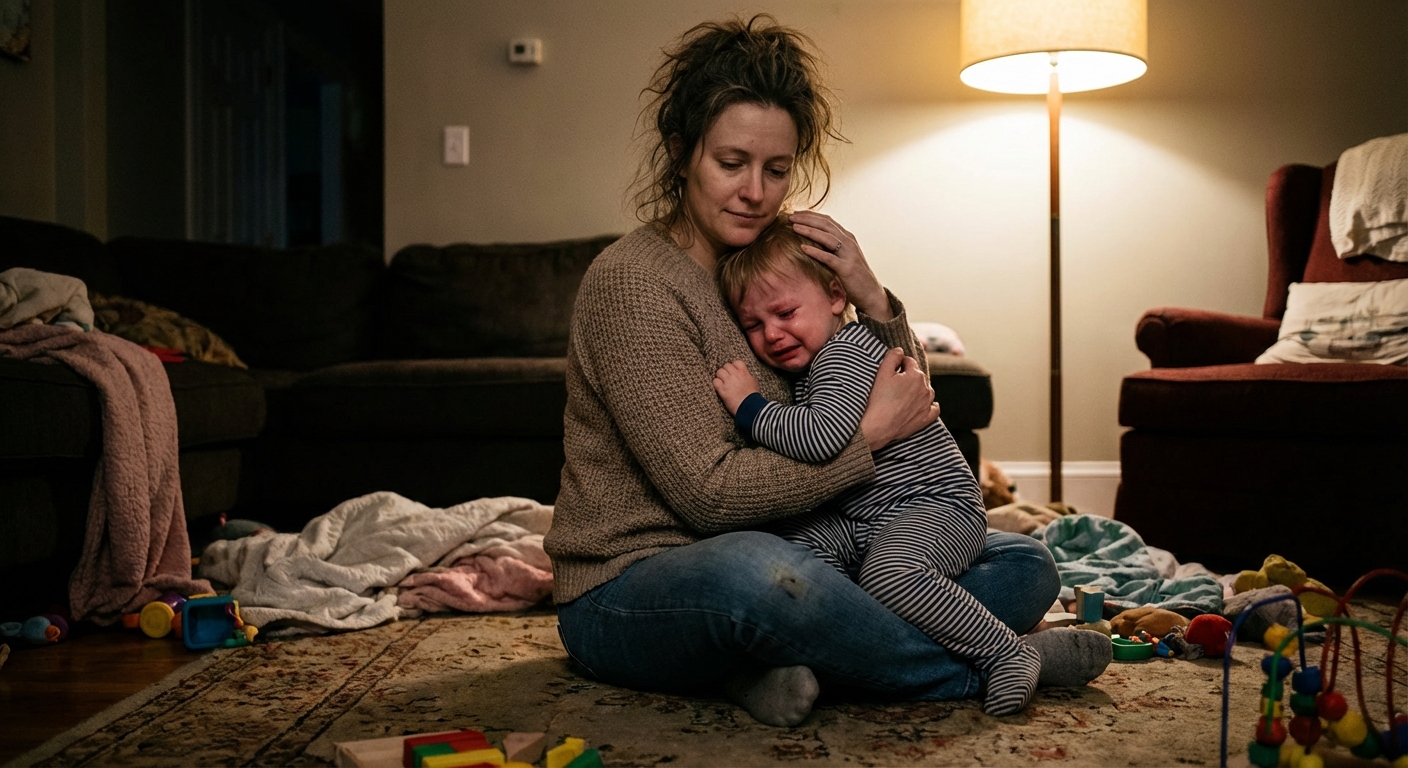
5) Time-in (connection first, then correction)
A time-in is a calm pause with you nearby. You’re helping your toddler settle, then teaching. For many toddlers, especially the sensitive or easily dysregulated ones, time-ins work better than being sent away.
Time-in vs time-out in one sentence: Time-in is calming with you; time-out is a brief break from the action.
What a time-in looks like:
- You move close, lower your voice, and use fewer words.
- You hold a boundary and co-regulate (breathe, sit together).
- When calm returns, you teach the next step.
Script: “You’re having a hard time. I’m right here. We’re going to breathe and then we’ll try again.”
Time-outs: when they help
Time-outs aren't automatically harmful. The problem is how they're often used: too long, too angry, or as rejection (“Go away until you’re better”). For some toddlers, a brief, boring break from the action can help reset.
If you use time-outs, keep them:
- Brief: for toddlers, often about 1 to 3 minutes total
- Calm: no lectures, no scolding
- Predictable: same spot, same routine
- Followed by repair: reconnect and teach
Script: “Hitting isn’t okay. We’re taking a break. I’ll stay close. When your body is calm, we’ll try again.”
Emotion coaching that sticks
Emotion coaching means you name the feeling, hold the limit, and show what to do with that feeling. It doesn't mean you give in.
The simple formula: Feelings are okay. Behavior has limits.
Scripts you can borrow:
- “You’re mad. I won’t let you hit.”
- “You really wanted that. It’s hard when it’s time to stop.”
- “You can be upset. The answer is still no.”
- “Show me with your words: help, please.”
Why this helps: Toddlers often calm faster when they feel understood. And a dysregulated toddler has a much harder time learning new skills in the moment.
Prevention that counts as discipline
This isn't “giving in.” It's setting your toddler (and you) up to succeed.
- Snack first: hunger makes everything louder.
- Sleep check: overtired toddlers melt down faster.
- Transition warnings: “Two more minutes, then bath.”
- Reduce overload: step into a quieter space if everyone’s escalating.
- Routine anchors: the same steps in the same order lowers battles.
Positive attention (the underrated tool)
One of the simplest ways to get less of what you don't want is to notice more of what you do want. Catch them being good, but make it specific.
- “You put your cup on the table. That was helpful.”
- “You touched the dog gently. Nice safe hands.”
- “You stopped when I said ‘freeze.’ That kept you safe.”
Boundaries without 40 extra words
Calm boundaries aren't soft. They're clear and steady. Think: kind voice, firm line.
Say no in one sentence
When parents are anxious, we over-explain. Toddlers hear it as negotiation.
Try:
- One sentence rule
- One choice you can live with
- Follow-through without extra talking
Script: “Markers are for paper. Paper or we put them away. You choose.”
Offer real choices
Choices reduce power struggles, but only if you truly mean them.
- “Do you want the blue cup or the green cup?”
- “Do you want to hop to the bath or walk to the bath?”
- “Do you want to hold my hand or ride in the stroller?”
Avoid: “Do you want to leave?” when leaving isn't optional.
Scripts for hard moments
Scenario 1: The classic “NO!”
Toddlers aren't being “defiant” the way older kids can be. Often they're tired, hungry, overstimulated, or trying to feel some control.
What to do: stay neutral, give a simple choice, then help physically if needed.
Script: “You don’t want to. I hear you. It’s time to go. You can climb into the car seat or I can help you. One… two…”
Follow-through: If they don't choose, help them with calm hands and minimal words.
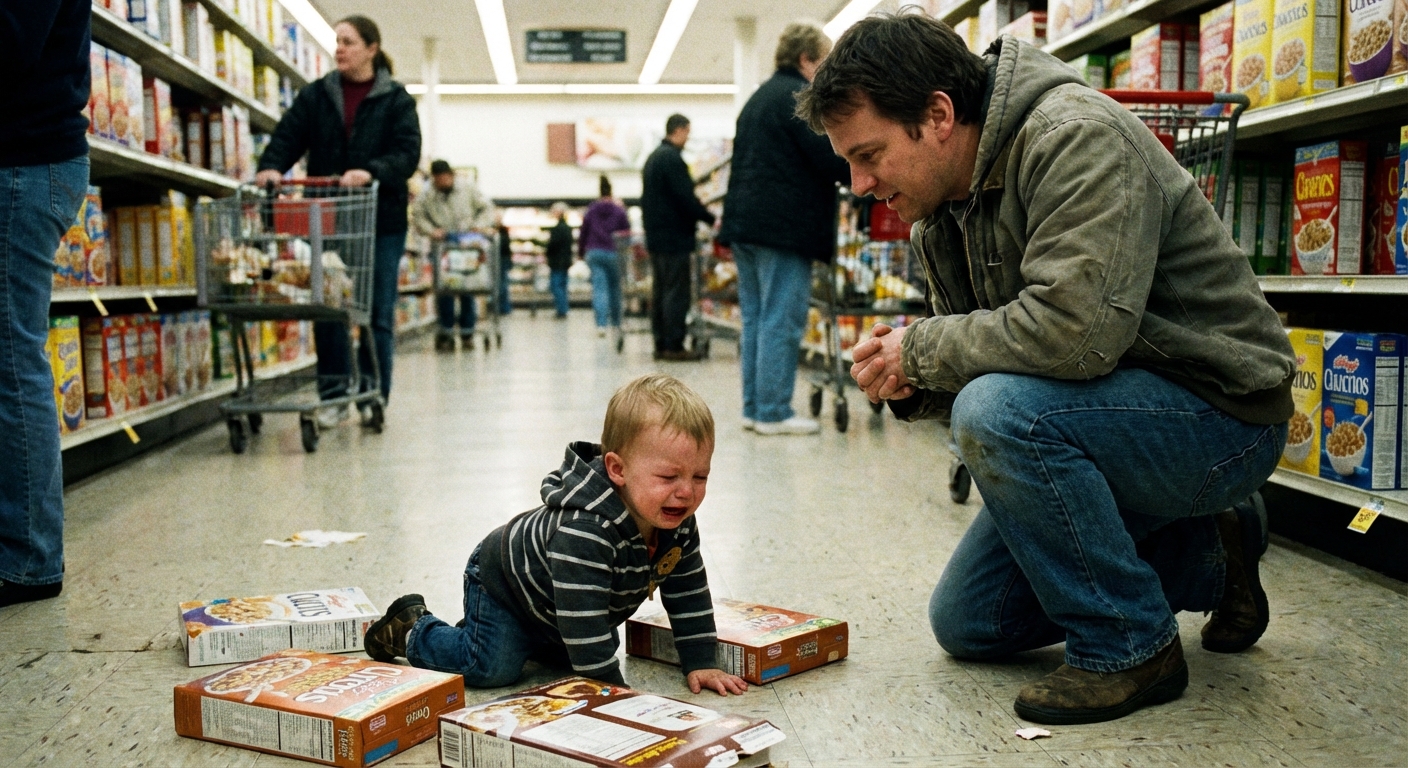
Scenario 2: Meltdown in public
Your toddler isn't giving you a hard time. They're having a hard time. You can keep it short and still be compassionate.
What to do:
- Move to safety if needed (cart, corner, outside)
- Lower your voice
- Name the feeling and the boundary
- Wait it out, then offer the next step
Script: “You’re so upset. You wanted the cookies. We’re not buying cookies today. I can hold you while your body calms, or you can sit in the cart.”
If people stare: Remind yourself: you're parenting, not performing.
Scenario 3: Not listening (after you repeat yourself 10 times)
Most “not listening” is one of these: they're absorbed in play, they don't understand, or they're testing if you mean it.
What helps:
- Get close and make gentle eye contact
- Touch their shoulder
- Use a short direction
- Ask for a simple repeat-back
Script: “I need you to put the blocks in the bin. Show me you heard me. What are you going to do?”
If they still don't move:
Script: “I’ll help you start.” (Then put 2 to 3 blocks away together. Momentum matters.)
Scenario 4: Hitting, kicking, or biting
This is where you get very calm and very firm. The goal is safety, not a lecture.
What to do:
- Separate bodies. Block the hit or gently hold hands if needed.
- If someone is hurt, check on the injured child first.
- State the limit.
- Remove from the situation if it continues.
- Teach what to do instead.
Script: “I won’t let you hit. Hitting hurts.”
Then: “You can stomp your feet or squeeze this pillow.”
And if it continues: “We’re taking a break from playing. We can try again when your hands are ready.”
Scenario 5: Throwing toys
Script: “Toys aren’t for throwing. If you throw it again, it goes up.”
If it happens again:
Script: “You threw it. The toy is taking a break.” (Put it away for a short, clear time. Then try again.)
Scenario 6: Refusing to leave the playground
Prevent it: give a heads-up and a ritual.
- “Two more slides, then we go.”
- “Last thing: slide or swing?”
Script at leaving: “It’s hard to stop when you’re having fun. Time to go. Do you want to walk or do you want me to carry you?”
How to stop yelling when you're about to explode
Let’s get practical. When yelling is about to happen, your body is already in stress mode. You need a plan that works in real time.
The 10-second reset
- Pause and put one hand on your chest.
- Inhale slowly through your nose.
- Exhale longer than you inhaled.
- Say one sentence only.
One-sentence options: “I’m getting frustrated. I’m going to take a breath.”
“I can be calm and firm.”
“We’re safe. This is just loud.”
Use a firm adult voice (without the edge)
You can be louder without being mean. Sometimes toddlers need a firm, clear voice to interrupt unsafe behavior. Aim for steady and clear, not sharp.
Repair if you do yell
Repair teaches kids how to recover from big feelings. It also lowers everyone’s stress over time.
Script: “I yelled. That was scary and not okay. I’m sorry. Next time I’ll take a breath. Let’s try again.”
Common mistakes (and easy fixes)
- Too many warnings. Fix: one warning, then action.
- Asking a question when it isn't a choice. Fix: state the plan. “It’s bath time.”
- Big lectures mid-meltdown. Fix: fewer words, more calm presence.
- Inconsistent follow-through. Fix: choose consequences you can actually enforce.
- Expecting skills they don't have yet. Fix: teach and practice when they're calm.
What works best by age
Age 12 to 24 months
- Redirection and prevention (baby-proofing is discipline)
- Simple limits: “Stop. Not safe.”
- Immediate, gentle removal from unsafe situations
- Lots of practice with words: “Help,” “Mine,” “All done”
Age 2 to 3 years
- Choices and routines
- Logical consequences
- Time-ins, and brief time-outs if you choose
- Emotion coaching and problem-solving after calm
When to talk to your pediatrician
Most toddler boundary-pushing is normal. But bring it up if:
- Aggression is frequent and intense (hurting others daily, hard to interrupt)
- Meltdowns are extreme, very long, or increasing after age 3
- You worry about speech delays (not understanding simple directions, limited words)
- Sleep problems, chronic constipation, or sensory issues seem to be driving behavior
- You feel like you're losing control or afraid you might hurt your child
If you're in that last bullet point, you deserve support immediately. Call your child’s pediatrician, a trusted mental health provider, or a local crisis line in your area. If you're in the U.S., you can call or text 988 for the Suicide & Crisis Lifeline.
A simple plan to start today
If you want a quick reset without overhauling your whole life, start here for one week:
- Pick 3 house rules and say them the same way every time.
- Use redirection for minor stuff, logical consequences for repeat stuff.
- Practice one script for hitting and one script for not listening.
- Do a repair any time you yell.
- Add one minute of specific praise each day (“I noticed you…”).
You don't need to be the calmest parent on earth. You just need a plan you can repeat, even at 3 AM, even on little sleep. Calm and consistent beats loud and exhausted most days, and it builds a home that feels safer for everyone.
References
- American Academy of Pediatrics (HealthyChildren.org): guidance on toddler behavior, tantrums, positive discipline, and time-out use
- Centers for Disease Control and Prevention (CDC): positive parenting tips (toddler)
- Zero to Three: toddler development, co-regulation, and behavior guidance
- Gottman Institute: emotion coaching framework (parent emotion coaching)