How to Get a Toddler to Brush Teeth

Sarah Mitchell
Sarah Mitchell is a Registered Pediatric Nurse and a mother of three who has spent over a decade helping families navigate the beautiful, chaotic early years of childhood. She combines evidence-based medical knowledge with real-world parenting experience to offer practical, compassionate advice. At Awesome Parent, Sarah's mission is to help exhausted parents find solutions, trust their instincts, and finally get some sleep.
If toddler tooth brushing in your house looks less like a calm bedtime routine and more like a tiny wrestling match, you are in very good company. Toddlers love independence and hate being controlled, and tooth brushing is basically a two-minute festival of “No.”
The good news: you do not need a perfect routine to protect your child’s teeth. You need a repeatable plan, a little creativity, and a calm way to hold the line when they melt down. I am a pediatric nurse and a mom of three, and I have coached many families through this exact battle on 3 a.m. energy levels.
Quick note: This is general guidance. If you have concerns about your child’s teeth, fluoride, or safety during brushing, your pediatric dentist or pediatrician can tailor advice to your child.

Below are realistic strategies that work with toddler brain development, not against it.
First, check the basics
When brushing feels impossible, I always check the simple stuff first. Tiny tweaks can remove big triggers.
- Toothbrush size: Use a toddler-sized brush with a small head and soft bristles. If the brush feels big or pokey, you will get instant refusal.
- Timing: Some kids do better right after dinner instead of right before bed when they are overtired. You still want brushing before sleep, but moving it 30 minutes earlier can save everyone’s sanity.
- Location: Not every toddler will stand at the sink. Try sitting on the closed toilet seat, sitting on a step stool, or sitting on your lap facing the mirror.
- Sensory triggers: Strong mint can feel “spicy.” Try a mild, kid-friendly fluoride toothpaste.
- Brush replacement: Swap toothbrushes every 3 months (or sooner if bristles fray). Many families also replace after a stomach bug or strep, especially if the brush looks worn.
How much fluoride to use
Fluoride helps prevent cavities by strengthening enamel, and major dental guidelines support using fluoride toothpaste for kids. The key is using the right amount and supervising. In general, use fluoride toothpaste as soon as the first tooth erupts.
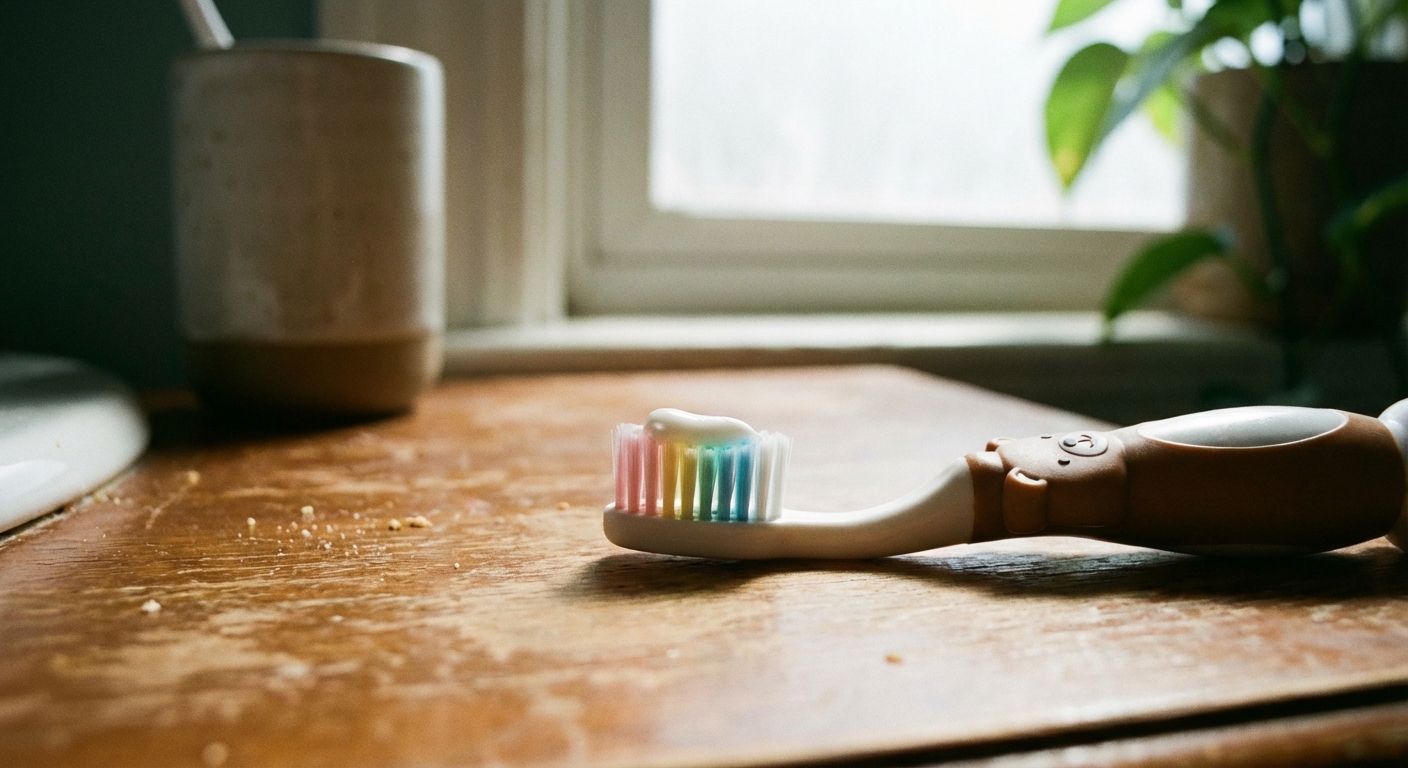
- Under 3 years: Use a smear (a grain-of-rice-sized amount) of fluoride toothpaste.
- Ages 3 to 6 years: Use a pea-sized amount.
What if my toddler swallows toothpaste? With the small amounts above, occasional swallowing is expected. Encourage spitting as they get older, and store toothpaste out of reach so they cannot snack on it. If your child regularly eats toothpaste or you are worried about how much they got into, call Poison Control for individualized advice.
How to brush a toddler’s teeth
For toddlers, the goal is not a perfect dentist-level clean every time. The goal is consistent plaque removal where cavities love to start.
Do this twice a day
- Angle: Aim bristles toward the gumline.
- Motion: Small circles or gentle back-and-forth is fine.
- Order: Pick an order you always follow so you do not miss spots. Example: top outside, top inside, bottom outside, bottom inside, then chewing surfaces.
- Time: About 2 minutes total is ideal. If you can only manage 30 to 60 seconds during a rough phase, do it and try again next time.
- Adult finish: Let your toddler “start,” but try to get an adult turn at the end. Many dentists suggest kids still need hands-on help until their fine motor skills mature, often around ages 5 to 7 (sometimes later).
Quick check: back molars
Molars have deep grooves (pits and fissures) and are cavity magnets. If you only accomplish one thing, make it a few solid passes on the molars, especially before bed.
After brushing
- Spit or wipe: For younger toddlers, wiping excess foam is fine.
- Go easy on rinsing: If your child can spit reliably, consider avoiding big mouthfuls of water right after brushing so fluoride can sit on the teeth a bit longer.
Make brushing fun
You do not have to become a full-time children’s entertainer. You just need enough novelty to get cooperation.
Offer tiny choices
Toddlers are fueled by control. Give safe choices:
- “Do you want the blue toothbrush or the green toothbrush?”
- “Brush first or floss pick first?”
- “Do you want to stand on the stool or sit on my lap?”
Choices work best when both options end with brushing.
Use a tooth-brushing song
Songs add structure and make time feel shorter. You can:
- Sing the same silly “brushy brush” song every time.
- Play a two-minute song your child loves.
- Set a simple timer and celebrate when it dings.
Use a video sparingly
For some families, a short brushing video is the only thing that gets toothpaste in mouths. If screens are a hard no in your routine, skip it. If you are drowning, consider this a temporary tool.
- Keep it consistent: same short clip every time.
- Keep it paired with brushing: video only plays while the brush is moving.
- Keep it small: stop the video when brushing ends.
Make them the helper
- Let them brush a stuffed animal’s teeth first.
- Let them “count teeth” with you in the mirror.
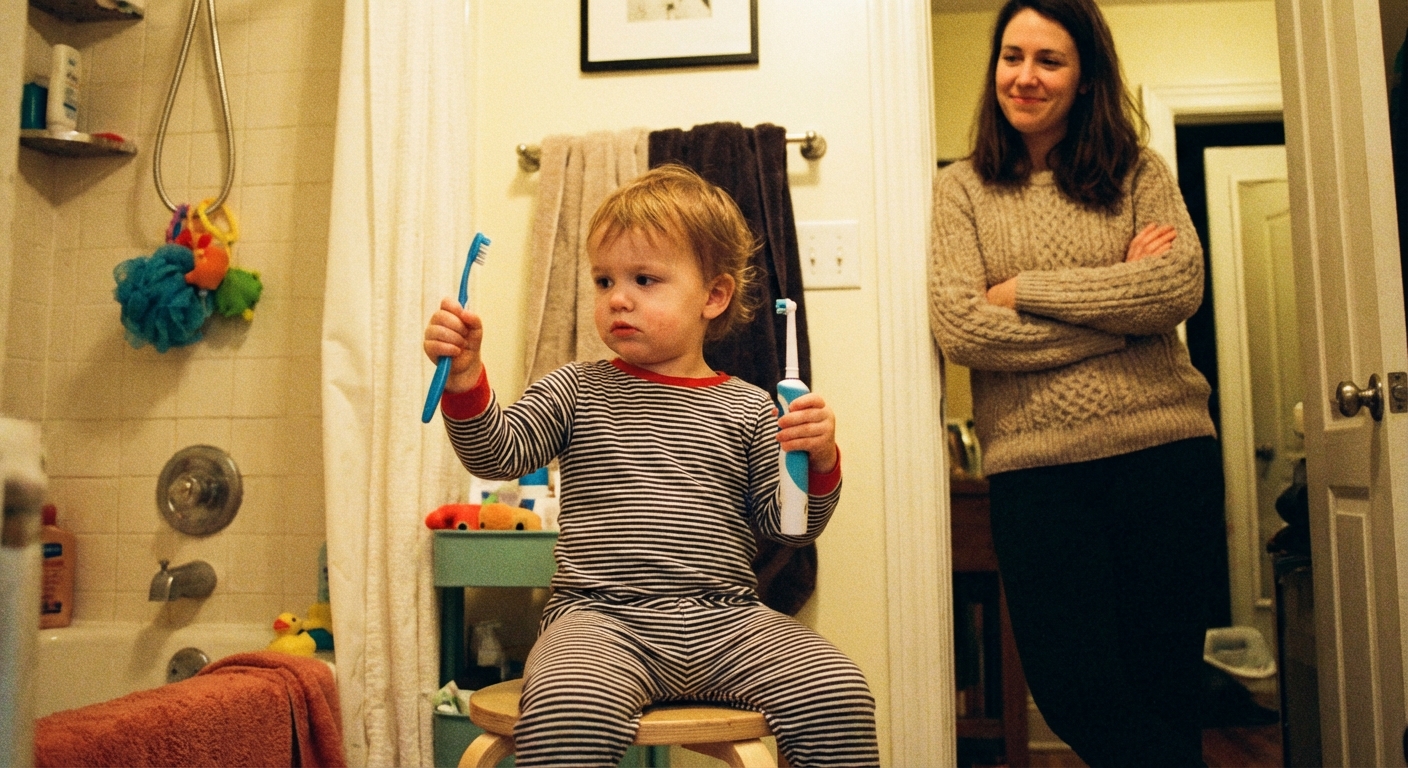
- Let them hold a second toothbrush while you brush with the first.
Scripts for resistance
When toddlers resist, we often talk too much. Try short, calm phrases you can repeat like a broken record.
- Validate + boundary: “You do not want to. Tooth brushing is not optional.”
- Offer choice: “Do you want to brush first, or should I help first?”
- Clear next step: “When teeth are brushed, then we read books.”
Say it once. Then follow through. The magic is in calm repetition, not in finding the perfect sentence.
When it becomes a meltdown
Some nights, your toddler goes full noodle-body with shrieks that make you worry the neighbors will call in a wellness check. Here is your meltdown plan.
1) Keep everyone safe
- Move away from slippery water, hard countertops, and sharp edges.
- Take a slow breath. Your calm nervous system is the closest thing to a reset button.
- If you are escalating, pause for 20 to 30 seconds. It is okay.
2) Do the minimum effective brushing
If you cannot do a full two minutes, aim for a quick, strategic clean:
- Brush the back molars.
- Brush the front teeth at the gumline.
- Call it a win and try again tomorrow.
One imperfect brush is better than skipping completely, especially before bed.
3) If you must assist, keep it gentle and brief
Sometimes, a toddler cannot or will not cooperate, and you still need to protect their teeth. If you choose to do a quick assisted brush:
- Stay gentle. Avoid pinning with force that could hurt them.
- Do not force the brush into a clenched mouth. If they are clamped shut, pause and try again when they open to talk, cry, or take a breath.
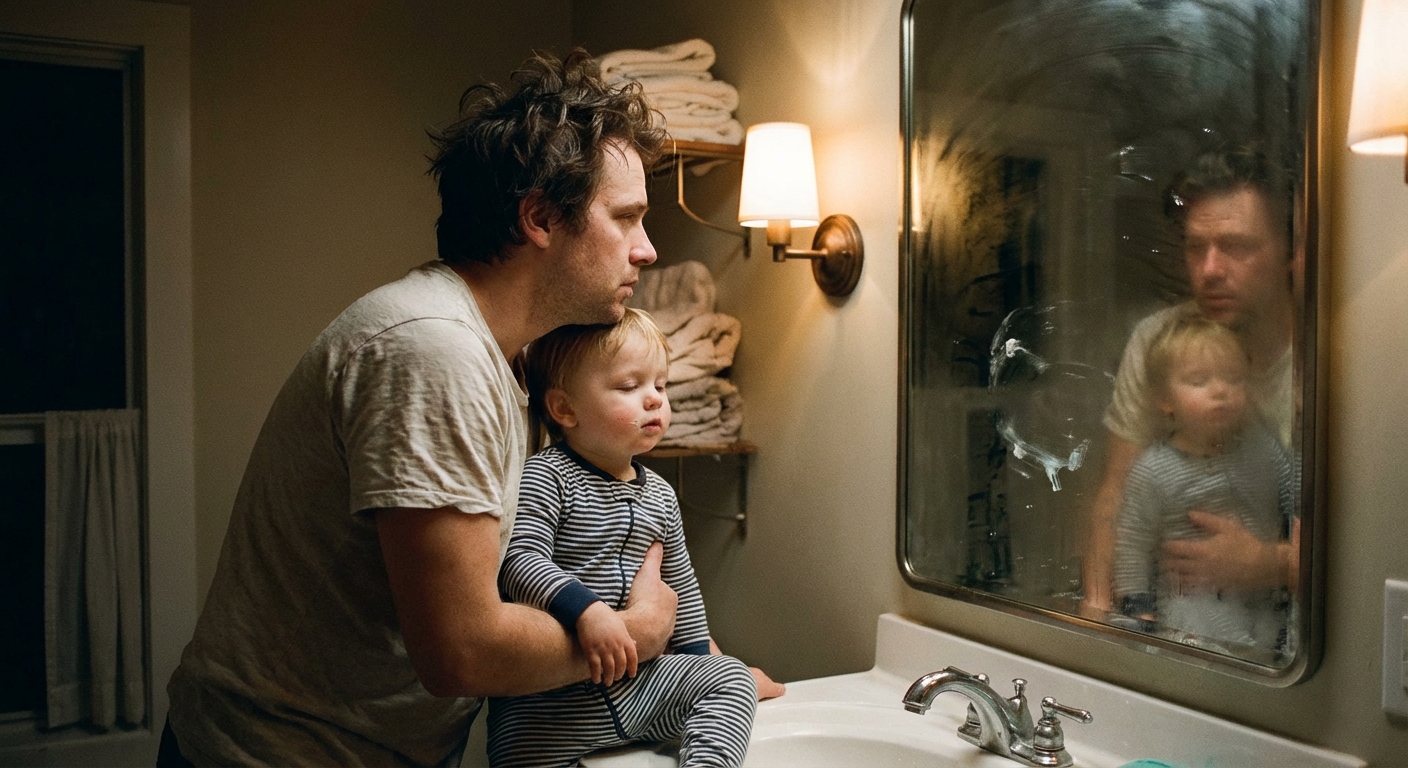
- Try the “lap lean”: have your child sit on your lap facing away from you and gently tilt their head back against your chest, so you can see their teeth in the mirror.
- Keep it short, calm, and matter-of-fact. “I am going to help. Then we are all done.”
If you feel like you are needing physical help often, or it feels unsafe or emotionally brutal every night, that is a sign to ask your pediatric dentist for a plan. You are not failing. You need better tools.
4) Repair after
Once they calm down, reconnect. You can hold the boundary and still be warm.
- “That was really hard. I love you. We will try again tomorrow.”
- Offer a hug, water, and move on.
Build a routine
Toddlers thrive on predictable steps. A simple routine reduces negotiations.
Try this simple sequence
- Bathroom
- Toothbrush choice
- Brush together (child first, then parent finishes)
- Spit or wipe
- High five and bedtime activity
Use small rewards
I am not above a sticker chart. Just keep it low-pressure.
- Reward the attempt, not perfection.
- Use immediate rewards: sticker right after brushing.
- Avoid turning it into a huge prize that creates power struggles.
Protect the bedtime brush
If you can only “win” one brushing session, make it the one before sleep. After brushing, stick to water only. Milk, juice, and sweet snacks after brushing are a fast track to cavities.
Common problems
“My toddler bites the toothbrush.”
- Offer a “biting toothbrush” they can chew for 20 seconds, then switch to the brushing toothbrush.
- Say: “Teeth are for biting food. Toothbrush is for brushing.” Repeat calmly.
“They hate toothpaste.”
- Switch to a different mild flavor, still with fluoride.
- Use a smear amount and gradually increase to the age-appropriate amount.
- Wet the brush and double-check that bristles are soft.
“They clamp their mouth shut.”
- Ask them to roar like a lion, say “ahhh,” or make a silly face in the mirror.
- Brush when they laugh or talk. You only need small openings to get the job done.
“We keep forgetting.”
- Put toothbrushes where you will see them, like next to the soap.
- Pair brushing with a habit you never miss, like putting on pajamas.
“Should we floss?”
- Floss when teeth are touching and you cannot clean between them with a toothbrush.
- If you use floss picks, an adult should do it with close supervision. Picks are not a toy and can be a choking or poking risk for toddlers.
When to call the dentist
Most brushing battles are behavioral, not medical. But it is worth getting help if something seems off.
- Tooth pain, sensitivity, or your child avoids chewing
- Brown or white spots on teeth that do not brush off
- Bleeding gums that persist
- Bad breath that does not improve with brushing
- Any mouth injury or concern for infection
- Mouth sores, swollen gums, or new sensitivity that makes brushing painful
Dental visits should begin around the first tooth eruption or by age 1, and regular checkups help catch small issues early. If you are not sure where to start, your pediatrician can recommend a pediatric dentist.
A quick pep talk
If brushing is hard right now, it does not mean you are doing anything wrong. It means you have a toddler. Aim for consistency over perfection, keep your boundary calm, and use whatever silly song, toothbrush color, or two-minute video gets you through this season.
And if tonight is a meltdown night, do the minimum effective brushing, cuddle, and try again tomorrow. Teeth are a long game, and you are absolutely allowed to play it one bedtime at a time.