How to Get Rid of Cradle Cap

Sarah Mitchell
Sarah Mitchell is a Registered Pediatric Nurse and a mother of three who has spent over a decade helping families navigate the beautiful, chaotic early years of childhood. She combines evidence-based medical knowledge with real-world parenting experience to offer practical, compassionate advice. At Awesome Parent, Sarah's mission is to help exhausted parents find solutions, trust their instincts, and finally get some sleep.
If your baby has thick, greasy-looking flakes on their scalp, take a breath. Cradle cap can look dramatic, especially under bright bathroom lights at 2 AM, but it is very common and usually harmless. I saw it constantly in clinic. As a mom, I also stared at it on my own babies and wondered if I was doing something wrong. You are not.
Quick reassurance: Most cases clear on their own. A gentle rhythm of soften, lightly brush, shampoo is usually enough.
This guide will walk you through what cradle cap is, why it happens, exactly how to loosen and remove flakes safely at home, and when it is time to check in with your pediatrician.
What it is
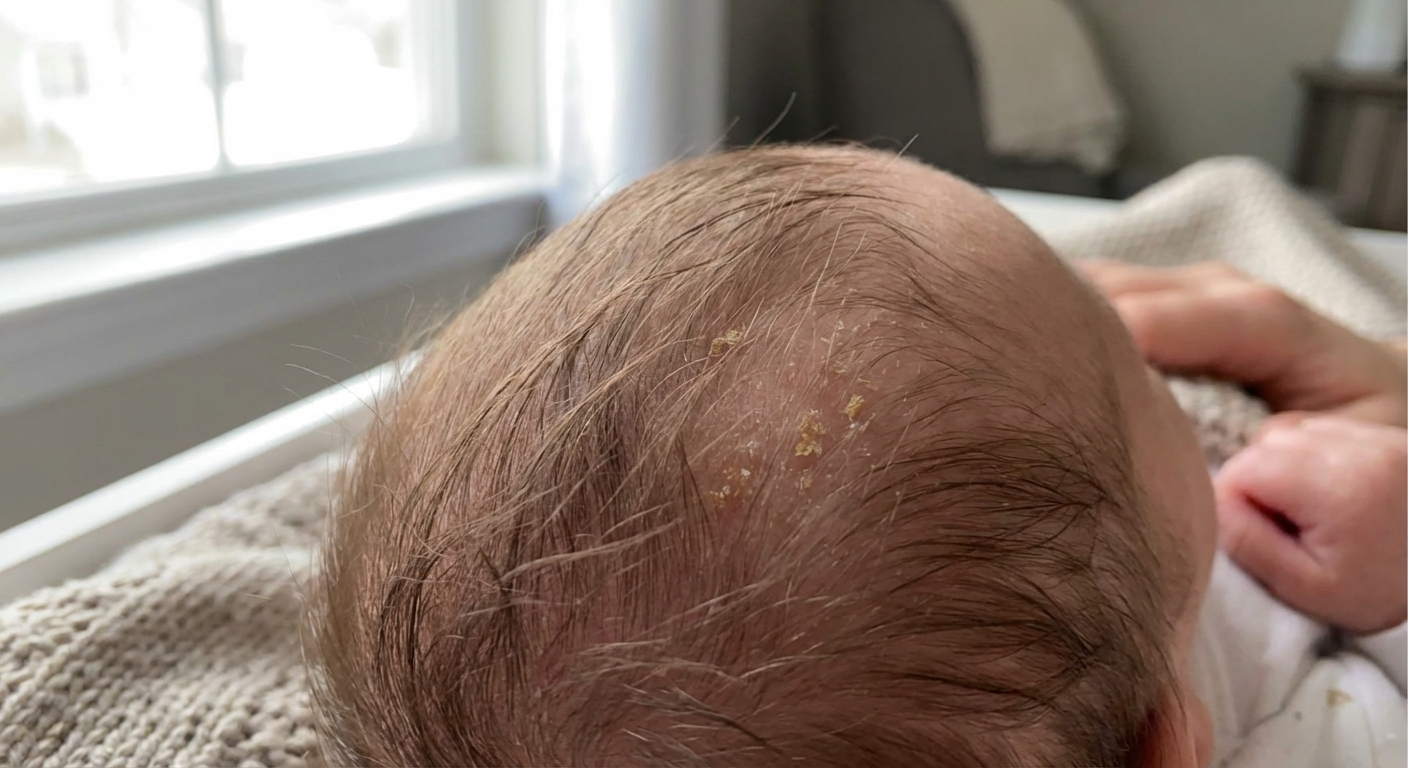
Cradle cap is the everyday name for infantile seborrheic dermatitis. It is very common in the first months of life and most often shows up as:
- White or yellow flakes that may look dry or greasy
- Thicker scales or crusts on the scalp
- Mild redness underneath the flakes (sometimes)
- Occasionally, similar flaky patches on the eyebrows, behind the ears, or in neck folds
Cradle cap is not caused by poor hygiene. It is not contagious. And for many babies, it does not bother them at all.
What causes it
There is not one single perfect explanation, but these factors are thought to contribute:
- Higher oil production: Newborn skin is still adjusting after birth, and oil glands can be more active for a while.
- Yeast that normally lives on skin: A common skin yeast (Malassezia) may play a role for some babies.
- Hormones from pregnancy: In the early weeks, leftover maternal hormones may contribute to oil gland activity.
Cradle cap often appears in the first weeks to months of life and tends to improve over time, even if you do nothing.
When it goes away
Many cases improve significantly by 3 to 6 months, and many resolve by the first birthday. That said, there is a wide normal range. Some babies have on-and-off flaking longer, especially if they also get seborrheic dermatitis in other areas (like behind the ears or in skin folds).
The goal at home is usually not to make the scalp look perfect overnight. It is to soften scales, gently lift what is ready to come off, and keep the skin calm.
Cradle cap vs. eczema
These two conditions can look similar at first glance, but they behave differently. Here are the typical patterns parents notice.
Cradle cap tends to look like
- Greasy or waxy flakes, often yellowish
- Most common on the scalp, eyebrows, behind ears
- Usually not very itchy
- Often starts in the first weeks of life
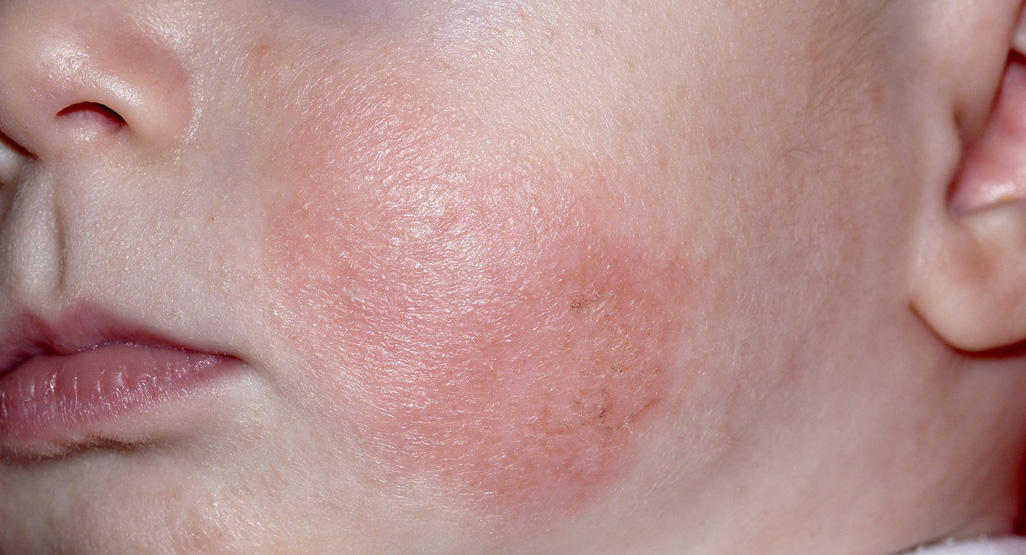
Eczema (atopic dermatitis) tends to look like
- Dry, rough, red patches
- Often on cheeks, arms, legs, and later in elbow and knee creases
- Frequently itchy and uncomfortable
- May ooze or crust if scratched
- Often has a family history of eczema, allergies, or asthma
If your baby seems very itchy, the skin looks angry and dry rather than oily, or the rash is widespread, it is worth asking your pediatrician whether it is eczema or a mix of both.
What not to do
Quick safety note from the triage-nurse part of my brain: some well-meaning tricks can backfire.
- Do not pick or peel scales with your fingernails. It can break the skin and invite infection.
- Do not scrub hard. Friction can inflame the scalp and make it redder.
- Avoid essential oils on baby skin unless specifically recommended by your clinician. They can irritate and some are unsafe for infants.
- Be careful with adult dandruff shampoos unless your pediatrician tells you exactly what to use and how often. Many are not labeled for infants.
- Pause fragranced or new hair products if the scalp looks more irritated after starting them. Some babies get contact irritation from fragrance.
Step-by-step routine
This is the routine I typically recommend because it is effective, gentle, and realistic for tired parents.
Step 1: Soften (5 to 15 minutes)
Choose a simple oil or emollient to loosen thick crusts:
- Mineral oil or petroleum jelly are great options and less likely to cause irritation.
- You can also use a small amount of baby oil if your baby tolerates it.
Apply a thin layer to the affected areas of the scalp and let it sit for 5 to 15 minutes. If your baby has very thick scales, you can go closer to 15 minutes.
Tip: Avoid leaving oil on for hours. It can be hard to fully wash out and may worsen greasiness or irritation for some babies.
Step 2: Loosen with a soft brush
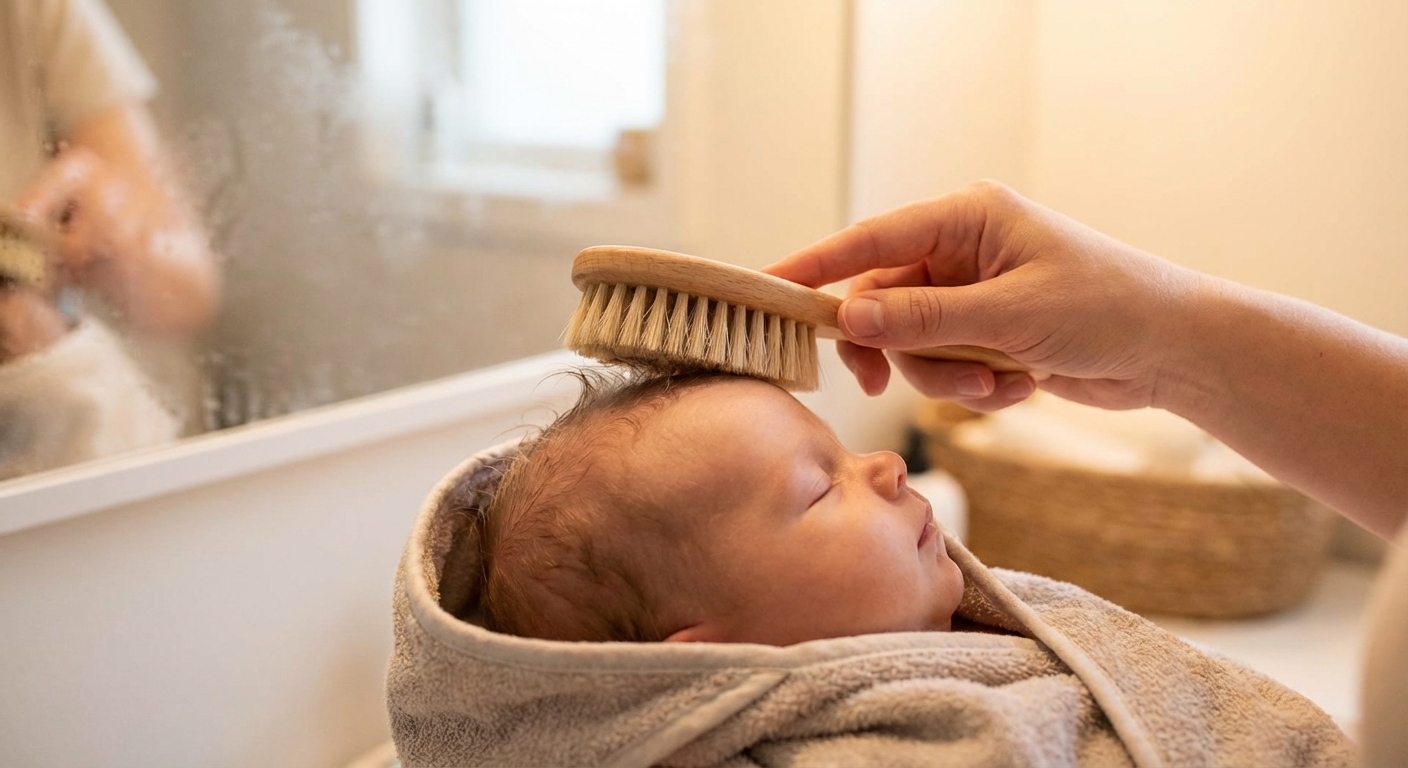
Using a soft baby brush or a clean, soft toothbrush, lightly brush in small circles to lift the scales that are ready to come off. Think: “polishing a strawberry,” not “scrubbing a pan.”
Soft spot note: Many parents worry about the fontanelle. Gentle brushing is fine, just avoid pressure.
Step 3: Wash the scalp
Wash with a gentle baby shampoo to remove the oil and loosened flakes. Massage with your fingertips, rinse well, and pat dry.
Step 4: Repeat, but do not overdo it
You can repeat this routine 2 to 3 times per week until it improves. Daily shampooing can be too drying for some babies, but in mild cases, a short daily shampoo phase can help. If the scalp gets redder or drier, scale back.
Safe home options
Gentle shampoo plus brushing
For mild cradle cap, you may not need oil at all. Shampoo, rinse, then gently brush when the hair is damp.
Emollient for stubborn patches
Mineral oil or petroleum jelly can be especially helpful when scales are thick and stuck on.
Moisturize nearby irritated skin
If the skin around the hairline or behind the ears looks a bit irritated, a thin layer of a fragrance-free moisturizer can help protect the skin barrier.
Medicated shampoos
If cradle cap is persistent, widespread, or very thick, your pediatrician may recommend a medicated shampoo. The right choice and frequency depend on your baby’s age, skin sensitivity, and how severe it is.
Because infants have delicate skin, I recommend checking with your pediatrician before using medicated dandruff shampoos, especially in very young babies or if there is broken skin. Many over-the-counter dandruff shampoos are not labeled for infants.
- Anti-fungal shampoos: sometimes ketoconazole is recommended.
- Anti-dandruff ingredients: options may include selenium sulfide or zinc pyrithione, but suitability varies by age and product.
If your pediatrician recommends one, follow their instructions closely (including how long to leave it on) and avoid getting it in your baby’s eyes.
On eyebrows, ears, and folds
Cradle cap can show up beyond the scalp. Here is how to handle those areas safely:
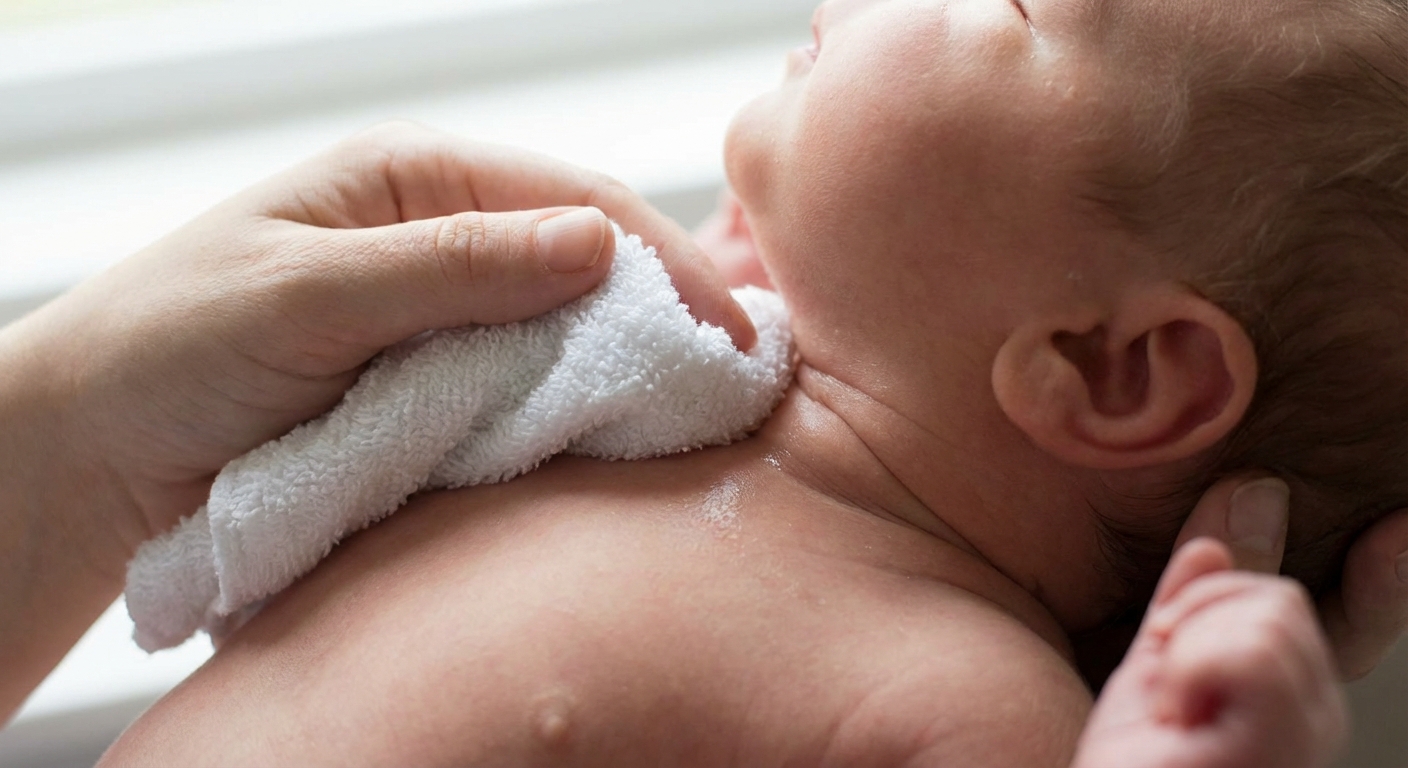
- Eyebrows: Use a tiny amount of petroleum jelly for a few minutes, then wipe gently with a warm, damp washcloth.
- Behind ears: Clean gently, pat dry, and use a thin layer of fragrance-free moisturizer if the skin looks irritated.
- Neck folds: Keep the area clean and dry. Moisture trapped in folds can lead to irritation or yeast overgrowth. After cleaning, pat dry carefully.
Maintenance
Once it is improving, you can usually shift to a simpler routine:
- Keep up regular gentle shampooing (often a few times a week is enough).
- Brush lightly after baths if flakes start to return.
- Skip oil if you notice it makes the scalp look greasier or more irritated.
When to see the doctor
Cradle cap is usually a home-care situation. Call your pediatrician if you notice any of the following:
- Redness that is spreading or looks increasingly inflamed
- Oozing, crusting, or a bad smell (possible infection)
- Bleeding or open sores
- Significant swelling or tenderness when you touch the area
- Fever or your baby seems unwell
- The rash is widespread beyond the scalp or involves the diaper area with bright red irritation
- Your baby seems very itchy, is scratching, or sleep is being disrupted
- No improvement after 2 to 4 weeks of gentle home treatment
Sometimes what looks like cradle cap is actually eczema, contact dermatitis (including fragrance irritation), a bacterial skin infection, or a different fungal rash (like tinea) that needs different treatment. A quick check can save a lot of trial and error.
FAQ
Is cradle cap painful?
Usually, no. Most babies are unbothered by it. If your baby seems uncomfortable or itchy, that is a clue to check for eczema, irritation, or infection.
Will removing the scales make hair fall out?
You might see some hair come out with the flakes, and that can be alarming. It is typically temporary, and the hair grows back normally.
Can cradle cap come back?
Yes. Many babies have a few rounds of it. Once you know the routine, it is easier to manage the next time.
Do I need to treat it at all?
Not always. If it is mild and not bothering your baby, you can leave it alone and focus on gentle washing. Many parents treat it mainly because it looks concerning or gets thick.
My calm-parent takeaway
Cradle cap is one of those newborn things that looks worse than it is. A simple rhythm of soften, gently brush, wash is usually enough. If the scalp starts looking angry, oozing, or your baby seems uncomfortable, that is your cue to get your pediatrician involved.
If you are unsure which routine fits your baby’s skin (or whether this is cradle cap versus something else), your pediatrician can help you tailor a plan.