How to check for ticks, remove them safely, recognize early Lyme symptoms (including the bullseye rash), understand when antibiotics are needed, and prevent ...
How to Remove a Tick From a Child

Sarah Mitchell
Sarah Mitchell is a Registered Pediatric Nurse and a mother of three who has spent over a decade helping families navigate the beautiful, chaotic early years of childhood. She combines evidence-based medical knowledge with real-world parenting experience to offer practical, compassionate advice. At Awesome Parent, Sarah's mission is to help exhausted parents find solutions, trust their instincts, and finally get some sleep.
If you have found a tick on your child, take a breath. This is one of those parenting moments that feels scarier than it needs to be, especially when it is happening in real time with a wiggly kid and a rising sense of panic. The good news is that most tick bites are handled safely at home, and the best removal method is simple and quick.
I am going to walk you through exactly what to do, what not to do, and what to watch for afterward, using the same practical steps we taught families in our pediatric clinic.
What you need
Gather supplies first so you can remove the tick smoothly and calmly.
- Fine-tipped tweezers (pointed tips work better than blunt cosmetic ones)
- Soap and water or rubbing alcohol
- Cotton ball or gauze
- A small container with a lid (or a sealed bag) if you plan to save the tick
- Gloves if you have them (optional, but helpful)
- Good light and, if needed, a second adult to help hold a squirmy toddler
Quick add: If you can, rinse the tweezers with soap and water or wipe them with rubbing alcohol before and after.
If you do not have fine-tipped tweezers, it is reasonable to call your pediatrician, urgent care, or a nurse line for guidance. In clinic, we would rather help you remove it safely than have you improvise with fingernails or household “remedies.”
Step-by-step: tweezers
1) Keep your child still
Removal is easiest when you can see the tick clearly. For little kids, it helps to sit them on your lap, offer a video, or have another adult gently hold their hands. Tell them you are taking off a “tiny bug,” and that it will be fast.
2) Expose the tick
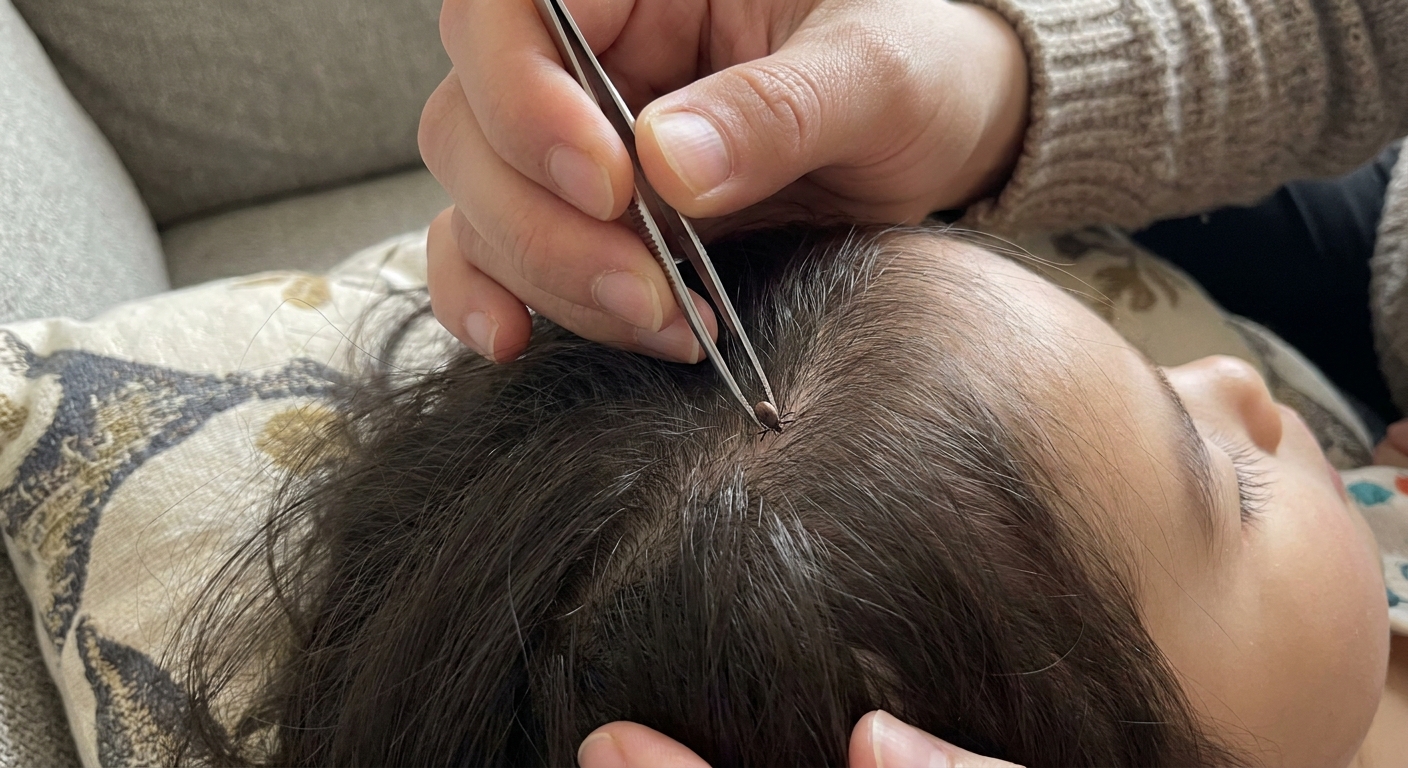
Make sure you can see where the tick’s mouthparts meet the skin. If the tick is in hair, use a comb or your fingers to part the hair and hold it aside.
3) Grasp close to the skin
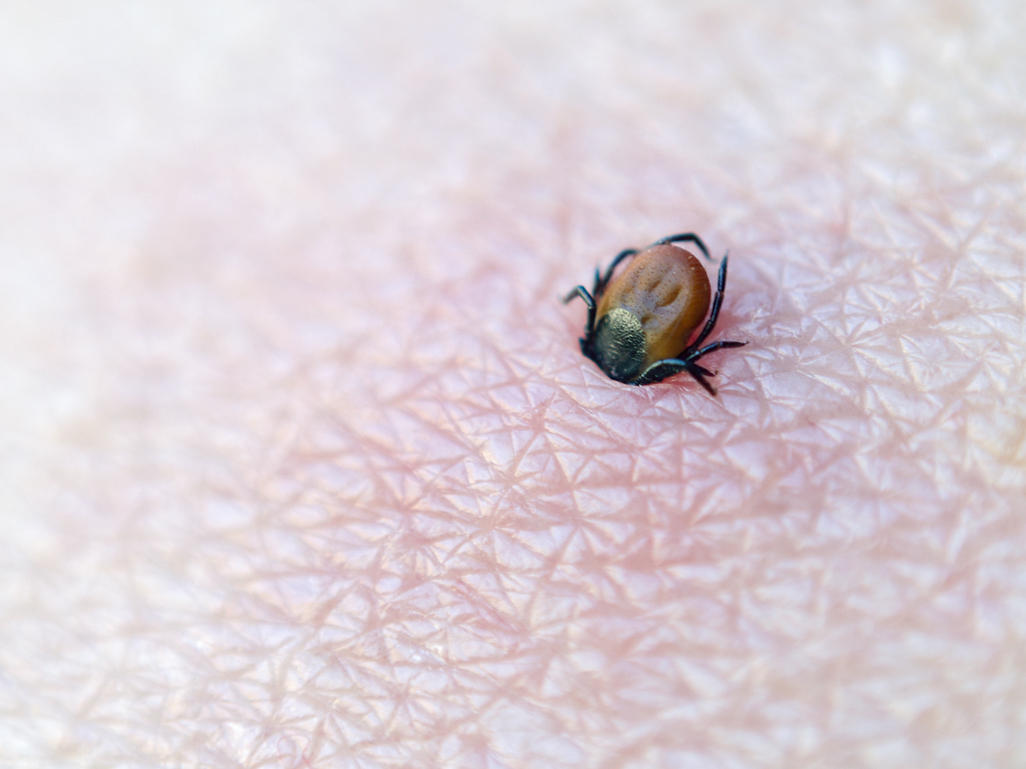
Using fine-tipped tweezers, grab the tick as close to the skin as possible, ideally right at the head or mouth area.
- Aim for the tick’s head area, not the swollen body.
- Try not to pinch your child’s skin, but do prioritize a secure grip.
4) Pull straight up
Pull straight up with slow, steady pressure. Try not to jerk or twist. The goal is to remove the tick in one piece.
5) Check the skin
After removal, look closely at the bite site:
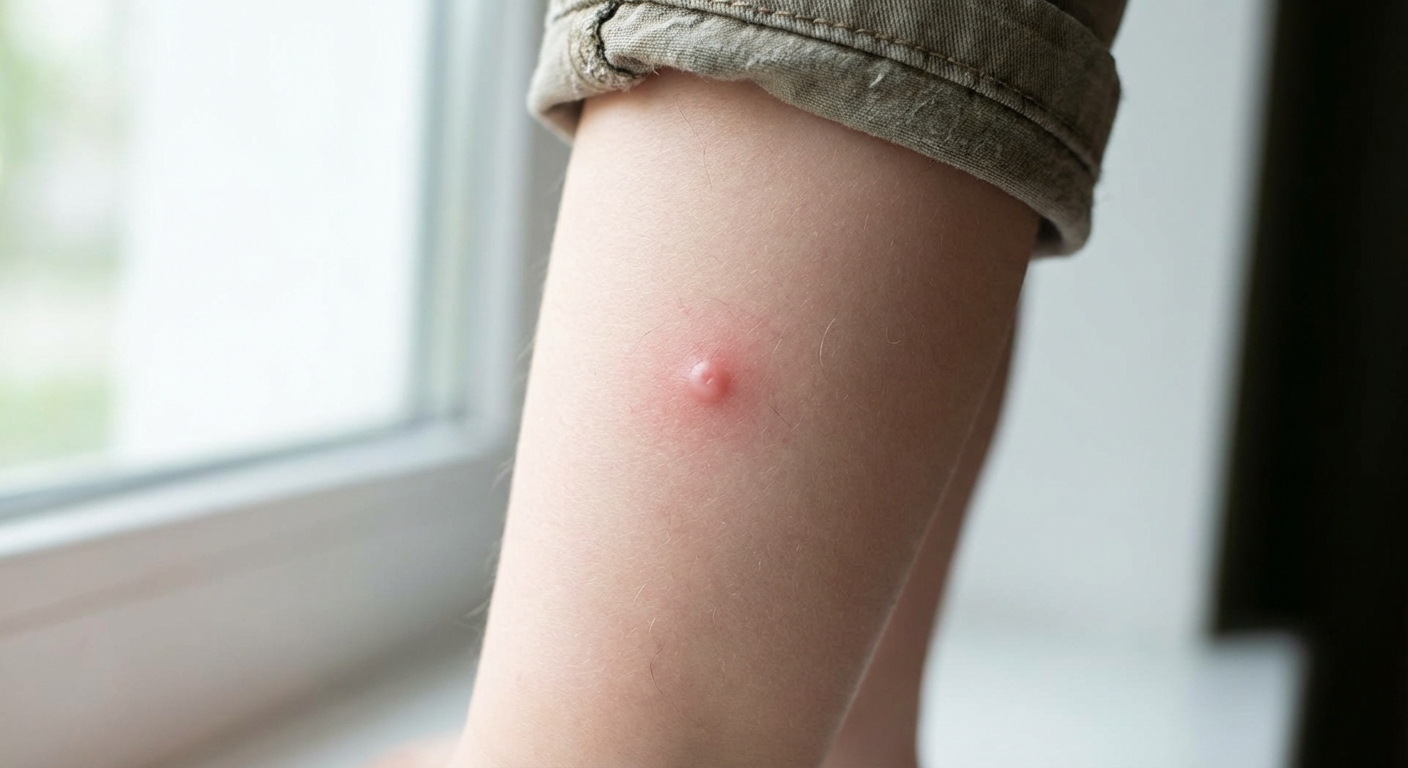
- If the tick is out, you will see a small red bump or dot.
- If you think a tiny dark piece is still in the skin, it may be a mouthpart fragment. More on that below.
6) Wash up
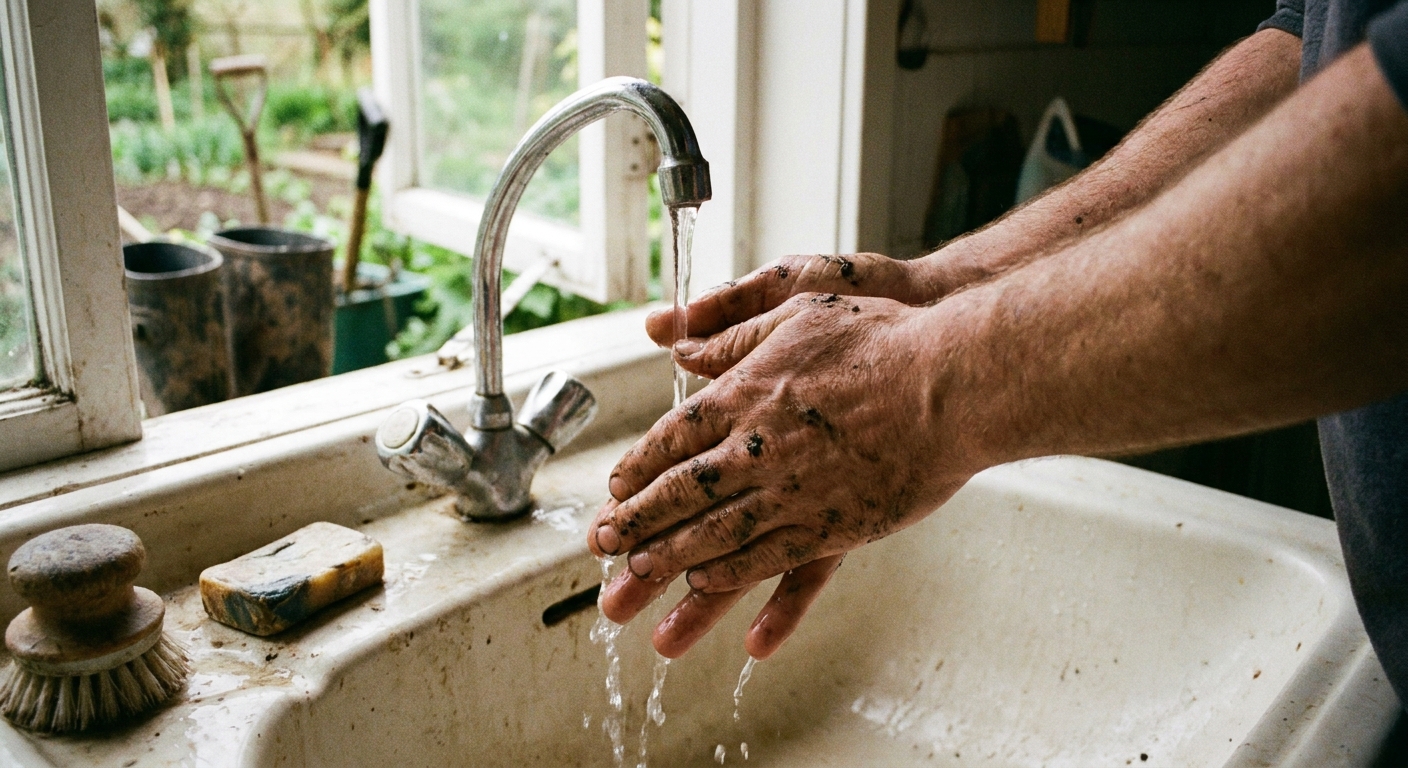
Wash hands with soap and water, even if you wore gloves.
What not to do
When parents come into clinic, I often hear some version of, “My neighbor said to put nail polish on it,” or “My aunt swears by a match.” I get it. Tick myths get passed around like family recipes. But these methods can irritate the tick, make removal harder, and may increase the chance of saliva or gut contents getting into the bite.
- Do not burn it (matches, lighters, hot pins).
- Do not smother it (petroleum jelly, oils, butter, lotion, nail polish).
- Do not squeeze the body of the tick if you can avoid it.
- Do not use your fingernails to pinch and pull.
- Try not to twist the tick out like a screw.
Stick with fine-tipped tweezers and a steady, straight pull. Simple is good here.
If parts look stuck
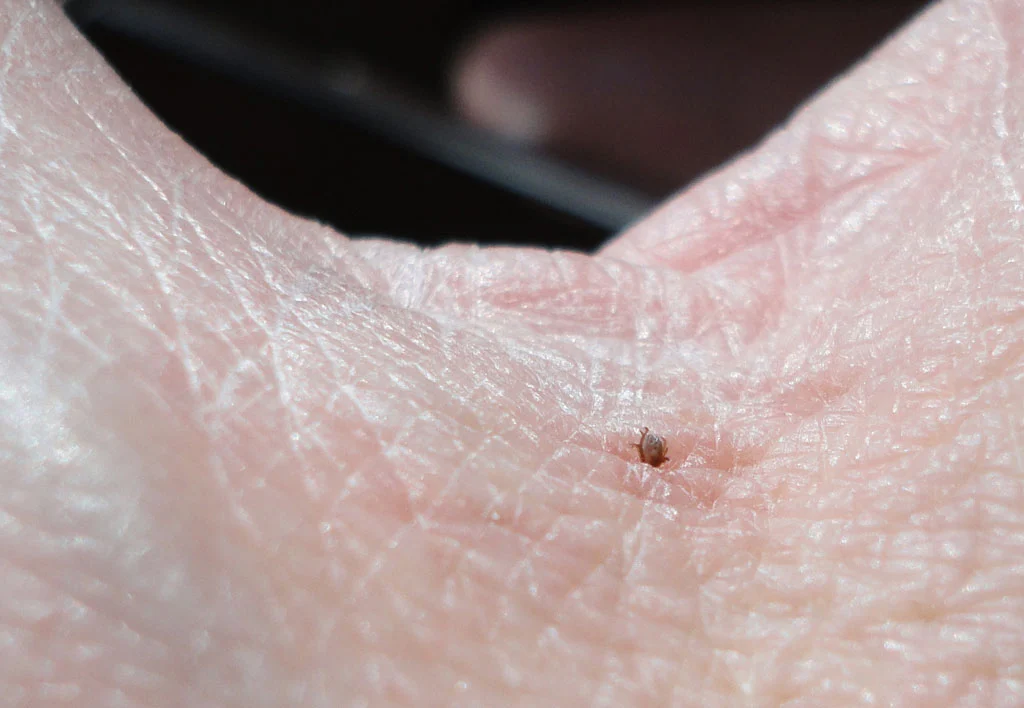
Sometimes, after the tick is removed, you may notice a tiny dark speck that looks like a splinter. This is often a mouthpart fragment, and it can happen even when you do everything right.
- Do not dig aggressively with a needle or knife. That is how we end up with more skin trauma and infection.
- If it is easily lifted with clean tweezers the way you would remove a splinter , you can gently remove it.
- If it is not easily removed, leave it alone. The skin often pushes small fragments out naturally as it heals.
If the area becomes increasingly red, warm, swollen, painful, or starts draining pus, call your child’s clinician.
Clean and soothe
After the tick is out:
- Clean the area with soap and water or rubbing alcohol.
- Keeping it clean is usually enough. If your clinician has previously said it is safe for your child, you can apply a small amount of antibiotic ointment for basic skin protection, but topical ointment does not prevent tickborne illness.
- If your child is itchy, a cool compress can help.
A small red bump right after a bite is common and often looks similar to a mosquito bite for the first day or two.
Save it or not
In many cases, saving the tick is optional, but it can be helpful if your pediatrician wants to identify the tick type or estimate risk based on where you live and how long it may have been attached.
If you choose to save it:
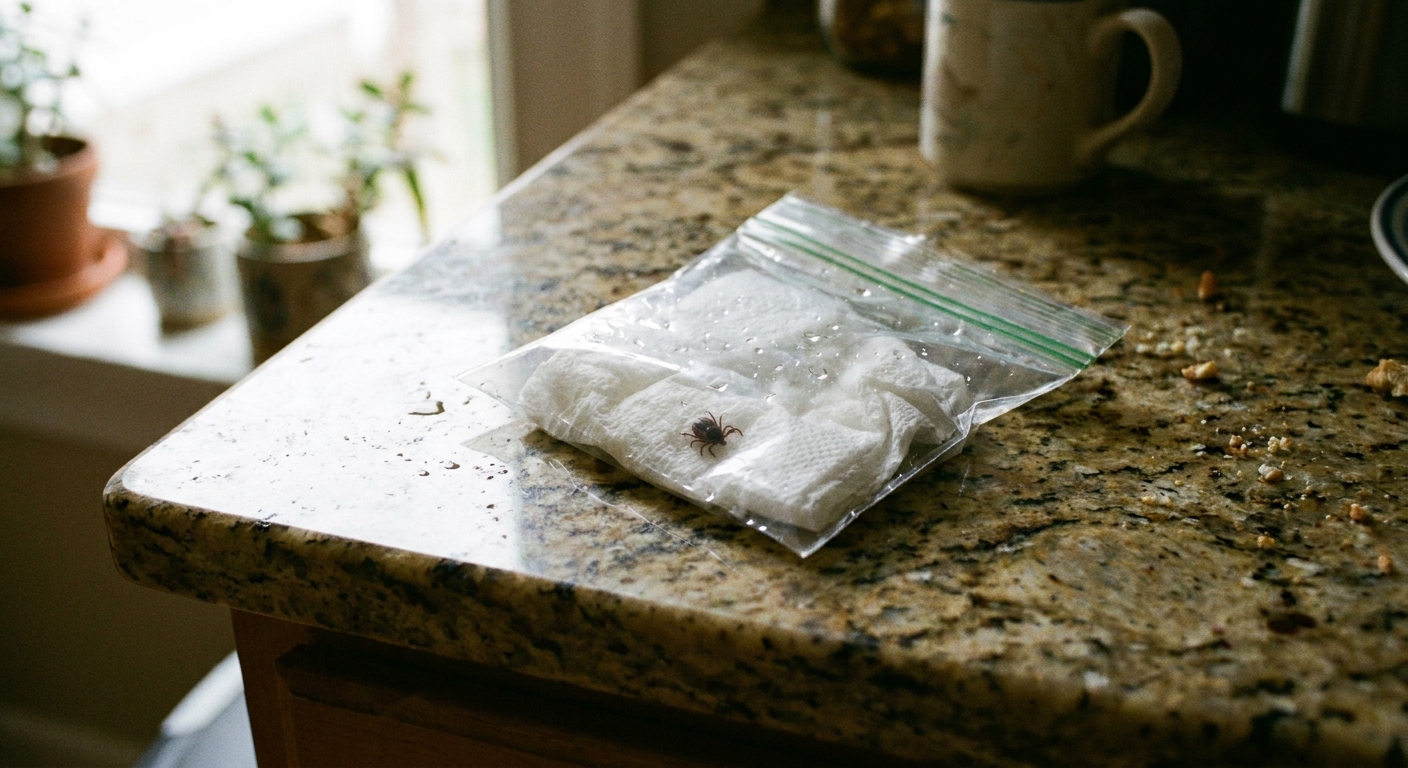
- Place the tick in a sealed container or bag.
- Label with the date and where on the body it was found.
- Take a clear photo of the tick next to a coin for size reference.
- Follow local guidance for storage. Many clinicians are fine with a dry, sealed bag or container. Some areas recommend preserving the tick in rubbing alcohol for identification.
Try not to crush the tick with bare fingers. If you are disposing of it, you can seal it in tape or a bag before throwing it away (follow local guidance).
Do not feel pressured to mail ticks off to random online labs. If tick testing is appropriate, your clinician or local public health guidance will direct you.
Document it
If you can, take 30 seconds to jot down:
- The date you removed the tick
- Where it was found on the body
- Your best guess at how long it may have been attached (for example, you did a tick check last night and it was not there)
- A quick photo of the bite site (helpful if a rash develops later)
Watch for symptoms
Most kids do completely fine. Still, keep an eye out for symptoms over the next several weeks. For Lyme disease specifically, monitoring for up to 30 days is a useful rule of thumb, since the classic rash often shows up days to weeks after a bite.
Normal reactions
- A small red bump at the bite site
- Mild itching
- Minor tenderness for a day or two
Rash notes
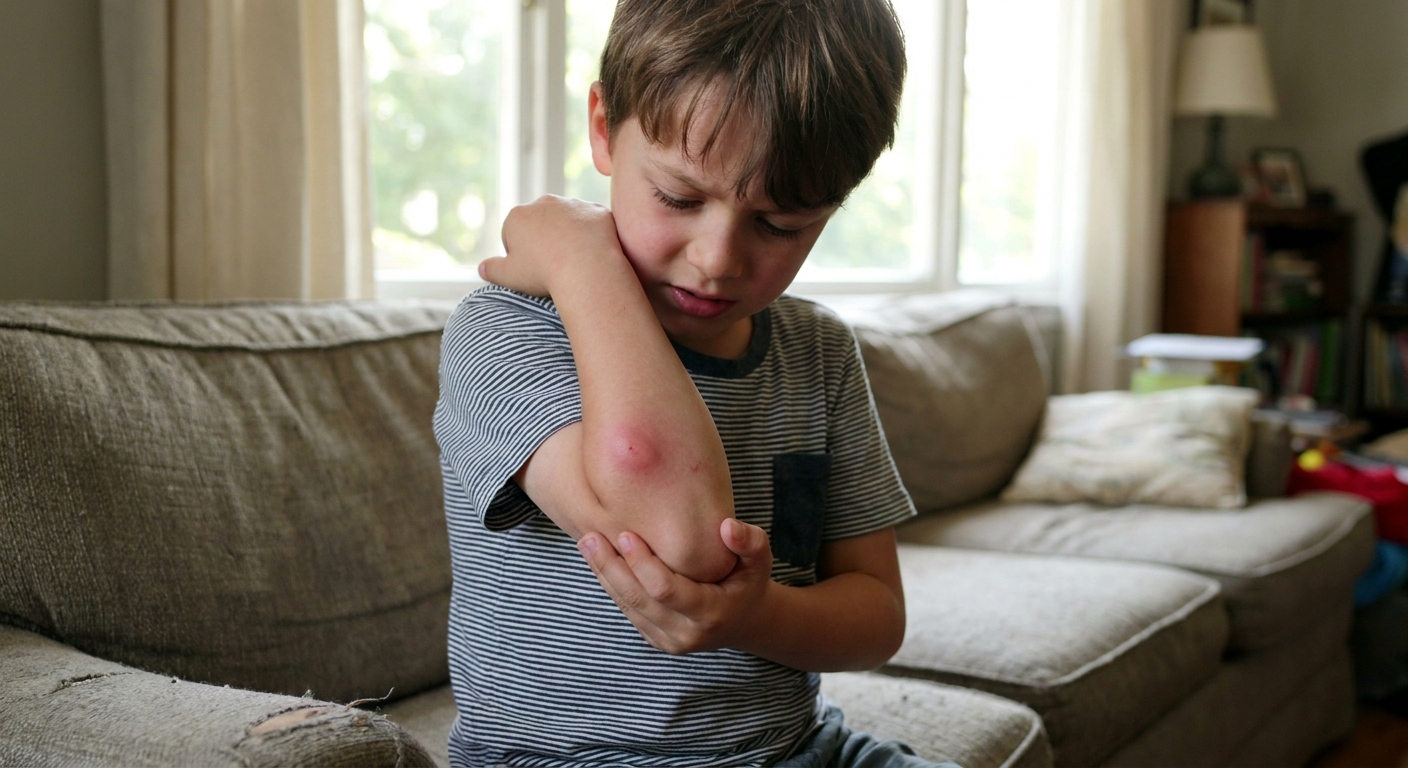
A small red spot right after removal is common. The Lyme rash (erythema migrans) usually:
- Appears later, often several days after the bite (not immediately)
- Expands over time and often becomes larger than about 2 inches (5 cm)
- Does not always look like a perfect bull’s-eye, and it can look different on different skin tones
Any rash that spreads, changes quickly, or shows up with fever deserves a call.
Call your child’s clinician if you notice
- Fever, chills, or flu-like symptoms
- New or worsening fatigue
- Headache, neck stiffness, or significant body aches
- Joint pain or swelling
- Rash anywhere, especially one that expands over days
- Increasing redness, warmth, swelling, or drainage at the bite site
Ask about preventive antibiotics
In certain higher-risk situations, clinicians may recommend a one-time dose of doxycycline to lower the chance of Lyme disease. This is not for every tick bite, but it is worth asking about if all of the following are true:
- The tick is likely an Ixodes tick (often called deer tick or blacklegged tick), which can transmit Lyme
- It may have been attached for 36 hours or more (or it looked very engorged)
- You are in a higher-incidence area for Lyme
- The tick was removed within the last 72 hours
- Your child has no medical reason they cannot take doxycycline
Pediatric nuance: current guidance allows doxycycline for short courses, even in younger children, when it is the right medication. Your child’s clinician can help you decide what makes sense based on age, location, tick type, and timing.
When to get care today
Go in urgently or call your pediatrician right away if:
- You cannot remove the tick, or it breaks apart and you cannot get the body out
- The tick is attached near the eye, inside the ear, or in another very sensitive location
- Your child develops hives, trouble breathing, facial swelling, or vomiting right after the bite (rare, but treat as an emergency)
- Your child has a weakened immune system or a complex medical condition and you want tailored guidance
When clinicians should remove
Most ticks can be removed at home. Clinicians should remove ticks when:
- The tick is in a location that is hard to access safely (eye area, ear canal, genitals)
- A child cannot stay still enough to remove it without risking skin injury
- There are signs of skin infection or significant swelling around the tick
- Parents have tried and the tick will not come out cleanly
In clinic, we use the same principle: fine-tipped forceps, grasp close to the skin, and a straight, steady pull.
Prevention basics
Because once you have removed one tick, you tend to become very motivated to avoid the sequel.
- Do a full-body tick check after outdoor play, especially around the scalp, hairline, behind ears, armpits, waistband, behind knees, and between toes.
- Shower or bathe within a couple of hours after being outdoors when possible.
- Put outdoor clothes in the dryer on high heat for a short cycle to help kill ticks.
- Use tick repellent appropriate for your child’s age and follow the label directions.
- If you have pets, keep them on vet-recommended tick prevention, since they can bring ticks indoors.
If you are reading this at 3 AM with a flashlight in your mouth and tweezers in your hand, you are doing great. Remove it, clean the area, jot down the date, and then let your nervous system come back down. Most of the time, that is the end of the story.