How to Start Solids at 6 Months: A Week-by-Week Guide

Sarah Mitchell
Sarah Mitchell is a Registered Pediatric Nurse and a mother of three who has spent over a decade helping families navigate the beautiful, chaotic early years of childhood. She combines evidence-based medical knowledge with real-world parenting experience to offer practical, compassionate advice. At Awesome Parent, Sarah's mission is to help exhausted parents find solutions, trust their instincts, and finally get some sleep.
Starting solids is exciting, messy, and for many parents, surprisingly emotional. One day your baby is happily living on milk, and the next you are staring at a spoonful of mush thinking, Am I doing this right?
Take a deep breath. At around 6 months, solids are mainly about practice, not calories. Breast milk or formula stays the main nutrition source through about 12 months, while solids gradually become a bigger share (often noticeably after about 9 months). Your job this month is to help your baby practice sitting upright and stable in the high chair, bringing food to their mouth, moving food around in their mouth, and swallowing safely, all while keeping mealtimes low pressure.
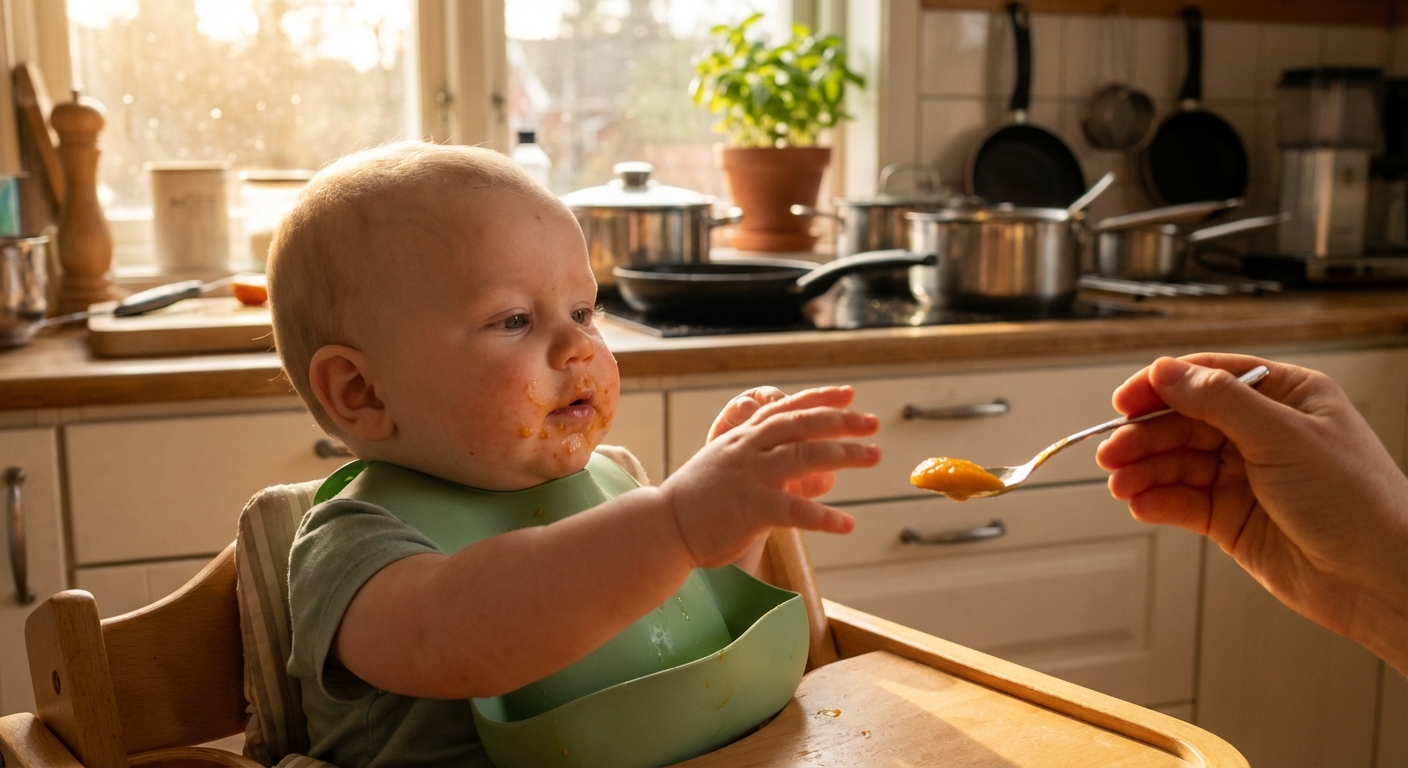
This guide gives you a gentle week-by-week plan for the first month: what to offer, how much, how to fit solids alongside milk feeds, and what to watch for with allergies, gagging, and food refusal.
Before you start: Is baby ready?
Many babies are ready around 6 months, but the calendar is not the best test. Look for these signs:
- Sits with minimal support and has good head and neck control.
- Brings objects to mouth and can coordinate hands, mouth, and eyes.
- Shows interest in food (watching you eat, reaching, opening mouth when food approaches).
- Tongue-thrust reflex is fading (they do not automatically push everything out with their tongue).
If your baby was born early, has significant reflux, low tone, or any swallowing concerns, check in with your pediatrician before starting.
Milk still comes first
For the first month, think of solids as a short “skills practice” session once or twice a day. Most babies still take:
- Breast milk: on demand, typically 5 to 8 feeds per day.
- Formula: often around 24 to 32 ounces per day total (sometimes up to about 36), but it varies a lot by baby.
A simple rule that helps: offer milk first, then solids about 30 to 60 minutes later. This keeps baby from being too hungry (and furious) to practice. If your baby seems uninterested after milk, flip it and try solids first, then milk. There is no parenting trophy for the “right” order.
If milk intake drops significantly, diaper output changes, or you are worried about growth, check in with your pediatrician.
Purees vs BLW: You can mix and match
You do not have to pick a team. Many families do a flexible combo: some spoon-feeding, some finger foods.
- Purees: great for early practice with swallowing and for easy allergen introductions (thin peanut butter mixed into yogurt, for example).
- BLW-style finger foods: great for self-feeding practice and texture exploration.
Whichever you choose, keep baby upright, closely supervised, and offer soft foods that squish easily between your fingers.
If you want deeper help, our site also covers the BLW vs purees decision, first foods, allergen introductions, refusing solids, and constipation after solids.
Safety basics (the part every triage nurse wants you to read)
Positioning matters
- Use a high chair with good back support.
- Feet supported is ideal (a footrest helps stability).
- No eating in car seats, bouncers, swings, or while crawling around.
Gagging vs choking
Gagging is loud and dramatic: coughing, sputtering, watery eyes, tongue forward. It is common early on and is part of learning.
Choking can be quieter, or involve weak or ineffective coughing (baby cannot move air well). It can look like trouble breathing, inability to cry, or color changes.
If you have not taken an infant CPR class yet, put it on your to-do list. It is one of those things you hope you never use, and you will sleep better knowing you could.
High-risk choking foods to avoid (or modify)
- Whole grapes and cherry tomatoes (cut lengthwise into quarters).
- Blueberries (squash flat between your fingers, or quarter lengthwise).
- Hot dogs (still high risk; generally avoid early on. For older babies when appropriate, offer very thin strips cut lengthwise and cooked until soft).
- Nuts and popcorn (avoid). Nut butter is OK when thinned.
- Chunks of apple, raw carrot, firm pear (avoid raw; cook until soft).
- Sticky globs of nut butter (thin it).
- Hard cubes of cheese (offer very soft, thin pieces or finely shredded).
Portion sizes: How much should a 6-month-old eat?
In the beginning, we measure success in teaspoons, not tablespoons.
- Week 1: 1 to 2 teaspoons once daily.
- Week 2: 1 to 2 tablespoons once daily (or split into two mini meals if baby is enjoying it).
- Week 3: up to 2 to 4 tablespoons total per day.
- Week 4: 2 “meals” per day if baby is interested (still small portions).
Some babies eat more, some eat almost nothing. Both can be normal in the first month as long as milk intake, growth, and diaper output remain solid.
A quick note on hunger and fullness cues
- Keep going if baby is leaning in, opening their mouth, reaching for food, and seems happy.
- Stop if baby turns away, closes their mouth, pushes food away, gets fussy, or starts doing the “I am done” arch.
Iron and zinc: Prioritize early
Around 6 months, babies start needing more iron and zinc than milk alone can provide. Early solids do not need to be fancy, but it helps to regularly include iron-rich options like iron-fortified cereal, meat, fish, beans, lentils, and eggs (once tolerated). This is one of the most practical “nutrition wins” in the first year.
Allergy intro: What to watch for
Most allergists now support introducing common allergens around 6 months (not before 4 months) once baby is developmentally ready. Many families find it easier to start after baby has tolerated a few non-allergenic foods, but that is a practical preference, not a strict requirement.
Introduce allergens on a calm day
- Try new allergen foods earlier in the day, not right before bedtime.
- Offer at home, when you can observe for about 2 hours.
- Start with a small amount, then gradually increase if tolerated.
Common allergenic foods
- Peanut
- Egg
- Dairy
- Wheat
- Soy
- Sesame
- Fish
- Shellfish
- Tree nuts
Signs of an allergic reaction
Mild to moderate: hives, facial redness, itching, vomiting, diarrhea, and sometimes new cough or congestion soon after eating (especially when it comes with skin or stomach symptoms).
Emergency signs (call emergency services): trouble breathing, wheezing, repetitive vomiting with lethargy, swelling of lips or tongue, widespread hives plus breathing or swallowing issues, or any sign your child is suddenly getting worse.
If your baby has severe eczema, a known food allergy, or a strong family history of allergies, talk with your pediatrician about the safest plan for allergen introduction.
Your first month of solids: Week-by-week plan
This plan is intentionally simple. The goal is to build confidence and routine, not to create a gourmet baby tasting menu.
Week 1: One food, once a day
Goal: get comfortable with the high chair, the bib, the spoon, and the idea of food.
- Frequency: 1 “meal” per day, 5 to 10 minutes.
- Portion: 1 to 2 teaspoons.
- Textures: smooth puree or very soft mashed food thinned with breast milk/formula/water.
First foods to try (choose 1 per day):
- Iron-fortified cereal mixed thin (oat or multigrain is fine).
- Avocado mashed smooth.
- Sweet potato puree.
- Banana mashed and thinned.
- Pear or apple puree (cooked, then blended).
Tip from the clinic: constipation is more likely when babies start with lots of cereal and not much fruit or veg. You can absolutely use cereal, just balance it with produce and fluids from milk feeds.
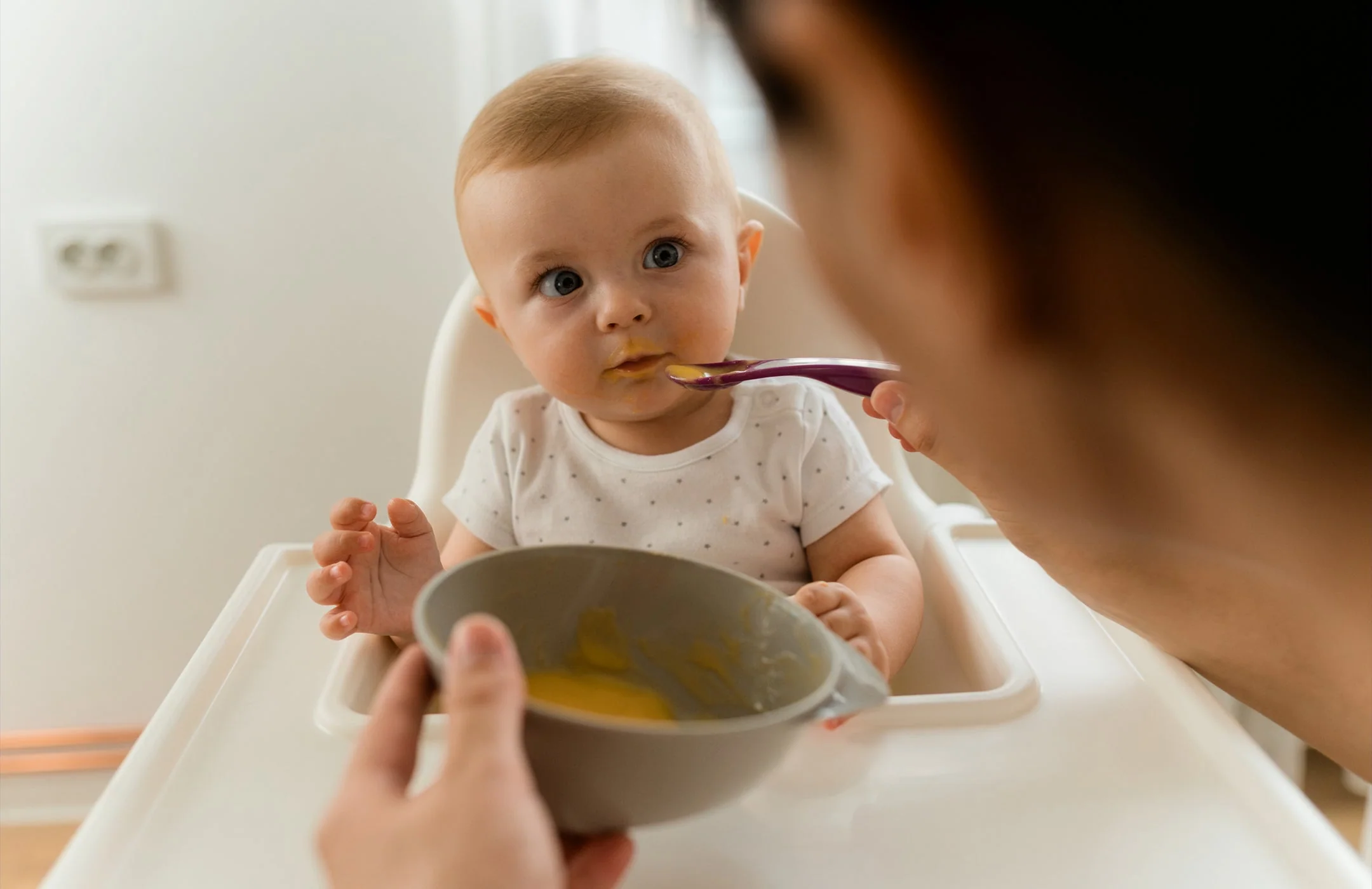
Week 2: Build variety and start allergen planning
Goal: expand flavors and keep it positive. Your baby is learning that new foods are safe.
- Frequency: 1 meal per day (or 2 mini meals if baby is eager).
- Portion: 1 to 2 tablespoons total per day.
- Textures: slightly thicker purees, mashed foods with a little texture.
Foods to rotate in:
- Vegetables: carrot (cooked), peas, zucchini, butternut squash.
- Fruits: peach, plum, mango, prunes (helpful for poop).
- Protein and iron: pureed meat or lentils, or well-cooked beans blended smooth.
- Yogurt: plain, full-fat (if dairy is appropriate for your baby).
Allergen intro prep: pick your first allergen for next week (often egg or peanut). If your baby has high-risk eczema or prior reactions, check with your pediatrician first.
Week 3: Introduce key allergens safely
Goal: start common allergens one at a time, in small amounts, and repeat exposures if tolerated.
- Frequency: 1 to 2 meals per day.
- Portion: up to 2 to 4 tablespoons total per day.
- Textures: mashed foods, thicker purees, and some soft finger foods if you are ready.
How to offer peanut (safe forms):
- Stir very thin smooth peanut butter into yogurt or puree (no sticky globs).
- Use peanut powder mixed into applesauce or oatmeal.
How to offer egg (safe forms):
- Well-cooked scrambled egg mashed finely.
- Hard-boiled egg yolk mixed with breast milk/formula to a smooth mash (some babies prefer yolk first).
What repeat exposure can look like: if tolerated, offer the allergen 2 to 3 times per week in a safe form. Consistency matters more than quantity.
Add soft finger foods if desired:
- Avocado spears rolled in crushed cereal for grip.
- Very soft roasted sweet potato sticks.
- Soft ripe banana pieces.
- Well-cooked pasta spirals that squish easily.
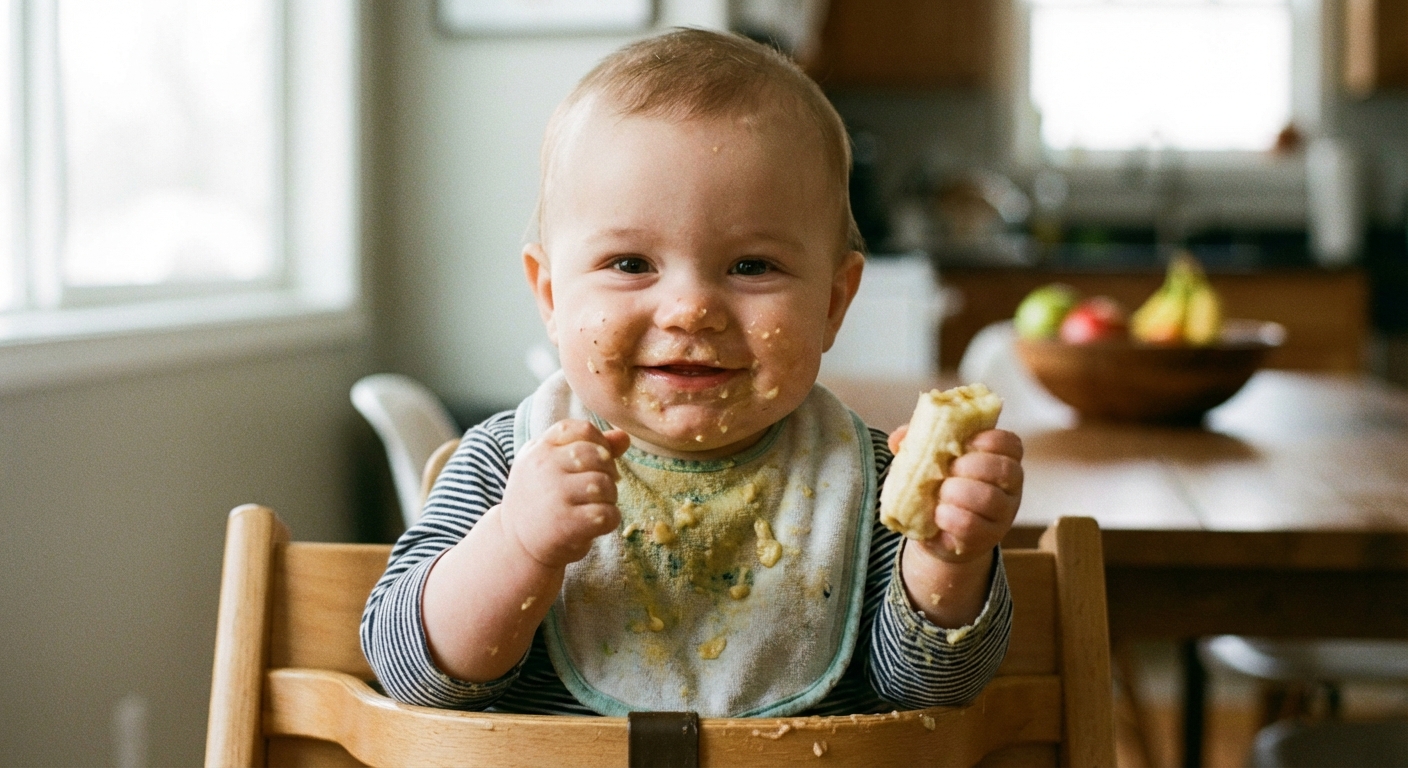
Week 4: Move toward simple meals
Goal: establish a routine and gently increase textures and food groups.
- Frequency: 2 meals per day (breakfast and dinner often work well).
- Portion: stop when baby shows fullness cues (turning away, closing mouth, pushing food away, fussing).
- Textures: mashed and lumpy foods, more self-feeding opportunities.
Easy first meals to rotate:
- Oatmeal with mashed banana and a little peanut powder (if peanut is already tolerated).
- Plain yogurt with mashed berries (crushed well) and cinnamon (optional).
- Mashed avocado with finely shredded chicken.
- Lentil puree with a drizzle of olive oil.
- Soft scrambled egg with avocado.
Water: you can offer small sips of water in an open cup or straw cup with meals. Keep it modest, often just a few ounces per day total, and avoid letting water replace milk feeds. Milk still does the heavy hydration work.
What if my baby gags?
Gagging is common when babies start solids, especially with thicker textures or finger foods. It can look alarming, but it is often a normal protective reflex.
- Stay calm. Babies pick up our panic fast.
- Let them work it out if they are coughing and making noise.
- Reduce the size of the piece next time, or cook the food softer.
- Check posture: upright with good support, chin not tucked.
If your baby has frequent choking episodes, persistent coughing with feeds, a “wet” sounding voice after eating, or poor weight gain, talk to your pediatrician promptly. Those can be signs of feeding or swallowing issues that deserve a closer look.
What if my baby refuses solids?
Also common. Babies are not being dramatic. They are being babies.
Try these calm resets
- Keep sessions short: 5 to 10 minutes is enough early on.
- Offer when baby is content: not starving, not overtired.
- Dial down pressure: it is okay if they touch, smear, and taste one molecule.
- Model eating: sit and eat something safe alongside them.
- Repeat, repeat, repeat: it can take 10 to 20 exposures for acceptance.
When to check in: if your baby consistently cannot tolerate textures, vomits frequently with solids, arches and cries at the sight of food, or you are seeing weight or hydration concerns, loop in your pediatrician.
Common questions parents ask at 3 AM
Do I need to wait 3 days between new foods?
For most babies, you can introduce new foods more quickly than the old “3-day rule,” especially for low-allergen foods like fruits and vegetables. For common allergens, spacing them out a bit can make it easier to spot reactions.
Should I start with veggies so baby does not get a sweet tooth?
This is a popular worry, and it tends to be overblown. Breast milk and formula are already sweet. Focus on variety over rules. Offer both fruits and veggies across the week.
What about salt and sugar?
Avoid adding salt and added sugars. Use natural flavors: cinnamon, garlic powder, mild spices, lemon juice, and herbs are fine in small amounts (skip honey before age 1 due to botulism risk). If you use spice blends or sauces, check labels since many are surprisingly salty or sweet.
Do I need baby food pouches?
No. They can be convenient, but they are not required. If you use them, try squeezing onto a spoon or into a bowl sometimes so baby practices oral skills, not just sucking.
A simple checklist for your first month
- High chair with good support, baby sitting upright.
- 1 to 2 short solid “practice sessions” per day.
- Milk feeds remain the main nutrition source.
- Soft textures and safe finger food shapes if doing BLW-style foods.
- Prioritize iron-rich foods alongside fruits and veggies.
- Introduce allergens thoughtfully, watch for reactions.
- Expect mess, gagging, changing poop, and fluctuating interest.
If you remember nothing else: your baby does not need to eat a lot right now. They need to learn. You are not behind, and you are not doing it wrong.
When to call your pediatrician
Trust your instincts and reach out if:
- Your baby has any signs of a significant allergic reaction.
- You suspect choking or there are frequent scary coughing episodes.
- There is persistent vomiting, blood in stool, or constipation that is severe (hard, painful stools, blood from straining, or going several days with significant discomfort) after starting solids.
- Your baby has fewer wet diapers, poor weight gain, or seems unusually lethargic.
- Mealtimes feel consistently stressful or impossible, despite trying different approaches.
You deserve support. Feeding should not feel like a daily emergency.