How to Stop Early Morning Wake-Ups

Sarah Mitchell
Sarah Mitchell is a Registered Pediatric Nurse and a mother of three who has spent over a decade helping families navigate the beautiful, chaotic early years of childhood. She combines evidence-based medical knowledge with real-world parenting experience to offer practical, compassionate advice. At Awesome Parent, Sarah's mission is to help exhausted parents find solutions, trust their instincts, and finally get some sleep.
If your baby is popping up at 5 AM like they have an important meeting, you are not alone. Early morning wake-ups are one of the most common sleep complaints I heard as a pediatric triage nurse, and now as a mom of three, I can confirm: nothing humbles you faster than a cheerful baby in the dark.
The good news is that most 5 AM wake-ups are fixable. The trick is figuring out which kind of early wake-up you are dealing with, then making a few targeted changes (not turning your whole life into a sleep bootcamp).
Quick age note: This article is most useful for babies 4 months and up, when sleep becomes a bit more pattern-based. If you have a newborn, early mornings can be noisy and unpredictable, and that is often normal. (You still can use the environment tips, though.)

What counts as “early”
For most babies, a reasonable “morning” is 6:00 to 7:30 AM. Waking at 5:00 AM (or earlier) usually means something is nudging their body clock forward, like too much light, an overtired stretch, or a habit wake-up that has become part of the routine.
One important note: If your baby is going to sleep at 6:30 PM, a 5:30 AM wake-up might simply be the math working out. Many babies sleep about 10 to 12 hours overnight after 6 months, and total 24-hour sleep varies a lot by child.
Why 5 AM wake-ups happen
Early wake-ups usually come down to one or more of these:
- Too much morning light or household noise
- Bedtime is too late (overtired) or occasionally too early
- Naps are off (too little daytime sleep or a too-long last wake window)
- Hunger or a lingering early-morning feed habit
- Temperature discomfort (often chilly around dawn)
- Sleep association (needs help to fall back asleep)
- Development (new skill, separation anxiety, schedule transitions)
Step 1: Treat 5 AM like night
This is the hardest step when you are already exhausted, but it matters the most.
What to do at 5 AM
- Keep the room dark.
- Keep your voice low and boring (this is not story time, sadly).
- Avoid turning on bright lights or opening curtains.
- If baby is safe and not distressed, give a few minutes to see if they resettle.
- Use the same soothing you use overnight, not your morning routine.
When we “start the day” at 5 AM (lights, feed, play), baby’s internal clock learns that 5 AM is a perfectly acceptable wake-up time. Babies love consistency, even when it ruins ours.
Set a goal wake time
Pick a time you consider morning, like 6:00 AM. For one week, treat anything before that like nighttime (dark, minimal interaction). Once baby is regularly making it to 6:00, you can inch it later by 10 to 15 minutes every few days (6:10, then 6:20, then 6:30).
Step 2: Fix light, sound, and temp
Dawn is sneaky. Even a small crack of light can tell a baby’s brain, “It’s go time.”
Make the room darker
- Use blackout curtains or a travel blackout shade.
- If you are doing a temporary DIY layer, make sure it is securely fastened, has no cords, and cannot fall into the sleep space. Keep anything like this well away from the crib.
- Cover or remove glowing electronics.
- Aim for “can’t find your own socks” dark. Practical benchmark: you should not be able to read a book in the room.
Add consistent sound
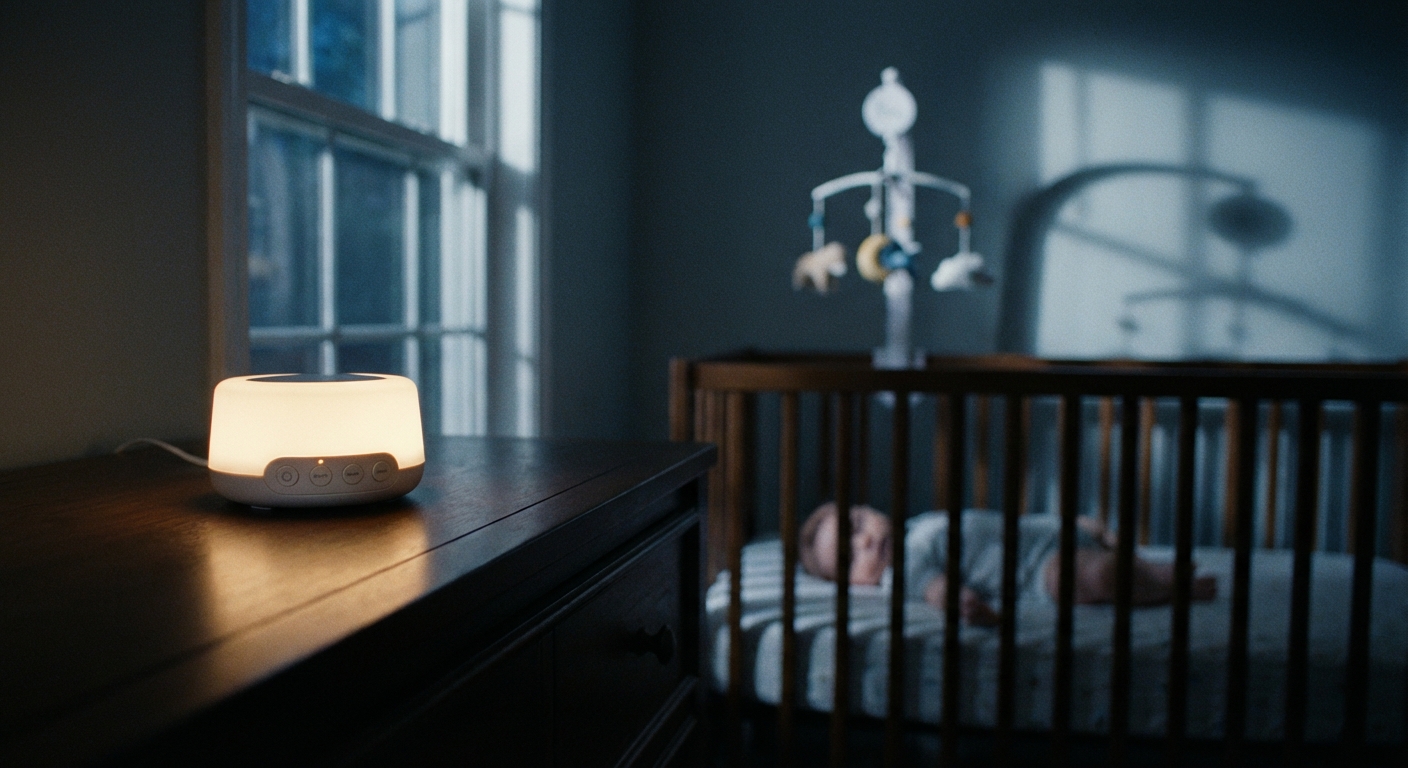
- Use a white noise machine at a steady volume (think shower sound, not jet engine).
- Place it across the room from the crib, not inside it.
Check the early morning temperature
Many homes dip in temperature around 4 to 6 AM. A baby who was comfy at midnight may be chilly at dawn.
- Many babies do well around 68 to 72°F (20 to 22°C), but some rooms are comfortable a bit warmer or cooler. Use your baby’s cues and dress accordingly.
- Consider warmer pajamas or an appropriate sleep sack instead of adding loose blankets (no loose bedding in the crib).

Step 3: Check bedtime and total sleep
Early wake-ups often come from a schedule that is just slightly out of alignment.
If bedtime is too late
Overtired babies tend to wake more and wake earlier. When sleep pressure gets out of whack, sleep can become lighter and more fragmented, and early morning wakes can stick.
Try this: Move bedtime earlier by 15 minutes every 2 to 3 nights until you see improvement. Big jumps often backfire.
If bedtime is too early
Some babies are simply “done” sleeping after a certain number of night hours. If bedtime is 6:00 PM and they are up at 5:00 AM, that may be a full night for them.
Try this: If naps are solid and baby seems happy at 5:00 AM, experiment with a slightly later bedtime (10 to 15 minutes later for several nights) and see if morning shifts later. This works best when the room is truly dark in the early morning.
Step 4: Fix naps and the last window
In clinic, I used to say sleep is like a mobile: tug one piece (naps) and the whole thing moves (night sleep). Early wake-ups are often a nap problem in disguise.
Nap patterns that trigger 5 AM wakes
- Not enough total daytime sleep, leading to overtiredness
- Last wake window too long before bedtime
- Late afternoon nap too late, stealing sleep pressure from the night
Quick nap tweaks that help
- Protect the first nap. An early first nap can prevent the whole day from sliding into overtired territory.
- If you are in a 3-to-2 nap transition (often around 6 to 9 months, sometimes earlier or later), use an early bedtime on rough nap days.
- If baby is on 2 naps, avoid letting the second nap run too late into the afternoon.
A simple example (2 naps, around 6 to 9 months)
Every baby is different, but this general shape helps many families:
- Wake: 6:30 AM
- Nap 1: 9:30 to 10:45 AM
- Nap 2: 2:00 to 3:15 PM
- Bed: 7:15 to 7:45 PM
If your baby is waking at 5:00 AM, a common tweak is to shorten the last wake window and/or pull bedtime earlier for several nights to catch up on sleep.
Step 5: Handle hunger and early feeds
Some early wake-ups are truly hunger, especially in younger babies. Others are a learned “snooze feed” that became a standing appointment.
Signs hunger is driving it
- Baby takes a full feed at 5 AM and goes right back to sleep.
- Daytime intake has been low (distracted feeding is a big one).
- Baby is under 6 months or still needs night calories (very individual).
Gentle ways to shift a 5 AM feed later
- Tank up during the day: Offer more frequent feeds, especially in the late afternoon and before bed.
- Dream feed (optional): A feed around 10 to 11 PM sometimes helps some babies stretch the morning. It does not work for everyone.
- Wean gradually: If 5 AM has become a habitual feed, reduce the amount by small increments every few nights (or shorten nursing time) while keeping the room dark and boring.
If your baby is under 6 months, was born prematurely, has growth concerns, or you are unsure whether night feeds are still needed, check in with your pediatrician before you actively wean.
Step 6: Break the 5 AM habit
Babies are excellent pattern detectors. If waking at 5 leads to cuddles, rocking, a bottle, and then the day starts, they will keep doing it.
A realistic response plan
- If baby wakes at 5, pause for a moment to see if they resettle.
- If they fuss, offer brief comfort in the crib first (hand on chest, shush, pacifier if you use one).
- If they escalate, do a quick check-in, soothe, and put them back down calm and settled (however you normally handle overnight wake-ups).
- Repeat as needed, keeping it consistent until your goal wake time.
Consistency matters more than intensity. You do not need to “win” on night one. You are teaching a new pattern.
Step 7: Use morning cues on purpose
Think of this as anchoring your baby’s body clock.
After your goal wake time
- Open curtains and get bright light exposure fairly soon after wake-up (outdoor light is best, even on cloudy days).
- Offer a full feed and do your “morning routine” with normal voices and energy.
Before your goal wake time
- Keep it dark, quiet, and boring.
This contrast helps many babies learn: “This is night sleep time” versus “This is morning.”
Teething and regressions
Sometimes the culprit is not your schedule at all. It is your baby’s brain doing baby things.
- Milestones: Rolling, crawling, pulling to stand can cause early wakes. Give extra practice time during the day and keep responses boring at dawn.
- Separation anxiety: Often shows up around 8 to 10 months (give or take) and again in toddlerhood. Use consistent reassurance, but avoid starting the day early.
- Teething: True pain usually shows up as increased night waking and difficulty settling. If your baby seems uncomfortable, ask your pediatrician about age-appropriate pain relief. Avoid assuming every early wake is teething, since it can become a catch-all explanation that delays fixing the real issue.
Fast troubleshooting checklist
If you want the fastest path to progress, start here:
- Is the room pitch-dark at 5 AM? If not, fix that first.
- Is baby warm enough at dawn? Check the temp at 4 to 6 AM.
- Are you starting the day at 5? Keep it boring until your set wake time.
- Is baby overtired? Try an earlier bedtime for several nights.
- Are naps age-appropriate? Especially the last wake window.
- Is hunger involved? Increase daytime calories and shift feeds gradually.
When to call the pediatrician
Most early wake-ups are behavioral or schedule-related, but trust your gut. Reach out if:
- Your baby is under 4 months and sleep feels unpredictable or worsening.
- There are signs of illness: fever, breathing concerns, persistent vomiting, dehydration, or unusual lethargy.
- Reflux symptoms, eczema itching, or chronic congestion seem to disrupt sleep.
- Your baby is not gaining weight well or you are worried about feeding.
Final note
You did not “cause” this by feeding at the wrong time once, or letting your baby nap in the car, or existing as a human with limits. Early wake-ups are common, and they are usually a handful of small factors stacking up.
Pick two changes to try for 5 to 7 days. Track wake-ups and bedtime. Then adjust. Baby sleep is rarely one magical fix. It is more like troubleshooting a very tiny, very loud system.
If your publication allows comments, consider leaving your baby’s age, bedtime, nap schedule, and what happens at 5 AM (crying, chatting, feeding, back to sleep or up for good). If comments are not an option, write those details down for yourself. That little log often makes the pattern obvious.