How to Stop Toddler Biting

Sarah Mitchell
Sarah Mitchell is a Registered Pediatric Nurse and a mother of three who has spent over a decade helping families navigate the beautiful, chaotic early years of childhood. She combines evidence-based medical knowledge with real-world parenting experience to offer practical, compassionate advice. At Awesome Parent, Sarah's mission is to help exhausted parents find solutions, trust their instincts, and finally get some sleep.
If you are reading this after your toddler bit someone (again), take a breath. Biting is one of those behaviors that feels alarming and personal, but for many toddlers it is a short, intense phase with very solvable causes. You are not raising a “bad kid.” You are raising a tiny human with big feelings and very limited tools.
As a pediatric nurse and a mom of three, I have seen biting from every angle: in daycare rooms, in waiting rooms, and in my own living room when someone took the wrong truck. The good news is that a gentle, consistent approach helps in many families. And if you try these strategies for a few weeks and it is not improving, that is not a failure. It is a sign you may need more support and a more tailored plan.
Quick note: This article is educational and not a substitute for medical advice. If you are worried about your child’s safety or development, or a bite breaks skin, contact your pediatrician.
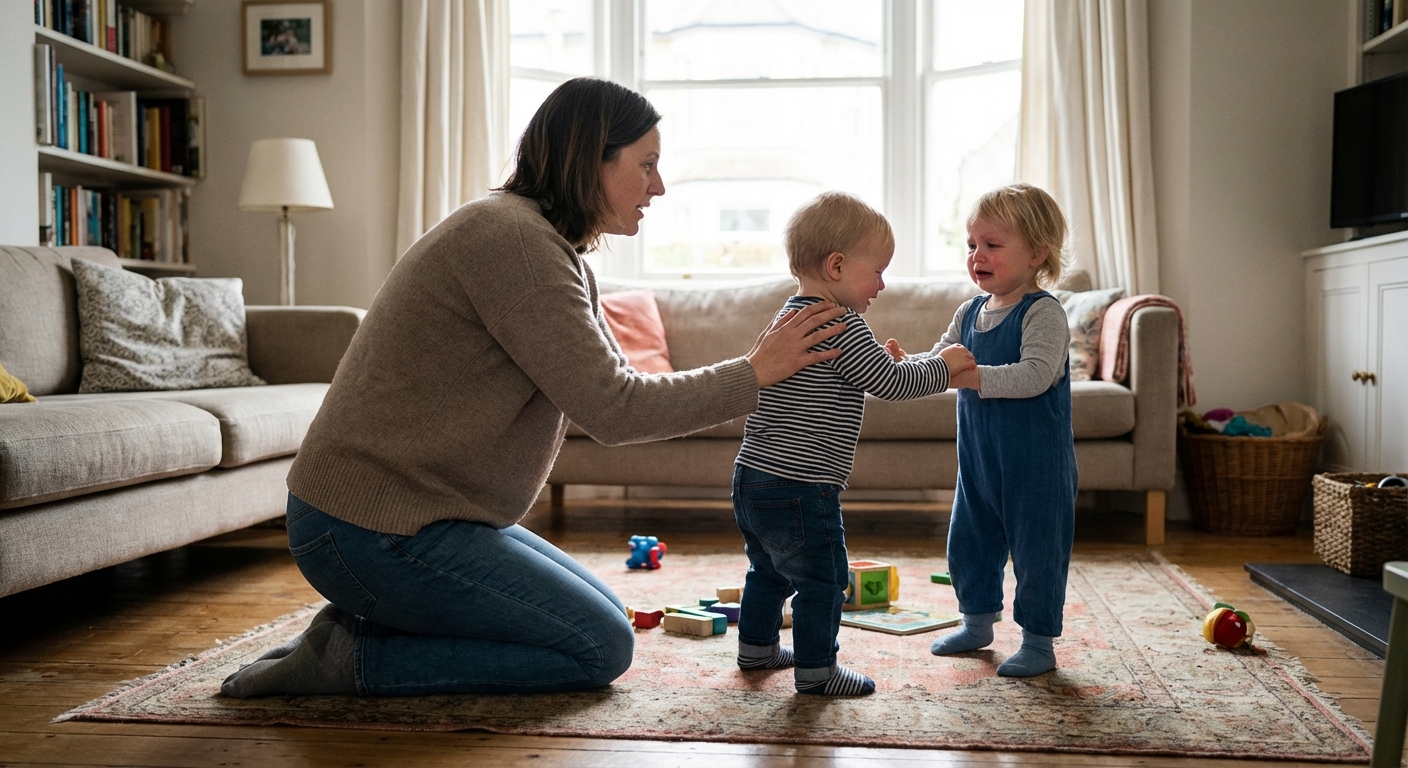
Why toddlers bite (often not true aggression)
Toddlers bite because biting works in the moment. It is fast. It gets a reaction. It can stop someone from taking a toy. It can release frustration. And it is one of the few tools they have when their language and self-control are still under construction.
- Big feelings, small words: Your toddler may not be able to say “I am overwhelmed, please back up.” Teeth become the message.
- Impulse control is still developing: The brain skills that pause a reaction and choose a better action are not reliable yet, especially under stress.
- Sensory needs: Some kids chew and bite more when they are teething, tired, hungry, or seeking sensory input.
- Attention and big reactions: Even negative attention can reinforce biting if it reliably produces a strong adult response.
- Experimenting with cause and effect: Toddlers are tiny scientists. “When I bite, people yell. Interesting.”
- Overcrowded spaces: Biting is more common when kids are packed together with limited toys and lots of stimulation.
Important nuance: sometimes biting is about defense, not attack. A child who is repeatedly grabbed, crowded, or chased may bite to create space. That does not make biting okay, but it changes how we solve it.
Also, some toddlers do bite in anger. It is still rarely premeditated. It is usually an impulsive, overwhelmed body choosing the quickest option it knows.
What to do in the moment (calm and effective)
In triage nursing we had a saying: slow is smooth, smooth is fast. When biting happens, your job is to protect, stay calm, and teach. Not to punish or lecture.
Step 1: Separate and block
Move your toddler a few feet away or gently place your body between them and the other child. If you can, get down to their level. Keep your face neutral.
Step 2: Help the bitten child first
Comfort the child who was bitten first. This can reduce reinforcement for the biter and keeps your focus on safety and care.
Say: “Ouch. Biting hurts. I am going to help you.”
Step 3: Quick first aid for the bite
If the skin is not broken, wash the area with soap and water and use a cold compress for swelling.
If the skin is broken, rinse well with soap and running water, pat dry, cover with a clean bandage, and contact a clinician for guidance. Human bites can become infected.
Step 4: Use one short phrase (no long speech)
Toddlers do best with a simple, consistent script.
- “I will not let you bite.”
- “Teeth are not for biting.”
- “Biting hurts. Mouth is for food.”
Step 5: Remove them from the situation briefly
This is not a shame-based time-out. Think of it as a reset. Move to a calmer spot briefly, about a minute or two, or until their body is calmer.
Say: “You are having a hard time. We are taking a break to keep everyone safe.”
Step 6: Rehearse the replacement behavior
Once calm, help them practice what to do next time.
- “If you want a toy, tap and say ‘turn’.”
- “If someone is too close, say ‘stop’ and come to me.”
- “If you feel like biting, bite your chewy.”
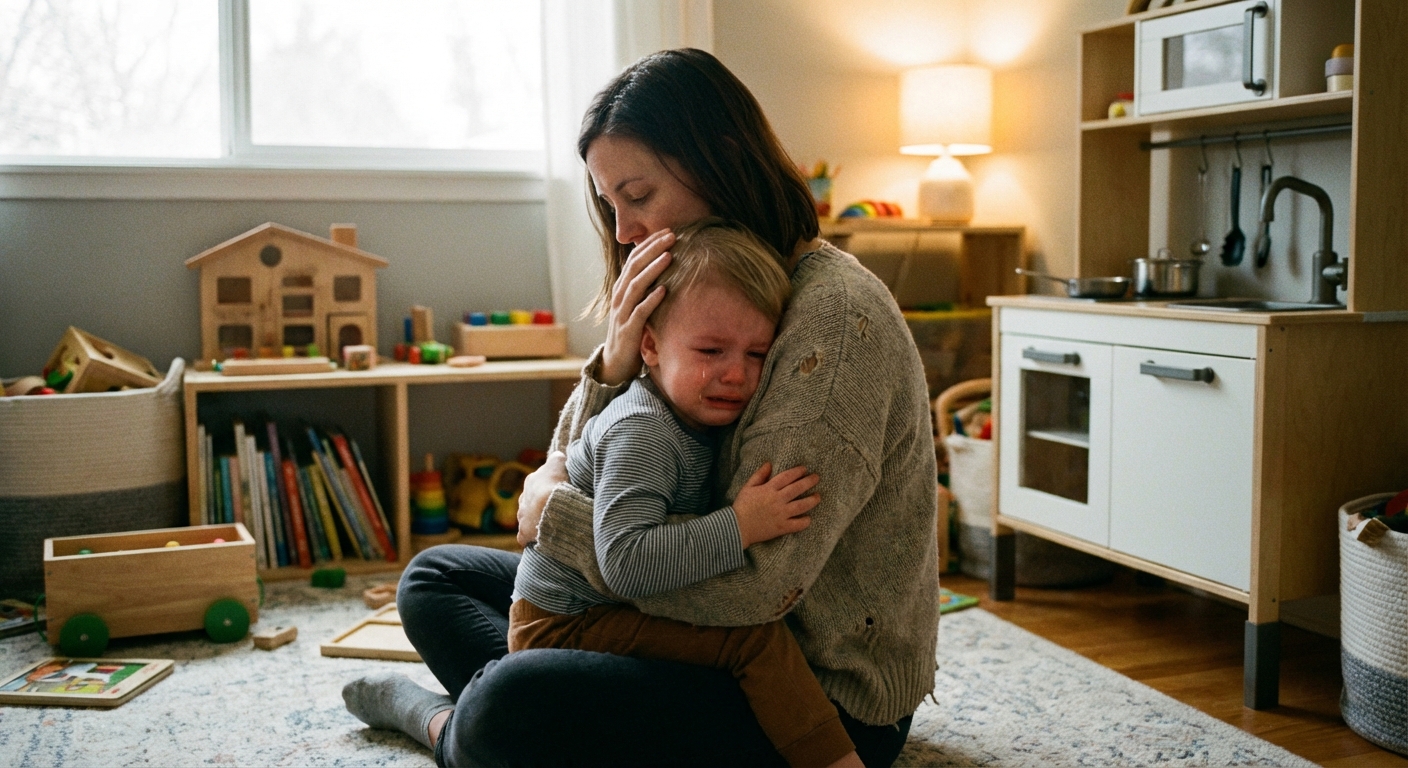
Gentle strategies that reduce biting
Most biting improves when you combine three things: prevention, clear limits, and teaching skills. Here are the strategies I see work over and over.
1) Track triggers for one week
Do a quick mental log. You are looking for patterns, not perfection.
- When: late afternoon? before lunch? at daycare pickup?
- Where: crowded playdates? sibling’s room? grocery cart?
- What happened right before: toy grab, transition, loud noise, being touched?
Once you know the usual suspects, you can step in earlier.
2) Watch for pre-bite signals
Many toddlers show tells right before a bite. If you learn your child’s signals, you can interrupt the pattern early.
- Leaning in close toward another child’s shoulder or arm
- Clenched jaw, open mouth, or a fixed stare
- Grabbing and pulling a toy in tight
- Body getting stiff, frantic, or overly silly right before contact
Intervene early: step between, guide hands away, and coach a simple phrase like “turn” or “stop.”
3) Stay close during high-risk moments
If biting happens most during playdates or sibling play, be their “shadow” for a while. Not forever. Just long enough to interrupt the pattern and coach the skill.
Try: “I am going to stay right here while you two play. I will help if it gets tricky.”
4) Teach a replacement that matches the need
We want a replacement that gives the same payoff as biting.
- Need: space → teach “stop” with a hand up, stepping back, or coming to you.
- Need: a turn → teach “my turn,” offer a timer, or a simple trade.
- Need: sensory input → offer a teether, crunchy foods that are prepared safely, or a safe chew toy.
- Need: attention → build in a quick “connection break” (2 minutes of focused play) before problem times.
Practice when everyone is calm. Toddlers cannot learn new skills mid-meltdown.
5) Keep consequences immediate and boring
The consequence should be about safety, not suffering.
- End the game for a moment.
- Move away from the other child.
- Remove the toy if the biting was over a specific object.
Script: “You bit. Play is paused. We can try again when your mouth is safe.”
6) Praise the behavior you want
Catching the “almost bite” moments is powerful.
- “You were so mad and you used your words.”
- “I saw you step back instead of biting. That kept everyone safe.”
- “You asked for a turn. Nice job.”
Specific praise helps your toddler repeat the skill.
7) Set up your home for success
You cannot parent your way out of an environment that sets your toddler up to fail. A few tweaks go a long way.
- Have duplicates of favorite toys during playdates.
- Create a “cozy corner” where your toddler can retreat with books or stuffed animals.
- Offer snacks and water before typical problem times.
- Use a simple timer for turns.
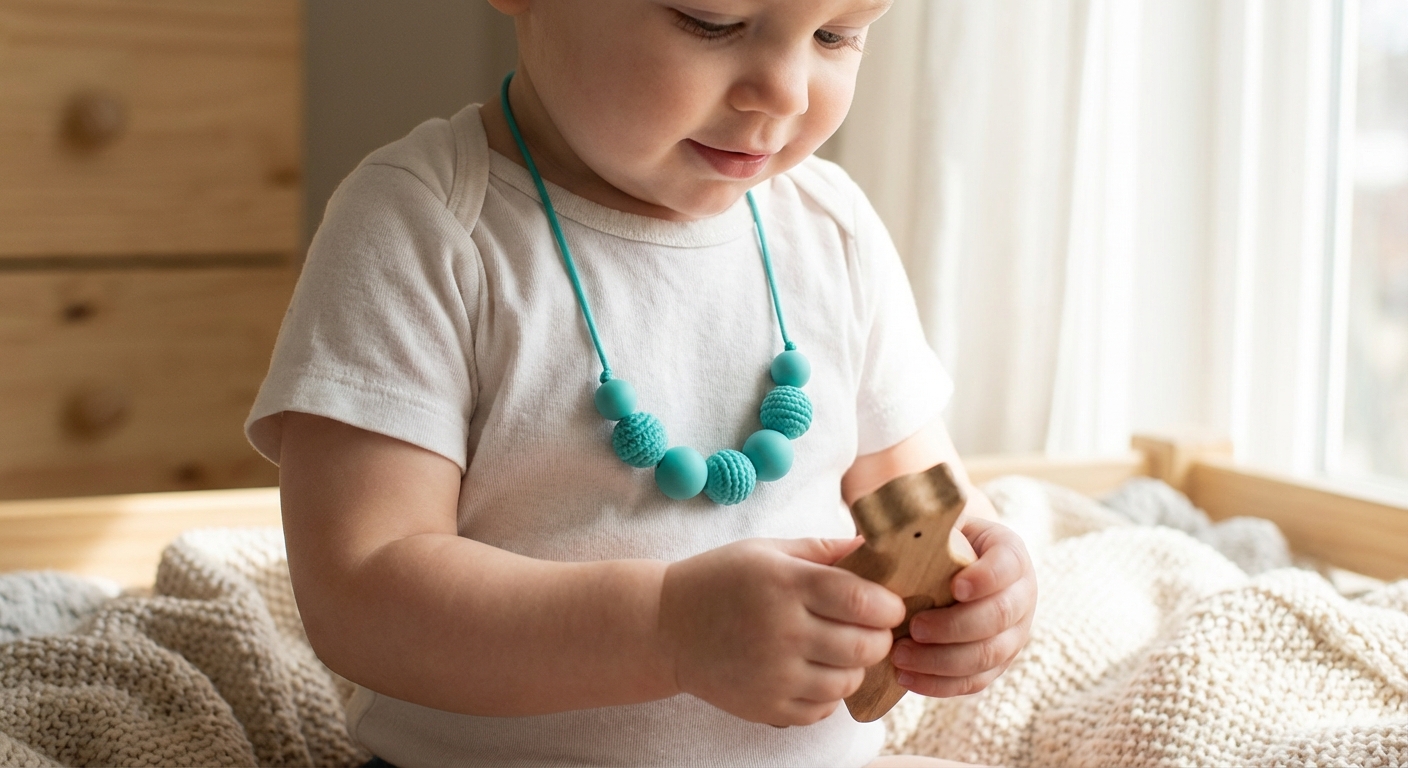
Chewy safety note: If you use a chewy necklace, use only purpose-made, age-appropriate products and supervise closely. Inspect regularly for wear and tear. Follow daycare rules. Some families prefer a handheld teether instead, especially for active climbers or younger toddlers.
What not to do
No judgment. When someone bites your child, your nervous system lights up. But these common reactions tend to make biting worse or create new problems.
- Do not bite back. It teaches that biting is a tool for solving conflict.
- Do not wash the mouth with soap or hot sauce. This is unsafe and can escalate fear and aggression.
- Do not label your child as “a biter.” Labels stick. Focus on the behavior: “Biting is not okay.”
- Do not demand a forced apology. Toddlers often say “sorry” without understanding. Aim for repair: “Let’s get ice,” “gentle touch,” “check on them.”
- Do not do long lectures. Keep it short and repeatable.
Scripts you can use
If your brain goes blank in the moment, borrow these. Say them like you mean it, but keep your volume low.
When your toddler bites
- “I will not let you bite.”
- “Biting hurts. I am moving you away.”
- “You can be mad. You cannot bite.”
When it is about a toy
- “You wanted the truck. Say ‘turn’.”
- “We are using the timer. When it beeps, it is your turn.”
When it is about space
- “Say ‘stop’ and put your hand out.”
- “If you need space, come stand by me.”
Repair afterward
- “Let’s check on your friend. Gentle hands.”
- “Can you bring them an ice pack or a stuffed animal?”

Teething vs biting
Teething can increase chewing and biting, but teething usually looks like gnawing on objects, drooling, and wanting to mouth everything. Biting people is more often about communication, sensory needs, or impulse control.
If teething seems to be a factor:
- Offer a cold teether or chilled washcloth (supervised).
- Offer age-appropriate foods prepared safely. For example, soft foods or very thin slices that are easy to gum, with your child seated and closely supervised. If you are unsure what is safe for your child’s age, ask your pediatrician.
- Ask your pediatrician about appropriate pain relief if your child is very uncomfortable.
Even if teething is involved, keep the boundary the same: “You can chew this. You cannot bite people.”
If your toddler bites at daycare
Daycare biting is incredibly common because toddlers are tired, overstimulated, and sharing space all day. The goal is teamwork, not blame.
Ask for specifics
- What time of day does it happen?
- Is it the same peer or different kids?
- Is it during transitions, free play, or crowded areas?
- What do teachers notice right before the bite?
Align on a consistent response
Share your at-home script and ask what they use. Consistency helps your child learn faster.
Send a safe alternative
If sensory needs are part of it, ask if your child can have an approved teether or chewy. Many centers allow this with guidelines.
Practice at home
Role-play simple phrases like “turn,” “stop,” and “help” during calm moments. Rehearsal is the secret sauce.
If your child is the one getting bitten
If your toddler is being bitten repeatedly, ask the daycare how they are increasing supervision, separating high-conflict pairs, and coaching alternatives. At home, teach: “move away,” “stop,” and “help.” A child who is constantly crowded may bite defensively, so creating space is prevention.
When to worry and call the pediatrician
Most toddler biting is developmental and improves with consistent coaching. Reach out to your pediatrician or a child development specialist if:
- Biting is frequent, intense, and not improving after a few weeks of consistent strategies.
- Your child seems to bite without clear triggers and cannot be redirected.
- You notice language delays, limited social engagement, or big sensory sensitivities that make daily life hard.
- The bites break skin often, or your child hurts themselves or others in multiple ways.
- You suspect your child is being bitten or hurt by another child and is biting defensively.
Human bite medical checklist
- Clean with soap and running water as soon as you can.
- Use a cold compress for swelling if the skin is intact.
- Cover broken skin with a clean bandage.
- Seek urgent care for deep punctures, uncontrolled bleeding, bites to the face or hand, worsening pain, or if you are concerned.
- Call a clinician promptly for broken skin, especially if you see increasing redness, warmth, swelling, pus, fever, red streaking, or your child cannot use the area normally.
- Ask about tetanus status if the skin is broken.
If your toddler is biting, you do not need harsher discipline. You need clearer boundaries, better tools, and a plan you can repeat when you are tired. Which is basically parenting in a sentence.
A simple 7-day plan
If you love a checklist, here is one that works for many families.
- Days 1 to 2: Track triggers. Stay close during high-risk times. Use the same one-line boundary every time.
- Days 3 to 4: Add a replacement skill (turn timer, “stop” hand, teether or chewy). Practice it twice a day when calm.
- Days 5 to 6: Increase positive attention for gentle play. Aim for 5 specific praises per day.
- Day 7: Review patterns. Adjust the environment (duplicates, snacks, shorter playdates, more breaks).
Progress often looks like fewer bites, or your toddler starting to pause before biting. Celebrate the pause. That pause is your opening to coach.
Quick FAQ
Is biting normal at age 2?
Yes, biting can be common between about 12 months and 3 years, especially when language is limited and emotions run high. It still needs a firm, consistent limit.
Will my toddler grow out of it?
Many do, but waiting it out without teaching new skills can drag it out. A calm plan usually speeds things up.
Should I punish biting?
Focus on safety and learning rather than punishment. Immediate separation, a short reset, and skill-building are typically more effective than harsh consequences.
What if my toddler laughs after biting?
Some kids laugh when they are nervous, overstimulated, or getting a big reaction. Keep your response neutral and predictable. Comfort the bitten child first.