Cold-weather safety for kids: how to spot frostbite early, prevent it, rewarm safely, and know when it’s urgent or an emergency.
Hypothermia in Babies and Toddlers

Sarah Mitchell
Sarah Mitchell is a Registered Pediatric Nurse and a mother of three who has spent over a decade helping families navigate the beautiful, chaotic early years of childhood. She combines evidence-based medical knowledge with real-world parenting experience to offer practical, compassionate advice. At Awesome Parent, Sarah's mission is to help exhausted parents find solutions, trust their instincts, and finally get some sleep.
When most parents think “dangerous cold,” they picture frostbite: pale skin, numb fingers, maybe a scary-looking toe. But for babies and toddlers, the bigger risk often shows up before frostbite appears, and it can be quieter at first. Hypothermia is when the body’s core temperature drops too low, and little kids can slide there faster than many adults expect.
As a pediatric nurse and a mom who has wrestled with snow suits, stroller blankets, and that one child who refuses mittens on principle, I want you to have a calm, practical game plan. You’ll learn early signs, what to do right away, and when to get urgent help.
What hypothermia is
Clinically, hypothermia is defined as a core body temperature below 95°F (35°C). The tricky part is that home thermometers do not always reflect true core temperature, especially if you use a forehead or ear thermometer in a cold-exposed child. So yes, temperature matters, but symptoms and behavior matter a lot, too.
If you are trying to check a baby’s temperature at home, follow your pediatrician’s guidance. In general, rectal temps are the most accurate in infants.
Hypothermia vs. frostbite
Hypothermia is a whole-body problem. The body loses heat faster than it can make it, and the core temperature drops. That affects energy, breathing, heart rate, and alertness.
Frostbite is a local tissue injury. It happens when skin and underlying tissues freeze, usually on fingers, toes, ears, cheeks, or the nose.
They can happen together, but you can absolutely have hypothermia without obvious frostbite. That is why I do not want you waiting for “frostbite-looking” skin before taking cold exposure seriously.
If you want to read more about localized cold injury, we have a separate article on frostbite. See frostbite symptoms and treatment here.
Why little kids get cold fast
- More surface area for their size: They lose heat faster than adults.
- Immature temperature control: Their bodies do not regulate heat as efficiently as grown-ups do. Newborns and young infants also cannot shiver effectively and rely on non-shivering thermogenesis and caregivers to keep them warm.
- Less effective insulation: Many infants have less protective insulation than adults, and their skin is thinner.
- They cannot tell you clearly: Toddlers might just melt down. Infants might simply get quiet.
- Wet equals fast heat loss: Snow, rain, drool-soaked shirt fronts, or a sweaty base layer can chill kids quickly, even when it is not “that cold.”
Higher risk situations
These are the scenarios where I want your radar up, even if the temperature does not seem extreme:
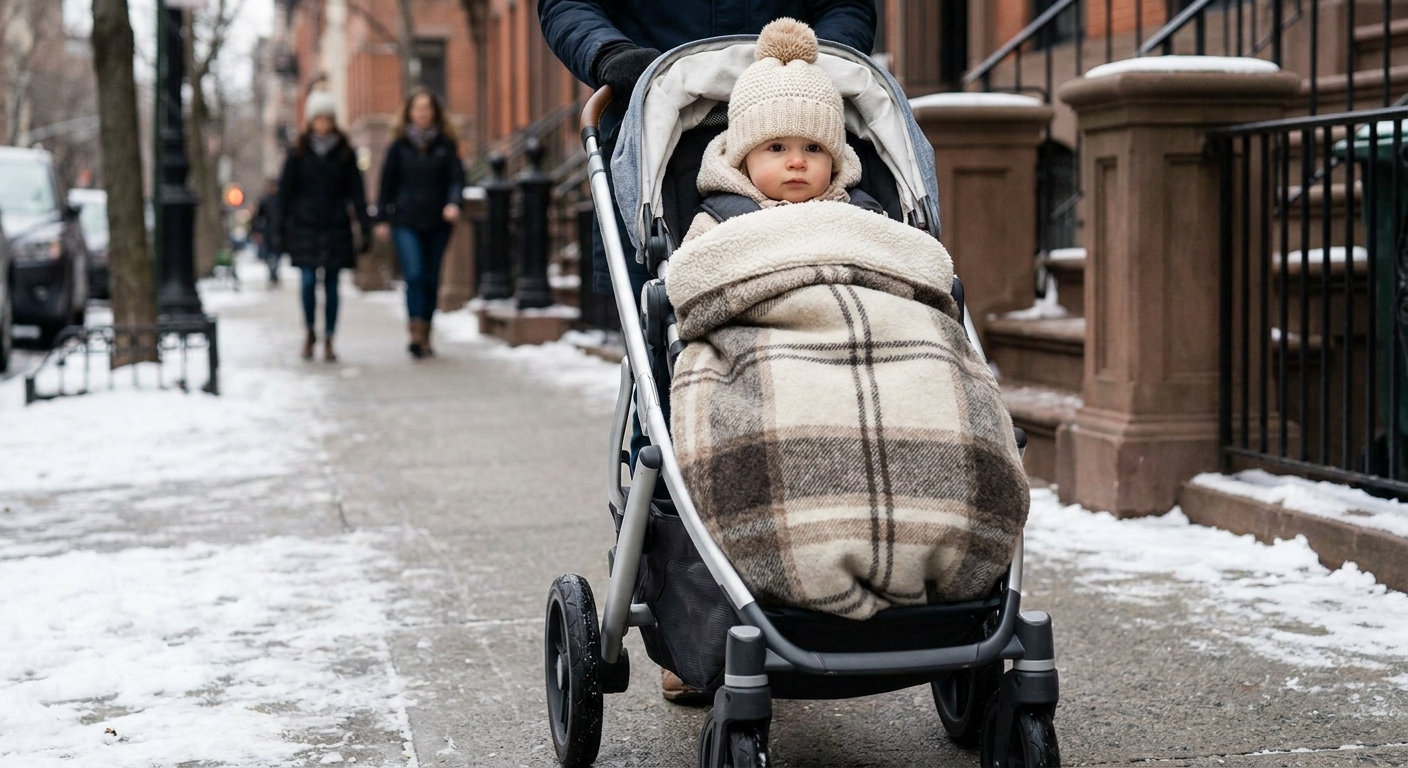
- Windy stroller time: Babies are not generating much heat, and wind cuts right through.
- Wet clothing: Snow play, sledding, puddles, or just soaked mittens.
- Water exposure: Cold water, splash pads on cool days, or falling into water.
- High altitude or rapid weather changes: It gets cold fast and the wind can be sneaky.
- Illness or exhaustion: Kids who are sick, not eating well, or very tired can have a harder time maintaining body temperature.
Early signs in babies
In infants, hypothermia can look less like dramatic shivering and more like a baby who just is not acting right.
What you might notice
- Lethargy or unusual sleepiness
- Poor feeding (short feeds, weak suck, refusing bottle or breast)
- Weak cry or less responsiveness
- Cool skin, especially on the chest, tummy, back, or neck
- Pale, mottled, or blotchy skin
- Breathing changes: they may breathe faster initially, and with worsening hypothermia breathing can become slow or shallow
- Low energy, floppy tone, or “just not themselves”
A quick gut-check
If your baby is cold and also feeding poorly or seems unusually sleepy, treat that as a bigger deal than cold hands alone. Hands and feet can be cool in winter. A baby who is too tired to eat is a different story.
Signs in toddlers and older kids
Toddlers often give you “behavioral weather reports” instead of clear symptoms. One minute they are fine, the next minute they are melting down because the universe is unfair and their sock seam is the enemy. Cold can add fuel to that fire.
Watch for
- Shivering (often the first sign in older kids)
- Clumsiness, stumbling, dropping things
- Slurred speech or trouble talking clearly
- Confusion, zoning out, acting “drunk”
- Extreme fussiness or sudden quietness
- Fatigue or wanting to be carried when they usually walk
- Cold, pale, mottled skin
What to do right away
Your goal is to warm the child gradually and safely, focusing on the core (chest, back, belly), not just hands and feet.
Step-by-step rewarming at home
- Get them out of the cold: Move indoors or into a warmed car as soon as possible.
- Remove wet layers: Wet clothing keeps pulling heat from the body. Replace with dry, warm layers.
- Warm the core first: Add a dry shirt, sweater, and blanket around the torso.
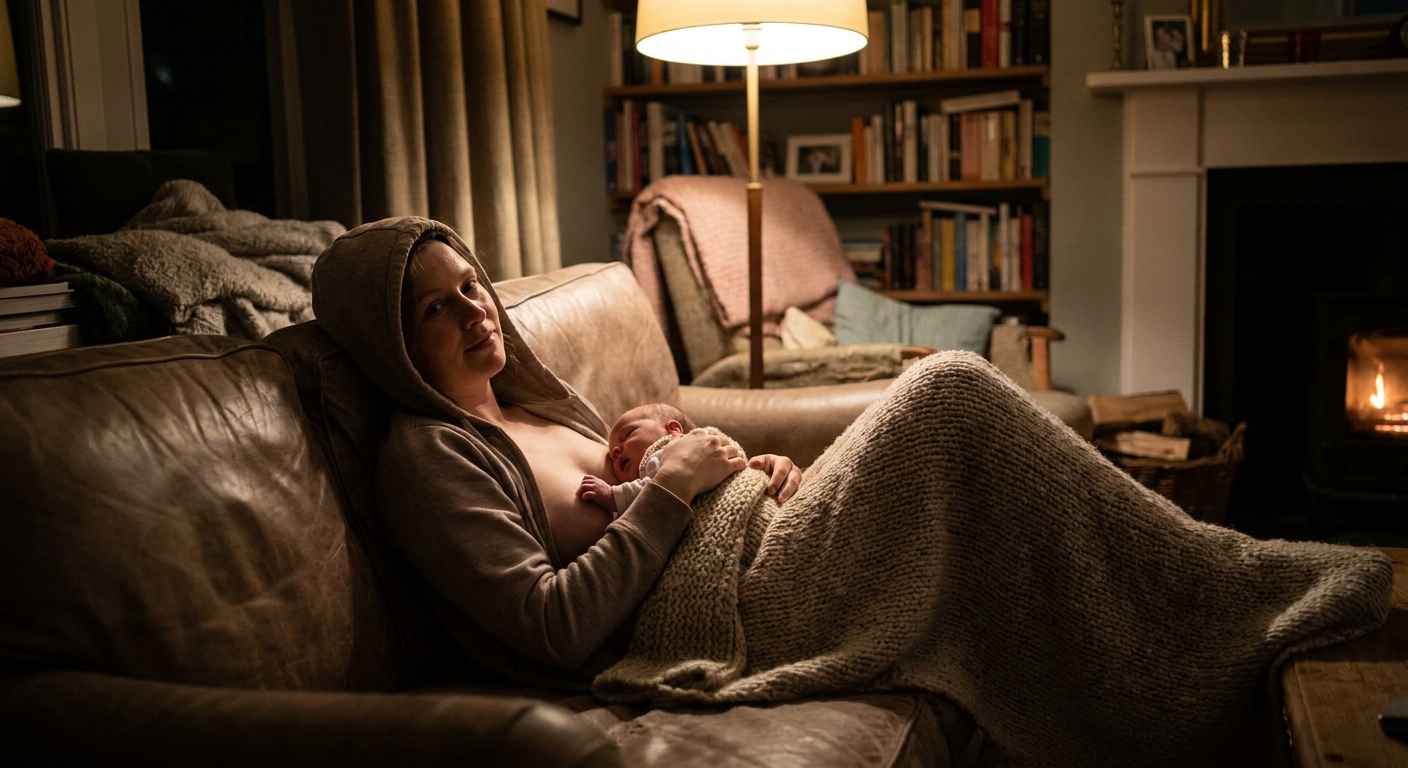
- Skin-to-skin for babies: Place baby in a diaper against your bare chest, cover both of you with a blanket. This is simple and very effective.
- Offer warm fluids if they are alert: For babies, offer warmed breast milk or formula. For older kids and toddlers (for example, over 12 months), offer age-appropriate warm fluids they can safely sip. Do not force feed a sleepy baby.
- Keep them close and calm: Comfort counts. Crying and agitation can increase heat loss and energy use, so hold them, bundle them, and keep things steady.
If you are outdoors and cannot get inside yet
- Get out of wind and wet: Find shelter, get into a car, or create a windbreak.
- Add dry layers fast: Even a dry adult coat or extra shirt helps.
- Share body heat: Skin-to-skin for babies if feasible, or cuddle under blankets.
- Call for help early: If you cannot warm them or symptoms are concerning, call emergency services.
What to avoid
- No hot baths for a cold, lethargic child: Rapid rewarming can increase cardiovascular stress and can raise the risk of burns. If your child is mildly chilled but acting normal, a warm (not hot) bath can be reasonable. If they are sleepy, weak, confused, or not acting right, focus on gentle warming and get medical advice.
- No heating pads or hot water bottles directly on skin: Kids burn easily.
- Do not rub cold skin aggressively: Especially if you suspect frostbite, rubbing can damage tissue.
When to get medical help
Trust your instincts. If your child’s behavior is off in a way that scares you, you do not need to “wait and see” for long.
Get urgent care now
Go to the ER or call emergency services if:
- Your baby is very sleepy, hard to wake, or unusually floppy
- Your child has trouble breathing (slow, shallow, or struggling)
- There is confusion, inability to walk normally, or fainting
- Shivering stops and they still seem cold (can be a late sign)
- You suspect significant cold exposure and your child is not improving with rewarming
- Your child has blue or gray lips, or signs of poor circulation
Call the pediatrician soon
- Your child was cold-exposed and now has persistent fussiness or is not eating normally
- You are seeing mottled skin that does not improve as they warm up
- You are worried about frostbite on ears, fingers, toes, cheeks, or nose
Important: For newborns and young infants, I have a lower threshold for getting checked. Small babies can deteriorate faster, and “sleepy and not feeding” is a symptom combination we take very seriously in pediatrics.
Car seats and winter layers
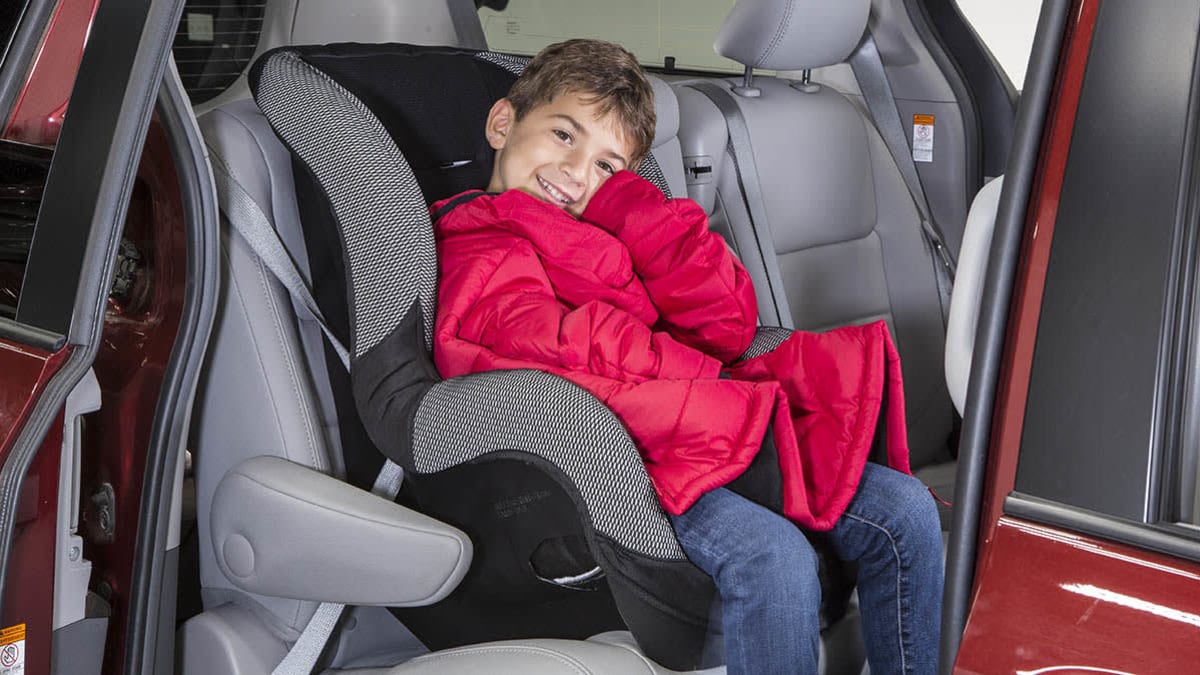
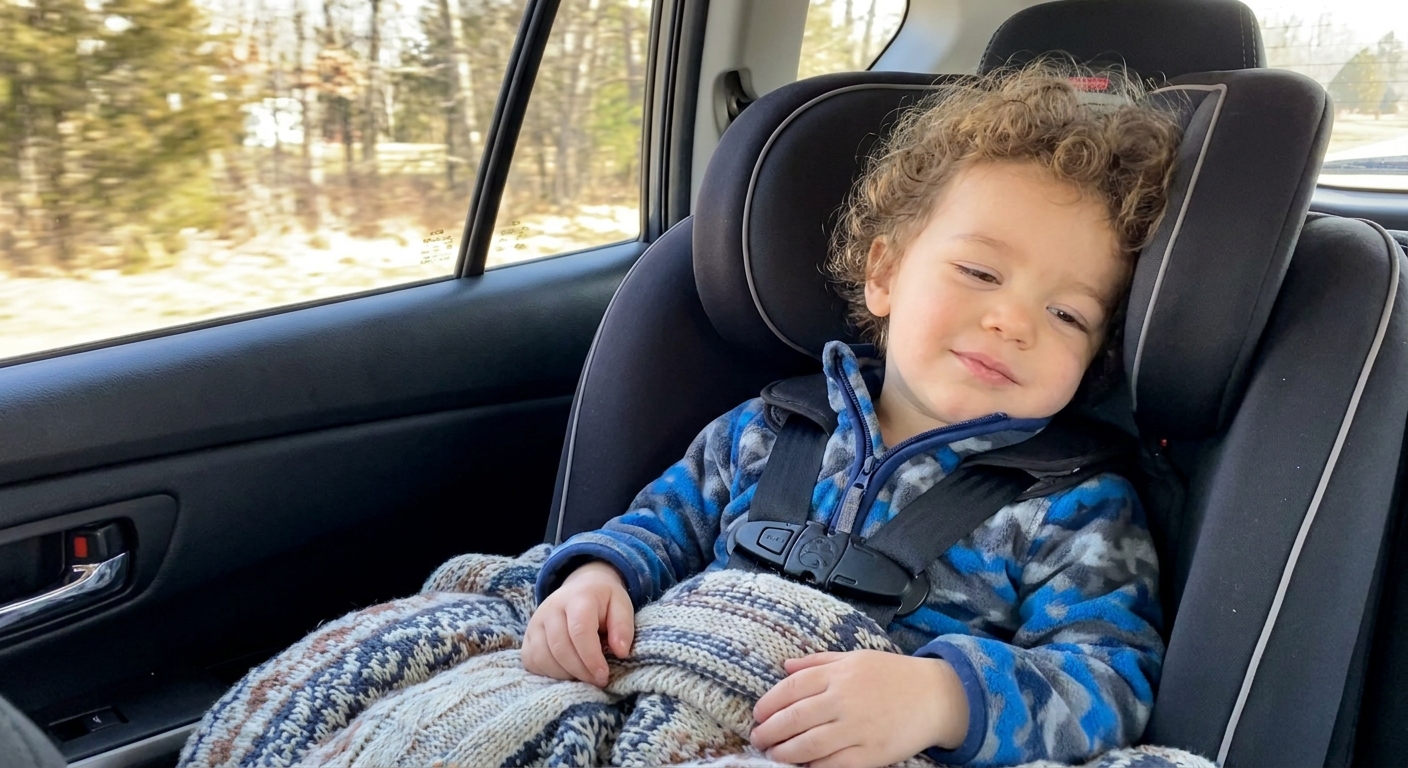
Let’s talk about the thick coat problem. Puffy coats and bulky snowsuits can make car-seat straps seem snug when they are not. In a crash, the coat compresses, and a child can end up with dangerously loose straps.
Safer warmth options
- Dress in thin, warm layers: A long-sleeve shirt plus fleece or wool-like layer is often enough for the car.
- Buckle first, then add warmth: After you tighten the harness properly, place a blanket over the child or put the coat on backwards over the buckled straps.
- Be cautious with extras: Avoid aftermarket inserts and covers that were not tested with your specific car seat. Use only products the car seat manufacturer explicitly allows, and never place anything behind the child’s back or under the harness unless approved.
We go much deeper on this (with a simple “pinch test” walkthrough) in our car-seat winter guide. Read: Why winter coats and car seats do not mix .
Preventing hypothermia
- Think layers, not bulk: Base layer, insulating layer, and a windproof outer layer if needed.
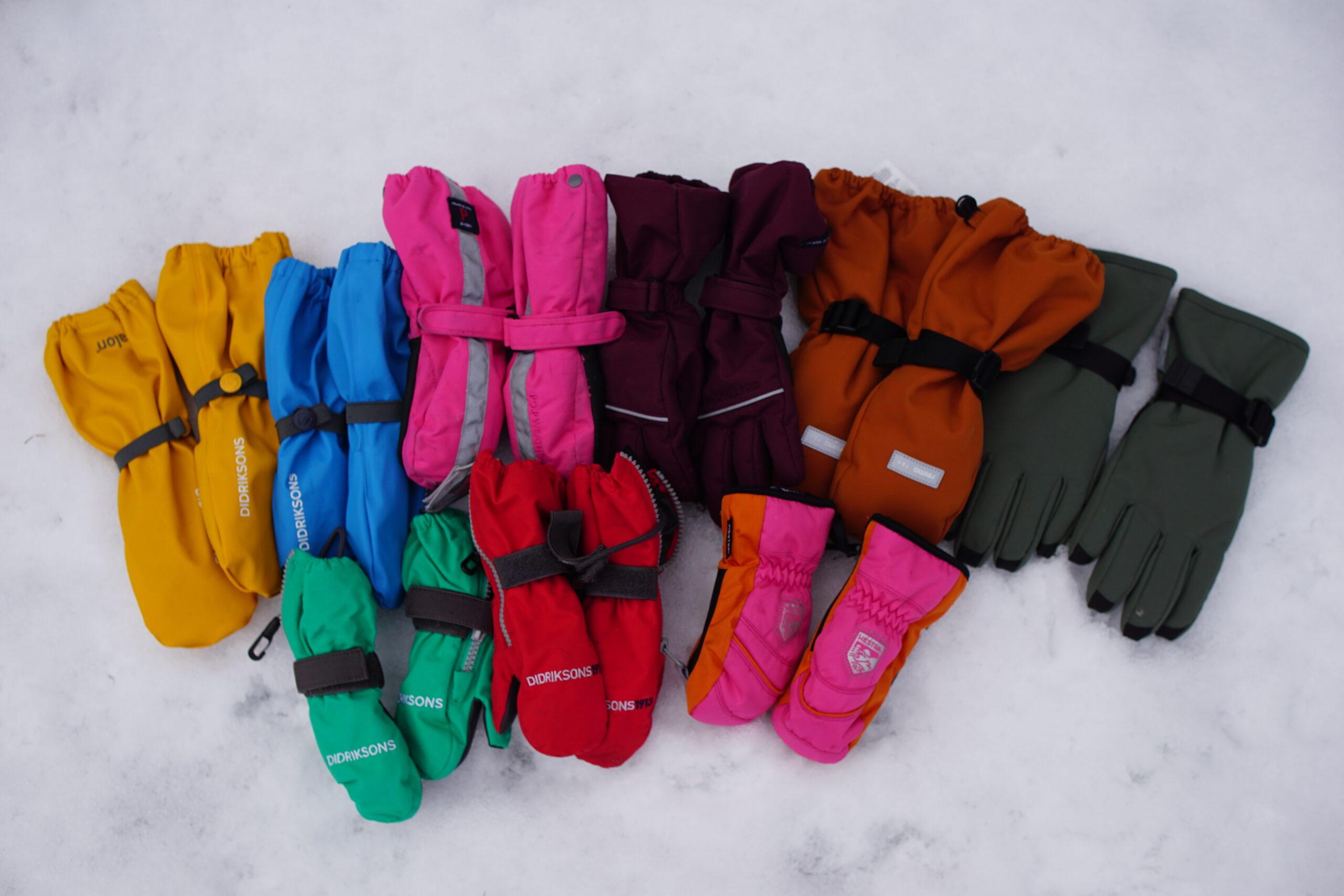
- Protect head, hands, and feet: Hats and mittens matter. So do dry socks.
- Stay dry: Change out of wet clothes quickly, including damp mittens.
- Limit time out in extreme cold: Especially for infants who are not moving much in a stroller or carrier.
- Check the chest, not just hands: Cool fingers can be normal. A cool chest or back is a bigger clue.
- Watch the quiet baby: Some babies stop fussing when they are too cold. Quiet is not always content.
Quick FAQs
Can a baby get hypothermia indoors?
Yes. It is uncommon in healthy homes with normal heating, but it can happen with a very cool room, a baby who is underdressed, or after a bath if they are not dried and warmed well. Newborns are the most vulnerable.
Is shivering always a sign of hypothermia?
Shivering is a sign the body is trying to warm itself. Mild shivering can happen before true hypothermia. Worrisome signs are shivering plus confusion, extreme sleepiness, poor feeding, or a child who is getting colder despite warming efforts.
What is “too cold” for a baby outside?
There is no single magic number because wind, wetness, and how your baby is dressed matter a lot. As a rule, be extra cautious when it is below freezing, windy, or damp, and limit time outside for young infants who are not generating heat through movement.
The bottom line
Frostbite is scary, but hypothermia is often the sneakier threat for babies and toddlers. If your child is cold and acting off, especially if an infant is sleepy and not feeding well, warm them gently and get medical help sooner rather than later.
You are not overreacting. You are paying attention. That is good parenting, even if it is 3 AM and you are googling with one eye open.
Sarah Mitchell
Sarah Mitchell is a Registered Pediatric Nurse and a mother of three who has spent over a decade helping families navigate the beautiful, chaotic early years of childhood. She combines evidence-based medical knowledge with real-world parenting experience to offer practical, compassionate advice. At Awesome Parent, Sarah's mission is to help exhausted parents find solutions, trust their instincts, and finally get some sleep.