Most toddler bowing and knock knees are normal phases. Here’s the usual age range timeline, reassurance tips, red flags like asymmetry or pain, and when im...
In-Toeing and Out-Toeing in Toddlers

Sarah Mitchell
Sarah Mitchell is a Registered Pediatric Nurse and a mother of three who has spent over a decade helping families navigate the beautiful, chaotic early years of childhood. She combines evidence-based medical knowledge with real-world parenting experience to offer practical, compassionate advice. At Awesome Parent, Sarah's mission is to help exhausted parents find solutions, trust their instincts, and finally get some sleep.
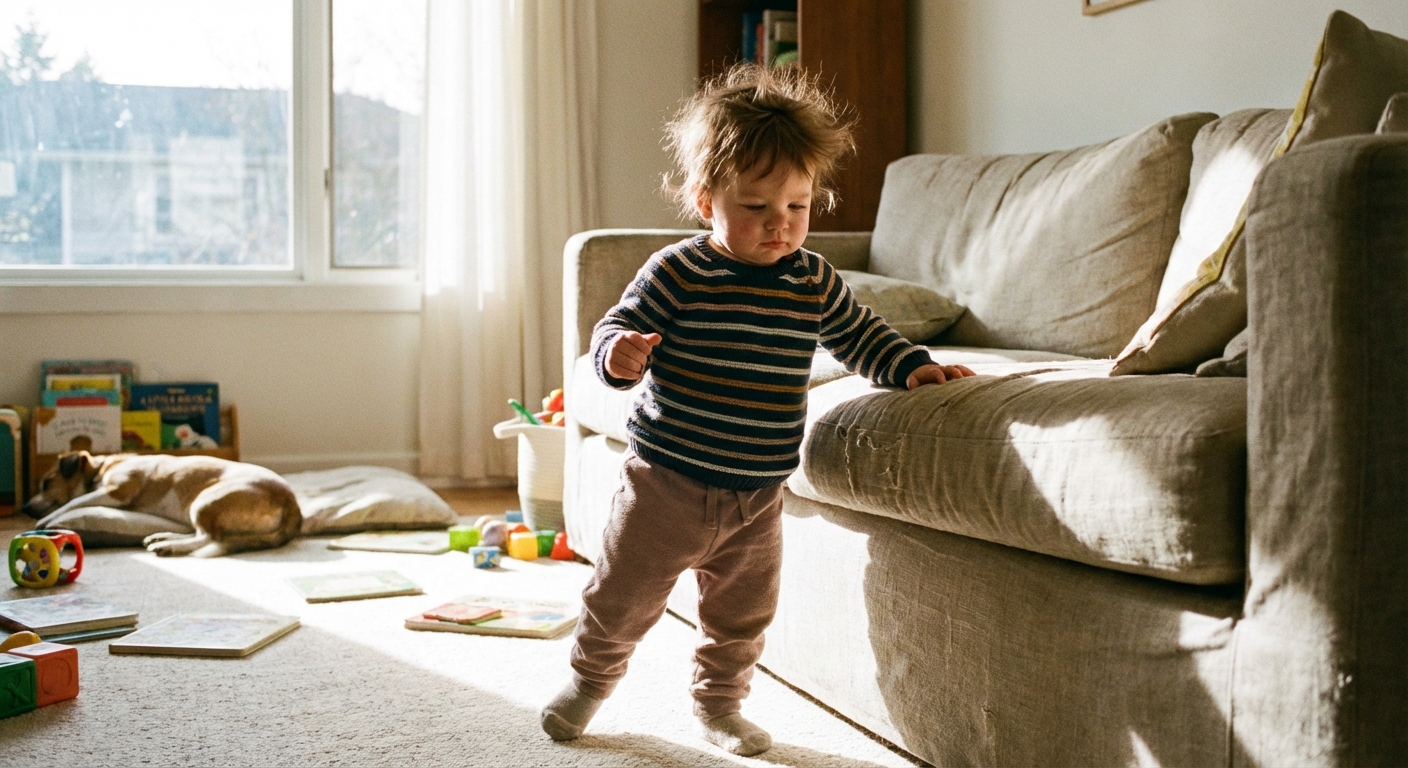
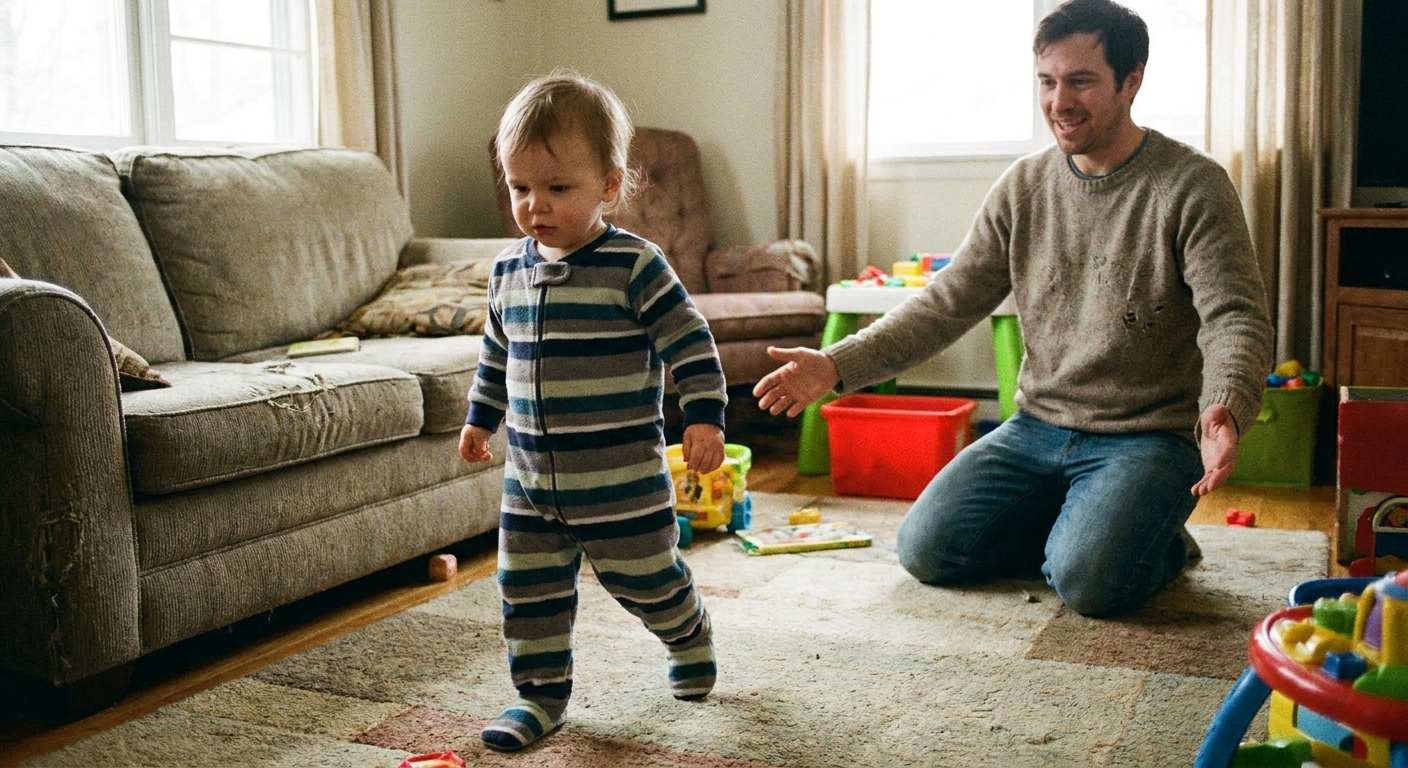
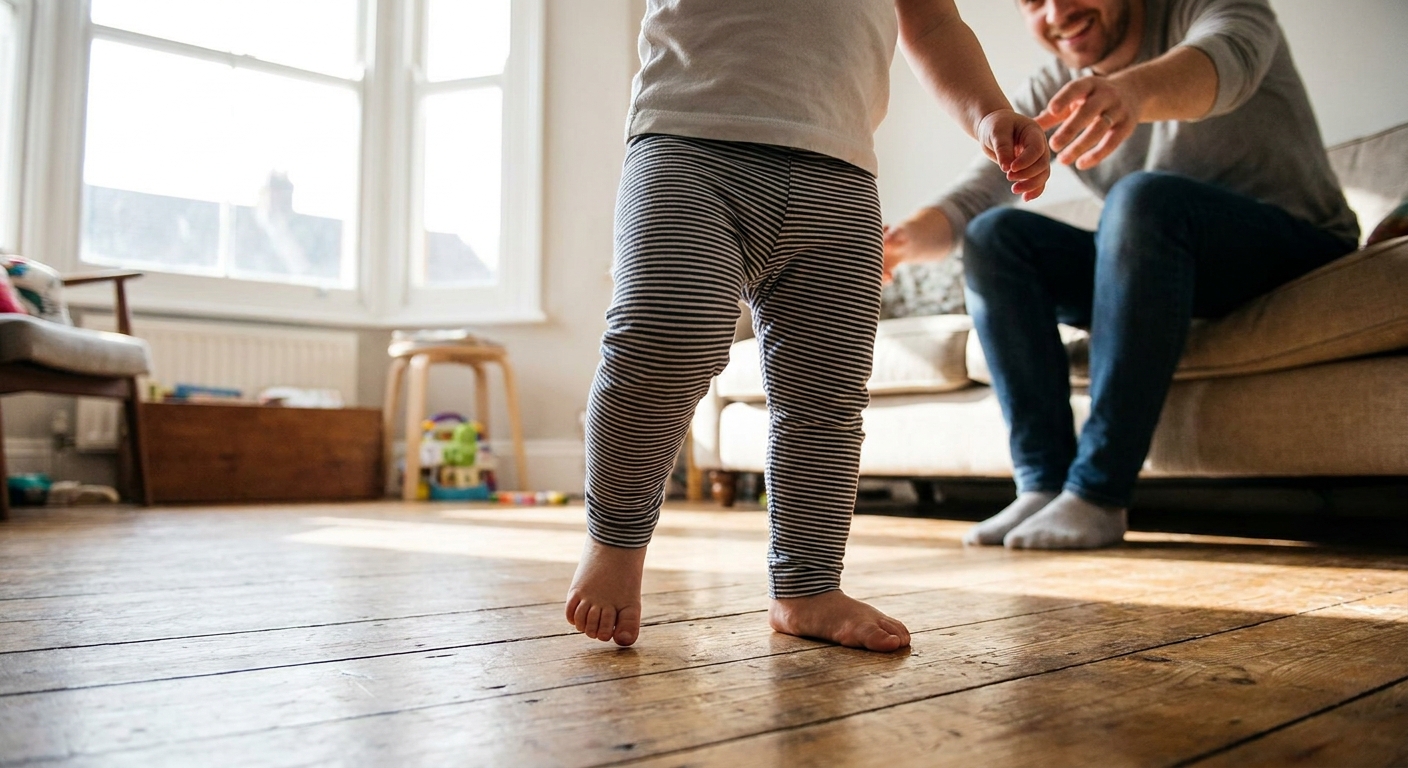
If your toddler suddenly looks like they are walking “pigeon-toed” (toes in) or “duck-footed” (toes out), you are in very good company. I saw this all the time as a triage nurse, and I have also done the late-night hallway stare-down with my own kids thinking, Is that new?
The good news is that most in-toeing and out-toeing in toddlers is a normal part of how little legs grow and twist into their adult alignment. The trick is knowing what is typical, what deserves a check-in, and when to request a specialist.
Quick definitions
In-toeing
The feet point inward when your child walks or runs. It is often most noticeable when they are tired, excited, or moving fast.
Out-toeing
The feet point outward during walking. Sometimes it shows up more when a toddler is learning to walk, when they have a wider stance, or when they are wearing stiff shoes.
Why it happens
Toddler legs are still “unwinding” from their curled-up position in the womb. The turning can come from three main areas: the foot, the shinbone, or the thighbone. Sometimes it is a mix.
1) Metatarsus adductus (a curved forefoot)
This means the front half of the foot curves inward, kind of like a gentle banana shape, while the heel stays more centered. Many babies are born with this because of how they were positioned in the uterus.
- What parents notice: The toes angle inward even when your child is standing still.
- What it feels like: In many kids, you can gently straighten the front of the foot with your hand.
2) Tibial torsion (a twist in the shinbone)
The tibia is the big shinbone. In some toddlers, it is rotated slightly inward, making the feet point in even if the knees face forward. This is one of the most common reasons for in-toeing in the toddler years.
- What parents notice: Knees often look straight ahead, but the feet point in.
- Common pattern: More noticeable after your child starts walking and can look “worse” around ages 1 to 3 as they get faster.
3) Femoral rotation (often increased femoral anteversion)
The femur is the thighbone. Some kids have more inward rotation at the hip (often called increased femoral anteversion), which can bring the knees and feet inward. This is commonly seen a bit later than tibial torsion.
- What parents notice: Knees may turn inward as well, and your child might prefer sitting in a “W” position.
- Important note: W-sitting is very common and usually reflects how a child is built (like hip rotation or ligament flexibility), not something you “caused.” Occasional W-sitting is typically fine. If it is the only position your child uses, or you notice tightness, frequent tripping, or other functional concerns, it is worth mentioning at checkups.
Common reasons for out-toeing
Out-toeing can also come from the shinbone or thighbone, just rotated the other direction. In real life, a few common examples include:
- External rotation from the hip: Some infants and early toddlers have hips that rest a little more turned out (sometimes called femoral retroversion), and the feet may point outward when they start walking.
- External tibial torsion: A shinbone that rotates outward is more often noticed in older kids, but it can show up earlier too.
- Flat feet and a wide toddler stance: Many toddlers have flexible flat feet and a wide base while they learn balance, which can make the feet look more turned out.
Mild, two-sided out-toeing in a new walker is often just part of the learning curve. Persistent, worsening, or one-sided out-toeing is the pattern that deserves a closer look.
What is normal and when it improves
Most rotational differences improve gradually as bones grow and as your child’s muscles gain strength and coordination. Think months and years, not days.
- Metatarsus adductus: Often improves in infancy. Flexible cases typically straighten on their own. Stiffer cases sometimes need stretching guidance, and occasionally casting in early infancy.
- Internal tibial torsion (in-toeing from the shin): Common from about 1 to 3 years and often improves steadily by around 4 to 5 years.
- Femoral anteversion (in-toeing from the hip/thigh): Often most noticeable between about 3 and 6 years and commonly improves through about 8 to 10 years (sometimes longer).
- Out-toeing: Mild out-toeing in early walkers can be normal. Out-toeing that is persistent, worsening, painful, or clearly one-sided is the version to bring up sooner.
One thing that helps parents: many kids look more “twisty” when they are little because they are still building balance. As they grow, their gait often looks smoother and straighter without any special treatment.
How this differs from toe walking
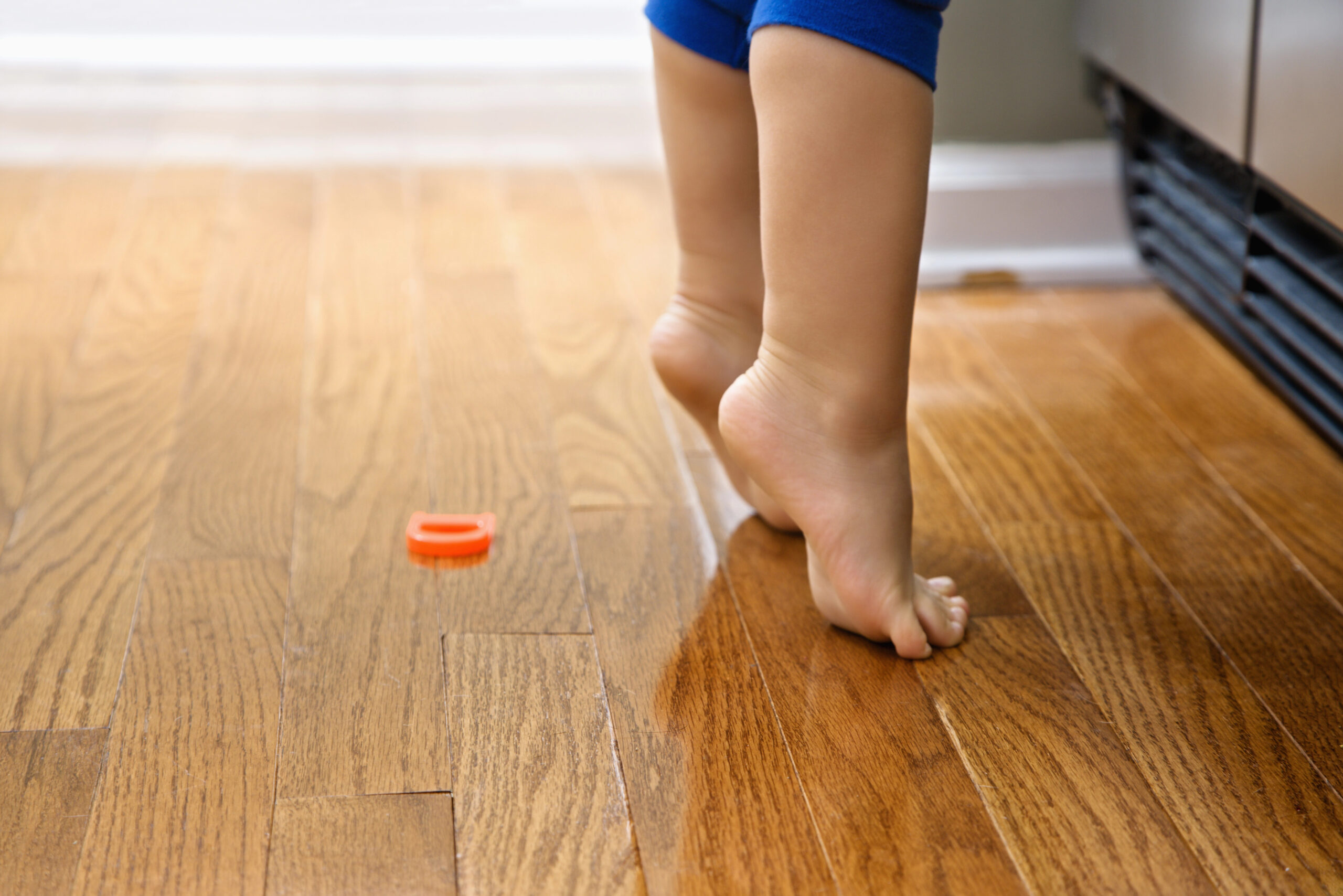
Toe walking is mainly about how the foot contacts the ground (walking on the balls of the feet with little or no heel strike). In-toeing and out-toeing are about the direction the feet point.
Kids can toe walk and in-toe at the same time, but they are evaluated differently. If your main concern is direction, you are in the right place. If your concern is heels not coming down, bring it up with your pediatrician, especially if it is frequent, persistent, or paired with stiffness or developmental concerns.
What you can do at home
Helpful, realistic steps
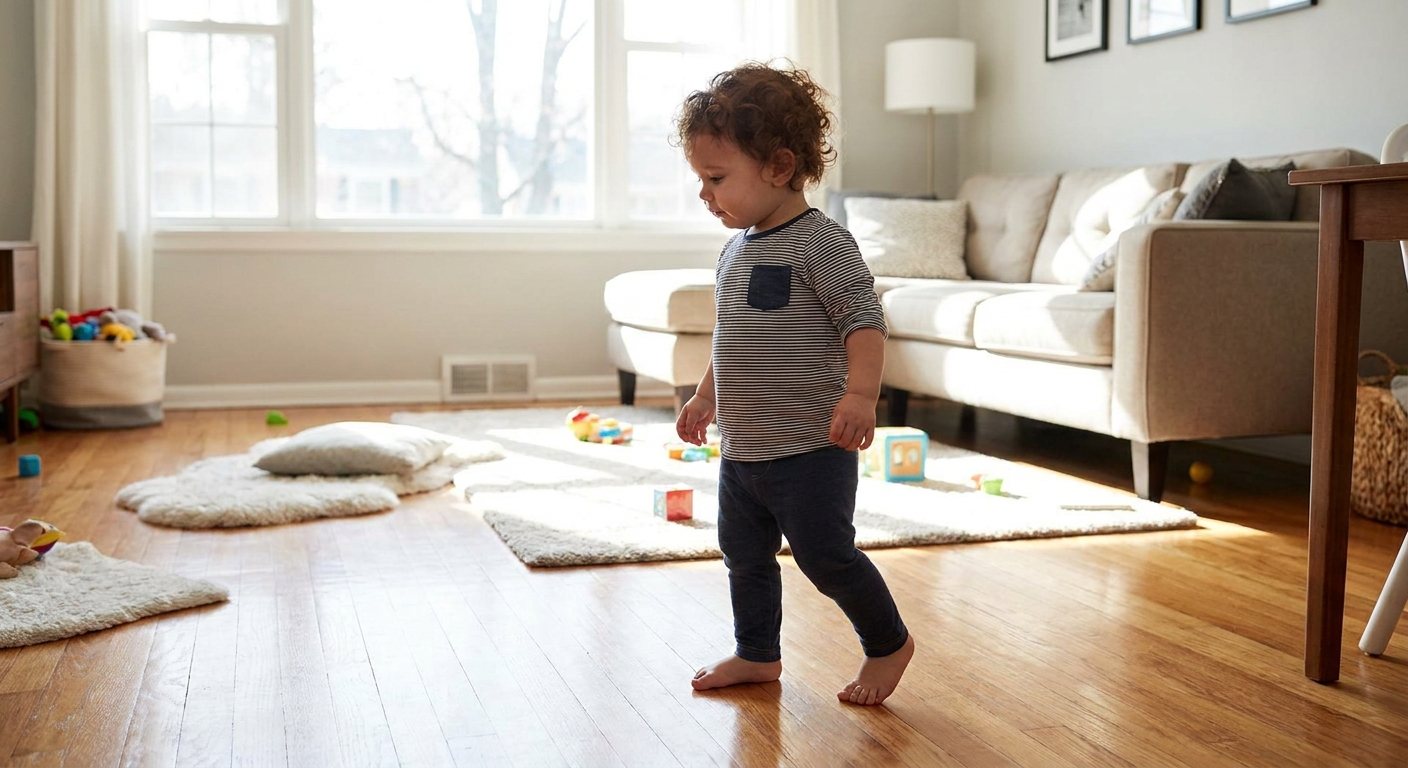
- Go barefoot at home when safe: This can help toddlers build foot strength and balance. It does not “untwist” bones, but it can support normal development. Outside or on rough surfaces, supportive shoes are fine.
- Choose flexible shoes: Look for a shoe that bends at the ball of the foot and is not overly stiff.
- Encourage lots of movement: Climbing, playground time, squatting to play, and walking on different surfaces all help coordination.
- Gentle stretching only if recommended: If your pediatrician or PT shows you specific stretches for a curved forefoot, do them exactly as taught.
Usually not needed
- Special shoes, inserts, or braces for typical in-toeing: For most toddlers with in-toeing from tibial torsion or femoral anteversion, these do not speed up the natural improvement.
- Telling your child to “walk straight” all day: It is frustrating for everyone and rarely changes the underlying rotation.
My calm-nurse, real-life-mom summary: if your toddler is happy, active, and improving over time, the best “treatment” is usually time plus normal play.

Red flags
Most cases are harmless, but I never want you to ignore something that truly needs attention. Reach out to your child’s clinician if you notice any of these:
- Pain in the legs, hips, knees, or feet, especially pain that limits play.
- Limping or a sudden change in walking.
- One-sided in-toeing or out-toeing that is clearly worse on one side, especially if it is new.
- Worsening over time instead of slowly improving.
- Falling far more than peers or frequent falls that cause injuries (toddlers do fall, so we are looking for “this seems like a lot,” not perfection).
- Stiffness in joints, trouble moving the hip, or a foot that seems rigid and cannot be gently moved toward straight.
- Delayed motor milestones or concerns about muscle tone (very stiff or very floppy).
- History of injury or concern for fracture.
Those last few matter because significant stiffness, asymmetry, or delays can occasionally point to something beyond typical growth patterns, and your clinician will want to rule that out.
If your toddler is under 3 and otherwise doing well, your pediatrician may simply document it, watch it over time, and recheck at the next well visit. That is a valid plan.
When to see a specialist
Your pediatrician might refer you to a pediatric orthopedic specialist or a pediatric physical therapist if:
- There are red flags like pain, limp, stiffness, or asymmetry.
- The rotation is severe and significantly affecting function.
- The pattern is not improving on a reasonable timeline for your child’s age.
- There is a rigid foot shape suggesting a stiffer metatarsus adductus or another foot issue.
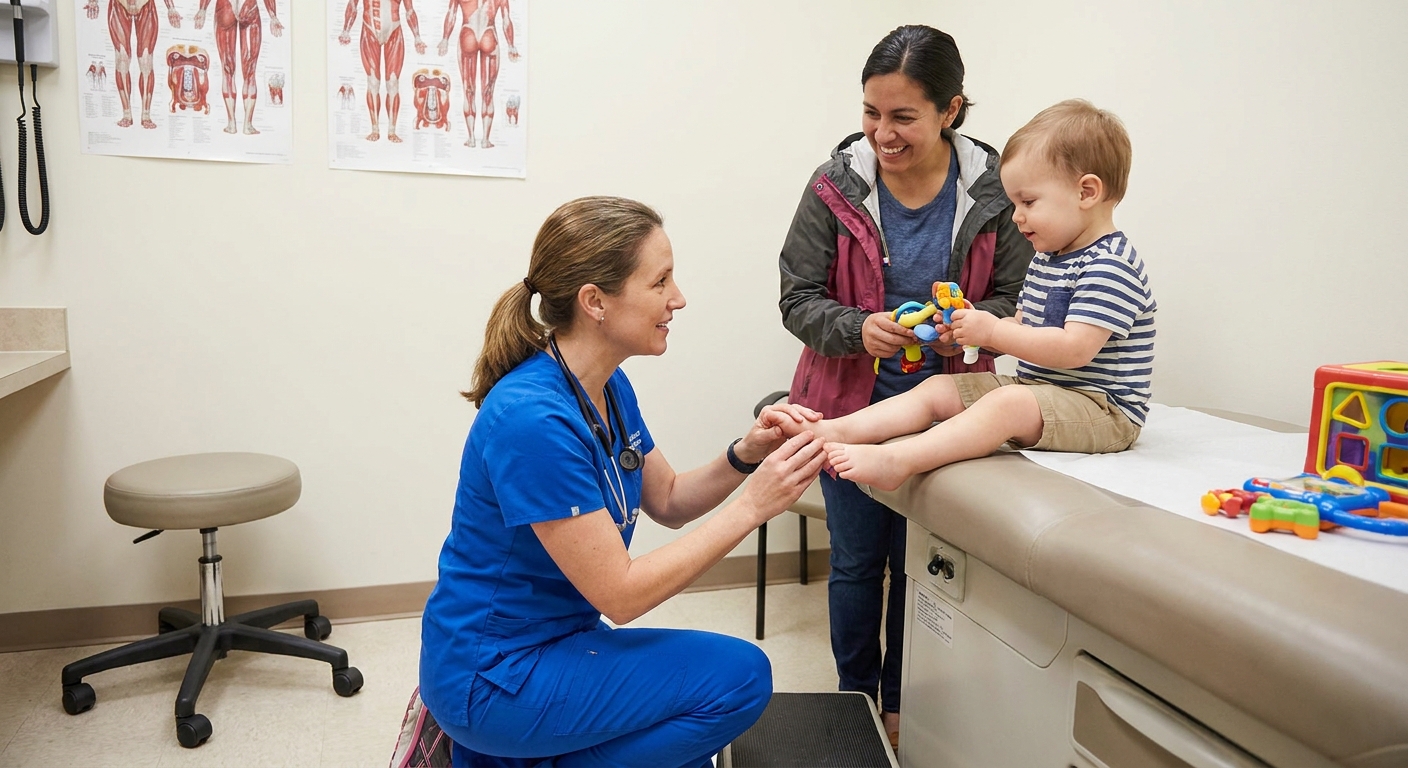
Specialist visits are often very straightforward. The clinician watches your child walk, checks hip and leg rotation, examines the feet, and asks about milestones and family history.
What the clinician may measure
- Foot progression angle: the direction the feet point while walking.
- Thigh-foot angle: a simple way to estimate shinbone rotation.
- Hip rotation: how the hip turns in and out, which helps identify femoral rotation patterns.
Imaging is often unnecessary when the exam fits a common, benign pattern and there are no red flags. Your clinician may order X-rays or other imaging if there is pain, a limp, asymmetry, a history of injury, or an exam that does not match the usual patterns.
What watch and wait looks like
If your clinician recommends observation, here is what that usually means in real life:
- Track function, not perfection: Can your child run, climb, and keep up with peers?
- Take a short video every 2 to 3 months of your child walking toward you barefoot on a flat surface. Tiny changes are easier to see over time.
- Bring it up at well visits: Ask, “Does this still look like typical tibial torsion or femoral rotation for age?”
- Return earlier if you see pain, limping, new asymmetry, or rapid worsening.
And yes, your kid may still look in-toed when they sprint down the hallway like a tiny tornado. That can be normal.
Parent questions
Did I cause this?
Usually, no. Sitting positions, shoes, and how you carry your child are not typically the root cause of in-toeing or out-toeing. This is mostly growth and natural variation.
Will my child need surgery?
It is very unlikely for the average toddler with typical in-toeing or mild out-toeing. Surgery is generally reserved for older children with severe, persistent rotation that causes significant functional problems, and it is not a common toddler scenario.
Should I stop W-sitting?
You do not need to panic. If your child W-sits occasionally, it is usually fine. It generally does not cause in-toeing. If it is their only sitting position, or you are seeing tightness or functional issues, encourage other options (cross-legged, legs out in front, side sitting) and mention it to your pediatrician.
Bottom line
In-toeing and out-toeing in toddlers are usually part of normal development, most often related to gentle twists in the feet, shins, or thighs that improve as kids grow. Keep an eye on comfort and function. If there is pain, limping, stiffness, asymmetry, or a pattern that is clearly getting worse, trust your gut and get it checked.
At your next appointment, be ready to share your child’s age, when you first noticed the change, and whether the knees also point in or out. A quick video of your child walking barefoot toward you can be surprisingly helpful, too.
Sarah Mitchell
Sarah Mitchell is a Registered Pediatric Nurse and a mother of three who has spent over a decade helping families navigate the beautiful, chaotic early years of childhood. She combines evidence-based medical knowledge with real-world parenting experience to offer practical, compassionate advice. At Awesome Parent, Sarah's mission is to help exhausted parents find solutions, trust their instincts, and finally get some sleep.