Is your baby constipated or just stooling less often? Get clear guidance for breastfed and formula-fed babies, gentle home measures, and red flags that need ...
Infant Dyschezia: Why Newborns Strain and Grunt to Poop

Sarah Mitchell
Sarah Mitchell is a Registered Pediatric Nurse and a mother of three who has spent over a decade helping families navigate the beautiful, chaotic early years of childhood. She combines evidence-based medical knowledge with real-world parenting experience to offer practical, compassionate advice. At Awesome Parent, Sarah's mission is to help exhausted parents find solutions, trust their instincts, and finally get some sleep.
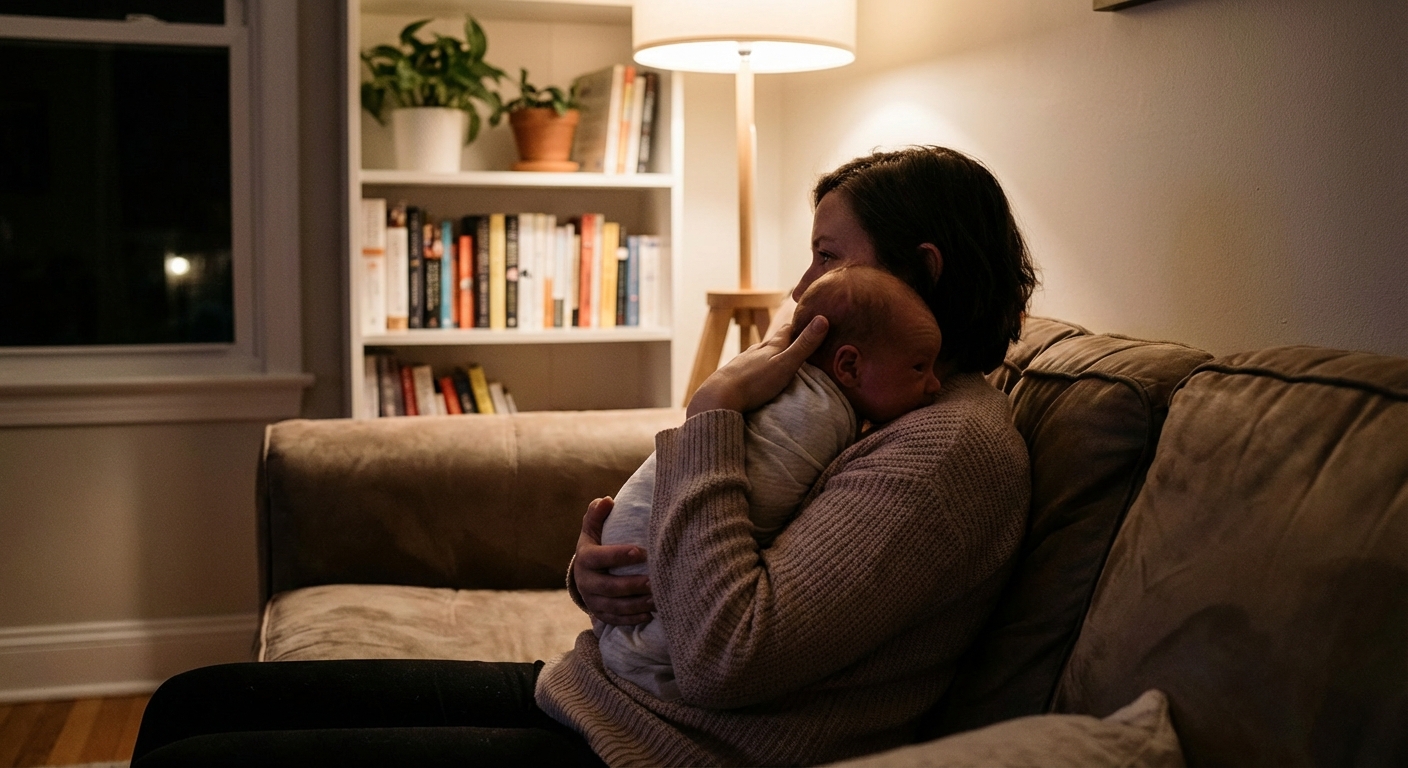
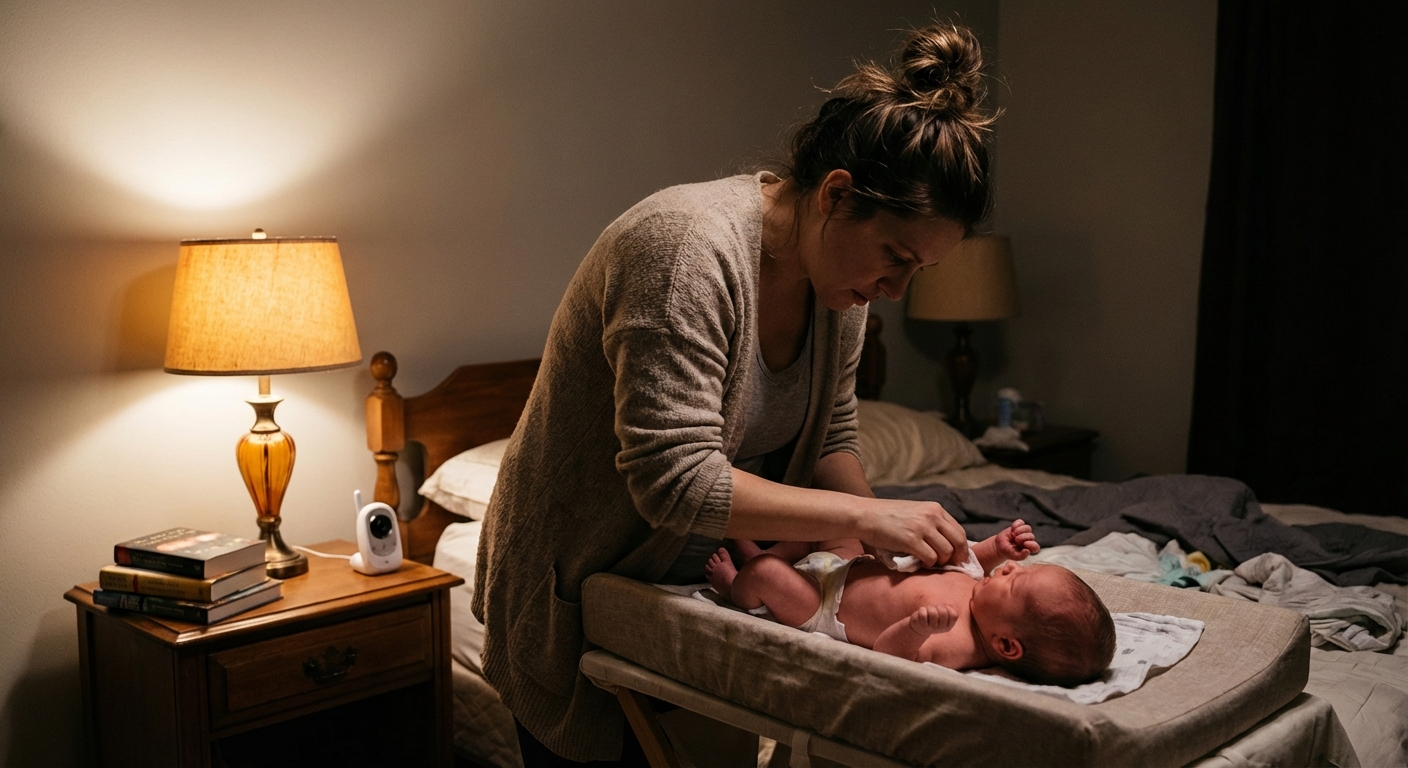
If you have ever watched your newborn turn bright red, scrunch their face, grunt like they are lifting a tiny barbell, and then finally produce a totally normal soft poop, you are not alone. This is one of the most common panic-inducing newborn moments I saw as a pediatric triage nurse. It is also one of the most misunderstood.
In many otherwise healthy babies under about 6 months, this pattern is something called infant dyschezia. It looks dramatic, sounds uncomfortable, and can last 10 minutes or longer. But when the poop is soft and baby is otherwise well, it is usually a normal developmental phase that resolves with time.
What it is
Infant dyschezia is a temporary coordination issue. Your baby is learning how to poop, and the “muscle teamwork” is still immature.
A commonly used clinical description (based on Rome criteria) is:
- In an infant under 6 months
- At least 10 minutes of straining and crying before
- Successful passage of a soft stool
To pass stool, a baby needs to do two things at the same time:
- Increase belly pressure by bearing down (tightening abdominal muscles)
- Relax the pelvic floor and anal sphincter so stool can come out
In infant dyschezia, babies can bear down, but they do not relax the bottom muscles reliably yet. So they push against a closed door, grunt, cry, and strain, and then eventually the muscles relax and a soft stool passes.
One detail that helps parents feel less alarmed: crying often accompanies bearing down and can increase abdominal pressure. It is not necessarily a sign of pain. Sometimes it is just part of the learning process.
Dyschezia vs constipation
These two get mixed up constantly, even though they are different issues.
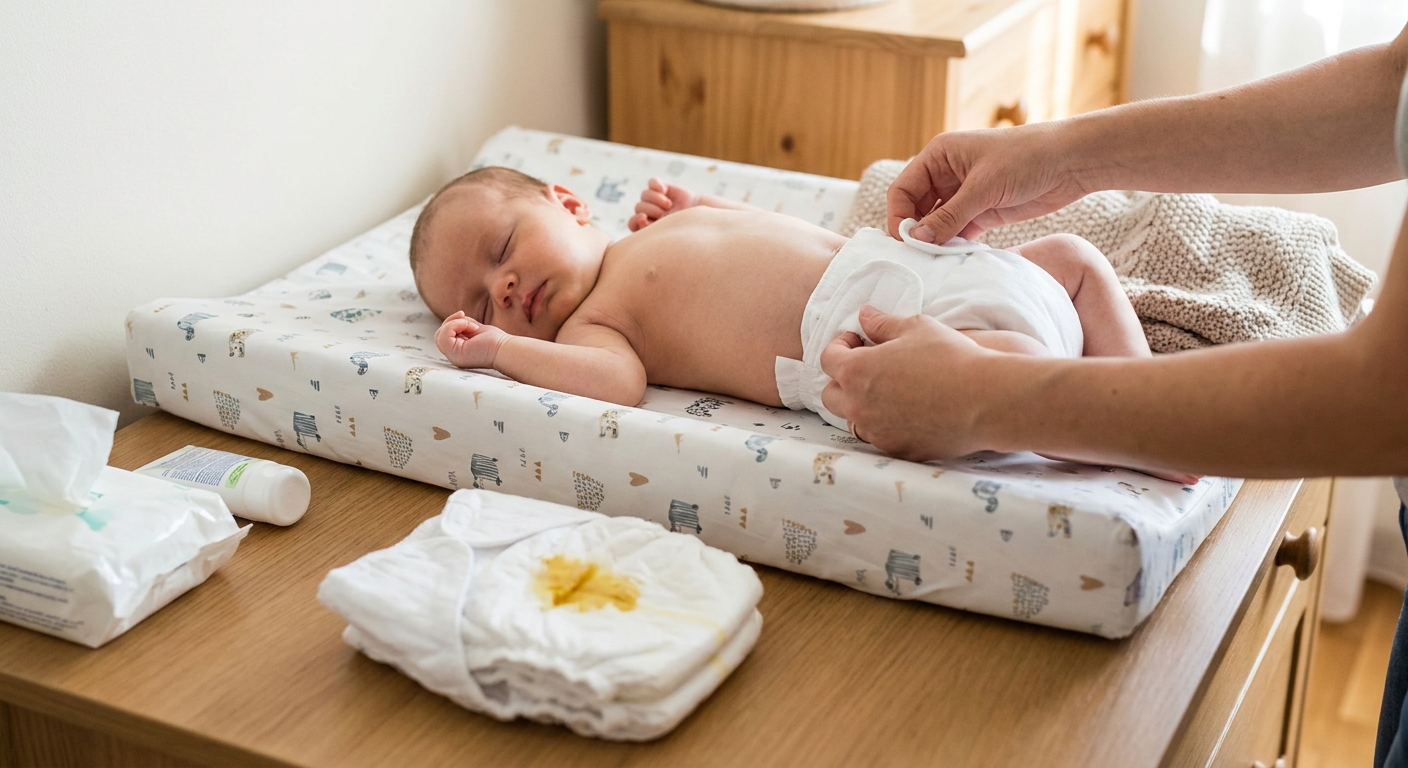
Dyschezia often looks like this
- Baby strains, grunts, and may cry for several minutes (sometimes 10 minutes or more)
- Then passes a soft or loose stool
- No hard pellets, no dry stool
- Baby is otherwise feeding and growing normally
- Most often starts in the first weeks of life and improves over the next weeks to months
Constipation often looks like this
- Stools are hard, dry, pellet-like or very thick
- Pooping may be infrequent and difficult
- Baby may seem uncomfortable even between attempts
- Sometimes there is blood on the stool from a small anal fissure
Important nuance: Frequency alone is not constipation. Some breastfed babies poop many times a day, and some go several days between poops once milk supply is established. Formula-fed babies often poop more regularly, but there is still a wide normal range. What matters most is stool consistency and your baby’s overall well-being.
What causes it
This is usually not caused by something you ate, a formula brand, or a mistake you made. It is typically just nervous system and muscle development catching up.
Coordinating abdominal pressure with pelvic relaxation is a skill, and skills take practice.
How long it lasts
Infant dyschezia is most common in the early weeks, and many babies outgrow it within a few weeks as coordination improves. It can show up anywhere in the first several months of life, but it is not typically a long-term issue.
If your baby is thriving, stools are soft, and there are no red flags, time is usually the “treatment.” I know that is not the satisfying answer at 3 AM, but it is the honest one.
What you can do
Your job is to support, not to force. Here are gentle options that are typically safe for otherwise healthy newborns:
1) Keep things calm
Many babies poop best when they are relaxed. If you can, dim the lights, keep noise low, and give it a little time.
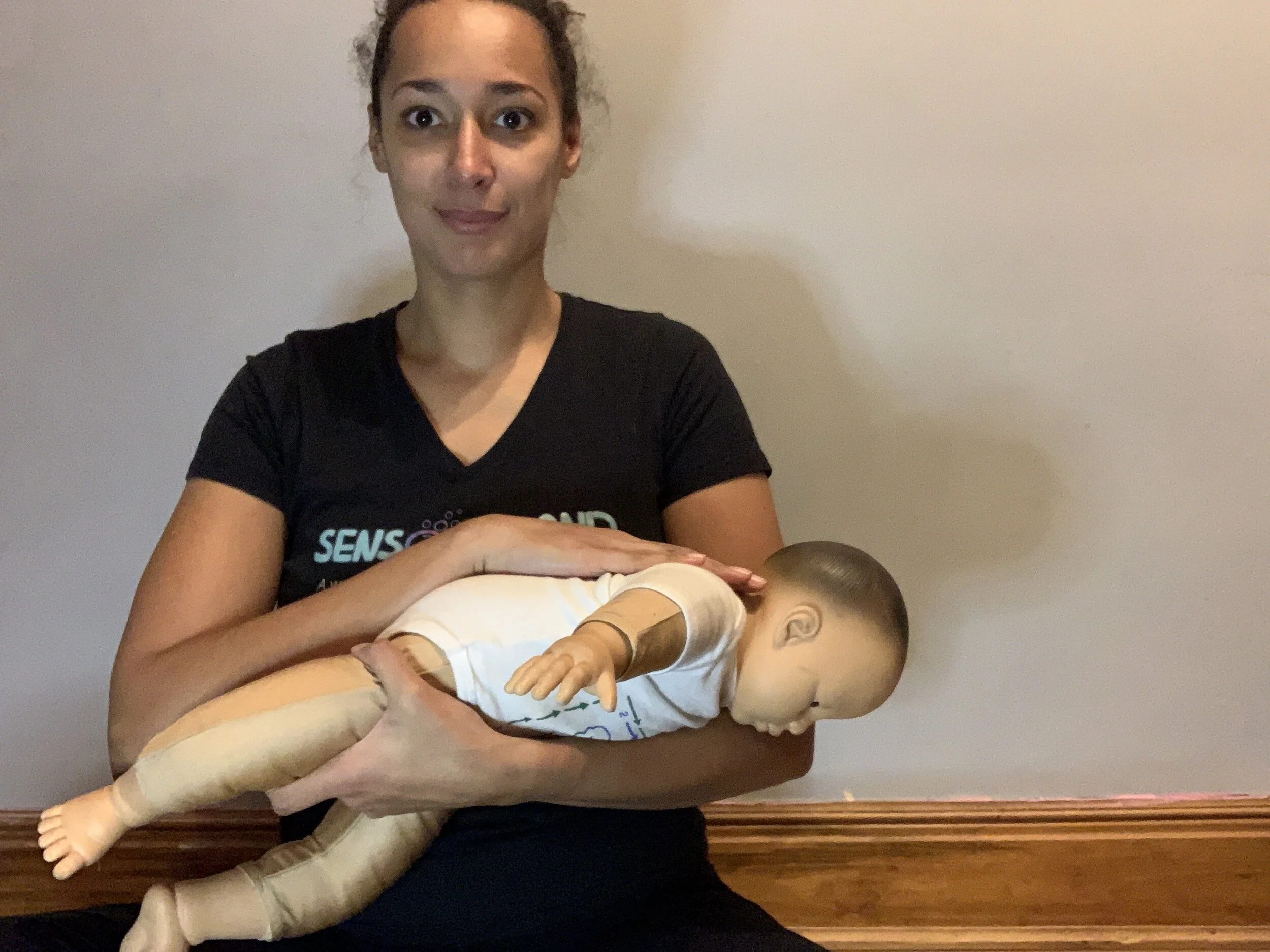
2) Knees to tummy
During a straining episode, you can gently bend your baby’s knees toward their belly for a few seconds, then release. Repeat a few times. This mimics a natural squat-like position and can help with coordination.
3) Bicycle legs or gentle belly rub
Slow bicycle motions or a soft clockwise belly rub can sometimes help move gas along, which can make pooping feel easier.
4) Warmth
A warm bath can relax tense muscles for some babies. If bath time is a guaranteed meltdown in your house, skip it. No one needs extra drama.
5) Keep feedings steady
Continue feeding as usual. Hydration supports normal stool consistency.
What to avoid
When your baby is clearly struggling, it is tempting to “help” in bigger ways. Most of the time, those bigger interventions are unnecessary and can create new problems.
- Avoid routine rectal stimulation (thermometers, Q-tips, suppositories) unless your pediatrician specifically instructs you to. It can irritate delicate tissue, and it may interfere with learning normal coordination if it becomes a habit.
- Avoid giving water, juice, or home remedies to young infants unless your clinician tells you to. Newborn feeding should be breastmilk or formula.
- Avoid switching formulas repeatedly just because of grunting with soft stools. It is usually unnecessary for dyschezia and can complicate troubleshooting if other symptoms appear.
- Avoid laxatives unless prescribed. Infant dyschezia is not constipation, so constipation treatments usually do not address the real issue.
What it is not
A few other things can look similar at 2 AM:
- Noisy sleep and gas: Newborns grunt, squirm, and vocalize in active sleep. Dyschezia is specifically straining and crying that ends with a soft poop.
- True constipation: Hard, dry stools are the key clue.
- Something that needs urgent evaluation: Severe belly swelling, green vomiting, poor feeding, lethargy, or a baby who never passed meconium in the first day or two can signal conditions that need prompt care (for example, bowel obstruction or Hirschsprung disease). If you see those, call right away.
When to call
Trust your instincts. You know your baby best. Contact your pediatrician promptly or seek urgent care if you notice any of the following:
- Blood in the stool (more than a tiny streak, repeated episodes, or blood with illness signs)
- Vomiting, especially green (bilious) vomiting or repeated forceful vomiting
- Poor feeding or refusing feeds
- Fewer wet diapers or signs of dehydration (dry mouth, very sleepy, sunken soft spot)
- Abdominal distension (a hard, very swollen belly) or severe tenderness
- Fever: In many settings, a rectal temperature of 100.4°F (38°C) or higher in babies under 2 to 3 months is considered urgent. Follow your clinic’s guidance, but do not wait it out at home.
- Poor weight gain or unusual sleepiness/lethargy
- Failure to pass meconium within the first 24 to 48 hours of life (for brand-new newborns)
- Hard, pellet-like stools or consistently thick, dry stools (more consistent with constipation)
- Baby is inconsolable or seems in significant pain between poops
If you are unsure, it is always appropriate to call. That is what pediatric offices are there for, and a quick check-in can save you a long night of worry.
If you think it is constipation
If your baby’s stools are truly hard, dry, and difficult to pass, reach out to your pediatrician before trying at-home fixes. What is appropriate depends on age, feeding type, and the full picture. Also, avoid internet “remedies” like water for young infants, and never give honey to babies under 12 months.
FAQs
Is infant dyschezia painful?
It can look painful, but it is often more “frustrating” than painful. The crying and red face are usually part of bearing down and learning coordination. If your baby seems distressed for long periods, is not feeding well, or has any red flags, get them checked.
My baby grunts all night. Is that dyschezia?
Not always. Newborns are noisy sleepers and often grunt with gas, normal movement, or light sleep. Dyschezia is specifically straining and crying that ends with a soft poop.
Can gas drops help?
Gas drops (simethicone) are generally considered low risk, but they do not treat dyschezia itself. Some families feel they help with gassiness, which can make the whole situation less intense. If you want to try them, follow the package instructions and your clinician’s advice.
Should I change my diet if I am breastfeeding?
Usually no. Infant dyschezia is about muscle coordination, not a food sensitivity. If there are additional symptoms like blood in stool, eczema, or significant feeding issues, talk with your pediatrician about whether an allergy or intolerance should be considered.
Bottom line
If your newborn strains, grunts, and cries for several minutes but then passes a soft stool, infant dyschezia is a very likely explanation. It is common, it is scary to watch, and it usually resolves as your baby’s body learns the right “push and relax” timing.
Your best tools are patience, gentle positioning, and knowing the red flags that deserve a call. And if you are reading this with one hand while holding a grunty little newborn with the other, consider this your official permission to take a deep breath. You are not doing anything wrong.

Sarah Mitchell
Sarah Mitchell is a Registered Pediatric Nurse and a mother of three who has spent over a decade helping families navigate the beautiful, chaotic early years of childhood. She combines evidence-based medical knowledge with real-world parenting experience to offer practical, compassionate advice. At Awesome Parent, Sarah's mission is to help exhausted parents find solutions, trust their instincts, and finally get some sleep.