Afebrile seizures can look different from febrile seizures. Here is how to keep your toddler safe, what to track, and the red flags that need emergency help.
Infantile Spasms: Subtle “Jackknife” Movements and When to Get Help

Sarah Mitchell
Sarah Mitchell is a Registered Pediatric Nurse and a mother of three who has spent over a decade helping families navigate the beautiful, chaotic early years of childhood. She combines evidence-based medical knowledge with real-world parenting experience to offer practical, compassionate advice. At Awesome Parent, Sarah's mission is to help exhausted parents find solutions, trust their instincts, and finally get some sleep.
If you have ever watched your baby do a quick little crunch, a head bob, or a sudden “folding” at the waist and thought, Was that… a seizure? you are not alone. Some seizure types are obvious. Infantile spasms often are not. They can look like tiny movements that come and go in clusters, especially around sleep transitions.
As a pediatric nurse and a mom, I want to give you an orientation that is calm, clear, and practical. This page is not treatment advice. It is about what you might see, what it can be confused with, and why prompt evaluation matters. Only a clinician can diagnose infantile spasms, and video plus an EEG are often key.
What parents notice
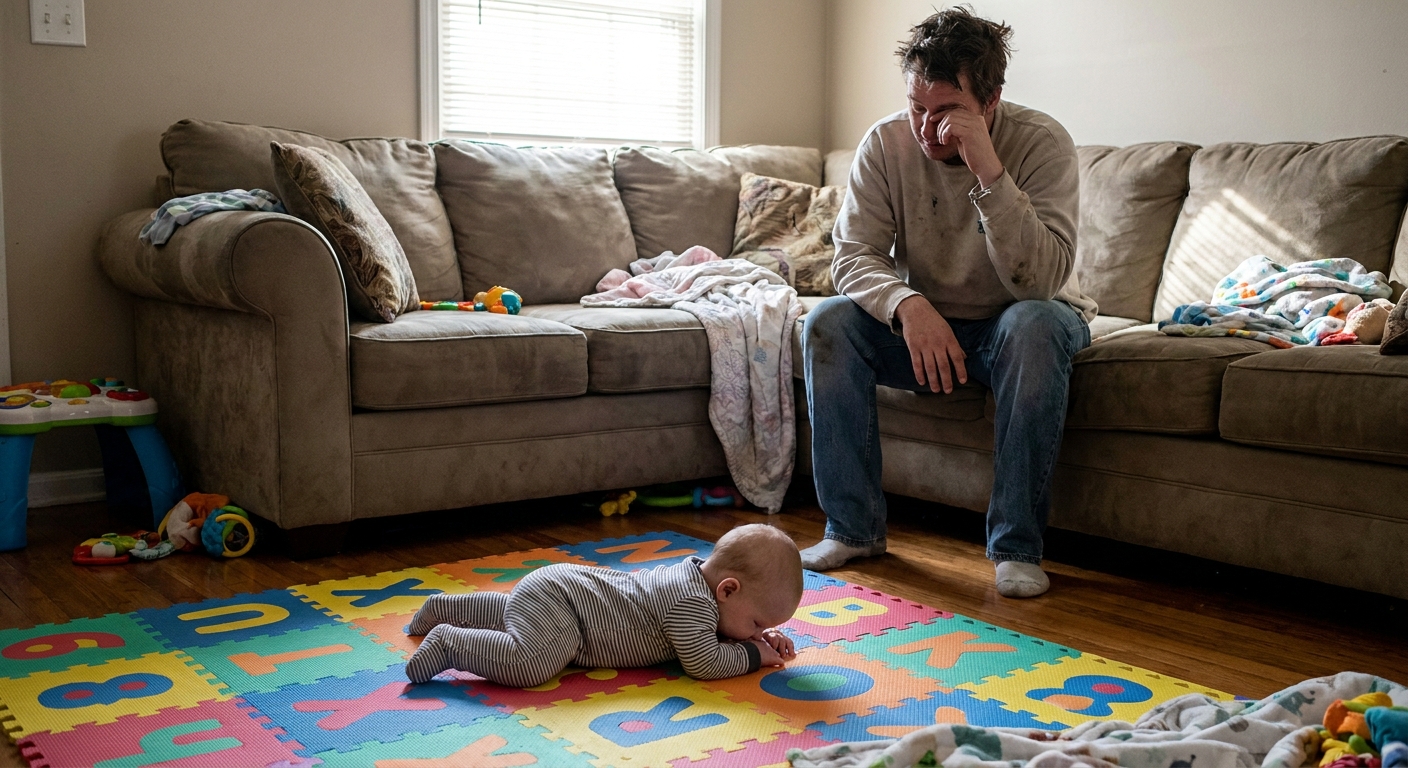
Infantile spasms are a specific type of seizure that typically happens in infancy, most often starting between about 3 to 12 months (with a peak around 4 to 8 months). They can happen outside that window, but that is the classic age range. Many parents describe the movements as so quick and small they are easy to dismiss, especially at first.
Common descriptions
- Clusters: several events close together, often separated by a few seconds, then a pause, then more. A cluster might last a few minutes.
- “Jackknife” movement (flexor spasm): a brief crunch where the head and shoulders come forward and the body may bend at the waist, sometimes with knees drawing up.
- Extensor or mixed movements: some babies briefly stiffen or arch (not just crunch), or do a mix of both.
- Head drops: the chin dips suddenly toward the chest, like a quick nod.
- Arm movements: arms may fling outward, lift up, or stiffen briefly.
- Timing around sleep: often noticed around sleep transitions, especially on waking, and sometimes as baby is getting drowsy.
After a cluster, some babies seem upset or unusually sleepy. Others act fairly normal, which is one reason these can be so confusing.
Another clue some families notice: a baby may pause or lose skills they had been gaining, or seem less interactive. This does not happen in every case, but if you notice developmental slowing or regression along with repetitive clusters, that is worth urgent attention.
Trust your gut: If you are thinking, “This is happening over and over and it looks the same each time,” that pattern alone is worth taking seriously.
Why urgency matters
Infantile spasms are considered time-sensitive because they can be linked with changes in brain activity and development. The earlier a baby is evaluated, the sooner specialists can figure out what is going on and start appropriate care if needed.
In real life, what delays families is not a lack of love or attention. It is that these movements can look like normal baby movements.
If you see repeated, stereotyped clusters of the same movement, it is worth getting checked promptly, even if your baby seems fine in between.
Common look-alikes
Many normal and not-so-serious baby behaviors can mimic seizures at first glance. This is not a way to diagnose at home, but it can help you communicate clearly when you call your child’s doctor.
Normal startle (Moro reflex)
- Typical look: a sudden flinging out of the arms, then pulling back in, often with a startled face.
- Common trigger: loud sound, sudden movement, being laid down.
- Pattern: usually single events, not repetitive clusters with the same timing.
- Age: most noticeable in newborns and typically fades by about 4 to 6 months.
Benign neonatal sleep myoclonus
- Typical look: brief jerks or twitches as baby falls asleep or during sleep.
- Pattern: often stops when baby is fully awake. It is not usually clustered right after waking with repeated identical movements.
Reflux discomfort and Sandifer syndrome
- Typical look: arching, grimacing, squirming, pulling knees up, and sometimes unusual posturing of the head and neck (Sandifer syndrome).
- Context clues: often tied to feeds or shortly after, spitting up, gagging, or signs of discomfort. Movements can be variable rather than the same repeated motion in clusters.
Febrile seizures (seizures with fever)
Febrile seizures are a separate topic, but here is the quick comparison many parents need in the moment:
- Trigger: febrile seizures happen with fever, usually in children 6 months to 5 years.
- What you see: often more dramatic full-body stiffening and shaking, or loss of responsiveness. Sometimes they can look different (including focal features), which is why any seizure concern deserves medical guidance.
- Timing: typically a single episode associated with an illness, not clusters of brief, repeated jackknife-like movements.
Important: A baby can have a seizure without a fever, and a baby can have a fever for many reasons. Fever does not automatically explain repeated, clustered spasms.

What to do now
If you suspect infantile spasms, the goal is not to “wait and see” for a week. The goal is to get your baby evaluated quickly and safely.
Do these steps
- Record a video if you can do it safely. Even 10 to 20 seconds can be incredibly helpful.
- Count the pattern: how many in a row, how long the cluster lasted, and what baby was doing right before it started (waking, falling asleep, feeding).
- Call your pediatrician the same day and say clearly: “I am seeing repetitive clusters of sudden head drops or crunching movements. I have a video.”
- Ask where they want you to go: office, urgent visit, or emergency department.
If your pediatrician’s office is closed and you are seeing repeated clusters, it is reasonable to seek urgent evaluation.
Go to the ER now
You do not have to be 100 percent sure it is a seizure to seek emergency care. Go to the ER or call your local emergency number now if:
- Your baby has trouble breathing , turns blue or gray, or is struggling to breathe.
- Your baby is not waking up, is extremely difficult to arouse, or seems unusually limp.
- A seizure lasts more than 5 minutes (continuous or repeated without recovery).
- Your baby has repeated clusters and is getting worse, especially if they seem confused or not acting like themselves afterward.
- Your baby is very young (especially under 3 months) and you are concerned about any seizure-like activity. It is safest to seek urgent or emergency evaluation.
- There was an associated injury, choking event, or you worry your baby is not safe at home right now.
If you are on the fence, you can also call your pediatrician’s after-hours line or a nurse line, but for breathing issues, poor responsiveness, or prolonged events, skip the phone call and go in.
What evaluation is like
Parents often imagine they will be judged or told they are overreacting. In pediatric care, we would much rather evaluate a baby and say, “Good news, this is not infantile spasms,” than miss something time-sensitive.
Depending on what is happening, clinicians may:
- Ask detailed questions about the movements and your baby’s development
- Watch your video
- Do a full exam
- Recommend an EEG (a test that looks at brain electrical activity). Infantile spasms are often associated with EEG patterns called hypsarrhythmia or related patterns.
- Refer you to pediatric neurology and consider other testing based on the situation
Bring the basics: diaper bag supplies, your video queued up, and any medication list. If you can, also note recent illnesses, birth history highlights, and whether the clusters are happening daily. If you are too frazzled to remember details, that is normal. The video helps a lot.

Quick script
When you are tired and worried, words get stuck. Here is a simple way to describe what you are seeing:
“My baby is having repeated clusters of the same brief movement. It looks like a sudden head drop and crunch forward at the waist. It happens several times in a row, especially around sleep transitions, often on waking. I have a video. I am worried about infantile spasms and I need to know where to be seen today.”
Bottom line
Infantile spasms can be subtle, repetitive, and easy to mistake for normal baby movements. The key clues parents often notice are brief spasms in clusters, commonly around sleep transitions, including head drops and jackknife-like crunches, sometimes with brief stiffening or arching.
If you are seeing this pattern, prompt evaluation matters. You are not being dramatic. You are being the parent your baby needs.