Ingrown Toenails in Kids

Sarah Mitchell
Sarah Mitchell is a Registered Pediatric Nurse and a mother of three who has spent over a decade helping families navigate the beautiful, chaotic early years of childhood. She combines evidence-based medical knowledge with real-world parenting experience to offer practical, compassionate advice. At Awesome Parent, Sarah's mission is to help exhausted parents find solutions, trust their instincts, and finally get some sleep.
If your child is suddenly guarding a toe, wincing when a sock goes on, or insisting one shoe is “mean,” an ingrown toenail is a very common culprit. The good news is that many mild cases can be managed safely at home with a few simple steps. And if your child does need a clinician to remove a small nail edge, it is usually quick and very routine.
I’ll walk you through what to do at home, how to fix the shoe and trimming habits that keep this problem coming back, and the exact red flags that mean it is time to call your child’s pediatrician or another clinician.
What it looks like
An ingrown toenail happens when the corner or side of the nail presses into the skin next to it. In kids, it most often affects the big toe.
Common signs
- Tenderness along one side of the nail, especially when touched or when shoes press on it
- Redness and mild swelling where the nail meets the skin
- Complaints when putting on socks, shoes, or footed pajamas
- A small “spike” corner of nail that seems to be digging in
When it is more than irritated
If bacteria get into the irritated skin, it can turn into an infection. That is when you may see drainage, warmth, worsening swelling, or spreading redness. More on that below.
Could it be something else?
Not every sore toe is an ingrown nail. Consider an earlier call or visit if the nail edge looks normal and the pain started after a clear injury (like stubbing the toe), or if you see a blister, wart, splinter, or a pocket of pus along the nail fold that does not seem connected to the nail edge (paronychia can happen without an ingrown nail). If the nail is thick, crumbly, or unusually discolored, ask your clinician about causes like fungal infection or skin conditions such as psoriasis.
Home care for mild cases
If your child has mild redness and tenderness but no fever, no spreading redness, and no significant pus, home care is a reasonable first step.
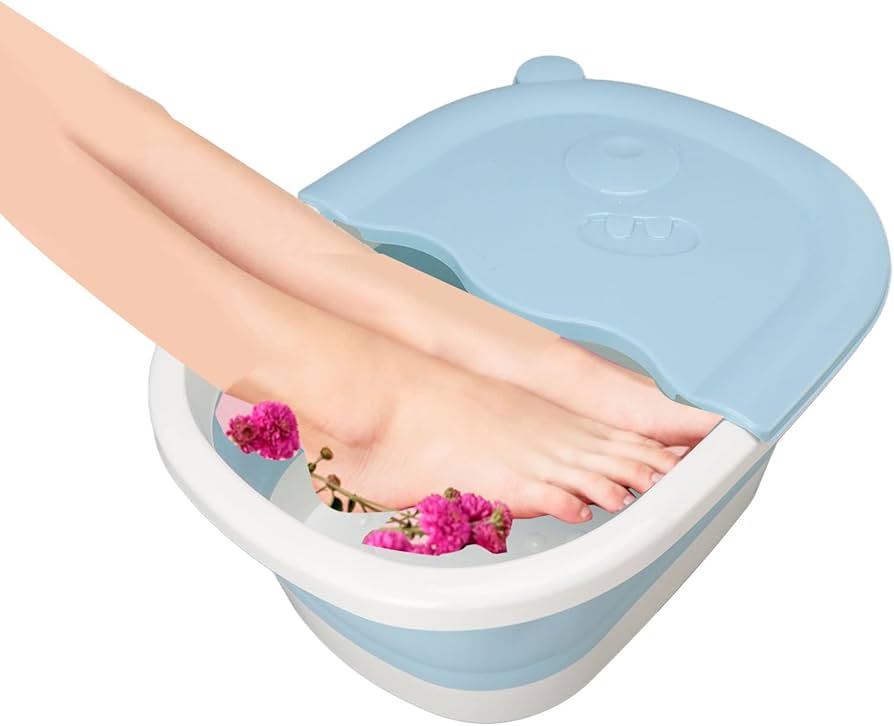
Step 1: Warm soaks
Warm water soaks help soften the skin, reduce swelling, and relieve pain.
- How: Soak the foot in warm (not hot) water for 15 to 20 minutes.
- How often: 2 to 3 times per day for a few days.
- Optional: A small amount of mild soap is fine. Epsom salt is optional too, not required. You do not need harsh antiseptics.
After the soak, gently pat the toe dry, especially between toes.
Step 2: Reduce pressure
- Switch to open-toe sandals or the roomiest shoe you have for a few days, if weather and safety allow.
- Skip tight socks. Choose soft, breathable socks with a roomy toe box.
- At home, barefoot can be helpful if it is safe and clean.
Step 3: Pain relief
If your child is uncomfortable, over-the-counter pain medicine can help. Use the dose on the package based on your child’s current weight, or follow your clinician’s guidance.
- Acetaminophen or ibuprofen are commonly used options for kids.
- Avoid aspirin in children unless your clinician specifically instructs it.
- Do not use ibuprofen in infants under 6 months unless your clinician tells you to.
- If you use acetaminophen, be careful not to double-dose by also giving a multi-symptom cold medicine that contains acetaminophen.
Step 4: Gentle care, no digging
It is very tempting to try to “get in there” with clippers or tweezers. That is often how small problems become big infections.
- Do not cut a deep V in the nail.
- Do not dig under the nail corner.
- Do not try to cut out a deep corner if you cannot clearly see it.
If there is a tiny visible hangnail-like corner that is clearly snagging and fully accessible, you can trim only the loose, sharp edge. If you have to “hunt” for it, stop.
What about cotton or floss under the edge?
You might see advice to gently lift the nail corner and place a tiny bit of cotton or dental floss under it. Some clinicians do recommend this for older, cooperative kids in select mild cases. If your child is squirmy, in significant pain, or you would have to force the nail up, skip it. It is easy to tear the skin and make things worse. When in doubt, stick with soaks and pressure relief and call your pediatrician.
Step 5: Basic hygiene
- Keep the toe clean and dry.
- Change sweaty socks promptly.
- Avoid picking at the skin around the nail.

Shoe fit matters
In clinic, one of the biggest drivers of repeat ingrown toenails is shoes that are just a little too short or too narrow. Kids rarely say, “My toe box is cramped.” They just adapt until their toe is angry.
Quick toe-box check
- With your child standing, press the front of the shoe. You want about a thumb’s width of space beyond the longest toe.
- Look at the shape of the shoe. If it comes to a point, it can push toes inward even if the length seems fine.
- Check socks too. Some socks are surprisingly tight across the toes.
What to look for
- A wide, rounded toe box
- Enough length for growth and toe splay
- Breathable materials to reduce moisture and skin breakdown
If your child plays sports, consider having cleats fitted. Tight cleats are a classic trigger.
How to trim toenails
Toenail trimming is not a test of parenting perfection. It is a tiny task that gets done in real homes, with real squirming. Aim for safe and consistent, not flawless.
The safest approach
- Trim toenails straight across, then gently smooth sharp corners with a nail file.
- Do not round the corners deep into the sides. That invites the nail to grow into the skin.
- Leave nails a little longer rather than cutting them very short.
- Trim after a bath when nails are softer, and use proper nail clippers (adult clippers are usually easier for toenails than tiny baby clippers).
Thick nails or repeat issues
If your child has very thick nails, sweaty feet, or repeat ingrowns, ask your pediatrician if a podiatry visit makes sense. Sometimes a simple trimming technique adjustment or footwear change is all it takes. If the nail has been thick, yellowed, or crumbly for a while, ask whether fungus or a skin condition could be contributing.
Signs of infection
Call your child’s pediatrician or seek urgent care if you notice any of the following:
- Pus or cloudy drainage
- Worsening redness, swelling, warmth, or pain after 24 to 48 hours of home care
- Redness that is spreading beyond the nail fold
- Fever or your child seems ill
- A red streak traveling up the toe or foot (this can be a sign the infection is spreading and needs urgent evaluation)
- Your child has diabetes, immune suppression, significant circulation problems, or you were told they are high risk for infections
If your child cannot tolerate any touch to the toe or you cannot get shoes on at all, that is also a good reason to call, even if you do not see obvious pus.
When to call sooner
Even if you do not see classic infection signs, it is smart to contact your pediatrician sooner if:
- Your child is very young (especially an infant or toddler) and the toe looks very inflamed
- Pain is severe, your child cannot bear weight, or they are avoiding walking
- You suspect an abscess (a tense, very tender pocket that looks like it wants to burst)
- The problem keeps coming back in the same spot
- Your child has a condition that increases infection risk
When a clinician removes the nail edge
Parents often picture a dramatic procedure. In reality, when clinicians “remove the nail,” they usually remove only a small sliver of nail on the ingrown side, not the entire toenail.
Common reasons
- Repeated ingrown toenails in the same spot
- Significant swelling over the nail edge
- Infection that is not improving with conservative care
- A nail corner that is embedded and cannot be safely managed at home
What happens at the visit
Exact steps vary by clinic, but a typical in-office approach looks like this:
- Numbing: The toe is cleaned and numbed with local anesthetic. This is the part kids dislike most, because the initial numbing can sting.
- Partial nail edge removal: Once numb, the clinician gently lifts and removes a narrow strip of nail along the side that is digging in.
- Cleaning: Any trapped debris or inflamed tissue is addressed.
- Dressing: The toe is wrapped, and you will get home care instructions.
In some recurrent cases, the clinician may also treat the nail’s growth area along that edge (called a matrixectomy) to reduce the chance it grows inward again. This can be done in different ways depending on the clinic and your child’s situation, and your clinician should talk you through the pros and cons.

Aftercare
Follow the specific plan you are given, but common aftercare includes:
- Keeping the dressing on for the recommended time
- Soaking or gentle cleansing as instructed
- Applying an ointment if recommended
- Using open-toe or roomy footwear for a few days
- Watching for increasing redness, swelling, warmth, or drainage
Call the office if pain is worsening instead of improving, if drainage increases, or if your child develops fever.
What not to do
- Do not dig under the nail with tweezers, needles, or sharp tools.
- Do not try to cut out a deep corner if you cannot clearly see it.
- Do not use harsh chemicals or caustic home remedies on broken skin.
- Do not ignore worsening symptoms for days hoping it will “drain on its own.”
If you are unsure whether it is mild irritation or early infection, a quick call to your pediatrician can save you a lot of stress and your child a lot of pain.
FAQ
Should I use antibiotic ointment?
For mildly irritated skin, keeping the area clean and dry and reducing shoe pressure often matters more than ointment. If the skin is broken or there is minor drainage, your clinician may recommend an ointment. If there is significant pus, spreading redness, warmth, or fever, ointment alone is not enough. Call your pediatrician.
Can my child go to school or sports?
If your child can wear comfortable shoes and pain is manageable, school is usually fine. Sports can worsen pain because of repeated pressure and sweating. A short break or switching footwear may help while the toe heals.
Will it keep coming back?
It can, especially with tight shoes, aggressive corner trimming, or sweaty feet. The most effective prevention is roomy footwear plus straight-across trimming with gently filed corners. If it keeps recurring in the same spot, ask whether a partial nail procedure and, in some cases, a matrixectomy might prevent repeat episodes.
When in doubt
If your child is in significant pain, the redness is spreading, or you are seeing pus, it is time to get help. You are not overreacting. Ingrown toenails are small, but they can make a kid absolutely miserable, and getting the right treatment early is usually the fastest path back to comfortable feet and calmer bedtimes.