Is Your 2-Year-Old Ready to Potty Train?

Sarah Mitchell
Sarah Mitchell is a Registered Pediatric Nurse and a mother of three who has spent over a decade helping families navigate the beautiful, chaotic early years of childhood. She combines evidence-based medical knowledge with real-world parenting experience to offer practical, compassionate advice. At Awesome Parent, Sarah's mission is to help exhausted parents find solutions, trust their instincts, and finally get some sleep.
If you are staring at a stack of tiny underwear at 3 AM wondering if your 2-year-old is ready to potty train, you are in excellent company. In clinic, I saw parents come in convinced they had “missed the window” because a cousin’s kid trained at 20 months. At home, I learned the hard way that a toddler who can sit on a potty is not always a toddler who is ready to use it consistently.
Potty training goes best when your child’s body, brain, and temperament all line up. This checklist will help you spot the true readiness cues, avoid common false alarms, and decide whether to start now or give it a few more weeks.
Quick note: This article is general education, not medical advice. If you have concerns about constipation, pain with peeing, or delays, check in with your child’s pediatrician.
Age is a clue, not the rule
Two is a very common age to start thinking about potty training, but readiness varies wildly. Some kids show readiness signs closer to 18 to 24 months, many are ready sometime between 2.5 and 3.5 years, and some need longer. That range is normal.
If you want a reputable benchmark, organizations like the American Academy of Pediatrics (via HealthyChildren.org) emphasize following readiness signs over a specific age.
What matters more than the birthday candle count is whether your child can:
- Recognize the feeling of needing to pee or poop
- Hold it long enough to reach the potty
- Communicate what they need
- Cooperate with the routine often enough that everyone stays mostly sane
The readiness checklist
Think of potty training readiness like a three-legged stool: physical + cognitive + behavioral. When one leg is missing, the whole thing wobbles.
1) Physical signs
- Stays dry for longer stretches: Often around 2 hours at a time during the day, or wakes from a nap dry fairly often. This is a common sign, not a hard requirement.
- More predictable poops: Many toddlers poop around the same time daily. Predictability helps you catch early successes.
- Has the motor skills to get there: Can walk to the potty, sit down, and stand up safely (with a stable potty chair or seat insert and a step stool).
- Can pull pants up and down: It does not need to be perfect, but they should be able to help. If every attempt becomes a wrestling match, training gets frustrating fast.
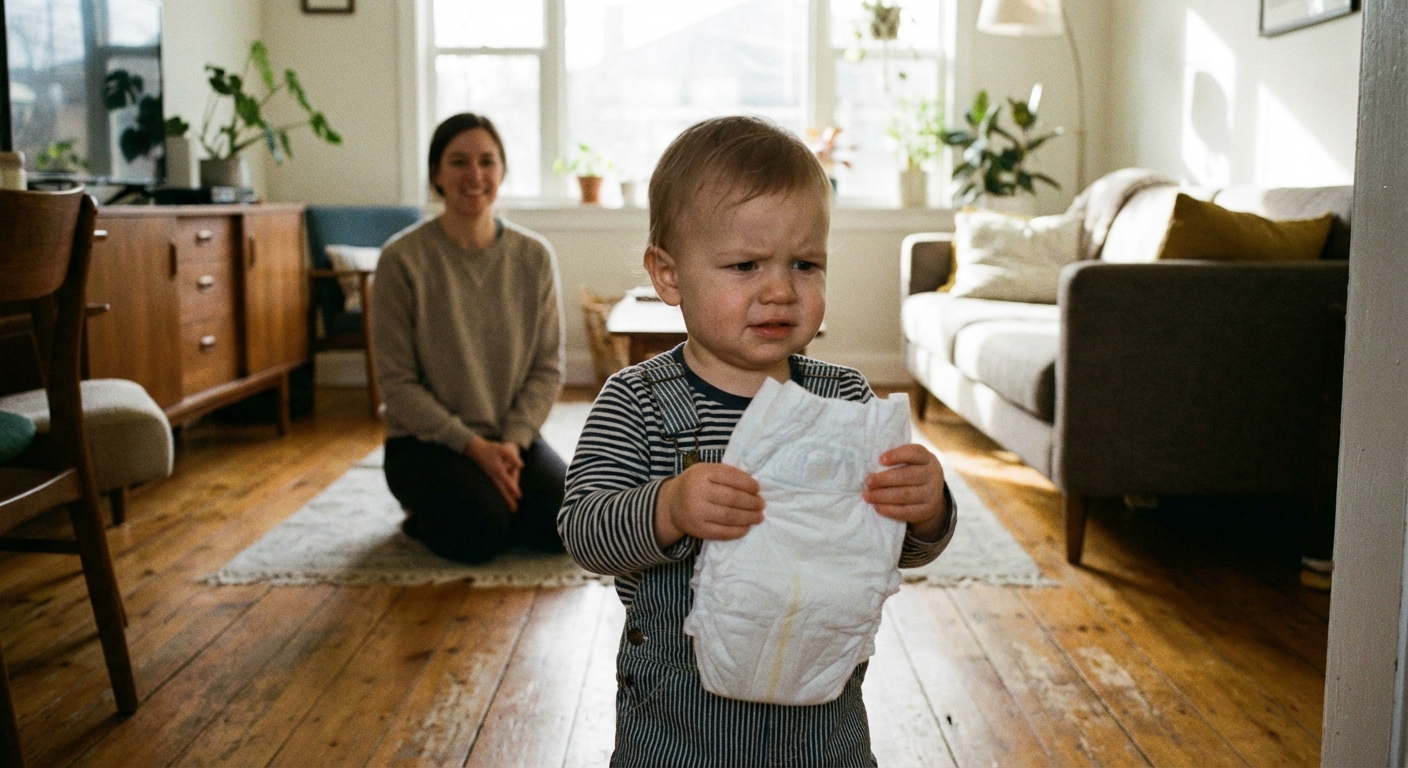
- Shows awareness of wet or dirty diapers: They might tug at a diaper, ask to be changed, or hide to poop.
2) Thinking and communication signs
- Understands simple directions: For example, “Go sit on the potty,” “Bring me your pants,” or “Put the wipe in the trash.”
- Has words or signals for pee and poop: This can be actual words, a sign, a specific face, or a consistent phrase like “I go!”
- Connects actions with outcomes: They understand that pee and poop go in the potty, not on the floor next to it.
- Notices body cues: They might pause mid-play, cross legs, squat, or announce “poop!” right before it happens.
3) Behavior and emotional signs
- Shows interest in the bathroom: Follows you in, wants to flush, asks questions, or wants to try sitting on the potty.
- Tolerates transitions reasonably well: Potty training involves stopping play, changing routines, and practicing often.
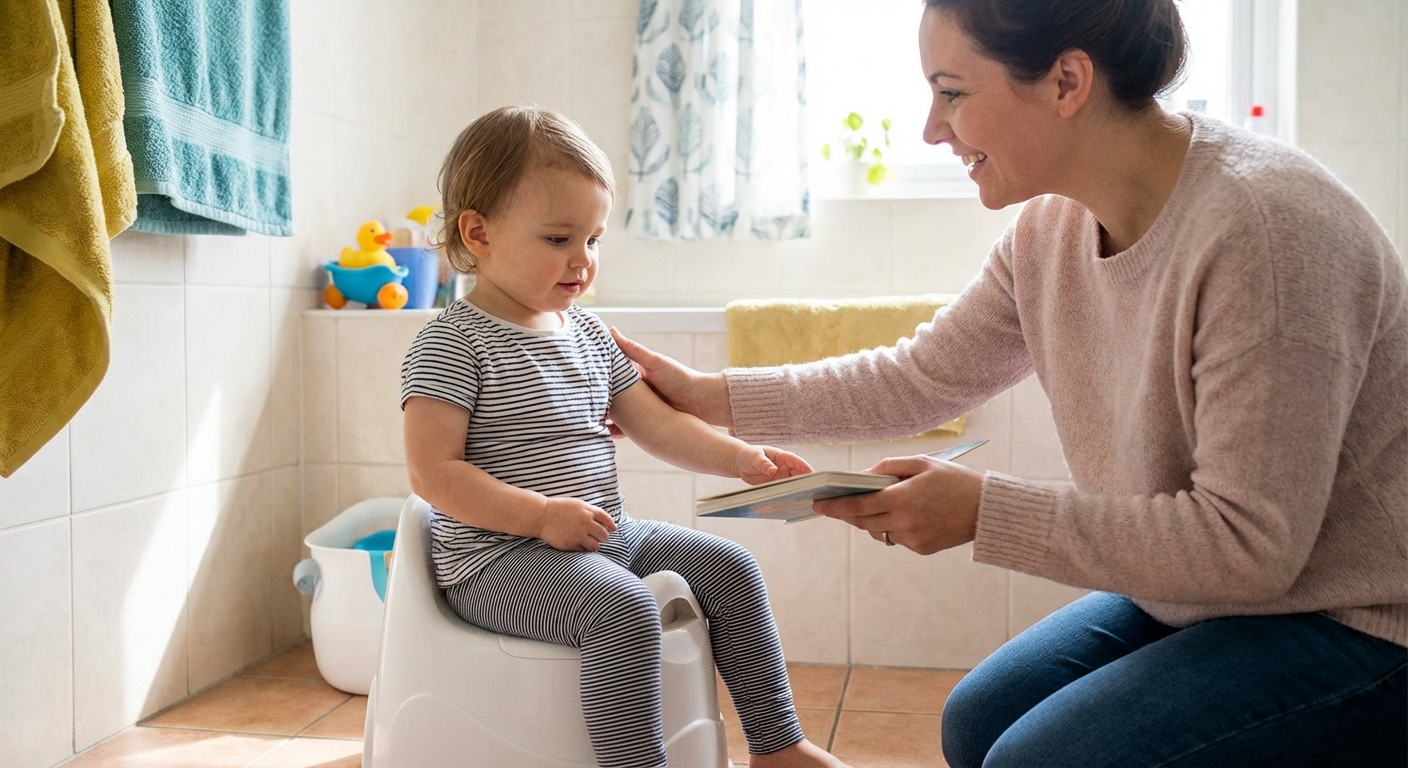
- Can sit for a short time: Roughly 1 to 3 minutes is enough. If they cannot sit long enough to blow bubbles or look at a book, it may be early.
- Wants some independence: The classic “Me do it!” energy can actually help here.
- Is not in a major life upheaval: Starting daycare, moving, a new sibling, travel, sleep regression. These do not make potty training impossible, but they can make it harder.
My nurse-mom rule of thumb: If your child has most of the physical signs plus at least a couple of thinking/communication signs and a sprinkle of willingness, you can consider starting.
Green lights vs. false alarms
Strong green lights
- Often dry for 2+ hours and pees a lot at once (not constant dribbles)
- Poops are fairly regular and they clearly signal before it happens
- They can tell you after they pee or poop, and sometimes before
- They will sit on the potty without a full-body protest
Common false alarms
- They hate diaper changes: This can mean readiness, but it can also mean they just hate being interrupted. Many toddlers do.
- They can say “potty”: Cute, but not sufficient. The key is connecting the word to the body cue.
- They sat once and peed: A lucky catch is not the same as control. Celebrate, then look for consistency.
- A friend’s kid trained at 22 months: Comparison is the fastest route to stress. Your child’s timeline is not a group project.
When it is smart to wait
Waiting is not failing. Waiting is choosing the path with fewer tears, fewer power struggles, and fewer loads of laundry. Consider pressing pause if you are seeing any of these:
- Frequent constipation or painful poops: If pooping hurts, kids will avoid it, and potty training can backfire fast.
- They cannot stay dry for even an hour: This often means their bladder control is not ready yet.
- Big resistance: Screaming, stiffening, panic, or refusing to enter the bathroom. A little hesitation is normal, but intense fear is a sign to slow down.
- Major life changes happening now: You can still talk about potty skills, but formal training may be smoother later.
- They are sick or recovering: Training is hard enough when everyone is well rested, which is already a stretch some weeks.
A simple scoring shortcut
If you like a quick check, here is a practical, non-medical shortcut I use with tired parents (and my own tired brain). It is a heuristic, not a validated tool.
- Physical: 0 to 5 points (one point for each physical sign above)
- Thinking/communication: 0 to 4 points
- Behavior/emotional: 0 to 5 points
How to interpret it:
- 10+ total with at least 3 physical points: Reasonable to start a gentle, low-pressure plan.
- 7 to 9: Do readiness-building for 2 to 4 weeks, then reassess.
- 6 or less: Probably too soon. Focus on comfort with the bathroom and basic skills first.
How to build readiness
If your child is close but not quite there, you can set the stage now and save yourself a lot of frustration later.
- Normalize the potty: Keep a potty chair in the bathroom. Let them sit on it clothed at first.
- Teach the routine: Pants down, sit, wipe, pants up, wash hands. You can practice with dry runs.
- Use simple language: “Pee goes in the potty.” Repeat like it is your job.
- Switch to easy clothes: Elastic waist pants, no tricky buttons, no overalls for now.
- Support comfortable poops: Fiber, water, movement. Constipation is one of the biggest hidden potty training wrecking balls.
- Let them watch you (if you are comfortable): Toddlers learn by copying. It is weird. It works.
Potty setup and safety
- Pick the right tool: Some kids do better with a floor potty (more secure). Others prefer a seat reducer on the big toilet.
- Stability matters: If using the toilet, use a sturdy step stool and make sure your child’s feet are supported. Dangling legs can make pooping harder and sitting feel unsafe.
- Supervise: Toddlers can climb, tip stools, and get curious fast. Stay nearby.
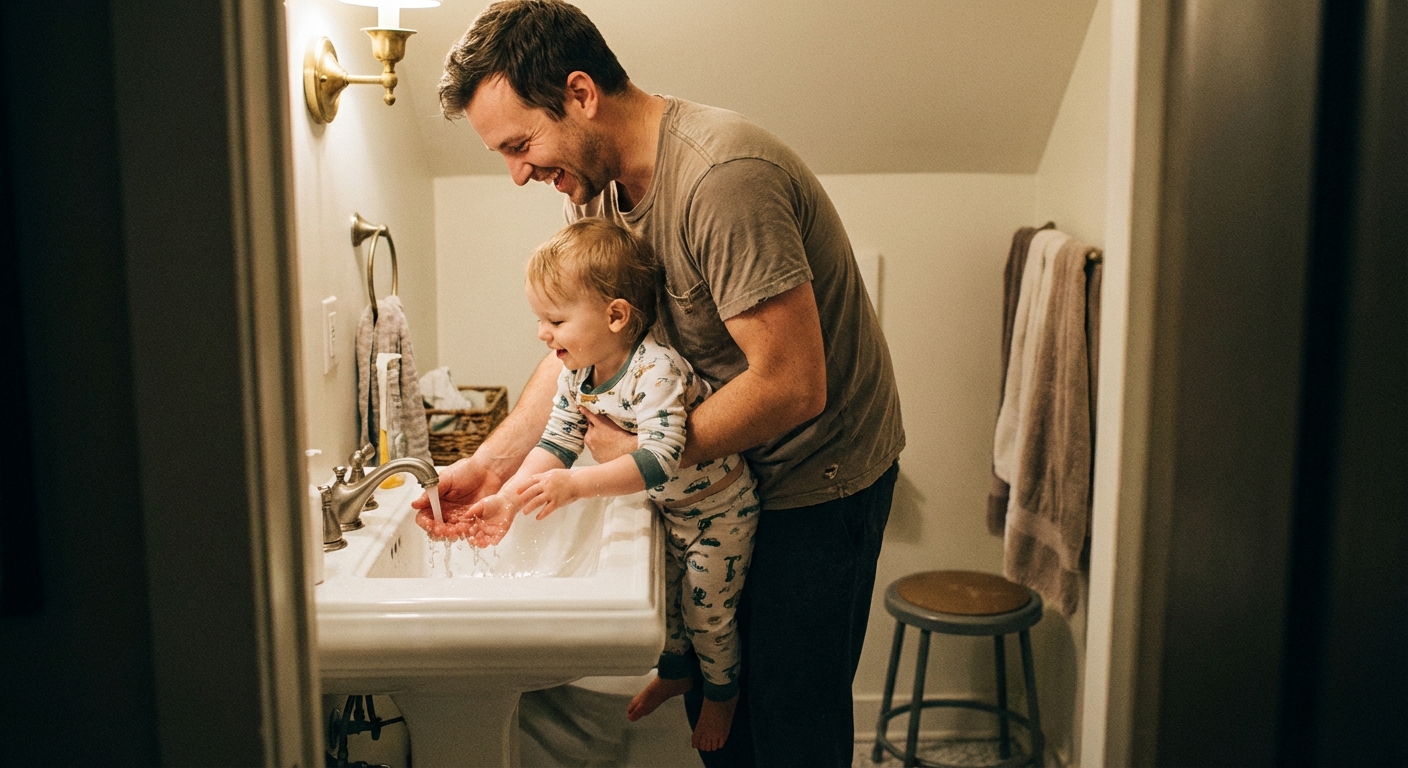
- Hygiene: Handwashing is part of potty training. Wipe down potty chairs and handles regularly.
What “ready” looks like
Parents often imagine readiness as a toddler politely announcing, “I need to pee.” In real life, readiness looks more like:
- They pause, get wiggly, or go quiet, and you start recognizing their tell.
- They can sit when prompted at natural transition times, like after waking, before bath, or before leaving the house.
- They have at least a little pride in staying dry or using the potty, even if they also sprint away immediately afterward.
If you can picture a gentle routine forming, you are probably close.
Neurodiversity and delays
If your child is autistic, has ADHD, sensory sensitivities, speech delays, or other developmental differences, readiness signs may look different and the timeline may be longer. That is not a failure, it is just a different map.
If you are stuck, your pediatrician can help, and an occupational therapist can be fantastic for sensory needs, routines, and bathroom independence skills.
FAQs
Can I potty train at 2 if my child is in daycare?
Yes, but consistency matters. Ask what the daycare’s potty routine is and match it at home as much as possible. If daycare cannot support training yet, you can still build readiness and start more formally during a long weekend or vacation block.
What about nighttime training?
Nighttime dryness is largely developmental, involving things like sleep arousal, bladder capacity, and hormone patterns. Many kids continue wearing nighttime diapers or pull-ups for months or years after daytime training. That is normal and not a parenting failure. You cannot train nights the same way you train days.
Do rewards help or hurt?
Small, simple rewards can help some kids, especially for early cooperation like sitting and trying. Keep rewards low-key and short-term. Avoid turning potty success into a high-stakes performance, because that is when anxiety and power struggles show up.
My 2-year-old will pee on the potty but refuses to poop. Now what?
This is incredibly common. Pooping feels more vulnerable and can be scary. Make sure stools are soft, offer a footstool so knees are higher than hips, and stay calm. Pushing hard usually increases resistance. If constipation is part of the story, address that first with your pediatrician.
When to call the pediatrician
Most potty training bumps are normal, but reach out for guidance if you notice:
- Constipation that is persistent, painful, or associated with stool withholding
- Pain with peeing, blood in urine, or frequent urgency that seems unusual
- Extreme fear of the toilet that does not improve with gentle exposure
- A child who was trained and then has a sudden, ongoing regression without an obvious reason
If potty training is turning into daily battles, that is not a sign you need to be tougher. It is usually a sign you need a different plan, or simply more time.
The bottom line
If your 2-year-old is showing solid physical signs (longer dry stretches, awareness of wet or dirty diapers, regular pooping patterns), can communicate at least a little, and is not in a full-body meltdown about the potty, you can absolutely start.
If those pieces are not in place yet, you did not miss anything. You are just early. Build readiness, protect the parent-child relationship, and try again soon. Potty training is a season, not a character test.