A calm, evidence-based guide to AAP safe sleep (2022): back to sleep, firm flat surface, empty crib, room-sharing, swaddling safety (avoid weighted products)...
Is Your Baby Too Hot?

Sarah Mitchell
Sarah Mitchell is a Registered Pediatric Nurse and a mother of three who has spent over a decade helping families navigate the beautiful, chaotic early years of childhood. She combines evidence-based medical knowledge with real-world parenting experience to offer practical, compassionate advice. At Awesome Parent, Sarah's mission is to help exhausted parents find solutions, trust their instincts, and finally get some sleep.
At some point, every parent has done the midnight hover: one hand on baby’s belly, one eye on the monitor, brain whispering, Are you too hot? Too cold? Am I ruining sleep forever?
Take a breath. Overheating is a real concern, but it’s also one of the most fixable ones. This guide will help you read your baby’s cues, pick a safe room temperature, and choose sleep layers (including TOG basics) in a way that complements, not replaces, the safe-sleep rules we follow for reducing SIDS risk.
Why overheating matters
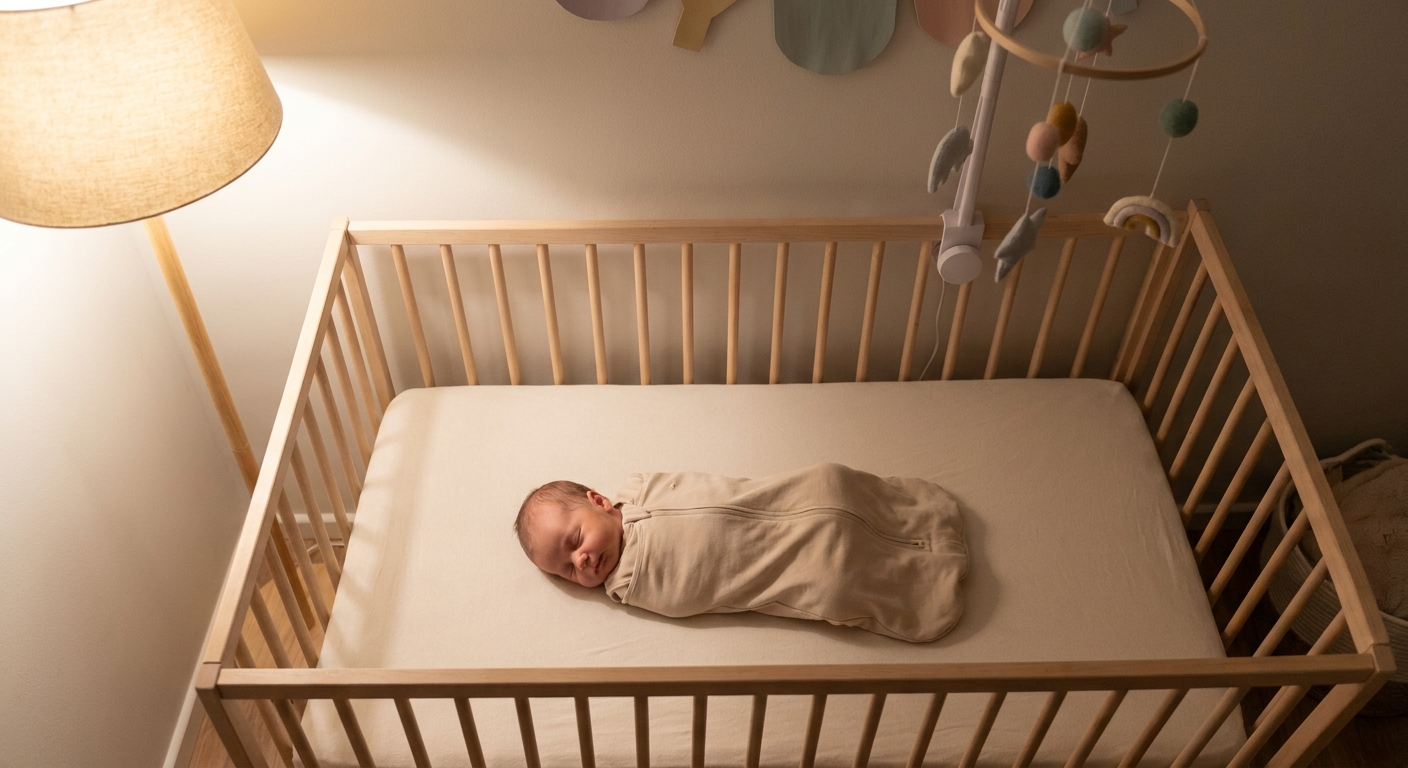
Babies have immature temperature regulation and a higher surface-area-to-body-weight ratio than adults. In plain English: they can overheat more easily, cool off faster, and they can’t tell us, “Hey, I’m roasting.”
Overheating during sleep is associated with a higher risk of sleep-related death, including SIDS. That doesn’t mean you need to obsess over the thermostat every five minutes. It means we aim for a comfortably cool sleep environment and avoid over-bundling.
Important: This article is about temperature and layers. It doesn’t replace safe-sleep basics. Always put baby to sleep on their back, on a firm, flat surface, with a fitted sheet only, and keep the sleep space free of pillows, loose blankets, stuffed animals, and bumpers.
How to tell if your baby is too hot
Many parents check baby’s hands or feet and panic. Tiny extremities often feel cool even when baby is perfectly comfortable. Focus on the core.
Best places to check warmth
- Chest or upper back: Warm is good. Hot and sweaty isn’t.
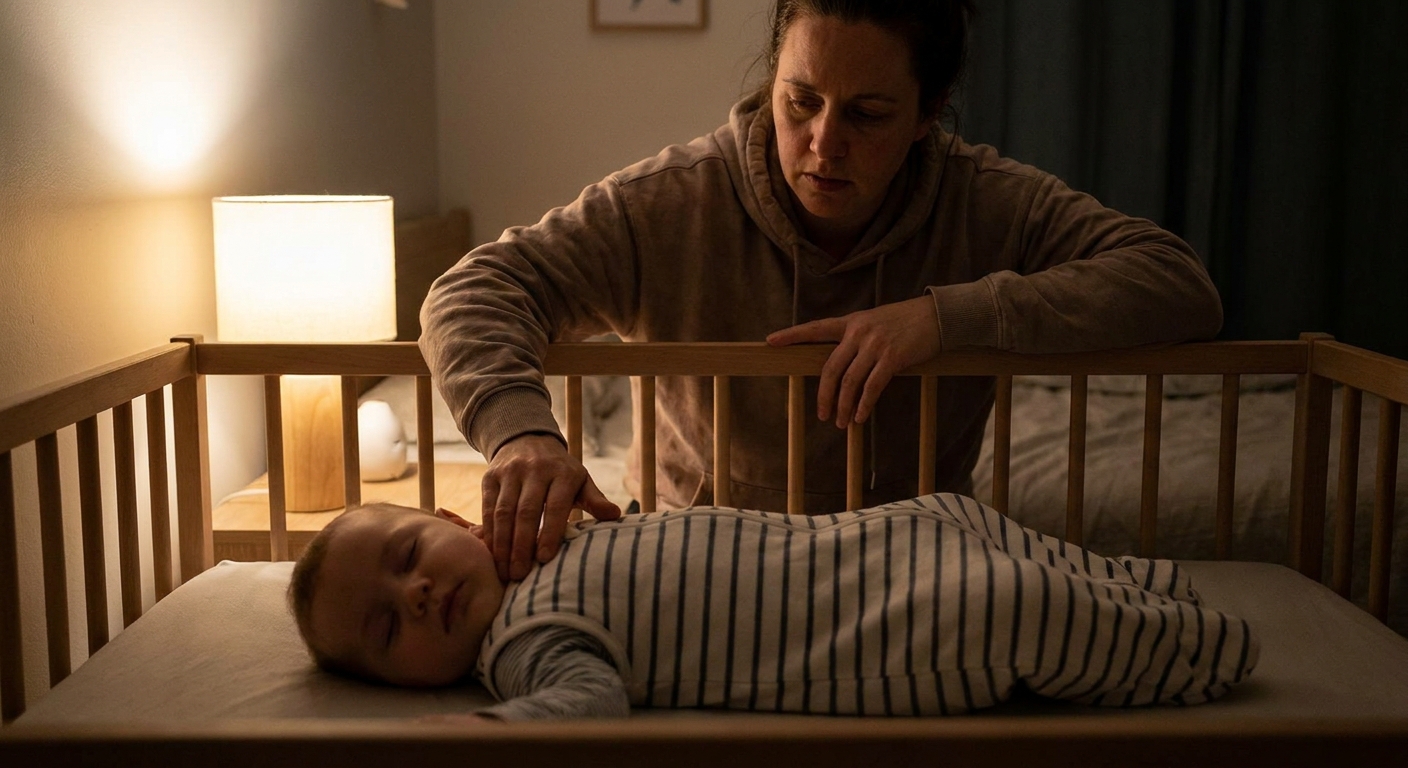
- Back of the neck: A quick, reliable “too warm” checkpoint.
Common signs your baby may be overheating
- Sweating, especially damp hair or a sweaty neck
- Flushed, red, or unusually warm skin
- Fast breathing that’s new for your baby and not explained by crying
- Heat rash in skin folds or on the chest and back
- Restlessness, frequent waking, or seeming uncomfortable
- Warm to hot chest or back (not just hands)
Signs your baby is probably comfortable
- Chest and back feel warm, not hot
- Baby is sleeping normally for them
- No sweat, no damp hair, no flushed face
Quick check without fully waking them: Slip two fingers inside the neckline at the back of the neck or feel the upper back through pajamas. You’re looking for warm and dry, not hot or damp.
When to call your pediatrician urgently: If your baby is under 3 months and has a rectal temperature of 100.4°F (38°C) or higher, or if they seem lethargic, difficult to wake, or are breathing abnormally. Overheating from layers is usually solved by removing a layer, but fever is different and needs medical guidance.
Safe room temperature
Most guidance lands in the same neighborhood: a room that feels comfortable for a lightly clothed adult, on the cooler side.
A practical range
Many experts suggest aiming around 68°F to 72°F (20°C to 22°C), while others recommend a broader, cooler range around 60°F to 68°F (16°C to 20°C). Instead of chasing a perfect number, aim for a comfortably cool room and adjust layers based on the actual room temperature and your baby’s cues.
Ways to manage temperature
- Use a room thermometer if your home has hot and cold pockets. Nursery monitors are sometimes off by a few degrees.
- Keep air moving with a ceiling or standing fan (not blowing directly on baby). Gentle air circulation may reduce overheating risk.
- Watch sun exposure during naps. A sunny room can heat up quickly even if the thermostat looks fine.
- Avoid space heaters near the crib, and never aim heat at the sleep space.
One more reality check from someone who’s done the “why is the nursery 76°F again?” tour of an old house: if you can’t keep the temperature perfectly stable, focus on safe layers and do a quick core check during heat waves or cold snaps.
Heat waves and power outages
If your home gets hot fast, go lighter than you think: a single breathable layer can be enough, and a lighter sleep sack (or none) is often safer than adding more. Move to the coolest room you can, close blinds, and use battery-powered fans for air circulation if needed.
TOG made simple
TOG is a rating used for sleep sacks and wearable blankets to describe warmth. Higher TOG usually means warmer fabric and more insulation.
What TOG does and doesn’t do
- TOG helps you compare warmth between sleep sacks.
- TOG doesn’t replace checking baby’s chest and neck for comfort.
- TOG isn’t universal. Brands vary, and your home’s humidity and airflow matter.
A practical TOG approach
Instead of chasing the perfect number, use TOG like a starting point:
- If the room is warm, choose a lighter sleep sack and fewer layers.
- If the room is cool, choose a warmer sleep sack and add one simple base layer.
If you’re using a sleep sack with a TOG rating, follow the manufacturer’s temperature guidance as a baseline, then adjust based on your baby’s cues. If baby is damp, flushed, or hot on the chest or neck, scale back.
How to layer for sleep
The simplest rule that holds up in real life: start simple, then adjust. A common starting point is one more light layer than an adult would wear to be comfortable in that room, but plenty of babies need less, especially in warm homes. Your baby’s chest and neck are the tie-breakers.
Safe layer building blocks
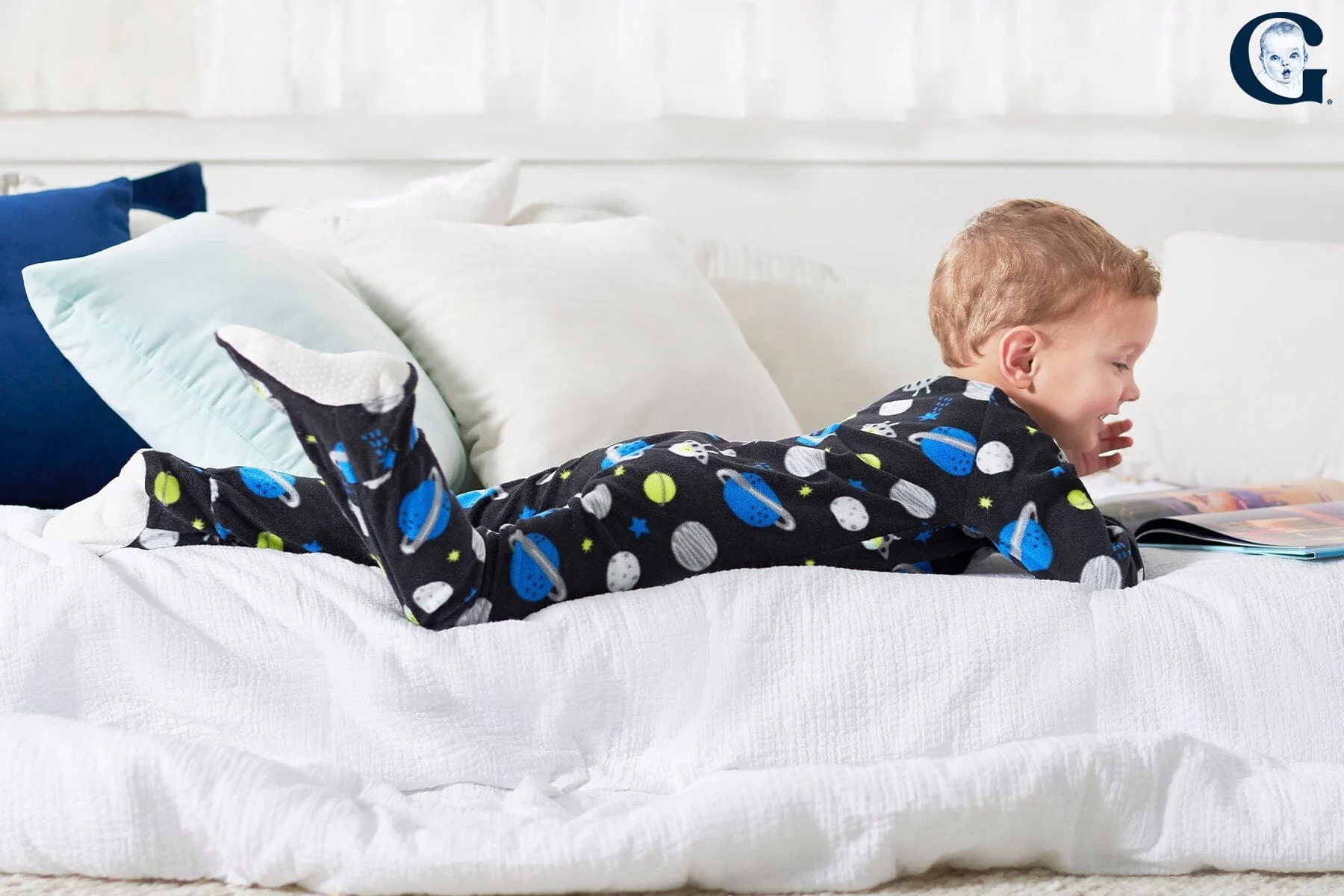
- Base layer: a short-sleeve or long-sleeve onesie, or footed pajamas
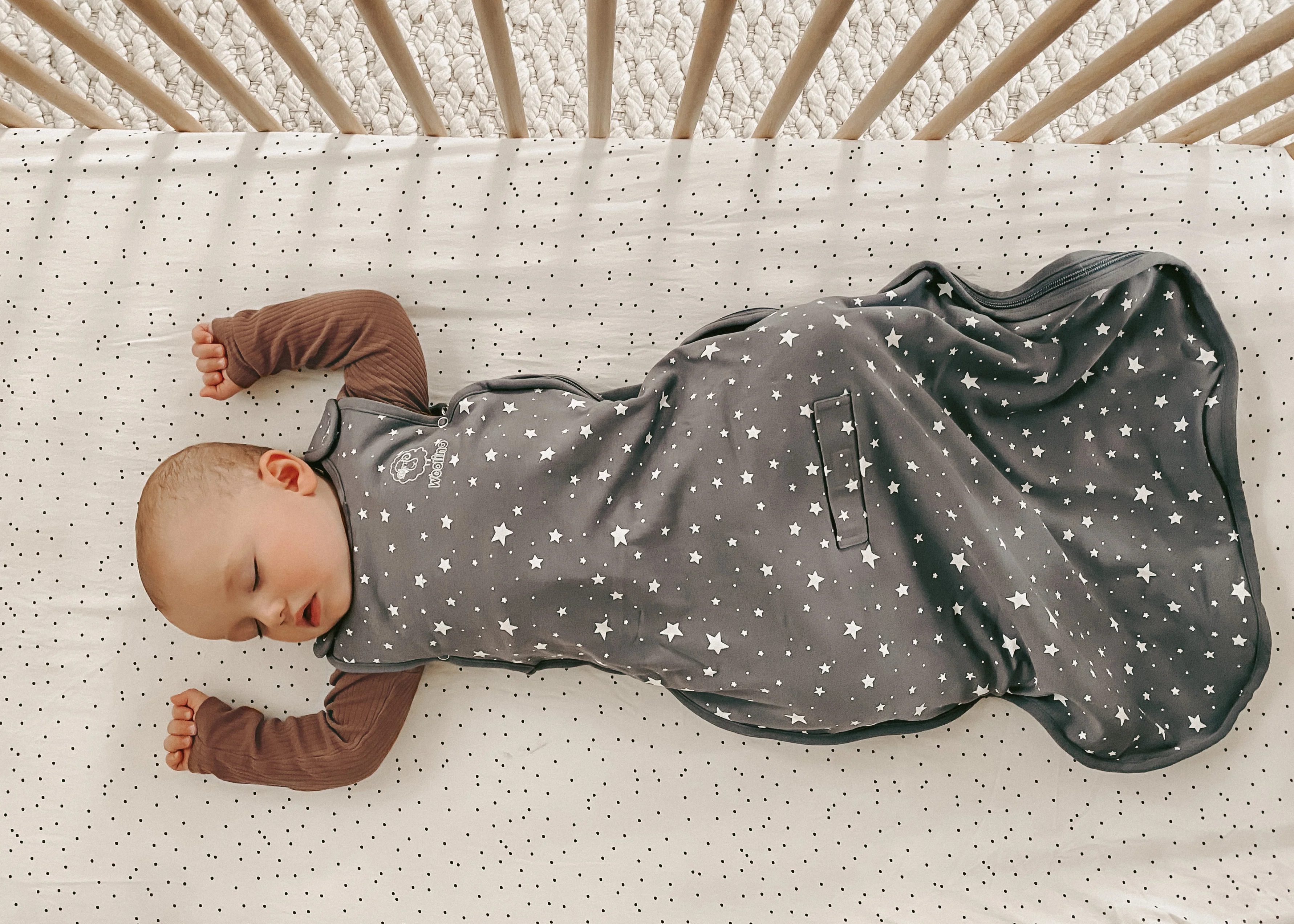
- Sleep layer: a sleep sack or wearable blanket
- Optional extra warmth: switching to warmer pajamas or a warmer sleep sack, rather than adding loose blankets
Swaddles and rolling
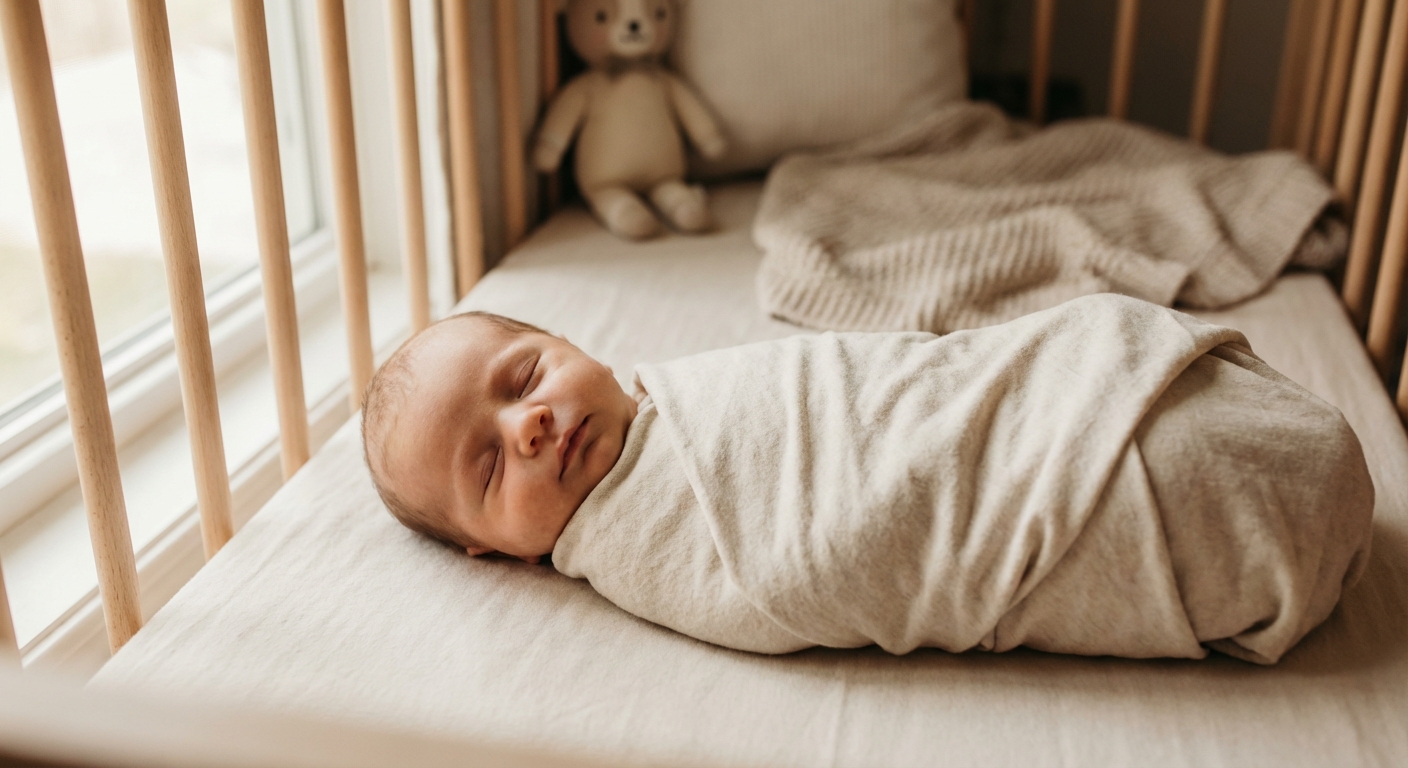
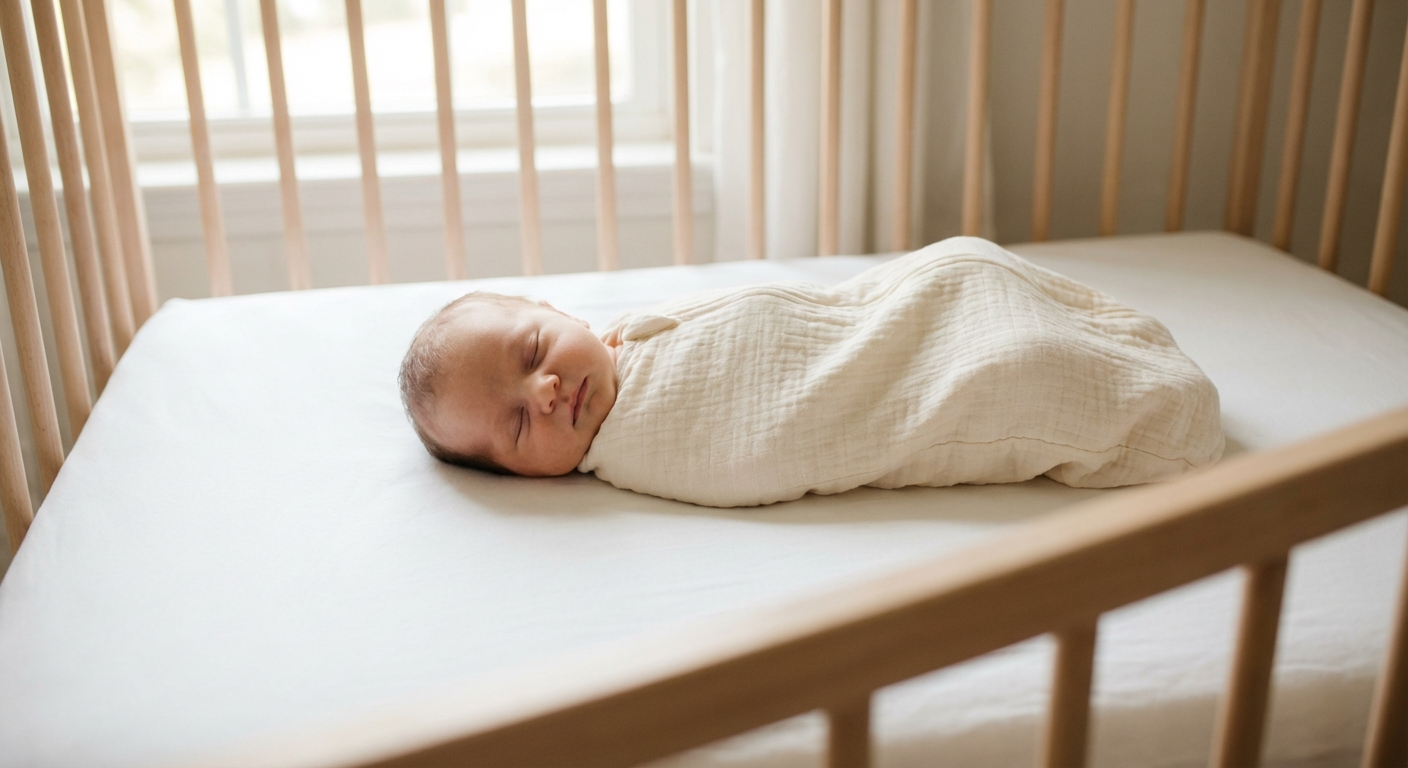
- Swaddling adds warmth. If you swaddle, you’ll usually need fewer clothing layers underneath.
- Stop swaddling when baby shows signs of rolling (often around 2 months, sometimes earlier). At that point, switch to an arms-free sleep sack or wearable blanket.
- Only use swaddle products designed for sleep, and follow the manufacturer’s directions. Avoid anything that compresses the chest beyond what the product intends.
What to avoid
- Loose blankets in the crib, even if tucked
- Hats or hoods during sleep indoors (they can increase overheating and can shift)
- Bulky layers that restrict movement or trap heat
- Aftermarket positioners or padding to “keep them cozy”
If your baby isn’t rolling yet, you may be tempted to add just a little blanket. I get it. But the safest warmth is worn, not loose.
Note: This guidance is for babies sleeping in a crib or bassinet on a flat surface. Blankets for older toddlers are a separate conversation, so ask your pediatrician if you’re unsure.
Quick examples
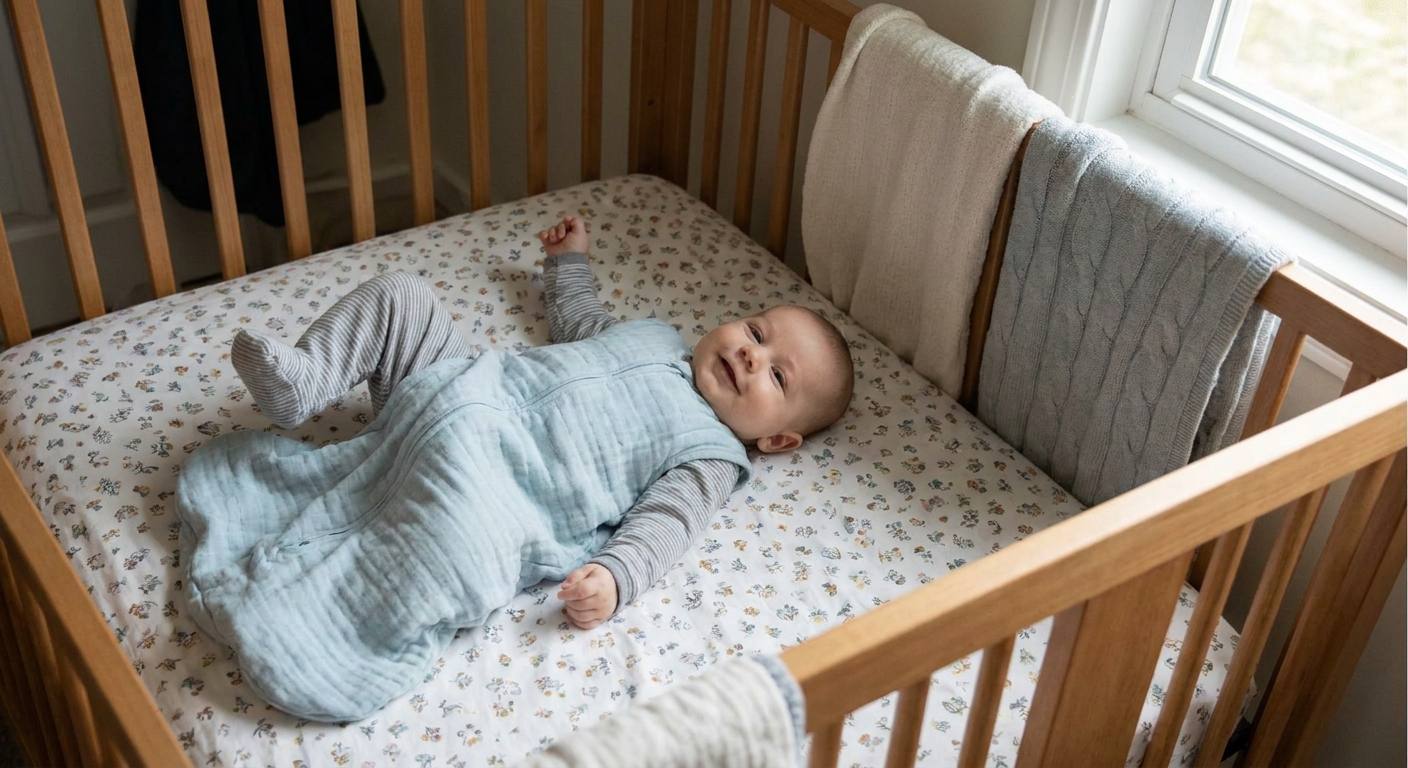
Because 3 AM math isn’t anyone’s strongest skill. Here are a few common setups, then adjust for your baby and your room.
- Room feels warm (mid 70s°F / about 24°C): light pajamas or a short-sleeve onesie plus a lightweight sleep sack, or pajamas alone if your baby runs warm.
- Room feels comfortable (upper 60s to low 70s°F / 20 to 22°C): cotton footed pajamas plus a light to moderate sleep sack.
- Room feels cool (mid 60s°F / about 18 to 19°C): long-sleeve pajamas plus a warmer sleep sack, or add a simple bodysuit under pajamas if needed.
These are starting points, not rules. Two babies in the same room can need different setups. My middle child ran hot like a tiny furnace. My youngest? Needed an extra layer in the same house. Both were normal.
Common traps
1) Judging by hands and feet
Cool hands are common. Check the chest or back of neck instead.
2) Over-correcting after one bad night
If baby woke frequently, it might be temperature, but it might also be hunger, gas, a developmental leap, or teething. Make one small change, then reassess.
3) Over-bundling in the car seat or stroller
Cars and strollers heat up fast. Dress in breathable layers and use the car’s climate control rather than adding thick covers. Avoid heavy, puffy outerwear in car seats for safety and fit reasons.
4) Using a heater to “fix” winter sleep
Heaters can create hot spots. A better strategy is a slightly warmer sleep sack and appropriate pajamas.
What to do if you think baby is overheating
- Cool the environment and remove one layer.
- Offer a feed if it’s time and baby is awake. Hydration matters, especially in warm weather.
- Recheck chest and neck after a few minutes.
- Rule out fever. If baby is under 3 months with a rectal temperature of 100.4°F (38°C) or higher, contact your pediatrician urgently.
Skip cold baths or aggressive cooling unless your clinician specifically instructs you. For most sleep-layer overheating, simply removing layers and cooling the room is enough.
How this fits with safe sleep
Think of temperature as one spoke in the safe-sleep wheel, not the whole bike.
- Back to sleep for every sleep
- Firm, flat sleep surface
- Room share, not bed share (per your pediatrician’s guidance)
- No loose bedding or soft items in the sleep space
- Avoid overheating and head covering
- Smoke-free environment
If you’re already following the safe-sleep basics and you adjust layers thoughtfully, you’re doing a lot right.
FAQ
Should my baby wear a hat to sleep?
Usually, no. Indoors, hats can contribute to overheating and can slip. Use appropriate clothing layers and a sleep sack instead.
Is it okay if my baby sweats a little?
Sweating during sleep is a sign you should reassess layers and room temperature. Some babies get slightly damp during a feed or when held, but a sweaty neck or damp hair during sleep is a “remove a layer” signal.
What if my baby feels cold?
Check the chest and upper back. If baby’s core feels cool, add one breathable layer or choose a warmer sleep sack. Avoid loose blankets.
Can I use a fan in the nursery?
Yes, as long as it’s safely placed and not blowing directly on baby. Gentle air circulation may help with comfort and may reduce overheating risk.
3 AM takeaway
If you only remember three things at 3 AM, make it these:
- Check the chest or back of neck, not hands.
- Aim for a comfortably cool room and adjust based on your actual temperature and baby’s cues.
- Warmth should be worn, not loose. Think pajamas plus sleep sack, not blankets.
You don’t need perfection. You need a safe setup, a quick check, and the confidence to adjust one layer at a time.
Sarah Mitchell
Sarah Mitchell is a Registered Pediatric Nurse and a mother of three who has spent over a decade helping families navigate the beautiful, chaotic early years of childhood. She combines evidence-based medical knowledge with real-world parenting experience to offer practical, compassionate advice. At Awesome Parent, Sarah's mission is to help exhausted parents find solutions, trust their instincts, and finally get some sleep.