A parent-friendly guide to common bites and stings, normal vs allergic reactions, tick removal, home treatment, antihistamines, prevention tips, and emergenc...
Jellyfish Stings: Fast First Aid for Kids at the Beach

Sarah Mitchell
Sarah Mitchell is a Registered Pediatric Nurse and a mother of three who has spent over a decade helping families navigate the beautiful, chaotic early years of childhood. She combines evidence-based medical knowledge with real-world parenting experience to offer practical, compassionate advice. At Awesome Parent, Sarah's mission is to help exhausted parents find solutions, trust their instincts, and finally get some sleep.
If you spend enough summers near the water, a jellyfish sting eventually shows up like an uninvited beach guest. The good news: most stings in kids are painful and dramatic, but very treatable with the right sequence. The tricky part is that the wrong rinse or the wrong “old beach trick” can make the sting worse.
Below is the quick plan I use as a pediatric nurse and mom, plus the details that help you decide whether this is a standard sting you can handle on the sand or a “we are done with the beach today” situation.
What a jellyfish sting usually looks like
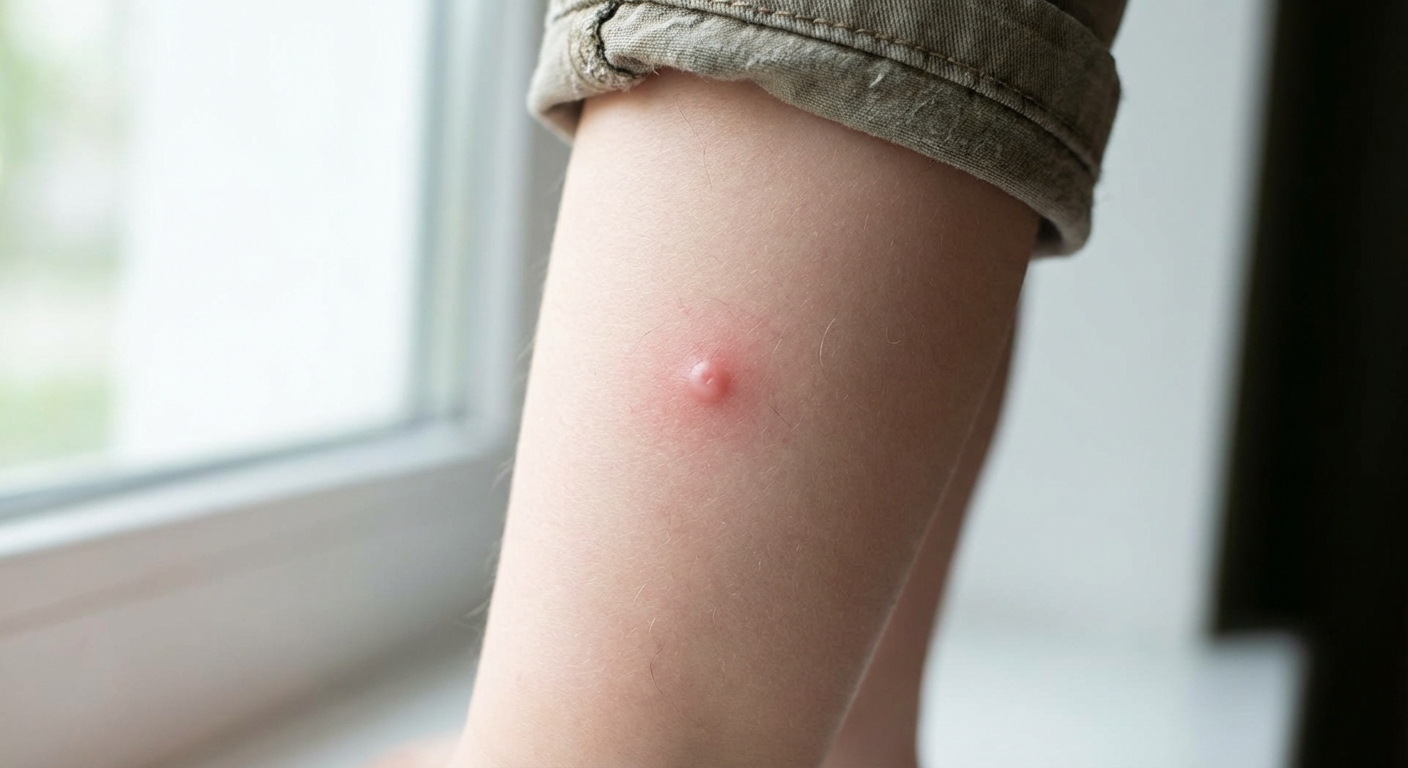
Most jellyfish stings cause immediate burning pain and red, raised lines where the tentacles touched. Kids often describe it as “on fire” or “like needles.” You might see:
- Whip-like red welts in curved or straight lines
- Swelling around the area
- Itching as it starts to calm down
- Small blisters later in the day
Many stings improve a lot within 30 to 90 minutes with good first aid, though redness and itch can linger for days.
First: quick safety check
Before you focus on the skin, do a quick head-to-toe scan (about 10 seconds). Call emergency services right away if you see:
- Trouble breathing, wheezing, repetitive coughing, or throat tightness
- Swelling of lips, tongue, or face
- Fainting, severe dizziness, or unusual sleepiness
- Widespread hives away from the sting area
- Vomiting that starts quickly after the sting
- Severe pain that is escalating fast, or a sting to the eye
These can signal a serious allergic reaction or a more dangerous envenomation. Most kids will not have this, but this is the part you do not “wait and see” on.
Important regional note: first aid is not one-size-fits-all. Some high-risk species (like box jellyfish in Australia, and Portuguese man o’ war in some regions) can have different best practices. If your beach has posted first aid signs or lifeguards on duty, follow local guidance.
Beach first aid sequence
If your child is stable and breathing comfortably, here is a commonly recommended sequence for many jellyfish stings that helps pain and lowers the chance of triggering more stinging cells.
Mini checklist (save this):
1) Out of water
2) Rinse gently (usually seawater)
3) Remove tentacles (gloves, towel, tweezers)
4) Heat for pain (warm to hot water, 20 minutes)
5) Pain meds if needed
6) Watch for red flags
Step 1: Get out of the water
Move to dry sand or a safe spot. If your child is panicking, they can swallow water or stumble, so this is a safety step, not just comfort.
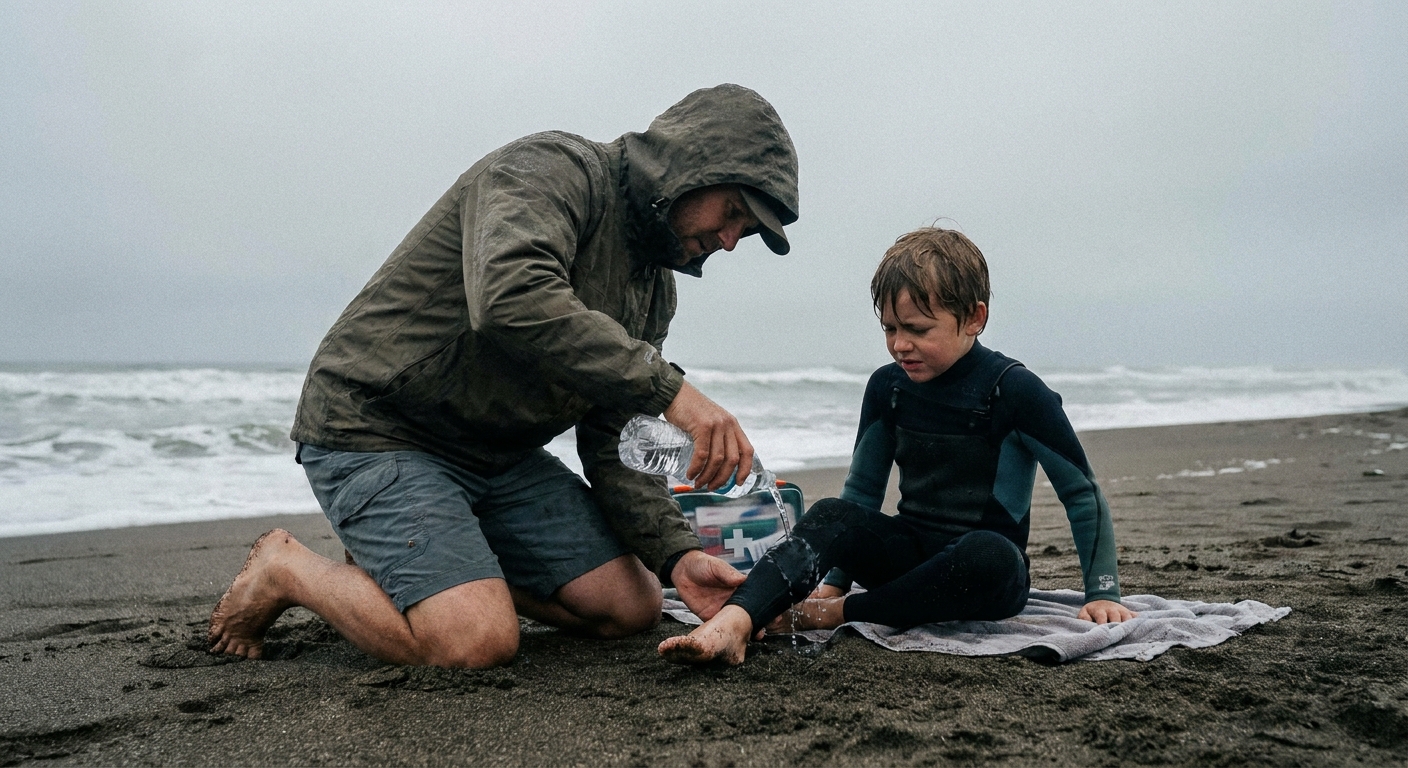
Step 2: Rinse gently (usually seawater)
Rinse the area gently with seawater to wash off any loose tentacles. Avoid forceful spraying.
- Avoid fresh water at the beach while tentacles are still present. Fresh water can trigger unfired stinging cells to release more venom in many species.
- Avoid alcohol or hydrogen peroxide on the sting.
If fresh water is all you have, the safest approach is still to avoid it until you have removed visible tentacles. Once tentacles are off, a gentle rinse at home is usually reasonable, just do not scrub.
What about vinegar? This is where location matters. In Australia, vinegar is widely recommended for suspected box jellyfish stings (and often for Irukandji risk) because it can help prevent more stinging cells from firing. In other regions and for other species, vinegar may not help and can worsen pain. If you do not know the species, use posted beach guidance or ask a lifeguard.
Step 3: Remove tentacles carefully
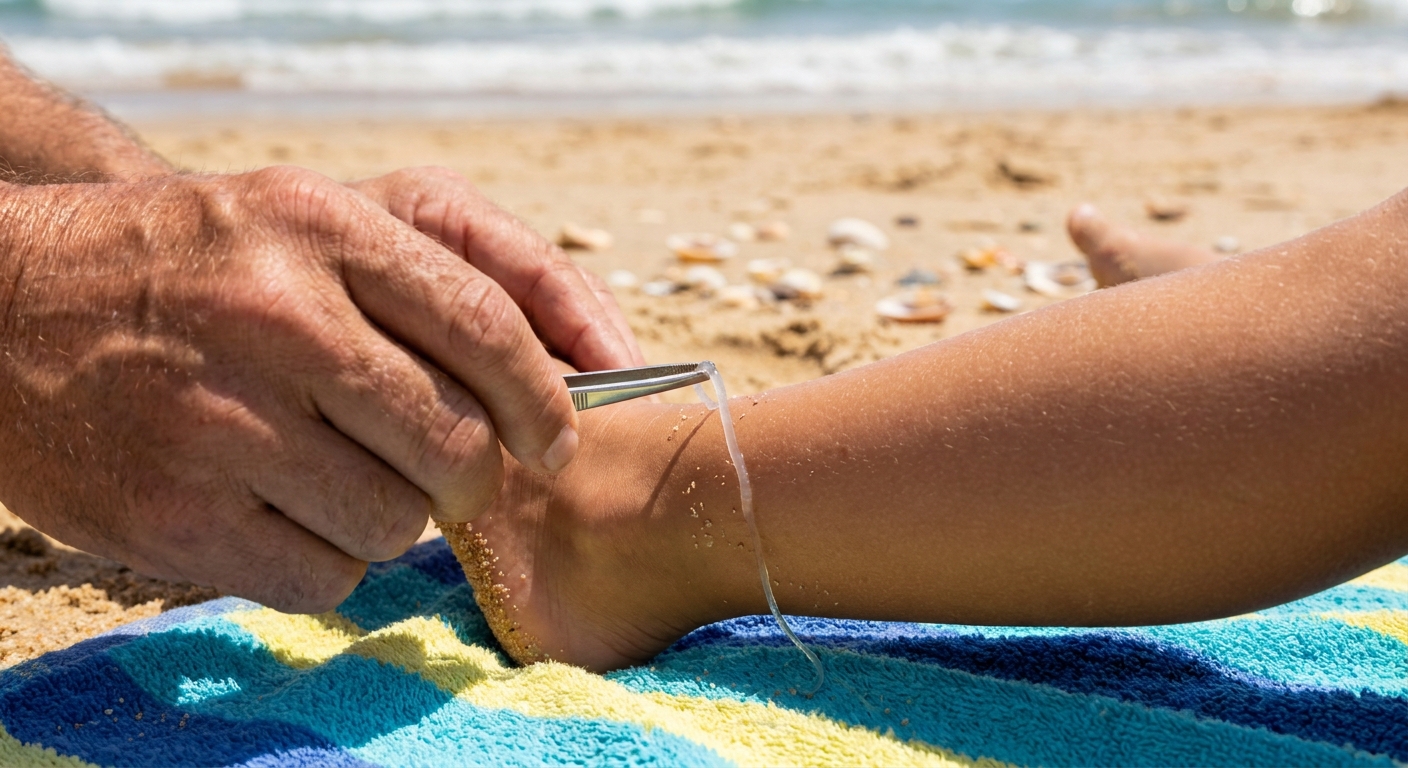
After rinsing (or after vinegar if local guidance says to use it), remove any visible tentacles:
- Use gloves if you have them, or a thick towel or cloth as a barrier.
- Lift or pluck tentacles off. Try not to rub.
- If you have tweezers, use them for small pieces.
Skip scraping with a credit card if you can. Scraping and rubbing can burst more stinging cells. If you must scrape because tentacles are stuck and you have nothing else, rinse first, use a very gentle edge, and stop once the obvious pieces are off.
Clothing tip: if the sting is under a swimsuit or rash guard, remove it as soon as you can and rinse the clothing separately. Tiny tentacle bits love seams.
Pain relief that works
Once tentacles are off, treat pain next. For many common jellyfish stings, heat is your best friend for pain relief.
Use heat after tentacle removal
Soak the area in hot water that is not scalding, or apply a hot pack. Aim for about 20 minutes, and repeat if pain returns.
- Target water temperature is often cited around 104 to 113°F (40 to 45°C), but the practical parent version is: as warm as your child can comfortably tolerate without burning.
- Test the water on your inner wrist first. Kids’ skin burns faster than adult skin.
On the beach, you can improvise with warm water from a thermos, a beach shower that runs warm, or a warmed wet towel.
I sometimes tell kids warm water “helps turn down the sting.” Clinically speaking, the goal is pain control. It does not erase what already happened, but it can make a big difference in how they feel.
Give age-appropriate medicine if needed
For pain, you can typically use:
- Ibuprofen (if your child is old enough and can take it safely)
- Acetaminophen
For itch later in the day or overnight, an oral antihistamine can help some kids. If you are unsure on dosing, use the label for weight-based dosing or check with your pediatrician.
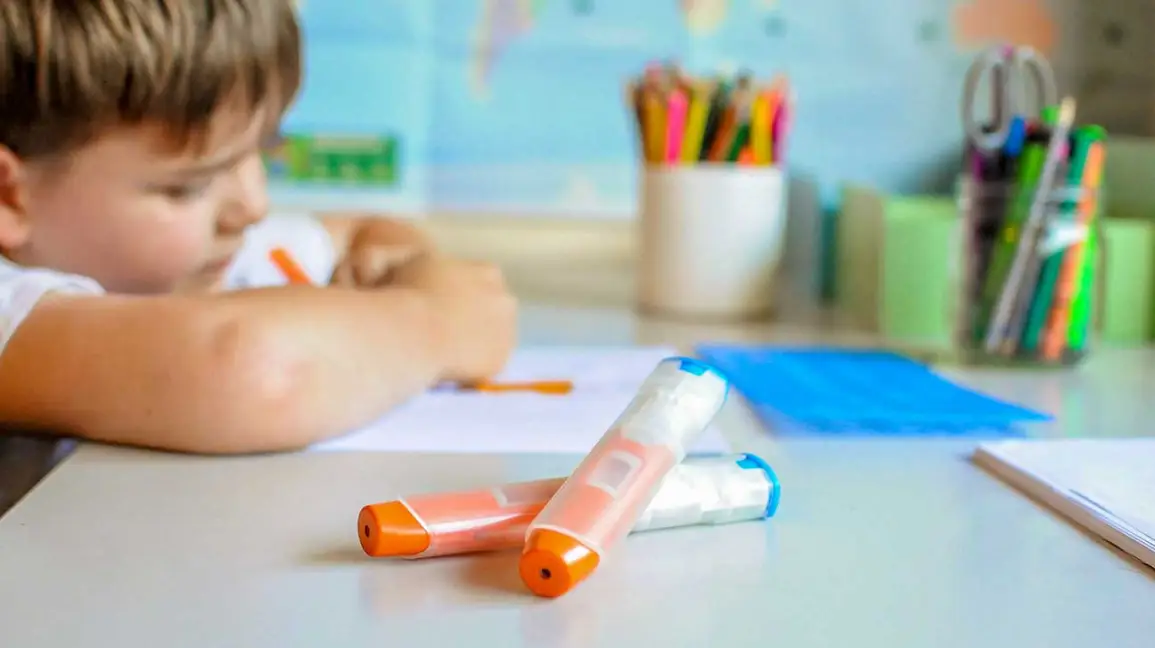
If your child has a history of anaphylaxis and carries epinephrine, use it if they have signs of a severe allergic reaction (trouble breathing, throat tightness, lip or tongue swelling, fainting), then call emergency services.
Cold packs are okay later
If heat is not available, a cool pack can take the edge off. When you can, switch to heat, since heat is more consistently helpful for venom-related pain.
Lingering tentacles
The “sting that keeps stinging” is often a tiny tentacle fragment still stuck to the skin, or trapped in a swimsuit seam.
Signs a tentacle is still there
- Pain that spikes again after improving
- New red lines extending beyond the original area
- A prickly sensation when the skin is touched or rubbed
How to check and clean at home
- Remove the swimsuit and rinse it separately.
- If you are still at the beach, rinse the skin gently with seawater. If you are home, a gentle rinse is fine, just avoid vigorous rubbing.
- Look closely in good light. Use tweezers for any visible fragments.
- Repeat hot water soaks for pain control.
If your child develops increasing redness that spreads, warmth, pus, or worsening tenderness over the next few days, that is less about venom and more about skin infection or an inflamed reaction. That is a good time to call your pediatrician.
Reef cuts vs stings
On coastal vacations, I see a lot of “I think it was a jellyfish” situations that are actually reef scrapes, coral cuts, or barnacle abrasions. They can burn, they can sting, and they can get infected.
Clues it is a jellyfish sting
- Immediate burning pain after swimming
- Linear, whip-like welts
- No obvious skin break at first, more of a raised rash
Clues it is a reef or coral cut
- You felt a scrape on rock, dock, or reef
- Broken skin, oozing, or embedded sand
- Pain is more like a sharp abrasion than a burning line
First aid for reef cuts
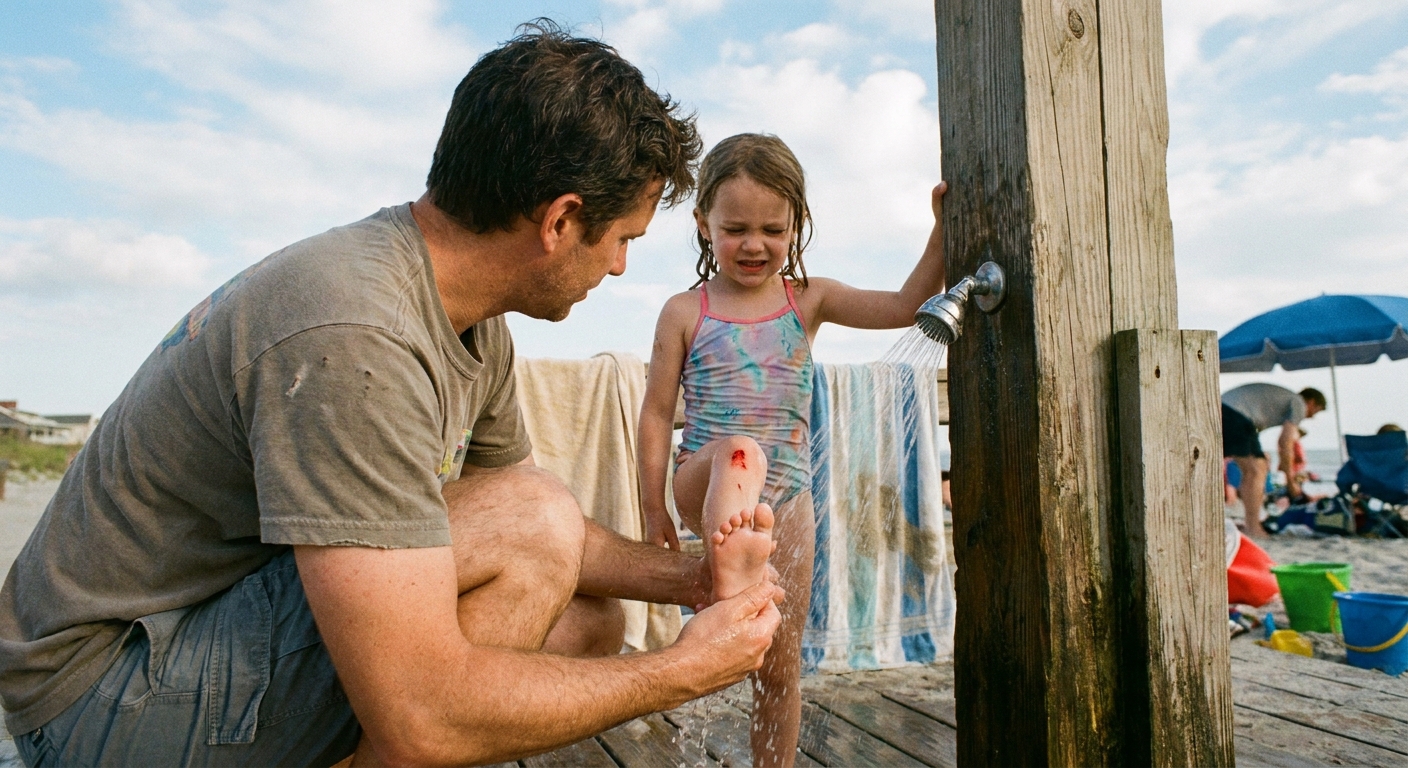
- Rinse with clean fresh water to remove sand and debris.
- Wash gently with soap and water.
- Control bleeding with gentle pressure.
- Apply a thin layer of antibiotic ointment if your child is not allergic and it has been okayed for them before, then cover with a clean bandage.
Reef cuts have a reputation for getting infected. If redness spreads, pain increases, or your child develops fever, seek medical care.
What not to do
These are the “please do not” items I wish I could gently confiscate from every beach bag. (Said with love.)
- Do not pee on it. It is unreliable and can worsen the sting.
- Do not rinse with fresh water while tentacles are still present.
- Do not rub with sand or a towel directly on the sting.
- Do not apply alcohol or hydrogen peroxide to the sting area.
- Do not use ice first as your main strategy if heat is available.
When to get medical care
Trust your gut here. If your child looks “off,” you do not need to win a parenting award for staying at the beach.
Go to the ER now if
- Any signs of breathing trouble, throat tightness, facial swelling, or fainting
- Sting to the eye or inside the mouth
- Severe, whole-limb pain that is not improving with heat and pain medicine
- Chest pain, severe headache, or muscle cramping
- Large area sting in a small child, or multiple stings
- You suspect a high-risk species for your region (follow local guidance and do not tough it out)
Get same-day advice if
- Pain is persistent beyond a couple of hours despite hot water and medication
- The sting site is on the face or genitals
- Your child has a history of severe allergies or anaphylaxis
- The rash is spreading far beyond the sting pattern
- There are signs of infection over the next few days (spreading redness, warmth, pus, fever)
If you are traveling, local lifeguards often know what species are currently in the water and what first aid is recommended in that region. They are an underrated resource.
What to pack
You do not need a tactical medical kit to handle most stings. A few smart items make it much easier to do the right steps quickly:
- Tweezers (dedicated to the beach bag)
- Disposable gloves
- Small instant hot pack or a thermos for warm water
- Ibuprofen and acetaminophen (child-appropriate)
- Oral antihistamine your child has used safely before
- Bandages and antibiotic ointment for reef cuts
- If your child has a prescribed epinephrine auto-injector, it comes to the beach. Always.
Calm script for kids
Kids feed off our energy. When I am trying to keep things steady, I use a simple script:
“I know it hurts. You are safe. We are going to rinse it, take off the sticky bits, and then use warm water to turn the pain down. I will stay right here.”
Is it magic? No. But it keeps you both moving through the steps instead of getting stuck in the pain spiral.
FAQ
How long does a jellyfish sting last in kids?
The intense pain often improves within 30 to 90 minutes with good first aid. Redness and itch can last several days, and the area may look irritated for a week.
Can my child go back in the water?
Once they are comfortable and you are sure no tentacles remain, it is usually safe, but I recommend taking a break. If jellyfish are present, stings can repeat quickly, and irritated skin is extra miserable in saltwater.
Should I cover the sting with a bandage?
Usually no. Let it breathe unless it is in an area that will rub and cause more irritation. If you do cover it, use a nonstick dressing.
Sarah Mitchell
Sarah Mitchell is a Registered Pediatric Nurse and a mother of three who has spent over a decade helping families navigate the beautiful, chaotic early years of childhood. She combines evidence-based medical knowledge with real-world parenting experience to offer practical, compassionate advice. At Awesome Parent, Sarah's mission is to help exhausted parents find solutions, trust their instincts, and finally get some sleep.