High fever, back or flank pain, vomiting, and lethargy can signal a kidney infection in children. Here’s how doctors test, treat, and when to seek urgent c...
Kidney Stones in Kids: Flank Pain and Blood in Urine

Sarah Mitchell
Sarah Mitchell is a Registered Pediatric Nurse and a mother of three who has spent over a decade helping families navigate the beautiful, chaotic early years of childhood. She combines evidence-based medical knowledge with real-world parenting experience to offer practical, compassionate advice. At Awesome Parent, Sarah's mission is to help exhausted parents find solutions, trust their instincts, and finally get some sleep.
If your child suddenly grabs their side, can’t get comfortable, and then you notice pink, red, or tea-colored urine, it is hard not to spiral. Kidney stones in kids are real, they can be very painful, and they can look a lot like other common problems like a UTI, constipation, or a stomach bug. Other conditions can also mimic this kind of pain, including appendicitis, testicular or ovarian torsion, and even pneumonia (especially if there is fever or cough). The good news: most kids do well with prompt evaluation and the right plan.
As a pediatric nurse, my goal is always the same: help you figure out what might be going on, what you can safely do right now, and when it is time to go in urgently.
What kidney stones feel like in children
Kidney stones are hard crystals that form in the kidneys and can move into the tube that drains urine (the ureter). That movement can trigger sudden, intense pain and irritation that leads to blood in the urine.
Common kidney stone symptoms in kids
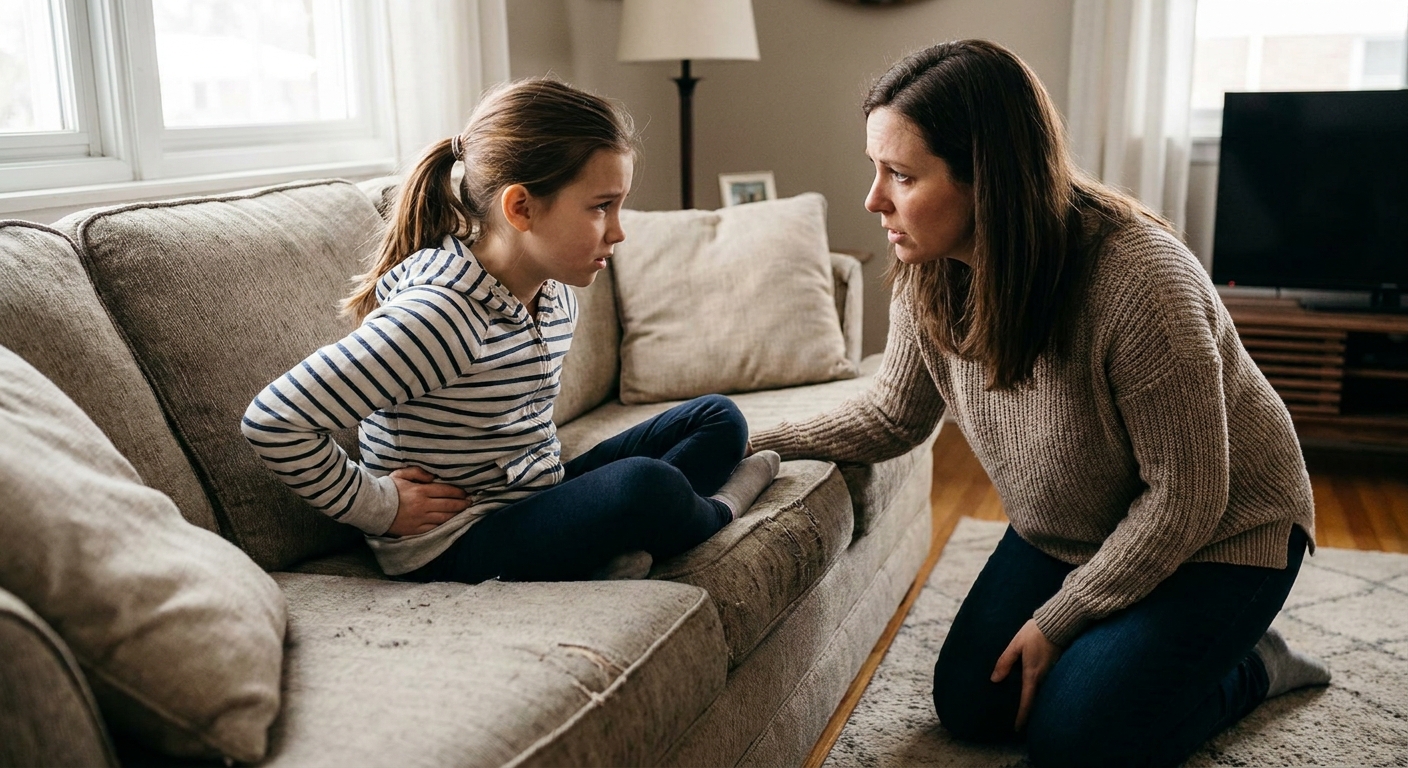
- Flank pain: pain on one side of the back, below the ribs. In kids it can also show up as belly pain or groin pain.
- Waves of pain: pain that comes and goes, often severe, with your child unable to find a comfortable position.
- Blood in the urine: pink, red, brown, or “tea-colored” urine. Sometimes you cannot see it, but a urine test picks it up.
- Nausea or vomiting: especially when pain spikes.
- Urinary urgency or frequency: feeling like they have to pee constantly, often with only small amounts.
- Pain with urination or lower belly discomfort (more common as the stone gets closer to the bladder).
Some kids have more subtle symptoms, especially younger children who cannot describe flank pain well.
In toddlers and preschoolers, you might see unexplained fussiness, guarding the belly, vomiting, or refusing to walk or move comfortably.
Kidney stones vs UTI vs “just a stomach bug”
These conditions overlap, so your instincts matter. Here are a few clues that help clinicians sort it out:
- Stone pain is often sudden, severe, and comes in waves. Kids may pace, curl up, or keep changing positions.
- UTI pain often centers around burning with urination, frequent urination, and lower belly discomfort. Fever can happen, and fever with back pain raises concern for a kidney infection.
- Stomach bug usually comes with diarrhea and more generalized crampy belly pain, and it tends to move through the family.
- Constipation can cause belly pain, decreased appetite, and even urinary urgency. A history of hard stools or skipping days is a big hint.
Because a kidney stone can block urine flow or occur alongside infection, it is not something to “watch for a week.” If you suspect it, call your pediatrician the same day.
What to do at home right now
If your child’s symptoms are mild, they are stable, and you are not seeing any red flags (we will cover those next), these basics can help while you arrange evaluation.
Hydration: helpful, but do not force it
Fluids help keep urine moving and can support stone passage. Offer small, frequent sips if your child is nauseated.
- Water is great. Oral rehydration solution is fine too if vomiting is present.
- Aim for pale yellow urine when possible.
- Do not push large amounts of fluid if your child is repeatedly vomiting or in severe pain. That is a sign to be seen urgently.
Safe pain relief basics
Kidney stone pain can be intense. For many kids, appropriate dosing of over-the-counter pain medicine makes a big difference.
- Ibuprofen can help with pain and inflammation if your child can drink normally and has no kidney disease and is not dehydrated. If your child is vomiting a lot, cannot keep fluids down, or is showing dehydration signs, skip NSAIDs and get urgent medical advice.
- Acetaminophen is another option and is often easier on the stomach.
- Use the dose on your child’s bottle label based on weight, or the dose your pediatrician has given you. If you are unsure, call and ask. Avoid “guesstimating” at 2 AM.
- Avoid aspirin in children unless specifically directed by a clinician.
Comfort measures that actually help
- Warmth: a warm bath or a heating pad on low (with supervision) can relax muscles and ease discomfort.
- Rest and positioning: your child may prefer curling on one side or switching positions often.
- Bring a urine sample if you can: if your child can pee into a clean container, clinicians may want a sample for testing. If your clinician asks you to strain the urine to catch a stone, follow their instructions.

When to call the pediatrician today
Contact your child’s pediatrician the same day if your child has any of the following:
- Flank or one-sided back pain, especially if it comes in waves
- Visible blood in the urine
- Urinary urgency, frequency, or pain with urination plus belly or back pain
- Repeated vomiting but still able to keep some fluids down
- A history of kidney stones, kidney abnormalities, or recurrent UTIs
Your pediatrician may recommend an office visit, urine testing, imaging, or referral depending on your child’s age, symptoms, and exam.
Go to the ER now: obstruction or infection red flags
These are the situations where we worry about a blocked urinary tract, a significant infection, or dehydration. Please seek emergency care now or call your local emergency number if needed.
ER signs you should not wait on
- Fever (especially with flank pain), chills, or your child looks very ill
- Severe pain that is not controlled with appropriate dosing of acetaminophen or ibuprofen
- Inability to keep fluids down or repeated vomiting with signs of dehydration (dry mouth, no tears, dizziness, very little urine)
- Not peeing or very minimal urine output
- Known single kidney, kidney disease, or prior urinary tract surgery and new severe symptoms
- Confusion, extreme sleepiness, or your child is hard to wake
- New severe abdominal swelling or a rigid, extremely tender belly
One of the most important combinations is fever plus flank pain. That can signal a kidney infection, and if a stone is also blocking urine flow, bacteria can get trapped behind the blockage. That is what clinicians mean by an infected, obstructing stone, and it can become an emergency quickly because it can lead to sepsis and kidney injury if not treated promptly.
How doctors diagnose kidney stones in kids
Most of the time, clinicians put the puzzle together using your child’s symptoms, an exam, urine testing, and imaging.
Tests you may see
- Urinalysis: looks for blood, signs of infection, and urine concentration.
- Urine culture: checks for bacterial growth if infection is suspected.
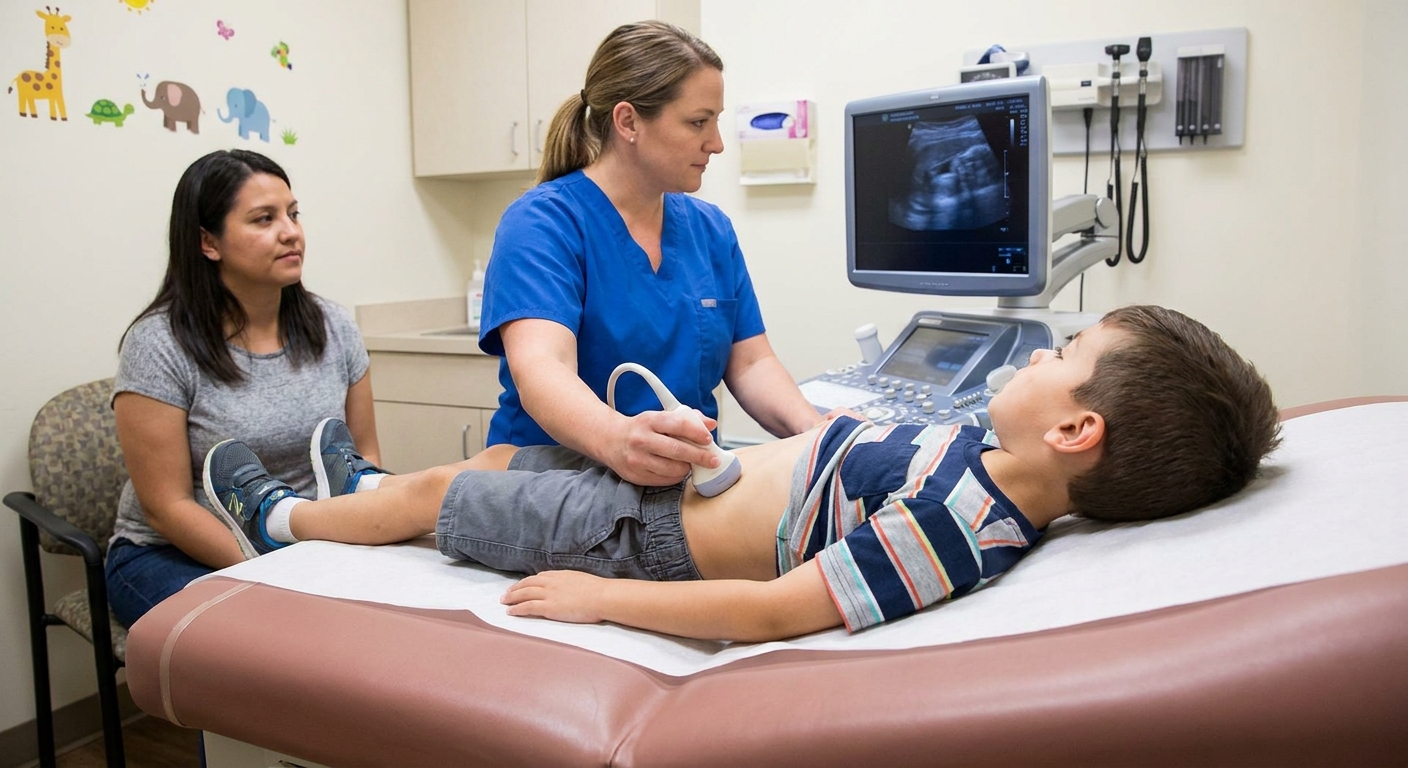
- Ultrasound: often the first imaging choice for kids because it avoids radiation and can detect many stones and swelling (hydronephrosis) from blockage. It can miss some ureteral stones, so a normal ultrasound does not always fully rule out a stone if symptoms strongly fit.
- CT scan: sometimes used if the diagnosis is unclear or symptoms are severe and ultrasound does not give enough information. Clinicians try to minimize radiation in children, so CT is not always first-line.
- Blood tests: may be used to assess kidney function, dehydration, or infection.
Treatment: what happens next
Treatment depends on the stone size, location, symptoms, and whether there is infection or obstruction.
How long does it take to pass a stone?
Stone passage can take days to weeks, depending on size and location. Pain often comes in waves, and it can feel better for a while and then spike again as the stone moves.
Re-check is important if symptoms are worsening, your child cannot stay hydrated, pain becomes unmanageable, or fever develops.
Many stones pass on their own
Small stones often pass with time, good hydration, and pain control. Your child may be asked to strain urine to catch the stone for analysis, which can guide prevention.
Medications
- Pain medicine: sometimes stronger prescription options are needed, especially early on.
- Anti-nausea medicine: can help kids drink and prevent dehydration.
- Antibiotics: only if infection is present or strongly suspected.
- Medical expulsive therapy: in some cases, clinicians use a medication (often tamsulosin) to help relax the ureter and improve passage. In children, this is not a do-it-yourself option and use varies by age and institution, so it should only be used under clinician direction.
When procedures are needed
If a stone is large, causes ongoing severe symptoms, blocks urine flow, or infection is involved, pediatric urology may recommend intervention.
Options can include extracorporeal shock wave lithotripsy (ESWL), removing it with a tiny scope (ureteroscopy), or placing a stent to help urine drain. Not every stone is a good ESWL candidate. The best choice depends on stone size, location, anatomy, and your child’s overall health.
When to see pediatric urology
Your pediatrician may refer your child to pediatric urology or pediatric nephrology (kidney specialist) in these situations:
- Stone that does not pass or symptoms that keep returning
- Stone large enough that spontaneous passage is unlikely
- Any stone with recurrent infections or significant obstruction
- Multiple stones or stones in both kidneys
- First stone in a very young child
- Family history of stones or suspected metabolic cause
- Abnormal kidney anatomy or history of urinary tract problems
After a first stone, many pediatric teams recommend a more formal prevention workup because kids have a longer lifetime risk of recurrence. That may include blood tests, urine studies (sometimes a 24-hour urine), stone analysis if it was collected, and a review of diet and fluid intake.
Prevention basics (without turning meals into a science project)
Not every stone is preventable, but a few habits really do lower risk.
Hydration is the biggest lever
Most kids who form stones need more fluid than they are currently getting. A practical goal is frequent pale yellow urine through the day.
- Send a water bottle to school and build in “water breaks.”
- Hydrate extra during sports, hot weather, and illness.
Do not automatically cut calcium
This surprises many parents. For many stone types, normal dietary calcium is protective. Restricting calcium without medical guidance can backfire and is not great for growing bones.
Be mindful with salt and ultra-processed foods
High sodium can increase calcium in the urine, raising stone risk. Aim for fewer salty snacks and more whole foods when you can.
Supplements: more is not always better
Ask your clinician before starting or megadosing supplements. In particular, high-dose vitamin C can increase oxalate levels in the urine for some people.
Talk to your clinician before making big diet changes
Some stones are related to oxalate, uric acid, cystine, or other factors. The prevention plan should match the stone type and your child’s labs, not a one-size-fits-all list from the internet at midnight.
Quick checklist: what to track for your visit
If you are heading to urgent care, the ER, or your pediatrician, this information helps:
- When the pain started and where it is located
- Whether the pain comes in waves or is constant
- Any visible blood in urine and what it looked like
- Fever readings and when you took them
- Vomiting frequency and what fluids stayed down
- Last time your child peed
- Any history of stones, UTIs, or kidney problems in the family
- What medications you gave, dose, and time
The bottom line
Kidney stones in kids can cause sudden flank or back pain, blood in the urine, nausea, and urinary urgency. Even mild cases deserve prompt medical evaluation.
Any fever, uncontrolled pain, dehydration, or trouble peeing is an urgent reason to go to the ER. You are not overreacting by getting help. With the right workup and follow-up, most children recover well and can lower their risk of repeat stones.
If you are unsure whether your child’s symptoms are “bad enough,” call your pediatrician or nurse line. In triage, we would much rather talk it through early than meet you later when everyone is exhausted and the pain has escalated.
Sarah Mitchell
Sarah Mitchell is a Registered Pediatric Nurse and a mother of three who has spent over a decade helping families navigate the beautiful, chaotic early years of childhood. She combines evidence-based medical knowledge with real-world parenting experience to offer practical, compassionate advice. At Awesome Parent, Sarah's mission is to help exhausted parents find solutions, trust their instincts, and finally get some sleep.