Itching, redness, or burning can come from irritation, not a UTI. Here’s what causes toddler vulvovaginitis, what helps at home, what not to do, and when t...
Labial Adhesions in Young Girls

Sarah Mitchell
Sarah Mitchell is a Registered Pediatric Nurse and a mother of three who has spent over a decade helping families navigate the beautiful, chaotic early years of childhood. She combines evidence-based medical knowledge with real-world parenting experience to offer practical, compassionate advice. At Awesome Parent, Sarah's mission is to help exhausted parents find solutions, trust their instincts, and finally get some sleep.
If you are reading this late at night after noticing that your little girl’s vaginal opening looks different than usual, take a breath. Labial adhesions are a common childhood finding, and in many cases they are painless, harmless, and treatable. They also tend to sound much scarier than they are.
Quick anatomy note (because the internet is confusing): the vulva is the external genital area you can see. The vagina is internal. Many parents use “vagina” to mean the whole area, and you are not alone.
As a pediatric nurse and a mom, I have seen this play out the same way over and over: a parent doing routine bath time help, a quick glance, then an instant spiral of worry. The goal here is to give you a clear picture of what labial adhesions are, what they are not, and when you actually need to do something.
One more important thing: this is educational information, not a diagnosis. If you are unsure what you’re seeing, your child’s clinician can usually confirm it with a quick external exam.

What are labial adhesions?
Labial adhesions (also called labial fusion) happen when the inner labia (the small inner lips of the vulva, also called the labia minora) partially or fully stick together. This can make the opening look partly covered by a thin, pale line of tissue.
This is most common in infants, toddlers, and preschool-aged girls. It tends to occur during the years when estrogen levels are naturally low. Add a little irritation from diapers, wiping, soap, or a recent rash and the delicate skin can heal “stuck” together.
What it usually looks like
- A thin, smooth, pale or grayish line between the inner labia
- A smaller-than-expected opening, sometimes with a tiny opening near the top
- Often no redness or swelling
- Usually not painful
Many parents find out about adhesions at a well visit when the clinician notices them during a routine exam.
A gentle reminder: photos online are not a reliable way to self-diagnose. Also, try not to repeatedly check or “test” the area. Frequent pulling and separating the tissue can cause more irritation and make adhesions more likely to persist.
Adhesions vs irritation
This is where a lot of anxiety comes from, because several different issues can cause changes in the vulvar area.
Labial adhesions
- Main feature: the inner labia look stuck together
- Often painless
- Skin usually looks smooth rather than raw
- May cause urine-related symptoms if the opening is very small
Irritation (dermatitis, “soap irritation”)
- Main feature: redness, dryness, or a rash on the outer skin
- Often itchy or uncomfortable
- Triggered by wipes, bubble bath, tight clothing, wet swimsuits, fragranced laundry products
Vulvovaginitis
- Main feature: redness and irritation, sometimes discharge or odor
- Can sting with urination
- Often related to hygiene issues (wiping back-to-front), irritants, constipation, or lingering moisture
Important note: in young girls, vulvovaginitis is commonly not a yeast infection. It is usually simple inflammation from irritation and moisture. That said, persistent discharge, bleeding, or significant pain always deserves a medical check.

Why do labial adhesions happen?
Most cases come down to two things working together:
- Low estrogen in early childhood: the tissues are thinner and more prone to sticking during healing.
- Local irritation: diaper rash, wiping friction, ammonia from urine, bubble bath, or vulvovaginitis can all inflame the area.
It is not caused by poor parenting. It is not caused by anything you did “wrong.” And in most cases, it is not a sign of abuse.
That said, if you have any concern for trauma (bruising, lacerations, swelling that does not make sense), your child reports someone touched them, or you notice bleeding you cannot explain, your child should be evaluated promptly. Trust your instincts and call your pediatrician.
Symptoms
Most labial adhesions are found accidentally and cause no symptoms. When symptoms happen, they tend to involve urine.
Possible signs
- Urine that seems to spray or go in an unusual direction
- Urine that dribbles after she stands up (urine can pool behind the adhesion)
- More dampness in underwear than expected
- Recurrent irritation after peeing
- Occasionally, urinary tract infections
Complete urinary blockage is rare, but if your child cannot pass urine, is crying in pain, or has a very distended lower belly, that is urgent.
Gentle hygiene
Whether your child has a small adhesion or you are trying to prevent irritation that can contribute to one, the theme is the same: protect delicate skin and avoid over-cleaning.
Do
- Use plain warm water for routine cleaning.
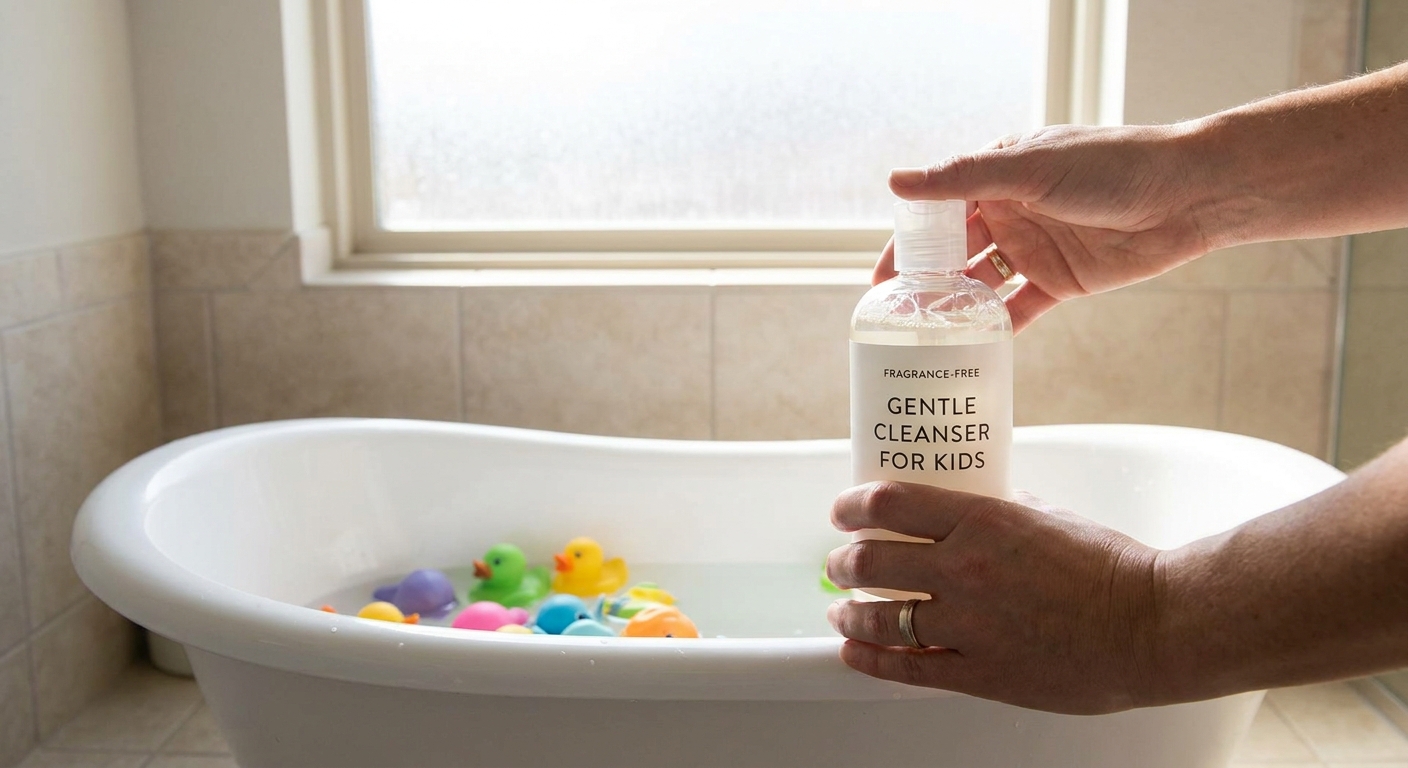
- If you use soap, choose a mild, fragrance-free cleanser and keep it on the outside only.
- Pat dry instead of rubbing.
- Use a thin layer of plain petroleum jelly (or another simple barrier ointment) on irritated outer skin as needed.
- Choose loose, breathable cotton underwear and clothing.
- Change out of wet swimsuits quickly.
- Treat constipation, since straining and stool leakage can worsen vulvar irritation.
Don’t
- Do not use bubble bath, bath bombs, or fragranced soaps in the bath water.
- Do not scrub the vulva or use wipes aggressively.
- Do not try to “pull it apart” with a finger, cotton swab, or Q-tip. This can tear the tissue, hurt, and make scarring and re-adhesion more likely.
- Do not put over-the-counter yeast cream on it unless your clinician specifically recommends it.
When to call the pediatrician
Even though many adhesions are harmless, it is worth letting your child’s pediatrician know, especially if you are not sure what you are seeing. A quick external exam is usually all it takes to confirm the diagnosis.
Make an appointment soon if
- You think the labia are stuck together, even if she has no symptoms
- Your child has urine spraying, dribbling, or frequent dampness
- There is ongoing redness or itching that is not improving with gentle care
- You notice recurrent vulvar irritation or possible UTIs
Seek urgent care now if
- Your child cannot urinate, has very little urine output, or seems to be retaining urine
- There is significant pain, fever, or signs of a urinary tract infection (pain with peeing, belly pain, new accidents, foul-smelling urine)
- You see bleeding, a foreign body concern, severe swelling, or signs of injury
If you are ever uneasy about what you are seeing, that is enough reason to call. You do not need to wait until things are “bad.”
How they are diagnosed
Diagnosis is typically made by a clinician with a simple visual exam of the external genital area. No internal exam is needed.
If your child has urinary symptoms, the pediatrician might also:
- Check a urine sample for infection
- Ask about constipation and wiping habits
In my clinic days, the most helpful thing parents brought was not a perfect description. It was their observations: “Her pee is spraying sideways,” or “She stays damp for an hour after she pees.” That information guides treatment.
Do they need treatment?
Not always. Many mild adhesions separate on their own as children get older and estrogen levels rise, especially if you reduce irritation and protect the skin.
Common approaches
1) Watchful waiting plus gentle hygiene
Often recommended when the adhesion is small and your child has no symptoms.
2) Barrier ointment
A clinician may suggest applying petroleum jelly to reduce friction and help prevent re-adhesion, especially if there has been irritation.
3) Prescription estrogen cream
If the adhesion is more significant or causing urinary symptoms, many pediatricians prescribe a small amount of topical estrogen cream for a short course. This helps the tissue mature and separate more easily.
4) Prescription steroid cream
Some clinicians use a topical steroid (such as betamethasone) instead of or after estrogen, depending on the case and local practice.
5) In-office separation
This is rarely needed and usually reserved for significant symptoms, recurrent problems despite medication, or very small openings that affect urination. It should only be done by an experienced clinician with appropriate pain control. It is not a DIY project.
What you should expect: even when creams work beautifully, adhesions can recur until a child is older. Recurrence is common and not a sign you failed.
Cream treatment
If your pediatrician recommends a cream, they will show you where and how to apply it. Usually the goal is to apply a tiny amount along the adhesion line, not to coat the entire area. The smallest effective amount is the goal.
If estrogen cream is prescribed
- Typical course: often a few weeks, sometimes followed by barrier ointment to prevent re-sticking
- Possible temporary side effects (uncommon and dose-dependent): mild breast budding or nipple darkening, slight vulvar pigmentation, or local irritation
- Good news: these effects generally fade after stopping the medication
Call your clinician if you notice significant irritation, new bleeding, or anything that worries you. Most kids do very well with careful use and follow-up.
At-home care
- Keep baths simple: warm water, quick wash, rinse well.
- Wipe gently: front-to-back, with minimal passes.
- Air time helps: a little diaper-free time for toddlers can reduce moisture and irritation.
- Address triggers: constipation, harsh soaps, wet swimsuits, tight leggings.
After separation
If the adhesion separates (on its own or with treatment), many clinicians recommend a barrier ointment to reduce re-sticking while the tissue heals. Follow your child’s plan, but it is commonly used daily for several weeks or longer if advised, along with avoiding irritants.
If you are using a prescription cream, follow your clinician’s plan closely and do not extend the course on your own.
Puberty and fertility
In typical childhood labial adhesions, the outlook is excellent. Adhesions usually resolve with time, gentle care, and treatment when needed. They do not affect fertility.
Once estrogen rises later in childhood and at puberty, the tissue becomes thicker and less likely to stick. That is why this issue is so strongly tied to toddler and preschool years.
Quick reassurance
- Labial adhesions are common and usually painless.
- They are often found incidentally and may not need treatment.
- Do not try to separate them at home.
- Gentle hygiene and avoiding irritants matter more than “extra cleaning.”
- Call your pediatrician if there are urinary symptoms, recurrent irritation, or you are unsure what you are seeing.
If you are feeling anxious, you are not overreacting. You are paying attention to your child. This is exactly the kind of concern pediatricians handle all the time, and a quick visit can turn a scary late-night search into a clear plan.