
How intussusception often shows up: sudden crampy episodes, drawing up legs, pallor, bilious vomiting, and concerning stool changes. Clear ER triggers and wh...
Malrotation and Volvulus in Babies: Red Flags

Sarah Mitchell
Sarah Mitchell is a Registered Pediatric Nurse and a mother of three who has spent over a decade helping families navigate the beautiful, chaotic early years of childhood. She combines evidence-based medical knowledge with real-world parenting experience to offer practical, compassionate advice. At Awesome Parent, Sarah's mission is to help exhausted parents find solutions, trust their instincts, and finally get some sleep.
If you have ever Googled “baby vomiting green” at 2:47 AM, you are not alone. Most baby spit-up is annoying but harmless. Some vomiting is a stomach bug. But there is one scenario where I want you to stop scrolling and act: green (bilious) vomiting, especially with belly pain or blood in the stool.
This article is about intestinal malrotation and volvulus in babies, a true surgical emergency. I am going to be direct and calm here, because when it comes to a twisted intestine, time matters.
Quick note: This is general education, not personal medical advice. If you think your baby is seriously ill, trust your instincts and seek urgent care right away. If your baby is limp, very hard to wake, having trouble breathing, or turning blue or gray, call your local emergency number.

What are malrotation and volvulus?
During pregnancy, a baby’s intestines normally rotate and settle into the right position inside the belly. Malrotation means the intestines did not rotate into the usual arrangement.
Some babies with malrotation never have a problem. But malrotation can leave the intestines more likely to twist around themselves. That twisting is called volvulus.
When volvulus happens, it can:
- Block food and fluid from moving through
- Cut off blood flow to part of the intestine
And that second part is why doctors treat this like a race. Intestine without blood flow can become injured quickly.
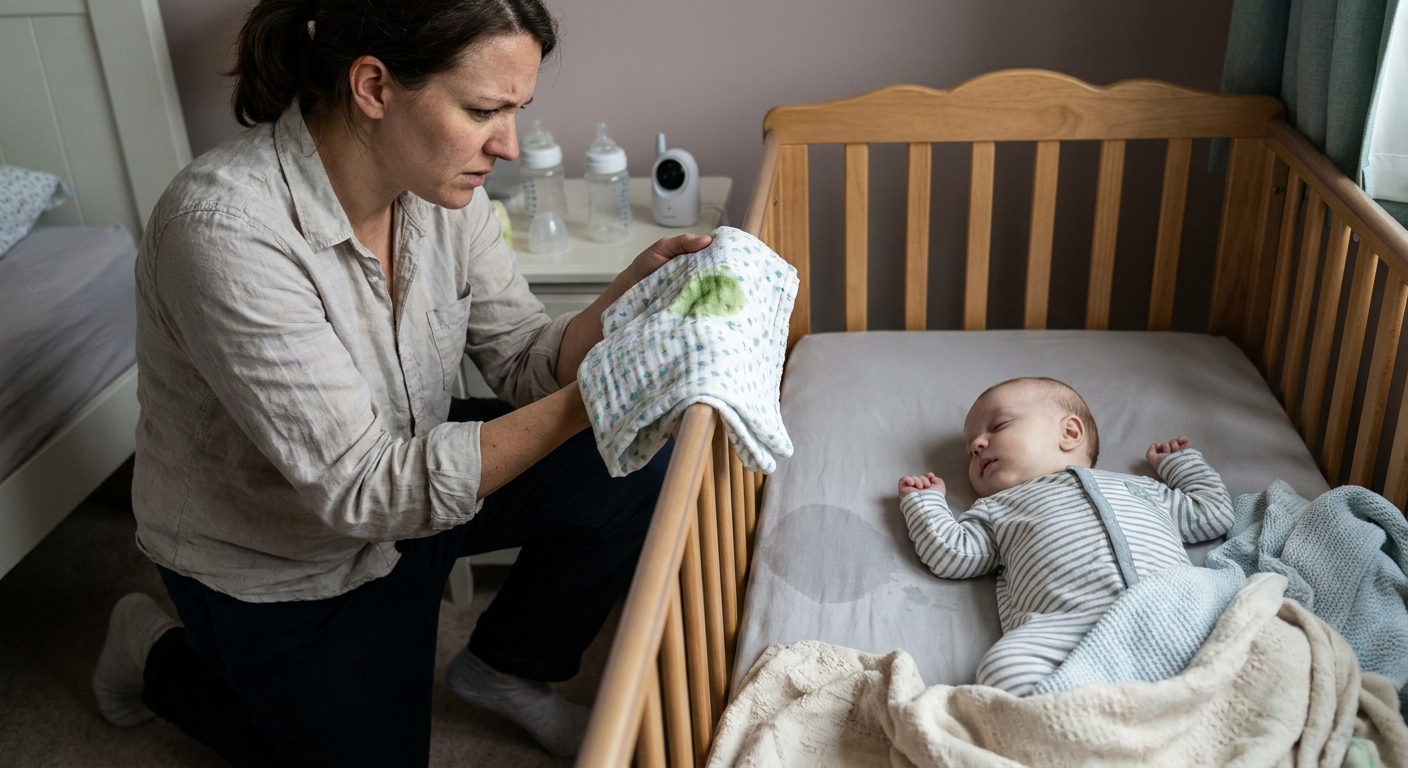
The biggest red flag: bilious (green) vomiting
Parents often tell me, “It looked kind of yellow-green.” That matters.
Bilious vomiting is vomiting that is green or clearly yellow-green from bile. Bile is digestive fluid that enters the intestine just past the stomach. So when bile shows up in vomit, it can be a clue that something is blocking the intestines beyond the stomach.
In infants, bilious vomiting is treated as an emergency until proven otherwise, because it can signal an intestinal blockage like volvulus.
Newborn note: In a newborn, any green or clearly yellow-green vomit is an immediate ER concern, even if your baby otherwise seems okay.
What bilious vomit can look like
- Bright green (classic)
- Neon yellow-green
- Sometimes “lime” colored
If your baby vomits and you are unsure about the color, take a quick photo in good light. In the ER, that can genuinely help.
Other warning signs parents notice
Volvulus can show up in the newborn period, but it can also happen later in infancy and childhood. Symptoms can come on suddenly.
- Sudden vomiting, especially repeated episodes
- Belly pain or severe fussiness, often in waves (baby draws knees up, cries intensely)
- Belly swelling or a belly that seems unusually firm
- Blood in stool (especially with mucus)
- Pale, sweaty, or lethargic behavior (hard to wake, too weak to feed)
- Refusing feeds
- Fewer wet diapers, dry mouth, no tears
- No poop or no gas (this can happen with obstruction, but it is not always present)
Not every baby has every symptom. The combination of green vomit plus pain is especially concerning.
Bloody stool: what it can mean
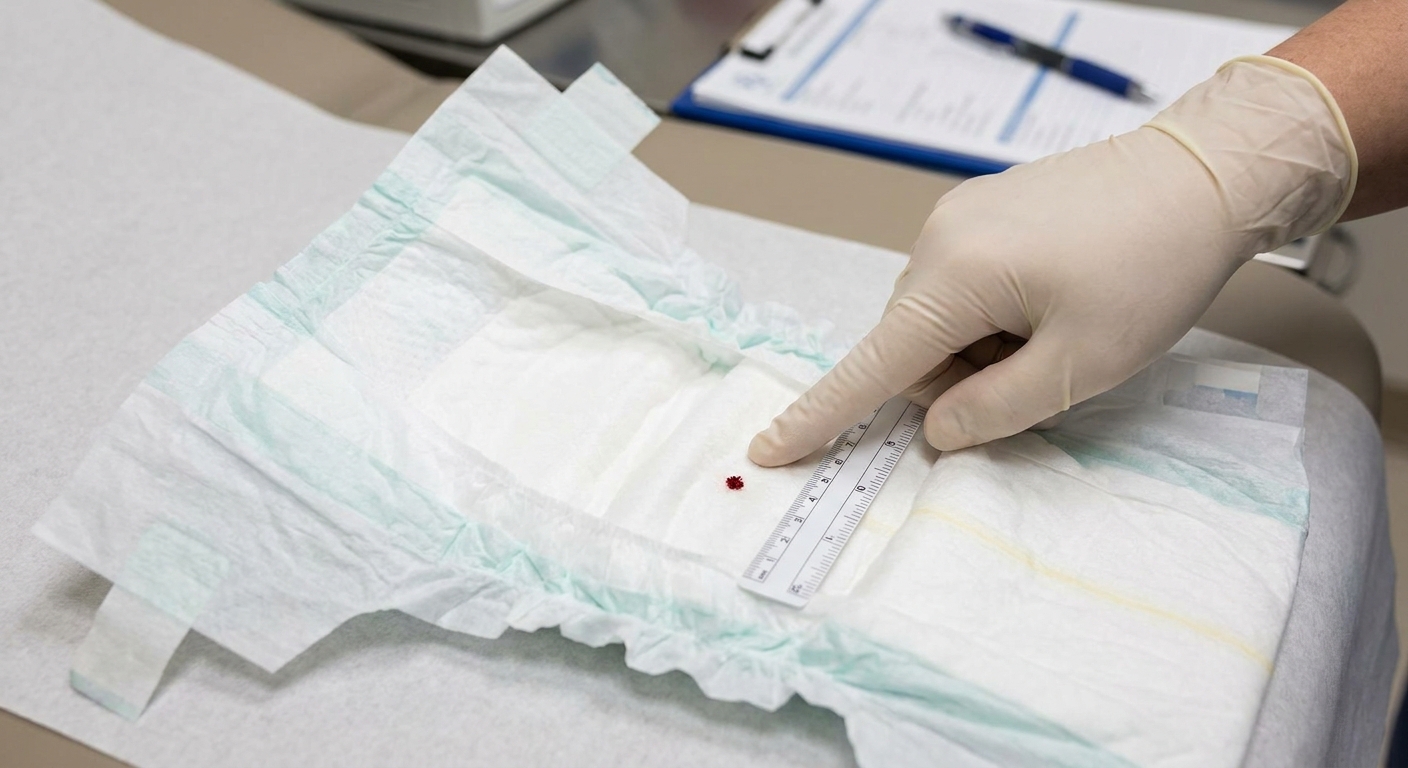
Blood in a diaper is always worth a call. Sometimes it is from a small anal fissure (a tiny tear from constipation). But with volvulus, blood can appear because the intestine is under stress or losing blood flow.
Stool may look like:
- Bright red streaks mixed with mucus
- Dark red or maroon
- Blood and mucus that can look jelly-like
One important nuance: the classic phrase “currant jelly stool” is more often taught with intussusception (another emergency where part of the intestine slides into itself). Volvulus can also cause bloody stools, but the takeaway is the same. Blood in stool plus vomiting, belly swelling, or significant pain needs urgent evaluation.
Reflux vs bug vs obstruction
As a pediatric nurse and a mom, I know the mental spiral: “Is this just spit-up? Did daycare bring home another virus? Am I overreacting?” Here is a practical comparison.
Reflux (common)
- Spit-up is usually milky or curdled
- Baby often seems comfortable or only mildly fussy
- Weight gain is usually okay
- No severe belly swelling
- No bilious (green) vomit
Stomach bug (gastroenteritis)
- Vomiting can be frequent, sometimes with diarrhea
- Often there are sick contacts in the house
- Vomiting may be yellow, food-filled, or clear
- Baby may still have periods of normal play between episodes
- Green or clearly yellow-green vomit is not typical, especially in a young infant
Possible obstruction (like volvulus)
- Bilious (green or clearly yellow-green) vomit
- Baby looks increasingly uncomfortable or unusually sleepy
- Belly may become distended
- May have bloody stools
- May have no poop or no gas
- Symptoms can escalate quickly
Yes, some stomach bugs can make a child vomit hard and look miserable. But bilious (green) vomiting in a baby is the moment to shift from “watch and wait” to “we are going in.”
Why time matters
When the intestine twists, blood flow can be squeezed off like a kinked garden hose. Without blood flow, tissue can be damaged, and that can become life-threatening.
This is why clinicians take bilious vomiting seriously even if your baby had one episode and then seems calmer. Waiting “to see if it happens again” can cost precious time.
If your baby has green or clearly yellow-green vomiting, treat it like an emergency until a doctor tells you it is not.
Go to the ER now
If you see any of the signs below, go to the nearest emergency department or call emergency services right away. Do not drive yourself if your baby is very sleepy, limp, or having trouble breathing.
- Bilious (green or clearly yellow-green) vomiting, especially repeated vomiting
- Vomiting with a swollen or hard belly
- Blood in stool with vomiting or belly pain
- Severe, persistent crying or pain that comes in waves
- Baby is difficult to wake, unusually floppy, or not responding normally
- Blue or gray color around lips or face, or trouble breathing
- Signs of shock: cold clammy skin, very fast breathing, extreme weakness
If you are calling a nurse line or your pediatrician after hours, use clear words: “My baby had green vomit.” That phrase gets attention for a reason.
What to expect at the hospital
Knowing the steps can make this slightly less terrifying.
- Quick assessment: vital signs, belly exam, hydration check
- IV fluids if dehydrated or vomiting repeatedly
- Imaging: many hospitals start with an abdominal X-ray. If malrotation or volvulus is a concern, an upper GI series is often the key test to evaluate malrotation. Ultrasound may also be used in some centers (for example, looking for specific blood vessel patterns or twisting signs).
- Surgery consult right away if volvulus is suspected
Treatment depends on what they find. If volvulus is present, surgery is usually needed urgently to untwist the intestine and prevent further injury.
While you are waiting, your baby may be kept NPO, meaning no feeds by mouth, to reduce vomiting and prepare for possible surgery.
Other causes of bilious vomiting
Malrotation with volvulus is a big one we worry about, but it is not the only cause of bilious vomiting in babies. Other urgent causes of intestinal blockage can include things like:
- Duodenal narrowing or blockage (atresia or stenosis)
- Incarcerated hernia
- Meconium-related blockage in newborns
- Hirschsprung-associated enterocolitis
- Intussusception
You do not need to sort these out at home. The action step is the same: bilious vomiting needs urgent medical evaluation.
Common parent questions
Can malrotation be present without symptoms?
Yes. Some children have malrotation and never know it. The emergency happens when twisting (volvulus) occurs or when bands of tissue cause obstruction.
My baby spit up yellow. Is that bile?
Milk plus stomach acid can look yellow. Bile is typically green or clearly yellow-green. If you are uncertain and your baby is young, vomiting forcefully, in pain, or not acting right, it is safest to be seen urgently.
What about a tiny streak of blood in stool?
A small streak with a hard stool can be a fissure. But blood plus vomiting, belly swelling, or severe fussiness should be treated as urgent.
Can this happen after a normal day?
Unfortunately, yes. Volvulus can come on suddenly.
What you can do right now
- Pause feeds if your baby is actively vomiting and you are heading to urgent care or the ER. Once you are being evaluated, follow the clinician’s guidance on when to restart feeds.
- Take a photo of the vomit or diaper if possible. It sounds odd, but it helps.
- Note timing: when symptoms started, how many vomits, wet diapers, and whether belly looks different.
- Trust your gut. If your baby looks “off,” you do not need permission to get help.
Bottom line
Most baby vomiting is not an emergency. But green (bilious) vomiting, especially with belly pain, belly swelling, not passing stool or gas, or blood in the stool, is different. Malrotation with volvulus is rare, but it is exactly the kind of rare problem we do not want to miss.
If you are seeing these red flags, you are not overreacting. You are doing the right thing by acting quickly.
Sarah Mitchell
Sarah Mitchell is a Registered Pediatric Nurse and a mother of three who has spent over a decade helping families navigate the beautiful, chaotic early years of childhood. She combines evidence-based medical knowledge with real-world parenting experience to offer practical, compassionate advice. At Awesome Parent, Sarah's mission is to help exhausted parents find solutions, trust their instincts, and finally get some sleep.