Meningitis Symptoms in Babies and Toddlers

Sarah Mitchell
Sarah Mitchell is a Registered Pediatric Nurse and a mother of three who has spent over a decade helping families navigate the beautiful, chaotic early years of childhood. She combines evidence-based medical knowledge with real-world parenting experience to offer practical, compassionate advice. At Awesome Parent, Sarah's mission is to help exhausted parents find solutions, trust their instincts, and finally get some sleep.
If you are reading this at an unholy hour with a feverish baby on your chest, I want you to hear this first: you are not overreacting for wondering about meningitis. Meningitis can be serious, and it can move quickly. Most fevers and cranky days are not meningitis, but the goal is to recognize the red flags early and get help fast when it matters.
This guide walks through what meningitis can look like in babies and toddlers, what is actually helpful to watch for at home, and the clear thresholds for when to go to the ER. (And yes, the same emergency red flags apply to older kids too, even if they can describe symptoms more clearly.)

What meningitis is, in plain language
Meningitis is inflammation of the lining around the brain and spinal cord. It is usually caused by a virus or bacteria.
- Viral meningitis is more common and often less severe, but it can still make kids very sick.
- Bacterial meningitis is less common thanks to vaccines, but it is a medical emergency and needs treatment right away.
The tricky part is that early symptoms can look like a lot of “normal” childhood illnesses at first. What raises concern is the pattern, the speed of change, and certain neurologic signs.
Go to the ER now: non-negotiable signs
If your baby or toddler has any of the signs below, treat it as an emergency and go to the ER or call emergency services. Trust your gut, especially if your child looks or acts “not right.”
- Hard to wake, unusually sleepy, limp, or not making eye contact the way they normally do
- Breathing trouble, grunting, pauses in breathing, or turning blue or gray
- Seizure, especially a first-time seizure, a seizure lasting more than 5 minutes, repeated seizures, or a child who is not returning to their usual self afterward (even if there is a fever)
- Neck stiffness or severe neck pain: holding the head very still, refusing to move the neck, or seeming in significant pain with movement (do not try to force a neck exam at home)
- Bulging soft spot (fontanelle) in a young infant that is persistent when they are calm and upright
- Severe headache plus fever, vomiting, confusion, or light sensitivity (more common in older toddlers and kids)
- New rash that looks like tiny purple or red dots or bruised patches that do not fade when pressed, especially with fever or a very ill-appearing child
- High fever in a young baby: any fever 100.4°F (38°C) or higher in a baby under 3 months needs urgent, same-day medical evaluation. In many places that means the ER, especially for newborns under 28 days, but follow local guidance and do not wait.
- Persistent vomiting with worsening lethargy, severe irritability, or signs of dehydration
Parent reality check: If your child is getting worse over hours, not days, do not wait for “morning to see.” Meningitis is one of the reasons pediatric nurses can sound repetitive about not delaying care.
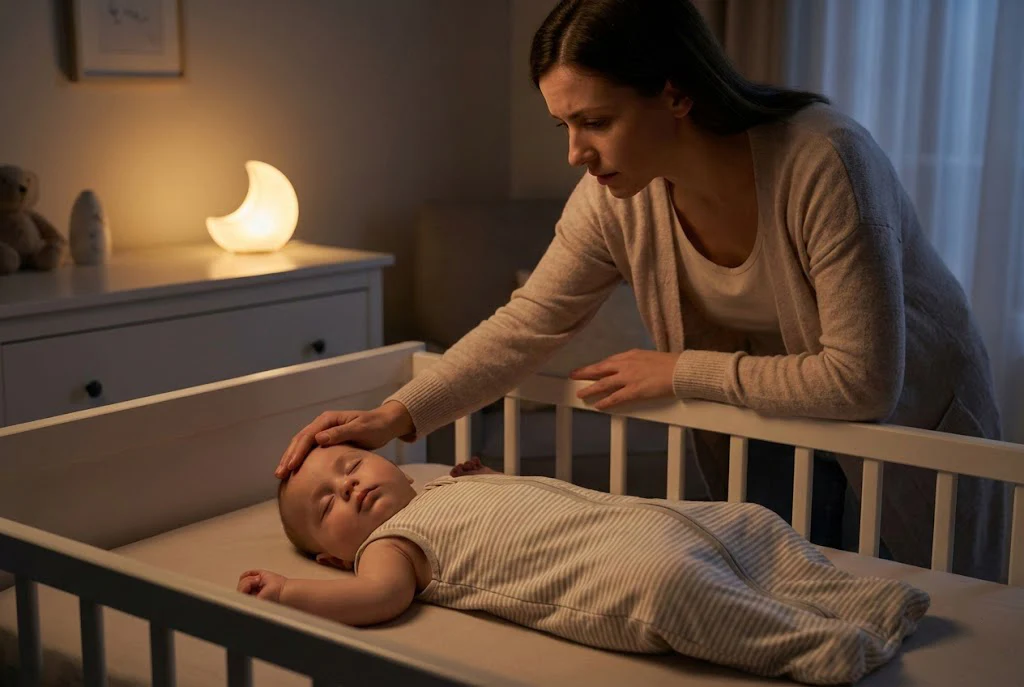
Meningitis symptoms in babies (0 to 12 months)
In babies, meningitis often does not show up with the classic stiff neck. The symptoms can be subtle, and sometimes the first clue is simply that your baby looks very unwell compared to a typical cold.
Common early signs in infants
- Fever or sometimes low temperature (especially in very young babies)
- Extreme fussiness or inconsolable crying
- High-pitched cry that sounds different than usual
- Poor feeding or refusing bottles or breast
- Vomiting or frequent spit-ups that are suddenly worse than normal
- Sleepiness, less responsive, weaker cry, or “just not themselves”
- Decreased wet diapers
More concerning infant signs
- Bulging fontanelle (soft spot) that stays bulging when baby is calm and upright (it can look temporarily full with crying, vomiting, or lying flat)
- Stiff body or unusual floppy limp tone
- Arched back with distress
- Seizure
One thing I want to emphasize as both a nurse and a mom: “irritability” can mean “cries when you put them down,” but meningitis-level irritability often looks like cannot be comforted at all, even with feeding, rocking, or skin-to-skin.
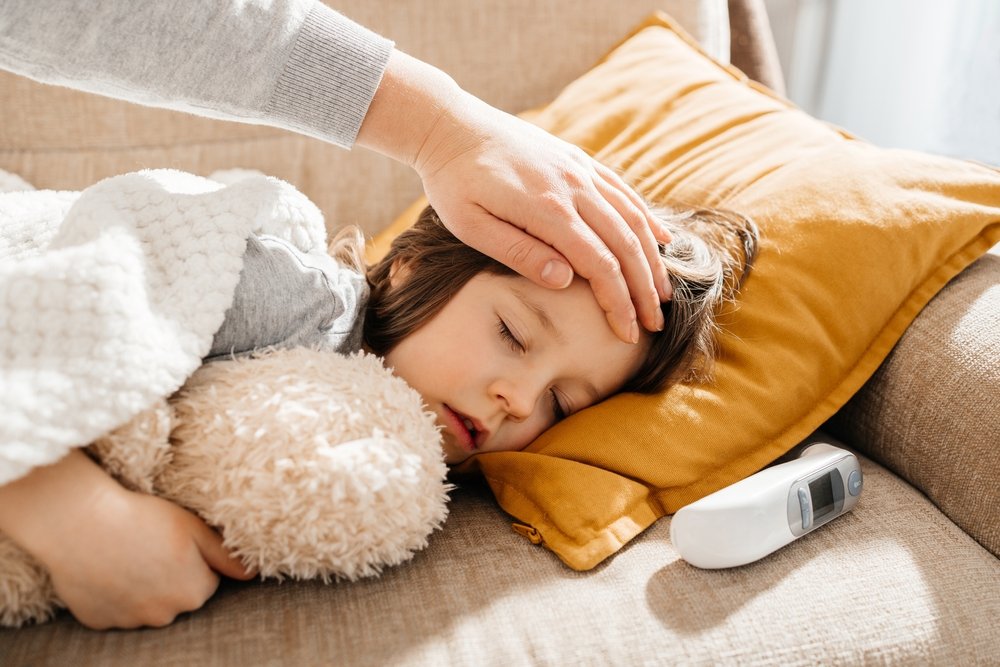
Quick fever note for infants: For babies, a rectal temperature is usually the most accurate. Forehead and ear thermometers can be less reliable in very young infants. If you get a borderline reading and your baby feels hot or seems unwell, recheck and call for guidance.
Meningitis symptoms in toddlers (1 to 3 years)
Toddlers can show more “classic” symptoms than infants, but they still may not be able to explain what hurts. You may be working off behavior clues and how they move their body.
Common toddler signs
- Fever
- Severe irritability, or unusual aggression or confusion
- Sleepiness or hard to wake
- Vomiting, especially with headache or lethargy
- Not wanting to walk or refusing to move much
- Reduced appetite and fluids with fewer wet diapers
More specific red flags in toddlers
- Headache that seems intense or is getting worse quickly
- Neck pain or stiffness: they hold the head still, avoid looking down, cry with normal movement, or prefer lying very still
- Light sensitivity: squinting, hiding face, wanting a dark room
- Rash that spreads rapidly or does not blanch
Important limitation: “Check their neck” is not a great home test. Many toddlers fight any exam even when they have a simple ear infection. Please do not try to force neck bending. What matters is the whole picture: fever plus worsening lethargy, confusion, severe headache, repeated vomiting, neck stiffness, or a concerning rash.
What about the rash?
You have probably heard about a “meningitis rash.” Here is the calmer, more accurate version:
- Some bacteria that can cause meningitis can also cause a bloodstream infection. That can lead to a petechial rash (tiny red or purple dots) or larger purple, bruised-looking patches.
- The key concern is a rash that does not fade when pressed and is paired with fever or a child who looks very ill.
- If you want a quick check, you can press a clear glass against the rash to see if it fades. If it does not, seek urgent care. Do not spend a long time testing at home if your child looks sick.
- Many childhood viruses cause rashes that are harmless but dramatic-looking. A rash alone is not automatically meningitis, but a rash plus a very sick child is a reason to get urgent care.
If you are unsure, it is absolutely appropriate to call your pediatrician’s after-hours line or go in. I would rather you be told “good news, it is a viral rash” than stay home with a child who is deteriorating.
How fast can symptoms change?
It depends on the cause, the child’s age, and their immune system, but bacterial meningitis can worsen over hours. That is why clinicians focus so much on:
- Rapid escalation of fever, sleepiness, or irritability
- New neurologic symptoms like confusion, seizures, or a new weakness
- Signs of poor perfusion like cool hands and feet, mottled skin, or unusually fast breathing
Parents often tell me, “They were fine this morning.” With some serious infections, that can be true. If your instinct says the shift is sudden and scary, treat that as meaningful information.
Call the doctor vs. go to the ER
Go straight to the ER
- Any fever 100.4°F (38°C) or higher in babies under 3 months (follow local guidance, but do not wait)
- Any of the red flags in the emergency list above
- Your child looks very ill, is hard to wake, or is getting worse quickly
Call your pediatrician urgently (same day) if
- Fever with significant fussiness, poor feeding, or fewer wet diapers
- Repeated vomiting without clear cause (especially if it is paired with headache, lethargy, or dehydration)
- New rash with fever but your child otherwise seems stable
- You are worried and cannot get a clear answer about next steps
If it is nighttime and you are stuck deciding, use this simple rule: if you cannot safely watch them sleep because you are worried they will worsen, that is an ER-level concern.
What happens at the ER?
This part is here because uncertainty makes everything scarier.
In the ER, the team will focus on the basics first: breathing, circulation, hydration, and how alert your child is. Depending on age and symptoms, they may do:
- Vital signs and a detailed exam
- Blood tests
- Urine testing (especially in young infants with fever)
- Viral testing in some cases
- Sometimes imaging and, when indicated, a lumbar puncture (spinal tap) to test spinal fluid
If bacterial meningitis is suspected, treatment with antibiotics is started quickly. That speed is intentional and lifesaving.
Can vaccines help prevent meningitis?
Yes. Vaccines have dramatically reduced several major causes of bacterial meningitis in children. Keeping up with routine immunizations helps protect your child and the babies around them.
Depending on your child’s age, health conditions, and your country’s schedule, protection may include vaccines against Hib, pneumococcal disease, and meningococcal disease. If you are unsure what your child has received, your pediatrician can review your immunization record with you in about 30 seconds.
What to do right now
- Trust your instincts. You know what “normal sick” looks like for your child.
- Take a temperature (and write it down), note the time, and whether you gave fever medicine.
- Look at hydration: wet diapers, tears, moist mouth, and whether they can keep fluids down.
- Do not drive if your child is actively seizing, has severe breathing difficulty, or you feel unsafe. Call emergency services.
- If your baby is under 3 months with fever, get medical guidance immediately and plan on urgent, same-day evaluation.
You are not bothering anyone by seeking care for possible meningitis symptoms. In pediatrics, we would rather evaluate ten worried families and catch one truly serious illness than miss the one that needed urgent treatment.
Quick reminder: This article is for education and cannot diagnose your child. If you think your child may have meningitis, seek urgent medical care.