Not sure if those tiny bumps are baby acne? Here’s what it looks like, why it happens, how to distinguish it from other rashes, and when to seek medical ad...
Milia in Newborns: Tiny White Bumps

Sarah Mitchell
Sarah Mitchell is a Registered Pediatric Nurse and a mother of three who has spent over a decade helping families navigate the beautiful, chaotic early years of childhood. She combines evidence-based medical knowledge with real-world parenting experience to offer practical, compassionate advice. At Awesome Parent, Sarah's mission is to help exhausted parents find solutions, trust their instincts, and finally get some sleep.
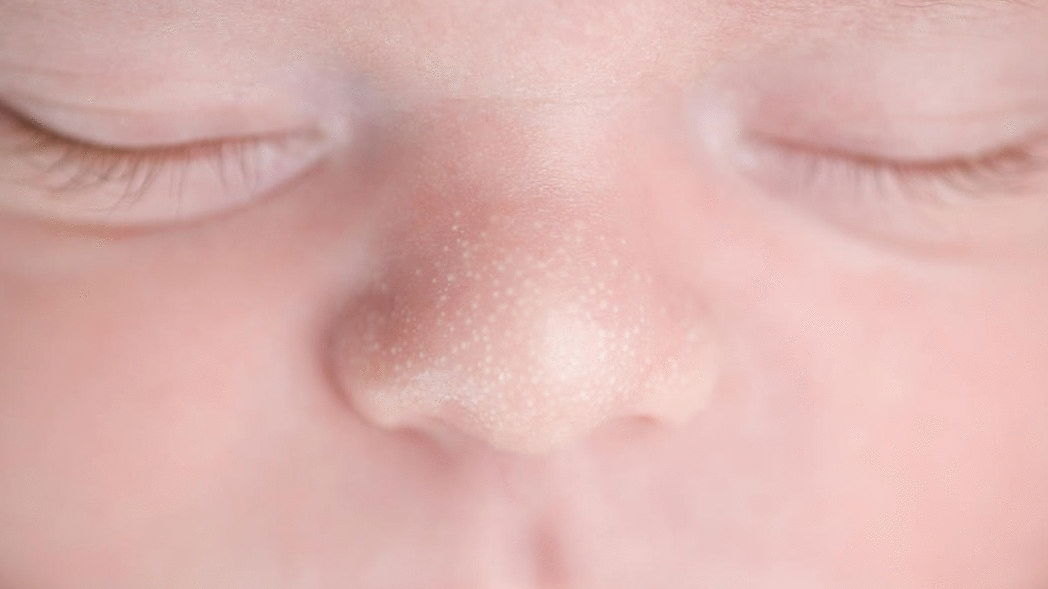
If you just noticed tiny, pearly white bumps on your newborn’s nose, cheeks, or chin, take a breath. In clinic, we saw this constantly, and at home I have stared at the same little dots on my own babies at 3 AM wondering if I should be doing something. Most of the time, these bumps are milia, a very common, harmless newborn skin finding that looks dramatic up close but usually disappears on its own.
What are milia?
Milia are tiny, white or yellowish bumps that form when keratin (a normal skin protein) gets trapped just under the surface of the skin. Think of them like little “keratin pearls.” They are not an infection, not an allergy, and not caused by anything you did or didn’t do.
Milia can show up in older kids and adults too, but newborn milia are especially common because baby skin is adjusting to life outside the womb.
How they are diagnosed: Milia are usually diagnosed just by looking at them. No tests are needed in typical cases.
What do milia look like?
- Size: pinhead-sized, usually 1 to 2 mm
- Color: white, pearly, or slightly yellow
- Texture: firm little bumps, not flaky
- Surrounding skin: typically not red or irritated
- Common spots: nose, cheeks, chin, forehead, sometimes scalp
They can look like tiny whiteheads, but they are not “pimples” and they do not need to be “popped.”
Note: newborns can also get tiny white bumps inside the mouth (often called Epstein pearls). This article focuses on facial milia, but the same “gentle and leave it alone” approach usually applies.
Milia vs baby acne vs cradle cap
These three get mixed up all the time, especially in newborn photos where everything looks magnified. A helpful clue is timing: milia are often present at birth or show up in the first few days, while acne-type bumps usually show up later.
If you cannot tell which one you are looking at, use this rule of thumb: white bumps without redness can usually be watched. If it is red, inflamed, crusting, or spreading quickly, check in with your pediatrician.
Milia
- Look: tiny white bumps without redness
- Feel: firm, pinpoint
- Where: most often nose and cheeks
- Timing: often present at birth or within the first few days
- Cause: trapped keratin under the skin
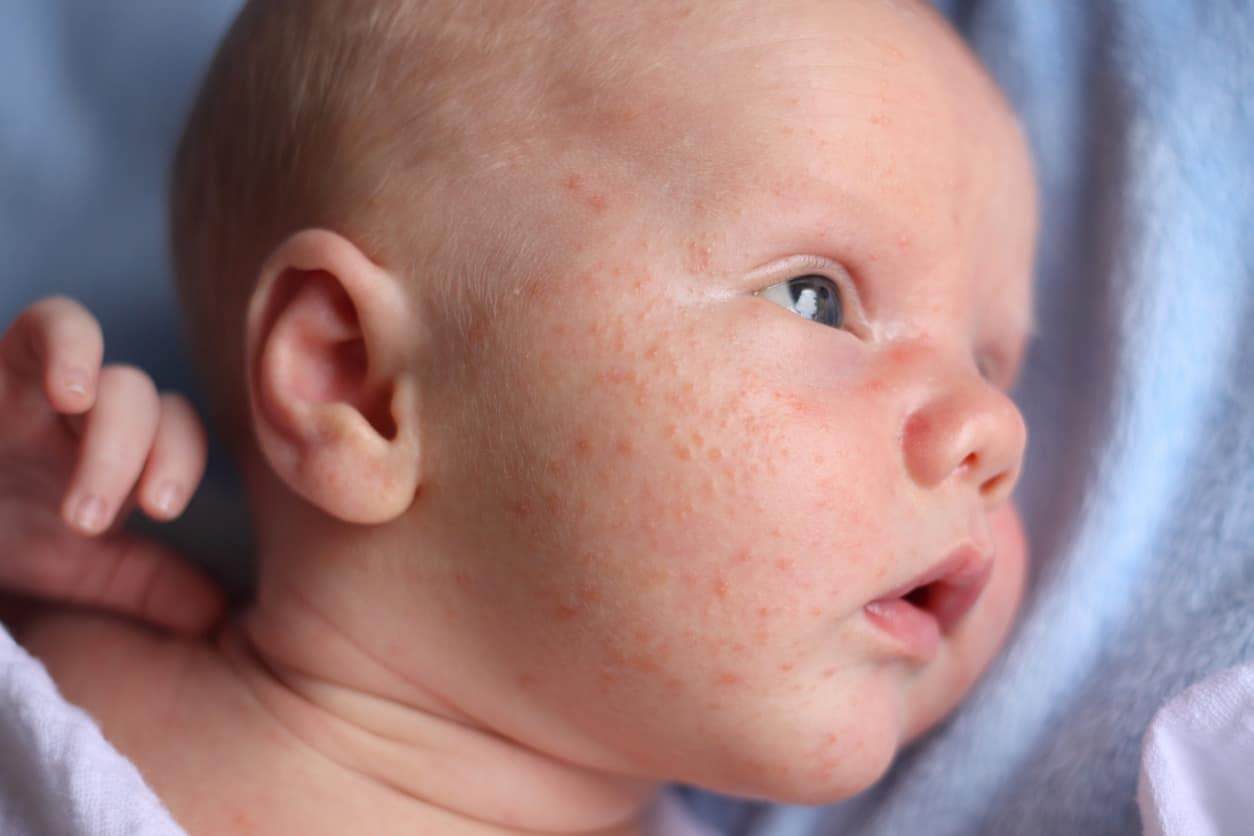
Baby acne
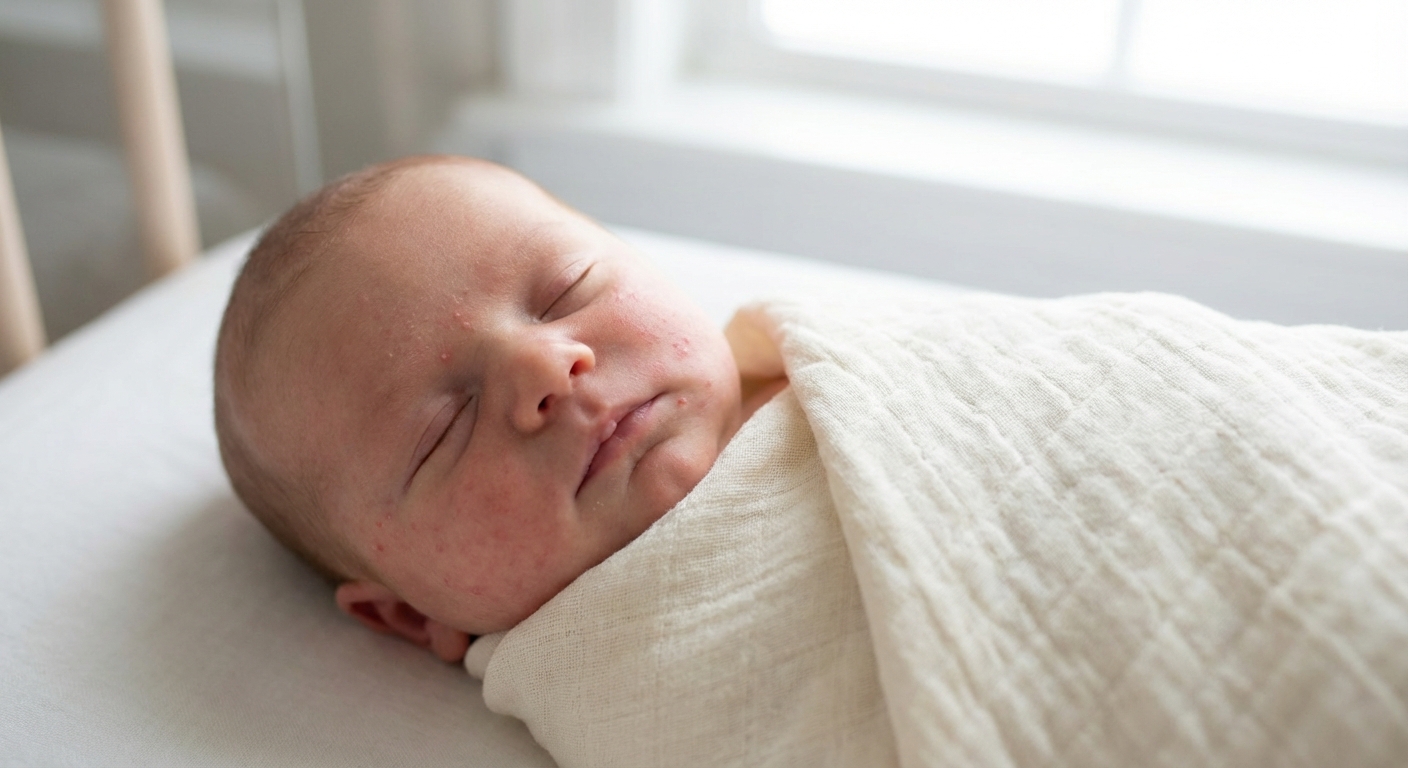
- Look: red bumps and sometimes small pustules that resemble pimples
- Feel: may look inflamed
- Where: cheeks, forehead, chin, sometimes chest or back
- Timing: often appears around 2 to 4 weeks of age, but can vary
A quick note on names: people use “baby acne” to describe a couple of related rashes. The common newborn version usually improves on its own. If acne-like bumps start later (after the newborn period) or persist, your pediatrician may use different terms and treatment guidance.
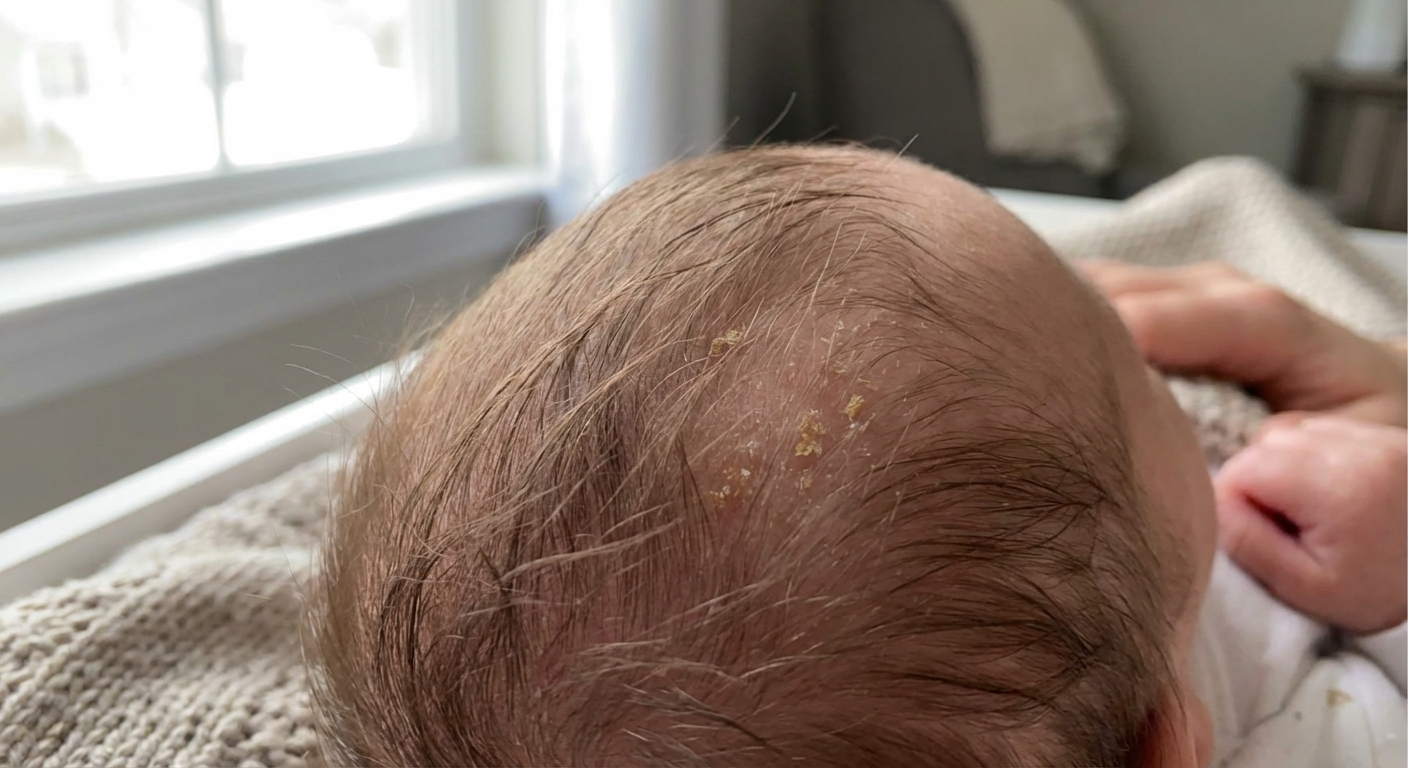
Cradle cap
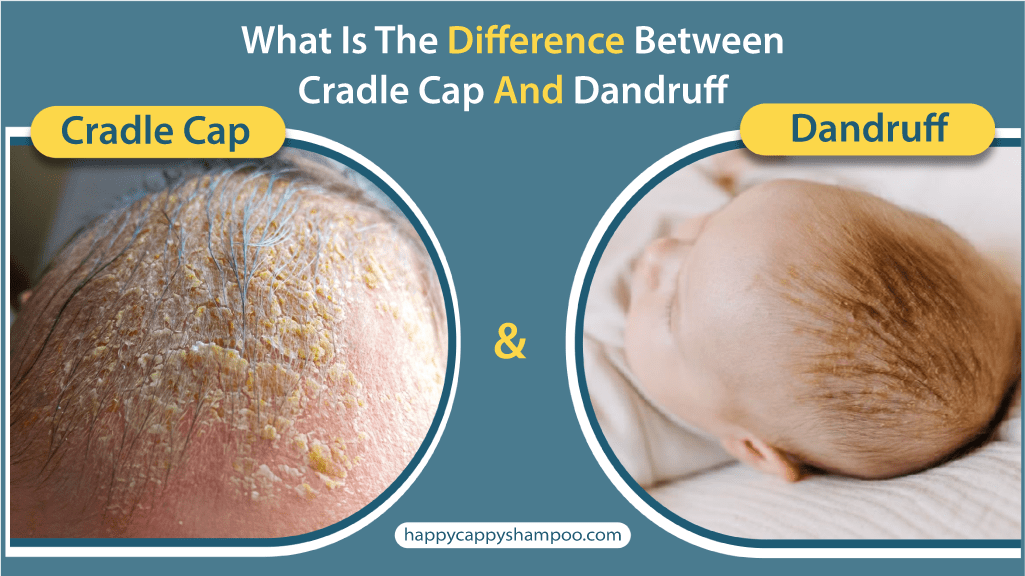
- Look: greasy yellow scales or flakes, sometimes with mild redness
- Feel: flaky or waxy, can be thick
- Where: scalp most commonly, but can also show up on eyebrows, behind ears, and skin folds
Cradle cap is more about scaling than bumps.
When do milia go away?
Most newborn milia clear on their own within a few weeks. Sometimes a few bumps linger for a month or two, and occasionally they can last longer (even a few months) before fading.
As the skin naturally exfoliates and matures, the trapped keratin works its way out. No special products required.
What to do and what not to do
Here is the simplest, safest plan.
Do
- Keep it gentle: wash baby’s face once daily (or as needed) with lukewarm water and a mild, fragrance-free cleanser.
- Pat dry: use a soft towel, no rubbing.
- Moisturize only if needed: if baby’s skin is dry, use a small amount of fragrance-free moisturizer recommended for babies.
Do not
- Do not pick, squeeze, or “pop” the bumps. This can break the skin and raise the risk of infection or scarring.
- Do not scrub with washcloths, brushes, or exfoliating products.
- Do not use acne medications (including benzoyl peroxide, salicylic acid, retinoids, or adult acne washes) unless your pediatrician specifically tells you to.
- Do not use essential oils on newborn skin. They can irritate sensitive skin, and some are not recommended for newborns.
If you remember one thing: milia is a “leave it alone” situation.
When bumps are not milia
Most of the time, milia are straightforward. But there are a few signs that suggest you are dealing with something else, and it is worth checking in with your pediatrician.
Call your pediatrician if you notice:
- Redness, swelling, warmth, or tenderness around the bumps
- Yellow crusting, oozing, or blisters
- Rapid spreading or a rash that looks very different day to day
- Baby seems sick (poor feeding, unusual sleepiness, trouble breathing)
- Fever (for babies under 3 months, fever generally needs prompt medical advice)
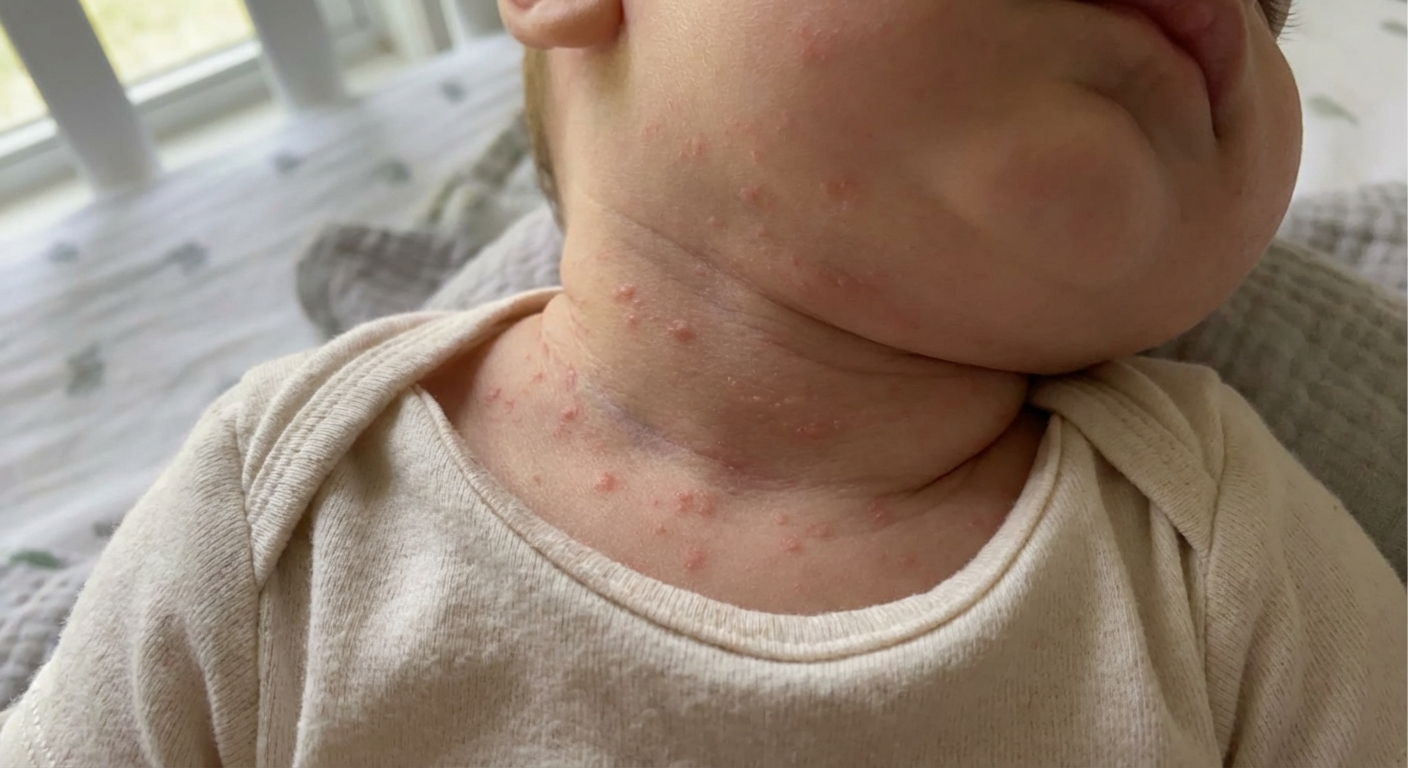
- Bumps in moist areas (diaper area, armpits, neck folds) that look irritated, which may point to yeast or heat rash instead
- Itchy rash (milia usually is not itchy), especially if there is significant dryness or eczema-like patches
Some common look-alikes include:
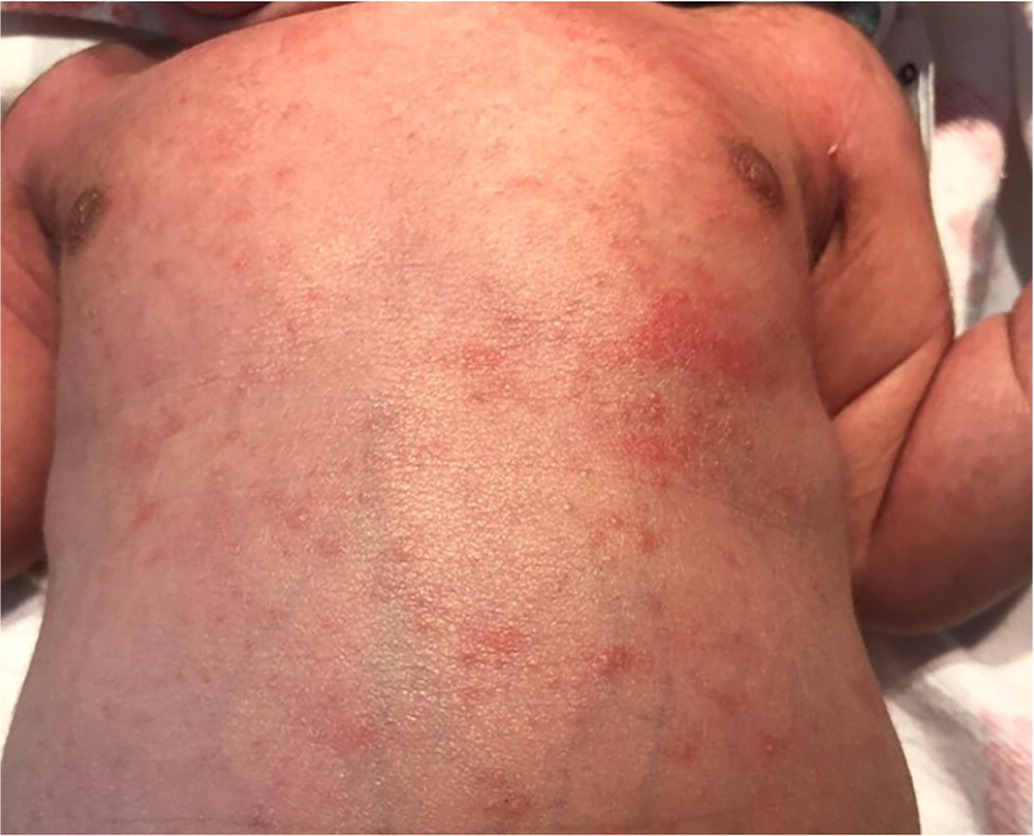
- Erythema toxicum neonatorum (ETN): a very common newborn rash with small white or yellow bumps on a blotchy red base, often appearing in the first days of life
- Heat rash: tiny red or clear bumps, often in warm, sweaty areas
- Eczema: dry, rough, inflamed patches, often on cheeks and scalp
- Baby acne: red pimply bumps, often starting after the first couple of weeks
- Infections: rare, but can look like pustules, blisters, or crusting
Quick reassurance
Newborn skin is a whole season of surprises. Milia are one of the most common and most harmless ones. If your baby is feeding well, acting like themselves, and the bumps are tiny, white, and not inflamed, you can almost always watch and wait with gentle cleansing and zero picking.
If you are unsure, trust that instinct and send a photo to your pediatrician or ask at your next visit. You are not overreacting. You are parenting.
FAQ
Are milia contagious?
No. Milia are not caused by a virus, bacteria, or fungus, and they do not spread from person to person.
Do breastmilk or formula cause milia?
No. Milia are related to trapped keratin in the skin, not diet.
Can I put lotion or oil on milia?
You can use a gentle baby moisturizer if your baby’s skin is dry, but lotions and oils will not “treat” milia and sometimes can make bumps more noticeable by making the skin look shinier. If you use anything, keep it minimal and fragrance-free.
Will milia leave scars?
Milia themselves do not scar. Scarring risk comes from picking or aggressive rubbing.
Sarah Mitchell
Sarah Mitchell is a Registered Pediatric Nurse and a mother of three who has spent over a decade helping families navigate the beautiful, chaotic early years of childhood. She combines evidence-based medical knowledge with real-world parenting experience to offer practical, compassionate advice. At Awesome Parent, Sarah's mission is to help exhausted parents find solutions, trust their instincts, and finally get some sleep.