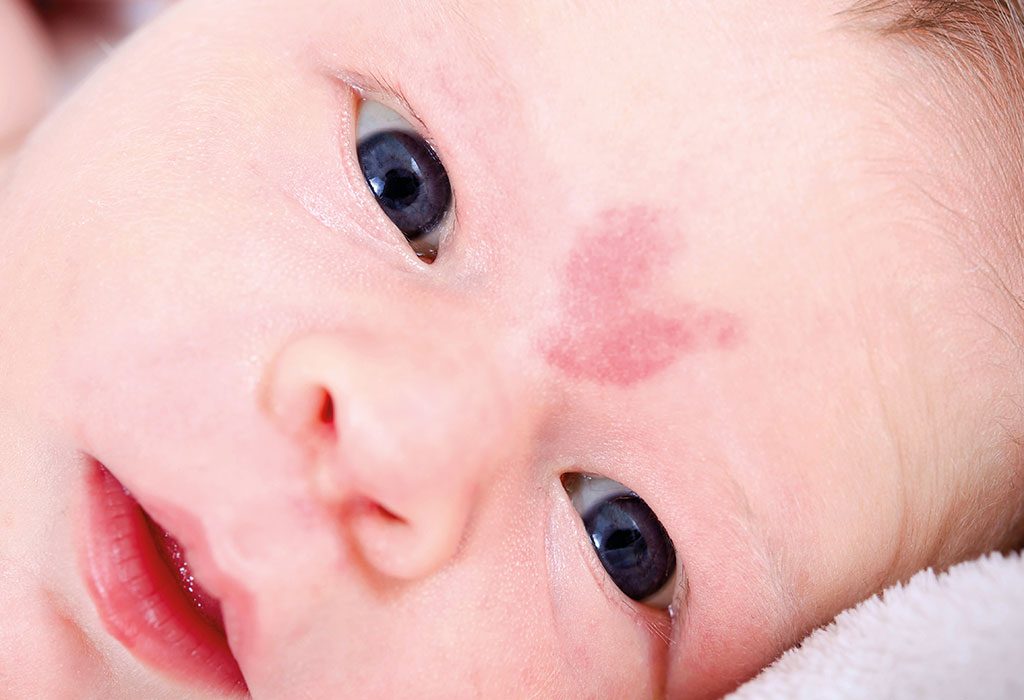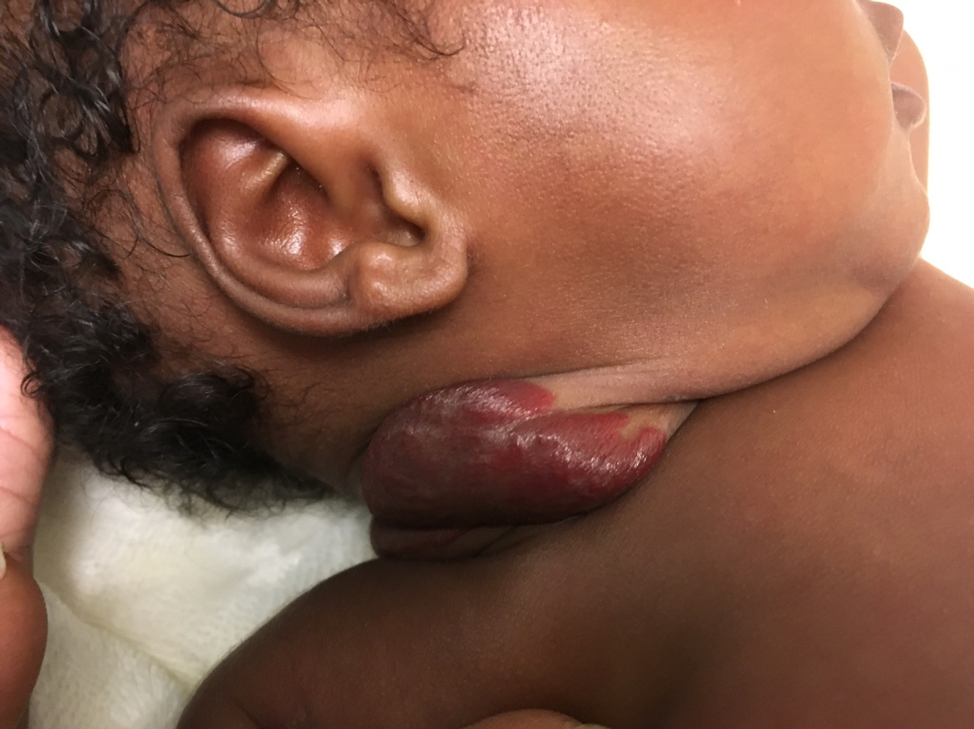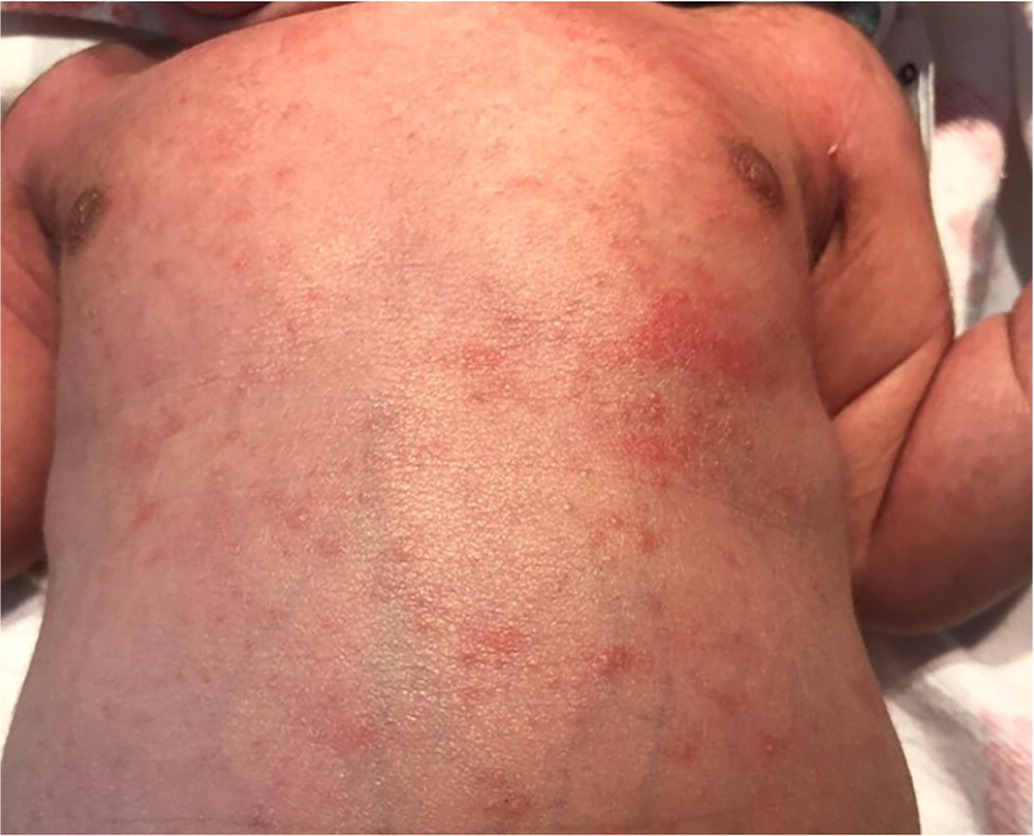
Not sure what those red bumps mean? Here’s how to identify common baby rashes, what causes them, what you can do at home, and when to call your pediatrician.
Mongolian Spots in Newborns

Sarah Mitchell
Sarah Mitchell is a Registered Pediatric Nurse and a mother of three who has spent over a decade helping families navigate the beautiful, chaotic early years of childhood. She combines evidence-based medical knowledge with real-world parenting experience to offer practical, compassionate advice. At Awesome Parent, Sarah's mission is to help exhausted parents find solutions, trust their instincts, and finally get some sleep.
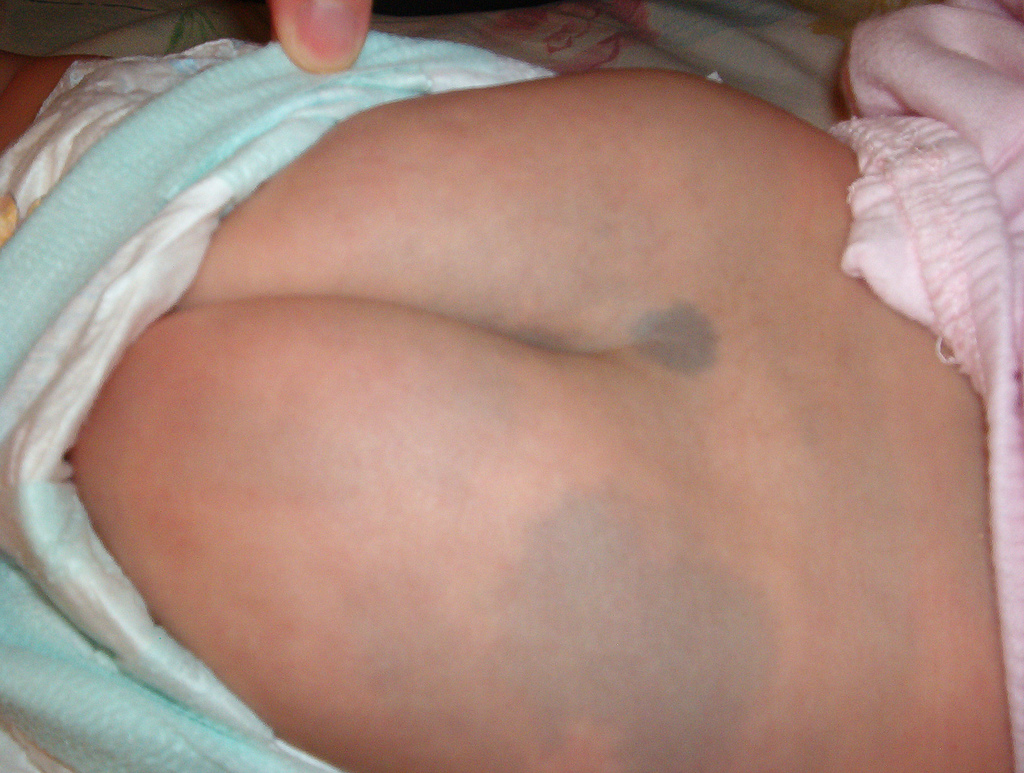
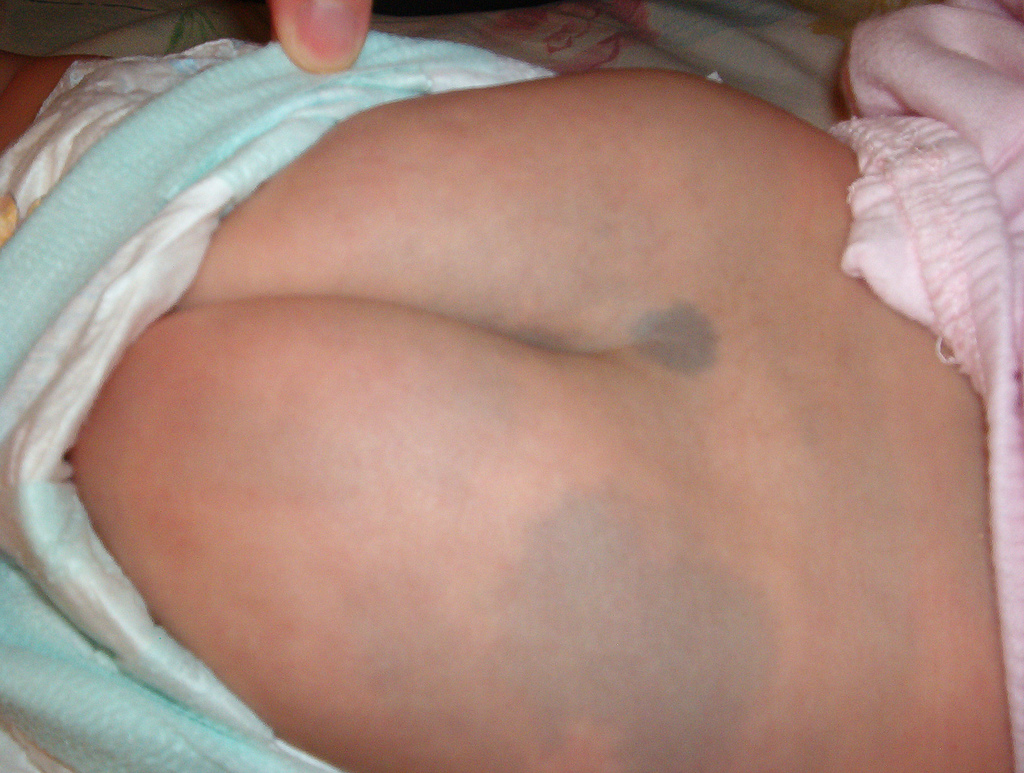
If you just noticed a blue-gray patch on your newborn’s skin, you are not alone. Many parents panic because it looks like a bruise, especially when it shows up on the lower back or bottom. The good news is that what you are seeing may be congenital dermal melanocytosis, a very common and harmless type of birthmark.
You may also hear people call these Mongolian spots. That older term is still widely used online (and many parents search for it), but it is increasingly considered outdated and culturally insensitive. Many clinicians and medical references now prefer terms like congenital dermal melanocytosis or slate gray nevus. If you see any of these names, they are usually describing the same normal finding.
The basic idea is simple: pigment cells sit a little deeper in the skin than usual in that area, creating that smoky blue-gray look.
What they look like
Congenital dermal melanocytosis spots are:
- Flat (not raised like a bump)
- Blue-gray, slate, or bluish-green in color
- Irregularly shaped, often oval or cloud-like
- Soft-edged rather than sharply outlined
- Not painful and not itchy
They can be small like a coin or large enough to cover a big portion of the lower back. The skin texture over the spot should feel totally normal.
Common locations
These spots most often appear in areas where bruises also commonly show up, which is part of why they worry parents.
Typical locations include:
- Lower back
- Buttocks
- Hips
- Upper thighs
Less commonly, they can appear on the shoulders, arms, or other areas.
Who gets them (and why)
These marks can happen in babies of any skin tone, but they are more common in families with Asian, Black, Hispanic/Latino, Native American, and Pacific Islander ancestry. They are present at birth or become noticeable very soon after.
Here is the simple explanation: pigment-producing cells (melanocytes) are located deeper in the skin than usual in that area. The way light scatters through deeper pigment can make the spot look blue-gray instead of brown.
Important reassurance: These spots are not caused by anything you did during pregnancy. They are not a sign of poor care, and they are not contagious.
Spots vs. bruises
This is the part I used to talk through a lot as a triage nurse, because the stress parents feel is very real. These marks can look like bruising at first glance, but there are some clues that help.
More consistent with congenital dermal melanocytosis
- Present from birth or noticed in the first days of life
- Flat and the skin feels normal
- No tenderness when you touch the area
- Color stays fairly stable instead of changing day to day
- Often located on the lower back or buttocks
More consistent with bruising
- Appears after a known injury or after a procedure (like a blood draw)
- May be tender or sore
- Often changes color over time (purple to green to yellow)
- May have swelling or a clear point of impact
If you are unsure, it is always appropriate to ask your pediatrician. You are not overreacting. You are doing exactly what a caring parent does.
When they fade
Most spots gradually fade as your child grows.
- Many lighten significantly by age 1.
- Most fade by early childhood (often by ages 3 to 6).
- Some may persist longer, especially if they are larger or darker. In a smaller number of children, a faint mark can remain into adolescence or adulthood.
The fade is usually slow and subtle. This is one of those “take a photo every few months” situations if you are curious, because the day-to-day change is hard to see.
What to mention at well visits
These marks are a normal finding, but it is still important that your pediatrician documents them clearly in your child’s medical record. This helps avoid confusion later, especially in childcare settings or if another clinician sees your baby for the first time.
At your next well visit, mention:
- When you first noticed it (at birth, day 2, etc.)
- Location (for example, “center of lower back,” “right buttock”)
- Approximate size (coin-sized, palm-sized)
- Whether it has changed (usually it has not)
You can also ask your clinician to note it as “congenital dermal melanocytosis” (or “slate gray nevus”) in the chart, including a description of size and placement.

Call the doctor sooner
These spots themselves are harmless, but you should reach out promptly if you notice skin findings that do not fit the usual pattern.
Call your pediatrician if:
- The mark appears later (not present at birth and not noticed until weeks afterward)
- There is swelling, warmth, or pain in the area
- The color is changing rapidly, or you see multiple new “bruise-like” spots
- Your baby seems unwell (poor feeding, fever, unusual sleepiness)
- The spots are very large, widespread, or in atypical locations, especially if they are accompanied by other symptoms. Very rarely, unusually extensive dermal melanocytosis can be seen alongside certain underlying conditions, so it is worth having your pediatrician take a look.
If your baby has a fever (100.4°F or 38°C or higher) and is under 3 months old, follow your clinician’s guidance for urgent evaluation.
Treatment
No treatment is needed. Creams will not make them fade faster, and they are not caused by irritation or dryness.
The best “treatment” is simply:
- Documentation at well visits
- Reassurance that they are common and benign
- Patience while they fade over time
Quick reassurance
If your newborn has a flat blue-gray patch on their lower back or bottom and they seem comfortable, it is very likely congenital dermal melanocytosis (sometimes still called Mongolian spots). They are common, harmless, and they typically fade gradually during early childhood.
And if you are still worried, bring it up at your next well visit or send a message to your pediatrician with a photo. You deserve peace of mind, especially in the newborn weeks when everything feels a little louder and scarier than it needs to.
Sarah Mitchell
Sarah Mitchell is a Registered Pediatric Nurse and a mother of three who has spent over a decade helping families navigate the beautiful, chaotic early years of childhood. She combines evidence-based medical knowledge with real-world parenting experience to offer practical, compassionate advice. At Awesome Parent, Sarah's mission is to help exhausted parents find solutions, trust their instincts, and finally get some sleep.