Mononucleosis in Kids and Teens

Sarah Mitchell
Sarah Mitchell is a Registered Pediatric Nurse and a mother of three who has spent over a decade helping families navigate the beautiful, chaotic early years of childhood. She combines evidence-based medical knowledge with real-world parenting experience to offer practical, compassionate advice. At Awesome Parent, Sarah's mission is to help exhausted parents find solutions, trust their instincts, and finally get some sleep.
If your kid has had a sore throat for days, is sleeping like it’s their full-time job, and somehow still looks exhausted, mono is probably on your radar. In triage, I saw this pattern a lot, especially in older kids and teens. Mono can look like strep at first, but it tends to stick around longer and comes with a sports rule that catches families off guard: protecting the spleen.
Let’s walk through what mono looks like in real life, how it is diagnosed, what you can do at home, and how to make safe decisions about school and returning to sports.

What is mono?
Mononucleosis, usually called mono, is most often caused by the Epstein-Barr virus (EBV). It spreads mainly through saliva and close contact. That is why it gets nicknamed the “kissing disease.” In real family life, it can also spread through shared drinks, utensils, water bottles, or anything that gets saliva on it, especially with repeated, close exposure. Casual contact is a much less efficient way for EBV to spread.
Mono is common in teens and young adults. Younger children can get EBV too, but they often have mild symptoms that look like a plain viral cold, or no symptoms at all.
Mono symptoms in kids and teens
Mono can start like many other illnesses, then gradually reveals itself by how long it lasts and how wiped out your child feels.
Common symptoms
- Severe fatigue (often the biggest clue)
- Sore throat, sometimes very painful
- Fever
- Swollen glands in the neck
- Headache and body aches
- Swollen tonsils, sometimes with white patches
- Decreased appetite
Other possible symptoms
- Swollen eyelids or puffiness around the eyes early on
- Enlarged spleen (you cannot reliably feel this at home)
- Liver irritation, which may cause mild belly pain or rarely yellowing of the skin or eyes
- Rash, especially if certain antibiotics are given
One parent-gut note: many families tell me, “This is not the usual sore throat. They seem weirdly exhausted.” That observation matters.
Mono vs. strep
Mono and strep throat can look very similar early on. Both can cause fever, swollen tonsils, and white patches on the throat. The difference is what typically shows up with the sore throat and how the illness behaves over time.
More like strep
- Sore throat with no cough
- Sudden onset
- Tender swollen glands in the front of the neck
- Headache, stomachache
- Scarlet fever type rash (fine, sandpapery)
More like mono
- Extreme fatigue that feels out of proportion
- Swollen glands that can be more widespread (often including the back of the neck)
- Sore throat that lingers
- Possible enlarged spleen
- Symptoms that stretch beyond a typical “few day” illness
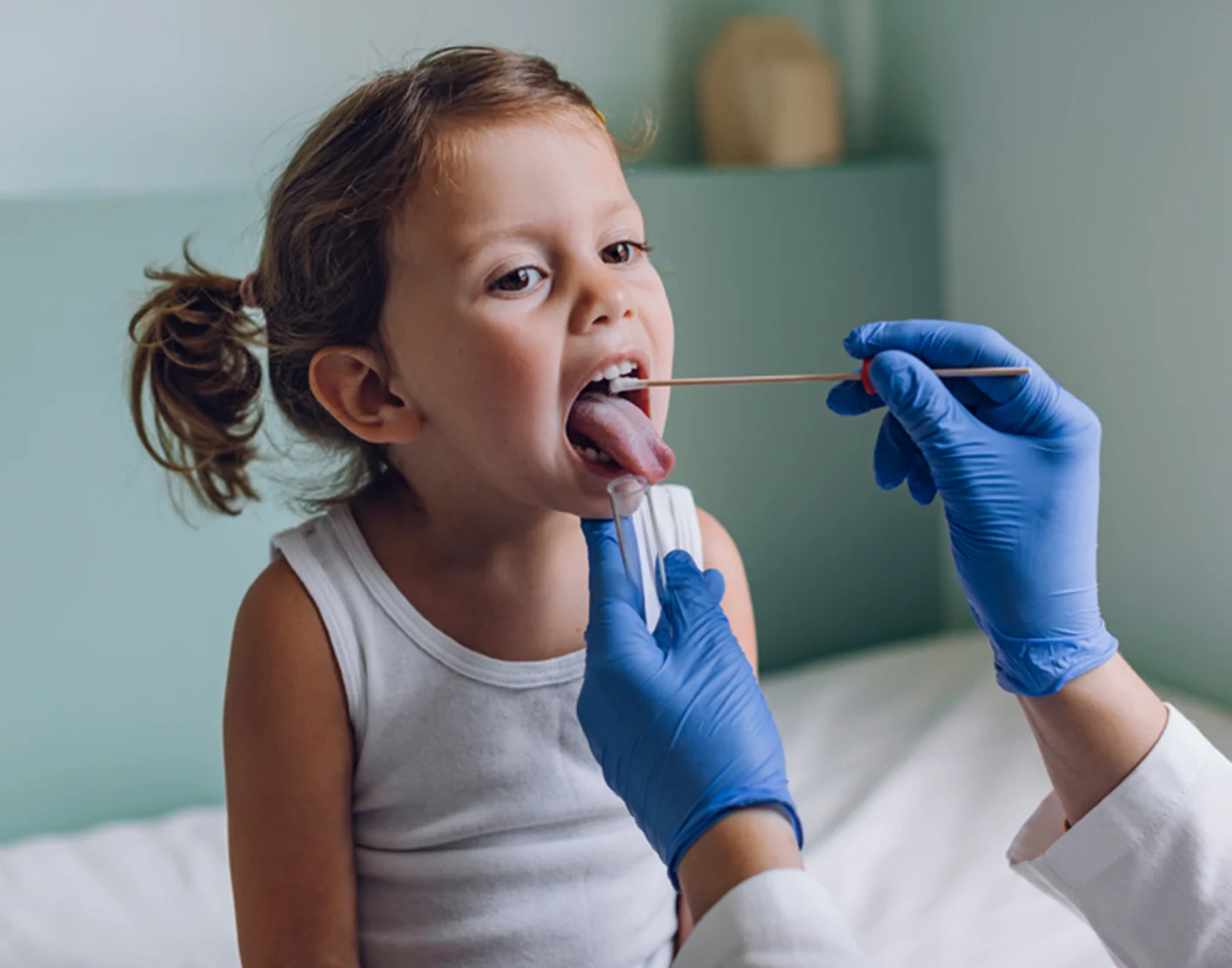
Important: you cannot diagnose either one based on looks alone. A quick strep test and, when appropriate, mono testing are what clarify things.
When testing helps
Testing can be useful, but the timing matters.
Common tests
- Rapid strep test and sometimes a throat culture, because strep is treatable and can mimic mono.
- Monospot test (heterophile antibody test). This can be negative early in the illness, and it is less reliable in younger children than in teens. Sensitivity tends to improve after about 7 to 10 days of symptoms, but false negatives can still happen.
- EBV blood panel (EBV-specific antibodies). This can help when Monospot is negative but suspicion is still high, or when the diagnosis really matters for sports clearance.
- Basic blood work (sometimes): clinicians may look for atypical lymphocytes or check liver enzymes if symptoms suggest liver involvement.
When it is most helpful
- Your child or teen has had a significant sore throat and fatigue for more than several days.
- Strep testing is negative, but symptoms are classic for mono.
- Your teen is an athlete and the diagnosis will affect return-to-play decisions.
- There are concerning symptoms, prolonged fever, or your clinician needs to rule out other causes.
When it may not change much
- Mild symptoms where home care is the same either way.
- Very early illness where a negative test would not be reassuring.
If you are in that frustrating “all tests are negative but my kid is clearly not okay” window, that is real. Sometimes the most accurate plan is close follow-up, repeat testing later, and strict rest and hydration in the meantime.
How long does mono last?
Mono is not a quick in-and-out virus. Symptoms often unfold in phases:
- Week 1 to 2: sore throat, fever, swollen glands, major fatigue.
- Weeks 2 to 4: throat symptoms improve, but fatigue can linger.
- Weeks 4 to 8 (sometimes longer): energy slowly returns, but many kids tire easily with school, activities, or sports.
Fatigue is the symptom that most often outlasts everything else. For many teens, the hardest part is feeling “kind of better” but not being able to power through like they usually do. And yes, pushing too hard can backfire. If your child returns to full days and full expectations too fast, the crash afterward can be rough.
Home care
There is no specific “mono medicine” for routine cases. Treatment is supportive, meaning we help the body rest and recover while watching for complications.
What to do at home
- Hydration: sore throats make kids drink less. Offer cold water, smoothies, popsicles, warm broth, or electrolyte drinks.
- Pain and fever relief: use acetaminophen or ibuprofen as directed by your child’s clinician. (Avoid aspirin in children due to Reye syndrome risk.) If your clinician has mentioned liver irritation or elevated liver enzymes, ask specifically about the safest dosing plan and avoid doubling up on acetaminophen from multiple cold and flu products.
- Throat comfort: warm tea with honey for kids over 1 year, saltwater gargles for older kids, cool mist humidifier at night.
- Rest: not “stay in bed forever,” but give permission to truly slow down. Mono recovery is not a character-building exercise.
- Food: soft foods are your friend. Think yogurt, oatmeal, scrambled eggs, soups, pasta.
Antibiotics and the famous mono rash
Mono is viral, so antibiotics do not treat it. Sometimes mono is mistaken for strep and an antibiotic like amoxicillin or ampicillin is prescribed. In kids with EBV, these antibiotics can trigger a dramatic, widespread rash. It is not usually a dangerous allergy, but it is a big clue that EBV could be the real cause.
That said, do not ignore a rash. If your child develops a rash while on antibiotics, call your clinician for guidance. And if there is facial or lip swelling, wheezing, trouble breathing, or widespread hives, seek urgent care right away.

Spleen and sports
If there is one mono rule I want you to remember, it is this: mono can enlarge the spleen, and an injured spleen is a true emergency.
Why it matters
The spleen sits in the upper left side of the abdomen and helps filter blood and support the immune system. With EBV, it can become enlarged and more fragile. A hard hit or pressure to the abdomen can, rarely, cause the spleen to rupture and bleed. Splenic enlargement often peaks in the first few weeks of illness, which is a big reason activity restrictions are taken so seriously even if your teen starts to feel better.
Higher risk activities
- Contact sports: football, hockey, wrestling, lacrosse, martial arts
- Collision or fall-risk sports: soccer, basketball, gymnastics, cheer, skateboarding, skiing
- Heavy lifting and intense strength training: this is not as standardized as contact restrictions, but many clinicians recommend avoiding it early on because it can increase abdominal pressure. Follow your clinician’s guidance.
When can they return?
This needs individualized medical clearance, but here is the general way many clinicians think about it:
- No exercise during the acute illness when fever, significant sore throat, or major fatigue are present.
- Many clinicians recommend no sports for about 3 weeks from symptom onset, then a gradual return to light, non-contact activity only if the athlete is clinically well and improving.
- Contact and collision sports are often held longer (commonly 4 weeks or more), depending on symptoms, exam, sport, and clinician or sports medicine assessment.
About ultrasound: families often ask if an ultrasound can “clear” the spleen. Sometimes it is used, but it is not a perfect solution because spleen size varies by person, and a single ultrasound snapshot does not always equal real-world risk. Your clinician or sports medicine provider will guide you based on the full picture.
Spleen emergency signs
Seek emergency care right away for:
- Sudden, severe pain in the upper left abdomen
- Left shoulder pain (referred pain can happen)
- Dizziness, fainting, confusion, or looking very pale
- Fast heart rate or trouble breathing
These are not “wait and see” symptoms.
School and daycare
Mono spreads through saliva, but kids can shed the virus for a long time, sometimes even when they feel better. That means the practical goal is not “zero contagious,” it is “well enough to participate and follow hygiene.”
They can return when
- They are fever-free for 24 hours without fever-reducing medicine.
- They can swallow fluids well enough to stay hydrated.
- They can make it through the day with reasonable comfort, even if they are still more tired than usual.
Some kids need partial days or a lighter workload for a while, especially teens. Fatigue accommodations can last weeks. If your child’s school is flexible, consider asking for temporary adjustments like reduced homework, extra time for assignments, or rest breaks.
Hygiene basics
- No sharing water bottles, cups, utensils, straws, lip balm, or toothbrushes.
- Hand washing is helpful, but remember EBV is mostly saliva-driven.
- If your teen has a partner, talk about avoiding kissing until cleared by their clinician.
When to get help
Mono is usually manageable at home, but some situations need prompt medical attention.
Call your clinician soon if
- Sore throat is severe or not improving after several days.
- Your child cannot keep fluids down or shows signs of dehydration (very dark urine, dry mouth, dizziness, not peeing much).
- Fever lasts more than 3 to 5 days, or returns after improving.
- Significant belly pain, especially on the upper left side.
- Your child has asthma or other conditions that make breathing illnesses more complicated.
Go to urgent care or the ER now if
- Trouble breathing or drooling because they cannot swallow.
- Signs of airway obstruction from very swollen tonsils (muffled voice, struggling to breathe).
- Severe abdominal pain, left shoulder pain, fainting, or weakness.
- Yellow skin or eyes, or severe vomiting.
When it is not mono
Mono is common, but it is not the only reason a child can have a lingering sore throat and fatigue. Follow up with your clinician if symptoms are not trending better, or if something feels off.
Consider other causes if
- Severe one-sided throat pain, trouble opening the mouth, or a “hot potato” muffled voice (possible peritonsillar abscess).
- Prolonged fever, unintentional weight loss, night sweats, or lymph nodes that keep enlarging instead of slowly improving.
- Mono-like illness with a negative EBV workup, especially in older teens, where other viruses like CMV and other infections may be considered based on history.
This is not meant to alarm you. It is meant to give you permission to recheck if your child is not following the expected recovery path.
FAQs
Can my child get mono more than once?
Most people develop lasting immunity after EBV infection, so classic mono usually happens once. However, fatigue and other symptoms can recur with other viruses, stress, lack of sleep, or different illnesses. If your teen is repeatedly wiped out, it is worth checking in with their clinician.
Is mono dangerous?
Most kids and teens recover fully. The serious concern is spleen injury, and less commonly airway swelling or liver inflammation. That is why activity restrictions and follow-up matter.
Do steroids help?
Steroids are not routine treatment for mono. They are sometimes used when there is a specific complication, like significant tonsil swelling that threatens the airway, or other clinician-identified concerns. If you hear “steroids,” it is usually because your clinician is treating a particular risk, not because steroids “cure” mono.
Can younger kids get it from a teen sibling?
Yes. Younger children often have mild symptoms, but they can still catch EBV. Do what you can to avoid sharing cups and water bottles, and focus on hydration and rest if they develop cold-like symptoms.
The bottom line
Mono is a long-haul illness for many school-aged kids and especially teens. The key priorities are hydration, pain control, real rest, and protecting the spleen by avoiding sports until a clinician clears return to play. If something feels off, trust that instinct and call your pediatrician. You do not need to sort through scary internet extremes at 3 AM.
Medical note: This article is for general education and does not replace medical advice from your child’s clinician.