Moving from Crib to Bed Without Losing Sleep

Sarah Mitchell
Sarah Mitchell is a Registered Pediatric Nurse and a mother of three who has spent over a decade helping families navigate the beautiful, chaotic early years of childhood. She combines evidence-based medical knowledge with real-world parenting experience to offer practical, compassionate advice. At Awesome Parent, Sarah's mission is to help exhausted parents find solutions, trust their instincts, and finally get some sleep.
If you are staring at the crib at 2 AM wondering whether you should keep it, convert it, or drag it to the curb, you are in excellent company. Moving a toddler from a crib to a bed is one of those “small” parenting transitions that can absolutely bulldoze your sleep if you do it at the wrong time or without a plan.
As a pediatric nurse and a mom of three, here is my honest take: most toddlers do not need to move out of the crib as early as the internet makes it sound. But when the time is right, a thoughtful transition can be surprisingly smooth.
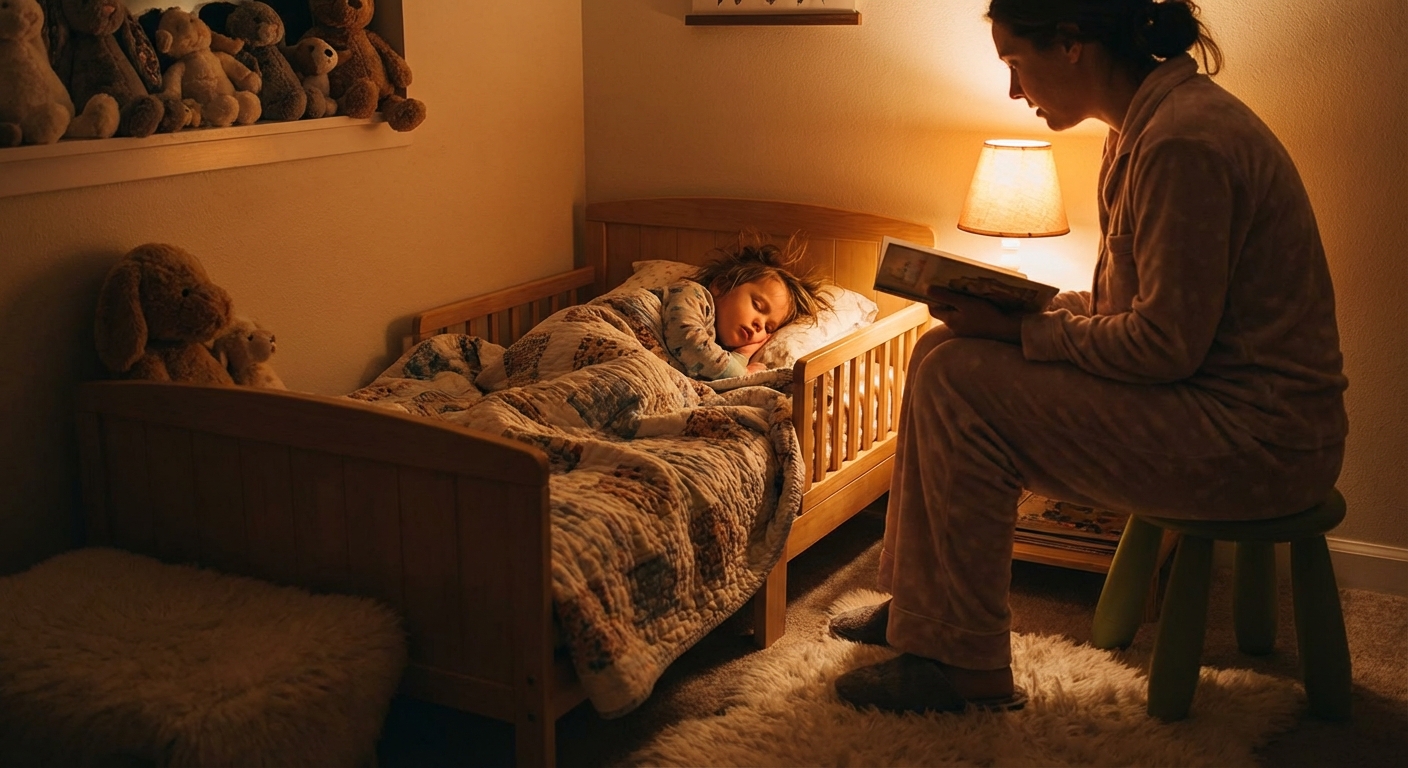
When should you switch from a crib to a bed?
The best time is when your toddler is developmentally ready and the crib is no longer the safest option. Age matters less than behavior.
Most common window
Many children transition often between 2.5 and 3.5 years. Earlier can work, but it commonly comes with more boundary testing and more night wake-ups.
Signs your child is ready
- Climbing out or attempting to climb out, even occasionally.
- Asking for a “big kid bed” and showing excitement about the idea.
- Following simple safety rules most of the time, like staying in bed during stories.
- Potty training needs that make nighttime bathroom access helpful (not always required, but it can tip the scales).
Reasons to wait if you can
- Your child sleeps well in the crib and is not climbing out.
- You are in the middle of a big change already: new baby, move, travel, daycare switch.
- Sleep is currently fragile and you have no urgent safety reason to switch.
Nurse note: If your toddler is climbing out, this stops being a sleep decision and becomes a safety decision. Falls from cribs can cause real injuries. In that case, make the switch promptly and focus on making the room safe.
Crib safety check: are you truly out of options?
Before you convert anything, do a quick crib reality check. Sometimes a “sudden climber” is actually a “sudden trampoline enthusiast.”
- Lower the mattress to the lowest setting if it is not already there.
- Remove climbing helpers: bumpers, pillows, big stuffed animals, or anything that acts like a step.
- Follow your crib manual: check the manufacturer’s height limits and safety guidance for your specific crib.
- Do a rail-height reality check: if the top rail is low relative to your child (think mid-chest or lower when standing) or they can get a leg up, the crib is trending unsafe, even if it was fine last month.
If you do all of that and your toddler is still escaping, it is time.
Pick the right bed setup
You have a few options. The best choice is the one that keeps your child safe and helps them understand boundaries.
Toddler bed (or crib converted to toddler bed)
This is often the smoothest step because it feels familiar and is low to the ground. Many toddlers do great with this.
Twin bed with rails
Perfectly fine if the bed is low and you use a sturdy guardrail. Choose this if you want to “switch once” and not buy multiple beds.
Floor bed (mattress on the floor)
Some families love this because it removes fall risk. The tradeoff is that the entire room becomes the “crib,” so toddler-proofing matters a lot.

Make the room safe for a child who can walk around
This is the part many parents skip, and it is exactly why bedtime turns into a nightly escape room.
Toddler-proofing essentials
- Anchor furniture (dressers, bookcases, TV) to the wall.
- Lock up hazards: medications, cords, cleaning products, small choking hazards.
- Cover outlets and manage cords so they cannot be pulled down.
- Secure windows with locks or window guards as appropriate for your home.
- Gate stairs separately if there is any access to stairs, even if you also gate the bedroom door.
Safe sleep basics in a big kid bed
- Keep bedding simple: a light blanket is usually plenty. Avoid heavy blankets.
- Keep cords and strings far away: blackout curtain cords, monitor cords, and anything that can wrap or tangle should be secured and out of reach.
- Stuffed animals are fine in moderation, but skip piles of plush that turn the bed into a climbing gym.
Sleep sacks and climbing
If your toddler is attempting to climb, do not rely on a sleep sack to “fix” it. Some kids climb anyway, and anything that interferes with safe movement can increase fall risk. If climbing is starting, focus on the safety transition, not on outsmarting the climbing.
Door strategy: a nurse’s perspective
Many parents ask if they should close the door, use a gate, or use a childproof knob cover. My priorities are always safety, fire considerations, and making sure you can access your child quickly.
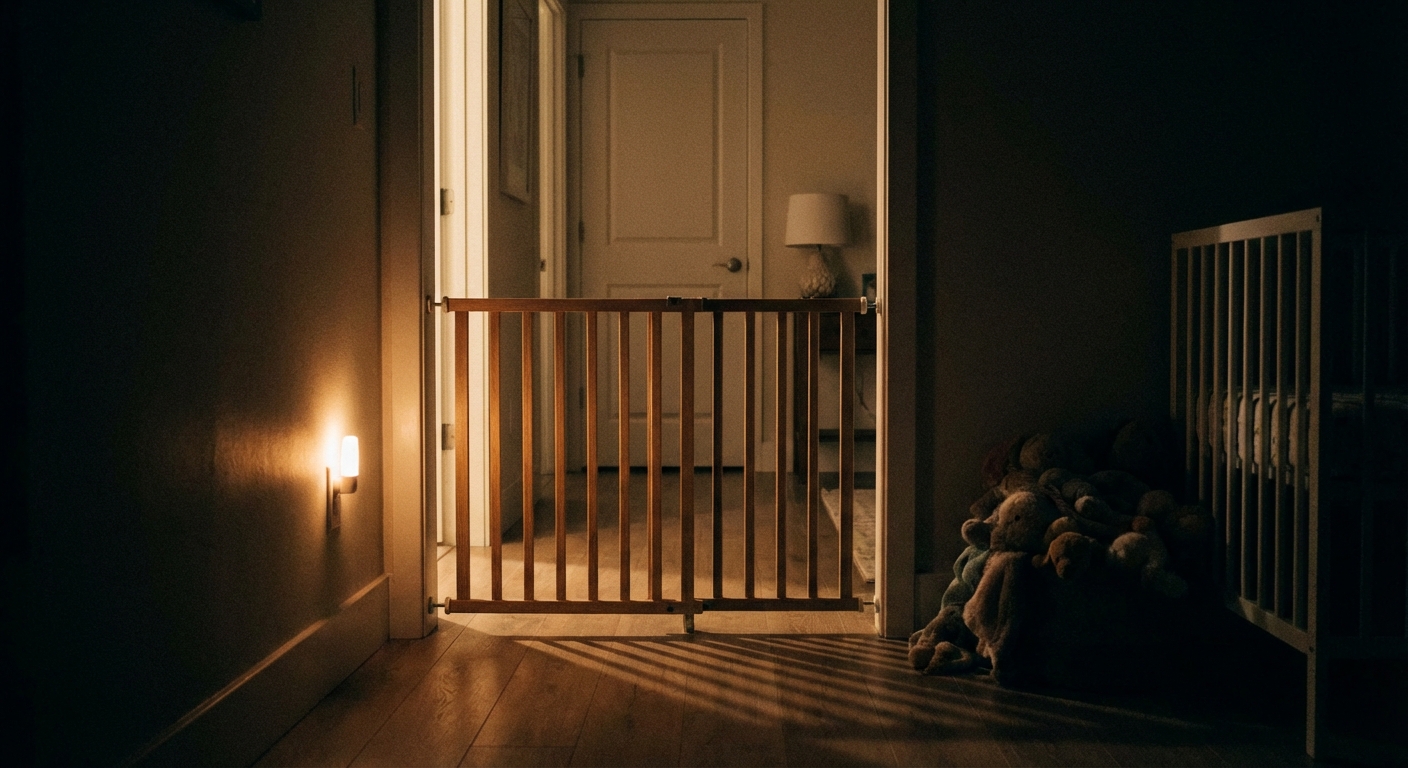
- What is often safer than roaming: keeping a toddler in a fully toddler-proofed room with a reliable monitor, if you have thought through fire safety and quick caregiver access. Some families use a baby gate in the doorway or a childproof cover on the inside knob for a short period during the transition.
- Why families do this: a wandering toddler can get hurt fast in a dark house. Keeping them in a safe room can be safer than expecting a 2 or 3 year old to make safe choices at 3 AM.
- Fire safety tip: a closed door can slow smoke and fire spread. Whatever you choose, make sure adults can open the door quickly, and consider your home’s layout and escape routes.
If you are unsure what is safest in your specific setup, ask your pediatrician and consider your local fire department’s guidance for children in bedrooms.
Step-by-step: a transition plan that protects sleep
Here is the plan I use with families and with my own kids. It is simple on purpose.
Step 1: Pick a calm week
Avoid starting the week of a vacation, house guests, a move, or when your toddler is sick. If you can, choose a stretch of 5 to 7 nights when you can be consistent.
Step 2: Talk about the change during the day
Keep it light and confident:
- “You are going to sleep in your big kid bed.”
- “At night, your job is to stay in bed.”
- “If you need me, you can call me and I will check on you.”
One or two sentences. No long speeches. Toddlers treat long speeches like negotiations.
Step 3: Keep bedtime routine exactly the same
This is not the moment to introduce a new bath schedule, three extra books, or a surprise bedtime snack tradition. Familiar routine equals safety.
Step 4: Practice during nap or quiet time
If your toddler still naps, start the new bed at nap. If not, do a 15 minute “rest and read” practice in the bed during the day. Praise the skill you want:
“You stayed in bed. That is exactly what big kids do.”
Step 5: Get caregivers on the same page
This is the sneaky make-or-break piece. Decide together what you will do when they get out of bed (silent return, checks, etc.), then respond the same way each time. Inconsistent responses teach toddlers to keep trying.
Step 6: Expect testing on nights 1 to 3
Most toddlers will get out of bed at least once, often many times. This is normal. It does not mean you did it wrong. It means your toddler discovered a new feature: legs.
How to stop nighttime wandering (without a battle)
You have a few well-supported behavioral tools that are realistic in real life. Choose one approach and stick with it for several nights.
The “silent return” method
This is boring on purpose, and it works for many kids.
- Walk your toddler back to bed calmly.
- Use the same short phrase every time: “It is sleep time.”
- Tuck in, leave.
- Repeat as many times as needed.
Key detail: keep your face neutral and your words minimal. Big reactions are toddler fuel.
The “one check” method
This is for the child who pops out because they want reassurance.
- At bedtime say: “I will check on you in 5 minutes.”
- Do a brief check: “You are safe. I love you. Goodnight.”
- Slowly increase the time between checks.
This method gives connection without turning it into an all-night hangout.
The toddler alarm clock or color light
If your child is closer to 3, a simple color-changing clock can help define the rule visually: red means stay in bed, green means morning. Use it for morning wake time first, then apply it to night wandering. Some kids love it, some do not care, but it can be a helpful tool.
The “bedtime pass” (for older toddlers)
For preschoolers or advanced negotiators, a bedtime pass can help some families. They get one pass to come out for a quick need, like a hug or potty. If they do not use it, they earn a small reward in the morning. This is not magic for a newly 2 year old, but it can be great for 3 to 4 year olds.
If wandering is constant, contain safely
If your toddler is repeatedly leaving the room and you are worried about safety, it is okay to use a gate or a childproof knob cover in a toddler-proofed room, as long as you can access your child quickly and you have considered fire safety for your home. Think of it as the new crib boundary. Your job is to provide the boundary. Their job is to be mad about it for a while.
Common problems and what to do
My toddler keeps getting out of bed to play
- Remove tempting toys from the sleep area for 1 to 2 weeks.
- Use a very dim night light.
- Do the silent return consistently.
My toddler is suddenly scared at night
- Validate briefly: “That felt scary.”
- Offer one comfort tool: a night light, a special stuffed animal, or a quick “monster check.”
- Avoid adding new complicated rituals that require you to stay longer and longer.
My child fell out of bed
- Use a guardrail or place the mattress lower.
- Consider a floor bed temporarily if falls keep happening.
- Keep a soft rug next to the bed.
Early morning wandering (the 4:58 AM party)
- Treat it like night: quiet, boring, back to bed if it is not time.
- Use a toddler clock for “okay to wake.”
- Check bedtime and nap schedule. Overtired and undertired kids both wake early.
Potty training and night wake-ups
If your child is potty training, do a calm bathroom trip before bed. At night, keep it boring: potty, back to bed, no extra chatting. If they are not dry overnight yet, that is normal and mostly developmental. Nighttime dryness often comes later and is not something you can train the same way you train daytime. Use a diaper or pull-up at night without shame.
Sleep away from home (daycare, grandparents, travel)
If your child sleeps somewhere else regularly, try to keep the key rules consistent (same bedtime routine, same “stay in bed” expectation, same response when they get up). Toddlers adjust faster when the boundary does not change depending on the adult.
What not to do (because it backfires at 2 AM)
- Do not introduce the bed as a punishment or consequence.
- Do not add exciting “just this once” sleepovers in your bed during the first week unless you truly want that to become the new routine.
- Do not start big bedtime negotiations. Toddlers hear negotiations as “keep trying.”
- Do not rely on threats. Fear may stop behavior briefly, but it worsens sleep and anxiety long-term.
A sample script you can copy tonight
If you want words that work when your brain is oatmeal:
“You are sleeping in your big kid bed. Your job is to stay in bed. If you need me, you can call me and I will check on you. I love you. Goodnight.”
When they get out:
“It is sleep time.”
That is it. You are not being cold. You are being consistent, which is comforting.
When to call your pediatrician
Most crib-to-bed struggles are normal boundary testing. Reach out for guidance if you notice:
- Snoring with pauses, gasping, or very restless sleep (possible sleep-disordered breathing).
- Night terrors or frequent, intense nighttime episodes that worry you.
- New sleep issues plus major behavior changes, weight loss, or persistent daytime sleepiness.
- You suspect anxiety, trauma, or a big regression you cannot explain.
You are not “failing” if you ask for help. You are parenting like a pro.
The bottom line
The crib-to-bed transition is less about the bed and more about boundaries. Wait if you safely can, switch promptly if climbing starts, toddler-proof the room like your sleep depends on it (because it does), and keep your responses calm and boring for a few nights.
And if tonight is night one, I want you to know this: you can do hard things, even on very little sleep. Pick a plan. Be consistent. You will get back to sleeping like a human.