A calm, practical overview for parents on measles symptoms, rash progression, contagious timeline, isolation basics, vaccine protection, and what to do after...
Mumps in Kids: Cheek Swelling, Contagious Period, and When to Return to School

Sarah Mitchell
Sarah Mitchell is a Registered Pediatric Nurse and a mother of three who has spent over a decade helping families navigate the beautiful, chaotic early years of childhood. She combines evidence-based medical knowledge with real-world parenting experience to offer practical, compassionate advice. At Awesome Parent, Sarah's mission is to help exhausted parents find solutions, trust their instincts, and finally get some sleep.
If your child wakes up with a suddenly puffy face and says it hurts to chew, your brain will do what every parent brain does: sprint to worst-case scenarios. Take a breath. Mumps is uncommon in many places thanks to the MMR vaccine , but it still pops up, especially during outbreaks in schools, camps, and colleges.
Below is what mumps usually looks like, when kids are contagious, how long they need to stay home, what you can do for comfort, and when it is time to call your pediatrician right away.
What is mumps?
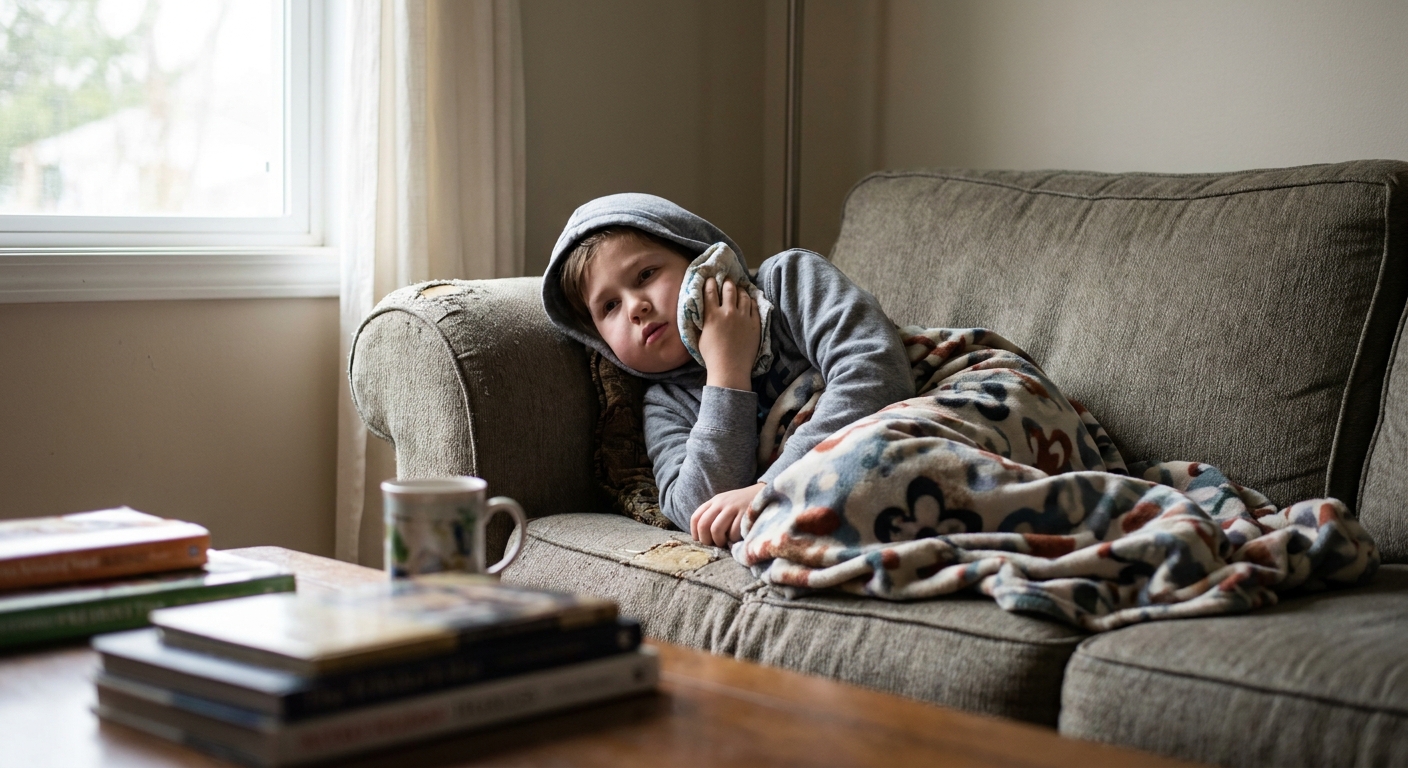
Mumps is a viral illness that most famously causes swelling of the salivary glands, especially the parotid glands located near the jaw and in front of the ears. It spreads through respiratory droplets and saliva, so think: coughing, sneezing, close talking, shared drinks, shared utensils, and crowded indoor spaces.
Because it is a virus, antibiotics do not help. Treatment is focused on comfort and watching for complications.
What it looks like
Mumps can start like a plain old viral bug before the classic swelling shows up. Some kids have mild symptoms, and a small number have no symptoms at all but can still spread it.
Early symptoms (often 1 to 2 days before swelling)
- Low-grade fever
- Headache
- Muscle aches
- Tiredness and low appetite
- Sore throat or just feeling “off”
Classic cheek and jaw swelling
Parents usually describe it like this:
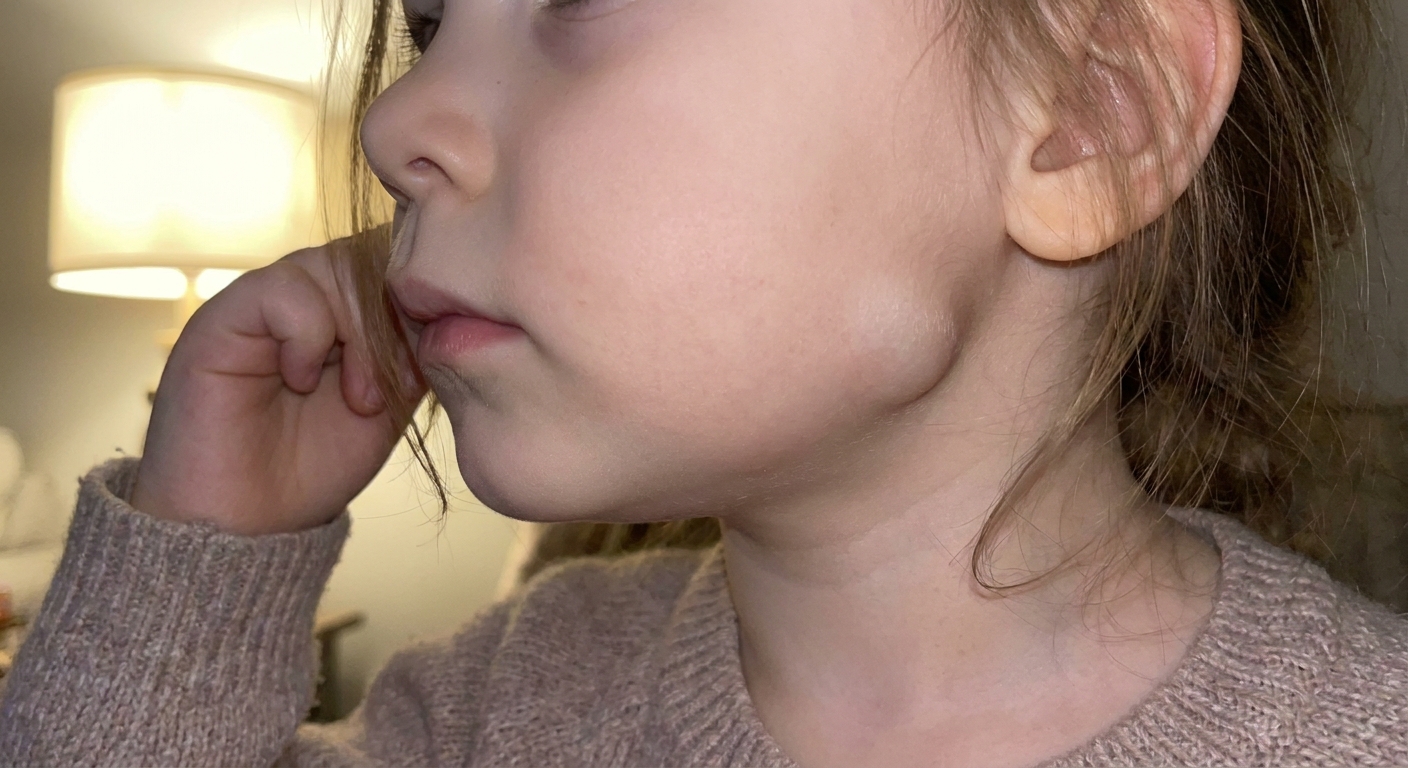
- “Chipmunk cheeks” or a suddenly rounded face
- Swelling in front of the ear and along the jaw, sometimes on one side at first, then both
- Pain with chewing or swallowing, especially with sour foods (they make saliva glands work harder)
- Earache-like pain without an ear infection
- Jaw tenderness when you touch near the angle of the jaw
The swelling typically peaks over 1 to 3 days and can last about 5 to 10 days.
How long is it contagious?
This is the piece parents need most for protecting siblings, classmates, and grandparents.
- Most contagious (generally): in the days right around when swelling starts and the first few days after
- Contagious window used for isolation (common public health guidance, including CDC-style recommendations): about 2 days before salivary gland swelling begins until 5 days after swelling starts
- One nuance: some public health sources note people may be contagious up to 5 days before swelling starts, which is why outbreaks can move fast
So, a practical way to think about it is: about 2 days (and possibly up to 5 days) before swelling begins through 5 days after it starts, depending on the source and the situation. When in doubt, follow your local health department guidance, especially during an outbreak.
Staying home and school
Guidance can vary by local health department and school policy during an outbreak, but the standard public health recommendation is:
- Stay home and avoid close contact for 5 full days after parotid (cheek/jaw) swelling begins.
Day 0 is the day you first notice the swelling. Many kids can typically return on Day 6 if they are improving and feel well enough to participate, and if that aligns with school rules and local public health guidance.
Practical tip from the triage desk: If you are unsure when swelling truly started, be conservative and ask your child’s clinician or your local health department. They would rather you over-isolate than accidentally seed a classroom outbreak.
What about siblings and classmates?
During known outbreaks, exposed kids may get additional instructions, especially if they are unvaccinated, under-vaccinated, pregnant household members are involved, or someone at home is immunocompromised. Your local health department guidance matters here.
Also: let the school nurse or administration know if mumps is suspected so they can follow their outbreak plan.
MMR vaccine basics
The MMR vaccine (measles, mumps, rubella) is the best tool we have to prevent mumps and reduce complications.
- Two doses protect better than one. Many cases in outbreaks occur in people who are unvaccinated or who only received one dose.
- Two-dose protection is good but not perfect. In real-world studies, effectiveness varies by setting and outbreak. It is often estimated in the high-80% range, but it can be lower in some outbreaks. Your pediatrician or local health department can point you to the most relevant numbers for your area.
- Protection can fade over time. That is one reason mumps outbreaks can happen in places with close contact like colleges, camps, and sports teams.
- Breakthrough cases can happen. Vaccinated kids who get mumps often have milder illness and fewer complications than unvaccinated kids, and swelling may be less dramatic.
Typical schedule: first dose at 12 to 15 months, second dose at 4 to 6 years (varies slightly by country and region). If you are not sure whether your child is up to date, your pediatrician can check the record and advise.
Sometimes a third dose is recommended during certain outbreaks for people at increased risk. This is not “routine,” it is outbreak-specific, and it comes from public health officials and your clinician.
Home care that helps
There is no antiviral medication that reliably treats routine mumps. Comfort care makes a real difference, especially because chewing and swallowing can hurt.
Hydration and easy calories
- Offer frequent sips: water, oral rehydration solution, diluted juice, popsicles, ice chips.
- Choose soft foods: yogurt, oatmeal, smoothies, mashed potatoes, soup, scrambled eggs.
- Avoid sour or acidic foods (orange juice, lemonade, sour candy). They can trigger salivary gland pain.
Pain and fever relief
- Use acetaminophen or ibuprofen if your child can take them, following label directions and your clinician’s guidance.
- A cool or warm compress on the swollen area can be soothing. Let your child pick which feels better.
Rest and isolation sanity
- Plan for a low-key week: movies, audiobooks, LEGO time, and very little pressure to “bounce back.”
- Teach everyone to use separate cups and utensils and wash hands often.
- Cover coughs and sneezes, and clean high-touch surfaces (doorknobs, remotes, bathroom handles).

Complications to watch
Most children recover without serious problems, but mumps can sometimes cause complications. Call your child’s clinician promptly if you notice concerning symptoms.
Orchitis (postpubertal boys)
Mumps can cause orchitis, which is painful swelling of a testicle. This is most common in postpubertal boys and teens and is uncommon in prepubertal boys. It often shows up several days after the salivary gland swelling starts, but timing varies.
Seek medical care the same day if an older boy has:
- Testicular pain or swelling
- Redness or warmth of the scrotum
- Fever returning after it seemed to improve
- Nausea, vomiting, or severe lower belly pain
This matters because other urgent conditions (like testicular torsion) can look similar and need immediate evaluation. Long-term infertility from mumps is rare. Testicular shrinkage (atrophy) can occur but is uncommon, which is another reason to get evaluated promptly.
Other complications that need guidance
- Dehydration from poor drinking
- Pancreatitis: significant belly pain, persistent vomiting
- Meningitis or encephalitis (rare): severe headache, stiff neck, confusion, extreme sleepiness
- Hearing changes (rare): sudden hearing loss or persistent ringing
- Ovarian inflammation in postpubertal girls (less common): lower belly pain with fever
When to get help now
Trust your gut. If your child looks very unwell or something is not adding up, get help.
Go to urgent care or the ER now if your child has:
- Trouble breathing or swallowing
- Signs of dehydration: very dry mouth, no tears, peeing much less, dizziness, or a baby with fewer wet diapers
- Severe headache, stiff neck, confusion, unusual sleepiness, or a seizure
- Severe belly pain or repeated vomiting
- New testicular pain or swelling (older boys and teens)
Call your pediatrician soon if:
- Your child has cheek or jaw swelling and you suspect mumps
- Fever lasts more than a few days or returns after improving
- Pain is not controlled with typical comfort measures
- There is a pregnant household member, a newborn, or someone immunocompromised at home
Important: If you suspect mumps, call ahead before going in. Clinics often arrange a specific rooming plan to reduce exposure to other families.
How it is diagnosed
Clinicians usually diagnose mumps based on symptoms plus testing, especially if there is an outbreak or a public health concern.
- A buccal (cheek) swab from near the parotid duct is commonly used for viral testing (often RT-PCR). PCR is typically most useful when collected as early as possible after swelling starts, often within the first 3 days.
- Blood tests (serology) may be used in some situations, but timing matters. Results can also be harder to interpret in vaccinated kids.
If your child has symptoms that look like mumps, it is still worth being evaluated. Other illnesses and gland infections can mimic it, and the isolation guidance is different depending on the cause.
What else looks like mumps?
Not every puffy jaw is mumps. A clinician may also consider:
- Other viral infections that can cause parotid swelling
- Bacterial parotitis
- Swollen lymph nodes from a cold or strep
- Dental infections
- Salivary stones or duct blockage
This is another reason it is smart to call your pediatrician if the story fits mumps, especially during an outbreak.
Protecting the family
When one child has mumps, everyone in the house is suddenly very into the concept of “personal cups.” A few realistic steps help.
- Do not share drinks, utensils, straws, toothbrushes, or lip balm.
- Handwashing with soap and water, especially after wiping noses and before meals.
- Masking can reduce spread if a sick child must be around others, but isolation is the key tool.
- Check vaccine records for siblings and adults in the home. Ask your clinician if anyone needs catch-up vaccination.
Public health note: Suspected or confirmed mumps is typically reportable. You may be contacted by your local health department to help with outbreak control and exposure guidance.
Quick FAQ
Can my vaccinated child still get mumps?
Yes, but it is less likely, and illness is often milder. During outbreaks, vaccinated people can still get infected, especially with close contact exposure.
How long does mumps last?
Many kids feel most uncomfortable for about a week. The gland swelling often improves within 5 to 10 days.
Does my child need antibiotics?
Not for mumps itself. Antibiotics only help bacterial infections, and mumps is viral. Your clinician will evaluate for other causes if something does not fit.
Is it safe to use lemon drops to help saliva flow?
For mumps, sour candies and citrus often make pain worse because they stimulate the salivary glands. If your child is uncomfortable, skip the sour stuff.
The bottom line
Mumps can look alarming, but most kids recover with rest, fluids, and pain control. The key family to-dos are (1) call your pediatrician if you suspect it, (2) follow local guidance and typically isolate for 5 days after swelling begins, (3) focus on hydration and soft foods, and (4) know the red flags, especially testicular pain in postpubertal boys.
If you are calling your pediatrician, it helps to write down your child’s age, when the swelling started, whether there is fever, MMR vaccine dates if you have them, and any known exposures at school or activities.