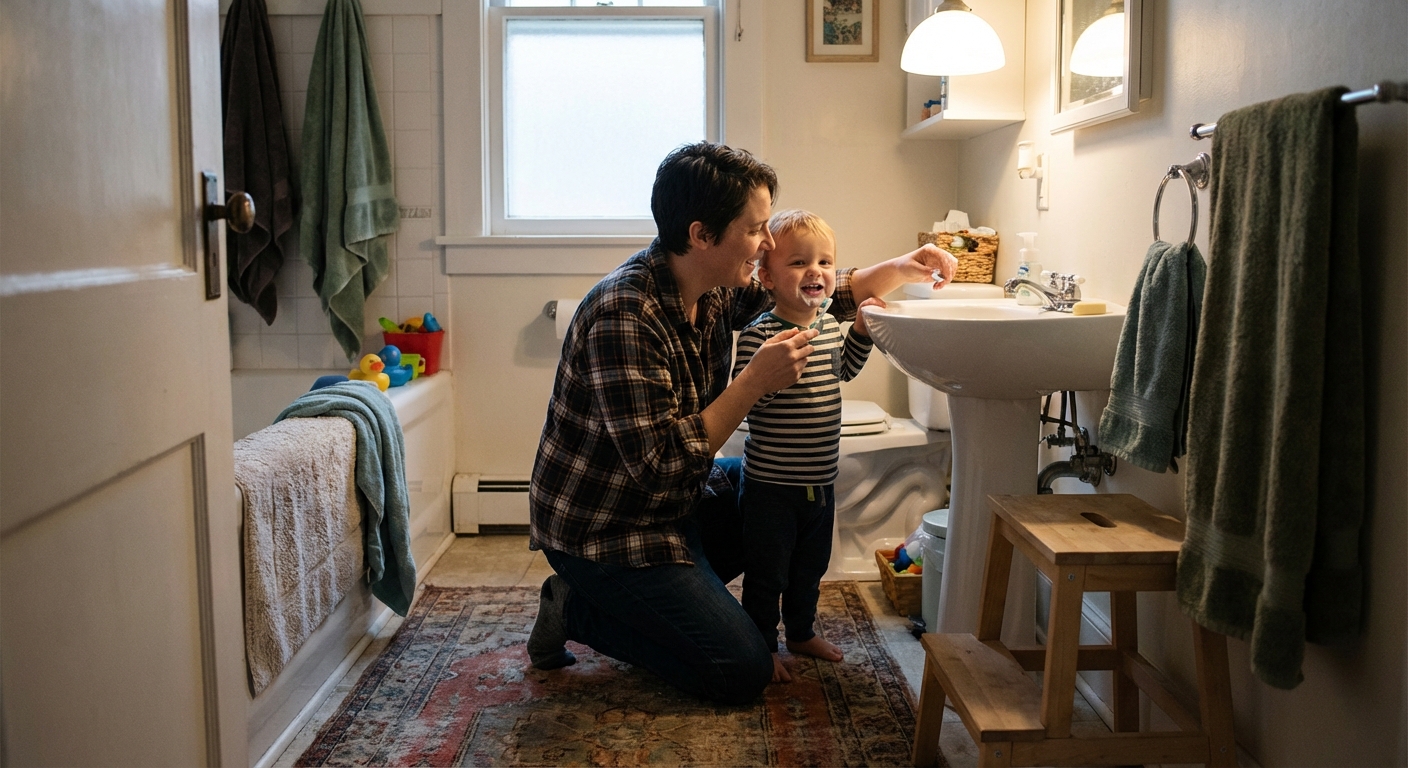
Songs, choices, playful routines, and calm boundaries that work. Plus toddler brushing technique, fluoride amounts by age, and what to do during a meltdown.
Nail Biting in Toddlers

Sarah Mitchell
Sarah Mitchell is a Registered Pediatric Nurse and a mother of three who has spent over a decade helping families navigate the beautiful, chaotic early years of childhood. She combines evidence-based medical knowledge with real-world parenting experience to offer practical, compassionate advice. At Awesome Parent, Sarah's mission is to help exhausted parents find solutions, trust their instincts, and finally get some sleep.
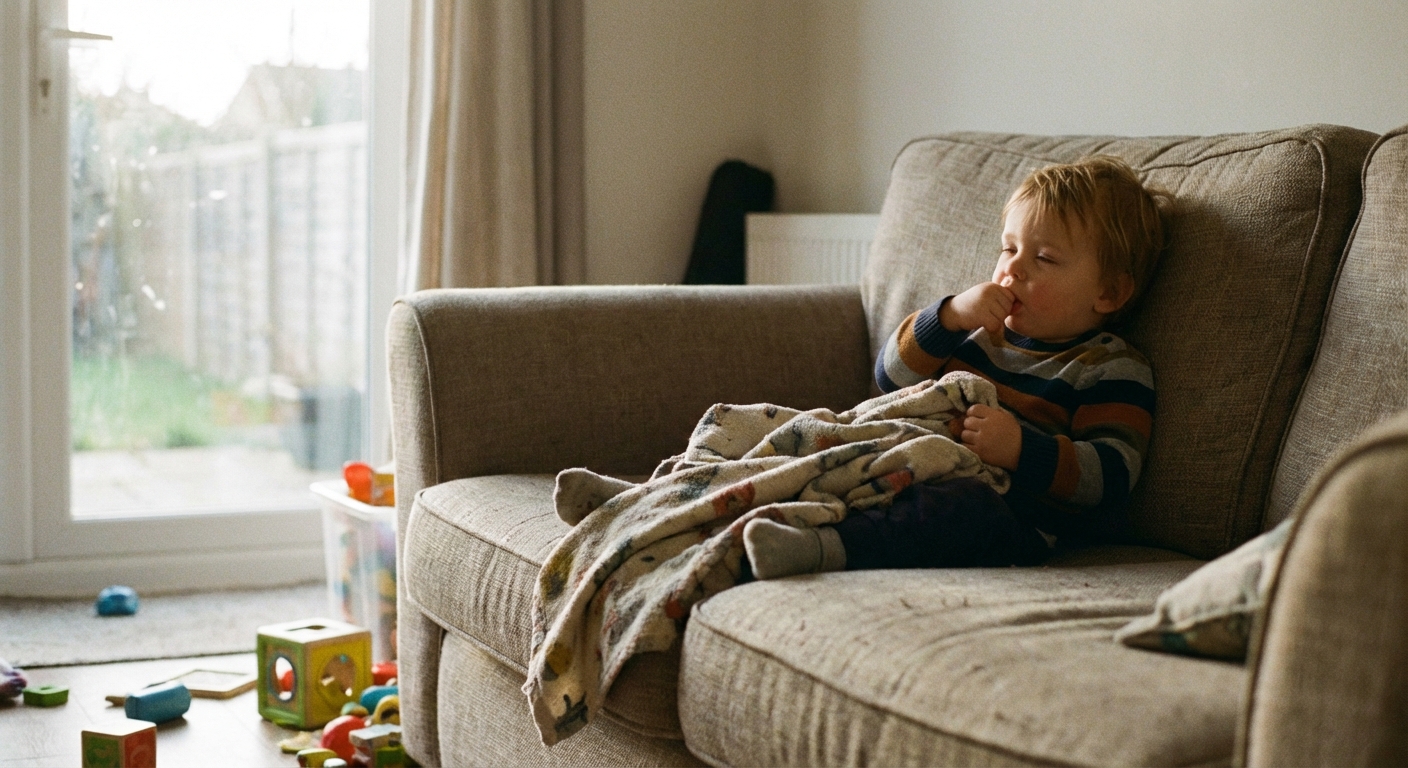
If you have a toddler who suddenly treats their fingertips like a snack, you are in very good company. Nail biting (and cuticle picking) is one of those classic “tiny human coping skills” that can show up during big developmental leaps or changes at home.
As a pediatric nurse and a mom of three, I want to offer you two reassuring truths right up front: nail biting is common, and it is rarely a sign that anything is “wrong” with your child or your parenting. It is usually a habit, a sensory comfort, or a way to manage feelings when their brain does not have better tools yet.
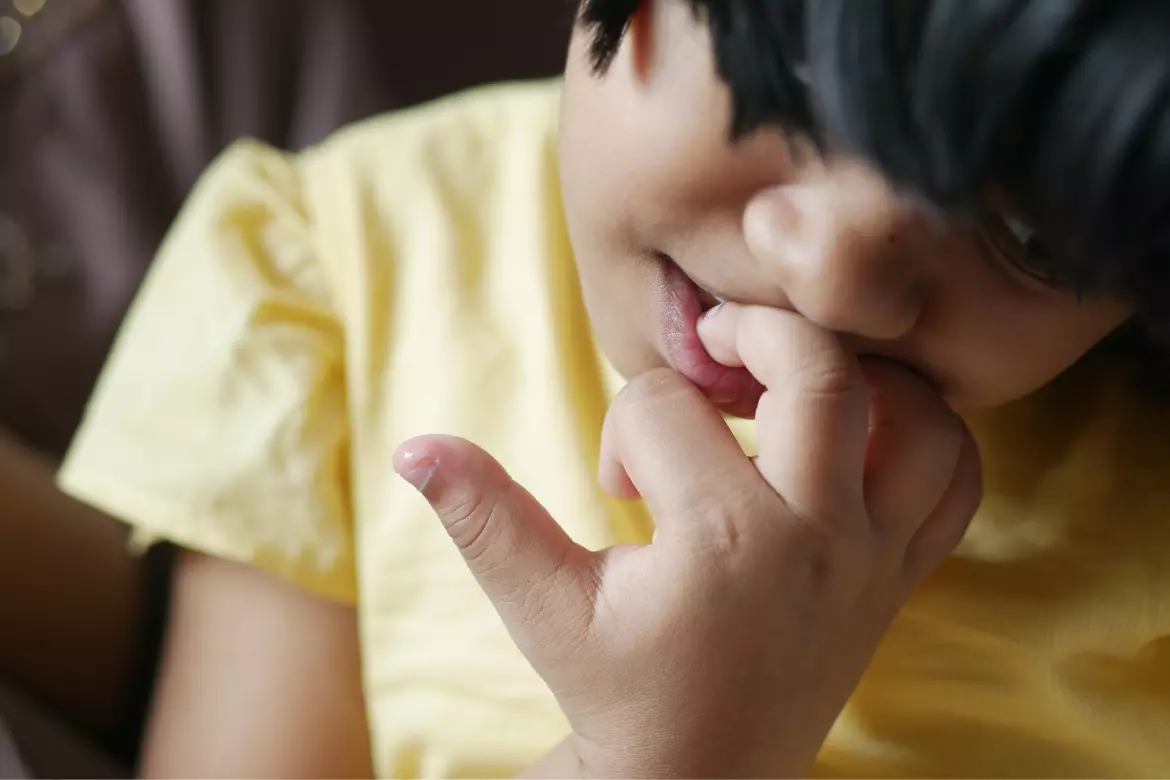
Let’s talk about why toddlers bite their nails, what the real hygiene risks are, what helps without shame or power struggles, and when it deserves a quick check-in with your pediatrician or dentist.
Why toddlers bite their nails
Nail biting is most often discussed in school-aged kids, but it can start in the toddler years too. In ages 2 to 5, you might see it come and go depending on stress, routines, and simple opportunity.
Stress or big feelings
Toddlers have huge emotions and limited ways to regulate them. Nail biting can be a self-soothing strategy when they feel:
Anxious (new daycare, new sibling, moving, travel, a parent returning to work)
Overtired (hello, bedtime battles)
Overstimulated (busy days, noisy environments)
Frustrated (when they want independence but still need lots of help)
Boredom and “idle hands” moments
Some toddlers bite more when their brain is under-stimulated. Common times include:
Car rides
Watching a show
Listening to stories
Waiting at appointments
This is less about worry and more about habit and sensory seeking.
Mouth-based soothing
At this age, it is very normal for the mouth to be a go-to tool for comfort and regulation. Nail biting can show up alongside other body-focused habits like thumb sucking, chewing on shirt collars, or mouthing toys.
Copying or curiosity
Toddlers learn by imitation. If they see a sibling or adult biting nails, they may try it too. They also may bite simply because they noticed a little jagged edge and want it “gone.” Their problem-solving skills are creative, just not always hygienic.
Skin irritation or sensory triggers
Dry skin, peeling cuticles, or rough nail edges can invite picking and biting. Some kids are extra sensitive to how their nails feel and will “fix” them with their teeth.
And sometimes, persistent nail biting is just one piece of a bigger sensory picture. Neurodivergent kids, or kids with sensory processing differences, may be more likely to seek oral input. This is not a problem to “label” on your own, just a helpful lens if the habit is intense or hard to redirect.
Germs and infection risks
Nail biting does increase exposure to germs. But you do not need to spiral into a cleaning frenzy. The goal is to understand the main risks so you can prevent the most common problems.
What kids can pick up
Stomach bugs and respiratory viruses: Toddlers touch everything. Hands go to mouth. That is the germ highway.
Pinworms: These are common in preschool and spread easily through hand-to-mouth contact. Nail biting can increase risk if pinworms are in a classroom or household.
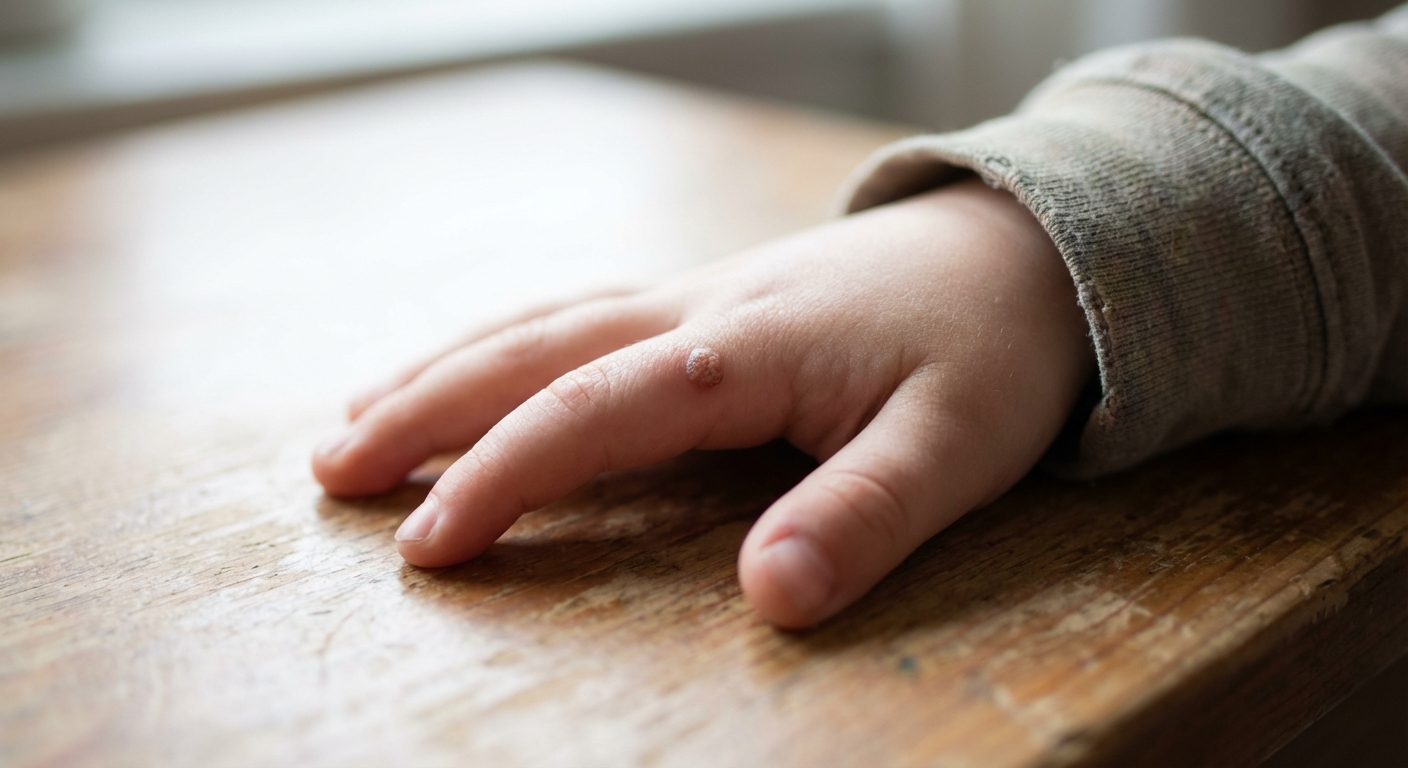
Warts: Viruses that cause warts can spread around the nails, especially when skin is broken.
Skin infections around the nail: Small tears can let bacteria in.
Common skin problems from biting
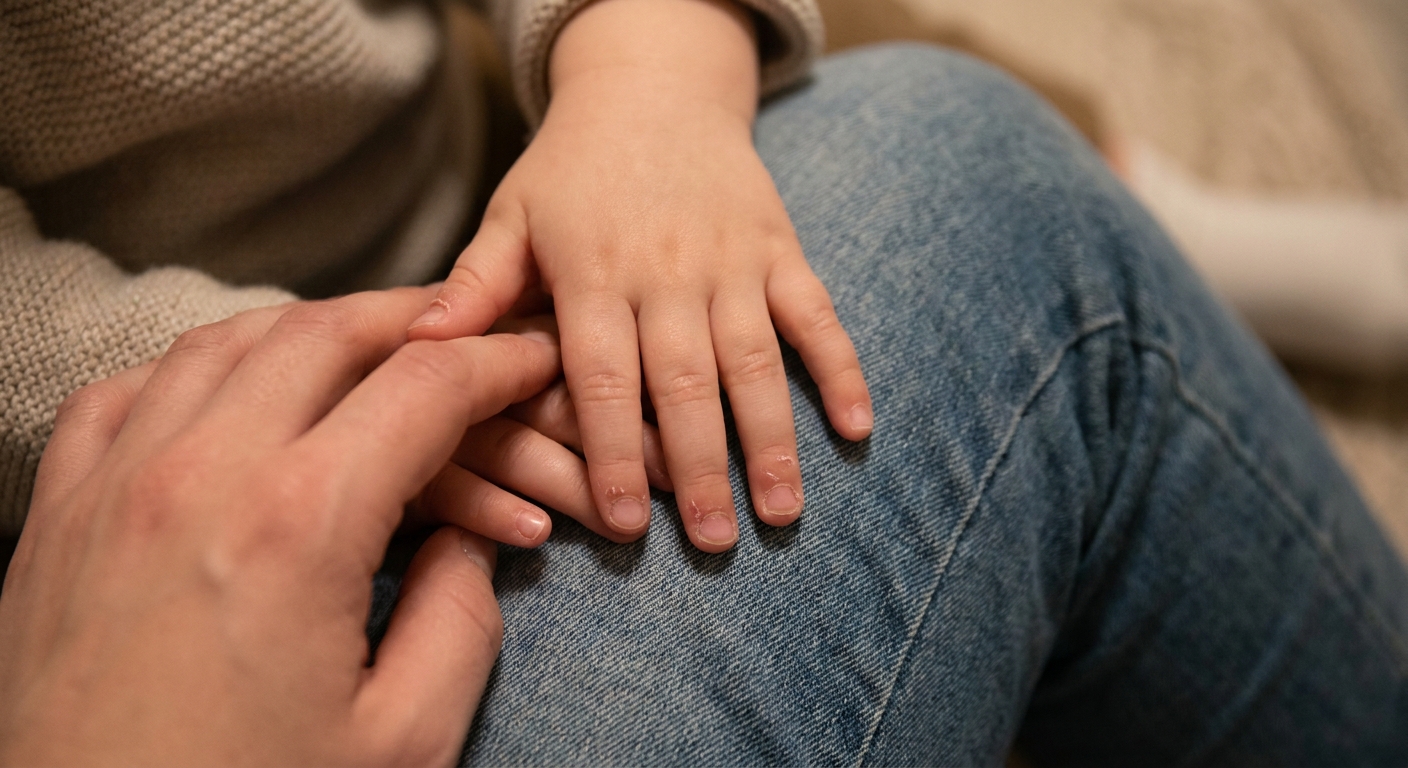
The most common issue I see is irritated, cracked skin that becomes sore. Sometimes this turns into paronychia, which is an infection of the skin around the nail. You might notice redness, swelling, warmth, tenderness, or pus near the nail edge.
Dental and mouth concerns
Occasional nail biting usually is not a dental emergency. But frequent, intense biting can irritate the gums or create sharp nail edges that poke the mouth. In older kids, long-term nail biting can contribute to tooth wear or bite changes, but that is less common in toddlers.
When to call the pediatrician
Call your pediatrician if you see:
Spreading redness, increasing swelling, or significant pain around the nail
Pus or a blister-like pocket near the nail
Fever, or your child seems unwell
Red streaking up the finger or hand (urgent)
A nail that is lifting, very discolored, or repeatedly infected
If you are seeing worsening redness, swelling, or pain, especially over 24 to 48 hours, it is worth a quick call. Nail-area infections can sometimes worsen quickly once bacteria get into broken skin.
Simple hygiene steps that help
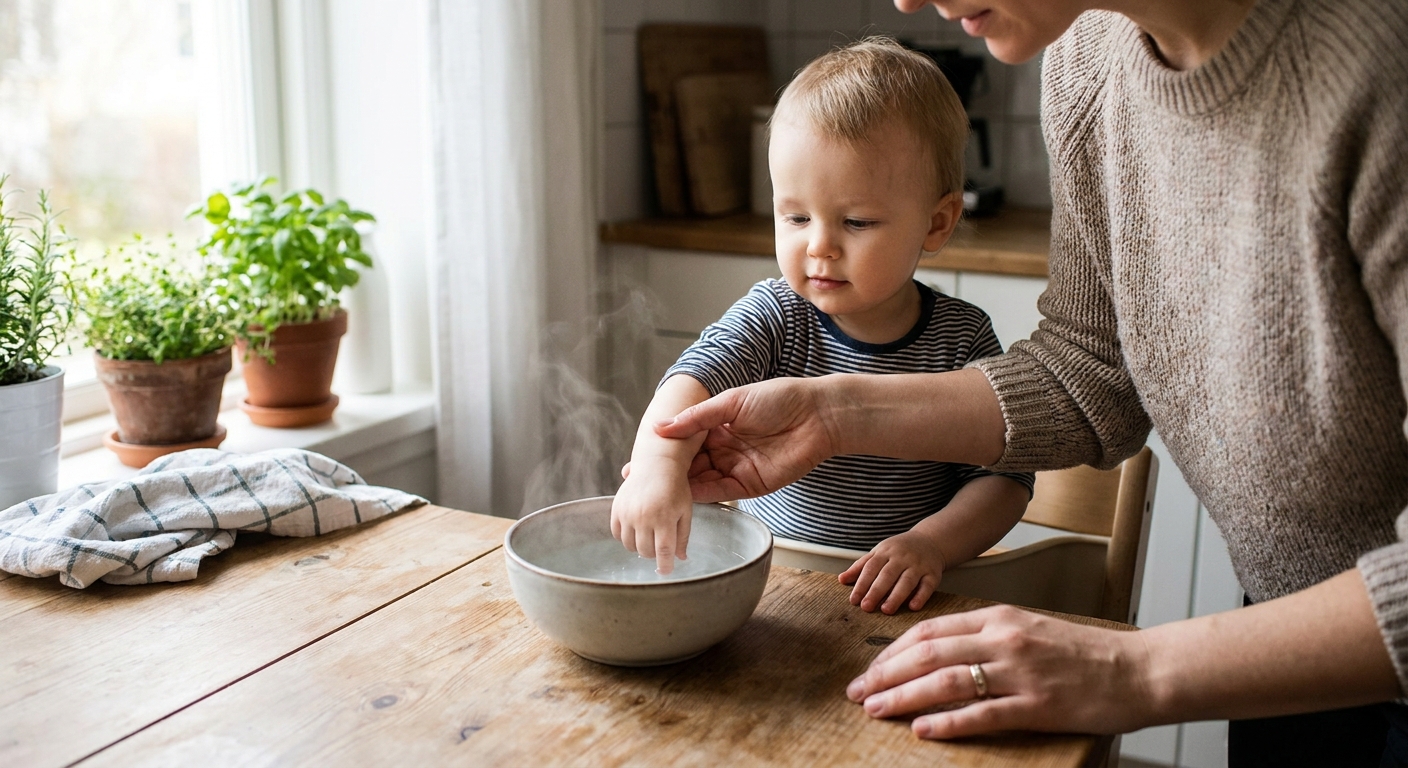
Wash hands after daycare and before meals (a quick 20 seconds with soap and water when you can).
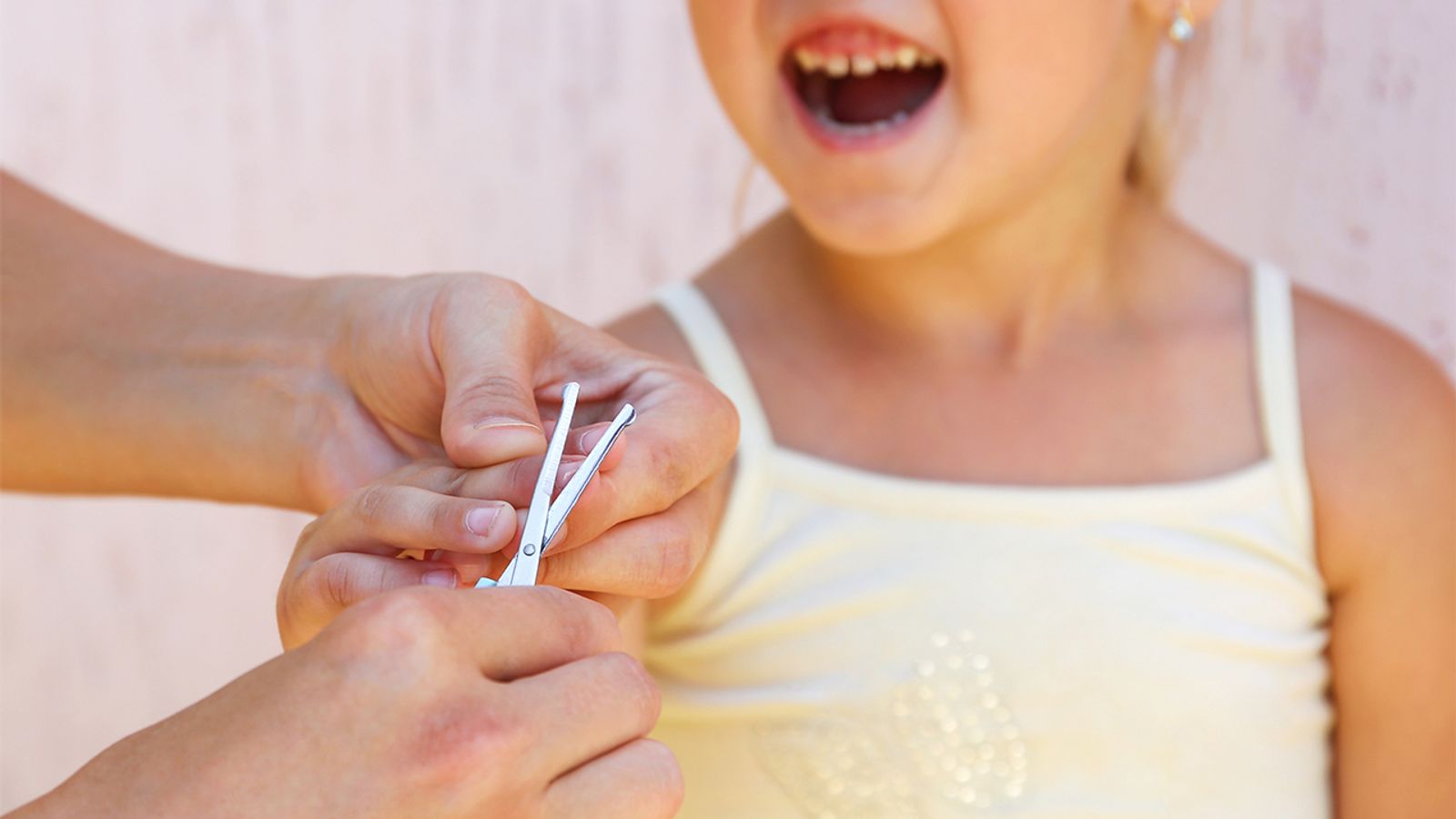
Keep nails trimmed short and smooth to reduce trapped dirt and jagged edges.
Moisturize cracked skin so there are fewer “tempting” rough spots to chew.
Gentle ways to help
Most toddlers do not respond well to “Stop that!” because nail biting is often automatic. The goal is to reduce triggers, protect the skin, and build replacement habits.
1) Use a calm script
Try a simple phrase that is not loaded with disappointment:
“Your fingers want to go in your mouth. Let’s give your mouth something else.”
“I see you biting. Your nails are not for chewing. Here’s something safe to chew.”
“Let’s help your fingers feel better.”
Avoid calling it “gross” or threatening consequences. Shame tends to increase anxiety, which can increase the biting.
2) Find the pattern
For a few days, notice when it happens most:
Before bed?
During screens?
At daycare pickup?
In the car seat?
Once you know the hot spots, you can plan supports that actually fit real life.
3) Keep nails smooth and short
This is simple, but it is one of the highest-impact steps. Jagged edges are an invitation to bite. Aim for:
Frequent trimming (little and often)
A gentle file to smooth rough edges
Extra attention after baths, when nails are softer
4) Protect and moisturize
If the cuticles and fingertips are dry or cracked, biting becomes more tempting and more harmful. Try:
Thicker fragrance-free moisturizer after hand washing and before bed
Petroleum jelly or a barrier ointment on cracked areas
In cold weather, mittens outside and moisturizing more often
If your child has eczema around the hands, addressing the eczema can significantly reduce picking and biting.
5) Offer a safe replacement
Because toddlers often have a real oral or sensory need, substitution tends to work better than “willpower.” A few toddler-friendly options:
A teether made for toddlers (check the age label, avoid small parts, and supervise use)
Busy hands tools: a larger textured ball, a pop-it board, or play-dough during high-risk times (choose items that are age-appropriate, and avoid anything with small removable pieces for kids under 3)
A comfort object for transitions (small blanket, stuffy)
Crunchy snacks during high-risk times if appropriate for your child (only when seated and supervised, and skip choking hazards for toddlers such as whole nuts, popcorn, or hard chunks)
For car rides or waiting rooms, keeping a “busy bag” can be surprisingly effective. If you use any chew products marketed as “chewelry,” use extra caution: many are designed for older children. For toddlers, stick with products labeled for their age and supervise closely.

Routines that help
Toddlers thrive on predictable rhythms. A routine does not have to be perfect. It just needs to be repeatable.
A simple hands and mouth routine
Morning: quick nail check, smooth any sharp edges
After daycare: wash hands, snack, then a short decompress activity (books, play-dough, outside time)
Before bed: bath, moisturize hands, bedtime story with a comfort item or safe teether nearby
Connection before correction
If nail biting spikes during transitions, your toddler may need a quick reconnection cue. Even 60 seconds helps:
“Do you want a big squeeze hug before we go inside?”
“Let’s do three deep breaths together.”
“Show me your hands. High five.”
Praise what you want to see
Skip big dramatic celebrations and do small, specific praise:
“I noticed you kept your fingers out of your mouth while we read. Nice job.”
“You used your teether in the car. That was smart.”
For many toddlers, attention is fuel. Try to give the most attention to the behaviors you want to grow.
Bitter nail products
Many families ask about bitter-tasting nail polish. In toddlers, I usually do not make this my first choice because:
It can become a power struggle.
Some toddlers just push through it.
It does not teach a replacement skill.
Some products are not meant for very young children, and toddlers may ingest more than you expect.
If you choose to try it, check the product labeling for age guidance, consider asking your pediatrician, and pair it with a replacement habit and lots of positive coaching.
What not to do
These are common strategies that can backfire:
Do not shame: “That’s disgusting” can create secrecy and anxiety.
Do not punish: taking away toys or treats rarely helps a sensory habit.
Do not threaten: toddlers cannot logic their way out of an automatic behavior.
Do not force their hands down: it can escalate into a control battle.
Instead, think: protect the skin, reduce triggers, offer a substitute, repeat calmly. Consistency is the secret sauce.
When to get help
Most toddler nail biting improves with time and gentle support. But persistent or intense biting can sometimes signal an underlying issue that is worth addressing.
Consider a pediatric check-in if:
The skin around nails is frequently bleeding or infected
Your child seems very anxious, has major sleep changes, or the biting started after a significant stressor and is escalating
There are other repetitive behaviors that interfere with daily life (constant hair pulling, severe skin picking)
You suspect pinworms (itchy bottom at night, disturbed sleep, worms seen around the anus or in stool)
The habit is causing pain but your child cannot stop
How long to try at-home strategies
If you are seeing daily nail biting with skin damage, I would try the trimming, moisturizing, and replacement plan consistently for about 2 to 4 weeks. If there is no improvement, or if things are getting worse, it is reasonable to loop in your pediatrician. Of course, if there are signs of infection, call sooner.
Consider a dental visit if:
You notice chipped teeth, tooth sensitivity, or gum irritation
Nail biting is frequent and forceful, especially as your child gets older
Your child already has bite or alignment concerns and nail biting is persistent
In many cases, your pediatrician or dentist will simply confirm it is common, help rule out infection or oral issues, and give you tailored habit-reversal tips.
Quick FAQ
Is nail biting a sign of anxiety in toddlers?
Sometimes, but not always. It can be stress-related, but it is also commonly boredom-based or sensory. Look at the timing and what else is going on. If your child seems generally happy and regulated, it may simply be a habit.
Will they outgrow it?
Many toddlers do, especially when you reduce triggers and help them practice a replacement behavior. Some kids carry it into older childhood, but that does not mean you have failed. It just means their brain likes that coping tool, and they need help swapping it for a better one.
Does nail biting cause worms?
Nail biting does not create pinworms, but it can increase the chance of spreading them if pinworms are present in a group setting. Good hand hygiene and trimming nails can reduce risk.
Should I use mittens?
Mittens can help temporarily for severe skin damage or sleep-time biting, but they do not teach the skill of stopping. If you use them, choose breathable mittens that fit well, follow safe sleep guidance, and pair with daytime strategies like trimming, moisturizing, and substitution. Also consider whether bedtime anxiety, overtiredness, or routine changes are driving the habit at night.
A gentle bottom line
Toddler nail biting is usually a normal phase, not a parenting report card. Your job is not to make it stop overnight. Your job is to keep your child’s skin healthy, lower stress where you can, and offer better tools for those moments when their fingers drift up toward their mouth.
If you are seeing frequent infections, significant anxiety, or damage to the nails and skin, loop in your pediatrician. You deserve support too, especially if this is happening during those long, exhausting stretches of early childhood.
Sarah Mitchell
Sarah Mitchell is a Registered Pediatric Nurse and a mother of three who has spent over a decade helping families navigate the beautiful, chaotic early years of childhood. She combines evidence-based medical knowledge with real-world parenting experience to offer practical, compassionate advice. At Awesome Parent, Sarah's mission is to help exhausted parents find solutions, trust their instincts, and finally get some sleep.