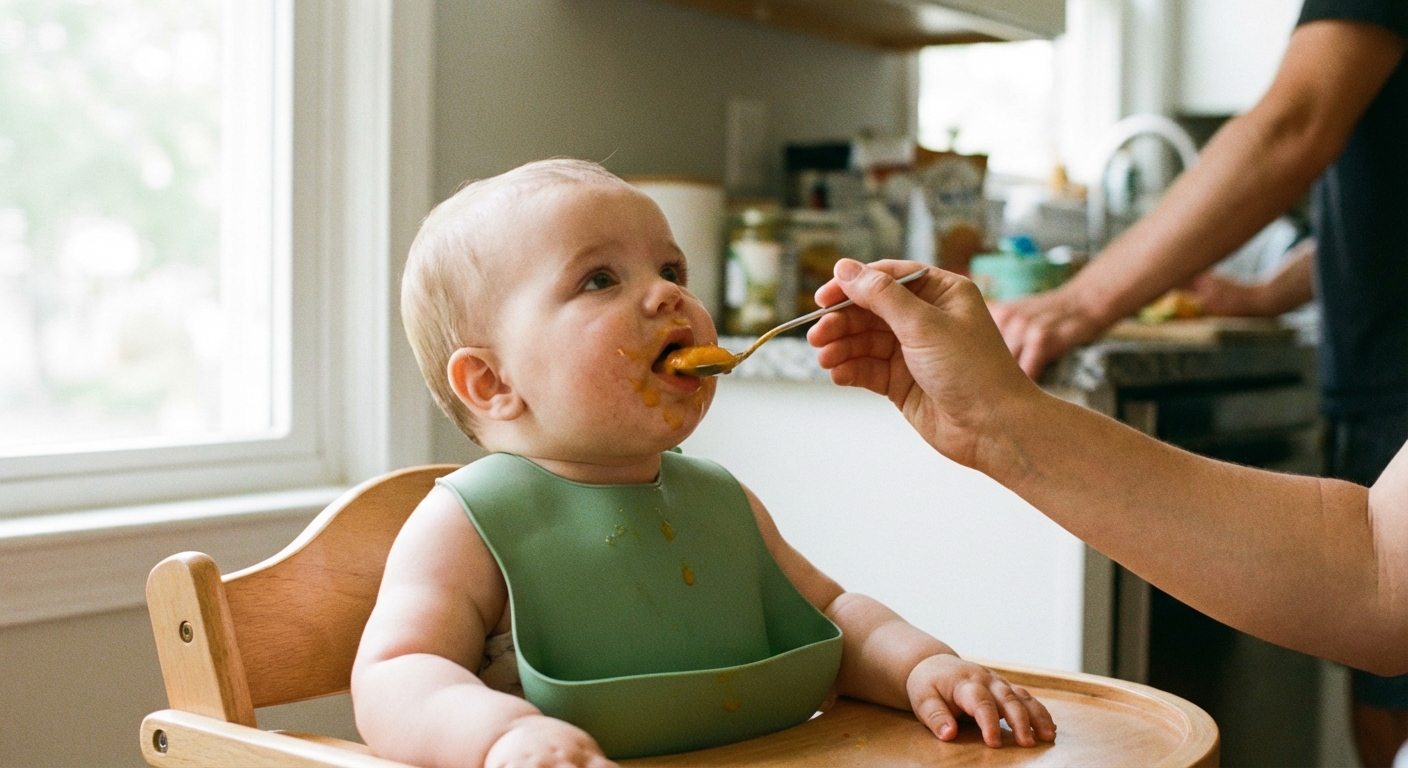
If your newborn turns red, grunts, and strains for minutes before a soft poop, it may be infant dyschezia. Here is what it means, comfort tips, and when to g...
Newborn and Infant Constipation: What’s Normal and What’s Not

Sarah Mitchell
Sarah Mitchell is a Registered Pediatric Nurse and a mother of three who has spent over a decade helping families navigate the beautiful, chaotic early years of childhood. She combines evidence-based medical knowledge with real-world parenting experience to offer practical, compassionate advice. At Awesome Parent, Sarah's mission is to help exhausted parents find solutions, trust their instincts, and finally get some sleep.
There are few things that can send a loving parent into a 2 a.m. panic faster than a baby who has not pooped in a day or three. I get it. In the pediatric clinic, “constipation” was one of our most common calls, and at home I have personally stared at diapers like they were going to reveal the meaning of life.
Here is the calming truth: infrequent stools are often normal in breastfed babies, especially after the first few weeks. Real constipation is less about how many days it has been and more about painful, hard stools and how your baby is acting.

Quick definition
Breastfed “skip days”
After feeding is established (often around 3 to 6 weeks), some exclusively breastfed babies poop less often. As their gut matures and they use milk efficiently, they may simply produce less waste day to day. It can be completely normal for a baby to go several days without a bowel movement if the stool, when it arrives, is still soft.
True constipation
Constipation means the poop is hard, dry, pellet-like or your baby seems to be straining in pain and having difficulty passing stool. Frequency alone does not diagnose constipation.
Key takeaway: A breastfed baby who has not pooped in 4 days but passes a large, soft stool and is feeding well is usually not constipated. A baby who poops daily but passes hard balls and cries is.
What normal poop can look like
First days
- Days 1 to 2: sticky, tar-like black or dark green meconium.
- Days 3 to 5: transitional stool, loosening and turning greenish to yellow.
- By about day 5: typical milk stools.
Breastfed patterns
- Texture: loose to pasty, often seedy or mustard-like.
- Frequency: in the early weeks, many babies poop multiple times a day. After a few weeks, some poop once daily, and some poop every few days.
- Smell: usually mild.
Formula-fed patterns
- Texture: thicker, more peanut-butter-like, sometimes firmer than breastfed stools.
- Frequency: often 1 to 3 times per day, but a range is normal.
- Color: yellow, tan, or brown is typical. Green can be normal too.
One important note: young babies do strain, turn red, and grunt even when they are not constipated. Often this is infant dyschezia , a normal coordination issue where they are learning to relax the pelvic floor while they push. If the stool is soft, that drama is usually coordination, not constipation.
How many days is too many?
This depends on age, feeding type, and symptoms. Use this as a practical guide, not a strict rule.
Exclusively breastfed babies
- Under 4 weeks: frequent stools are common. A sudden big drop in stools can be a feeding or intake concern, especially if wet diapers are also low.
- Over 4 to 6 weeks: it can be normal to go several days without a stool if baby is otherwise thriving and stools are soft.
Formula-fed babies
- Going a day without pooping can be normal.
- Going multiple days can still be normal for some babies, but if the stool is hard or baby is uncomfortable, treat it as possible constipation.
If you are seeing hard stools, blood, vomiting, poor feeding, or a very swollen belly, do not wait it out. Those are not “normal skip days.”
Signs it is constipation
- Hard, dry, or pellet-like stools
- Straining with distress and little output (some straining is normal, but crying in pain with hard stool is not)
- Blood streaks on the outside of stool (often from tiny anal fissures caused by hard poop)
- Bloated belly or noticeably increased gassiness with discomfort
- Decreased appetite or seeming uncomfortable during feeds
- Withholding behaviors (more common later in infancy and toddlerhood, but some babies do “clench” when they anticipate pain)
If you see recurrent blood, blood mixed into stool, or blood plus mucus, call your pediatrician. Sometimes blood is from a fissure, but it can also be a sign of irritation or cow’s milk protein intolerance, especially if baby has other symptoms.

Common causes
Breastfed babies
- Normal stool spacing after the first month
- Not enough milk intake (this is about overall intake, not the quality of milk)
- Illness or dehydration (rare in healthy breastfed babies, but possible)
Formula-fed babies
- Naturally firmer stool compared with breast milk
- Mixing formula incorrectly (too much powder can lead to constipation and dehydration risk)
- Switching formulas (temporary changes in stool pattern are common)
All babies
- Transition periods like starting daycare, mild illness, or schedule disruptions
- Early solid foods (usually closer to 4 to 6 months and beyond, which is a different phase than this article)
Important: If you are thinking about switching formulas because of constipation, check with your pediatrician first. Many babies do not need a switch, and frequent changes can sometimes create more tummy upset.
If constipation is severe, persistent, starts from birth, or is paired with poor growth, your pediatrician may want to evaluate for less common medical causes (for example thyroid issues, Hirschsprung disease, or anatomic concerns). That is not the most likely scenario, but it is worth naming so you know why clinicians ask those questions.
Safe home steps
If your baby is otherwise well and stools are just less frequent or slightly firm, these gentle steps are usually safe. If your baby is under 1 month or seems unwell, call your pediatrician before trying remedies.
1) Check feeding and hydration
- Breastfed: Make sure baby is latching well, feeding effectively, and producing steady wet diapers for age.
- Formula-fed: Recheck the label and measure carefully. Do not pack the scoop. Use the exact water-to-powder ratio recommended.
- Wet diaper reality check: After the first several days of life, many babies have around 6 or more wet diapers per day. Some variation is normal. If wet diapers drop noticeably, call your pediatrician.
- Extra water: In young infants, giving plain water is usually not recommended unless your clinician specifically tells you to. Too much water can be dangerous for babies.
2) Tummy massage
A gentle belly massage can help move gas and stool along. Use light pressure, like you are petting a cat, not kneading bread dough.
- Lay baby on their back when calm.
- Use your fingertips to rub in a clockwise circle around the belly button.
- Try 1 to 2 minutes, a couple of times a day.
3) Bicycle legs
Move baby’s legs like they are pedaling a bike. This can help with gas and can sometimes trigger a bowel movement.
4) Warm bath
A warm bath can relax the abdominal and pelvic muscles. Sometimes the magic happens in the tub. Sometimes it happens 10 minutes after you put a fresh diaper on. Babies have a sense of humor.
5) Rectal stimulation or glycerin, only with guidance
Some parents notice a bowel movement after a rectal temperature is taken because it can stimulate the rectum. For persistent constipation, pediatricians sometimes recommend an infant glycerin suppository. Because age and dosing matter, this is a “call first” step, especially for young infants.
Caution: Avoid making rectal stimulation a routine. Repeated stimulation can irritate delicate tissue and can become a habit you do not want to start.

What not to do
- Do not use honey, corn syrup, or herbal remedies in young infants unless your clinician recommends it. Honey is not safe for babies under 12 months due to botulism risk.
- Do not give laxatives, enemas, or mineral oil unless prescribed.
- Do not dilute formula to “help them poop.” Incorrect mixing can cause serious electrolyte problems.
- Do not assume all straining equals constipation. If the stool is soft, focus on comfort and time.
What about prune or pear juice?
Juice can be helpful for some constipated babies, but it is age-dependent and should be used thoughtfully.
- Under 1 month: call your pediatrician before giving anything other than breast milk or correctly prepared formula.
- Over 1 month: some clinicians recommend a small amount of pear or prune juice only if your baby’s clinician recommends it. A common office suggestion is 1 to 2 ounces, but the best amount depends on your baby’s age, size, and feeding pattern. Confirm with your pediatrician’s office before you try it.
If your baby is approaching the solids stage and constipation begins after introducing foods, that is a different situation than newborn “skip days.” Our solids-era constipation article focuses on fiber, food choices, and patterns that show up later.
Skip days: when to worry
Even if breastfed stool spacing can be normal, you should call your pediatrician if you notice:
- Fewer wet diapers than usual
- Poor weight gain or baby seems constantly hungry and unsatisfied
- Very sleepy or hard to wake for feeds
- Persistent vomiting (not just small spit-ups)
- Stool that is hard when it finally comes
In the clinic, constipation calls sometimes turned into feeding assessments. If intake is low, poop output often drops first.
Red flags
Trust your gut here. If something feels off, it is always appropriate to call.
Call urgently if your baby has
- Swollen, firm belly with significant discomfort
- Vomiting that is green or forceful and repeated
- Blood in the stool that is more than a small streak, or blood plus a sick-appearing baby
- Fever in a young infant (follow your clinic’s age-based fever guidance)
- Refusing feeds or signs of dehydration (very dry mouth, very low urine output, no tears when crying later on)
- No meconium in the first 24 to 48 hours of life
- Constipation starting from birth or ongoing severe constipation with poor growth
Seek emergency care now if
- Your baby is very lethargic, difficult to wake, or has trouble breathing
- Your baby has green vomit plus a distended belly
- You see signs of severe dehydration
How this differs by age
If you are thinking, “Wait, I read an article about constipation and it talked about fiber gummies and refusing the potty,” you are not wrong. Those topics are real, but they belong to a different stage.
- Newborn and young infant constipation: mostly about milk intake, normal stool spacing in breastfed babies, formula mixing, and gentle comfort measures.
- After starting solids: often related to lower fluid intake, stool bulk changes, iron-rich foods, and not enough fiber yet.
- Toddler constipation: frequently involves withholding, fear of painful poops, toilet training dynamics, and behavior patterns that need a longer plan.
In other words, this page is for the tiny humans who cannot negotiate with you yet. Toddler pages are for the tiny humans who absolutely can.
FAQ
My baby strains and cries but the poop is soft. Is that constipation?
Usually no. Many young babies have trouble coordinating the “push” and “relax” parts of pooping (often called infant dyschezia). If the stool is soft and baby settles afterward, this is often normal. Call your pediatrician if the crying is intense, feeds are affected, or stools become hard.
Is it normal for formula poop to be firmer?
Yes. Formula-fed stools are often thicker than breastfed stools. Constipation is when the stool becomes hard and difficult to pass or causes significant discomfort.
Can I switch formulas to fix constipation?
Sometimes a pediatrician recommends a change, but frequent switching is not always helpful. Before changing, confirm the formula is mixed correctly and talk with your baby’s clinician about the full picture, including growth and feeding tolerance.
My baby poops every day but they are little hard balls. What now?
That pattern suggests constipation even if it is daily. Start with safe comfort steps like bicycle legs and tummy massage, and contact your pediatrician for age-appropriate guidance on next steps.
A final note from a nurse mom
Poop stress is real. You are not overreacting. You are learning your baby’s patterns in a season where sleep is scarce and Google is loud.
If your baby is feeding well, making steady wet diapers, and their poop is soft when it arrives, “skip days” can be normal. If stools are hard, baby seems truly uncomfortable, or you see any red flags, call your pediatrician. That is what they are there for, and you deserve to feel supported.