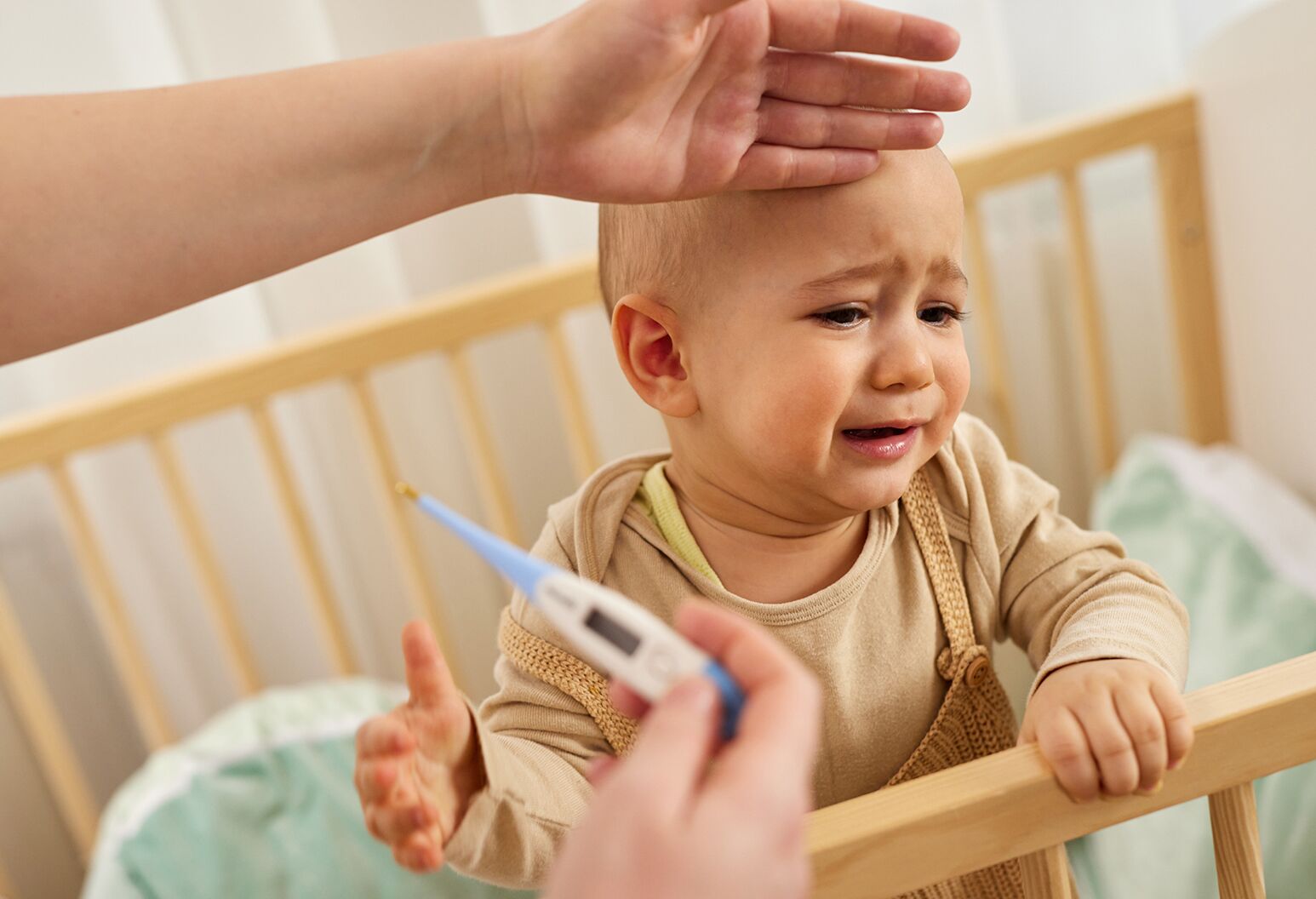
Pediatric nurse and mom advice on taking your baby’s temperature correctly, easing discomfort safely, and knowing when a fever needs urgent care.
Newborn Circumcision Care

Sarah Mitchell
Sarah Mitchell is a Registered Pediatric Nurse and a mother of three who has spent over a decade helping families navigate the beautiful, chaotic early years of childhood. She combines evidence-based medical knowledge with real-world parenting experience to offer practical, compassionate advice. At Awesome Parent, Sarah's mission is to help exhausted parents find solutions, trust their instincts, and finally get some sleep.
If you are reading this with one hand while the other hand tries to keep a newborn from peeing mid-diaper change, you are in the right place. Circumcision care is usually straightforward, but the first few days can look a little intense. Lots of parents worry they are either cleaning too much, not cleaning enough, or missing an emergency.
This guide is strictly informational and meant to help you understand what is normal, what is not, and how to keep your baby comfortable while things heal. Always follow the specific instructions from your baby’s clinician, especially if a particular technique (like a ring device) was used.
Before you start: what to expect
Most newborn circumcisions heal without complications. In general, you can expect:
- Some swelling at the tip of the penis for a few days
- Pink or red skin that gradually calms down
- A yellow, cream-colored film or crust as it heals (this is usually normal, not pus)
- Small spots of blood on the diaper during the first day or two
- Fussiness for a day or so, especially during diaper changes
What you should not see is persistent bleeding, worsening redness that spreads, bad-smelling drainage, or a baby who is not peeing normally.
Cleaning and diapering: the simple routine
Quick note: Aftercare can differ a bit by technique (Gomco or Mogen versus Plastibell or another ring). Some babies go home with gauze, some do not. When your discharge instructions differ from anything below, follow the discharge instructions.
Step-by-step for each diaper change
- Wash your hands first.
- Gently remove the diaper. If it sticks, drip warm water over the area to loosen it rather than pulling.
- Clean with warm water. Most of the time, plain warm water is enough. Use a soft cloth or cotton balls and dab rather than scrub.
- Avoid rubbing. Think “rinse and pat,” not “wipe and polish.”
- Use ointment only if instructed. Many clinicians recommend petroleum jelly to prevent sticking. If your clinician told you to use it, apply a thin layer to the tip of the penis or to the front of the diaper.
- Put on a clean diaper fastened a little looser than usual for comfort, but still secure enough to prevent leaks.
Can I use baby wipes?
For the first several days, many clinicians recommend avoiding wipes directly on the healing skin because wipes can sting and may irritate the area. If you need a wipe for poop that is nearby, try to keep it off the circumcision site and finish with a gentle rinse of warm water.
How much petroleum jelly, and for how long?
A thin layer is enough. If your clinician recommends petroleum jelly, it is commonly used with each diaper change for about a week, or until the area no longer looks raw and diapers are not sticking. Some babies need it a bit longer.
Important Plastibell note: If your baby has a Plastibell or ring device, many clinicians advise not using petroleum jelly or ointment unless they specifically told you to. Ointment can sometimes make the ring slip or interfere with how it separates. Follow your clinician’s device-specific instructions.
Skip these unless your clinician told you to use them
Avoid powders, alcohol, hydrogen peroxide, iodine, and “disinfecting” antiseptics on the site unless you were specifically instructed. These can irritate healing tissue.
Healing milestones: what it can look like day by day
Every baby heals at their own pace, but here is a realistic general timeline. Your baby may look slightly ahead or behind this and still be normal.
Day 0 to 1 (first 24 hours)
- Mild bleeding or a few small spots of blood on the diaper can be normal.
- The tip may look bright red and swollen.
- Your baby may be fussier, especially during diaper changes.
Day 2 to 3
- Swelling may peak and then start to improve.
- You may see a yellowish film on the head of the penis. This is commonly normal healing tissue.
- Less tenderness day to day.
Day 4 to 7
- Redness should gradually fade.
- The yellow film may persist, then slowly disappear.
- The area looks less “wet” and more settled.
Week 2
- Most babies look close to fully healed.
- A little residual redness can linger, but it should be improving, not worsening.

What about the Plastibell or ring device?
If your baby has a plastic ring (often called a Plastibell), the ring usually falls off on its own within 5 to 10 days. It can look swollen and a bit scary right before it comes off. Do not pull it off, even if it looks like it is barely hanging on.
Contact your clinician urgently if the ring slips down the shaft, seems embedded, causes worsening swelling, or your baby is not peeing normally.
If the ring has not fallen off by about 10 to 14 days (or by the timeframe your clinician gave you), call for guidance.
Bathing guidance
When can my baby have a bath?
Bathing instructions vary a lot by clinician and technique. Some clinicians allow a regular bath after 24 to 48 hours if there is no bleeding, while others recommend sponge baths only for several days and avoiding submerging the area until healing is clearly underway. Your safest move is to follow your discharge sheet.
In general, avoid soaking until the site looks like it is sealing over and your clinician says it is okay.
How to do a sponge bath safely
- Use warm water and mild, fragrance-free soap away from the circumcision site.
- If soap gets near the area, rinse with plain water.
- Pat dry gently. No rubbing.
What about swimming or hot tubs?
Newborns generally should not be in pools or hot tubs, and any soaking before the area heals can increase irritation and infection risk. Stick to gentle bathing per your clinician’s timeline.
Pain expectations and comfort
Most babies are uncomfortable for a short time, especially during diaper changes. Comfort measures that often help include:
- Skin-to-skin contact and cuddling
- Frequent feeds (nursing or bottle)
- Swaddling and a calm environment
- Changing diapers promptly so urine and stool do not sit on the area
Can I give acetaminophen (Tylenol)?
Do not give any medication to a newborn unless your clinician specifically instructed you on the correct dose and timing for your baby’s weight and age. If your baby seems inconsolable or painful beyond the first day, call your pediatrician.
What is normal vs not
Normal findings
- A few small spots of blood on the diaper in the first day
- Mild swelling and redness that improves over time
- Yellowish film or light crusting on the head of the penis (common healing tissue)
- Fussiness that improves within 24 to 48 hours
Call your pediatrician or the clinic the same day if
- Bleeding continues or you see more than a few drops
- Redness is spreading outward onto the shaft or surrounding skin
- Swelling is getting worse after day 2 to 3
- You notice foul odor, increasing drainage, or the area looks increasingly moist, swollen, or inflamed
- Your baby develops a fever (for infants under 3 months, any fever is a same-day urgent call)
- Your baby is not feeding well or is unusually sleepy
- The Plastibell or ring looks like it is slipping down the shaft or pinching the skin
- The ring has not fallen off by the time your clinician said it should
Go to the ER now (or call emergency services) if
- Bleeding will not stop after applying gentle pressure with clean gauze for 5 to 10 minutes, or the diaper is soaking with blood
- Your baby has not peed within about 8 hours after the procedure, or you notice a sudden, clear drop in wet diapers compared with your baby’s usual pattern
- Your baby looks very ill: limp, difficult to wake, breathing problems, or poor color
- Fever in a newborn (many practices define this as a rectal temperature of 100.4°F or 38°C or higher in infants under 3 months, which needs urgent medical evaluation)
- The glans looks dusky, blue, or black, or the ring appears to be cutting into tissue
How to apply pressure if there is bleeding
If you see more than a small spot of blood, place clean gauze over the tip and apply gentle, steady pressure for several minutes without checking constantly. If bleeding continues, restarts, or soaks through, seek urgent care.

If you are unsure, trust your instincts. Clinicians expect calls about bleeding, fever, or a baby who is not peeing. Those are absolutely appropriate reasons to reach out.
Common parent questions (the 3 AM edition)
Why does it look yellow? Is that infection?
That yellow, creamy film is often part of normal healing. Infection is more likely if you see spreading redness, worsening swelling, increasing tenderness, foul odor, or thick drainage that keeps coming back.
What if poop gets on it?
It happens. Rinse gently with warm water right away, pat dry, and then follow your clinician’s instructions (for many babies, that includes reapplying petroleum jelly, but for Plastibell babies it may mean skipping ointment). Avoid scrubbing.
Can the penis stick to the diaper?
Yes, especially early on. If your clinician recommended petroleum jelly, it helps prevent sticking. If it does stick, use warm water to loosen the diaper rather than pulling.
When should it look “normal” again?
Most babies look much better by a week, and close to fully healed by two weeks. If things look worse day to day instead of better, call.
Quick checklist
- Clean with warm water and gentle dabbing.
- Use petroleum jelly only if instructed (especially important if a Plastibell or ring device was used).
- Change diapers frequently and keep the area as clean and dry as possible.
- Sponge baths at first unless your clinician says regular baths are fine.
- Watch for: persistent bleeding, worsening redness, bad odor or drainage, fever, or decreased urination .
Newborn circumcision sites can look dramatic even when healing normally. If you are seeing slow, steady improvement and your baby is feeding and peeing well, you are almost certainly on the right track.
Sources and medical review notes
This article reflects common newborn circumcision aftercare guidance used in pediatric and newborn settings. Specific instructions vary by clinician, technique, and device used. For personalized advice, contact your pediatrician, the birth hospital nursery, or the clinician who performed the procedure.
- American Academy of Pediatrics (AAP), HealthyChildren.org: Circumcision (parent guidance)
- Seattle Children’s: Circumcision Problems (aftercare and when to call)
- Children’s Hospital of Philadelphia (CHOP): Circumcision care (aftercare guidance)
- Standard newborn fever guidance used in pediatrics: infants under 3 months with rectal temperature 100.4°F (38°C) or higher need urgent medical evaluation
Sarah Mitchell
Sarah Mitchell is a Registered Pediatric Nurse and a mother of three who has spent over a decade helping families navigate the beautiful, chaotic early years of childhood. She combines evidence-based medical knowledge with real-world parenting experience to offer practical, compassionate advice. At Awesome Parent, Sarah's mission is to help exhausted parents find solutions, trust their instincts, and finally get some sleep.