Speech clues, behavior red flags, how hearing tests work for ages 2 to 5, and what to do next including ENT and early intervention timelines.
Newborn Hearing Screening “Refer”: What It Means and What Happens Next

Sarah Mitchell
Sarah Mitchell is a Registered Pediatric Nurse and a mother of three who has spent over a decade helping families navigate the beautiful, chaotic early years of childhood. She combines evidence-based medical knowledge with real-world parenting experience to offer practical, compassionate advice. At Awesome Parent, Sarah's mission is to help exhausted parents find solutions, trust their instincts, and finally get some sleep.
If your newborn’s hearing screen came back as “refer”, I want you to take one slow breath. In the hospital world, “refer” is a frustrating word because it sounds like “failed,” but it really means: your baby needs a repeat screen or a more detailed follow-up test. It is not a diagnosis.
As a pediatric nurse who used to triage panicked parents all day (and as a mom who has watched tiny humans derail tests with perfectly-timed wiggling), I can tell you this: a large share of babies who get a “refer” end up having normal hearing on follow-up. Referral rates vary by hospital, timing, and the type of screen, and they are often higher in the first 24 hours of life when ears are still clearing. The goal now is simple: follow the next-step plan so, if there is a real hearing concern, it is caught early and supported well.
What “refer” means (and what it does not)
Most hospitals use the term “pass” or “refer.”
- Pass: Your baby’s screen did not show signs of hearing difficulty at the time of testing.
- Refer: The screening did not get a clear response from one or both ears. Your baby should be tested again, either with a repeat screen or a more detailed test.
Important: A newborn hearing screen is a screening, not a final answer. It is designed to be quick and sensitive, which means it will sometimes flag babies who are completely fine, especially in the first day or two of life.
Also practical: ask how you will get results. Some hospitals tell you in the room, others post it to the portal, and some call you later. If you are not sure, ask: “Who will contact me with results, and what number should I call if I do not hear back?”
Why hospitals do hearing screening
Newborn hearing screening is part of standard newborn care because babies learn language from day one, long before they say a single word. When hearing loss is identified early, families can access support early, which improves long-term communication outcomes.
Hospitals screen early because it is:
- Efficient: Babies are already in a controlled setting with trained staff.
- Time-sensitive: Early detection opens doors to early services.
- Universal: Hearing differences can occur even with no family history and an otherwise healthy pregnancy and birth.
Why a baby gets a “refer”
In real life, the newborn nursery is not a soundproof lab. A “refer” often happens because the test conditions were not ideal, not because your baby has permanent hearing loss.
Temporary fluid or congestion
It is common for newborns to have temporary fluid or congestion in the ear canal or middle ear, especially in the first 24 to 48 hours. That can dampen sound or interfere with the screening signal.
Vernix in the ear canal
Vernix is that creamy white protective coating on newborn skin. It can also be in the ear canal and affect the test.
Movement, crying, or lots of sucking
These tests are easiest when babies are calm or asleep. Squirming, crying, or vigorous sucking can lead to an incomplete or unclear result.
Background noise or a loose probe
Nurseries can be loud, and the sensors have to fit just right. A slightly shifted ear tip or sensor can change the results.
One ear vs. both ears
A “refer” can happen in one ear only. This is often related to fluid, debris, or positioning, but it still matters. Even one-sided (unilateral) hearing differences can affect how babies pick up sound and speech in real-world noisy environments later, so follow-up is still important.
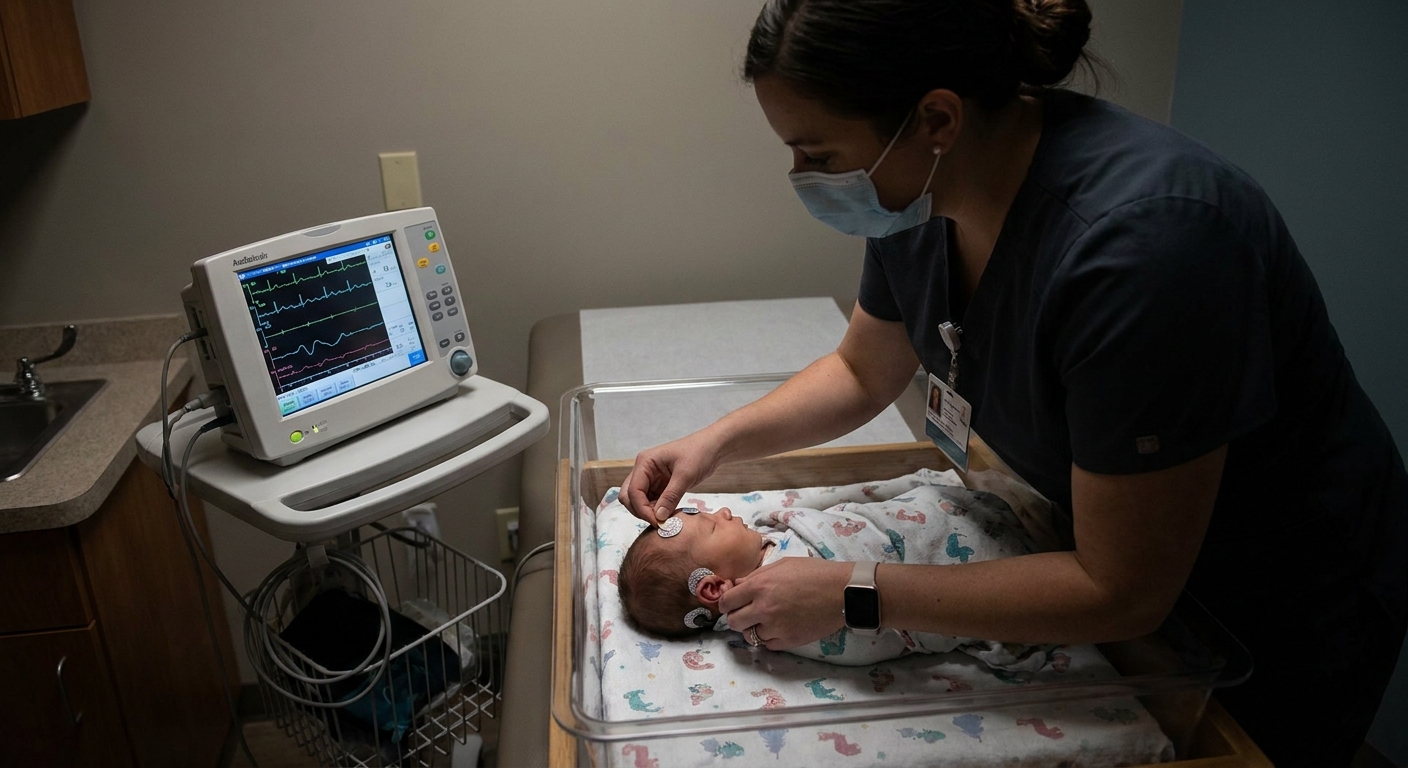
How the screen works
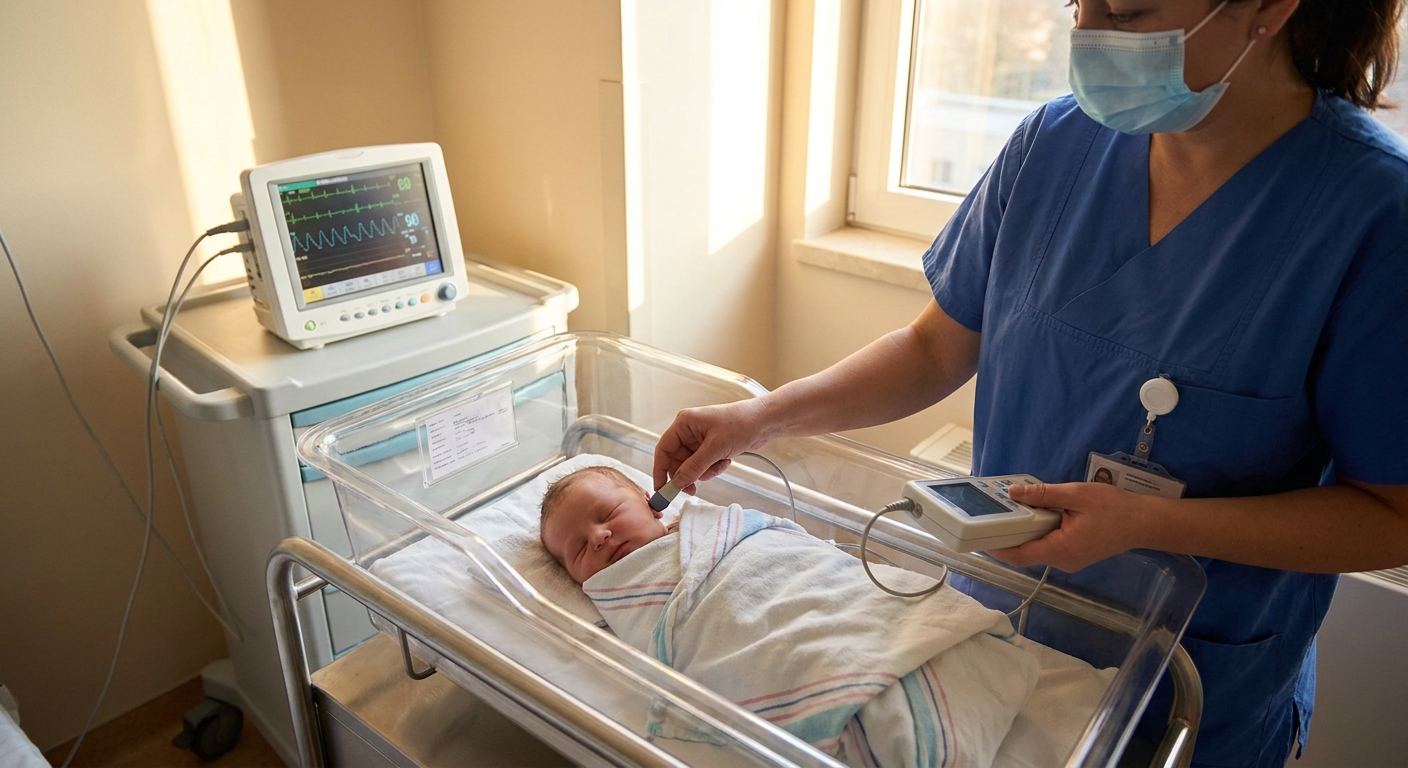
Hospitals typically use one or both of these screening methods:
OAE (otoacoustic emissions)
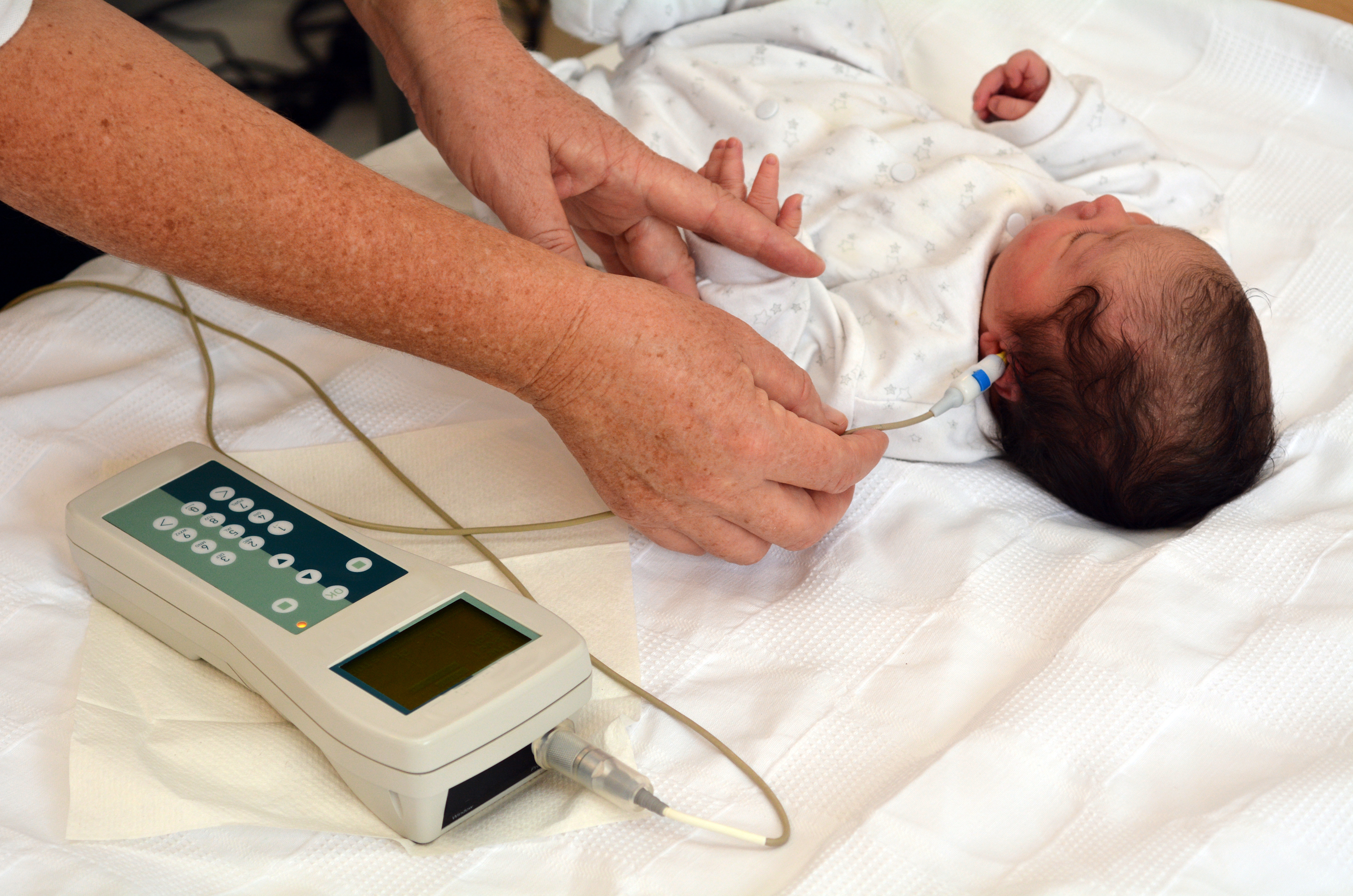
A tiny ear tip plays soft sounds and measures the echo response from the inner ear. If that echo is blocked by fluid or debris, the test may show “refer.”
AABR (automated auditory brainstem response)
Small sensors placed on the baby’s skin measure how the hearing nerve and brainstem respond to sound. This screening is still quick and painless. In many hospitals, AABR is used for babies with certain risk factors or in NICU settings, and some programs use it for all newborns.
What happens next
Your discharge paperwork may feel vague, so here is the common pathway families see. Your hospital or state program may vary a bit, but the themes are the same: repeat soon, then confirm if needed.
Step 1: Repeat the screening
Many babies who “refer” the first time will pass on a repeat, especially if the repeat happens a little later when ears have had time to clear.
- Some hospitals repeat it before discharge if time allows.
- Others schedule an outpatient rescreen within 1 to 2 weeks.
Step 2: If still “refer,” do a diagnostic test
If your baby refers again, the next step is usually a diagnostic hearing evaluation with pediatric audiology. This is more detailed than a screen and can identify whether there is hearing loss, which ear is affected, and roughly how much.
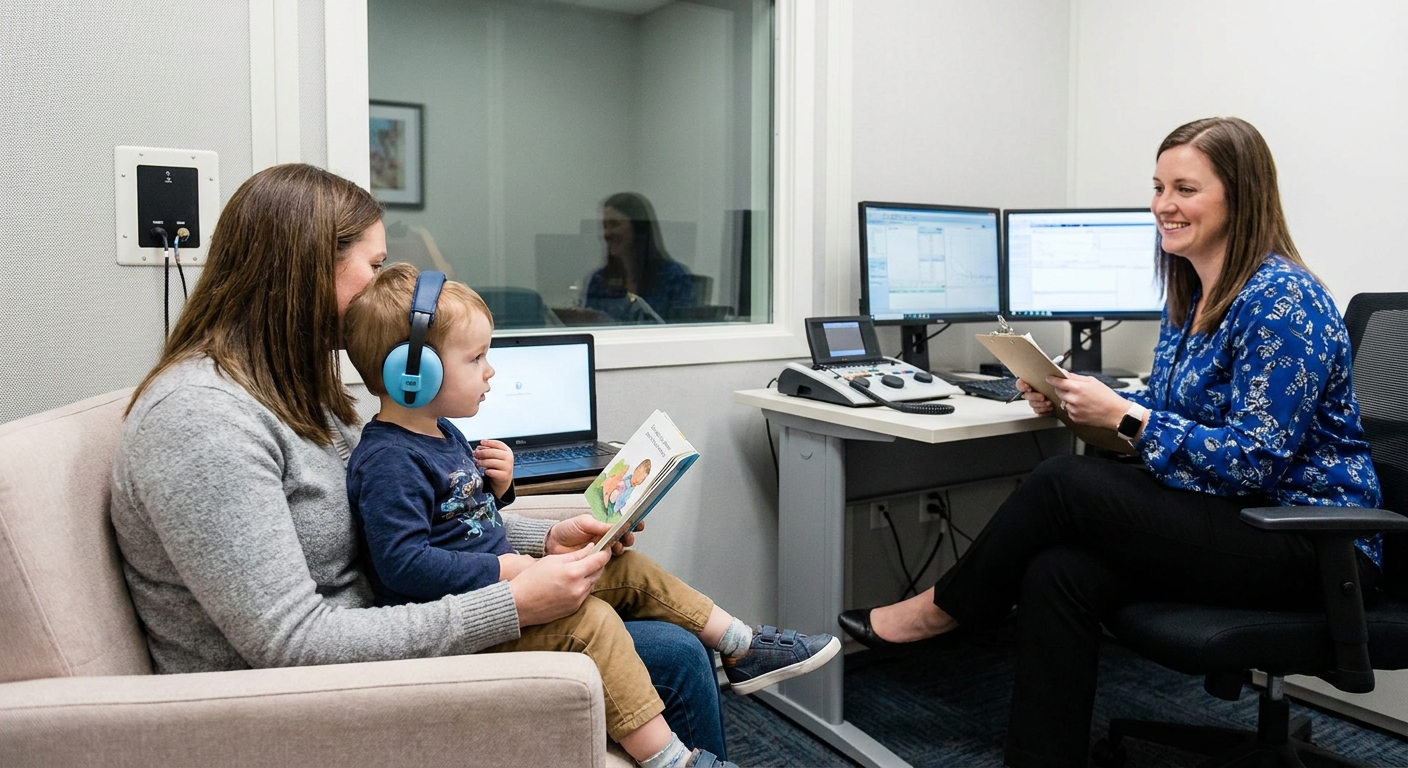
The diagnostic test is often a diagnostic ABR (auditory brainstem response). This is different from the automated AABR screening used in many hospitals. For young infants, it is commonly done while the baby sleeps naturally. For older babies who cannot sleep through the test, some centers may discuss sedation. Practices vary, and sedation decisions are made by the audiology and medical team based on age, safety, and what your child needs to get accurate results.
If your baby was in the NICU
If your baby had a NICU stay, follow-up can look a little different. Many programs use AABR in the NICU and may recommend a faster or more specialized audiology follow-up, even if the first screen was incomplete. If you are unsure, ask the NICU team or your pediatrician: “Do we need a rescreen or do we go straight to diagnostic audiology?”
Timing targets
You might come across the “1-3-6” timeline often used in early hearing detection programs:
- Screen by 1 month
- Diagnostic evaluation by 3 months (if needed)
- Early intervention by 6 months (if diagnosed)
If your follow-up appointment is weeks away, that can feel endless. If you have trouble getting scheduled, ask your pediatrician’s office to help expedite the referral to pediatric audiology.
How to prep for the appointment
These small tweaks can make testing smoother and may help you avoid repeat visits.
- Try to time the appointment for sleep. A sleepy baby is an audiologist’s best friend.
- Feed right before the test (or ask if they prefer you wait until you arrive). A full tummy helps babies settle.
- Dress baby in easy access clothing. For ABR, sensors may go on the forehead and behind the ears.
- Bring a pacifier if you use one.
- Avoid lotion on the forehead the day of the test, since sensors stick better to clean, dry skin.
- Ask about siblings. Many clinics prefer no extra children because the room needs to stay quiet and calm.
While you wait
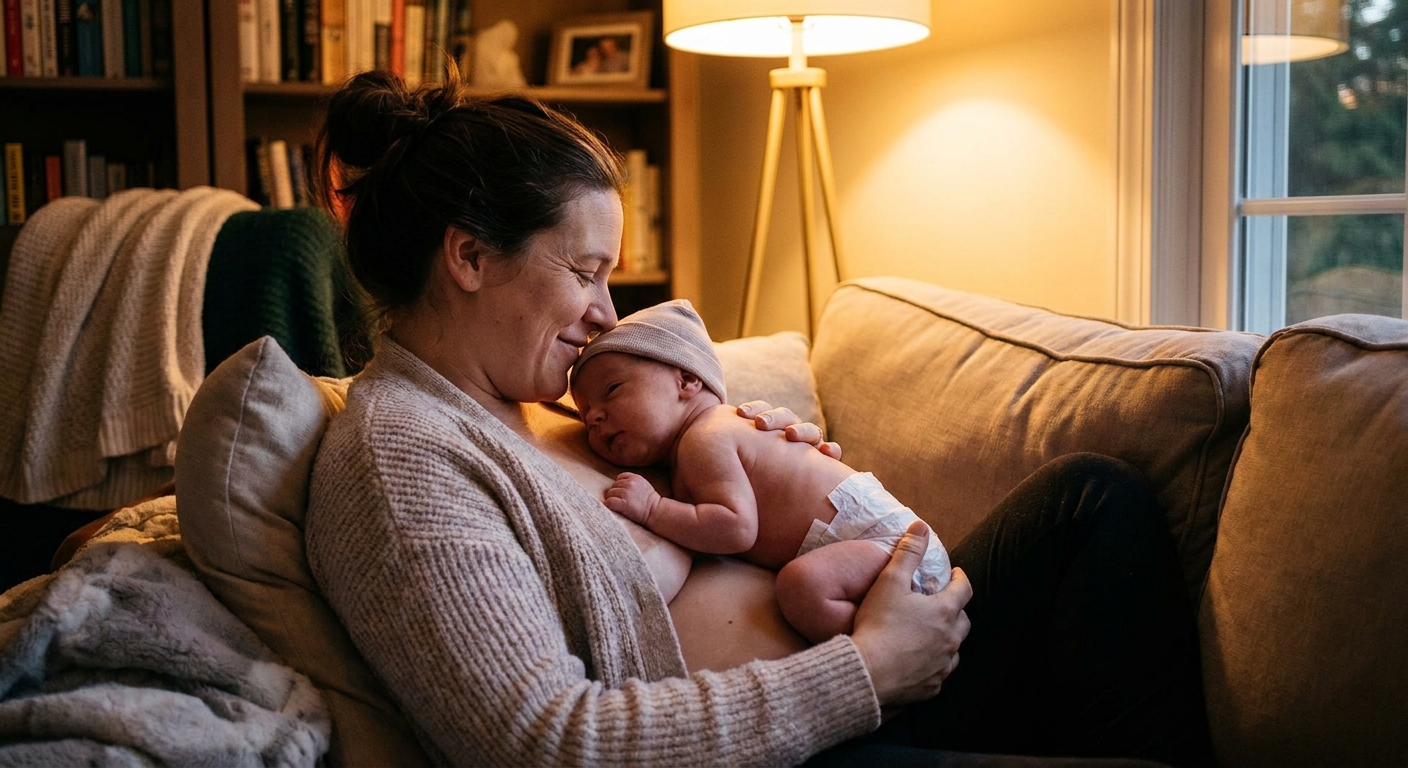
This is the part parents rarely get guidance on. You do not need to put your baby in a bubble or stop interacting until you “know.” Keep doing normal newborn life, just be a little more intentional about communication.
Keep talking, singing, and cuddling
Talk through routines, sing while you change diapers, narrate your day. Babies benefit from warm, responsive interaction whether they have typical hearing or not.
Use face-to-face time
Let your baby see your mouth and facial expressions up close. This supports early communication and bonding.
Add simple visual cues
Wave when you say “hi,” smile before you pick them up, and use consistent gestures. You are not “teaching a lesson.” You are making communication richer.
Notice patterns, not single moments
It is normal to watch more closely after a “refer.” Just remember newborn behavior is inconsistent. A baby might sleep through a dog barking one day and startle at a sneeze the next.
If you want to observe gently, look for patterns over days and weeks, like:
- Startling to sudden loud sounds sometimes
- Calming to a familiar voice sometimes
- Waking more easily to noise sometimes
Sometimes is the key word here. Newborns are not reliable responders.
When to call sooner
A “refer” result by itself is usually not an emergency, but certain situations deserve a quicker call to your pediatrician or audiology office.
- Your baby has risk factors such as a NICU stay, certain infections during pregnancy (for example congenital CMV), craniofacial differences, or a strong family history of childhood hearing loss.
- You were told there was a refer in both ears and follow-up is not scheduled.
- You notice your baby never seems to respond to loud sounds over time, especially as they become more alert in the coming weeks.
- You have trouble accessing the follow-up appointment within the recommended timeframe.
If you are unsure what category you fall into, call your pediatrician and ask: “What is the exact follow-up plan and by what date should it be completed?”
If hearing loss is confirmed
This is the part many parents are afraid to say out loud. If a diagnostic test confirms hearing loss, it does not mean your child cannot communicate, connect, or thrive. It means your family gets a clear plan.
Your care team may discuss:
- Type and degree of hearing loss
- Whether it is in one ear or both
- Next medical steps, which may include a pediatric ENT evaluation
- Early intervention services and communication options
- Assistive technology options such as hearing aids for eligible babies, and later, other options depending on the situation
Take notes, bring a support person if you can, and ask for written next steps. Your job is not to become an expert overnight. Your job is to keep showing up and asking questions.
FAQ
Is “refer” the same as “fail”?
In practice, people use the words interchangeably, but medically it is better to think of “refer” as an unclear screen that needs follow-up. It is not a confirmed diagnosis.
How common is a “refer” result?
It is common enough that pediatric clinics see it daily, especially when screening happens very soon after birth. Rates vary by hospital and method. Temporary fluid, vernix, and movement are frequent reasons.
Can newborn hearing problems be temporary?
Yes. Some hearing issues are temporary, like fluid in the middle ear. Others are permanent. The follow-up testing helps sort this out.
What if my baby passes later?
If your baby passes the rescreen or diagnostic testing, that is reassuring. Still, hearing can change over time for a small number of children, especially with certain risk factors. Keep routine well-child visits, and bring up any concerns about hearing or speech development as your baby grows.
Should I change how I interact with my baby while we wait?
No major changes. Keep bonding and communicating as usual, and add more face-to-face interaction and consistent routines if you can.
Next steps checklist
- Confirm whether the “refer” was in one ear or both.
- Schedule the repeat screen or diagnostic appointment before you leave the hospital if possible.
- Ask for the name and number of the pediatric audiology clinic and any referral paperwork.
- Ask how and when you will get results.
- Put the appointment date in your calendar and set a reminder to call if you do not get results promptly.
- Keep doing normal newborn life, with extra face-to-face communication.
If you are reading this in the dark with a sleeping baby on your chest, I want you to hear this clearly: you did not do anything wrong. “Refer” is a common speed bump, not a verdict. And you are already doing the most important thing by following up.
Sources
- CDC: Early Hearing Detection and Intervention (EHDI)
- Joint Committee on Infant Hearing (JCIH): Position Statement and the 1-3-6 benchmarks
- Your state EHDI program (often listed on your state health department website)
Sarah Mitchell
Sarah Mitchell is a Registered Pediatric Nurse and a mother of three who has spent over a decade helping families navigate the beautiful, chaotic early years of childhood. She combines evidence-based medical knowledge with real-world parenting experience to offer practical, compassionate advice. At Awesome Parent, Sarah's mission is to help exhausted parents find solutions, trust their instincts, and finally get some sleep.