Newborn Umbilical Cord Stump Care

Sarah Mitchell
Sarah Mitchell is a Registered Pediatric Nurse and a mother of three who has spent over a decade helping families navigate the beautiful, chaotic early years of childhood. She combines evidence-based medical knowledge with real-world parenting experience to offer practical, compassionate advice. At Awesome Parent, Sarah's mission is to help exhausted parents find solutions, trust their instincts, and finally get some sleep.
You finally get home with your newborn, you blink once, and suddenly you are staring at that little cord stump like it came with instructions you somehow misplaced. Take a breath. Umbilical cord care is usually simple: keep it clean, keep it dry, avoid rubbing it, and watch for a few specific warning signs.
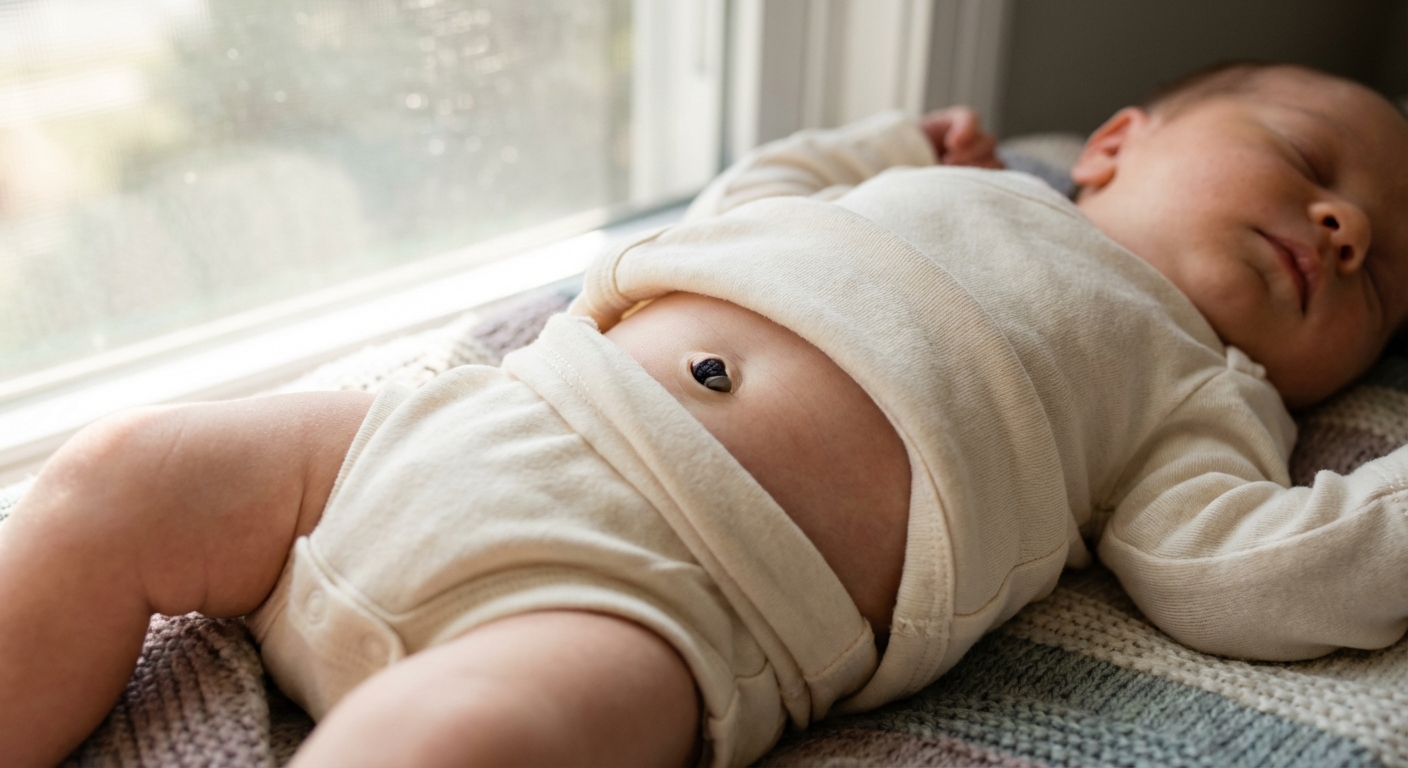
Most stumps fall off on their own in about 1 to 3 weeks. Your job is not to rush it. Your job is to protect the area while your baby’s skin heals.
What the stump is and why it changes
The umbilical cord stump is the leftover bit of cord after it is clamped and cut at birth. Over the first days and weeks, it naturally dries out, shrivels, and darkens from yellowish to brown or black. That is normal.
- Days 1 to 3: It may look pale, slightly moist near the base, and a little “rubbery.”
- Days 4 to 10: It dries and gets darker, smaller, and more crusty.
- Week 1 to 3: It loosens and eventually falls off. You might see a tiny spot of blood when it separates.
Think of it like a scab. We want it to dry and detach when it is ready.
Daily cord care
For most babies, the best care is “clean and dry.” You do not need fancy products.
1) Wash your hands first
This sounds obvious until it is 3 AM and you are on your third diaper in five minutes. Quick handwashing lowers the risk of infection.
2) Check the area once or twice a day
Look for changes that are expected, and watch for the red flags listed later.
3) Keep it dry
Air helps it dry. If it gets damp (bath water, urine, spit-up), gently dry it.
4) Clean only when needed
If the stump and surrounding skin look clean, you can leave it alone. If it gets dirty (poop happens), clean it like this:
- Use a clean cotton swab or soft cloth dampened with plain water (or mild soap and water if there is stool stuck on the skin).
- Wipe the skin around the base gently. Do not scrub.
- Pat dry with a clean cloth and let it air-dry for a minute before closing the diaper.
Do you need alcohol? Many hospitals and pediatricians now recommend dry cord care, meaning no routine rubbing alcohol. In some situations your clinician may advise it, so follow your baby’s discharge instructions if they differ.
Diaper tips
The biggest enemy of cord stumps is friction plus moisture. Diapers can create both, so a few tweaks help a lot.
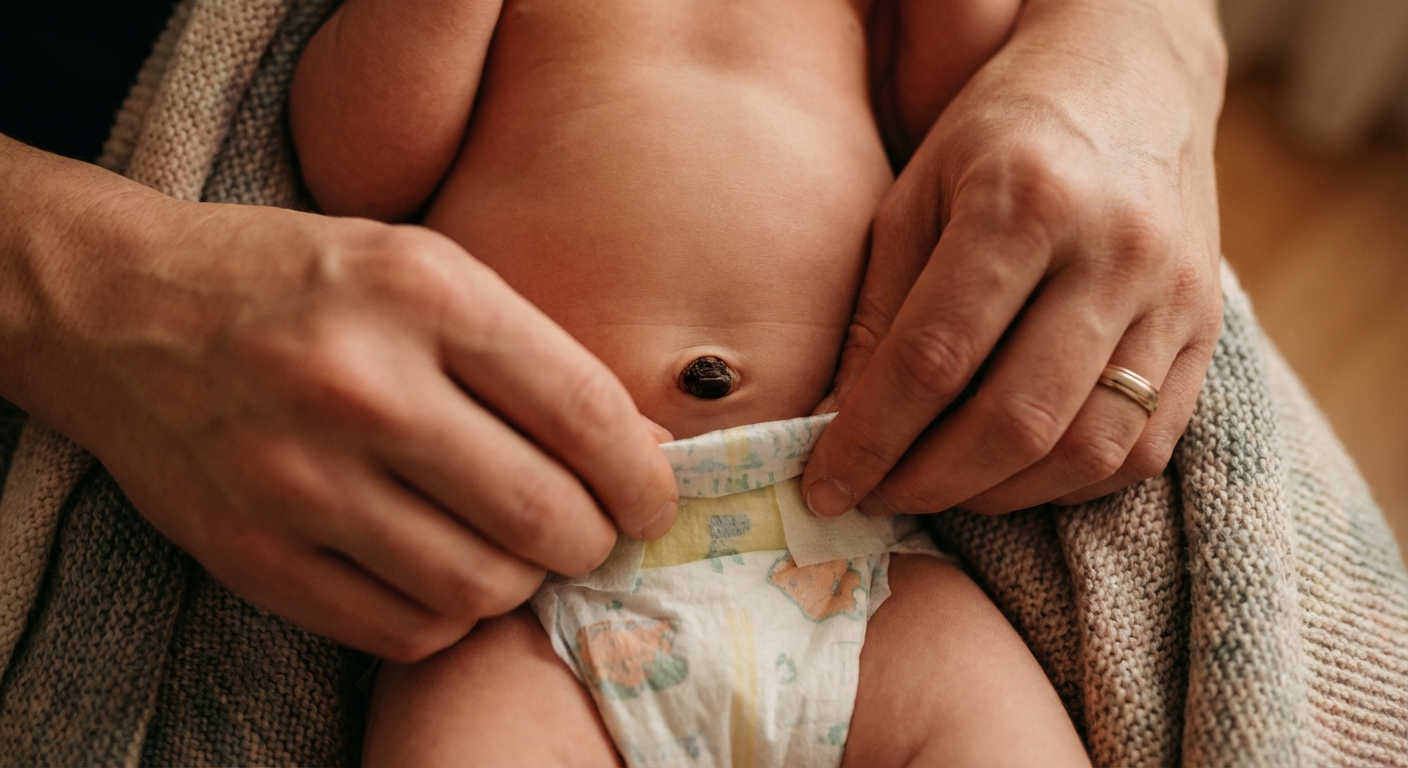
- Fold the diaper down so it sits below the stump. Many newborn diapers have a little scoop cutout, but folding works fine too.
- Avoid tight waistbands that rub the stump every time baby wiggles.
- Change diapers frequently to keep urine from soaking the area.
- If poop gets on it: clean gently with water, pat dry, and leave open to air for a minute if you can.
Bathing
Sponge bath or quick tub bath
Bath guidance varies a bit by clinician and hospital. Many clinicians recommend sponge baths until the stump falls off and the skin underneath looks healed, because keeping the area dry can make care simpler.
Other pediatric guidance allows a brief tub bath before the stump separates as long as you dry the stump well afterward. If your discharge instructions say one thing and the internet says another, trust your discharge instructions.
- Do: Use a warm, damp washcloth to clean the face, neck folds, underarms, diaper area, and any milk dribbles.
- Do: If the stump gets wet, gently pat it dry and let it air-dry.
- Don’t: Scrub the stump or try to “wash it off.” Gentle only.

After the stump falls off: If the belly button is dry and not oozing, you can usually move to a shallow baby bath. If it is still moist or weepy, give it another day or two and keep focusing on clean and dry.
What normal healing looks like
A lot of normal cord healing looks a little alarming if you have never seen it before. Here is what is typically okay:
- Color changes: yellow to brown to black.
- Dry, crusty texture: it may look like a little dried leaf.
- A small spot of blood: when it falls off, you may see a few drops or a small smear on the diaper.
- Clear or slightly yellow sticky moisture: a tiny amount right after separation can be normal for a day or two, as long as the skin is not red and irritated.
- Mild odor: a faint, musty smell can happen as it dries. It should not be strong or foul. If any smell worries you, it is reasonable to call and ask.
One important note: Do not pull the stump off, even if it is hanging by a thread. It is very tempting. It can bleed more and irritate the skin. Let it come off when it is ready.
When it falls off
Most umbilical cord stumps fall off between 7 and 21 days. A little earlier or later can still be normal, especially if the stump has been kept damp or if your baby was born a bit early.
If the stump is still attached after 3 weeks, it is worth messaging or calling your pediatrician for advice. It is often nothing urgent, but your clinician may want to take a look.
When to call the doctor
True umbilical cord infections are uncommon, but they can become serious quickly. Trust your gut. If something looks or smells wrong, call.
Call the same day if you notice:
- Redness spreading outward on the skin around the stump (not just a tiny rim right at the base).
- Swelling or the skin looks tight and puffy.
- Thick yellow or green discharge (pus) or ongoing oozing.
- Foul odor that does not go away after gentle cleaning and drying.
- Increasing tenderness: baby seems very uncomfortable when the area is touched.
Get urgent care now (or emergency care) if:
- Your baby has a fever. In general, any fever in a baby under 3 months should be evaluated promptly. Many practices use 100.4°F (38°C) rectal as the cutoff. Follow your pediatrician’s guidance.
- Your baby seems lethargic, very difficult to wake, or is feeding poorly.
- The redness is rapidly spreading or there are red streaks.
- There is significant bleeding that does not stop with gentle pressure after a few minutes. As a rule of thumb, bleeding that is more than a few drops, keeps coming back, or soaks gauze or the diaper needs a call right away.
Common questions
There is blood on the diaper. Should I worry?
A small spot of blood when the stump falls off is common. If bleeding is more than a few drops, keeps recurring, or soaks the diaper, call your pediatrician.
The stump fell off and now the belly button looks wet
A little moisture for a day or two can be normal. Keep it clean and dry. If it continues to ooze, smells bad, or the surrounding skin gets red, call.
What is that little pink bump in the belly button?
That can be an umbilical granuloma, which is a small bit of healing tissue that can stay moist and ooze. It is common and treatable in the pediatrician’s office. It is not something to DIY at home, so give your pediatrician a call.
My baby’s belly button sticks out. Is that from the stump?
That may be an umbilical hernia, which is a separate issue from the cord stump. It is common in infants and is often harmless. Mention it at your next visit (or sooner if it becomes hard, painful, discolored, or your baby seems very uncomfortable).
Can I cover the stump with a bandage?
Usually no. Covering traps moisture and slows drying. Loose clothing and a folded diaper are the best “protection.”
What not to put on it
Unless your pediatrician specifically tells you to use something, skip the add-ons. They often trap moisture or irritate the skin.
- No powders
- No lotions, ointments, or petroleum jelly on the stump area
- No essential oils or herbal remedies
- No tight wraps or snug bandages
Quick checklist
- Wash hands.
- Keep stump clean and dry.
- Follow your clinician’s bath guidance. If it gets wet, dry it well.
- Fold diaper below the stump.
- Do not pick or pull.
- Call for spreading redness, swelling, pus, foul odor, fever, or bleeding that is more than a few drops.
If you are reading this at an odd hour with a newborn on your chest, here is the most reassuring truth: most cord stumps look a little weird, then fall off, and you barely remember they existed. You are doing great.