A calm, practical guide to drool rash: what it looks like, safe barriers and daily care, and red flags for infection or a spreading rash.
Perioral Dermatitis in Kids

Sarah Mitchell
Sarah Mitchell is a Registered Pediatric Nurse and a mother of three who has spent over a decade helping families navigate the beautiful, chaotic early years of childhood. She combines evidence-based medical knowledge with real-world parenting experience to offer practical, compassionate advice. At Awesome Parent, Sarah's mission is to help exhausted parents find solutions, trust their instincts, and finally get some sleep.
If your child has a cluster of tiny red bumps around their mouth (sometimes around the nose or eyes, too) and it keeps coming back no matter how much “eczema cream” you use (especially steroid creams), you are not imagining things. There is a common, very frustrating rash called perioral dermatitis that can look like eczema at first glance but often needs a totally different approach.
I used to see this in triage all the time: a well-meaning parent doing all the “right” things for eczema (heavy moisturizers, sometimes even a little steroid cream) and the rash gets angrier. The good news is that most cases improve with a few targeted changes and, when needed, prescription help.
Quick note: This is general information, not a diagnosis. If the rash is near the eyes, spreading fast, crusting, or your child seems sick, it is worth getting a clinician’s eyes on it.
What it looks like
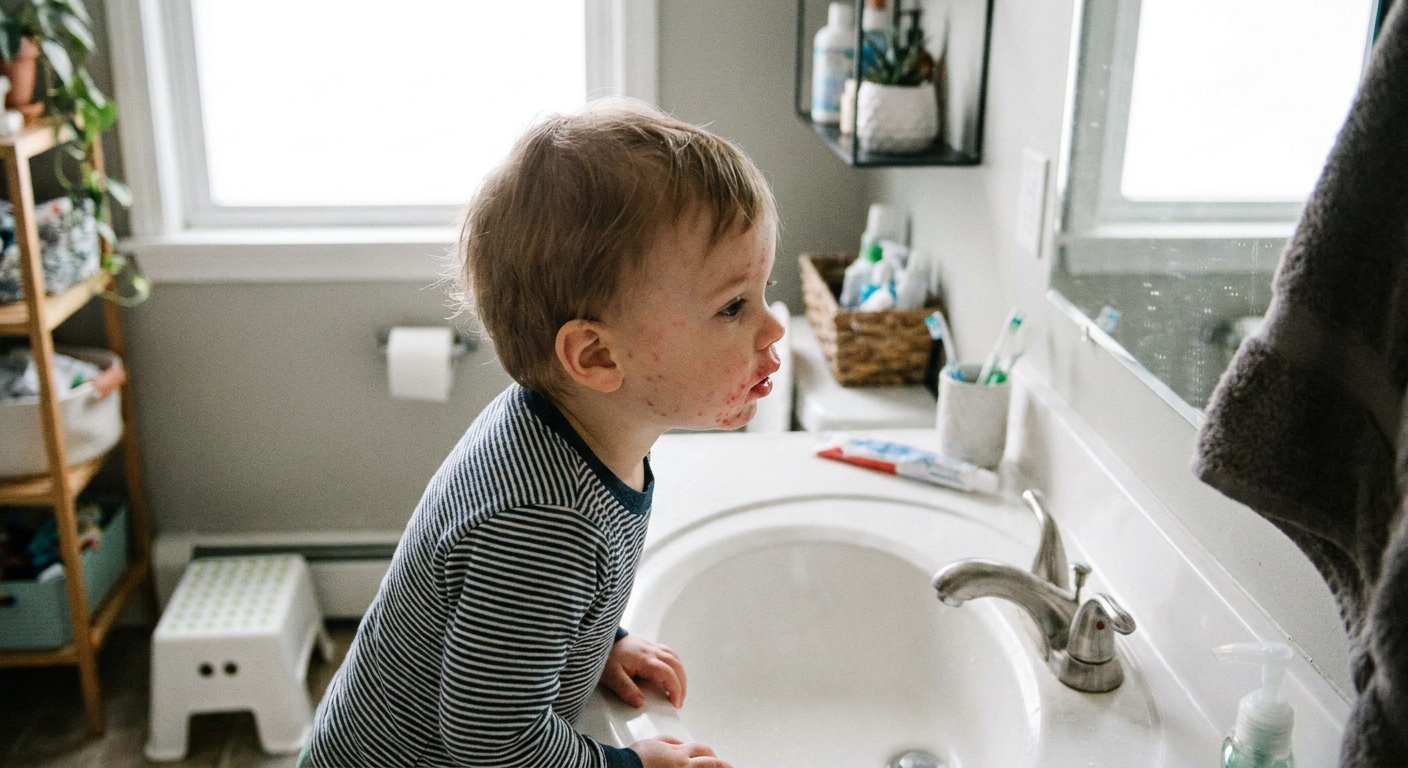
Perioral dermatitis is a rash made up of small red bumps and sometimes tiny pus-filled bumps (they can look like little whiteheads). It often forms a halo around the mouth.
Common clues
- Clustered bumps around the mouth, especially in the corners or on the chin
- A “spared” strip right next to the lip line (many kids have a narrow band of normal skin right at the edge of the lips)
- Dryness, scaling, or mild peeling around the bumps
- Stinging or burning more than itching (kids may complain it “hurts” or “feels spicy”)
- Sometimes it spreads to the nostrils or around the eyes (periorificial dermatitis)
It can come and go, and it often flares after certain products touch the skin.
Why it happens
Perioral dermatitis is not about “dirty skin.” It is usually about irritation and a disrupted skin barrier, plus inflammation that can be worsened by certain products. In some cases, microbes normally living on the skin may also play a role. The practical takeaway is the same: reduce triggers and keep the routine simple.
The big one: steroid creams
Topical steroids (like hydrocortisone) can temporarily calm redness, then the rash rebounds and spreads. This is one of the most common patterns I hear: “It gets better for a day, then it comes back worse.”
- If you have been using a steroid on the face, do not panic. Many kids improve once it is stopped, but the rash can look worse for a short time during the rebound period.
- Do not stop a prescribed steroid suddenly if it was directed for another condition. Check in with your clinician. Sometimes they will have you taper to reduce rebound.
Toothpaste and flavorings
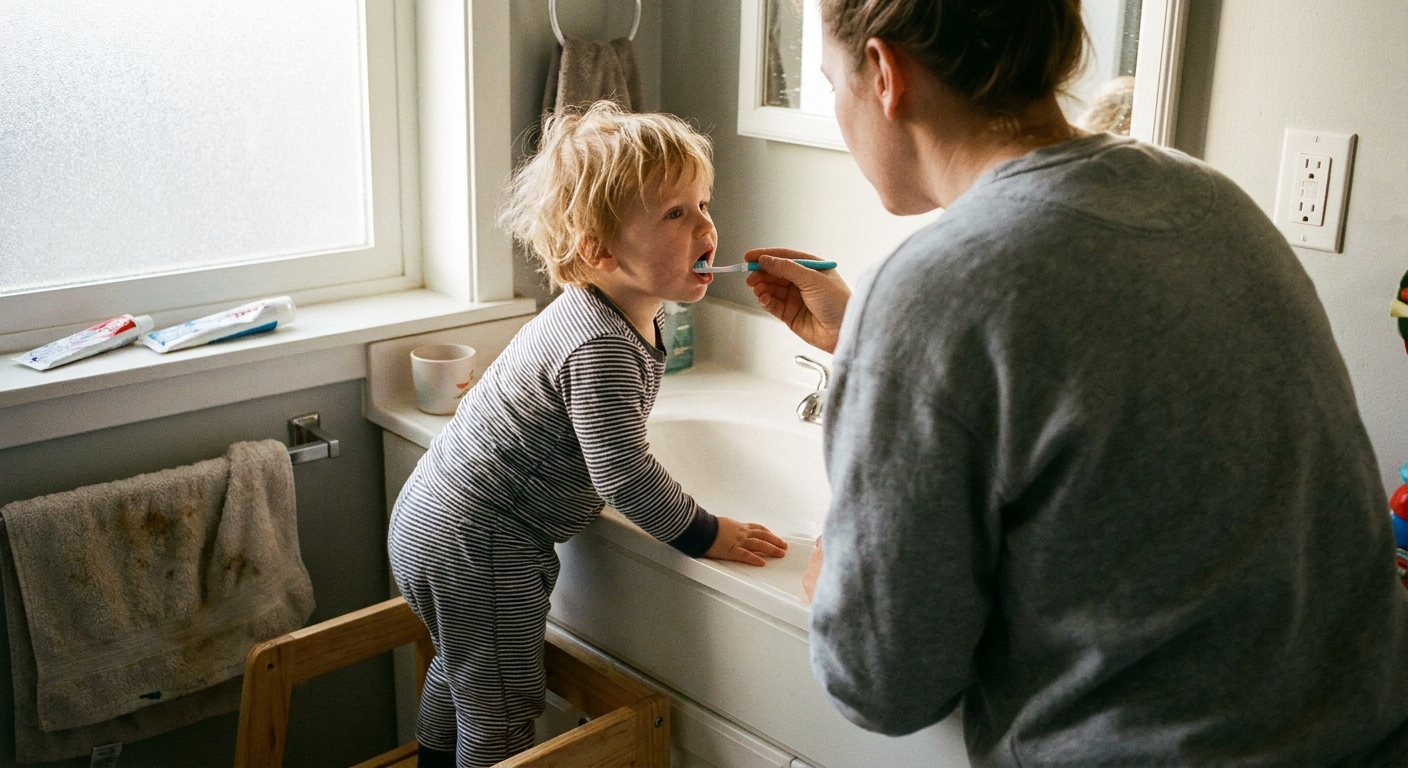
Toothpaste is a sneaky trigger because it touches the exact area where the rash lives. Common culprits include:
- SLS (sodium lauryl sulfate), a foaming agent
- Strong mint or cinnamon flavors
- Whitening additives
- In some kids, fluoride toothpaste may be irritating, or the bigger issue is toothpaste sitting on the skin. Reports are mixed, so focus on reducing skin contact and rinsing well.
This does not mean toothpaste is “bad.” It means your child’s skin might be extra reactive right now.
Wipes, drool, and the “clean it again” cycle
Baby wipes and face wipes can be harsh around the mouth, especially when used frequently. Add drool, frequent snacking, and the well-intended scrub after every bite, and the skin never gets a chance to recover.
- Wipes often contain fragrance, preservatives, and surfactants that can irritate facial skin.
- Drool and saliva are irritating, but over-cleaning can be just as problematic.
Thick balms and too much layering
This surprises parents: some thick, occlusive products can worsen perioral dermatitis in some kids by trapping moisture and heat or irritating already inflamed skin. On the flip side, a thin layer of a bland barrier can really help when drool or food is constantly hitting the skin. The issue is often multiple layered products, fragranced balms, or frequent reapplication of several things at once.
Sunscreen, face paint, and “extras”
In older kids, perioral dermatitis can flare with certain sunscreens, face paint, or skin care products that are heavy, fragranced, or occlusive. If the rash started after a new sunscreen or a week of face paint at camp, that is a useful clue.
Inhaled steroids and masks (sometimes)
If your child uses an inhaled steroid for asthma, a small amount can land on facial skin. Proper technique helps.
- Use a spacer if prescribed.
- Have your child rinse their mouth and gently wipe or rinse the face after use.
Care is different than eczema care
This is the part that saves a lot of time and tears: eczema care and perioral dermatitis care overlap a little, but they are not the same.
What helps
- Stop facial steroid creams unless your clinician tells you otherwise.
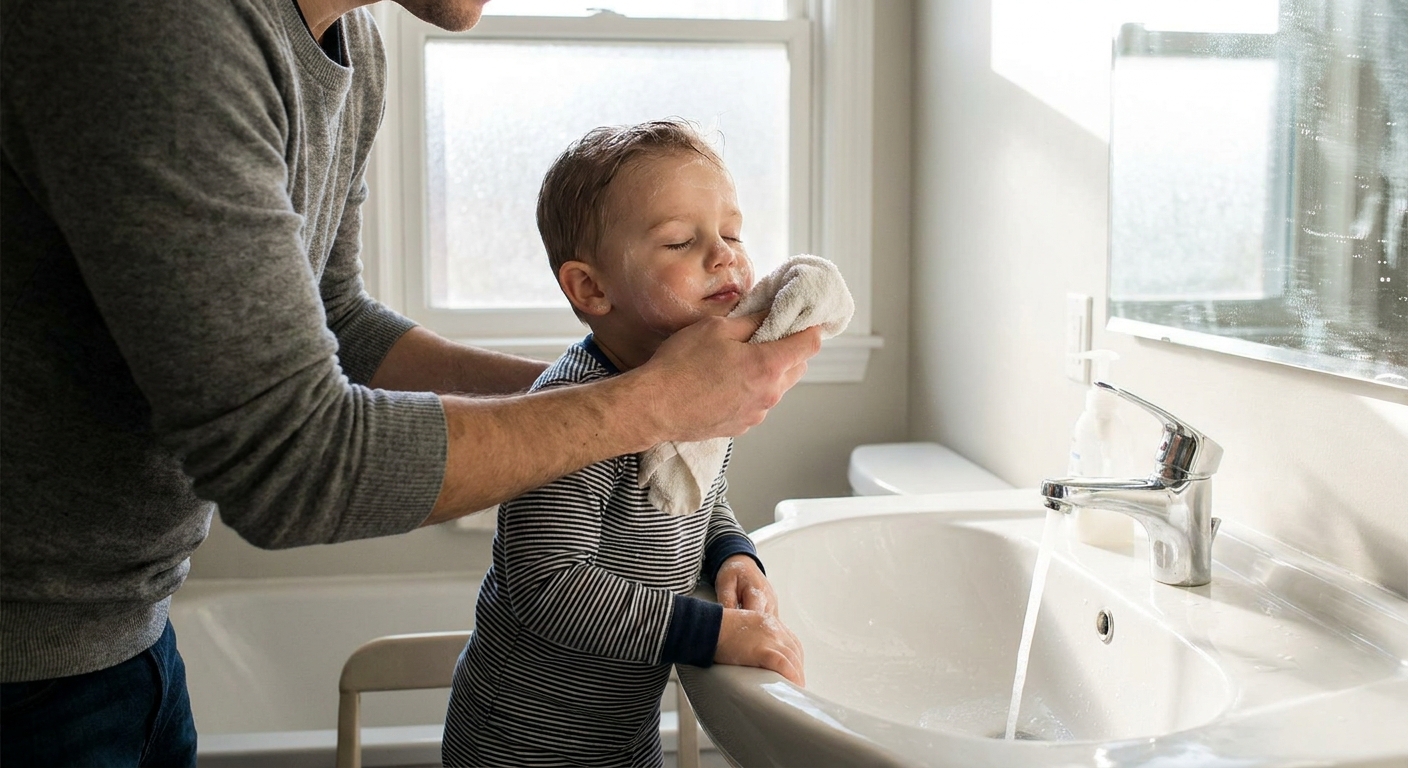
- Simplify the routine for 2 to 3 weeks: lukewarm water rinse, or a very gentle, fragrance-free cleanser once daily.
- Skip wipes on the face. Use water and a soft cloth, and pat dry.
- Protect the skin if drool or food is constant: a thin layer of a bland barrier (often plain petrolatum or a fragrance-free barrier cream) can help. Try not to pile on multiple products.
- Change toothpaste if suspected: try a mild option or one without SLS. Help your child rinse and wipe around the mouth with water afterward.
- Hands off: discourage picking or scrubbing. This rash hates friction.
What to avoid
- Topical steroids around the mouth and nose
- Fragranced products, scented balms, essential oils
- Acne products (benzoyl peroxide, salicylic acid) unless directed
- Harsh cleansers, exfoliating cloths, “scrubbing it clean”
- Randomly rotating multiple OTC actives (antifungals, acne washes, acids) unless your clinician recommends it
How long does it take to improve? Many kids start to look better within a couple of weeks once triggers are removed, but full clearing can take longer. If you stop a steroid, you may see a rebound flare before it improves.
If it is perioral dermatitis, more product is rarely the answer. Simpler is usually better.
When prescriptions help
Sometimes home care is not enough, or the rash has been going on long enough that it needs medication to calm the inflammation.
Common options
Your child’s clinician may recommend:
- Topical antibiotics (often metronidazole or erythromycin) for several weeks
- Non-steroid anti-inflammatory creams (for example, pimecrolimus or tacrolimus in select cases). These are clinician-directed and may be used off-label depending on age and situation.
- Oral antibiotics for more widespread or stubborn cases. Clinicians choose age-appropriate options, often avoiding tetracyclines in younger children.
These are not “forever medications.” They are usually used for a set course to break the cycle of inflammation, while you also remove triggers.
What to tell your clinician
- All products used on the face and lips (including “natural” balms)
- Whether any topical steroid was used and for how long
- Toothpaste brand and whether it is minty, whitening, or foaming
- Any inhaled steroid use and whether a spacer is used
- Photos of how it looks on bad days (helpful because rashes love to behave on appointment day)

Call sooner for red flags
Most perioral dermatitis is uncomfortable but not dangerous. Still, reach out promptly if:
- The rash is rapidly spreading or your child looks ill
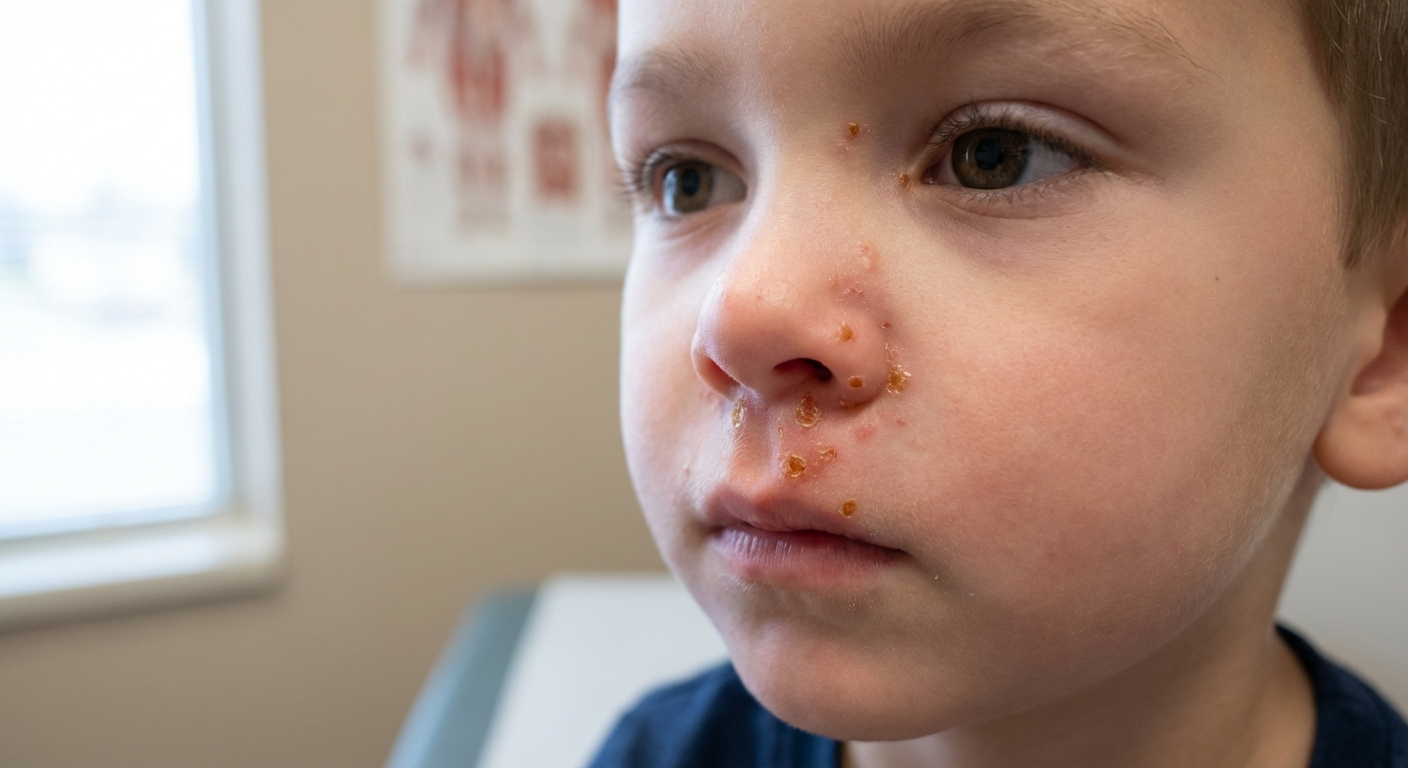
- There is honey-colored crusting, oozing, or the skin looks infected
- Your child has fever or significant pain
- The area near the eyes is involved with swelling, eye redness, or drainage
- Your child is an infant with a facial rash that is worsening quickly
Rashes that can look similar
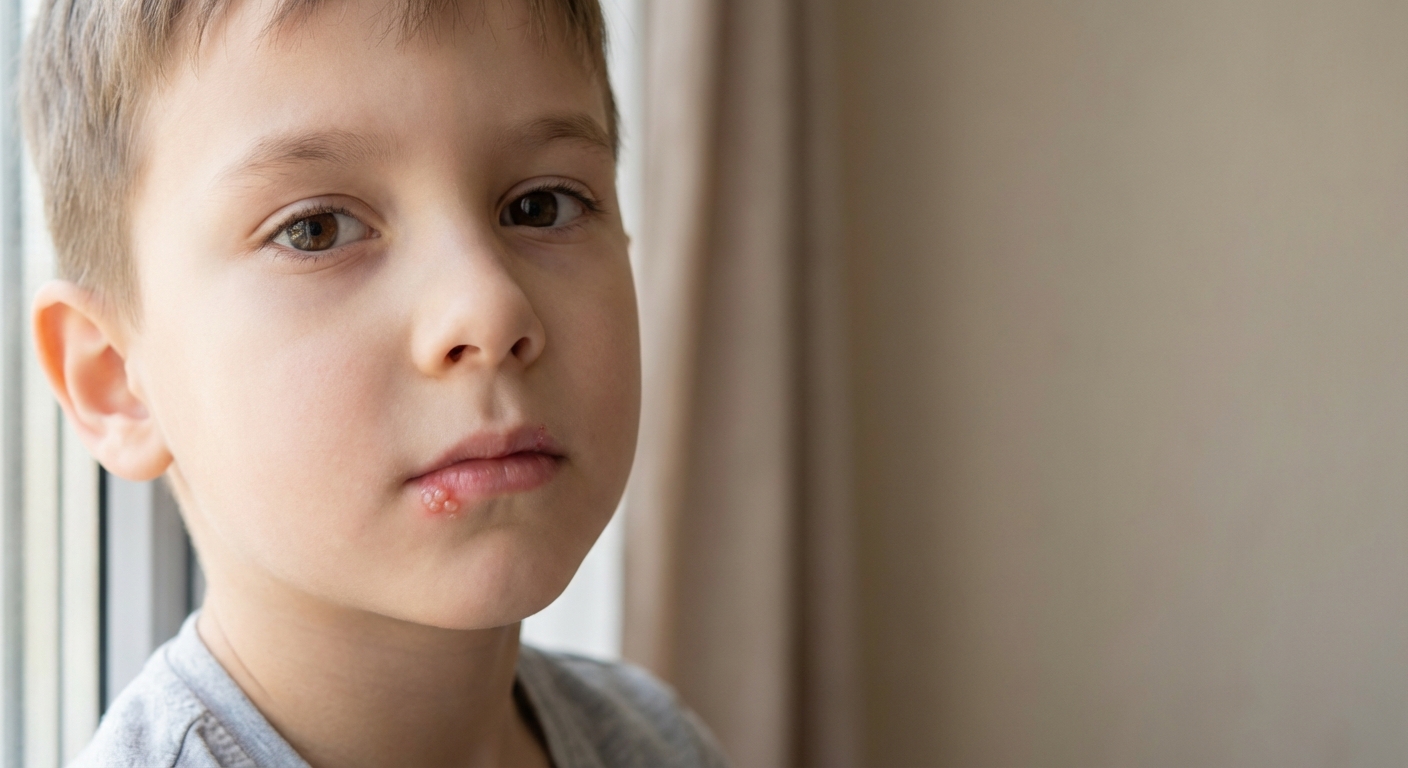
A few common “look-alikes” that deserve an exam include cold sores (grouped painful blisters), allergic contact dermatitis (often very itchy and linked to a product), and some fungal rashes. If you are not sure what you are seeing, that is a good reason to check in.
Eczema vs. perioral dermatitis
This section is only to help you sort the vibe of the rash.
Perioral dermatitis tends to look like
- Tight clusters of small red bumps around the mouth
- Often spares the lip edge
- Stinging or burning more than itching
- May worsen with steroid creams
Eczema tends to look like
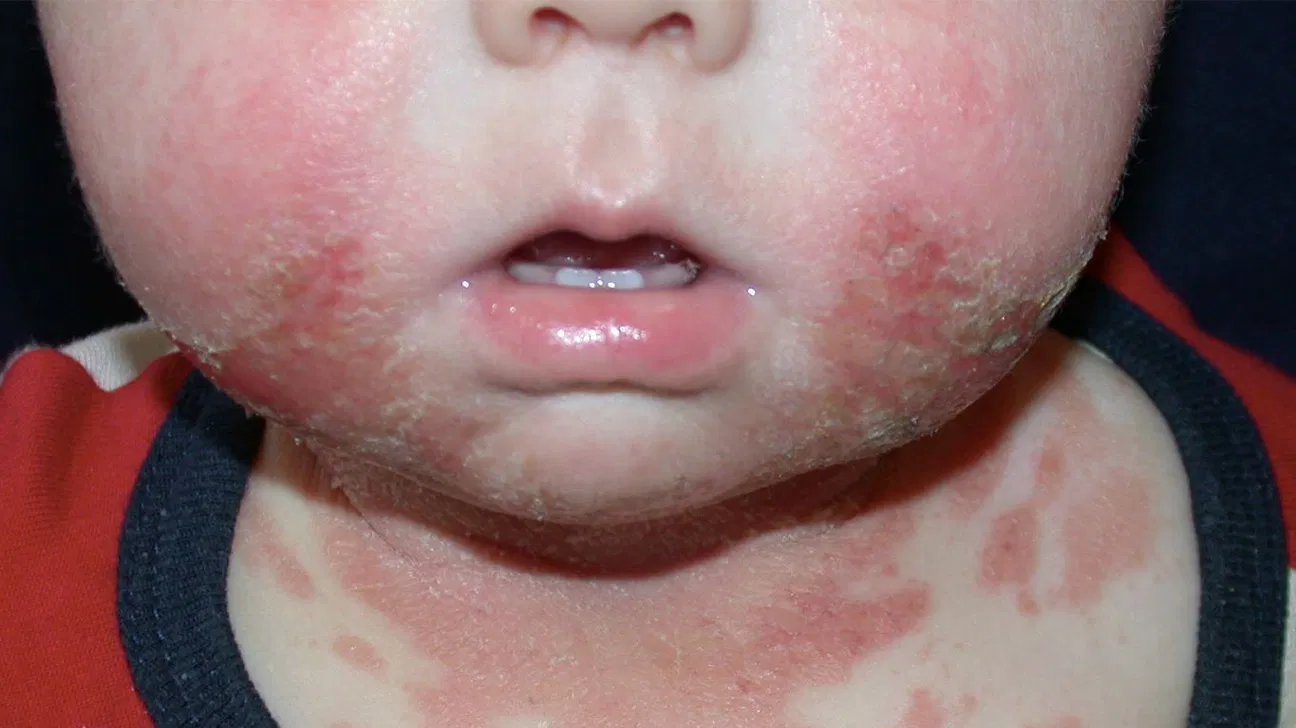
- Dry, rough, itchy patches that can be red and scaly
- Can show up on cheeks in babies, and in elbow and knee creases in older kids
- Often linked with a history of dry skin, allergies, or asthma
- Often improves with appropriate topical steroids used correctly, plus moisturizer
Impetigo vs. perioral dermatitis
Impetigo is a contagious skin infection and needs different care. This is not a full impetigo guide, just a quick “does this look infected?” check.
Perioral dermatitis tends to look like
- Bumps and mild scaling
- Usually not wet, weepy, or heavily crusted
- Chronic or recurrent pattern
Impetigo tends to look like
- Honey-colored crusts or yellow crusting
- May start as a small red spot and then ooze and crust
- Can spread quickly, especially with scratching
- Often shows up around the mouth and nose but can appear anywhere
If you see classic crusting or rapid spread, call your clinician. Impetigo usually needs prescription treatment to clear and to reduce spread to other kids.
Your 7-day reset plan
If your child is stable and you are not seeing infection signs, try this simple reset for one week:
- Stop steroid creams on the face (confirm with your clinician if it was prescribed for another reason, and ask if a taper is needed).
- Morning: rinse with lukewarm water, pat dry, apply a thin layer of bland moisturizer or barrier only if needed.
- After meals: water rinse or damp soft cloth, pat dry. Skip wipes and scrubbing.
- Toothbrushing: switch to a mild toothpaste, help them rinse, and wipe around the mouth with water afterward.
- Evening: gentle cleanser or water rinse, pat dry, minimal product.
- Track triggers: note flares after specific products, sunscreens, foods that sit on the skin (like tomato sauce), or licking habits.
- Reassess: if it is not improving at all by 10 to 14 days, or it is worsening, book a visit.
And if your child is a dedicated lip-licker, you are not alone. One of my kids could moisturize a whole sidewalk with saliva if I let him. The goal is not perfection, it is reducing the constant irritation enough for the skin to heal.
Bottom line
Red bumps around the mouth are not always “just eczema.” If the rash clusters around the mouth, stings, and flares with wipes, toothpaste, sunscreen, or steroid creams, perioral dermatitis is worth considering. A simplified routine and trigger removal help many kids, and prescriptions are available when home care is not enough.
If you are unsure, snap a few clear photos in good light and check in with your pediatric clinician. You deserve a plan that feels calm and doable, not another 2 AM spiral.
Sarah Mitchell
Sarah Mitchell is a Registered Pediatric Nurse and a mother of three who has spent over a decade helping families navigate the beautiful, chaotic early years of childhood. She combines evidence-based medical knowledge with real-world parenting experience to offer practical, compassionate advice. At Awesome Parent, Sarah's mission is to help exhausted parents find solutions, trust their instincts, and finally get some sleep.