A calm, parent-friendly guide to vitiligo in children: what the patches look like, common look-alikes, sun protection, school confidence, and when a dermatol...
Pityriasis Alba in Kids: Pale Patches on the Face and Arms

Sarah Mitchell
Sarah Mitchell is a Registered Pediatric Nurse and a mother of three who has spent over a decade helping families navigate the beautiful, chaotic early years of childhood. She combines evidence-based medical knowledge with real-world parenting experience to offer practical, compassionate advice. At Awesome Parent, Sarah's mission is to help exhausted parents find solutions, trust their instincts, and finally get some sleep.
If you have ever looked at your child’s face in bright summer light and thought, Wait, why are there pale patches all of a sudden? you are in very good company. I saw this constantly as a pediatric triage nurse, and I have had the same double-take with my own kids after a week of sunscreen, sprinklers, and popsicles.
One very common cause is pityriasis alba. It is benign, not contagious, and it often shows up right when parents are most worried about ringworm or vitiligo.
What it is (in everyday terms)
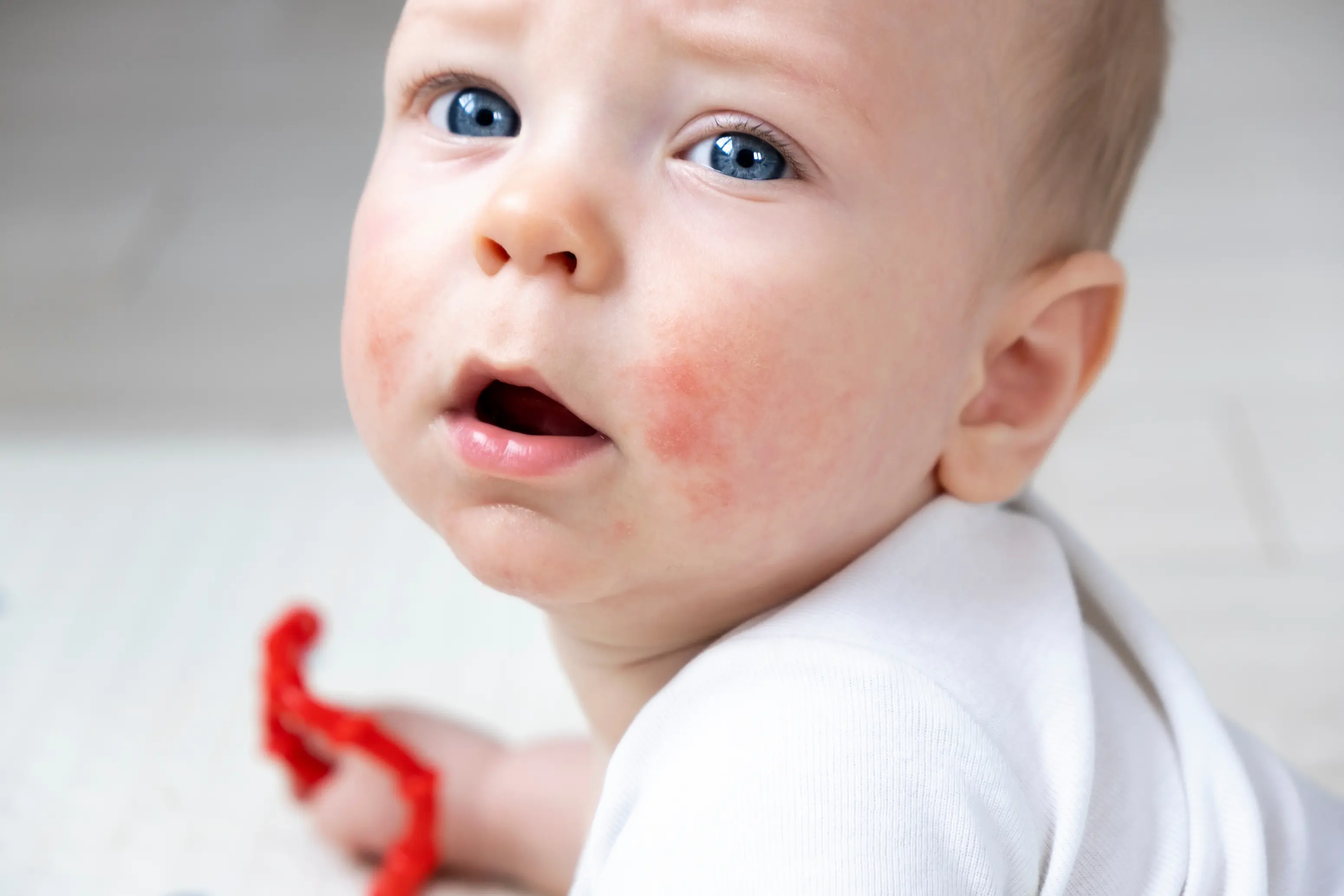
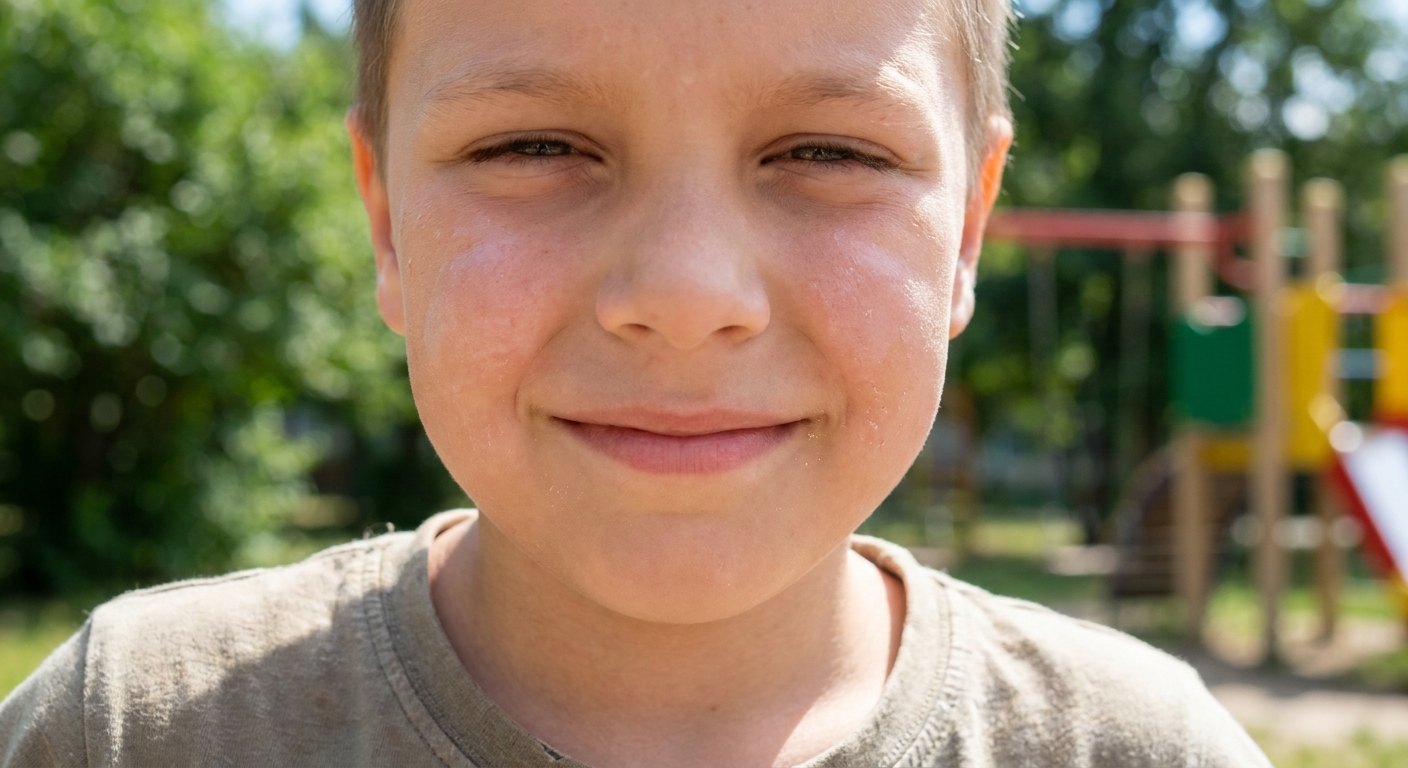
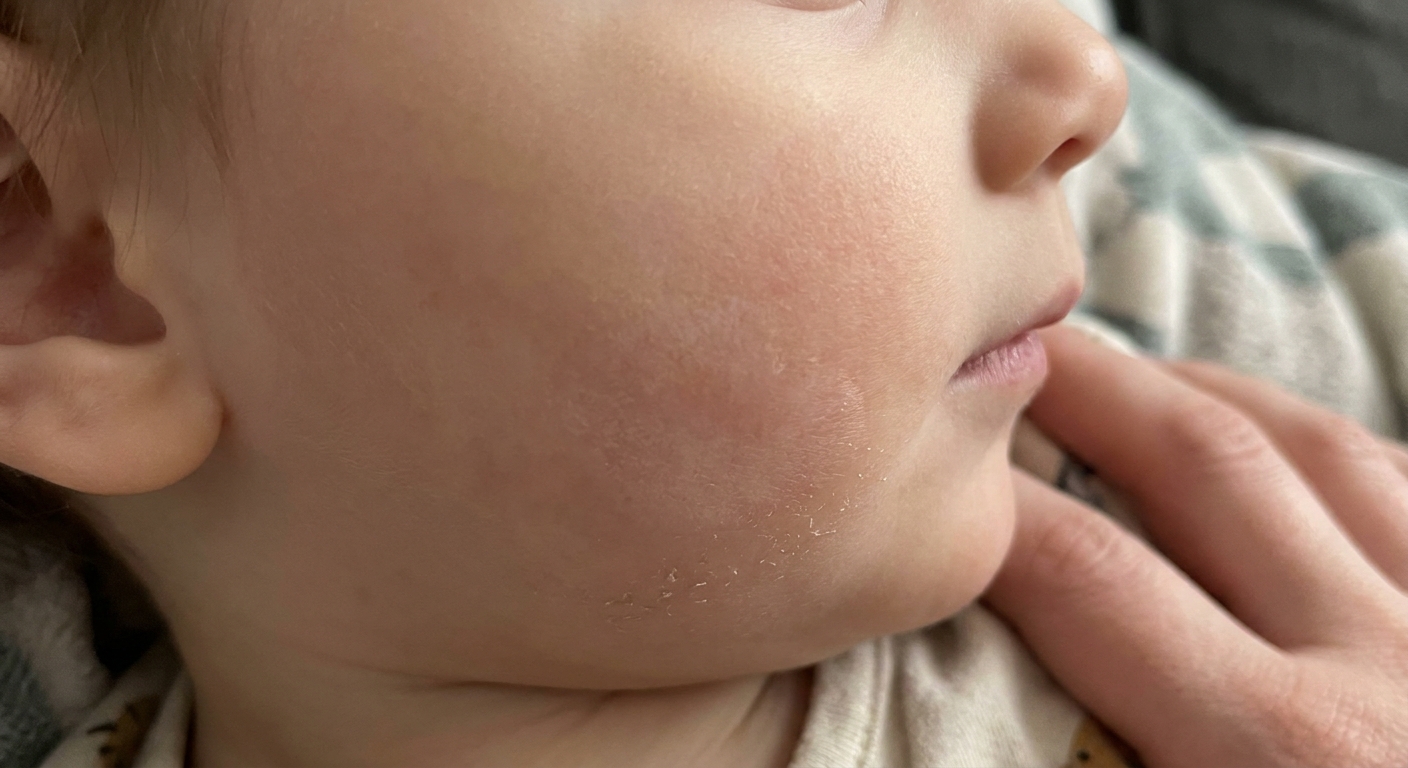
Pityriasis alba is a common childhood skin condition where small areas of skin look lighter than the surrounding skin. It is related to mild irritation and dryness in the skin, and it is often considered part of the “eczema family,” even if your child has never been diagnosed with eczema.
The key thing to know is this: the skin is not “losing pigment forever.” The lighter area usually happens because the skin was a bit inflamed or dry, and after sun exposure the surrounding skin tans more than the affected patch. The contrast makes the patch look extra obvious.
What it looks like
Pityriasis alba usually has a pretty consistent pattern:
- Color: lighter than the surrounding skin, not usually “chalk white”
- Edges: soft, blurry borders (not a sharp line)
- Texture: often a little dry or slightly rough
- Scale: sometimes a fine, powdery flake that you may only notice up close
- Symptoms: often no itch, or just mild itch
Some kids get a faint pink phase first (especially in winter or during dry weather), then the area fades to a lighter patch as it calms down.
Typical locations
Pityriasis alba has favorite hangouts:
- Face: cheeks, around the mouth, and sometimes the chin
- Arms: upper arms and outer forearms
- Neck and shoulders: occasionally
It can show up anywhere, but if you are seeing pale patches on the face after summer sun, this is one of the top explanations.
Why it shows up after sun
This is the classic scenario:
- Your child has a few slightly dry, mildly irritated areas that are easy to miss.
- Summer arrives and the surrounding skin tans.
- The irritated areas tan less evenly, so they look lighter by comparison.
Parents often tell me, “It looks worse now, but it wasn’t there before.” The truth is, the skin likely was a bit irritated before. Summer just turns the contrast knob way up.
Not vitiligo
When parents google “white patches on child face,” vitiligo is the result that can really spike the anxiety. Here is a simple, helpful comparison.
More typical for pityriasis alba
- Faintly lighter than the surrounding skin (not bright white)
- Blurry, soft edges
- Often a little dry or slightly rough
- Frequently on the cheeks and around the mouth
More typical for vitiligo
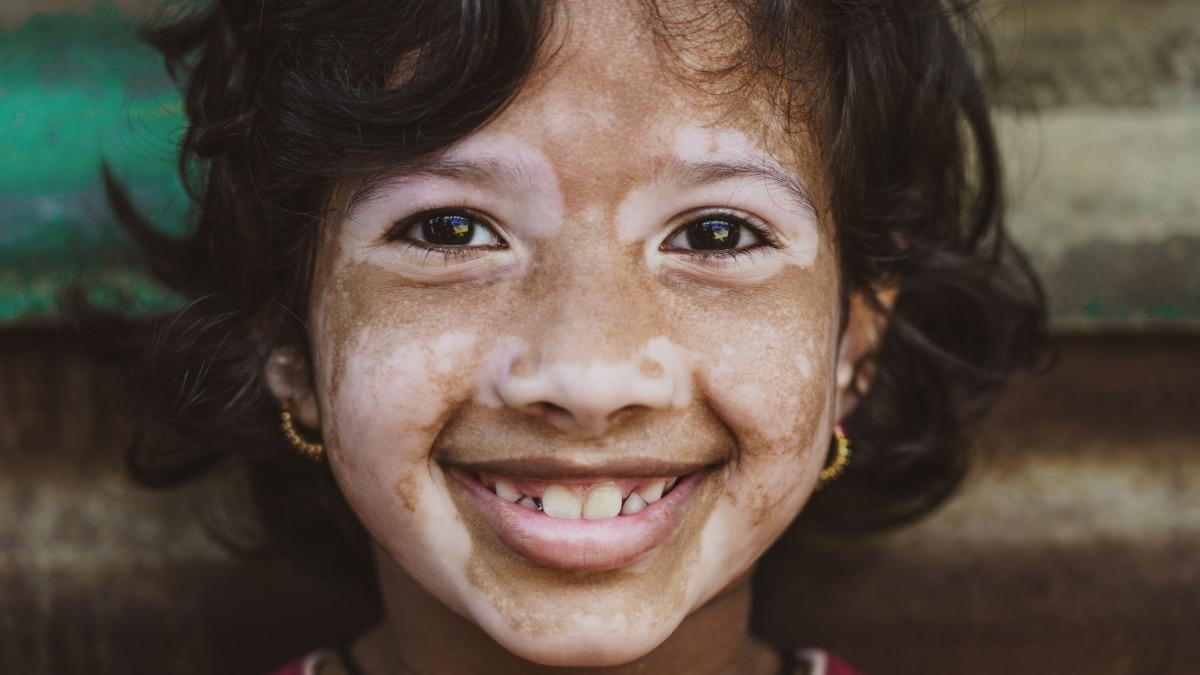
- Chalk white patches that look “washed out” compared with nearby skin
- Sharp, clearly defined borders
- Usually not scaly or dry just from the vitiligo itself
- Often involves areas like around the eyes, mouth, hands, or other spots that can be symmetric
- May be linked with a personal or family history of autoimmune conditions in some kids
If you are seeing truly white patches with crisp edges, or the lighter areas seem to be spreading with very clear borders, that is a good reason to message your clinician and ask for an in-person look.
Not ringworm
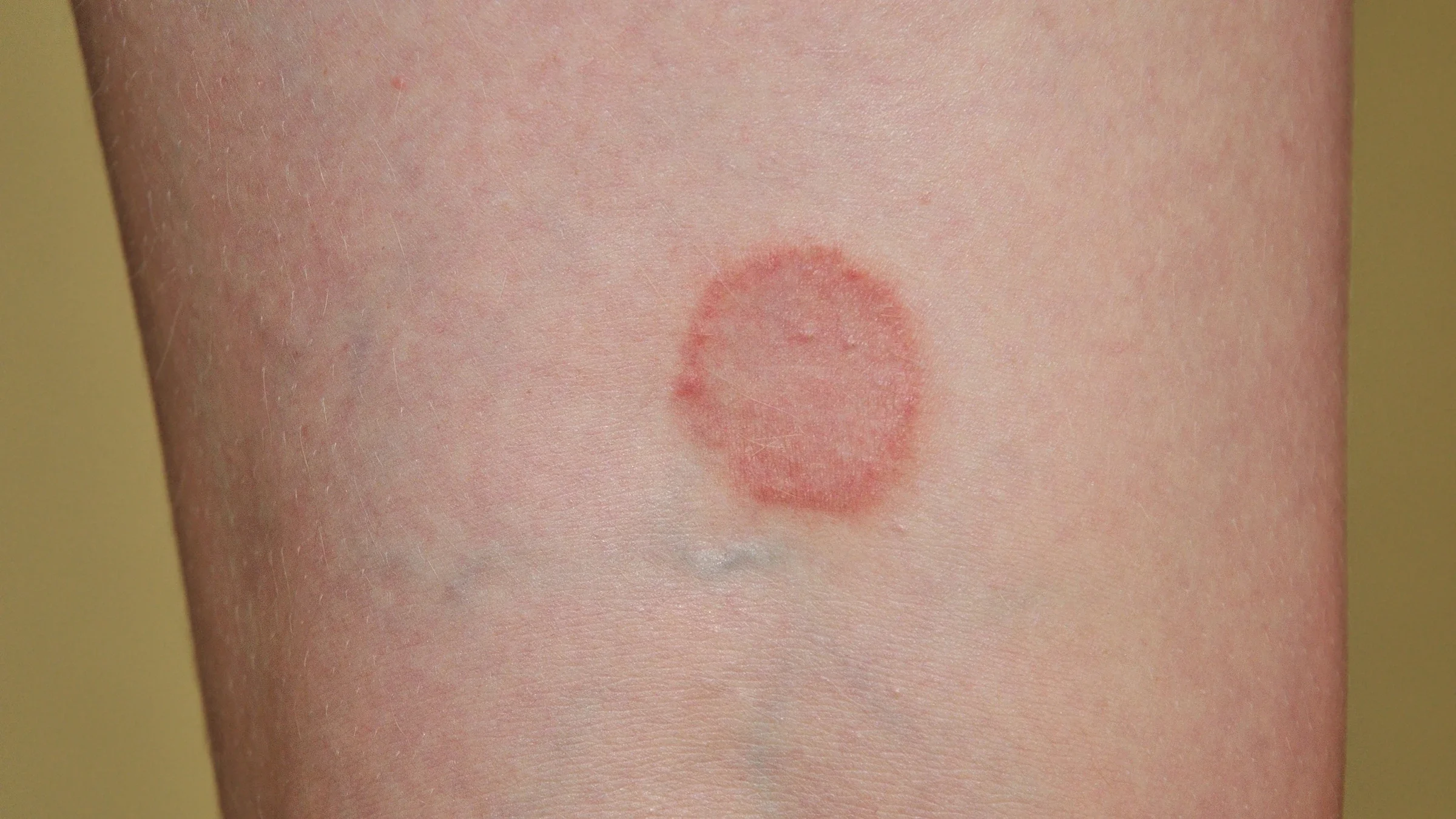
Ringworm (tinea corporis or tinea faciei when it is on the face) is a fungal infection, and it tends to have some features pityriasis alba does not.
More typical for pityriasis alba
- Patch is lighter with blurry borders
- May be slightly dry
- Often on the face
- Usually not very itchy
More typical for ringworm
- Often a ring-shaped patch with a more defined edge (but it is not always a perfect ring, especially on the face)
- The edge can look raised or scaly while the center looks more normal
- Often spreads outward over days to weeks
- More likely to be itchy
Facial tinea can be sneaky and can mimic eczema or pityriasis alba. If a spot is enlarging, getting more inflamed, or not improving with gentle moisturizing, it is reasonable to check in with your clinician. In some cases, clinicians will recommend an empiric antifungal trial when the diagnosis is uncertain.
Not tinea versicolor
Tinea versicolor is another fungal condition that can cause lighter (or sometimes darker) patches. It is more common in teens and young adults but can happen in kids.
Pityriasis alba tends to
- Favor the face and sometimes arms
- Have subtle dryness
- Be more obvious after tanning
Tinea versicolor tends to
- Favor the upper chest, back, shoulders, and sometimes neck
- Have fine scale that can be more noticeable when you gently scratch the surface
- Come back in warm, humid months
Clinicians can often confirm tinea versicolor by exam, and sometimes with a quick office test like a KOH prep (a gentle skin scraping) and occasionally a Wood’s lamp. Treatment is different, so location and pattern matter here.
Eczema-adjacent
Parents often ask if pityriasis alba is eczema. The most helpful answer is: it behaves like a mild eczema-type irritation even when it is not a classic, angry, itchy eczema flare.
If your child also has:
- dry skin overall
- history of eczema, asthma, or allergies in the family
- wintertime dry patches
that makes pityriasis alba more likely.
Skin care that helps
The goal is to support the skin barrier, calm any low-level irritation, and prevent new patches from forming. Think: gentle, boring, consistent.
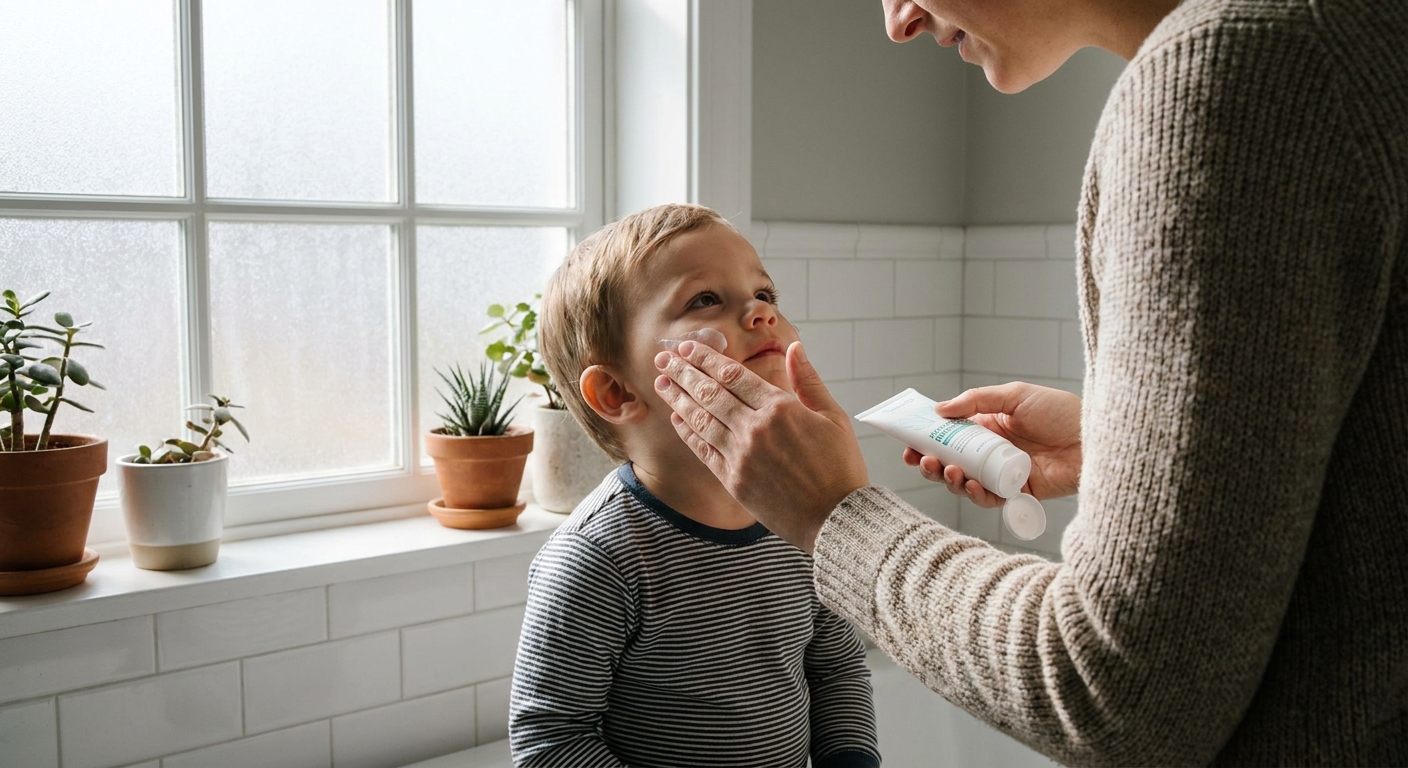
1) Moisturize often (and keep it easy)
- Use a fragrance-free cream or ointment (creams in tubs usually work better than pump lotions).
- Apply at least once daily. Twice daily is even better during dry seasons.
- Best time: within a few minutes after bathing, when skin is still slightly damp.
2) Keep baths and cleansers mild
- Short, lukewarm baths or showers.
- Use a gentle, fragrance-free cleanser only where it is needed (hands, feet, sweaty spots).
- Avoid harsh scrubs and “exfoliating” products on the patches.
3) Sunscreen helps the look (and protects the skin)
Sunscreen does not “cure” pityriasis alba, but it reduces tanning of surrounding skin so the contrast is less dramatic.
- Use broad-spectrum SPF 30+.
- If your child is sensitive, consider mineral sunscreen (zinc oxide or titanium dioxide).
4) If patches are red or itchy, ask about short-term anti-inflammatory help
For some kids, a clinician may recommend a short course of a low-strength topical steroid or another anti-inflammatory cream for the face. This is not a DIY situation for everyone, especially on facial skin, so it is worth a quick message to your pediatrician or dermatologist if inflammation is obvious.
What usually does not help: antifungal cream, unless the diagnosis is actually ringworm or tinea versicolor, or your clinician wants a short trial because the diagnosis is not clear.
What not to do
- Do not aggressively scrub or “buff” the patch. That usually makes irritation worse.
- Do not use skin-lightening or bleaching products on kids’ spots.
- Do not use strong steroid creams on the face unless your clinician tells you to.
How long it lasts
This is the part nobody loves: the color can take a while to even out, even after the skin feels less dry.
- Many patches improve over weeks to a few months.
- Some can linger 6 to 12 months, especially if your child tans often or the skin stays dry.
- The good news: it almost always fades over time and does not scar.
Recurrence is also common, especially in kids with dry skin or an atopic tendency. The same routine of moisturizing and sun protection usually keeps it quieter.
Photos to send
If you are unsure, a quick check is reasonable. Pityriasis alba is common, but it is not the only cause of light patches. Telehealth and portal messaging can work well if you send clear photos.
Take photos like a triage nurse would love
- One close-up of the patch in good natural light
- One zoomed-out photo showing where it is on the body (cheek, arm, etc.)
- One angled photo that shows texture (dryness or scale)
- If possible, include a photo of a different patch if there are multiple
Also include these details
- When you first noticed it
- Whether it is itchy or painful
- Any new products (sunscreen, soap, face paint, pool chemicals)
- Any recent rash, bug bites, scratches, or irritation in that area (post-inflammatory light spots are a thing)
- Any pets with hair loss spots, or close contacts with a rash
- What you have tried so far
When to be seen sooner
Most pale patches are not urgent, but you should contact your child’s clinician if you notice:
- Sharp, very white patches with clear borders (especially if spreading)
- Rapid growth of a spot over days to a couple weeks
- Ring-shaped lesions or scaly patches that keep expanding (even if the “ring” is not perfect)
- Significant itch, pain, oozing, or crusting
- Scalp involvement (scaly areas, broken hairs, patches of hair loss)
- Fever or your child seems unwell
- Any rash in a child with a weakened immune system
And trust your gut. If a patch is making you uneasy because it looks different from the “classic” descriptions, you are not overreacting by asking for eyes on it.
The bottom line
Pityriasis alba is one of those very normal kid skin quirks that loves to show up at the worst possible time, like right before picture day or during the first pool party of the year. It is not contagious, it is usually not ringworm, and it almost always improves with gentle moisturizing and sun protection.
If the pattern is not fitting, the patch is spreading quickly, or you just want reassurance, send a few good photos to your child’s clinician. You deserve an answer that lets you close the 3 AM browser tabs and go back to sleep.