
Baby blues or postpartum depression? Here are the key symptoms, risk factors, when to get help, screening, and what treatment can look like, including while ...
Postpartum Anxiety: Racing Thoughts, Panic, and When to Get Help

Sarah Mitchell
Sarah Mitchell is a Registered Pediatric Nurse and a mother of three who has spent over a decade helping families navigate the beautiful, chaotic early years of childhood. She combines evidence-based medical knowledge with real-world parenting experience to offer practical, compassionate advice. At Awesome Parent, Sarah's mission is to help exhausted parents find solutions, trust their instincts, and finally get some sleep.
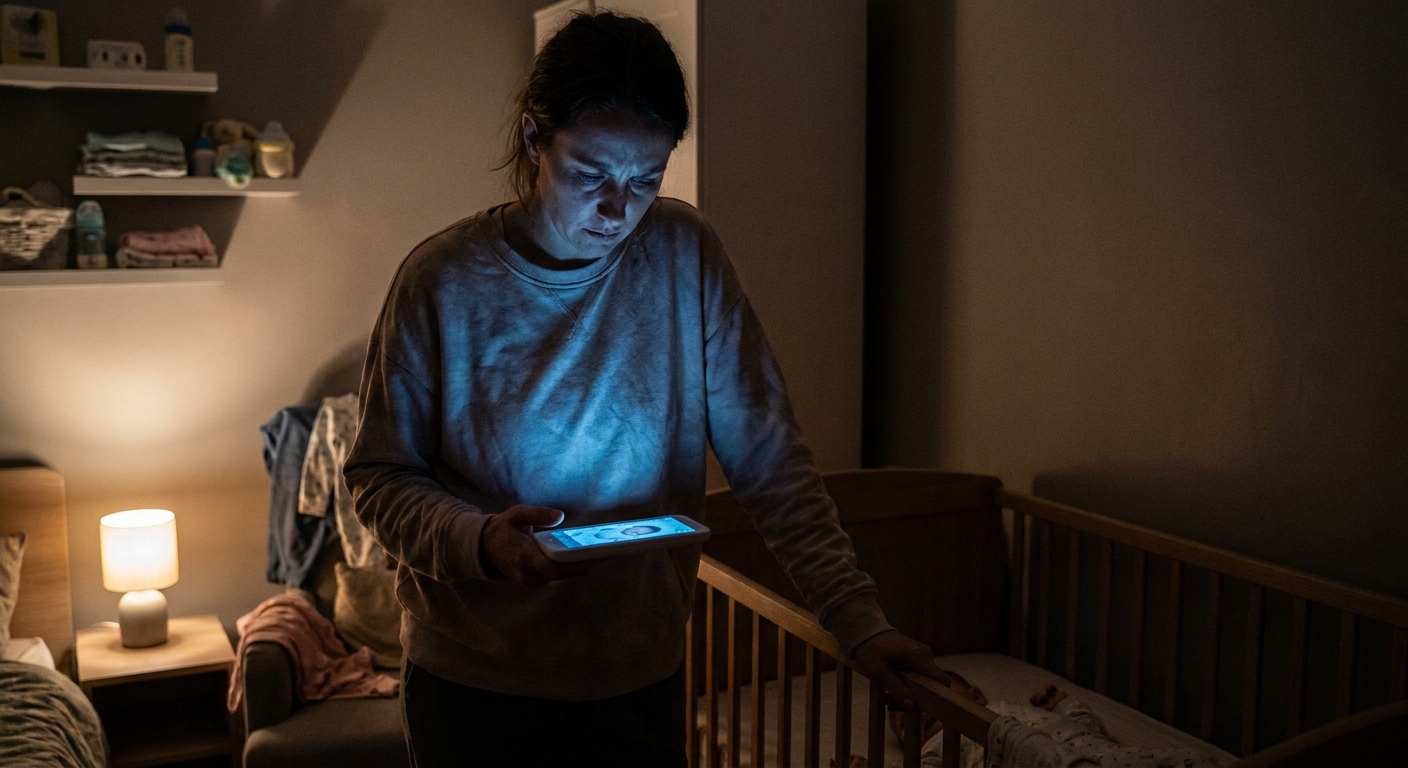
There is a particular kind of “awake” that hits at 2:47 AM when you have a newborn. Your body is exhausted, but your brain is sprinting. You replay the day, you imagine a hundred terrible possibilities, you google one symptom and suddenly you are spiraling.
If that sounds familiar, you might be dealing with postpartum anxiety . It is common, it is treatable, and it does not mean you are failing. It means your nervous system is stuck in overdrive during one of the most intense transitions a human body can go through.

What it is (and is not)
Most new parents expect some mood swings. But postpartum anxiety is more than normal worry. It is persistent, hard to control, and often comes with physical symptoms like a racing heart or a tight chest.
It can show up anytime in the postpartum period, including months after birth. Many clinicians define “postpartum” as the first year.
Postpartum anxiety vs. baby blues
- Baby blues are very common in the first 1 to 2 weeks after birth. You might cry easily, feel overwhelmed, and feel emotionally “raw.”
- Key difference: baby blues often fade within about 2 weeks. Hormone shifts, stress, and sleep disruption can contribute, but the pattern is usually that it improves on its own. With postpartum anxiety, the worry tends to stick around, intensify, or interfere with daily life.
Postpartum anxiety vs. postpartum depression (PPD)
- PPD often shows up as persistent sadness, hopelessness, numbness, loss of interest, or feeling disconnected from your baby.
- Postpartum anxiety is more “revved up”: excessive worry, dread, rumination, panic, or feeling like you cannot relax even when the baby is asleep.
- Important: you can have both anxiety and depression at the same time. Many parents do.
Also worth saying out loud: anxiety does not care whether you love your baby. Many deeply loving, attentive parents have postpartum anxiety.
Common symptoms
Postpartum anxiety is not one-size-fits-all. Some parents feel constant worry. Others have spikes of panic. Many feel it in their bodies before they can name it emotionally.
Thought patterns
- Racing thoughts that are hard to shut off
- “What if” loops (What if she stops breathing? What if I miss a symptom? What if I do it wrong?)
- Constant reassurance seeking (repeatedly checking the monitor, googling, calling family, rechecking temperatures)
- Catastrophizing (your brain jumps to the worst outcome as if it is likely)
- Difficulty concentrating because worry hijacks your attention
Body symptoms (somatic anxiety)
- Racing heart, palpitations
- Shortness of breath or feeling like you cannot get a full breath
- Chest tightness
- Nausea, diarrhea, stomach “flips”
- Trembling, restlessness, feeling keyed up
- Muscle tension, jaw clenching, headaches
- Trouble sleeping even when the baby sleeps
Behavior changes you might notice
- Overchecking (breathing checks, obsessively tracking feeds and diapers beyond what is helpful)
- Avoidance (avoiding certain tasks or situations that suddenly feel “too risky,” like driving, cooking, or being alone with the baby)
- Control spirals (feeling panicky when routines change or someone else holds the baby)
- Irritability and a short fuse, especially when you are sleep-deprived
Intrusive thoughts
Let’s talk about the thing many parents whisper about, if they talk about it at all: intrusive thoughts.
Intrusive thoughts are unwanted mental images or ideas that pop into your head. In the postpartum period, they often involve accidental harm (dropping the baby, the baby slipping in the bath) or other frightening scenarios.
What they often feel like
- They show up suddenly and feel shocking.
- You do not want them.
- You feel guilty or terrified that having the thought means something about you.
- You try to neutralize the anxiety by checking, avoiding, or asking for reassurance.
Many clinicians emphasize this: a thought is not a plan. Intrusive thoughts are a symptom of anxiety, not a character test.
When it is a bigger red flag
If thoughts involve wanting to harm yourself or your baby, feeling unable to control your behavior, hearing voices, believing things that are not real, or feeling disconnected from reality, that is an emergency-level situation and you deserve immediate help. More on exactly what to do below.
Why it happens
Postpartum anxiety is usually a mix of biology, stress, and life circumstances, not a personal weakness.
- Hormone shifts after birth can affect mood and sleep.
- Sleep deprivation is rocket fuel for anxiety.
- High stakes responsibility with a tiny, vulnerable human can flip the “danger” switch on full-time.
- Past anxiety, OCD, panic attacks, or trauma can increase risk.
- Birth experience (traumatic delivery, NICU stay, complications) can increase hypervigilance.
- Low support, financial stress, relationship strain, or pressure to “do it perfectly” can keep anxiety going.
It can also happen after pregnancy loss, stillbirth, adoption, or surrogacy. Any path into parenthood can put your nervous system on high alert.
A calm plan
When you are anxious, everything feels urgent. Here is a simple way to sort it. If something feels severe or unsafe, skip ahead. You do not have to “wait it out.”
Level 1: Self-care supports (mild symptoms, you are safe)
These do not fix postpartum anxiety overnight, but they can lower your baseline enough to think clearly.
- Protect sleep like it is medicine. If possible, do shifts with a partner or support person. Even one 3 to 4 hour uninterrupted block helps.
- Reduce “checking” rituals. Choose one or two safety steps (safe sleep setup, normal newborn checks) and then practice stopping.
- Limit late-night googling. If it is after midnight, write the question down for your pediatrician or your own clinician in the morning.
- Eat and hydrate regularly. Low blood sugar can mimic or worsen anxiety symptoms.
- Gentle grounding. Try: name 5 things you see, 4 you feel, 3 you hear, 2 you smell, 1 you taste. It is simple and surprisingly effective.
- Small movement. A 10-minute walk outside or stretching can help discharge stress hormones.
- Watch the caffeine spiral. If you are leaning hard on coffee to survive, you are not alone. But dialing it back a bit can lower the physical “buzz” that feels like panic.
Level 2: Support plan (anxiety is affecting your day)
If anxiety is interfering with sleep, feeding, leaving the house, or enjoying your baby at all, it is time for a more deliberate plan. You do not have to wait until it is unbearable.
- Use clear, concrete language. Try: “My anxiety is spiking at night. I need you to take the first shift from 9 PM to 1 AM so I can sleep.”
- Ask for targeted help. Meals, laundry, school pickup, sitting with the baby while you shower, making appointment calls.
- Create a reassurance script. Agree on a short phrase your partner can use when you spiral, like: “We have a safe sleep space. The pediatrician said this is normal. Let’s do one check and then rest.”
- Reduce decision fatigue. Pick a simple default routine for nighttime feeds, bottles, and pump parts so you are not reinventing life at 3 AM.
Level 3: Call a clinician (persistent, worsening, or impairing symptoms)
Reach out to your OB-GYN, midwife, primary care clinician, pediatrician, or a mental health provider if anxiety is sticking around, escalating, or interfering with your functioning. Time matters less than impact. If it feels like too much, that is enough.
It can also help to ask about screening tools. Some clinics use the EPDS (Edinburgh Postnatal Depression Scale) and may include anxiety items. Others may use the GAD-7 or postpartum-specific screening.
Consider reaching out if:
- Symptoms last more than 2 weeks, or they are getting worse.
- You have panic attacks or feel physically out of control.
- You cannot sleep even when the baby sleeps.
- Anxiety is pushing you into avoidance, compulsive checking, or constant reassurance-seeking.
- Intrusive thoughts are frequent and distressing, even if you would never act on them.
- You feel like you are not functioning the way you normally do.
What they may offer: therapy (especially CBT). If anxiety looks OCD-like (intrusive thoughts plus checking or avoidance), treatment may include CBT with exposure and response prevention (ERP). Support groups can help too. Sometimes medication is part of the plan, such as SSRIs or SNRIs. Some medications are compatible with breastfeeding, but the best choice depends on the specific medication, dose, your health history, and infant factors. Your clinician can help you weigh risks and benefits for your situation.
Level 4: Crisis help now
Get immediate help if you:
- Have thoughts of harming yourself or your baby.
- Feel you might act on scary thoughts.
- Are hearing or seeing things others do not.
- Feel paranoid, severely confused, or disconnected from reality.
- Cannot care for yourself or your baby due to symptoms.
If you are in the United States: call or text 988 (Suicide and Crisis Lifeline). If you feel in immediate danger, call 911 or go to the nearest emergency room.
If you are outside the United States: contact your local emergency number or a local crisis hotline in your country.
If you are reading this and thinking, “I do not know if it is ‘bad enough,’” that is often anxiety talking. You are allowed to get help before you hit a breaking point.
What to say for help
When you are anxious, it can be hard to organize your thoughts. Here is a simple script you can adapt:
- “I am X weeks postpartum and I am having persistent anxiety.”
- “I am experiencing (racing thoughts, panic symptoms, intrusive thoughts, trouble sleeping).”
- “It is affecting (sleep, eating, caring for baby, leaving the house).”
- “I do not have thoughts of harming myself or my baby” or “I am having thoughts of harm and I need urgent help.”
- “I would like an appointment and a plan for treatment and support.”
If making the call feels impossible, ask a partner or friend to sit with you and dial. Clinics and triage lines are used to this. You will not be the first, and you deserve kindness, not judgment.
Tools for a panic spike
While you are arranging longer-term support, here are a few in-the-moment tools to help you ride the wave until your body settles.
1-minute reset
- Cold water on your face or holding something cool may help reduce the intensity of the stress response for some people.
- Long exhale breathing: breathe in for 4, out for 6 to 8. Do 6 rounds.
- Name it: “This is anxiety. It feels awful, and it will pass.”
Reality check questions
- “What is the most likely explanation, not the scariest?”
- “If my best friend told me this, what would I say to them?”
- “What is one small next step I can do in the next 5 minutes?”

Common questions
Can dads and non-birthing parents get postpartum anxiety?
Yes. Partners can develop postpartum anxiety too, especially with sleep loss, new responsibility, or prior anxiety. Help looks similar: talk to a clinician, prioritize sleep blocks, and get real support.
Is it normal to feel anxious when the baby sleeps?
It is common. Many parents feel a spike of fear in quiet moments because your brain finally has space to worry. If it is preventing you from sleeping regularly, that is a sign to reach out for help.
What if I am afraid to tell someone about intrusive thoughts?
I get it. But clinicians hear this often, and it helps to be specific. Unwanted intrusive thoughts are different from intent. Saying it out loud is often the first step toward relief.
A gentle bottom line
Postpartum anxiety can be loud and convincing. It can tell you that you are the only one struggling, that you should be able to handle it, and that if you ask for help you are failing. None of that is true.
You deserve support that is steady, practical, and based in real care. If your mind is racing, your body is panicking, or your days are shrinking to just “get through it,” let that be your sign. Reach out. We can treat this. And you can feel like yourself again.
Medical note
This article is for education and does not replace medical advice. If you are concerned about your safety or your baby’s safety, seek urgent care right away.