Potty Training Boys: Tips, Timeline, and Common Challenges

Sarah Mitchell
Sarah Mitchell is a Registered Pediatric Nurse and a mother of three who has spent over a decade helping families navigate the beautiful, chaotic early years of childhood. She combines evidence-based medical knowledge with real-world parenting experience to offer practical, compassionate advice. At Awesome Parent, Sarah's mission is to help exhausted parents find solutions, trust their instincts, and finally get some sleep.
If you are potty training a boy and wondering why this feels like trying to coach a tiny, opinionated linebacker through a new life skill, you are not alone. Some boys do train later than some girls on average, but plenty do not. The real driver is readiness and temperament, not a gender deadline. Boys also come with some uniquely messy learning curves: aiming, standing vs. sitting debates, and the very common “I will pee in the toilet but I will absolutely not poop there” stage.
As a pediatric nurse and a mom of three, my biggest goal here is to help you keep this safe, realistic, and low-drama. You do not need a perfect method. You need a plan you can repeat calmly, plus permission to take your time.
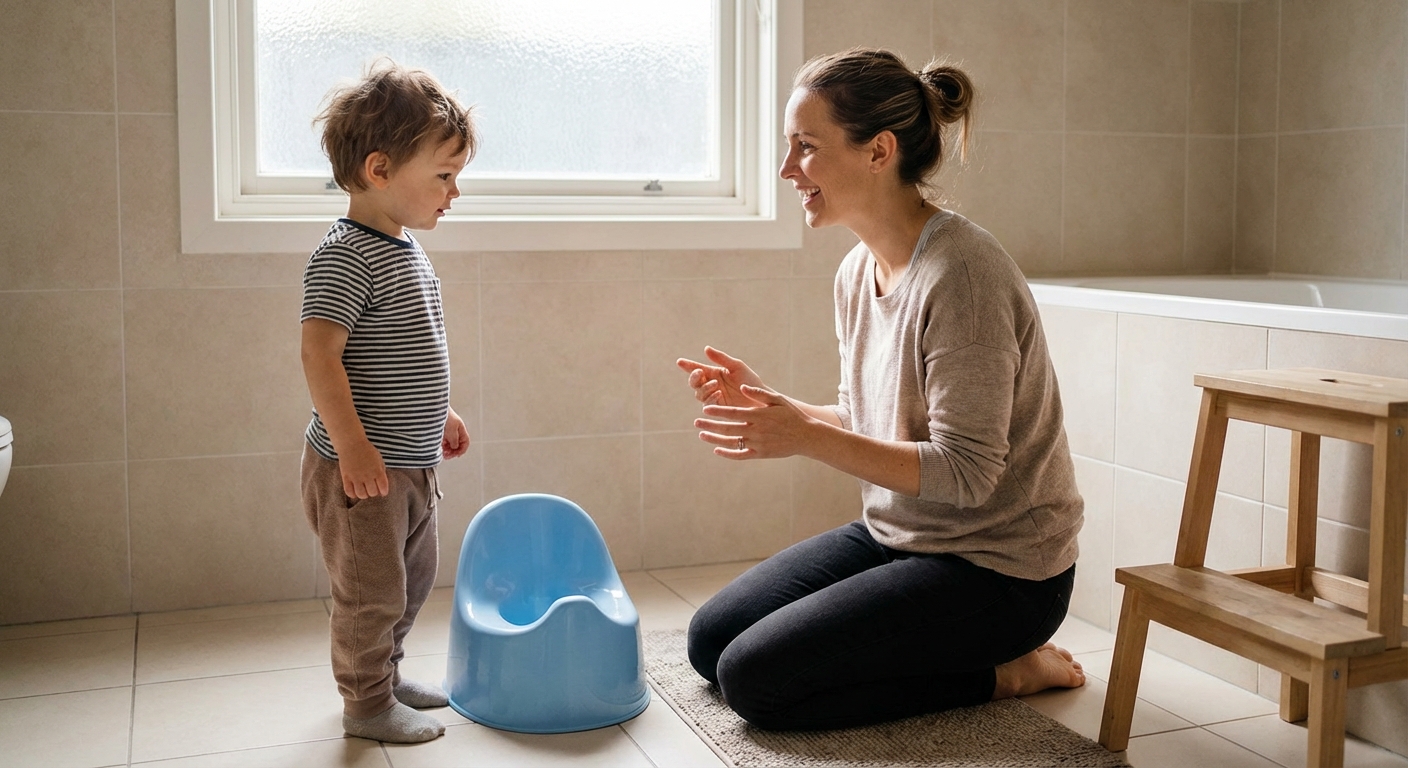
Timeline for potty training boys
Let’s start with the question every exhausted parent asks: When will this be done? Potty training is less like flipping a switch and more like learning to ride a bike. There is a first successful attempt, a wobbly practice period, and then one day you realize you are not thinking about it every hour.
Typical age ranges
- 18 to 24 months: Some boys show early interest, but many are not developmentally ready. Think “introducing the idea” more than “training.”
- 24 to 36 months: A very common window for starting. Many boys do well here, especially with a patient, consistent approach.
- 3 to 4 years: Also very normal, especially for poop training and for kids who are intense players and do not love transitions.
- 4+ years: Still within the range of normal for some kids, but if you are stuck, it is worth troubleshooting routines, constipation, anxiety, or developmental factors with your pediatrician.
Daytime potty learning often comes before staying dry overnight. Night dryness is largely developmental. It depends on things like bladder capacity, how deeply your child sleeps, how easily they wake to a full bladder, and normal nighttime hormone patterns (including ADH). Many children, especially boys, are not reliably dry at night until ages 5 to 7.
How long does it take?
- Initial learning (peeing in the potty with reminders): a few days to a few weeks
- More independence (telling you, going with less help): a few weeks to a few months
- Poop confidence: often the longest piece and can take months
If you have heard “three days and done,” please know that some families do have a quick start, but plenty of perfectly healthy kids need more runway.
Readiness signs (what matters most)
Readiness is not about age on a calendar. It is about your child’s body and brain being ready to cooperate.
Signs your boy may be ready
- Stays dry for at least 2 hours at a time or wakes from naps dry
- Has predictable poop timing (often after meals)
- Can follow simple two-step directions
- Can pull pants up and down with some help
- Notices pee or poop happening, or dislikes a wet diaper
- Shows curiosity about the bathroom or wants privacy to poop
Two underrated readiness factors
- Transition tolerance: Some boys get deeply absorbed in play and hate stopping. If this is your child, your plan needs built-in routines and very consistent prompts.
- Constipation status: If poops are hard, painful, or infrequent, potty training tends to stall. Comfort comes first.
When to wait: If your child is in the middle of a big change (new sibling, moving, starting daycare, illness), it is okay to pause. Potty training does not have to be the hobby you pick during chaos season.
Methods: how to choose
You will hear a lot of strong opinions about methods. In real life, most families use a mix.
- Child-led: Great for kids who hate pressure. You offer the potty and routines, but you do not push.
- Scheduled sits: Helpful for kids who get “play locked” and do not notice signals until it is too late.
- Quick-start (a long weekend): Can work well if your child is clearly ready and you can supervise closely. It is also okay if it turns into “a good start” instead of a miracle.
Pick the approach that best matches your child’s personality and your bandwidth. Calm and consistent beats intense and exhausted.
Gear that helps (and what to skip)
You do not need a bathroom full of gadgets. A few simple tools can make a big difference, especially for boys.
Helpful basics
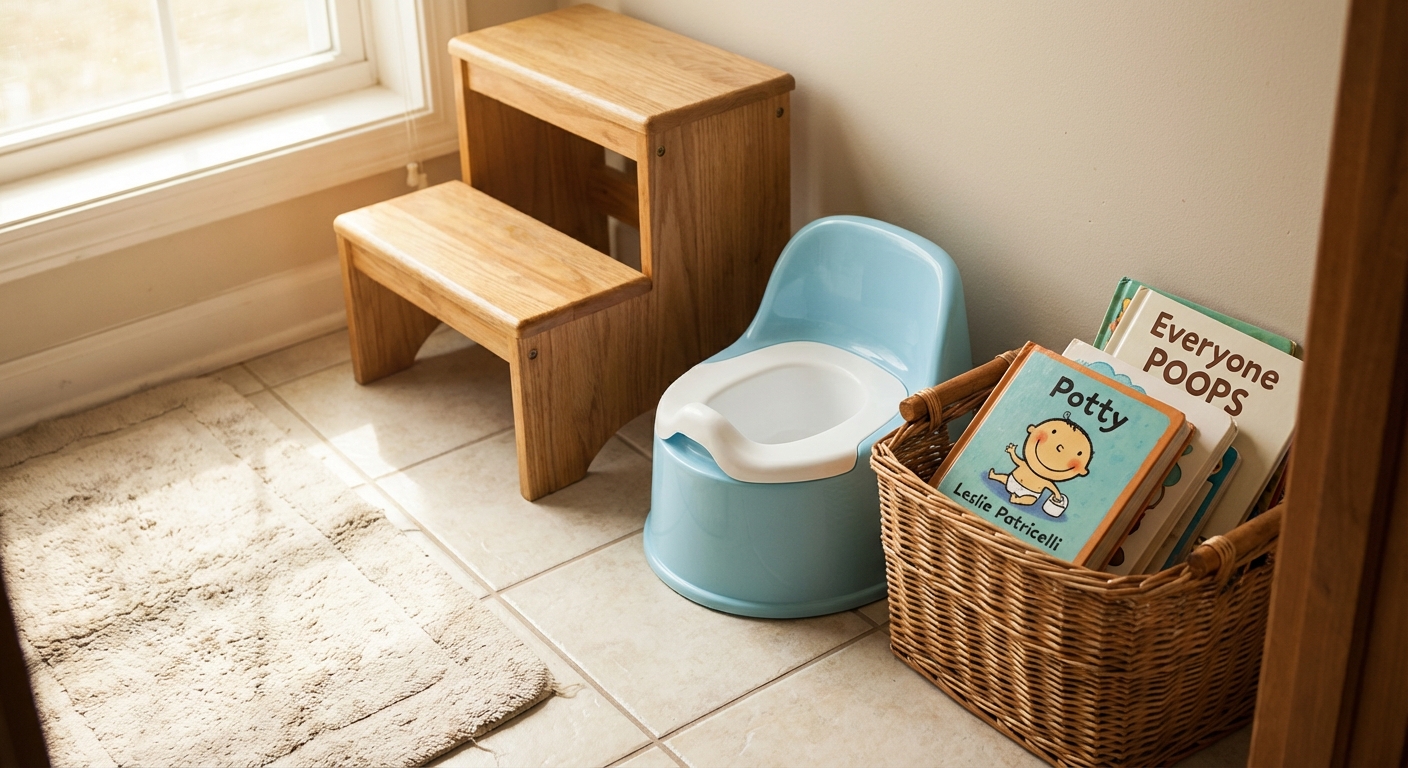
- Small potty chair or a toilet seat insert
- Step stool so feet are supported (this matters a lot for poop)
- Easy-off bottoms (soft shorts or pants, not complicated snaps)
- Cleaning spray and paper towels accessible for quick, calm cleanup
- Training underwear or thick cotton underwear once you are actively practicing
Quick note on training underwear: it is usually thicker than regular underwear but much less absorbent than a diaper. It helps kids feel wet sooner, but it will not prevent leaks. Plan accordingly.
Nice extras for boys
- Removable splash guard for small potties
- Target practice item (more on this below)
Sitting vs. standing
This is the big boy-specific question. Here is my practical take: start with sitting, then add standing once peeing is consistent.
Why sitting first often works better
- Less mess while he is learning body control and timing
- Builds the poop habit in the same location and posture
- One skill at a time is easier for toddlers
How to teach sitting to pee
- Have him sit with knees apart and feet supported.
- Remind him to point his penis down before he starts. This is a very common cause of “pee over the edge” accidents on a regular toilet.
- If he struggles to keep it pointed down, gently teach him to hold it with one hand.
When to introduce standing
Consider standing when he is consistently peeing in the potty with minimal accidents and he is interested in “peeing like Dad” or older brothers. Interest is a powerful teacher.
Pro tip: There is no rule that boys must stand at home. Plenty of families do sit-at-home, stand-in-public bathrooms, and everyone’s floors survive.
Aiming without losing your mind
Aiming is a motor skill, not a moral failing. Treat it like learning to pour milk without flooding the counter.
Easy aiming tricks
- Use a target: Drop a single square of toilet paper in the water and have him aim for it.
- Start close: Feet close to the toilet, body leaning slightly forward.
- Two hands is okay: One to hold the waistband, one to aim.
- Teach “pause and adjust”: If the stream goes sideways, stop, reposition, try again.
- Wipe check: Teach a quick wipe of the tip with toilet paper after peeing to reduce drips in underwear.
If your child is uncircumcised, do not force the foreskin back. Gentle washing on the outside and rinsing in the bath is plenty unless your pediatrician advises otherwise.
Poop problems
Many boys will happily pee in the potty and then request a diaper for poop like it is a formal dining experience.
This is common, and it is usually about one of three things: fear, habit, or constipation.
Why kids refuse to poop on the toilet
- Feet dangling: Hard to bear down without support, so it feels unstable or scary.
- Past painful poop: Even one constipation episode can create a strong “nope” response.
- They want privacy and control: Toddlers love control, and poop is a powerful bargaining chip.
What helps most
- Fix the posture: Feet supported on a stool, knees slightly higher than hips.
- Use routine timing: Sit 5 to 10 minutes after breakfast and dinner when the gastrocolic reflex can help move things along.
- Keep it boring: Calm voice, a couple of books, no big speeches.
- Offer a “poop plan” step-down: If he only poops in a diaper, start with diaper on while sitting on the potty, then diaper loosened, then eventually no diaper. Slow progress is still progress.
- Celebrate effort, not output: Praise sitting, trying, and telling you he needs to go.
When to suspect constipation
- Hard, pebble-like stools
- Pain or crying with poop
- Skipping days often
- Large stools that clog the toilet
- Stool smears in underwear after potty training (can be overflow from constipation)
If constipation is on the table, talk with your pediatrician. Treating constipation can be the single biggest turning point in poop training. If a stool softener is recommended, use it with pediatric guidance rather than guessing doses on your own.
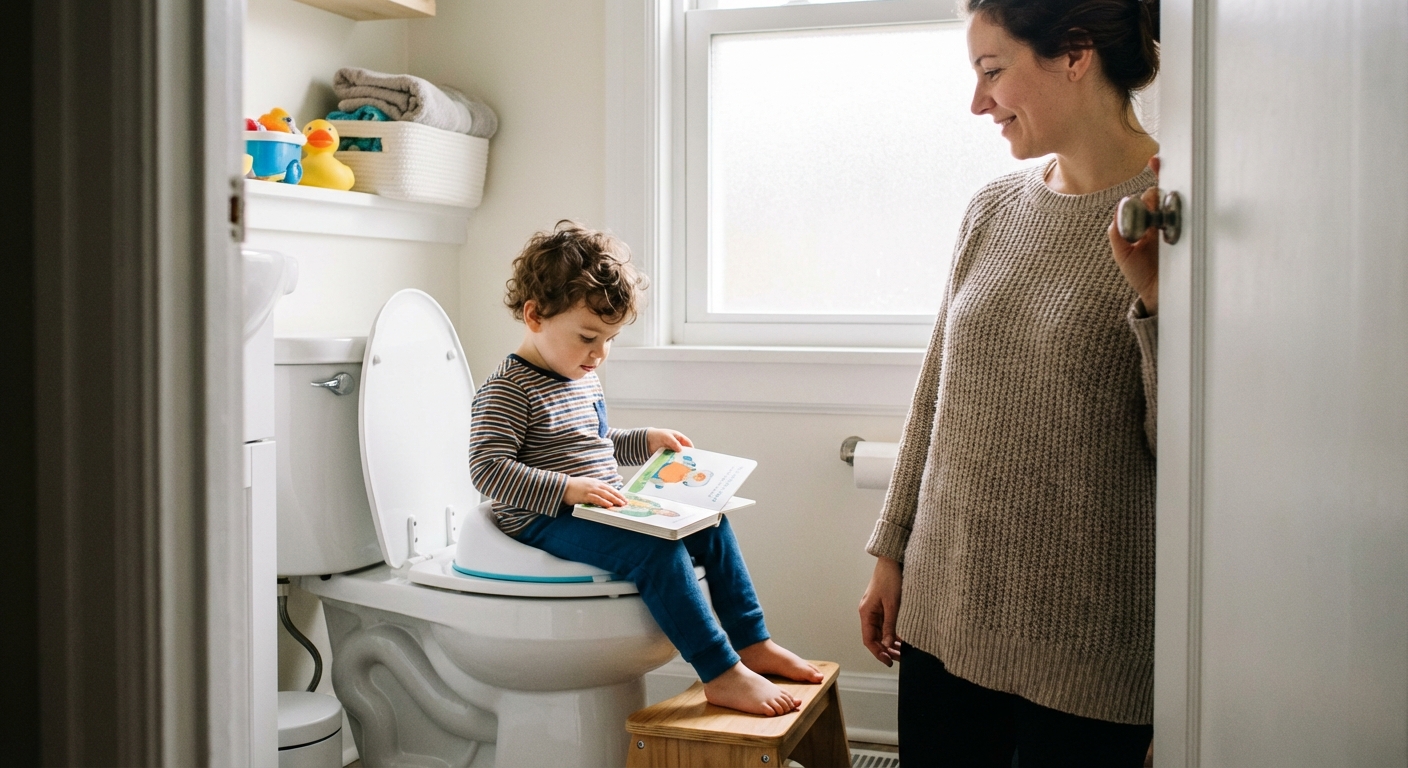
Accidents without shame
Accidents are information. They tell you the current gap: noticing the signal, getting to the bathroom in time, managing clothing, or resisting the urge to keep playing.
My go-to script
Keep it calm and short: “Pee goes in the potty. Let’s clean up.” Then move on.
Common accident patterns and fixes
- Accidents during play: Use routine potty sits (before leaving the house, before meals, before nap, before bath) plus gentle reminders.
- Accidents on the way to the potty: Practice pulling pants down fast. Consider looser waistbands for a few weeks.
- Accidents right after peeing: Teach the “wait and try again” trick. Some kids have a second small pee right after the first.
Avoid punishment or disgusted reactions. I know, sometimes it is hard when you are cleaning pee off the baseboards. But shame tends to create hiding, resistance, and constipation.
Regression
Regression is when a child who was doing well suddenly has more accidents or refuses the potty. It is common for many toddlers, especially around big life events or developmental leaps.
Common triggers
- New baby, move, travel, starting preschool
- Illness or disrupted routines
- Constipation
- Power struggles around control
How to respond
- Go back to basics for 3 to 7 days: more reminders, more routine sits, more supervision.
- Check the poop situation: constipation is sneaky.
- Lower pressure: drop rewards if they have become a battleground.
- Protect your connection: extra cuddle time and reassurance can matter more than any sticker chart.
If regression lasts more than a few weeks or comes with painful urination, very frequent urination, or new bedwetting after a long dry period, check in with your pediatrician to rule out constipation or a urinary issue.
Nighttime training
Many families assume nighttime training is simply the next step. Often, it is not a “training” issue at all.
What is normal
- Waking dry some mornings and wet others for months
- Needing a nighttime diaper or pull-up well into kindergarten
What you can do
- Have him pee right before bed.
- Use a waterproof mattress cover.
- Limit huge drinks right before sleep, but do not restrict fluids excessively.
- Consider a bedwetting alarm only if your child is older, motivated, and wetting is frequent.
If your child is over 7 and bedwetting is frequent, or if bedwetting is new and sudden, talk with your pediatrician.
Daycare and preschool
Consistency across settings is the secret sauce. If your child is training at home but not at school, it does not mean he is “failing.” It means he is a toddler who likes familiar bathrooms.
Ways to help
- Ask the teacher what their potty routine is and mirror it at home (for example, “everyone tries before outside time” or reminders every 2 hours).
- Send easy-off clothing and lots of extras.
- Practice public bathrooms together on calm days, not only when you are rushing.
- Teach a simple phrase: “I need to go potty.” Rehearse it like a game.
Public bathrooms
Public bathrooms can be loud, rushed, and honestly a little terrifying if you are three feet tall.
- Auto-flush fear: Cover the sensor with a sticky note or a small piece of toilet paper before he sits, then remove it when you are done.
- Hand dryer panic: It is okay to skip the dryer. Shake hands, use your own towel, or let them air dry.
- Big toilet insecurity: Use a travel seat if you have one, and support feet with your hand or a foldable stool if needed.
Hygiene basics
A little hygiene keeps this phase from turning into a germ and odor festival.
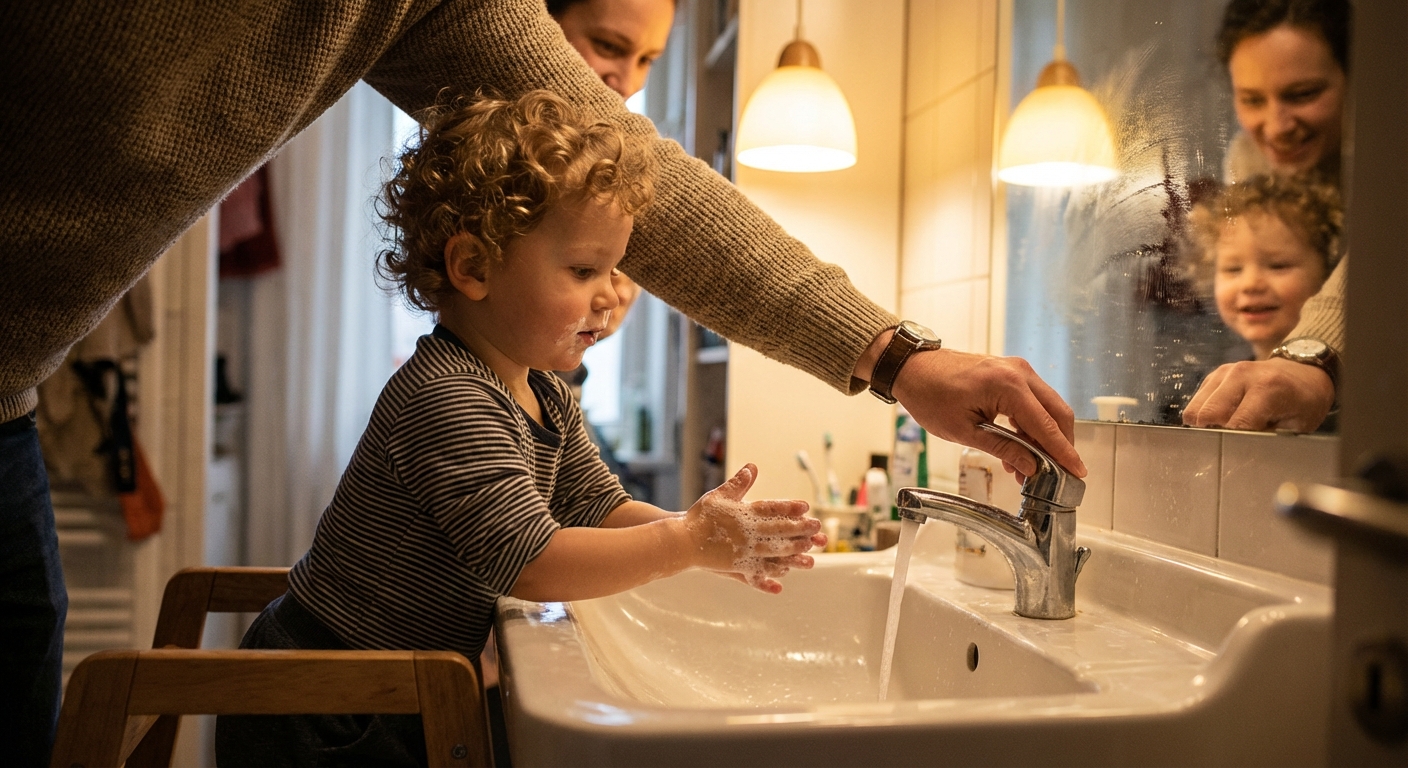
- Handwashing: Wash hands after every bathroom trip, even if it was “just sitting.”
- Drip and seat check: A quick wipe of the tip and a quick look at the seat and floor helps prevent lingering smells and repeat accidents.
- Potty chair cleaning: A quick daily wash or disinfecting wipe goes a long way.
Troubleshooting questions
My son will only pee standing up. Is that okay?
Yes. If it is working and the bathroom is not becoming a crime scene, you can go with it. If poop training is lagging, add routine sits for poop only, with feet supported.
He refuses to poop anywhere but a diaper.
This is very common. Try the gradual “diaper while sitting on the potty” step-down, and address constipation. Keep the tone calm and matter-of-fact.
He pees fine but has tiny dribbles in his underwear later.
Try “double voiding” (pee, wait 10 seconds, try again) and teach a quick wipe after peeing. If dribbling is persistent or associated with pain, urgency, a weak stream, or frequent accidents after a stretch of success, check in with your pediatrician.
Should I use rewards?
Rewards can help some kids, especially early on, but keep them small and predictable. Praise effort and routines. If rewards create pressure or bargaining, simplify or stop.
When to call your pediatrician
Most potty training bumps are normal. Reach out for medical guidance if you notice:
- Painful urination, fever, foul-smelling urine, or frequent urgent urination
- Blood in urine or stool
- Severe constipation, stool withholding, or ongoing poop accidents after training
- Regression that is persistent and not linked to a clear change
- Strong anxiety or panic around the potty that does not improve with gentle support
You are not bothering anyone by asking. This is exactly the kind of thing pediatric teams troubleshoot every day.
A calm plan to start today
If you want a simple way to begin, here is a low-pressure starting plan:
- Pick your start window: Choose a week with fewer big commitments.
- Start with sitting: Teach “penis down” and feet supported.
- Use routine potty times: Morning, before leaving, before nap, before bath, before bed.
- Target practice for standing: Add a toilet paper target when he is ready.
- Prioritize poop comfort: Stool support, routine sits after meals, treat constipation if present.
- Stay neutral about accidents: Clean up, reset, move on.
Potty training a boy is not a test of your parenting. It is a learning phase. Some kids sprint, some stroll, and a lot of them do a weird little zigzag. You are doing better than you think.