Potty Training Girls: Tips, Timeline, and Common Challenges

Sarah Mitchell
Sarah Mitchell is a Registered Pediatric Nurse and a mother of three who has spent over a decade helping families navigate the beautiful, chaotic early years of childhood. She combines evidence-based medical knowledge with real-world parenting experience to offer practical, compassionate advice. At Awesome Parent, Sarah's mission is to help exhausted parents find solutions, trust their instincts, and finally get some sleep.
Potty training a little girl can feel like one part milestone, one part mystery, and one part "why are you suddenly terrified of a plastic chair?" If you are in the thick of it, take a breath. You do not need a perfect plan, a perfect schedule, or a perfectly cheerful child. You need a realistic approach, a few practical skills (hello, wiping), and a calm way to handle the very normal bumps along the way.
On average, many girls show readiness a bit earlier than boys, but the best “timeline” is still the one your child can actually handle without turning every bathroom trip into a power struggle.
When to start
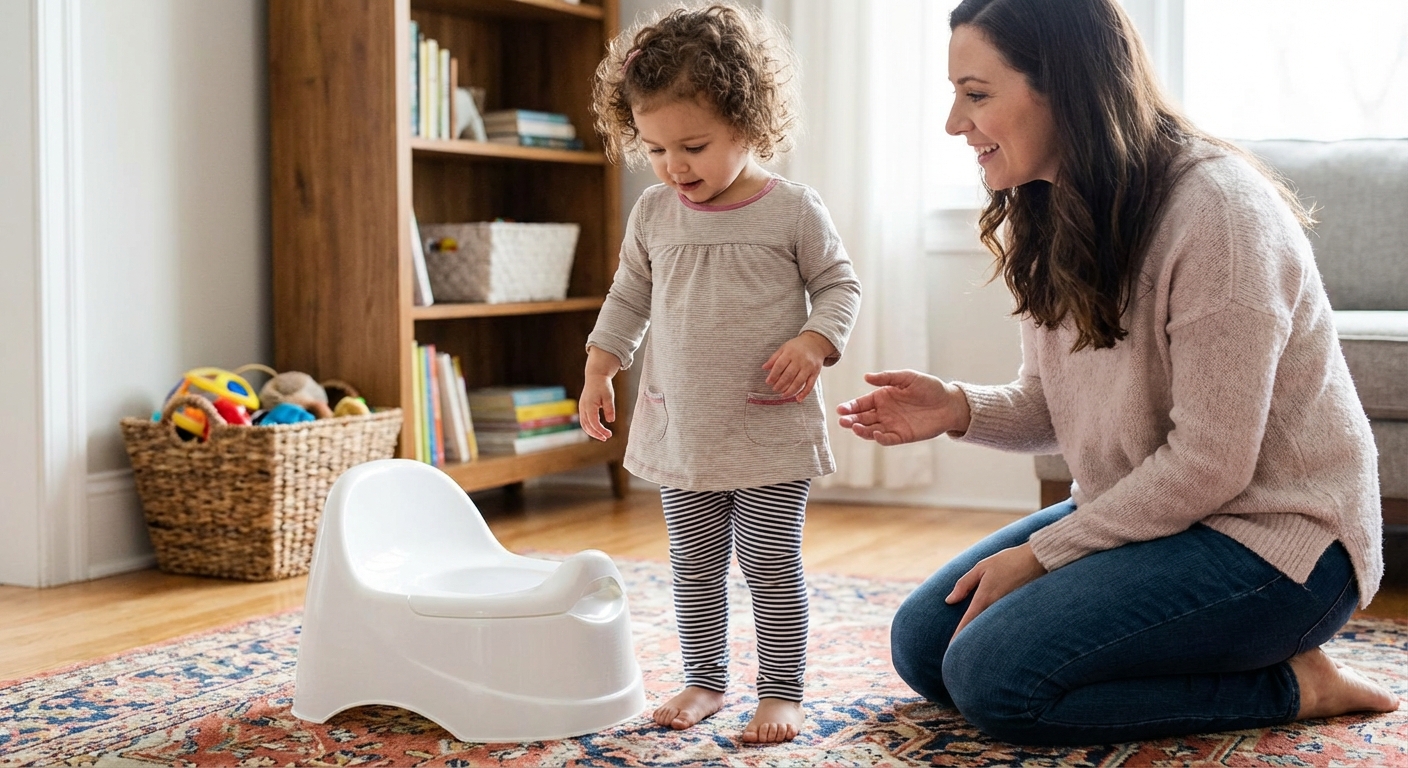
Many kids show potty training readiness somewhere between about 18 months and 4 years, but there is a wide range. Some children (especially if they are neurodivergent or dealing with constipation, anxiety, or big life changes) may be ready later. Instead of focusing on age, look for skills.
Physical readiness
- Stays dry for 2 hours at a time or wakes up dry from a nap.
- Has somewhat predictable poop times.
- Can walk to the bathroom and sit down with help.
- Can pull pants up and down (or is close).
Developmental and emotional readiness
- Seems aware of peeing or pooping, like pausing mid-play or hiding to poop.
- Can follow simple 2-step directions ("Go to the potty, then sit").
- Dislikes a wet diaper and wants a change.
- Shows interest in underwear or copying grown-ups.
- Can handle small frustrations without completely melting down every time.
Nurse note: If your child is constipated, having painful poops, or routinely holding stool, address that first. Potty training is much harder when pooping hurts.
When not to start
You can absolutely potty train through real life, but if you have the option, consider waiting a few weeks if any of these are happening right now:
- Big travel or a major schedule shift.
- A new sibling just arrived (or is about to).
- Starting a new daycare/preschool room.
- Illness, a recent hospital visit, or a constipation flare.
If you have already started and it is turning into daily distress, it is okay to pause for a couple of weeks and try again. That is not failing. That is listening.
What “normal” looks like
Here is the part most parents do not hear enough: potty training is usually a process, not a weekend project. Some kids truly click quickly, but many need repetition and time.
- Using the potty sometimes: often within days to a few weeks of consistent practice.
- Mostly daytime trained: commonly takes weeks to a few months, depending on consistency, temperament, and how often you are out of the house.
- Poop in the potty consistently: sometimes later than pee, and it is very normal for this to lag.
- Night dryness: can take months to years and is largely developmental. Many perfectly potty trained kids still need pull-ups at night for a while, and punishment never helps.
Set up for success
Pick your potty setup
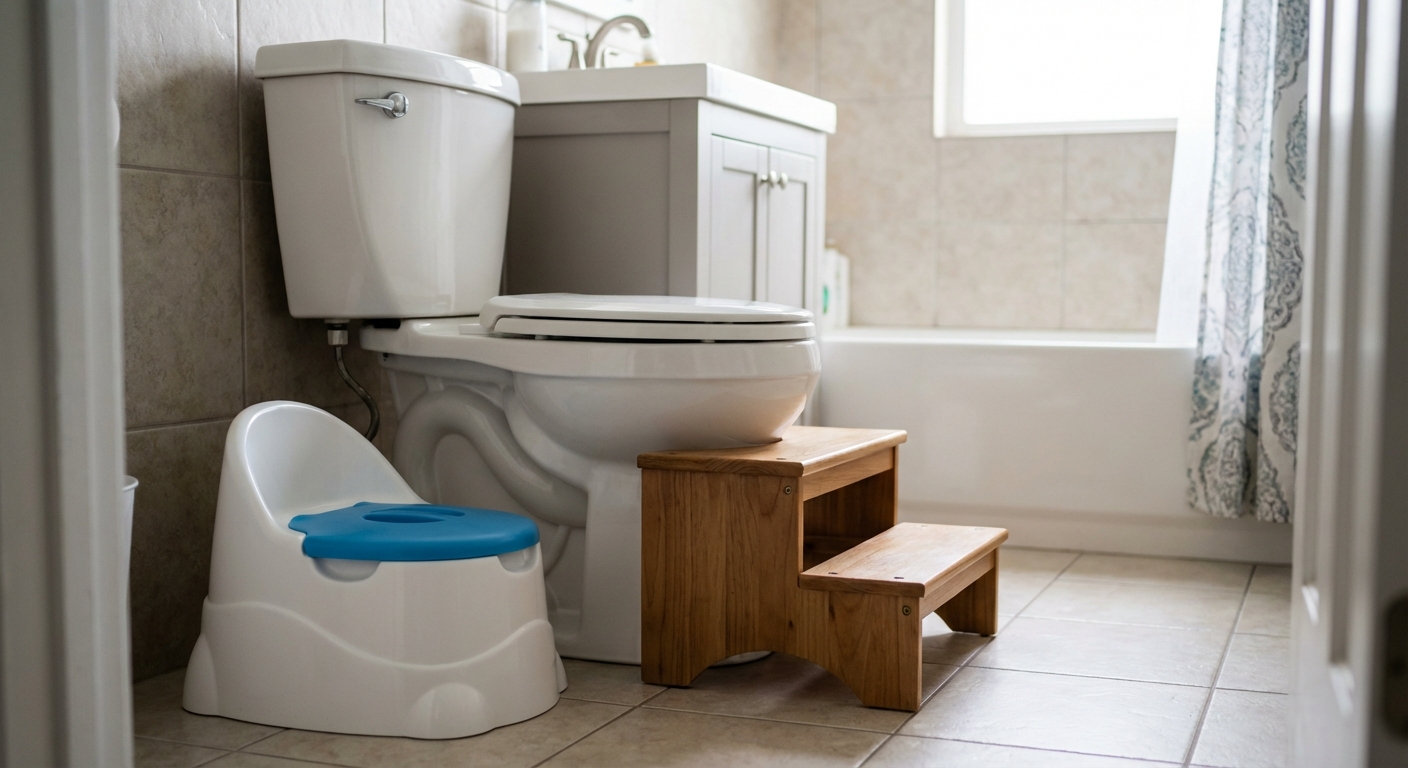
- Small potty chair: feels stable and less scary, especially for poop. Great for younger toddlers.
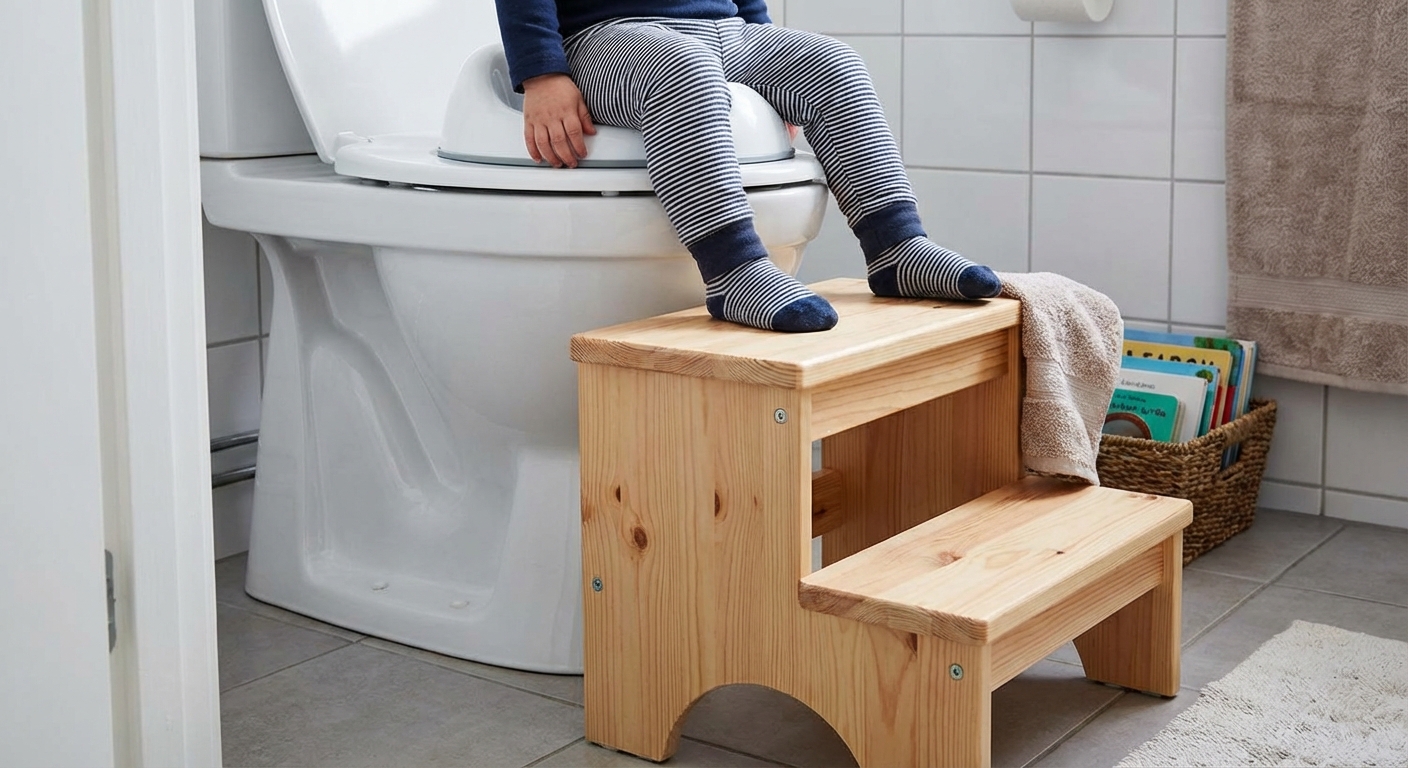
- Toilet seat insert + step stool: helpful if your child wants to use the “big potty,” but make sure her feet are supported. Dangling legs make it harder to relax and poop.
Keep supplies close
- Easy-on, easy-off pants (skip complicated buttons at first).
- Extra underwear and pants within arm’s reach.
- Wipes or toilet paper your child can manage.
- A small basket of books for bathroom sitting time.
Choose words you can stick with
Use simple, consistent language. If you prefer anatomically correct terms, “vulva” is a clear, appropriate word for external anatomy. Consistency is more important than perfection.
Wiping skills
If there is one potty training skill I wish we could magically download into toddlers, it is wiping correctly. Girls have a shorter urethra than boys, which can make them more prone to urinary tract infections (UTIs). Teaching front-to-back wiping is a big deal.
How to teach front-to-back wiping
- Use a simple script: “Wipe from your tummy to your back.”
- Start with supervision: At first, you do the final wipe. Think of it as a handoff, not all-or-nothing independence.
- One direction only: No back-and-forth “scrubbing.” Gentle wipes in the correct direction.
- Posture helps: Sitting back on the seat with knees slightly apart, then leaning forward a bit, can help aim pee down into the potty (and reduce the surprise spray).
- Teach wiping after pee and poop: Many kids skip wiping after pee. Make it part of the routine.
Tip: If toilet paper is too tricky, use wipes at first (if your plumbing can handle them, but most wipes should go in the trash even if labeled flushable). Then transition to toilet paper once she has the motion down.
UTI prevention
Potty training may temporarily increase UTI risk because kids hold pee, rush wiping, or do not fully empty their bladder. A few small habits go a long way.
- Regular potty tries: Encourage a try every 2 to 3 hours, plus after waking, before leaving the house, and before bed. Meals can be a helpful routine anchor too.
- Feet supported: A stool helps her relax so she can empty completely.
- Hydration: More water means more chances to practice and less concentrated urine.
- Breathe, don’t push: Instead of straining, encourage relaxed sitting and a slow breath out. Pushing to pee can actually make it harder for some kids.
- Change out of wet clothes quickly: If she has an accident, get her into dry underwear promptly.
- Skip bubble baths if she is irritated: They can trigger vulvar irritation in some kids.
When to call your pediatrician
- Pain or burning with urination.
- Fever (especially with urinary symptoms).
- New daytime accidents after she was doing well.
- Foul-smelling urine with symptoms, blood in urine, or belly or back pain.
- Vulvar redness, itching, or ongoing irritation that is not improving with gentle care.
Trust your gut. UTIs are common and treatable, but they are not something to “wait out.”
Fear of the potty
Some girls are excited to potty train until the first flush, the first loud echo in the bathroom, or the first wobble on the toilet seat. Fear is not stubbornness. It is a nervous system doing its job a little too enthusiastically.
What helps
- Start with a potty chair if the big toilet feels too intense.
- Let her control the flush: Ask, “Do you want to flush now or later?” Some kids prefer you flush after they leave the room for a while.
- Practice sitting clothed: No pressure to pee, just short, calm sits.
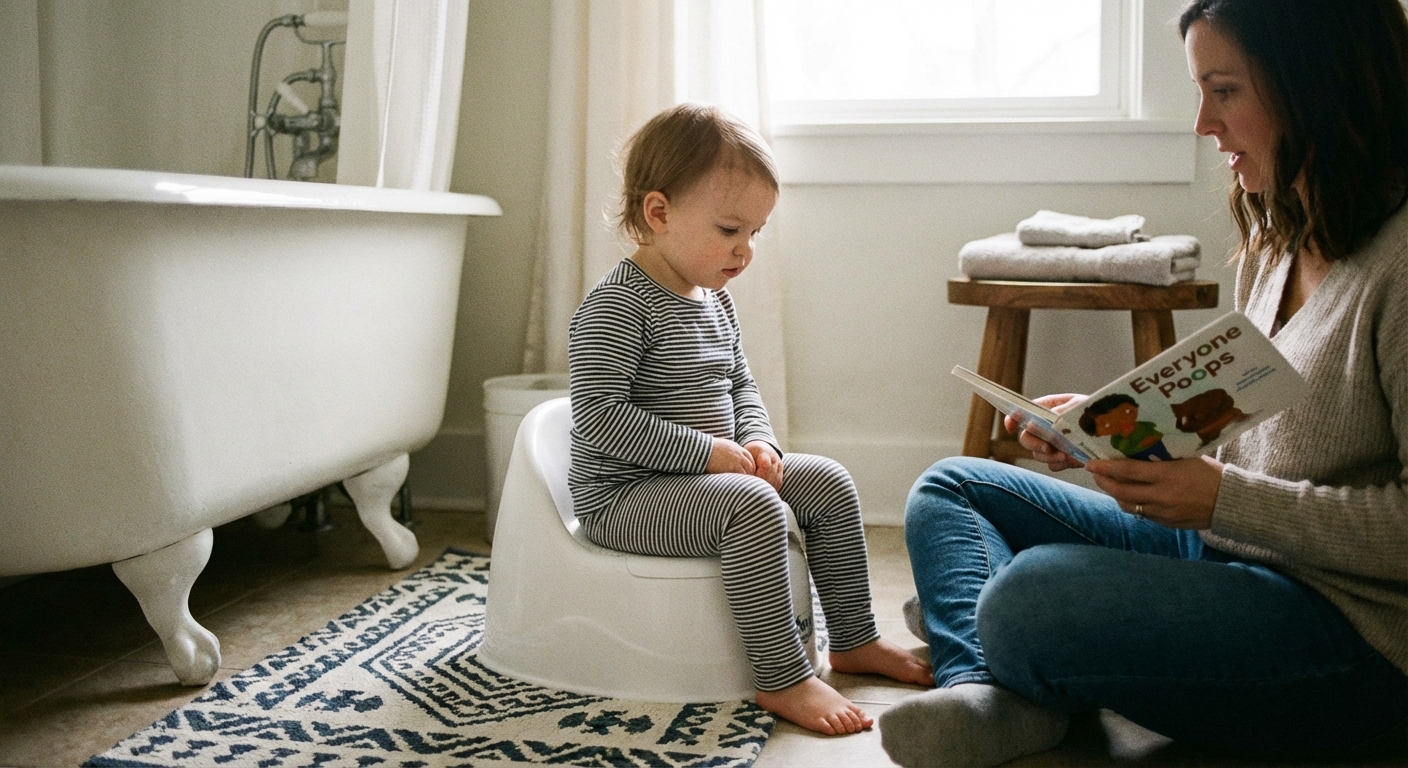
- Connection first: Read a short book, sing one song, then get up. Keep it predictable.
- Watch for pinching: Toilet seat inserts can pinch skin. Make sure it fits well.
Privacy and modesty
Some girls want privacy early. Others want you in the bathroom forever. Both are normal. The goal is to support comfort while keeping things hygienic and safe.
What to do
- Offer choices: “Do you want me to stand by the door or sit on the floor?”
- Use a privacy phrase: “I will give you privacy, and I will check on you in one minute.”
- Keep wiping support matter-of-fact: “I will help you wipe to keep your body healthy.”
- Teach bathroom boundaries: It is okay to say, “Private parts are private,” while still naming body parts clearly.
Accidents
Accidents are information. They tell you your child needs more reminders, easier clothes, less distraction, or a break from pressure.
What to say
- “Oops, your body let some pee out. Let’s clean up.”
- “Pee goes in the potty. We will try again next time.”
What to do
- Keep cleanup calm and boring.
- Have your child help in a small way (carry wet clothes to the hamper), without it becoming punishment.
- Reset the schedule. If she had an accident at 90 minutes, try reminders at 60 minutes for a while.
Gentle warning: Big reactions, even “funny” ones, can accidentally reinforce accidents. Calm wins here.
Regression
Regression is incredibly common. It often shows up after travel, starting preschool, a new sibling, illness, constipation, or just a developmental leap where your child’s brain is busy with other things.
Your plan
- Go back to basics for 1 to 2 weeks: More reminders, easier clothes, more supervision.
- Check for constipation: Hard stools, stool streaks in underwear, or infrequent poops can cause both accidents and pee holding.
- Reinforce routine over rewards: Praise effort and steps, not just “success.”
- Stay neutral: Shame and punishment tend to increase anxiety and accidents.
If regression is sudden and significant, especially with urinary symptoms, talk with your pediatrician to rule out UTI or constipation-related issues.
Poop problems
Many potty training struggles are really poop struggles in disguise. Some kids are scared of the sensation, the splash, the sound, or the idea of “losing” a part of themselves. Yep, toddler logic is wild.
What helps
- Feet support: A stool helps her poop comfortably and feel steady.
- Routine sits: Try 5 minutes after breakfast or dinner when the body naturally wants to go.
- Books and calm company: Connection helps relaxation.
- Address constipation early: If stools are hard or painful, ask your pediatrician about safe options. Pain creates fear, and fear creates holding.
Outings and public bathrooms
Potty training at home is one thing. Potty training at Target is a whole different sport.
- Bring spare underwear, pants, and socks.
- Consider a foldable travel seat or a simple seat cover if your child is anxious about the big toilet.
- Use your routine cues: try before you leave, try when you arrive, try before you get back in the car.
- If a public bathroom is too much right now, it is okay to use a pull-up for long outings while skills catch up at home.
Daycare and caregivers
Consistency is the secret sauce. If daycare or grandparents are involved, do a quick reset so everyone is using the same basics: reminders, clothing choices, wiping support, and a calm response to accidents.
Rewards and motivation
Some kids love a sticker chart. Others melt down if they do not “earn” something. Use whatever keeps your household calm.
- Praise the process: “You listened to your body and sat on the potty.”
- Keep rewards small and short-term: Stickers, a high five, choosing the bedtime book.
- Avoid big prizes for poop: It can create pressure and performance anxiety.
- Do not take rewards away for accidents: That turns accidents into a crisis.
FAQs
Do girls potty train faster than boys?
On average, many girls show readiness a little earlier, but there is a huge range. Temperament, consistency, and whether pooping is comfortable matter more than gender.
Should my daughter pee sitting with legs together?
Usually no. Sitting with knees slightly apart helps pee go straight down into the potty. If she is spraying over the seat, have her sit back fully and lean forward a bit.
What about training in dresses?
Dresses can be great because there is less to pull down, but teach her to lift and hold the fabric well out of the way so it stays dry.
Is it normal to be dry all day but wet at night?
Yes. Nighttime dryness is developmental and depends on hormones, sleep depth, and bladder capacity. Many kids need nighttime protection long after daytime training is solid.
My bottom line
Potty training a girl is mostly about readiness, routine, and hygiene habits that protect her body. Teach front-to-back wiping, support her feet, keep bathroom time low-pressure, and treat accidents like a normal part of learning.
And if today was a total mess, you are in very good company. Try again tomorrow. Preferably after coffee.
Medical disclaimer
This article provides general education and is not a substitute for medical advice. If you are worried about constipation, UTIs, painful urination, blood in urine, fever, persistent regression, or ongoing stool accidents, contact your child’s pediatrician.
Sources
- American Academy of Pediatrics, HealthyChildren.org: Potty training guidance and readiness
- Centers for Disease Control and Prevention (CDC): Developmental milestones and child development basics
- NHS: Constipation in children and toileting concerns