A calm, clear guide to weight, length/height, and head circumference percentiles, what “crossing curves” can mean, and when to call your child’s clinic...
Precocious Puberty Signs in Young Kids

Sarah Mitchell
Sarah Mitchell is a Registered Pediatric Nurse and a mother of three who has spent over a decade helping families navigate the beautiful, chaotic early years of childhood. She combines evidence-based medical knowledge with real-world parenting experience to offer practical, compassionate advice. At Awesome Parent, Sarah's mission is to help exhausted parents find solutions, trust their instincts, and finally get some sleep.
If you are reading this at an ungodly hour because your 7 year old suddenly smells like a middle school locker room, take a breath. Most “early puberty” worries turn out to be either normal variation or a benign, puberty-adjacent change (like adrenarche) showing up early. But sometimes, true precocious puberty is real, and getting the timing right matters.
As a pediatric nurse and a mom, here is my calm, practical roadmap for what parents typically notice first, what those clues can mean, what your pediatrician may test, and when to push for faster evaluation.
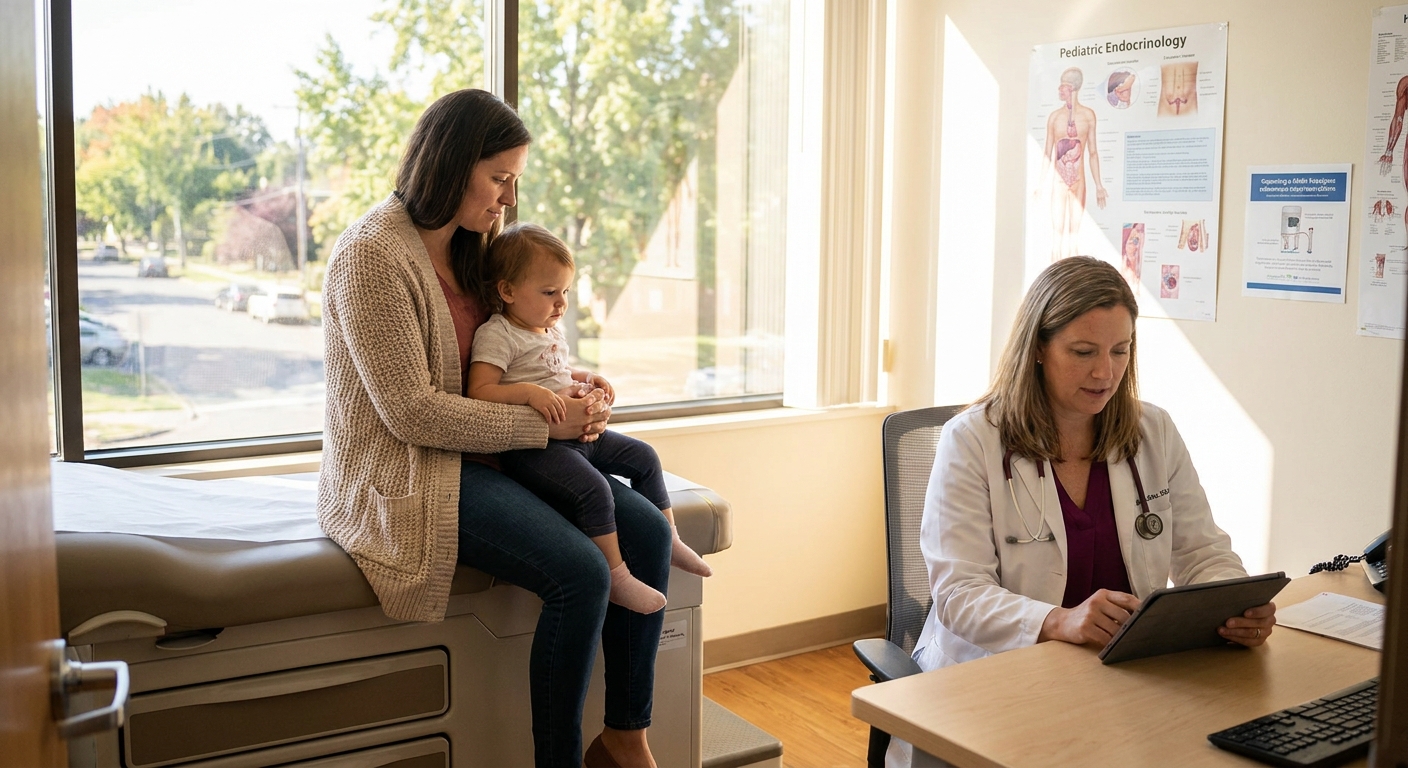
What counts as “precocious” puberty?
Clinically, we start paying closer attention when puberty-like changes begin:
- Girls: before age 8
- Boys: before age 9
These cutoffs are screening thresholds, not a verdict. They simply mean, “Let’s look more carefully.”
One important nuance: your pediatrician may interpret these cutoffs in context, including family pattern, growth pattern, weight status, and sometimes race and ethnicity. (Puberty timing can vary, and the “normal” window can be wider than most of us were taught.)
Also important: there is a difference between a single sign (like body odor) and true puberty (a coordinated hormone-driven process from the brain to the ovaries or testicles that tends to progress).
The signs parents notice first
These are the most common “wait, what?” changes families bring up in clinic. Some are more suggestive of true puberty than others.
Body odor (the classic surprise)
Underarm odor can show up early and, by itself, does not automatically mean true puberty. It is often linked to adrenarche, which is when the adrenal glands start making weak androgens (hormones that can cause odor, oily skin, and some hair growth). Adrenarche is a separate process from the brain-driven puberty pathway.
- More reassuring: odor only, no rapid growth spurt, no breast development, no testicular enlargement.
- More concerning: odor plus pubic or underarm hair that is increasing quickly, acne that is ramping up, or fast height growth.
Breast buds in girls
A small, firm, sometimes tender lump directly under one or both nipples can be the first sign of estrogen exposure. This can be:
- Premature thelarche: isolated breast budding that stays stable or progresses very slowly.
- Central precocious puberty: breast development that progresses over months, often paired with a growth spurt.
One-sided budding can happen at first. Tenderness can be normal. What matters most is progression over time.
Also worth knowing: in some children with higher body weight, the chest can look fuller from fat tissue alone (lipomastia). True breast buds usually feel like a distinct, firmer “button” under the nipple. If you are not sure, that is exactly what your pediatrician is for.
Pubic hair or underarm hair
Hair that appears before age 8 in girls or 9 in boys is often due to premature adrenarche, not true puberty. But it deserves a check-in, especially if it is paired with rapid growth, acne, or genital changes.
Acne and oily skin
Mild acne can happen earlier than many parents expect. If acne is significant and showing up with pubic hair, body odor, and fast growth, it can point to higher androgen exposure.
Rapid growth (the sneaky sign)
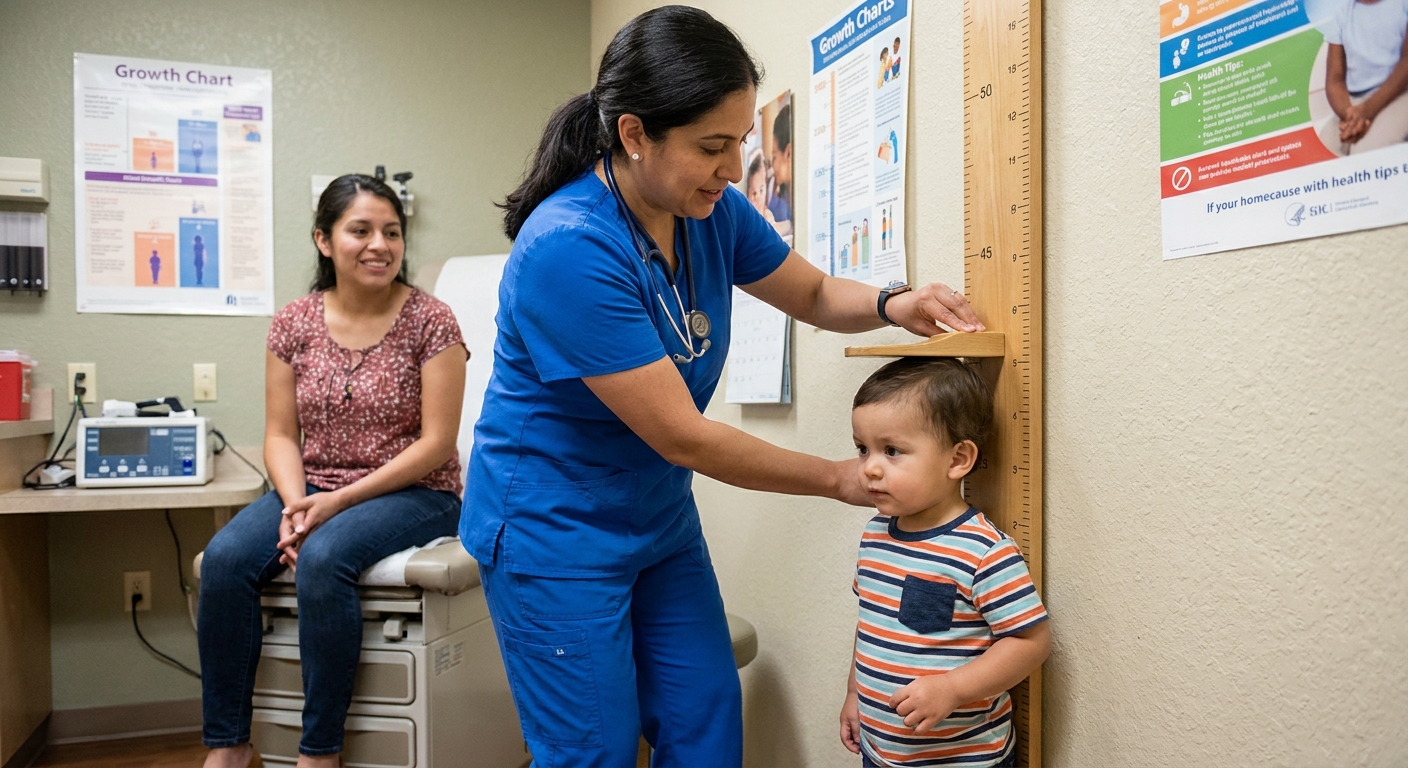
Many parents focus on visible changes, but pediatricians get very interested in growth velocity . A child who suddenly jumps percentiles or grows much faster than expected for age may be responding to puberty hormones.
Vaginal discharge or bleeding
Any vaginal bleeding in a young child needs prompt medical evaluation. It can be puberty-related, but there are other causes that must be ruled out, including irritation or infection, a foreign body, trauma, or (rarely) other medical conditions.
Testicular enlargement in boys
In boys, the earliest reliable sign of true puberty is typically testicular enlargement (not just penis size changes). Because boys have a higher chance of an underlying cause when puberty starts very early, early evaluation matters.
Central vs peripheral
You may hear your pediatrician or endocrinologist talk about central versus peripheral precocious puberty. Here is what that means in plain language.
Central precocious puberty (CPP)
This is when the brain starts the puberty “command center” too early. The hypothalamus and pituitary signal the ovaries or testicles to begin making sex hormones.
- Typical pattern: development that follows the usual puberty order, just earlier.
- Common in: girls (often no identifiable cause), and sometimes boys.
- Why it matters: can advance bone maturation and shorten adult height if rapid and untreated.
Peripheral precocious puberty
This is when puberty hormones are coming from somewhere other than the brain’s usual control system. Think: hormone production from the adrenal glands, ovaries, testicles, or exposure from outside the body.
- Typical pattern: may look “out of order” or unusual, like significant hair growth or acne without testicular enlargement, or breast development without typical sequencing.
- Possible causes: ovarian or testicular cysts or tumors (uncommon), adrenal conditions (like congenital adrenal hyperplasia), severe, untreated hypothyroidism (rare, but real), genetic syndromes like McCune-Albright (often in girls, sometimes with recurrent cysts or bleeding), or hormone exposure (for example, a testosterone gel in the home).
What “progression” looks like
Parents often tell me, “I don’t know if it’s changing or if I’m just noticing it more.” That is normal. Here are practical signs that suggest things are truly progressing:
- Breast buds getting clearly larger over about 3 to 6 months (not just occasional tenderness).
- Pubic or underarm hair spreading and getting thicker or darker over weeks to months.
- A real growth spurt, meaning a noticeable jump in height speed or crossing percentiles.
- More body changes stacking up (odor plus hair plus acne, or breast development plus discharge).
In pediatrics, speed of change is often the key detail.
When to call and when it is urgent
Most families can start with a regular appointment, but there are situations where I would not wait weeks.
Call soon (within a week or two) if:
- Breast buds start before age 8, especially if they are growing.
- Pubic or underarm hair starts before age 8 in girls or before age 9 in boys.
- Your child has a noticeable growth spurt that feels out of sync with their age.
- Acne or body odor is showing up with other signs.
- You are not sure what you are seeing and it is making you lose sleep.
More urgent, ask for prompt evaluation if:
- Changes are progressing quickly over weeks to a few months.
- Your child has vaginal bleeding.
- Puberty signs begin very early (for example, under 6 in girls or under 8 in boys).
- Your child has headaches, vision changes, or persistent morning vomiting , or any new neurological symptoms along with puberty changes.
- There are signs of significant androgen effect like rapidly increasing hair growth or a deepening voice.
If something feels like it is moving fast, trust that instinct and say those words: “This is progressing quickly.” It helps clinicians understand urgency.
What your pediatrician will do first
Your first visit is usually focused on two things: confirming what is actually happening in the body and figuring out how fast it is moving.
1) A careful history
- When did you first notice each change?
- Any family history of early puberty?
- Any exposure to hormone products at home (testosterone gels, estrogen creams, supplements)?
- Any headaches, vision changes, behavior or sleep changes?
2) A focused exam
This may include looking at breast development, pubic hair pattern, skin changes, and in boys, testicular size. Providers do this professionally and quickly, and you can absolutely ask for a chaperone if that helps your child feel comfortable.
3) Growth chart review
Expect your pediatrician to look hard at height and weight trends. If your child’s height curve has started to climb sharply, it supports a hormone-driven process. Weight can also influence timing, especially in girls. Earlier breast development is more common with higher BMI, but early or fast changes still deserve a real evaluation.
Bone age and labs
Testing is not always needed for mild, isolated signs, but if true puberty is suspected, these are common next steps.
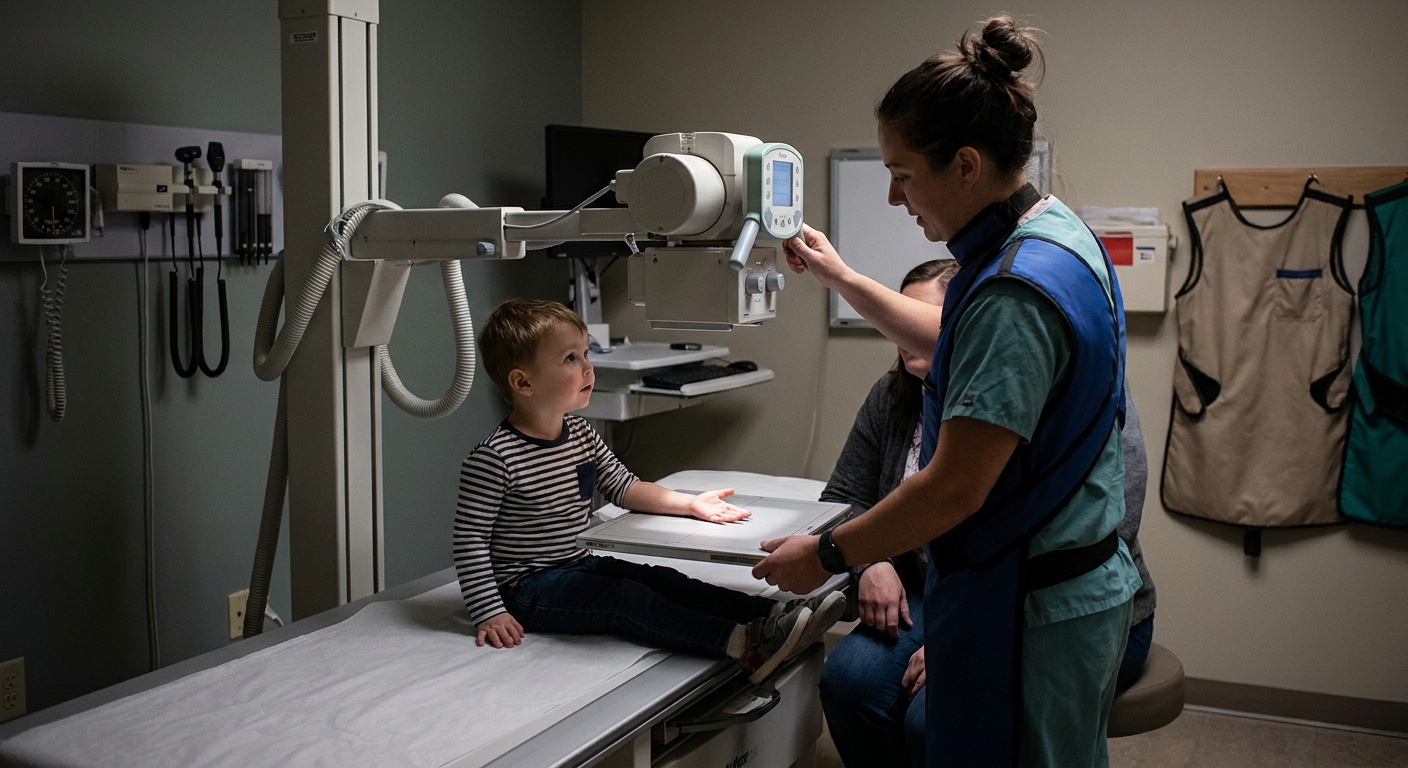
Bone age X-ray
A bone age is a simple X-ray of the hand and wrist. It estimates how “mature” your child’s bones are compared to their actual age.
- Why it matters: puberty hormones can make bones mature faster.
- What you might hear: “Bone age is advanced by X years.”
- What that means: if bones mature too quickly, growth plates can close earlier, which can reduce adult height potential.
Common blood tests (in plain terms)
Labs vary by child, but these are often discussed:
- LH and FSH: signals from the brain that turn puberty on. Higher levels, or levels that rise strongly with stimulation testing, can suggest central puberty.
- Estradiol (girls) or testosterone (boys): the main sex hormones produced by ovaries or testicles.
- DHEA-S and androstenedione: adrenal hormones often linked to body odor and hair growth.
- 17-hydroxyprogesterone: a screening lab for certain adrenal conditions.
- TSH and free T4: thyroid tests, because severe, untreated hypothyroidism can rarely cause puberty-like changes.
Sometimes: a “stimulation test”
If the picture is unclear, endocrinology may do a test that checks how strongly the brain’s puberty pathway responds. It sounds intense, but for most kids it is a few blood draws over a short period at a clinic or hospital.
Imaging
Not every child needs imaging. When it is recommended, it is usually to look for a treatable underlying cause.
Brain MRI
An MRI may be considered especially for:
- Boys with central precocious puberty
- Very young girls (often under 6) with central puberty
- Any child with neurological symptoms
Pelvic ultrasound (girls) or testicular ultrasound (boys)
These may be used if the pattern suggests a peripheral source of hormones, or to evaluate ovarian cysts, uterine size changes, or testicular concerns.
Household and environmental exposures
This one is easy to miss, and it is more common than most families realize. When a child is showing early hormone effects, clinicians often ask about exposure to:
- Transdermal testosterone or estrogen (gels, creams, sprays) used by an adult in the home. Accidental skin contact, shared towels, or unwashed hands can matter.
- Supplements marketed for bodybuilding or “hormone support” that may contain androgenic ingredients or contaminants.
- Essential oils (like lavender or tea tree). Evidence is mixed, but some reports suggest a possible association with breast development in children. If you are using them heavily and you are worried, bring it up with your clinician and consider pausing until you get guidance.
What treatment looks like
This is the part many parents are afraid to ask about. Here is the honest answer: some kids need treatment, many do not.
If it is isolated and stable
Conditions like premature thelarche or premature adrenarche often involve monitoring: repeat exams, growth checks, and sometimes a repeat bone age.
If it is central precocious puberty and progressing
Pediatric endocrinologists may recommend puberty blockers (GnRH analog therapy). This treatment pauses the brain’s puberty signaling.
- Goals: slow rapid progression, protect adult height potential (when timing and bone age suggest benefit), and support age-appropriate timing and psychosocial well-being.
- What it does not do: it does not change your child’s personality or who they are. It is simply hitting “pause” on a hormone signal.
If it is peripheral
Treatment focuses on the underlying cause, such as managing an adrenal condition, addressing a cyst, treating severe hypothyroidism, or stopping hormone exposure in the home.
Your endocrinologist will factor in your child’s age, bone age, growth rate, stage of development, and emotional well-being. There is no one-size-fits-all plan, and there should never be pressure to decide on the spot.
How to talk to your child
Kids take their cues from us. If we act alarmed, they feel alarmed.
- Use simple, neutral words: “Your body is growing and changing. The doctor is going to help us understand the timing.”
- Skip adult explanations: no need to talk about fertility or sex with a preschooler.
- Offer control where you can: let them pick the bandage, bring a comfort item, choose who comes in the room.
- Normalize privacy: teach that their body is their own, and doctor checks happen with a parent present.

What to bring to the appointment
If you want to make your visit maximally useful, show up with data, not panic. Here is what helps:
- Timeline: when each sign started (odor, hair, breast buds, acne, growth spurt).
- Photos if appropriate: for example, a dated photo of acne progression. Only if you feel comfortable and it helps your child avoid repeated exams.
- Height measurements: if you have them from home, include dates.
- Medication and exposure list: creams, gels, supplements, essential oils, or anyone in the home using hormone therapy.
- Questions written down: sleep-deprived brains forget everything.
Helpful questions to ask
- “Do you think this is true puberty or just one early sign?”
- “Is my child’s growth rate faster than expected?”
- “Do we need a bone age? Why or why not?”
- “What changes would mean we should be seen sooner?”
- “Should we see pediatric endocrinology, and how quickly?”
Common not-scary scenarios
These patterns are common and often less concerning, though they still deserve a mention at your next visit:
- Body odor only in a 6 to 8 year old with no other changes.
- Small breast bud(s) that do not change much over 6 to 12 months.
- Minimal pubic hair with normal growth and no other puberty signs.
- Chest fullness without a firm breast bud, especially in a child with higher body weight.
Still, if anything is accelerating, it is worth being evaluated. In pediatrics, the speed of change is often the key detail.
The bottom line
Early puberty signs can feel shocking, but you do not need to diagnose this at home. Your job is to notice patterns, track timing, and bring your concerns to a clinician who can look at the whole picture, including growth and bone age.
If your child is under 8 (girls) or under 9 (boys) with breast buds, pubic hair, or fast progression, make an appointment. If things are moving quickly or there is bleeding or neurological symptoms, ask to be seen promptly. You are not overreacting. You are being a good parent who is paying attention.
If you are stuck in the 3 AM worry spiral, remember: most kids do very well once the right team is involved. You are not alone, and there is a clear next step.
Medical note
This article is for education and cannot diagnose your child. If you are concerned about early puberty, contact your pediatrician or a pediatric endocrinologist for personalized care.