Preparing Your Toddler for a New Baby

Sarah Mitchell
Sarah Mitchell is a Registered Pediatric Nurse and a mother of three who has spent over a decade helping families navigate the beautiful, chaotic early years of childhood. She combines evidence-based medical knowledge with real-world parenting experience to offer practical, compassionate advice. At Awesome Parent, Sarah's mission is to help exhausted parents find solutions, trust their instincts, and finally get some sleep.
If you're pregnant (or about to bring home a newborn) and your toddler is acting extra clingy, wild, or suddenly “forgetting” how to do things they mastered months ago, take a deep breath. It isn't a sign you're failing. It's a sign your child is sensing a huge change coming.
As a pediatric nurse and a mom of three, I can tell you this is one of the most common transitions families struggle with. Not because toddlers are mean or “jealous kids,” but because toddlers have very big feelings and very few tools to manage them. Your job isn't to force instant sibling love. Your job is to build safety, predictability, and connection so your toddler can adjust.

What jealousy really looks like
Hollywood jealousy is a toddler glaring at the baby. Real-life jealousy is usually sneakier and frankly, weirder.
- Acting out: hitting, throwing, screaming, running away at the park, testing every limit
- Regression: potty accidents, wanting bottles, baby talk, asking to be carried nonstop
- Sleep changes: new bedtime battles, early wake-ups, nightmares, refusing naps
- Attention grabs: interrupting feeds, suddenly “needing” you the second you sit with the baby
- Avoidance: acting indifferent or saying “I don't like the baby”
All of those behaviors translate to the same message: “Are you still my person?”
When you can hear the question underneath the behavior, it gets a lot easier to respond calmly and consistently.
Start before baby arrives
The biggest mistake I see is waiting until the newborn is home to start “preparing.” Many toddlers do better when the change is introduced in small, predictable steps.
Talk about the baby
Skip big speeches. Use short, repetitive phrases:
- “A baby is growing in my belly.”
- “Babies cry and sleep a lot.”
- “We'll all learn together.”
If your toddler asks, “Will you still play with me?” answer directly: “Yes. I'll still play with you every day.”
Use books and pretend play
Books and doll play help toddlers process change through repetition. Look for simple stories about bringing a baby home and practice gentle touches on a doll or stuffed animal.
Pro tip from the clinic: toddlers learn best in tiny moments. Two minutes of pretend “diapering the bear” beats a 30-minute lecture.
Time big changes wisely
If you can, avoid stacking major transitions right around the birth. Think: moving houses, switching childcare, potty training, or moving to a big-kid bed.
- If you must do a big change: aim for several weeks before baby arrives (often 6 to 8), so it isn't linked to “the baby took my crib.”
- If it can wait: wait until family life is calmer.
As a pediatric nurse, I'll also say this: postpartum isn't the time to wage war over potty training. Keep expectations realistic.
Build independence (without blaming the baby)
Independence can reduce power struggles. Work on little wins like climbing into the car seat, washing hands, picking out pajamas, or carrying a diaper to the trash.
Phrase it as confidence building, not replacement: “You're getting so good at doing this,” not “Because mommy will be busy with the baby.”

Plan the first meeting
First impressions aren't everything, but they set the tone. Your goal is to help your toddler feel secure and important while the baby is present.
Before your toddler walks in
- If possible, have the baby in a bassinet, not in your arms. Toddlers often interpret “baby in mom's arms” as “I can't reach my mom.”
- Let your toddler come to you first. Offer a hug and a few minutes of full attention.
- Keep the room calm. Fewer people is usually better.
What to say
Try: “I missed you so much. I'm so happy to see you. This is your baby brother/sister.”
Then narrate what they can do: “You can look close. You can touch baby's feet with one finger. You can sit next to me.”
A small gift (optional)
This is optional, but it can help. Choose something your toddler will actually use (a new truck, crayons, a special stuffed animal). The point isn't bribery. The point is creating a positive association during an emotionally loaded moment.
Also consider a “from the toddler” gift for the baby. Toddlers love having a role.
Visitors and attention
Visitors can be a sneaky jealousy trigger. People naturally coo over the newborn, and your toddler can feel invisible fast.
- Set the tone early: “We're so happy you're here. Please say hi to (toddler's name) first.”
- Give visitors a job: “Would you read one book to her while I feed the baby?” or “Can you help him build a tower?”
- Use a simple script if it gets lopsided: “Thanks for loving on the baby. My toddler needs a little love too.”
If you're up for it, ask guests to bring something small for the toddler, even stickers or a snack they love. It helps them feel remembered.
The first two weeks
The early postpartum days are intense. Your toddler will likely get less of you. That's not a moral failure; it's math. The fix isn't perfection, it's predictable connection.
The 10-minute anchor
Once a day, give your toddler 10 minutes of undivided attention. No phone. No baby talk. Let them lead the play.
If you do nothing else, do this. It fills the attention tank in a way that can reduce acting out later.
Protect one routine
Pick one daily routine you can keep steady, even if everything else is chaos. Often that's bedtime, bath time, or the morning wake-up ritual.
- If bedtime is your lane: keep the same steps in the same order.
- If bedtime is impossible: protect something easier, like reading one book after breakfast.
Let your partner “own” toddler time
If you're recovering from a C-section, complications, or you're just touched-out, it helps when the non-birthing caregiver (or another trusted adult) temporarily owns toddler routines like breakfast, bath, daycare drop-off, or bedtime. Your toddler still gets predictability, and you get to heal.
Invite helping (with boundaries)
Toddlers love feeling important. Give them jobs that are safe and specific:
- Bring a diaper or wipes
- Choose the baby's onesie from two options
- Sing to the baby while you change the diaper
- Gently rub baby's back with an open palm (with you right there)
And also give them permission to not be interested. “You don't have to help. You can go play too.”
When they are gentle, name it: “I love how you used gentle hands,” or “That one-finger touch was perfect.” Specific praise teaches the skill faster than a general “good job.”
Talk for the baby's benefit (really, for your toddler)
This sounds silly, but it can be a powerful cue for your toddler: “Baby, it's toddler's turn with mommy right now. You can wait.”
To be clear, newborns can't follow the rule. This is for your toddler to hear that you still set boundaries and make space for them too.

Scripts that help
When you're tired, it's hard to find the right words. Here are a few phrases I've used as a nurse and as a mom when emotions run high.
When your toddler interrupts feeding
- “You want me. I hear you. I'm feeding the baby for two minutes, then it's your turn.”
- “Come sit by me. You can hold my hand while I feed.”
When they say “Put the baby down!”
- “You wish it was just us right now. It's hard to share me.”
- “I'll put the baby down as soon as baby is safe. Then I'll help you.”
When they act like a baby
- “You can be my baby for a minute. Come here.”
- “And you're also my big kid. Both can be true.”
Validating the feeling doesn't reward unsafe behavior. It helps your child feel understood so you can move them toward better choices.
Hitting and rough behavior
Let's be crystal clear: you don't need to panic, but you do need to take it seriously. Toddlers are impulsive. Babies are fragile. Your job is safety first, then teaching.
In the moment
- Block and separate: “I won't let you hit.” Move your body between them.
- Attend to the baby briefly: check baby, soothe quickly.
- Then focus on toddler: “You're angry. Hitting isn't safe. You can stomp, you can hit this pillow, you can tell me ‘mad!’”
Long lectures backfire. Keep it short and repeatable.
Reduce opportunities
- Use a safe spot for baby: bassinet, pack-and-play, or babywearing when you need both hands
- Supervise any “close” time until your toddler consistently shows gentle hands
- Create a “yes space” for toddler play where you can feed the baby without constant policing
Teach the replacement skill
Later, when everyone is calm, practice gentle touch on a doll. Practice what to do when they feel mad. Toddlers learn through repetition, not through guilt.
If aggressive behavior is frequent, intense, or escalating, loop in your pediatrician. Sometimes sleep deprivation, sensory needs, anxiety, or developmental delays are fueling it, and it's okay to get extra support.
Sleep changes
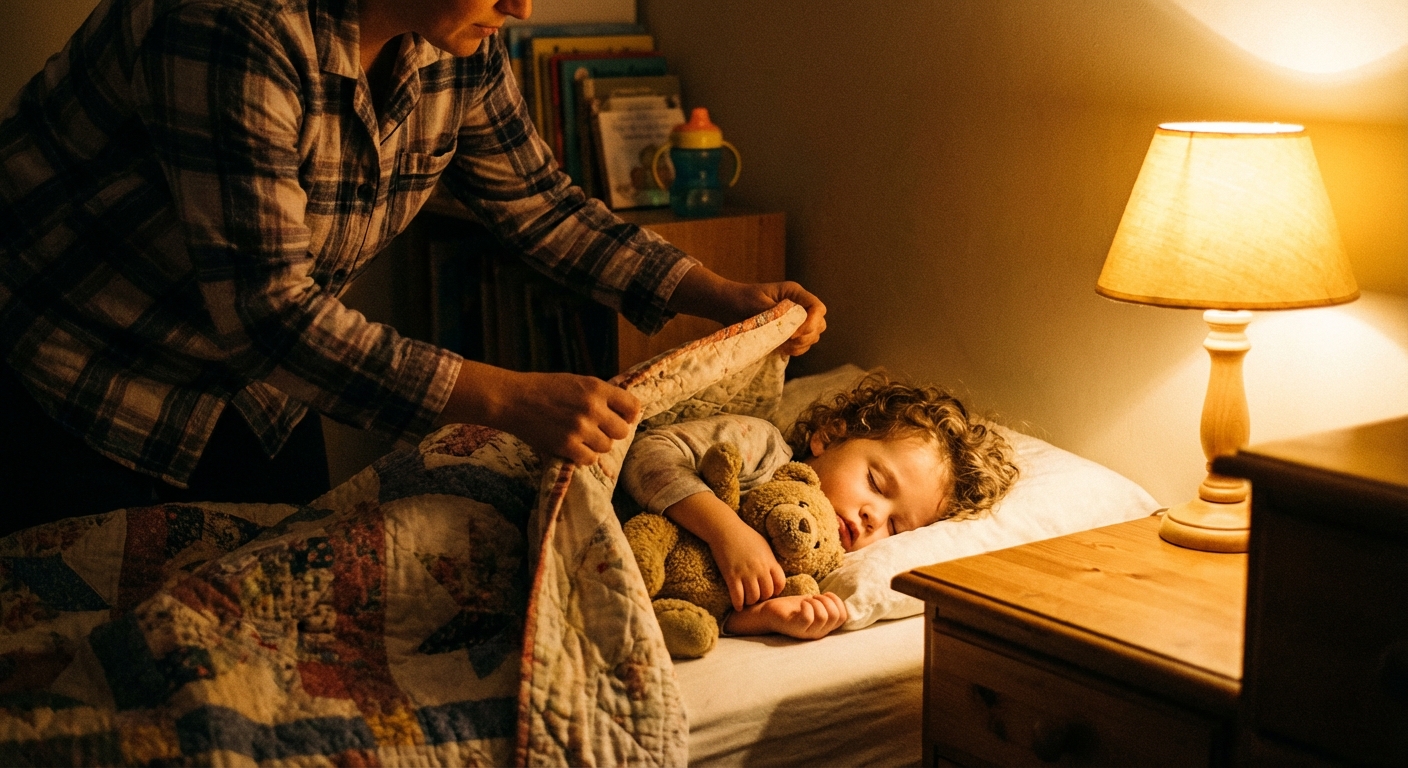
Sleep often falls apart right when you need it most. Some toddlers start fighting bedtime, waking at night, or dropping naps. This is usually temporary.
Why it happens
- They miss you and nighttime is when they can “get you”
- Household routines are different
- They're overstimulated and overtired
What helps
- Keep bedtime steps the same. Even if bedtime is later, keep the order predictable.
- Add connection, not surprises. One extra book or 3 minutes of cuddle can help. Avoid adding five new demands you can't sustain.
- Use a simple return phrase. “It's sleep time. I'll check on you.” Then keep it boring and consistent.
- Protect naps when you can. An overtired toddler is more likely to melt down around the baby.
If your toddler has been a reliable sleeper and suddenly has loud snoring, breathing pauses, persistent night terrors, or sleepwalking, talk to your pediatrician to rule out medical issues. In this season, many sleep disruptions are adjustment-related, but I always want you to trust your gut.
Keep expectations realistic
Some toddlers are instantly obsessed with the baby. Some ignore the baby for weeks. Some alternate between “my baby!” and “take her back!” in the same hour.
All of that can be normal.
Also remember: “toddler” is a huge range. An 18-month-old may show jealousy through clinginess and sleep issues. A 3-year-old may use more words, bigger bargaining, and bigger pushback. Same need underneath: safety and connection.
Instead of focusing on “They must bond,” focus on these early goals:
- Baby stays safe
- Toddler feels secure
- Family routines slowly stabilize
Attachment grows through thousands of tiny moments. Your toddler doesn't need to feel thrilled. They need to feel safe.
When to get extra help
Most sibling jealousy settles with time, structure, and attention. Reach out to your pediatrician or a child therapist if you notice:
- Repeated attempts to hurt the baby or pets
- Severe aggression toward caregivers or peers
- Regression that is intense or lasting beyond a couple of months
- Signs of anxiety that interfere with daily life (constant panic, refusal to separate, frequent stomachaches without illness)
- You feel unsafe managing both kids alone
And if you aren't okay, that matters too. If you're feeling persistently hopeless, panicky, ragey, or numb, or you're having scary thoughts, call your OB, midwife, primary care provider, or your child's pediatrician. Postpartum mood and anxiety disorders are common and treatable, and you deserve support.
Getting help isn't an overreaction. It's a protective move, like calling for backup before you're completely out of steam.
A realistic pep talk
The newborn stage is loud, messy, and emotional, and your toddler may have a few “who is this tiny roommate?” moments. That doesn't mean you made the wrong decision to grow your family. It means everyone is adjusting.
If you can offer your toddler two things consistently, you're doing the important work:
- Connection: “You still matter to me.”
- Boundaries: “I'll keep everyone safe.”
And on the days when you're feeding a baby, your toddler is yelling, and you're eating a granola bar over the sink, just know this: you're not alone, and this phase gets easier.