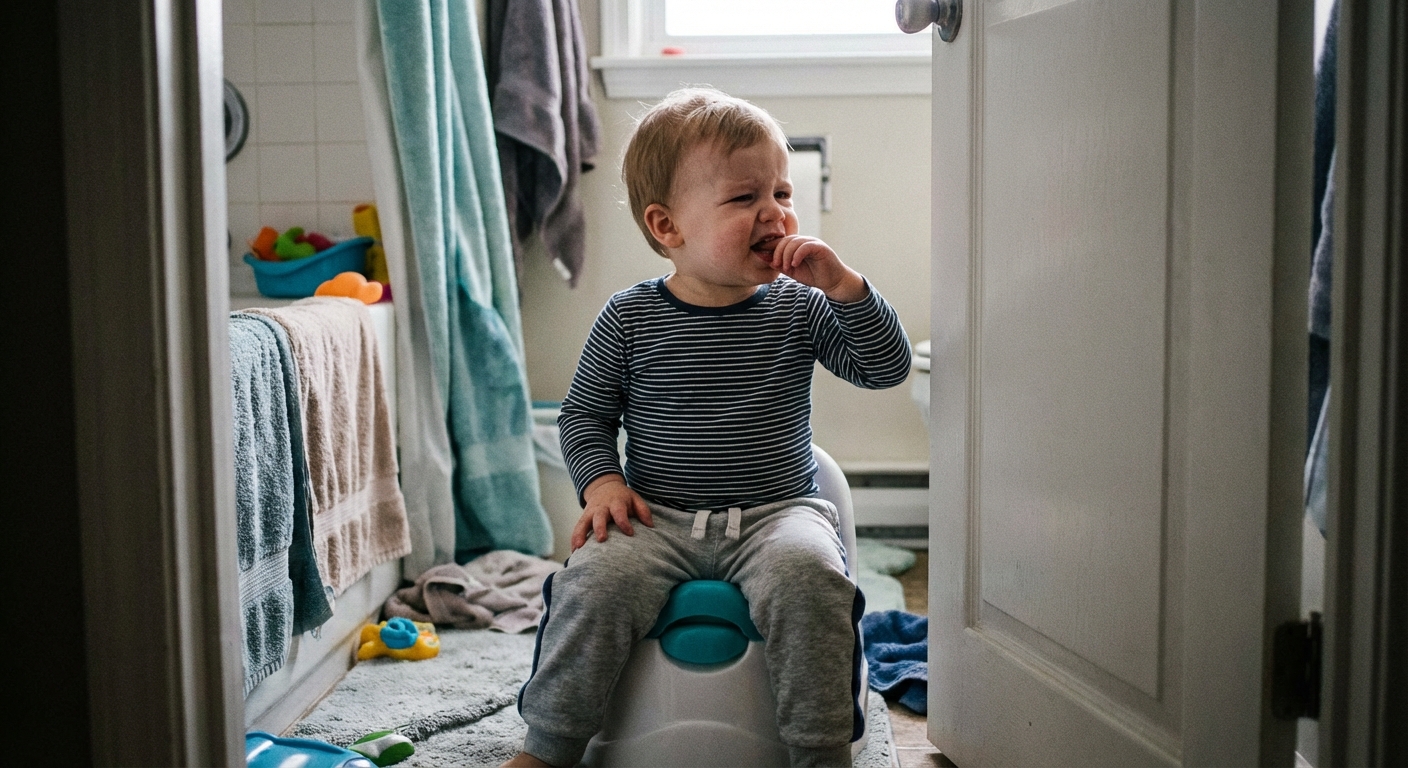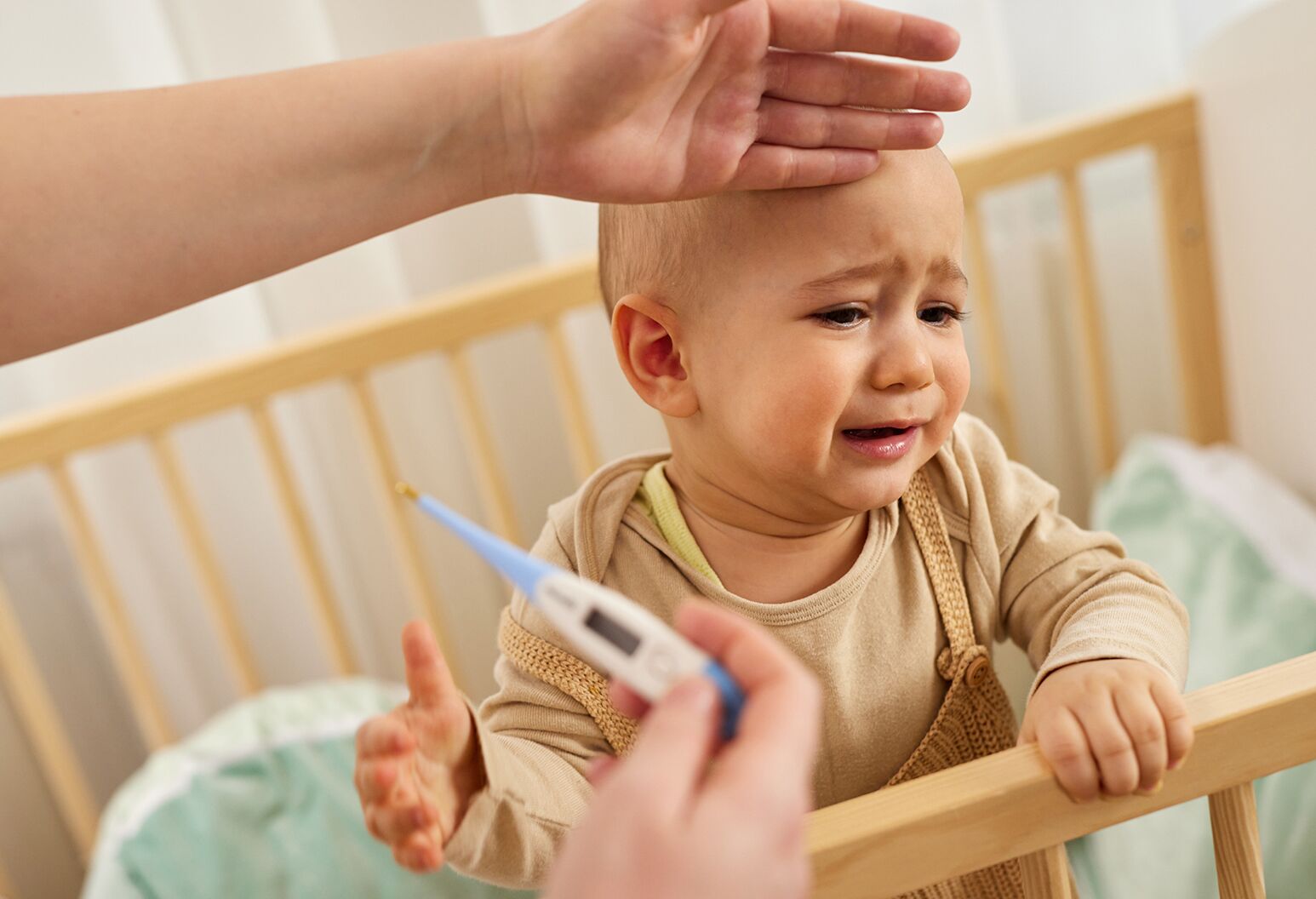
Babies often show UTIs as fever with no obvious cause. Here’s what to watch for, how urine samples are collected, what to do while waiting, and when to go ...
Pyelonephritis in Kids: Signs It’s More Than a Simple UTI

Sarah Mitchell
Sarah Mitchell is a Registered Pediatric Nurse and a mother of three who has spent over a decade helping families navigate the beautiful, chaotic early years of childhood. She combines evidence-based medical knowledge with real-world parenting experience to offer practical, compassionate advice. At Awesome Parent, Sarah's mission is to help exhausted parents find solutions, trust their instincts, and finally get some sleep.
If you have ever wondered, Is this just a UTI or something more serious? you are not being dramatic. A bladder infection can make kids miserable, but a kidney infection (pyelonephritis) can make them look really sick, really fast. As a pediatric triage nurse, I used to see the same pattern: a parent comes in worried about a fever, a kid who is suddenly limp and listless, and a nagging feeling that this is not “just a pee problem.”
Let’s walk through what pyelonephritis can look like in real life, how it differs from a simple bladder UTI, what tests are typical, and how to know when it is an ER situation, especially for infants. And one reassuring note up front: most kids do very well with prompt treatment.
What is pyelonephritis?
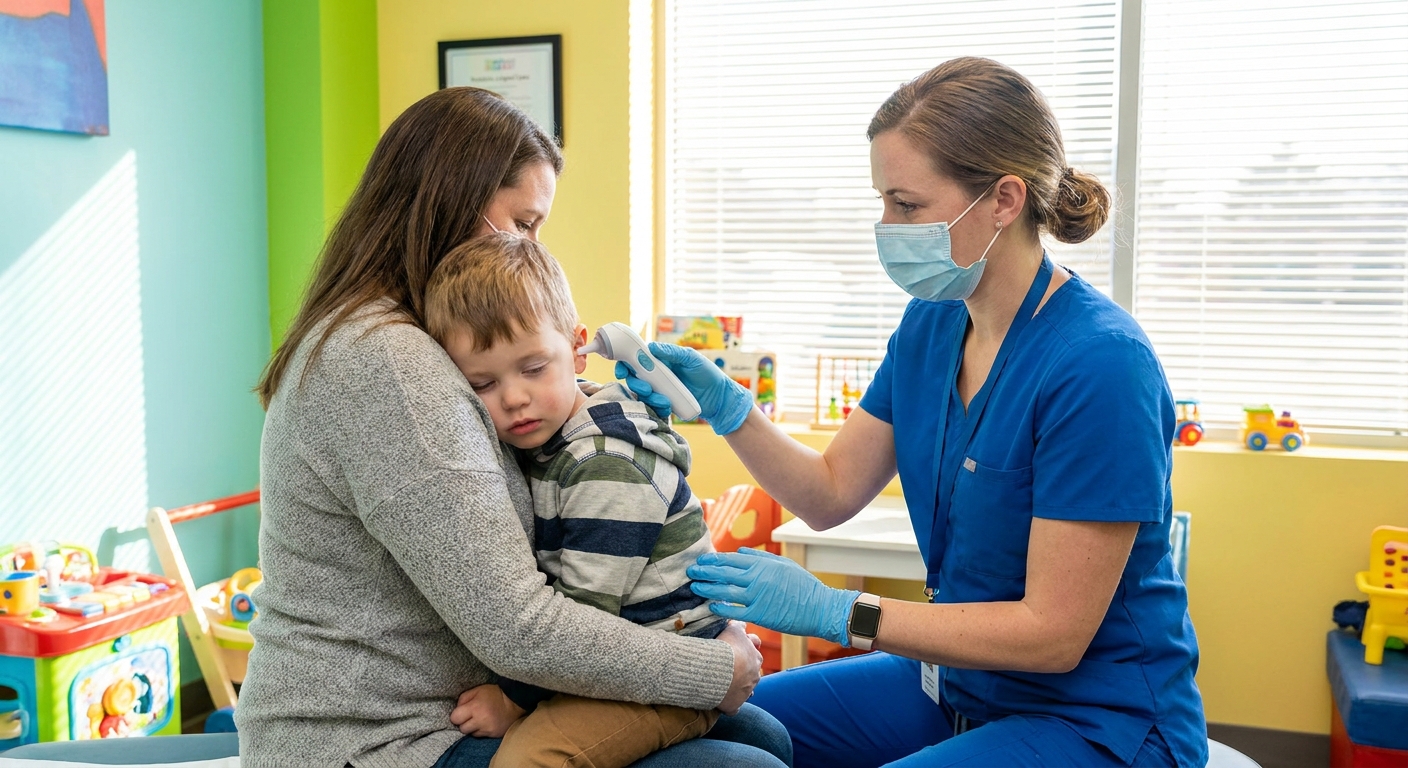
Pyelonephritis is an infection that has traveled up to the kidneys. Most of the time, it starts as bacteria in the bladder (a lower UTI) and climbs upward. The kidneys filter blood and make urine, so when they are inflamed and infected, kids often develop higher fevers and more whole-body symptoms.
Kidney infections in children are treatable, but they matter because they can lead to dehydration or, in some cases, infection that spreads to the bloodstream. They can also lead to kidney scarring in some children, especially with recurrent infections, delayed treatment, or vesicoureteral reflux.
Bladder UTI vs kidney infection
Here is the practical difference: bladder UTIs tend to cause pee symptoms. Kidney infections tend to cause pee symptoms plus “sick kid” symptoms.
Common bladder UTI signs
- Burning or pain with peeing
- Needing to pee often, but only small amounts come out
- Urgency, accidents after being potty trained
- Lower belly discomfort or pressure
- Urine that smells strong or looks cloudy
- Low-grade fever or no fever at all
Common kidney infection signs
- Fever, often higher (many kids are 102°F (38.9°C) or above, but not always)
- Back or flank pain (pain on one or both sides of the back, under the ribs)
- Vomiting or not keeping fluids down
- Chills
- Lethargy, unusually sleepy, weak, or “not themselves”
- Abdominal pain that is more intense or more generalized
- Pee symptoms may still be present, but sometimes they are mild or absent
Real-life parent translation: if your child has urinary symptoms and fever, vomiting, significant fatigue, or back pain, I want you thinking “possible kidney infection” and getting same-day medical care. It is not about hitting one magic temperature number. It is about the whole picture.
Symptoms by age
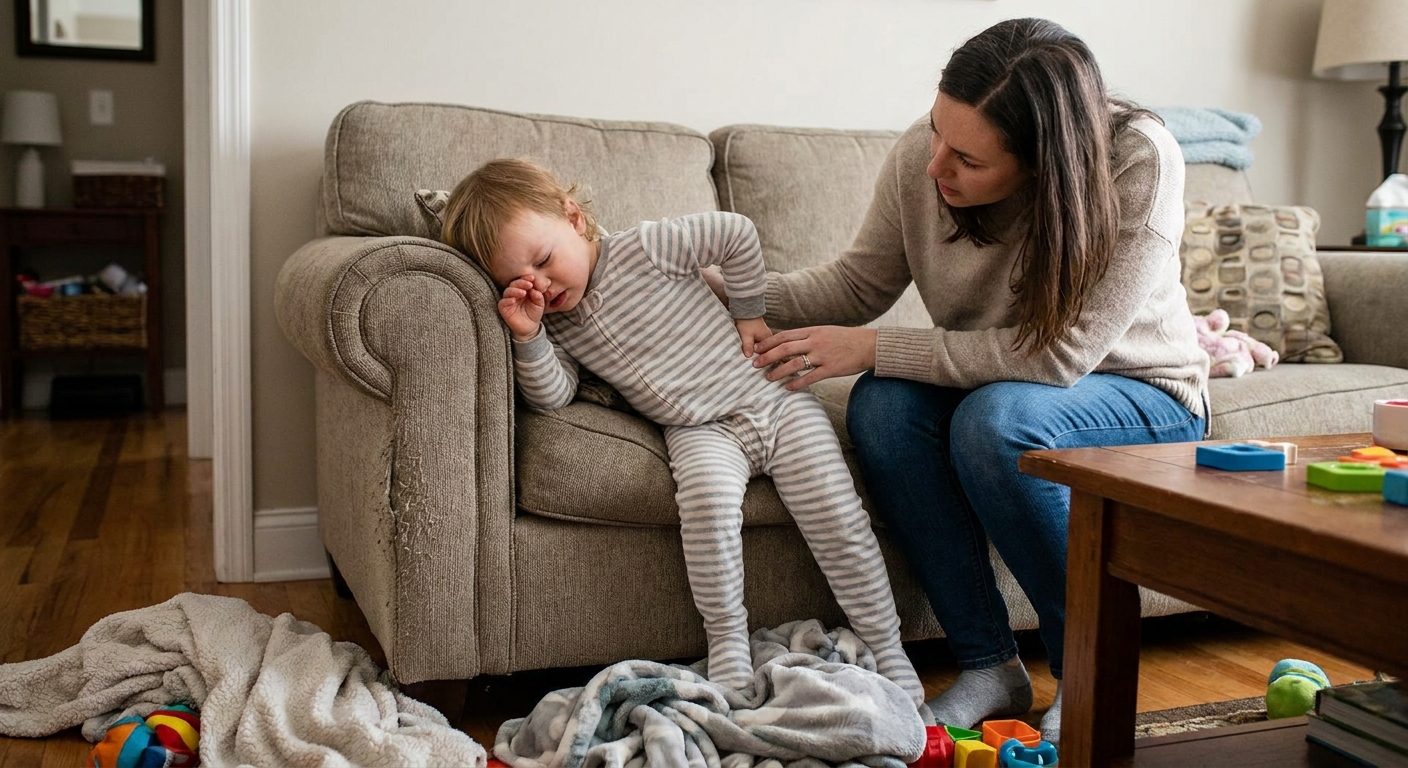
The younger the child, the less likely they are to say “my side hurts.” Instead, they show you with behavior and feeding.
Babies (newborn to 12 months)
- Fever or, in very young infants, low body temperature (hypothermia)
- Poor feeding
- Vomiting
- Irritability that feels different than usual fussiness
- Sleepiness, low energy, “floppy” appearance
- Fewer wet diapers (a dehydration clue)
Toddlers and preschoolers
- Fever without obvious cold symptoms
- Vomiting, belly pain
- New accidents or refusing to pee
- Back or side pain (some will point, some will just cling and cry)
- Acting very tired or out of it
School-age kids and teens
- More classic flank pain and urinary burning
- Fever, chills
- Nausea and vomiting
- A clinician may check for kidney-area tenderness by gently tapping the back (you do not need to try this at home)
Call today vs ER
Now we get to the question parents actually need answered: where should we go, and how fast? If your gut is telling you your child is “too sick for urgent care,” trust that.
Go to the ER now
- Infants under 3 months with a rectal temperature of 100.4°F (38°C) or higher
- Any age with trouble breathing, blue lips, or severe lethargy
- Cannot keep fluids down (repeated vomiting) or signs of dehydration: dry mouth, no tears, very sleepy, or very decreased urine (for example, no wet diaper for 6 to 8 hours in an infant, or no urine for 8 to 12 hours in an older child)
- Severe back/flank pain or severe abdominal pain
- Seems confused, hard to wake, or “just not right”
- Known kidney problems or immune system issues plus fever
Same-day pediatric visit or urgent care
- Fever with urinary symptoms
- Fever for more than 24 hours with no obvious source, especially in toddlers
- New bedwetting or accidents plus fever
- Back pain plus fever, even if pee symptoms are mild
Call your pediatrician
- Mild urinary symptoms without fever
- History of UTIs and early symptoms starting again
- Questions about collecting urine or taking antibiotics
Quick note for infants: Babies can look “fine-ish” between fevers and still have a serious infection. That is why fever in young infants is treated urgently.
Educational note: This guide is for general information, not a diagnosis. Your child’s clinician and local protocols should always win if they differ from a checklist.
How doctors diagnose it
The goal is to confirm infection, identify the bacteria, and decide whether your child needs oral antibiotics at home or IV antibiotics in the hospital. When possible, clinicians try to collect urine before starting antibiotics so the culture is accurate.
1) Urine testing
Most children will have:
- Urinalysis: looks for white blood cells, nitrites, and other clues of infection
- Urine culture: grows the bacteria so the antibiotic can be matched to what actually works (E. coli is the most common cause)
How urine is collected matters:
- Toilet-trained kids: a clean-catch midstream sample
- Babies and many toddlers: a catheterized sample is often recommended because it is much cleaner than a bag sample
Bag urine can be tempting because it is easier. In many settings, a bag sample may be used for an initial screening urinalysis. But it is not considered reliable for a culture because it can pick up skin bacteria and lead to confusing results. If the culture result matters (and with suspected kidney infection, it usually does), clinicians typically use a catheterized or clean-catch sample.
2) Blood tests
Depending on age and how sick your child looks, the team may order:
- Blood count and inflammation markers
- Blood culture if the child appears very ill or is very young
- Electrolytes if dehydration is a concern
3) Imaging
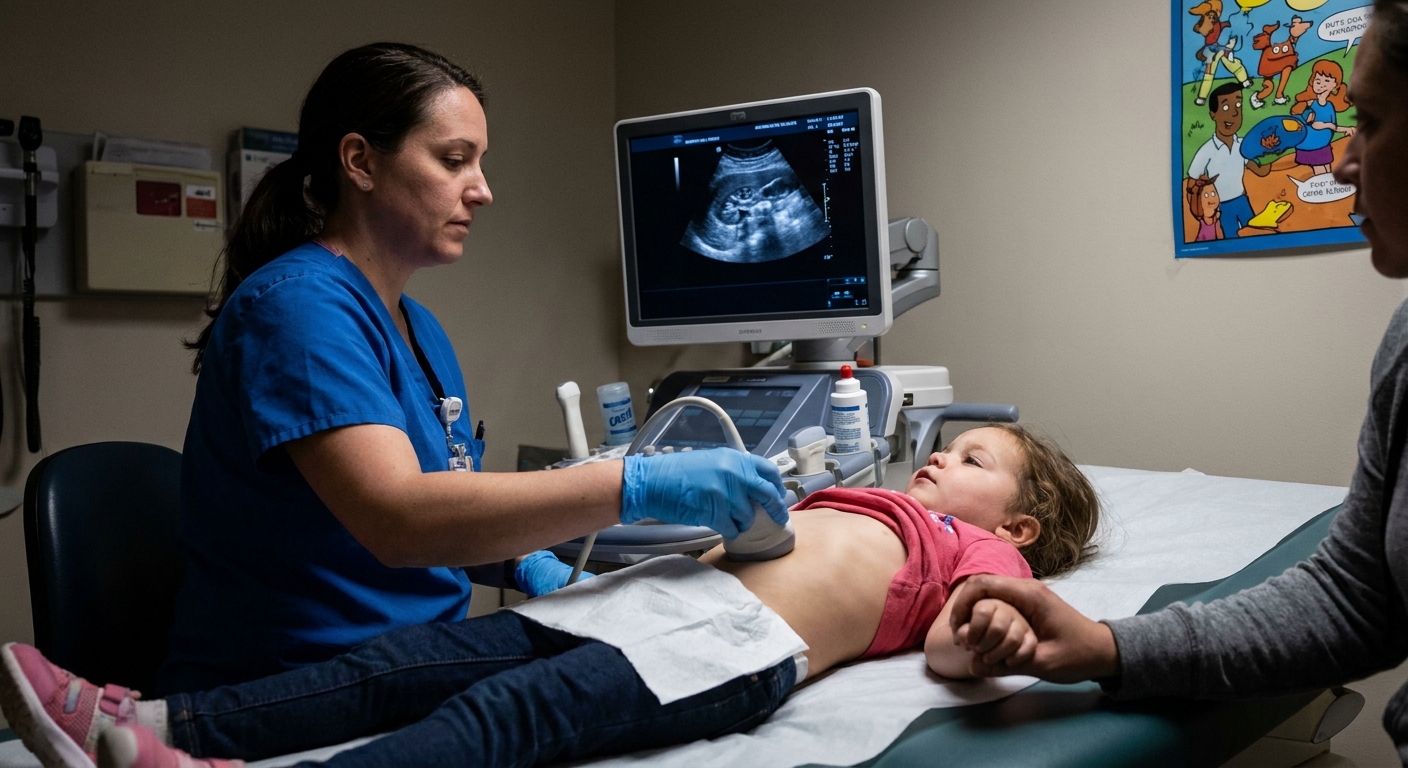
Most kids do not need imaging right away for a first, straightforward kidney infection that responds to antibiotics. Imaging is used when doctors need to look for anatomical issues or complications.
- Renal and bladder ultrasound: often considered after a first febrile UTI in younger children (commonly under 2), for recurrent UTIs, or if the child is not improving. Practices vary by age, sex, and guideline, so your clinician may tailor this to your child’s history.
- VCUG (voiding cystourethrogram): a special test to look for urine reflux (vesicoureteral reflux). This is usually not done after every UTI. It is considered if there are recurrent febrile UTIs or ultrasound findings that raise concern.
- CT scan: uncommon in children for routine pyelonephritis. It may be considered if there is concern for an abscess or kidney stone and the child is very ill or not responding to treatment.
Treatment
Pyelonephritis is treated with antibiotics. The route and setting depend on age, severity, and whether your child can drink and take medicine reliably.
Oral antibiotics at home
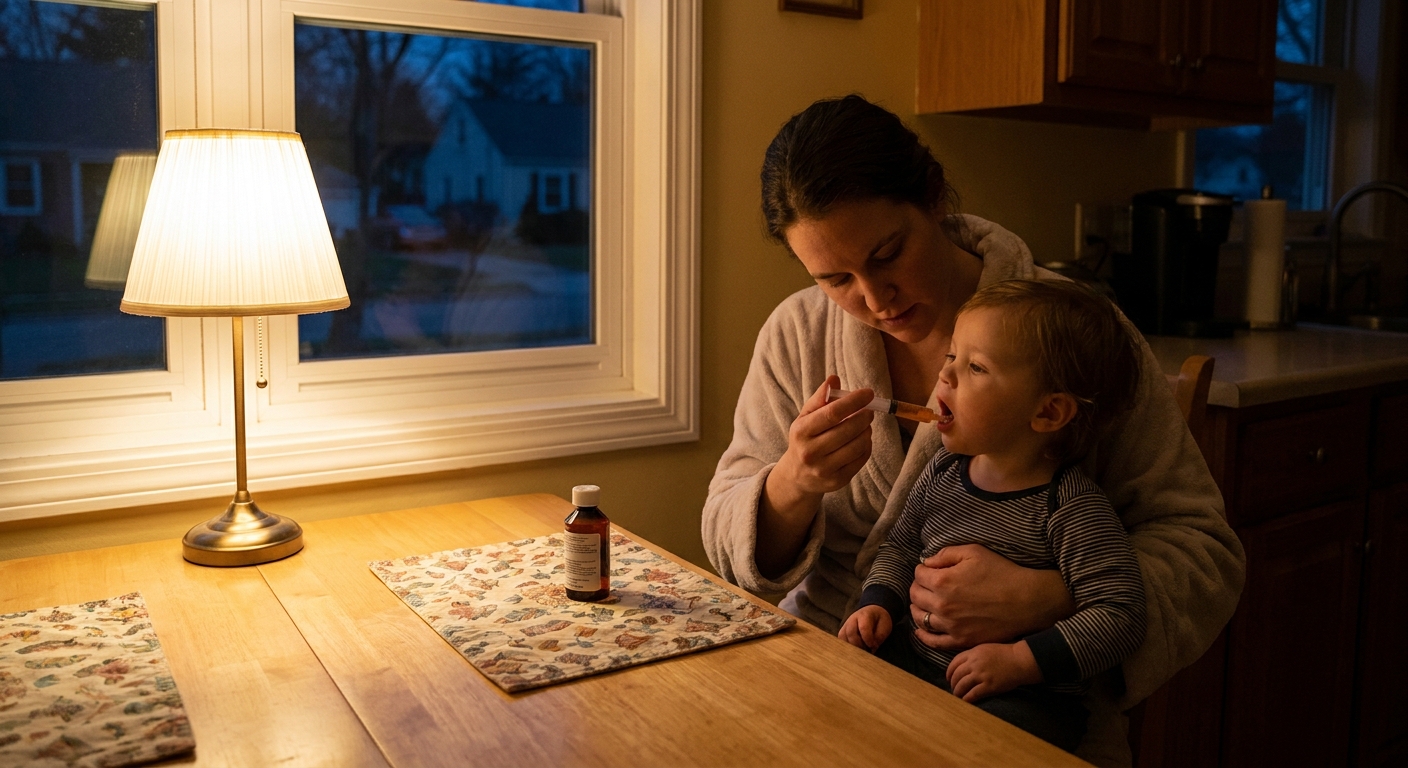
Many otherwise healthy toddlers and older kids can be treated at home if they are stable, able to drink, and not vomiting nonstop. Your clinician will choose an antibiotic based on local resistance patterns and adjust it if needed when the urine culture results return.
Typical treatment length for kidney infection is often 7 to 14 days depending on age and medical history. Always follow your child’s prescribed course, even if they perk up quickly.
IV antibiotics
IV antibiotics are more likely if:
- Your child is under 2 to 3 months (often admitted for monitoring)
- They look toxic, very lethargic, or have concerning vital signs
- They cannot keep fluids or oral meds down
- There are complications or underlying kidney issues
How fast should my child improve?
Most kids start to look better within 24 to 48 hours of starting the right antibiotic. Fever can take a bit to settle. If your child is worsening, still very sick at 48 hours, or cannot hydrate, call your clinician right away or return for care.
Home care
Antibiotics do the heavy lifting. Your job is comfort, hydration, and watching for red flags.
Hydration
- Offer small, frequent sips of water or oral rehydration solution if vomiting is an issue.
- For toddlers, popsicles or ice chips can count.
- Watch urine output. Pee should happen regularly and get lighter in color as hydration improves.
Fever and pain
- Use acetaminophen or ibuprofen as directed for age and weight.
- If your child is significantly dehydrated or vomiting a lot, ask a clinician before using ibuprofen.
- A warm compress on the belly or back can be soothing for older kids.
Food
- Do not fight for full meals right away. When nausea improves, aim for bland, easy foods.
Finish the antibiotics
- Set phone reminders. Missed doses can be one reason symptoms bounce back, along with resistance, a wrong-fit antibiotic, or complications.
- If your child vomits right after a dose, ask your pharmacist or clinician what to do. Timing matters.
Skip these traps
- Do not rely on cranberry products to treat an active kidney infection. They are not a substitute for antibiotics.
- Do not use leftover antibiotics. Wrong drug or wrong dose can delay proper treatment.
- Do not assume “no burning means no UTI.” Many kids, especially younger ones, do not report classic symptoms.
Follow-up
Sometimes. Your pediatrician may recommend follow-up if:
- Symptoms do not improve as expected
- The urine culture shows resistant bacteria and antibiotics are changed
- Your child has recurrent UTIs
- Your child is very young or had a complicated course
If imaging is recommended after a febrile UTI, it is usually scheduled after your child is improving, not during the worst of the illness.
Why some kids get repeat UTIs
Sometimes it is just bad luck and anatomy. Other times, there are fixable contributors.
- Constipation: One of the biggest repeat-UTI drivers in toddlers. A full rectum can press on the bladder and interfere with emptying.
- Holding urine: Common in busy preschoolers who do not want to stop playing.
- Not emptying fully: Some kids rush and leave urine behind.
- Bubble baths and irritants: Can irritate the urethral area in some children.
- Wiping and hygiene issues: Front-to-back wiping matters, but I promise you, you do not need to scrub your child like a kitchen pan. Gentle, consistent hygiene is enough.
- Vesicoureteral reflux or other urinary tract differences: These are evaluated when UTIs are recurrent or severe.
Ask your pediatrician specifically about constipation, bathroom routines, and whether your child needs any additional evaluation after a febrile UTI.
Fast checklist
If your child has urinary symptoms plus any of the following, treat it as urgent and get same-day care:
- Fever, especially if high or persistent
- Vomiting or refusing fluids
- Back or side pain
- Marked fatigue or lethargy
- Infant under 3 months with fever 100.4°F (38°C) or higher
If your child looks very sick, is hard to wake, cannot stay hydrated, or is under 3 months with fever, skip the debate and go in. You are not overreacting. You are protecting their kidneys and their whole body.
One more calming note
Most parents I met in triage were not missing the signs. They were second-guessing themselves because the symptoms did not match a neat checklist. Kidney infections do not always read the textbook, especially in little kids.
If you are worried your child’s “UTI” is actually pyelonephritis, you are doing the right thing by getting eyes on them quickly. And if you want to come back to this at 3 AM when you are counting wet diapers like it is your new hobby, I will be right here with you.
Sarah Mitchell
Sarah Mitchell is a Registered Pediatric Nurse and a mother of three who has spent over a decade helping families navigate the beautiful, chaotic early years of childhood. She combines evidence-based medical knowledge with real-world parenting experience to offer practical, compassionate advice. At Awesome Parent, Sarah's mission is to help exhausted parents find solutions, trust their instincts, and finally get some sleep.